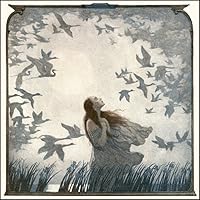
They are nine women with much in common―all German speaking, all poets, all personal witnesses to the horror and devastation that was World War II. Yet, in this deeply moving collection, each provides a singularly personal glimpse into the effects of war on language, place, poetry, and womanhood.
After Every War is a book of translations of women poets living in Europe in the decades before and after World War II: Rose Ausländer, Elisabeth Langgässer, Nelly Sachs, Gertrud Kolmar, Else Lasker-Schüler, Ingeborg Bachmann, Marie Luise Kaschnitz, Dagmar Nick, and Hilde Domin. Several of the writers are Jewish and, therefore, also witnesses and participants in one of the darkest occasions of human cruelty, the Holocaust. Their poems, as well as those of the other writers, provide a unique biography of the time―but with a difference. These poets see public events through the lens of deep private losses. They chart the small occasions, the bittersweet family ties, the fruit dish on a table, the lost soul arriving at a railway station; in other words, the sheer ordinariness through which cataclysm is experienced, and by which life is cruelly shattered. They reclaim these moments and draw the reader into them.
The poems are translated and introduced, with biographical notes on the authors, by renowned Irish poet Eavan Boland. Her interest in the topic is not abstract. As an Irish woman, she has observed the heartbreaking effects of violence on her own country. Her experience has drawn her closer to these nine poets, enabling her to render into English the beautiful, ruminative quality of their work and to present their poems for what they are: documentaries of resilience―of language, of music, and of the human spirit―in the hardest of times.
Born in Dublin in 1944, Eavan Boland studied in Ireland, London and New York. Her first book was published in 1967. She taught at Trinity College, University College Dublin, Bowdoin College, the University of Iowa, and Stanford University. A pioneering figure in Irish poetry, Boland's works include The Journey and other poems (1987), Night Feed (1994), The Lost Land (1998) and Code (2001). Her poems and essays appeared in magazines such as The New Yorker, The Atlantic, Kenyon Review and American Poetry Review. She was a regular reviewer for the Irish Times. She was married to the novelist Kevin Casey.
This was actually my first time reading poetry by German poets, particularly Jewish women. And I absolutely loved it. You've the usual themes of war-its effects, memory, displacement and rootlessness but the way the poets have weaved them together is absolutely amazing.
This anthology comprises "after-war poetry" written by women. The Irish poet Eavan Boland rescued in this German-English edition the work of poets such as Rose Ausländer, Ingeborg Bachmann and the Nobel Prize laureate Nelly Sachs. It is a privilege to read these women who survived the Second World War and had to face death but, above all, revival. It is futile to paraphrase poetry, but let me say there are poems about what captured the glance of a person before dying, about reincarnation, about loss (obviously). Just splendid.
As anthologies go, it does not get more beautifully compiled or rendered than this; complete with bios, maps, photos and checklists, this book is replete with "Being There". My only regret is that not every one of these poets can surprise the way the others do. If you want to go straight for the jugular sublime, pick up Hamburger's translations of Nelly Sachs. It will undo you.
Picked this up at Labyrinth when I was in Princeton over the holiday, so I already knew this book would be special. I feel so motivated to delve into poetry anthology this year, and this was my first time reading an anthology of only women authors and also of translated German poetry. I think Mel would love this one! I loved this part of the introduction, “The problem with human catastrophe is that it can be remembered all too well. But it is much harder to re-imagine it. What brings it from the domain of fact to the realm of feeling is often just a detail. A cup, a shoe, an open window, a village roof with missing slates. Once we see it, we recognize it. That could have been me, we suddenly think. I could have been there. That moment of private truth, simply because it cuts history down to size, has a rare value.” What a writer, Eavan Boland!
Bookmarks: Exile by Hilde Domin, Hiroshima by Marie Luise Kaschnitz, Exile by Ingeborg Bachmann, Over Glistening Gravel by Else Lasker Schuler, If Someone Comes by Nelly Sachs, If I Only Knew by Nelly Sachs (If I only knew where you put that last look.), My Key by Rose Auslander.
in the dream-stable the farmer’s wife is milking the goat.
the cherry tree up on the roof is blue [ . . . ]
the bride floats on her veil over the night-steppe.
—rose auslander
*
so you return my sweet anemone— all brilliant stamen, calyx, crown— making it worth the devastation, like nausicäa?
[ . . . ] anemone, my daughter, let me kiss your face: it is unmirrored by the waters of the lethe or of styx. and innocent of no or not.
—elisabeth langgässer
*
the sun, lying in wait by the roadside with magic wands, commands travelers to come to a halt.
they stand still in this bad dream with its glazed surfaces, while the cricket scratches daintily at what-cannot-be-seen
and the dancing stone transforms its dust into music.
—nelly sachs
*
she filled herself entirely with the molten dark. with the ember light of humility that serves the commandment of the monster and she will die for the golden idol—
yet in her heart is god. he has put his seal on her grave and lovely face. but she does not know that.
—gertrud kolmar
*
sweet angels, i have eaten such bitter bread. push open the door of heaven. for me, for now—
although i am still alive— although it is not allowed.
—else lasker-schüler
*
i will never see the night cities of glass says the watchman’s daughter of selinunte.
—marie luise kaschnitz
*
the sunken city, sunken for me alone.
i swim in these streets. others walk.
the old houses have grand, new doors, all of glass.
we swim, the dead and i, through the new doors of our old houses.
"its beheaded angel is trying to find a grave for hatred"
A beautiful anthology. I've never before had to opportunity to read anything by these authors before and was grateful for the opportunity to do so here. I particularly enjoyed Else Lasker-Schuler and Ingeborg Bachmann's works but everything in this collection was worth the read. Absolutely not something you'll regret reading if you can get your hands on this anthology.
Wonderful little collection. War is the knot that tie those talented women together. Their poems are bilingual, both in German and in English in the collection. In addition, each woman was provided with a concise bio. Some of the poems are really nice to read. Poems tackles topics such as exile, the losing of mother tongue, migration, culture, death, war, separation, homeland etc..
Nine German women poets from the 20th century, translated by Irish poet Eavan Boland. This is a thin volume with the original German on the left side and Boland's translation on the right. A short biography of each poet is included. The title comes from a line from Wislawa Szymborska, Nobel Prize winning poet from Poland who wrote, "After every war somebody must clean up."
Leí este poemario pensando únicamente en Ingeborg Bachmann, no me decepcioné para nada pues el apartado que le correspondía a ella era de los más amplios y su poesía, profunda y bella. Encontré además a otras voces femeninas entre las cuales destaco a Else Lasker-Schüller, por regalarme poemas que estaban más allá de lo que pude imaginar al comenzar a leer esta compilación. Un libro fantástico.
Many echoes here, in these excellent translations of German-speaking women poets of the middle of the 20th century, of the poetry of Afghan women of today.
Quote from Lisel Mueller in her book of translations of Marie Luise Kaschnitz: "There was no way for these writers and those of the next generation to write except in the context of that catastrophe and the evil which led to it."
Other quotes I found worthy of further reflection: "It still speaks to me--that language I cannot understand but need to hear." (p. 2)
"Women are not usually war poets...Nevertheless, their perceptions of the aftermath of war may be especially keen." (p. 3)
"One of my chief motives here has been simply to arrange this work so that the reader can follow it. Follow it, that is, off the pages of this book and into other books. Into the mystery and adventure of how a poet confronts time with language." (p. 11)
"I wanted these translations to be windows, not veils." (p. 11)
"I do not reside. I live."
(from the poem, "Biographical Note" by Rose Ausländer)
"A stranger always carries his native land in his arms-- like an orphan for which he might be seeking nothing more nor less than a grave."
(from the poem "If Someone Carries" by Nellie Sachs)
Exile
The mouth dying The mouth twisted The mouth trying to say the word right in a strange language.
Though this is not my favorite collection for the poems themselves, this collection is unique in the way that it is specifically 'collected'- an Irish poet sympathizing with WWII female poets that wrote during the war, but not about 'war' as we would think of war-poetry as 'fighting' poetry, translated from the German into English. The combination creates a new kind of community within the collection that gives the feeling of sisters mourning together.This is something that I think every poetry-lover should have on their shelves.
I had never heard of Nellie Sachs before. Her poems are beautiful. And of course I love Ingeborg Bachmann. I do read German, it is close to my mother-tongue; but poetry is always a little bit harder to fully experience in another language, and reading the poems both in translation and original, though neither my native language, deepened my understanding of them. This is a lovely collection.