When a car accident leaves photographer Burke Crenshaw in need of temporary full-time care, he finds himself back in the one place no forty-year-old chooses to be—his childhood bedroom. There, in the Vermont home where he grew up, Burke begins the long process of recuperation, and watches as his widowed father finds happiness in a new relationship that's a constant reminder of everything Burke wants and lacks.
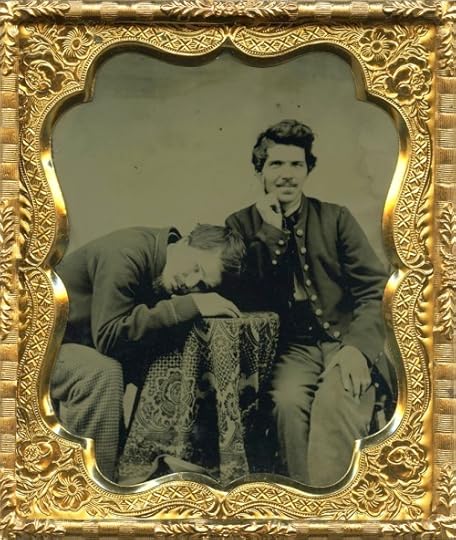
Exploring local history, Burke discovers an intriguing series of letters from a Civil War soldier to his fiancé. With the help of librarian Sam Guffrey, he begins to research a 125-year-old mystery that seems to be reaching into the present day. The more Burke delves into the past, the more he's forced to confront the person he has become: the choices he made and those he avoided, his ideas of what it takes to be a successful gay man, his feelings about his mother's death, and the suppressed tension that simmers between himself and his father.
Compelling, frankly funny, and often wise, The Road Home is the story of one man's coming to terms with who he is, what he wants out of life, and where he belongs—and the complex, surprising path that finally takes him there.
Michael Thomas Ford is the author of more than 75 books in genres ranging from humor to horror, literary fiction to nonfiction. His work for adult readers includes the best-selling novels What We Remember, The Road Home, Changing Tides, Full Circle, Looking for It and Last Summer, and his five essay collections in the "Trials of My Queer Life" series. His novel Lily was a Tiptree Award Longlist title and a finalist for both the Lambda Literary Award and the Shirley Jackson Award. He is also the author of the Sickening Adventures series of books featuring popular contestants from RuPaul's Drag Race.
As a writer for young adults he is the author of the novels Suicide Notes, Z, and Love & Other Curses, and under the name Isobel Bird he wrote the popular "Circle of Three" series. His work has been nominated for 14 Lambda Literary Awards, twice winning for Best Humor Book, twice for Best Romance Novel, and once for Best Mystery. He was also nominated for a Horror Writers Association Bram Stoker Award (for his novel The Dollhouse That Time Forgot).
The Road Home is exactly HOW I prefer my romance books to be: The plot is much more than just a description of the love-hate relationship between the MCs with a healthy dose of sex scenes.
Burke Crenshaw lives in Boston and works as a freelance photographer. He is single because he doesn't do relationships well, he's allergic to a country life and the worst possible scenario for him would be spending more than 24 hours under one roof with his father. They have never been too close with each other, and since the death of Burke's mother their relationship has become even more complicated. But, unfortunately, as sometimes happens in life, a car accident leaves the worst case happen: Burke HAS to spend 6 weeks at the house of his father, "far away from the civilisation", in a small town in Vermont, because of the injuries-one broken leg and one broken arm - he is completely dependent on external help. And his father's house was the last choice but the only one possible he is left with.
And how it happens in our romance books...*sigh*...the worst case turns into the best what could happen to our city dweller. The Road Home is a wonderful novel of COMING HOME, not only in physical meaning. To find yourself, to understand what things are the most important and significant in your life, to find inner peace, new friends and maybe...a new love.
And maybe...to start to live.
I also enjoyed the mystery part in this book: the mystique of an old farmhouse and the secret behind the old photographs that Burke coincidentally came across during his time in Vermont. His research is a thrilling parallel story in the story- though I don't want to say too much! Just read it!
Highly recommended!
My first of Michael Thomas Ford, but for sure not the last.
This one didn’t work for me. Frankly, I thought the story was all over the place.
It started good, became boring rather soon, then unbelievable and finally quite weird.
I liked the beginning - Burke’s reluctance to go back to his home town that he had left as quickly as possible after graduating school, his realization that he doesn’t really like his friends or his life - I was definitely hooked.
Sadly, things got boring once Burke arrived in Vermont. There was no development to his relationship with his father almost until the end of the book and except for one scene where all truths came out, it was quite uneventful.
Then, nearly everyone in this small town in Vermont was gay. Obviously, I have no way of knowing what the likelihood of that is, but it seems unbelievable to me. Anyway, I tried to get over it and enjoy the interactions between the characters but that didn’t happen either simply because I found all characters, including Burke, to be uninteresting. I found Sam particularly boring, every second line in his conversations with Burke was a quote from a book and eventually that got very annoying.
I must say there were some interesting parts at this point of the story. Burke got involved with 20 years old Will and seeing how he clung to that unsatisfying relationship (if it could be called a relationship) and tried to persuade himself that it could possibly work out was a strong moment as Burke knew he had reached his lowest point.
And then the final chapters … well, without giving much away, I’ll just say things got very weird. If the whole ‘Destiny’ thing and its rituals were supposed to be something that would finally set Burke free from his inhibitions and help him find a way to commit to a relationship, I just couldn’t see it do that.
Initially I was interested in the mystery of the letters and the photographs but I couldn’t see how this sub-plot related to Burke’s story. It felt like it was there just to fill the pages. In the end, I thought this could have been a much better story if the characters and their relations were better developed and explored instead of so much time being devoted to the mystery.
This is my first MTF ever, having picked it up on a whim. And what a delightful, wonderful novel it is. One of those great reading experiences that leaves you grinning from ear to ear, and with a spring in your step, for days afterwards.
Sexy, sassy, funny, sad, and wise. The writing is deceptively simple, but Ford has a real ear for dialogue, and the quirks that make disparate characters tick (Lucy, Sam and Gaither are particularly well delineated, as are the three bears).
A 40-something gay man is in a car accident and returns home to his father's care after being away from home for 20 years. There he meets a grown-up guy he had a brief dalliance with while in high school ... and is quite shocked when the guy's 20-something son comes onto him.
It is refreshing to find an author that addresses the problems and crises of confidence (and virility and ego) that middle-aged gay men face, particularly in a modern gay culture so fixated on body image and the virtues of youth. There is no pontificating here either; MTF is gentle and funny, and always right on the money with his insights.
There is so much packed into this slender novel: it is about fathers and sons, twinks and daddies, country vs. city life, the paucity of decent tops, Radical Faeries, families, libraries, true love, and even ghosts and a Civil War domestic tragedy: The Road Home is a cornocupia of wonders and home truths. Fantastic and utterly beguiling.
This was one of my favourites of this author's books. I liked the characters and their growth through the story and the theme of being true to yourself. The subplot of the 'ghosts' and their story had several parallels to the present day story and I liked the way it all came together. One to add to the wish list.
Normalmente los libros de este escritor me suelen gustar bastante, pero este es el garbanzo negro. Lo único relevante es que la historia de amor se sale de los tópicos de los libros MM, pero el resto es bastante soso y aburrido.
This is only the second book I read by Michael Thomas Ford, but I think he is quite the master in writing story of modern gay men who would like to be traditionalist and conservative, but in the positive meaning of these words.
Burke is apparently a successful man living an enviable life in Boston as a professional photographer; he has everything he dreamed about when he was growing in a small town in Vermont, and he would do everything to not having to renounce to it. But when a car accident forces him to face the reality that he actually has no one who really cares for him, if not his family, it’s there, in that small town in Vermont that he goes back.
As a teen, Burke was not a repressed or problematic kid, but more a bit reclusive, and not at ease to express his feelings, but that was more a normal attitude in his family than his fear of rejection. For a reason or the other he has never done a real coming out to his family and friends, that more or less applied the don’t ask don’t tell rule: everyone knew but no one admitted. Rather than facing it, Burke preferred to erase everything, his family, his youth, his friends; the man living in Boston is a different one, someone who has no connection with that life. When he comes back home, to Burke is like entering an unknown universe, even if nothing has changed, he doesn’t recognize the environment, his own childhood room is something stranger, he doesn’t even remember the books he probably coveted so many year ago (like a very “used” Gordon Merrick’s novel).
When he meets Will, the 20 years old son of his childhood best friend Mars, Burke is not able to split the old Mars with the young Will; Mars, who was Burke first experience with sex, even if it was not something Mars wanted to even acknowledge (I think that for him was simply another way to get off), is now someone completely different, and for that reason between them there is not really any reunion, they barely speak to each other. But with Will everything is different, above all when Burke finds out the kid is interesting in him more than his dad’s old best friend. At first I thought Burke was projecting in Will his father, that he was trying to live with the kid the unrequited love he was not able to fulfil with Mars. But then I read something different, Burke was projecting in Will the teenager he was, the one who wanted out from the small town to finally live an openly and happy gay life.
Burke was, and still is, reflecting his family’s attitude on the small town: since in his family no one was willing to understand was Burke really was, and it was not only the gay thing, also his career and dreams, Burke automatically thought the small town was the same, and a life there meant for sure a life in denial. As soon as Burke is able to understand that it was not a rejection, but more a lack of communication, he also starts to see the small town in a different way; not only that, he also finds people who can be really good friends and maybe more, an unexpected happily ever after.
There is an historical subplot regarding two men living during the Civil War, it’s not really something that changes completely the feeling of the story that is still a contemporary one, but more a nice addition; the only thing that I can see as a parallel between now and then, is that those men were able to accomplish something the modern day Burke is not able to, living comfortable with themselves even in a place and time that was all other than accepting. Searching info about them to Burke is almost to prove that they were not happy, that something happened, a tragedy; Burke will be able to understand, and accept, that only life got between them, only when he is able to accept that no one is against him and his happiness, if not himself.
Last nice note, is the figure of the old gay man living an happy but somewhat sad old age with a whole lot of good memories of his past life; this is a figure that I have already find in Looking for It, and it’s so real and well described that I think it’s the representation of someone in the author’s real life, or at least someone he would be glad to exist. It’s probably the hope of any modern man, gay or not, to arrive to an old age without regretting your past.
Burke Crenshaw is about to see everything in his life change, and it all starts on his 40th birthday. After the party, he is driving home when he swerves to avoid an animal and ends up in an accident that leaves him with a broken arm and leg. He is a successful photographer living in Boston. The challenge is that he is currently single, and his injuries mean that he will be unable to care for himself. As a result, he is going to have to head back to his family's home in rural Vermont. There is very little that he dreads as much.
His dad is an investment broker, but Burke always think of him as a local farmer. They do not have the best of relationships. His dad is a traditional gruff guy full of masculinity. His dad accepts Burke being gay, but they have never spoken about it. Burke does have a better relationship with is dad's girlfriend Lucy. She doesn't live with Burke's dad, but she is definitely willing to help play the nursemaid and confident.
That proves interesting when she introduces Burke to a book her first husband, who died years earlier from complications from Alzheimer's, had written. The book explores the role Vermonters plaid in the Civil War. The "story" is told largely through letters and photographs. Burke finds himself drawn into the book and, particularly, into the mysterious background of one particular man.
Burke is also finding being home to be a bit challenging. He left because it always felt too quite and unwelcoming to someone who was gay. It was nice to reconnecting with his former high school best friend, but even this takes on an interesting twist when he meet's his friend's son Will. Will and Burke find themselves forming a budding relationship. This freaks Burke out, considering their difference in ages. It also bothers him because Will seems less willing to be open about his sexuality.
Burke also forms an interesting friendship with Sam, who is the librarian at the library in a nearby town. Sam is definitely not like Burke's usual friends in Boston. They are all part of the same scene and seem to focus on relationships and other gossip. Sam is different ... and he is a little intriguing.
Over the course of the weeks Burke stays in Vermont, he finds himself evolving and changing. He starts to reconsider what he wants out of life and where he sees himself having a home. Being an ubranite may not have been as fun and enjoyable as he thought. And maybe rural living isn't as uncultured and boring as he remembered and assumed.
I have always found myself drawn to Ford's books. He creates characters and situations that just seem to feel and ring true. He explores life as a gay man in a realistic way. I also like how he doesn't focus in on only perfect looking guys or guys who are young. They are just regular guys making their way in the world. It is a world I feel like I could inhabit and interact with the people who are the primary and secondary characters.
I was absolutely in love with the general tone of this book, the whole narrative flowed like a dream. The characters were complex and flawed and their relationships were even more so. Burke was not an easy person to like, but he wasn't a horrible man, he was just lost and desperately needed to get his life in order, even when he thought he had it all. That aspect of the book was wonderfully done and I loved the ending and how far Burke had gotten.
The book did try to cover too many topics, though, and that made it a little less enjoyable. There was the historical mystery part that never got solved, the pagan rituals that were just wtf, Will's storyline that just abruptly ended without any resolution, Burke and his father's less than stellar relationship, Sam's bipolar disorder that came out of nowhere... it was just too much ground to cover and I couldn't connect with some of it.
And I can't believe I'm complaining about this, but every character was gay, aside from Burke's father and his childhood friend. Was it just a coincidence that Burke only came in contact with random people who happened to be gay? Was it because the author tried to make him see how he could change his life for the better like them? Eh, it wasn't a big deal, but it came off a bit forced after a while.
Anyway, the book was still great and had amazing lines and some scenes were exceptionally well written. I'm definitely looking into more books from the author in the near future!
I must first say that I'm a Michael Thomas Ford fan. I have read four of his previous novels--Last Summer, Looking For It,Changing Tides, and Full Circle. I thoroughly enjoyed each one of those. I didn't enjoy The Road Home nearly as much as the other four.
For me, the novel starts off as very promising, once you get past the first chapter--which still confuses me.
The main character, Burke Crenshaw, survives a car accident that rendered him incapable of taking care of himself. He is forced home to Vermont to not only convalesce but to also confront his distant relationship with his father as well as sort through the new-found feelings he has developed for Will, the son of his high school best friend.
I was also intrigued by the subplot--the historical mystery surrounding two Vermont soldiers who fought in the Civil War.
However, the meshing of the two stories didn't come together for me. I understand the plotting behind the events as Burke's delving into the mystery brought him within Sam, the librarian's, orbit. Sam is integral in Burke's discovery of what friendship and home mean, but I sometimes felt I was reading two different novels instead of one seamless whole.
This is kind of a strange book, in that identification with the main character will make up for the flaws of the novel with a lot of its readers - middle-aged gay men, particularly single ones.
There are things to like, such as the friends-first romance and the gentle sway of the prose, and there are a good few problems, such as how much is left unresolved and a "mystery" that amounts to random speculations about some names from the past. I kept thinking there would be some lost letters or something to flesh out that plotline... but, no.
This was a pleasant enough read - listen, actually - but I'm not exactly in a rush to check out the rest of Ford's catalog. (And although the reader did quite a good job, the sex scenes were kind of hilarious when read in his 80's announcer voice.)
This could have been a very hokey, predictable little book. (Which is kinda how it started off.) But it turned into a meandering trip through Vermont history, countryside and people that was really pretty nice. Several charaters I really liked: Lucy and Sam. Gaither was also interesting, someone you'd like to get to know better.
But I'm still not sure what the first chapter had to do with anything that followed...
I really enjoyed the characters, and they way the story never quite went where I thought it was going to go. I liked the subplot of the ghosts showing up in the photographs...REALLY didn't expect that! My heart broke for Will (and for Burke, although he got his HEA) and part of me wanted more of his story, but I appreciate that Ford knows that sometimes people make themselves miserable, for whatever reason, and there's not a damn thing you can do about it.
Awesome read, one of MTF's best. The Road Home has substance, a little mystery and much of what Ford does best: interweave incredible, well-developed characters that pulls the reader in and doesn't let go until the end - and a satisfying ending indeed. The relationship between protagonist and father is heart-breakingly real...if you are a fan of MTF, you will not be disppointed...
The Road Home by Michael Thomas Ford is simultaneously a bit of a misfire and a total knockout. While there are many things I enjoyed about this book (which I will get to soon) my biggest problem with this mystery novel was the actual mystery! For starters I didn't really find the mystery that interesting. Perhaps that is due to my general lack of interest in Civil War, but I think can mostly be attributed to my opinion that the elements of mystery felt sloppy and semi-shoehorned in. I continually found myself much more interested in the personal drama and not ever really wondering the answer to the mystery. On the other hand, where drama is concerned, Ford does a wonderful job. Through his writing the characters, emotions, and situations feel real, fleshed out, and even earned. This may just be my own bias towards a good drama, but the scenes in which Burke is contemplating his place as a gay man in a conservative town were simply the highlights of the entire book. Ford also does a wonderful job of developing interesting and thoughtful supporting characters. Sam and Will are both incredibly human and create great foils, not just for Burke, but for each other. Ford seems to have a master stroke when it comes to discussing real-life issues and the ways in which we, a delicate human creatures who are painfully flawed, approach them. Ford's writing is so nuanced (for the most part) that you know he deeply understands what he is saying and feels it at a root level. Because of such a genuine and careful delivery of the drama aspects of the plot, all of the mystery begins to take a back seat, leading me to question why it is really here in the first place. Personally, I would be okay with reading a novel of equal length in which there is no outside force weighing in on the protagonist's inner struggle, but perhaps that is just me.
Very well written novel about finding out in a shocking twist to yourself, where you belong and how to get there.
Burke is stuck, in a large house in the country broken in two places with an even more broken relationship - or lack-thereof - with his quiet and stoic father. He decides to make due with the hot young version of his old bestie and 1st crush, not to mention said bestie is the father of said hot young version (up to speed?... okay!). Burke thinks knows nothing will come of the hot entanglements of afternoon delight with JUNIOR, yet he still continues his proclivities. Meanwhile, Burke finds himself a great historical mystery of ghosts of Civil War past. This takes a whole new turn to meeting an interesting, loveable, honest librarian, Sam, who can be or isn't HOT... feelings ensue.
Great writing, honest history about Civil War that keeps you intrigued with where the story takes you: on a wonderful journey atop dazzling bears and fairies...
So good, and so much deeper than the premise would have you believe. I picked it up because I loved Michael Thomas Ford’s “Suicide Notes”. The premise is that a 40 year old gay man has had to move back in to his father’s house after an accident. He starts a relationship with the 20 year old son of his childhood best friend, who he once hooked up with, but who pretended it had never happened. There’s definitely a lot of sex scenes, but the actual story isn’t really about the character and this 20 year old. It’s about his relationship with his family, and gay civil war veterans who lived in the area. At a certain point, the story actually gets pretty spooky, almost like a ghost hunting story. If anything could have been better about the book, I wish there was more ghost stuff and more about this mystery the characters are unraveling. In that way, the ending is sort of unsatisfying, as I still had more questions about the war vets...
This entire review has been hidden because of spoilers.
Bought and read this in 2010 and just re read it yesterday. Burke Crenshaw is in a car accident and breaks a leg and arm and is forced to return to his fathers house in Vermont to recuperate. An always cool relationship with his father has not changed although his father's girlfriend is supportive and helpful. He is reunited with a childhood buddy Mars and meets his twenty something year old son. Will is very interested in Burke's life and envious that Burke was able to leave Vermont and life an independent life. At the same time, Burke meets several others in the community and realizes how shallow his friendships back in Boston are. A great story of maturing and learning what is missing and needed to make a more complete life.
*** For a long time now I have not been finding nice books to read. The Road Home, though, was a nice book. It is well written and most of it makes sense. Characters are reasonable and their attitudes acceptable. I will not give one more star, though, because in this story there is something that really displeases me. It is the fact that all and every chance encouter of the main character is with gay people. Everybody is gay. This does not make sense and I really think that it is very important not to be a fundamentalist.
This is Ford's sixth novel and his most accomplished so far. A few clumsy corners remained but I thoroughly enjoyed this tale of a middle-age gay man finding himself at last. I may be slightly biased as so much of the main character resonated with my own experience but the book is both amusing and moving in turn. Not even the small supernatural element managed to distract from that. My only real gripe is that the ending seems a little rushed.
4.5⭐️. I enjoyed the book . . . except for the usual authors crutch - - ghosts / supernatural. The story wasn’t enhanced in anyway with the paranormal genre. A great story teller and character developer, Fords stories excel in these areas. I would prefer authors not find it necessary using trendy subject maters and stick to good old storytelling.
Michael Thomas Ford doesn't disappoint yet again in his latest offering in paperback. This is the tenth title by Ford that I've read and I have to say that this might be his best offering yet (with the exception of Looking For It, which remain's my absolute favorite of Ford's works).
The story is simple: all you need to do is read the synopsis and that's pretty much exactly what happens in the story. Throw in an affair with a man half his age and an outing to a pagan community gathering, as well as a haunted house and a couple of ghosts from the past (literally), it's a recipe for a more-exciting-than-usual Ford literary adventure. For such a short book (page count-wise, this book is definitely thinner than the rest of Ford's body of work), it manages to cram in enough mystery, intrigue, family drama and even romantic fluff to make a Hollywood producer wet his pants and consider adapting it to a screenplay.
Well, in theory, anyway.
But it's true - The Road Home is a testament to how Ford's efficient writing can bring out the best emotion from its readers. It's one of those books whose plot didn't stray off the course that it was intended by the author, creating a story that is straightforward and intense, if a bit linear and limited. Burke Crenshaw's is not the voice of only middle-aged gay man; his is the voice of many people that age, or even younger, who is or has ever been uncertain of what they really want in life and tries to find their way back to their true self. It's a story with a character that represents a wide demographic and probably one of the more all-encompassing stories that Ford has ever written.
You do need to be ready to accept the fact that there's no immediately or fully conclusive resolution to the conflicts, though. As a fan of conclusive endings, be it happy or sad, I couldn't help but wish that the relationships Burke has with the people around him in this story - as well as the mystery of the ghostly figures around him - were concluded more firmly. Then again, this book is all about Burke and if Burke's all right in the end with whatever he has with those people around him, we should be happy for him too. Besides, having read many of Ford's books with more conclusive endings, I felt that this new approach of leaving some of the resolutions open to readers' interpretations is somewhat refreshing. In any case, it does fit the story so well because the whole idea of the book was to show how Burke's stagnant life was now open to various possibilities. What kind of possibility he chose to go with, well... that's for Ford to know and for us to imagine.
On the other hand, one of the more delightful aspects of this book is the mention of other books inside it. The more obvious evidence of this comes in the form of Sam Guffrey, Burke's librarian friend and potential love interest. He's forever quoting other books and poems (what can you expect from a librarian?) and "out-nerding" Burke. He chooses the right quote for the right time and, although that can be really annoying in real life, the inner geek in me squeals in delight at this character's love of the written words.
As if this kind of exchange (which happens often enough throughout the story to provide enough sustenance for my inner geek for many months ahead) is not enough, Ford then also includes his own passage of a pagan-themed story that becomes a part of Sam Guffrey's book. The concept of 'a book within a book' never fails to entice me and that is also true with The Road Home. Although I have no interest whatsoever in paganism, just reading about it in this book gives me incentive to want to find out more. Perhaps not any time soon, but I'll be reading up on it one day. And you know what they say: a book that can make people read more books is a damn good one indeed.
Unlike the early Ford books, The Road Home is neither romantic nor sensational. This particular book feels more intimate, more personal and contemplative, than anything the author has written before. The plot is not the most intricate, but in keeping thing simple, he manages to create a retrospective piece that is simultaneously profound and entertaining. Two thumbs up for Ford and three great big bear hugs!
I was captivated by the story within the first 20 pages. Finally, I was reading a gay novel that had depth and substance to spare! Not that the other novels I’ve read recently weren’t good, just not as good as this one. And I was doubly delighted, because the author is one whose previous books I haven’t cared for much, but I decided to give this one a try anyway. I’m glad I did!
The story follows Burke, a 40-year-old successful photographer in Boston, as he returns to his family home in Vermont to recuperate from a near fatal car accident. Much to his disdain, his only option was staying the summer with his father while his broken bones healed. He and his father had a lot of unspoken hostility toward each other, both with understandable reasons, or so each thought.
To complicate matters, Burke once again meets Mars, his high school best friend, a local veterinarian, with whom he’d once had a momentary tryst, about which they'd never spoken again. Mars takes a back seat to the story, however, when his 20-year-old son Will quickly figures out Burke is gay and instigates a friable summer romance, sparking some difficult situations for Burke and some unsettling memories.
Add in some colorful local characters and a subplot that involves some heavy detective work to unravel a local mystery seated in the civil war, a few steamy sex scenes, and you’ve got quite the interesting story!
Burke doesn’t realize he’s on a journey of self-discovery until he has reached the destination. His path was convoluted, but well worth the effort. The final few chapters tug at the heart strings and the story ends with a very satisfactory conclusion for the reader.