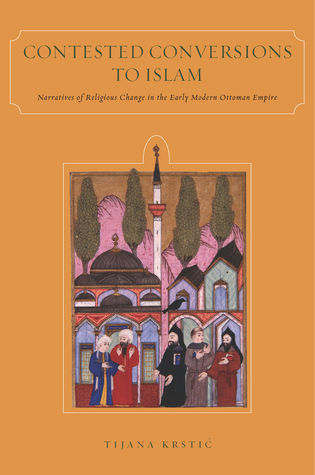
This book explores how Ottoman Muslims and Christians understood the phenomenon of conversion to Islam from the 15th to the 17th centuries. The Ottomans ruled over a large non-Muslim population and conversion to Islam was a contentious subject for all communities, especially Muslims themselves. Ottoman Muslim and Christian authors sought to define the boundaries and membership of their communities while promoting their own religious and political agendas. Tijana Krstić argues that the production and circulation of narratives about conversion to Islam was central to the articulation of Ottoman imperial identity and Sunni Muslim "orthodoxy" in the long 16th century. Placing the evolution of Ottoman attitudes toward conversion and converts in the broader context of Mediterranean-wide religious trends and the Ottoman rivalry with the Habsburgs and Safavids, Contested Conversions to Islam draws on a variety of sources, including first-person conversion narratives and Orthodox Christian neomartyologies, to reveal the interplay of individual, (inter)communal, local, and imperial initiatives that influenced the process of conversion.
This was a very interesting and thoughtful read about conversion, religion and identity in the early modern Ottoman Empire. The book does a great job showing how complicated religious change actually was and how people constantly negotiated between different worlds and beliefs.
One part I found especially fascinating was the discussion about Jesus in the Bible versus Isa in the Quran. We often assume they are exactly the same figure because of the name connection, but the book points out that it’s really the representation and identity behind the figure that matters. Even if they are understood as the same person historically, their roles and meanings in Christianity and Islam are fundamentally different.
I also really liked how the book shows that Islam in the Ottoman Empire had its own distinct character compared to Islamic practices in other regions. The differences in daily life, religious practice and social culture were fascinating, especially because the Ottoman version of Islam is often treated as if it were identical to every other Islamic society when in reality it developed in its own unique way.
A mildly incoherent look at conversion in the Ottoman Empire in the 15th-17th centuries based primarily on the study of narratives and texts produced by converts. As with any textual-based study which is justified through smugly self-righteous abstraction, Krstic relies for most of her evidence on the texts themselves. Now, while these might some interesting insights into certain aspects of the time (Christian converts' discussion of the Reformation, for example) they are not particularly illuminating as regards to what conversion meant more widely. Assuming that there was such a thing as "Ottoman Islam", Krstic sets out to define what it actually was via these narratives and debates over conversion. Throw in some wars with the Hapsburgs and Safavids and apparently you have a convenient answer. But, no, wait! Tie it all up with a wishy-washy conclusion "calling for further research" and you've sealed your own fate.