

What do you think?
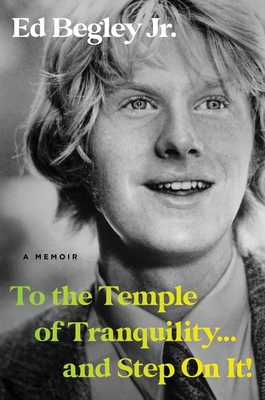
To the Temple of Tranquility...And Step On It!: A Memoir
Beloved actor and environmental activist Ed Begley Jr. shares hilarious and poignant stories of his improbable life, focusing on his relationship with his legendary father, adventures with Hollywood icons, the origins of his environmental activism, addiction and recovery, and his lifelong search for wisdom and common ground. Ed Begley Jr. is truly one of a kind, a performer who is known equally for his prolific film and television career and his environmental activism. From an appearance on My Three Sons to a notable role in Mary Hartman, Mary Hartman to starring in St. Elsewhere —as well as films with Jack Nicholson, Meryl Streep, and mockumentarian Christopher Guest—Begley has worked with just about everyone in Hollywood. His "green" bona fides date back to 1970, and have been the topic of two books, a reality show, countless media appearances, and even repeated spoofs on The Simpsons (in one episode, Begley's solar‑powered car stalls out on train tracks, but is saved when the train is revealed to be an "Ed Begley Solar‑Powered Train”).
In To the Temple of Tranquility...And Step On It! , Begley shares a fountain of hilarious and poignant stories throughout his life. The memoir is candid and endearing; in one chapter, he is summoned to Marlon Brando's house to discuss the practical uses of electric eels. In another, he tells the story of taking Annette Bening to the Oscars in “an oddball kit-car that had gull wing doors, and was nearly impossible to get in or out of, unless you were a yoga master, which fortunately she was.” Not to mention insightful and surprising tales about The Beatles, Monty Python, Richard Pryor, Cesar Chavez, Jeff Goldblum, Tom Waits, Arnold Schwarzenegger, Carrie Fisher, and so many more luminaries.
Begley’s unmistakable voice is honest and revealing in a way that only a comic of his caliber can accomplish. Behind all the stories, Begley has wisdom to impart. This is a book about family, friends, addiction, failure, and redemption.
In To the Temple of Tranquility...And Step On It! , Begley shares a fountain of hilarious and poignant stories throughout his life. The memoir is candid and endearing; in one chapter, he is summoned to Marlon Brando's house to discuss the practical uses of electric eels. In another, he tells the story of taking Annette Bening to the Oscars in “an oddball kit-car that had gull wing doors, and was nearly impossible to get in or out of, unless you were a yoga master, which fortunately she was.” Not to mention insightful and surprising tales about The Beatles, Monty Python, Richard Pryor, Cesar Chavez, Jeff Goldblum, Tom Waits, Arnold Schwarzenegger, Carrie Fisher, and so many more luminaries.
Begley’s unmistakable voice is honest and revealing in a way that only a comic of his caliber can accomplish. Behind all the stories, Begley has wisdom to impart. This is a book about family, friends, addiction, failure, and redemption.
256 pages, Hardcover
Published October 3, 2023
About the author
Ed Begley Jr.
41 books28 followersInspired by the works of his Academy Award-winning father, Ed Begley, Jr. became an actor. He first came to audiences’ attention for his portrayal of Dr. Victor Ehrlich on the long-running hit television series, “St. Elsewhere,” for which he received six Emmy nominations. Since then Begley has moved easily between feature, television and theatre projects.
Ed can currently be seen in the hit Seth Rogan/Judd Apatow film, “Pineapple Express”, as well as many Christopher Guest films, including “A Mighty Wind”, “Best In Show,” and For Your Consideration”.
Other feature film credits include “Batman Forever”, “The Accidental Tourist” and “The In-Laws.”
On television, Begley is appearing in the new CBS comedy on Wednesday night called “Gary Unmarried” He has also been seen recently in “Recount” with Kevin Spacey, Tom Wilkinson and Laura Dern, as well as recurring roles on “Six Feet Under”, “Arrested Development”, and “Boston Legal.”
Begley also starred in the West Coast premiere of David Mamet’s “Cryptogram,” at the Geffen Playhouse, in the role that he first performed in Boston and then in New York. He also starred in Mr. Mamet’s production of “Romance” last fall at the Mark Taper Forum.
Ed has directed several episodes of the hit show “NYPD Blue” as well as a play that he wrote called “Cesar and Ruben” that won a Nos Otros Award and four Valley Theater League Awards.
Ed Begley Jr. is currently one of the hottest speakers on eco-living in America. His theme, Live Simply So That Others Can Simply Live, has been received by standing ovations at more than 200 events in just the last four years. His message on sustainable living is empowering and humorous.
~From http://www.edbegley.com/biography/ & http://www.motherearthnews.com/fair/w...
Ed can currently be seen in the hit Seth Rogan/Judd Apatow film, “Pineapple Express”, as well as many Christopher Guest films, including “A Mighty Wind”, “Best In Show,” and For Your Consideration”.
Other feature film credits include “Batman Forever”, “The Accidental Tourist” and “The In-Laws.”
On television, Begley is appearing in the new CBS comedy on Wednesday night called “Gary Unmarried” He has also been seen recently in “Recount” with Kevin Spacey, Tom Wilkinson and Laura Dern, as well as recurring roles on “Six Feet Under”, “Arrested Development”, and “Boston Legal.”
Begley also starred in the West Coast premiere of David Mamet’s “Cryptogram,” at the Geffen Playhouse, in the role that he first performed in Boston and then in New York. He also starred in Mr. Mamet’s production of “Romance” last fall at the Mark Taper Forum.
Ed has directed several episodes of the hit show “NYPD Blue” as well as a play that he wrote called “Cesar and Ruben” that won a Nos Otros Award and four Valley Theater League Awards.
Ed Begley Jr. is currently one of the hottest speakers on eco-living in America. His theme, Live Simply So That Others Can Simply Live, has been received by standing ovations at more than 200 events in just the last four years. His message on sustainable living is empowering and humorous.
~From http://www.edbegley.com/biography/ & http://www.motherearthnews.com/fair/w...
Ratings & Reviews
Friends & Following
Create a free account to discover what your friends think of this book!
Community Reviews
Displaying 1 - 30 of 79 reviews

April 24, 2023
This memoir was pretty boring. It read exactly like listening to your dithering grandfather haphazardly telling you about his life. Begley isn't a gifted storyteller, he told most of the interesting things in his life in a very un-interesting manner. Found myself skimming the second half.

Read
February 8, 2024a sweet and sincere collection of memories from my dear friend Ed Begley Jr., possibly the only man who can make stories about getting plastered with Harry Dean Stanton and losing his virginity to two women at the same time seem as wholesome as Mr. Rogers
Read
May 21, 2024Based on this book, if you've ever lived in Hollywood, Ed Begley Jr. has a story about how you introduced him to his wife or took a (drunk) drive together.

November 29, 2023
Ed Begley Jr's memoir is humorous and inspiring. The audiobook is narrating by Ed himself. I really enjoy the stories about the friends he made during his acting career, the ups and downs in his life, environmental activism and providing life lessons along the way. This is one of the best memoirs that I have listened or read this year, thank you Ed Begley Jr for entertaining the world and sharing your story.

Did Not Finish
July 5, 2025DNF just shy of 50%.
No offense to Mr. Begley who is appropriately self-deprecating even in the midst of all his name dropping and Hollywood insider anecdotes but I have just listened to a few too many of these “follies of youth, wisdom of age” entertainment industry memoirs of late.
No offense to Mr. Begley who is appropriately self-deprecating even in the midst of all his name dropping and Hollywood insider anecdotes but I have just listened to a few too many of these “follies of youth, wisdom of age” entertainment industry memoirs of late.

July 5, 2023
I give this 2.5 stars rounded up to 3 stars since Ed seems like a pretty nice guy. This book was mainly him rambling on about who he knows and how he is friends with everybody including his ex wife. I thought the book didn't really have a point or any substance to it. I still don't know why or how he became an actor (maybe because his father was?), how he became sober, why he got divorced (did he cheat?, did his wife cheat?), or how he became such an activist. It was a lot of fluff and no substance. I did like hearing about all his friends and other celebrities and understand why he is in some many movies and tv shows.
Thank you to Netgalley and the publisher for the ARC of this book.
Thank you to Netgalley and the publisher for the ARC of this book.
This entire review has been hidden because of spoilers.
May 7, 2025
I am giving this 5 stars because it is a compilation of very interesting experiences from someone who has very nice things to say about everyone… a rarity indeed. I was lucky enough to hear Mr.Begley talk about this book, meet him, and get my photo taken with him at the Tucson Festival of books. Such a great experience. He’s a charming person and I can see why he’s had so many great times with so many famous people.

April 27, 2023
I received a copy of this book from Netgalley. Ed Begley Jr. writes a book that is part memoir and part sharing his beliefs in protecting the Earth and keeping it green. He is the son of Ed Begley and growing up in California maybe not a surprise he became an actor himself. He writes honestly about his being an alcoholic and keeping himself sober. He was very generous with his compliments on his fellow actors. He is "dear friends' with many actors. I liked getting to read about some of the movies and tv shows he has acted in. He shares about his beliefs in trying to keep a green Earth. He does not eat meat. tries to limit driving in cars and using less fuel. Tries his best not to add to pollution. I like that this is NOT a tell all book where he trashes other people. He kept his memoir "nice" so it was nice to learn about an actor I have seen over the years. Nice memoir I am glad I got the chance to read.

January 22, 2026
Really Good Memoir
I love Ed Begley Jr. whom I’ve watched since Mary Hartman, Mary Hartman and loved in St. Elsewhere. He writes a memoir that seems to include himself as a Hollywood watcher rather than star of his own story. He drops famous names with ease and it’s charming and fun to read.
I love Ed Begley Jr. whom I’ve watched since Mary Hartman, Mary Hartman and loved in St. Elsewhere. He writes a memoir that seems to include himself as a Hollywood watcher rather than star of his own story. He drops famous names with ease and it’s charming and fun to read.
February 14, 2024
Like his acting career, this memoir is not going to wow you, but it will entertain you!
EBJ is everyone’s friendly neighbor of film & tv for over 50 years & getting a glimpse inside his leading man role (his life!) was as pleasant as any of his many acting roles over the years. He is passionate about the environment & seems honest & sincere about everything else. Looking forward to seeing him on screen next time & knowing so much more about him as a person.
EBJ is everyone’s friendly neighbor of film & tv for over 50 years & getting a glimpse inside his leading man role (his life!) was as pleasant as any of his many acting roles over the years. He is passionate about the environment & seems honest & sincere about everything else. Looking forward to seeing him on screen next time & knowing so much more about him as a person.

March 10, 2024
I learned a lot more about Mr Begley Jr than I had ever thought I would want to know. I only found out about this book via Marc Maron’s WTF Podcast interview, that I almost skipped listening to, so.. glad that I didn’t, and also that I picked up this memoir and gave it a read. I had no idea about Ed’s struggles with well.. everything, and its made me appreciate his acting just that little bit more.

August 9, 2024
Ed Begley, Jr. has a kind heart. This is clear throughout this book. If you don't recognize that, the book may sound like a barrage of name-dropping. But he has the nicest things to say about the hundreds of people he has worked with throughout his long career (he will be 75 in September). And he has 587 titles to his credit on IMDB: 345 as an actor, and most of the rest as himself on various shows.
When I read (make that "listened to"; I love audio books, especially those read by the author) James Taylor's autobiography ("Break Shot: My First 21 Years"), it was at the time the most forthcoming admission of drug and alcohol addiction I had encountered. This one takes the lead. One must wonder, as we often do about addicts, how these people are still alive today. But we cheer for their having attained sobriety, and we thank Providence or whomever you thank in these instances, that they did.
Most people probably first knew Ed Begley, Jr. (his father was an actor as well; he played one of the jurors in "12 Angry Men") as Dr. Victor Ehrlich in "St. Elsewhere". Jan and I are currently rewatching "Six Feet Under", in which he plays Ruth Fisher's romantic interest as a hairdresser. I had forgotten that he appeared in "Mary Hartman, Mary Hartman" in the 1970s. I'm going to have to find that one and at least watch one episode.
Back to this book, though. It does not move in chronological order, which may not sit well with the somewhat OCD in us, but that's a small matter. You get a sense of the real person through the stories he tells, and how he appreciates and learns from the many people he has encountered. He is quite an amazing person, and the only spoiler I'll reveal is in the comment that he has been high-functioning both when he was drunk and high every day, and since he was diagnosed with Parkinson's Disease in 2016. You gotta love the guy. It's a good read (or listen).
When I read (make that "listened to"; I love audio books, especially those read by the author) James Taylor's autobiography ("Break Shot: My First 21 Years"), it was at the time the most forthcoming admission of drug and alcohol addiction I had encountered. This one takes the lead. One must wonder, as we often do about addicts, how these people are still alive today. But we cheer for their having attained sobriety, and we thank Providence or whomever you thank in these instances, that they did.
Most people probably first knew Ed Begley, Jr. (his father was an actor as well; he played one of the jurors in "12 Angry Men") as Dr. Victor Ehrlich in "St. Elsewhere". Jan and I are currently rewatching "Six Feet Under", in which he plays Ruth Fisher's romantic interest as a hairdresser. I had forgotten that he appeared in "Mary Hartman, Mary Hartman" in the 1970s. I'm going to have to find that one and at least watch one episode.
Back to this book, though. It does not move in chronological order, which may not sit well with the somewhat OCD in us, but that's a small matter. You get a sense of the real person through the stories he tells, and how he appreciates and learns from the many people he has encountered. He is quite an amazing person, and the only spoiler I'll reveal is in the comment that he has been high-functioning both when he was drunk and high every day, and since he was diagnosed with Parkinson's Disease in 2016. You gotta love the guy. It's a good read (or listen).

April 18, 2023
This book was provided to me from Netgalley, so I can read and review it before it’s published.
Hey, I know who Ed Begley Jr. is, but I have to be honest and tell you, I can only remember his appearances in several Christopher Guest movies. I know.
So, by the title of this, I thought it was going be about a spiritual journey, but boy, I sure was wrong and am very glad I chose this book to read. He’s the one who drives an electric car, correct?
I really enjoyed his stories of his life growing up, all the people who helped him along the way, and his family. I had no clue his dad was an actor; pretty cool to get some god genes passed down.
He worked as a comedian and opened up for some huge stars before his acting career took off. I didn’t know that.
I had no clue how close of friends he was with Harry Nilsson, Bruno Kirby, Michael Richards, Jack Nicholson, Marlon Brando, Carrie Fisher, and Cindy Williams – just to name a few that were mentioned in the book. He had a brief run in with Charles Manson and met John and Yoko Lennon.
He also talked about his relationship with drugs and alcohol, and how it affected him – both good and bad.
The last few pages of the book, he talks about his Parkinson’s diagnosis from 2016 of which he is doing well.
As far as the overall read, it was easy for me to understand and flowed very well.
Hey, I know who Ed Begley Jr. is, but I have to be honest and tell you, I can only remember his appearances in several Christopher Guest movies. I know.
So, by the title of this, I thought it was going be about a spiritual journey, but boy, I sure was wrong and am very glad I chose this book to read. He’s the one who drives an electric car, correct?
I really enjoyed his stories of his life growing up, all the people who helped him along the way, and his family. I had no clue his dad was an actor; pretty cool to get some god genes passed down.
He worked as a comedian and opened up for some huge stars before his acting career took off. I didn’t know that.
I had no clue how close of friends he was with Harry Nilsson, Bruno Kirby, Michael Richards, Jack Nicholson, Marlon Brando, Carrie Fisher, and Cindy Williams – just to name a few that were mentioned in the book. He had a brief run in with Charles Manson and met John and Yoko Lennon.
He also talked about his relationship with drugs and alcohol, and how it affected him – both good and bad.
The last few pages of the book, he talks about his Parkinson’s diagnosis from 2016 of which he is doing well.
As far as the overall read, it was easy for me to understand and flowed very well.

May 7, 2023
⭐️⭐️⭐️⭐️⭐️
Im so glad I read this book! Not only did I get a deeper understanding for a performer I've always liked but to see the innermost moments of his past and hear some vulnerable thoughts from him made me love this book as well as him all the more. At first i was hesitant because it was 40+ years in only so many pages but the way he connected his friends, life events and his work really was done well. Also this was my first nonfiction book in a over a decade to read and i was thoroughly impressed!
Im so glad I read this book! Not only did I get a deeper understanding for a performer I've always liked but to see the innermost moments of his past and hear some vulnerable thoughts from him made me love this book as well as him all the more. At first i was hesitant because it was 40+ years in only so many pages but the way he connected his friends, life events and his work really was done well. Also this was my first nonfiction book in a over a decade to read and i was thoroughly impressed!
April 10, 2023
Oh boy! Memoirs are my favorite genre and celebrity memoirs in particular. Ed Begley Jr. is an actor I’ve seen on screen for years, so reading about his life kept me riveted. It does seem as though he knows everybody in the entertainment business with a whole slew of “dear friends”. Good for him, I say. Here’s hoping his memoir sells a gazillion copies.

November 11, 2023
As a comedic actor, Ed Begley Jr. is way up there, a personal favorite from his career-launching role as Dr. Victor Ehrlich on "St. Elsewhere", to his hilarious Yiddishism-spewing, control room interfering public broadcasting executive Lars Olfen in Christopher Guest's brilliant mockumentary send up of a folk music reunion fundraiser "A Mighty Wind."
Dr. Ehrlich, of course, is fondly remembered for his many scenes with his egomaniacal heart surgeon mentor Dr. Mark Craig (William Daniels), and for his moment as a TV doc where Victor had cause to first to utter the phrase "penile health" in prime time.
Not much of which is in this book. I would have liked to hear a great deal more about Victor Ehrlich, Lars Olfen, and bringing great comedic characters to life. If this book is ever made into a movie, you defintely want to include those clips.
"St. Elsewhere" had a great multigenerational cast. Movie superstar Denzel Washington, who Begley properly acknowledges as a superlative acting talent, made his big break there, too. How did Denzel, Begley, and future TV leading man Mark Harmon (NCIS) develop their craft on the innovative, breakthrough MTM drama? Nothing on that. What was it like working with Daniels and Norman Lloyd? Zippo. We do get one glimpse of Begley finding his character when the costumer comes up with the clever and appropriate idea of dressing Ehrlich, a Californian, in Hawaiian shirts. It connected with the actor, a fine detail. Producer-director Mark Tinker, a fellow second generation TV difference-maker, liked Begley's take on the character, and the actor was on his way to six Emmy nominations in six years on the air.
Begley has decades of credits, but I really would have liked to hear more about "A Mighty Wind", one of my top ten films of all time. Why not include something on director Chris Guest's unique genius for semi-scripted improvisation? Begley makes the most of his scenes in the film, the Yiddish bits were even quoted in the Washington Post. Perhaps this book left the wrong pages on the cutting room floor?
Did someone at the publishing company say "listen Begley, stop trying to save the world. Mr. and Mrs. John Q. Bookbuyer don't want to hear about your process, get me?" Maybe they thought they would sell more books if he mentioned, "you know, everyone famous you ever met." So instead of discussing script nuances and the writers, we get an encounter with Charlie Manson. Did Begley meet future Simpsons writer-producer David Mirkin in early days on the stand-up comedy circuit? Not in the book, but we do get material on that other Simpson -- the disturbing, prescient concern Begley felt about O.J.'s relationship with his then-living wife.
A good memoir about someone in creative work needs to talk a little more about the work. Can you guess where Begley's deepest dive into creativity comes? Yup, his environmental concerns, particularly a moment with Marlon Brando discussing very complex and for once apparently feasible deep sea alternative energy scheme. Begley himself voices the audiobook, and you can hear the earnest passion he feels for his favorite causes. His passion for healthy food is smart and seems to have served him well and extended his life. The composting / energy efficiency / sustainability ratings talk aren't overdone. I could have done without the "social justice" verbiage, the apologetic white male tone, and the obligatory gratuitous swipe at Trump, but hey, it's his book.
Name dropping is mentioned in some of the reviews. Sometimes it does go on a bit, sort of like when the end credits of a movie go on for longer than the last act did, but what if the guy really does have a lot of friends and he thinks you'd be interested? Plus, Hollywood runs on relationships and Begley had the good sense, charm, and in-the-now Alan Watt's-it-all-about centeredness to attract loyal friends. Despite his father's reputation, Begley didn't have it easy breaking in. He trained for below-the-line production work and took other day jobs while the great movies of the 1970's were attracting thousands of fellow boomers to Hollywood. And some of the competition cheated -- they did it sober!
Yes, you get the whole boozer confessional subplot here, the cute jail story, the sad relationship-ruining mistakes, then a neat twist from a sobriety sponsor. The author is generous, except to himself. That hard, judgemental attitude you sometimes get from unreconstructed hippie types is far more tolerable when the person he comes down hardest on is himself. The personal ups and downs are a little hard to track sometimes because the book frequently veers out of sequence. All in all, I'd say stay with the read. The bottom line is you come away liking the man behind the wonderful characters because he's trying his best to be a loving person, and he's really good at making us laugh.
Dr. Ehrlich, of course, is fondly remembered for his many scenes with his egomaniacal heart surgeon mentor Dr. Mark Craig (William Daniels), and for his moment as a TV doc where Victor had cause to first to utter the phrase "penile health" in prime time.
Not much of which is in this book. I would have liked to hear a great deal more about Victor Ehrlich, Lars Olfen, and bringing great comedic characters to life. If this book is ever made into a movie, you defintely want to include those clips.
"St. Elsewhere" had a great multigenerational cast. Movie superstar Denzel Washington, who Begley properly acknowledges as a superlative acting talent, made his big break there, too. How did Denzel, Begley, and future TV leading man Mark Harmon (NCIS) develop their craft on the innovative, breakthrough MTM drama? Nothing on that. What was it like working with Daniels and Norman Lloyd? Zippo. We do get one glimpse of Begley finding his character when the costumer comes up with the clever and appropriate idea of dressing Ehrlich, a Californian, in Hawaiian shirts. It connected with the actor, a fine detail. Producer-director Mark Tinker, a fellow second generation TV difference-maker, liked Begley's take on the character, and the actor was on his way to six Emmy nominations in six years on the air.
Begley has decades of credits, but I really would have liked to hear more about "A Mighty Wind", one of my top ten films of all time. Why not include something on director Chris Guest's unique genius for semi-scripted improvisation? Begley makes the most of his scenes in the film, the Yiddish bits were even quoted in the Washington Post. Perhaps this book left the wrong pages on the cutting room floor?
Did someone at the publishing company say "listen Begley, stop trying to save the world. Mr. and Mrs. John Q. Bookbuyer don't want to hear about your process, get me?" Maybe they thought they would sell more books if he mentioned, "you know, everyone famous you ever met." So instead of discussing script nuances and the writers, we get an encounter with Charlie Manson. Did Begley meet future Simpsons writer-producer David Mirkin in early days on the stand-up comedy circuit? Not in the book, but we do get material on that other Simpson -- the disturbing, prescient concern Begley felt about O.J.'s relationship with his then-living wife.
A good memoir about someone in creative work needs to talk a little more about the work. Can you guess where Begley's deepest dive into creativity comes? Yup, his environmental concerns, particularly a moment with Marlon Brando discussing very complex and for once apparently feasible deep sea alternative energy scheme. Begley himself voices the audiobook, and you can hear the earnest passion he feels for his favorite causes. His passion for healthy food is smart and seems to have served him well and extended his life. The composting / energy efficiency / sustainability ratings talk aren't overdone. I could have done without the "social justice" verbiage, the apologetic white male tone, and the obligatory gratuitous swipe at Trump, but hey, it's his book.
Name dropping is mentioned in some of the reviews. Sometimes it does go on a bit, sort of like when the end credits of a movie go on for longer than the last act did, but what if the guy really does have a lot of friends and he thinks you'd be interested? Plus, Hollywood runs on relationships and Begley had the good sense, charm, and in-the-now Alan Watt's-it-all-about centeredness to attract loyal friends. Despite his father's reputation, Begley didn't have it easy breaking in. He trained for below-the-line production work and took other day jobs while the great movies of the 1970's were attracting thousands of fellow boomers to Hollywood. And some of the competition cheated -- they did it sober!
Yes, you get the whole boozer confessional subplot here, the cute jail story, the sad relationship-ruining mistakes, then a neat twist from a sobriety sponsor. The author is generous, except to himself. That hard, judgemental attitude you sometimes get from unreconstructed hippie types is far more tolerable when the person he comes down hardest on is himself. The personal ups and downs are a little hard to track sometimes because the book frequently veers out of sequence. All in all, I'd say stay with the read. The bottom line is you come away liking the man behind the wonderful characters because he's trying his best to be a loving person, and he's really good at making us laugh.

April 1, 2023
Synopsis: (from Netgalley, the provider of the book for me to review)
******************************************************************************
Beloved actor and environmental activist Ed Begley Jr.—known for countless roles over the last five decades, most recently in Better Call Saul and Young Sheldon—shares hilarious and poignant stories of his improbable life, focusing on his relationship with his legendary father Ed Begley Sr., adventures with Hollywood icons, the origins of his environmental activism, addiction and recovery, and his lifelong search for wisdom and common ground.
Ed Begley Jr. is truly unique, a performer known equally for his prolific film and television career and his environmental activism. From an appearance on My Three Sons to a notable role in Mary Hartman, Mary Hartman to starring in St. Elsewhere—as well as films with Jack Nicholson, Meryl Streep, and mockumentarian Christopher Guest—Begley has worked with just about everyone in Hollywood. His "green" bona fides date back to 1970 and have been the topic of two books, a reality show, countless media appearances, and even repeated spoofs on The Simpsons (in one episode, Begley's solar‑powered car stalls out on train tracks, but is saved when the train is revealed to be an "Ed Begley Solar‑Powered Train”).
In To the Temple of Tranquility...And Step On It!, Begley shares a fountain of hilarious and poignant stories throughout his life. The memoir is candid and endearing; in one chapter, he is summoned to Marlon Brando's house to discuss the practical uses of electric eels. In another, he tells the story of taking Annette Bening to the Oscars in “an oddball kit car that had gull-wing doors, and was nearly impossible to get in or out of, unless you were a yoga master, which fortunately she was.” Not to mention insightful and surprising tales about The Beatles, Monty Python, Richard Pryor, Cesar Chavez, Jeff Goldblum, Tom Waits, Arnold Schwarzenegger, Carrie Fisher, and so many more luminaries.
Begley’s unmistakable voice is honest and revealing in a way only a comic of his calibre can accomplish. Behind all the stories, Begley has the wisdom to impart. This is a book about family, friends, addiction, failure, and redemption.
I always remember the joke "ED BEGLEY AND HIS STUPID ELECTRIC CAR".. on Firends, In 1995!!! Ed surely saw the future and has lived it for DECADES. He is also witty, smart and one of those actors who I have loved since the days of "St. Elsewhere"...did you know that he had dinner with Norman Lloyd every week until Norman died at age 106?? (He has great range as I hated him on "CSI: Miami"!
A fun autobiography to read that is witty and full of hope for our future and what we can do to save the environment: I will recommend this book far and wide to my biography lovers, book clubs and tree huggers as it is entertaining (to say the least) and rather profound.
#shortbutsweetreviews
******************************************************************************
Beloved actor and environmental activist Ed Begley Jr.—known for countless roles over the last five decades, most recently in Better Call Saul and Young Sheldon—shares hilarious and poignant stories of his improbable life, focusing on his relationship with his legendary father Ed Begley Sr., adventures with Hollywood icons, the origins of his environmental activism, addiction and recovery, and his lifelong search for wisdom and common ground.
Ed Begley Jr. is truly unique, a performer known equally for his prolific film and television career and his environmental activism. From an appearance on My Three Sons to a notable role in Mary Hartman, Mary Hartman to starring in St. Elsewhere—as well as films with Jack Nicholson, Meryl Streep, and mockumentarian Christopher Guest—Begley has worked with just about everyone in Hollywood. His "green" bona fides date back to 1970 and have been the topic of two books, a reality show, countless media appearances, and even repeated spoofs on The Simpsons (in one episode, Begley's solar‑powered car stalls out on train tracks, but is saved when the train is revealed to be an "Ed Begley Solar‑Powered Train”).
In To the Temple of Tranquility...And Step On It!, Begley shares a fountain of hilarious and poignant stories throughout his life. The memoir is candid and endearing; in one chapter, he is summoned to Marlon Brando's house to discuss the practical uses of electric eels. In another, he tells the story of taking Annette Bening to the Oscars in “an oddball kit car that had gull-wing doors, and was nearly impossible to get in or out of, unless you were a yoga master, which fortunately she was.” Not to mention insightful and surprising tales about The Beatles, Monty Python, Richard Pryor, Cesar Chavez, Jeff Goldblum, Tom Waits, Arnold Schwarzenegger, Carrie Fisher, and so many more luminaries.
Begley’s unmistakable voice is honest and revealing in a way only a comic of his calibre can accomplish. Behind all the stories, Begley has the wisdom to impart. This is a book about family, friends, addiction, failure, and redemption.
I always remember the joke "ED BEGLEY AND HIS STUPID ELECTRIC CAR".. on Firends, In 1995!!! Ed surely saw the future and has lived it for DECADES. He is also witty, smart and one of those actors who I have loved since the days of "St. Elsewhere"...did you know that he had dinner with Norman Lloyd every week until Norman died at age 106?? (He has great range as I hated him on "CSI: Miami"!
A fun autobiography to read that is witty and full of hope for our future and what we can do to save the environment: I will recommend this book far and wide to my biography lovers, book clubs and tree huggers as it is entertaining (to say the least) and rather profound.
#shortbutsweetreviews
December 18, 2025
I found the book okay. There’s some interesting stories. They definitely have had a rich life with lots of loving people and lots of great friends and connections. They have had a full career and gotten many great opportunities. I can connect to them being an environmentalist and am inspired by their biking everywhere and I am finally about to start composting. If I were to build a home or whenever I remodel I try to do it as sustainable as possible. I am a vegetarian mostly vegan and trying to go full vegan. So I can definitely relate to that and acting but certainly not any success on my end like clearly there’s a lot on their end. I appreciate them going deep and explaining their failures and mistakes even if they made it out ok they still went through things. I did though just end up feeling it was a lot of name dropping and just like “good for them but why should I care?” Then of course jealousy that they can even make large mistakes and hardly try hard and so much turns out great for them. I expected some more just advice and lessons and the ones given were ones that are for people like them and don’t help just anyone trying to make it in acting or life. So just not very helpful or applicable to my life. I do appreciate that they realize that there’s a lot of inequality and they were just very lucky since birth.

September 20, 2025
I love a good celebrity memoir, and I’ve loved everything I’ve seen Ed Begley Jr. act in - my personal favorites being Pineapple Express and Future Man. Not sure what that says about ME, but that’s certainly not what this memoir, or this review, is about.
Ed is funny, compassionate, ecoconscious, and savvy. I genuinely had no idea his father was also a well-respected actor or that Jr. had been acting for as long as he has! I had no idea he ran in circles with Jim Belushi or Carrie Fisher or Jack Nicholson or Marlon Brando or Geena Davis.
While this recounting of his life is far from linear, it felt very much like sitting down and listening to my dad prattle on about his experiences coming up in the Valley in the 70s. It was refreshing to hear someone of privilege (of the white, cis-het, male, born into a family of relatively high status variety) acknowledge that privilege and how it has brought them great fortune, even if it took them some time to truly understand what that means. He really does cover the good, the bad, and the ugly. From his addiction and infidelity to his lovely children and grandchildren, even his Parkinson’s diagnosis - nothing is really off limits in this conversational recollection.
Ed is funny, compassionate, ecoconscious, and savvy. I genuinely had no idea his father was also a well-respected actor or that Jr. had been acting for as long as he has! I had no idea he ran in circles with Jim Belushi or Carrie Fisher or Jack Nicholson or Marlon Brando or Geena Davis.
While this recounting of his life is far from linear, it felt very much like sitting down and listening to my dad prattle on about his experiences coming up in the Valley in the 70s. It was refreshing to hear someone of privilege (of the white, cis-het, male, born into a family of relatively high status variety) acknowledge that privilege and how it has brought them great fortune, even if it took them some time to truly understand what that means. He really does cover the good, the bad, and the ugly. From his addiction and infidelity to his lovely children and grandchildren, even his Parkinson’s diagnosis - nothing is really off limits in this conversational recollection.
This entire review has been hidden because of spoilers.

May 26, 2024
As a kid, I first saw Ed Begley Jr. in either Roseanne or She-Devil (also starring Roseanne). I'm sure I learned his name from my mom, and from then on out, I frequently saw him in various TV shows and movies, where I'd say, "Hey, it's Ed Begley Jr.!" But even though I noticed him frequently, I never sought him out on purpose, nor did I read up on him. When I saw the cover of this memoir, I said, "Hey, it's Ed Begley Jr.!" and decided to read it. And I'm glad I did. What a rich, fascinating life. At first I couldn't believe all of the people he was close friends with but when I thought about how often he popped up on both the small and big screen, I realized it made perfect sense he would know so many stars. He had many stories to share with incredible wit that made me laugh out loud on several occasions. My only issue with this memoir, and it's not really a big deal, is it wasn't written with a linear structure. With a career spanning decades, this choice made it a little hard to follow.
Thank you to NetGalley and Hachette Books for providing me with an ARC in exchange for an honest review.
Thank you to NetGalley and Hachette Books for providing me with an ARC in exchange for an honest review.

December 18, 2023
This is a wonderful book to read & an even better one to listen to.
Ed Begley Jr. has lived a life of joy, humor, regret, love, disaster & friendship. He has come across many big familiar names along his journey & has unique experiences with each of them.
From crushes on & partying with Hollywood a-listers to saving the world one electric car at a time this book has it all & then some more.
The audiobook is read by Ed himself & brings a specific & much needed flair to the listener as Ed has a unique and animated voice bringing life to his story.
The tangents and timeline jumps some readers may feel odd about are much clearer while listening to this very gifted storyteller.
This isn’t a memoir written by a ghostwriter & Ed’s voice is the one that pushes it to its full potential…to the Temple of Tranquility if you will.
Ed Begley Jr. has lived a life of joy, humor, regret, love, disaster & friendship. He has come across many big familiar names along his journey & has unique experiences with each of them.
From crushes on & partying with Hollywood a-listers to saving the world one electric car at a time this book has it all & then some more.
The audiobook is read by Ed himself & brings a specific & much needed flair to the listener as Ed has a unique and animated voice bringing life to his story.
The tangents and timeline jumps some readers may feel odd about are much clearer while listening to this very gifted storyteller.
This isn’t a memoir written by a ghostwriter & Ed’s voice is the one that pushes it to its full potential…to the Temple of Tranquility if you will.
November 24, 2023
When will I ever learn not to read autobiographies?
Never read a self-serving book by and about someone you admire. You will always be disappointed, not only in how badly written these memoirs are, but by how shallow and egotistical almost every one of them is.
Ed Begley, Jr. is no exception.
I don't care who he knows.
I knew he was something of an activist for the environment and for living and leaving as small a carbon footprint as possible in life, but he barely touched on these areas.
I gave the book more than a fair chance at 97 pages plus the last three chapters.
It sucks, and I'm sad to know that, environmentalist or not, Begley is the same self-centered B actor as too many of the rest.
Don't waste your time.
Never read a self-serving book by and about someone you admire. You will always be disappointed, not only in how badly written these memoirs are, but by how shallow and egotistical almost every one of them is.
Ed Begley, Jr. is no exception.
I don't care who he knows.
I knew he was something of an activist for the environment and for living and leaving as small a carbon footprint as possible in life, but he barely touched on these areas.
I gave the book more than a fair chance at 97 pages plus the last three chapters.
It sucks, and I'm sad to know that, environmentalist or not, Begley is the same self-centered B actor as too many of the rest.
Don't waste your time.
September 4, 2023
Ed Begley jr. has always been , in my mind, an actor that is under utilized. I know he is a vegan, an activist, a staunch Democrat and a little bit out of sync with the main stream. But he is also a pretty good actor.
This is his autobiography and it is really quite fascinating the number of people he has met, worked and partied with over the years. It is entertaining, insightful, an reflective of the time he grew up.
I did enjoy this book. I hope his remaining years are just as exciting and varied as his previous 74.
I do recommend. Thank you to NetGalley and the publisher for allowing me this ARC.
This is his autobiography and it is really quite fascinating the number of people he has met, worked and partied with over the years. It is entertaining, insightful, an reflective of the time he grew up.
I did enjoy this book. I hope his remaining years are just as exciting and varied as his previous 74.
I do recommend. Thank you to NetGalley and the publisher for allowing me this ARC.
October 2, 2023
If you are looking for an extremely in-depth look into Ed Begley Jr.'s life, this isn't the book for you. It is more surface level but does cover quite a bit. It is definitely interesting to read about all of his close friends and who they are. Filled with a lot of humor and does discuss his dealing with addiction, which led him to some interesting situations. He also is quite an activist and was driving an electric car before it was the "cool" thing to do. Recommend if you are interested in a peek into his life and the famous people he knows.
Thanks to the publisher and NetGalley for advanced copy, and I give my review freely
Thanks to the publisher and NetGalley for advanced copy, and I give my review freely

October 20, 2023
I am familiar with Ed Begley Jr.'s television and film work and have enjoyed it over the years. He is a great character actor. He also has had some really interesting adventures in Hollywood over the decades which made this an interesting and fun read. It is brief and does not have a lot of self-reflection (just a bit) and instead could be titled "the crazy adventures of Ed Begley Jr." It is not a typical autobiographical read - instead is a series of interesting stories strung together. He would be fun to have a dinner party. In terms of a read, it was okay.
Thank you to Netgalley and Hachette Books for an ARC and I left this review voluntarily.
Thank you to Netgalley and Hachette Books for an ARC and I left this review voluntarily.

January 29, 2024
3 1/2 stars. I enjoyed listening to this book, mostly because it was read by Begley himself. It was as if we were sitting around together, and he was telling me the stories. He rambles a bit and name drops A LOT, but he doesn't try to make himself look better than he is - he talks about his drug use, drinking, and infidelity. About halfway through, I started paying less attention, because I realized the rest of the book was going to be more of the same -mostly about the famous people he knows and how much he still appreciates them. One reviewer said it read like one long Acknowledgements section, and I agree.

July 21, 2024
I heard Ed Begley Jr. on a podcast and he was surprisingly fascinating, which made me put this book on my to-read list. He's clearly lived a fascinating life and known a lot of interesting people, and someone should writ a book about it, but this just wasn't it. Everyone is a dear friend, everyone is brilliant and kind and beautiful. There are no details. Carrie Fisher called you from rehab? What did she say? What did you? How did you help each other in recovery after that? That's just one example of the MANY sentences in this book that begged to be fleshed out. You were at 2/3 of Geena Davis's weddings? So what happened at them? We get none of that, and it's too bad.
August 11, 2025
Ed Begley Jr. delivers a heavy message of recovery with the lightness of a friend, inviting the reader to be a part of a journey from the insanity of addiction to the magic of a sober life. This book takes us on this trip with humor, entertainment, and vulnerability. My favorite line is, "I wanted serenity in a bottle. And the truth is, it worked. I was such a wreck in my teens that alcohol probably saved me before it nearly killed me." I appreciate authors who share their recovery out loud and I appreciate this book. Sharing stories is a lifeline for me as a person who once sought serenity in a bottle herself. It worked until it didn't. Thank you for sharing, Ed!
March 22, 2026
I only knew Ed from his various roles in movies/shows that I was a fan of. I decided to read his autobiography because he always seemed like a fun actor/good person. I am glad I read this book. It was funny, engaging, and was filled with entertaining stories from start to finish. Ed seems like Forrest Gump (a comparison he acknowledges in the book) due to all the things he’s done/people he’s met. Highly recommend this book.
The only thing I would say was a negative was the book jumps all over the place in terms of a timeline. One chapter will be about something taking place in the 70s, then he will jump to the 2000s, then back to the 80s, etc. It can be a bit confusing at times
The only thing I would say was a negative was the book jumps all over the place in terms of a timeline. One chapter will be about something taking place in the 70s, then he will jump to the 2000s, then back to the 80s, etc. It can be a bit confusing at times

June 10, 2023
I enjoyed this book. The storytelling is very good and written with a certain lightness. I also appreciate that although Begley is a staunch environmentalist, he did not use the book as a pulpit. There is also no mudslinging here; it appears that Begley truly appreciates the people around him. I also liked the inside view of show business. On the other hand, I didn’t really find the book funny and Begley referred to so many people as dear friends or good friends etc, the terms lost all meaning. Thank you to Netgalley and Hachette Books for the digital review copy.
Displaying 1 - 30 of 79 reviews