In this critically acclaimed book, first published in 1988 and now reprinted in paperback, scientist and author Paul Davies explains how recent scientific advances are transforming our understanding of the emergence of complexity and organization in the universe. Melding a variety of ideas and disciplines from biology, fundamental physics, computer science, mathematics, genetics, and neurology, Davies presents his provocative theory on the source of the universe's creative potency. He explores the new paradigm (replacing the centuries-old Newtonian view of the universe) that recognizes the collective and holistic properties of physical systems and the power of self-organization. He casts the laws in physics in the role of a "blueprint," embodying a grand cosmic scheme that progressively unfolds as the universe develops. Challenging the viewpoint that the physical universe is a meaningless collection of particles, he finds overwhelming evidence for an underlying purpose: "Science may explain all the processes whereby the universe evolves its own destiny, but that still leaves room for there to be a meaning behind existence."
Paul Charles William Davies AM is a British-born physicist, writer and broadcaster, currently a professor at Arizona State University as well as the Director of BEYOND: Center for Fundamental Concepts in Science. He has held previous academic appointments at the University of Cambridge, University of London, University of Newcastle upon Tyne, University of Adelaide and Macquarie University. His research interests are in the fields of cosmology, quantum field theory, and astrobiology. He has proposed that a one-way trip to Mars could be a viable option.
In 2005, he took up the chair of the SETI: Post-Detection Science and Technology Taskgroup of the International Academy of Astronautics.
WARNING: THIS BOOK CONTAINS DENIAL OF DARWINIAN EVOLUTION!!! If this is offensive to you, consider not reading this book. If this is not offensive to you, read a book by Richard Dawkins!
This book is pretty trashy. Davies actually writes, "space sucks so hard, anti-gravity wins out..."
He also speculates on the possibility of creating a baby universe in the lab. I start to worry this book contains a lot of "fringe science" (read: bullcrap).
The first chapter is full of god this and religion that. Get yer religion out of my science book arrrrg!
Instead of using the actual physics words like "entropy" Davies uses watered down phrases like "creative potency". This practice, and also that of avoiding scientific notation by repeating "billion" or "billionth of a" over and over, are lowest common denominator and awful. It makes me cry.
He supports his claim of a "Cosmic Blueprint" or pre-determinism by citing Christianity and even animism. Seriously. Animism. That's so 18th century!
There is a chapter on complexity in mathematics (chaos theory, fractals, cellular automata) which is decent.
The next chapter is on biology. This is where the book shows it's age! The argument in this chapter is that reductionism does not satisfactorily explain the development of an embryo. He actually suggests that the information stored in DNA is not sufficient to explain the morphogenesis! He even presents one of Rupert Sheldrake's crackpot ideas about DNA as a "receiver" (as opposed to storage) and of information. Ridiculous garbage.
The chapter progresses by introducing Darwinism and more radical skepticism. Davies puts forth the laughable (and frighteningly backwards) claim that "chance alone is hopelessly inadequate to account for the richness of the biosphere". Ewwwww... just typing that makes me feel stupider. This guy seriously needs to read some books by Richard Dawkins! My word.
"The religion of the future will be a cosmic religion. It should transcend personal God and avoid dogma and theology. Covering both the natural and the spiritual, it should be based on a religious sense arising from the experience of all things natural and spiritual as a meaningful unity." AE
Despite the critics, the fact is that this book is about TOE! This is Mr. Davis' successful trial to embrace all that mainstream science knows about the realm of our existence, and all possible and impossible theories that have derived from that existing knowledge of humanity, around 1988 - when his book was published. (Atheist, and theist too! This is real gold mine for you!)
The chapters lead us through human puzzle of universe, about early basics confronting Aristotelian teleological view with the atomic theory of that of Democritus in trying to answer the eternal unanswered questions: Is there predeterminism or all we perceive is just a play of crazy atoms jiggling around since the Big Bang? To turn it otherwise, all the story is about our worry of our own significance: Are we divine creatures with deep significance or we are just a kind of thermonuclear waste? What I loved is the author's powerful language precision and his strict semantic hygiene! I saw physics explained on some different way of that I use to! A very very important value I've gained from this book! Yes, I agree there is a kind of denial of Darwinian evolution, there are claims arriving from the deepest places of metaphysics, but if not take them too seriously, the beauty of this book is in author's skills to lead us sometimes through fiction in book that will still retains its scientific character at the end of reading. To be honest I like to fly with the imagination, and there is nothing wrong with it, as long as one is able to keep control of that flight and land on reality safely after every flight!
This is from those books that deserve to be read, and read again! Cheers!
Very interesting read that challenges neo-darwinism and argues that there are laws of increasing complexity in nature that are independent from yet complement Newtonian physics and natural selection in the evolution of matter and life. Some of it was over my head and some of it I need to reread. The last few chapters are very persuasive on the concept of downward causation--that macro-level natural laws can dictate the behavior of matter on the micro-level and may be just as fundamental to the universe as the standard laws of physics.
This a ...not-bad book. It's frustrating because there are some really interesting ideas in here, but the book is poorly structured and Davies' writing style is pretty soporific. Whereas someone like Oliver Sacks brings new and difficult ideas to life and make them a joy to discover, Davies seems to just go with his first draft and hope the content is interesting enough to get at least a three-star rating. In which, I suppose, he is right.
Heel interessant boek veel fascinerend voorbeelden van complexe organisatie binnen ons heelal. Heeft mij mijn reductionistische visie over bepaalde verschijnselen toch wat doen bijstellen
Davies looks at the whole of reality and puts a stamp on it. In getting to his cosmic “blueprint” argument, Davies first counters alternative approaches that get at the fundamental questions (when did the universe begin, how did it begin, did it begin, what is its future, etc), which includes, especially, scientific reductionism where all of reality can be traced to a few principles. He also dismisses supernatural explanations (God’s creation) and mysterious forces like Bergson’s elan vital.
For Davies, the universe evolves (increases its complexity), with each level having its own laws of self-organization. That evolution is driven by a fundamental freedom that manifests itself, at its core, at the quantum level. Hence, Davies’ subtitle, “New Discoveries in Nature’s Creative Ability to Order the Universe.” The heart of this creative freedom is cooperation that allows, at least for life, the whole to be more than its parts. When it comes to the transition between non-life and life, life’s laws of organization are “biotonic,” which means that biology cannot be reduced to physics. Biological order, he states, is when component parts cooperate to perform “a coherent, unifying function.” As such, life pushes the boundaries of complexity endlessly with the emergence of the human mind and all that flows from it.
Seen this way, Davies’ self-organization is a middle way that skirts the limits of reductionism without falling into the non-scientific trap of supernatural powers or mysticism. It is an emergence from a featureless big bang, governed by an organizing principle that “shapes matter and energy.” It is design without a designer. It is Hegel without God.
Davies ends up in the right space, but he doesn't need to go where he goes - his blueprint argument - to account for it. It is just too much hoopla. With non-life, you have the movement from hot to cold, allowing “featurelessness” to form complexity (the clumping of matter and energy). With life, you have the seeking of energy to defeat entropy’s cooling movement, allowing a new form of complexity to emerge: masses of matter and energy that, by degrees, govern itself by, I suppose, Davies’ “biotonic” laws.
What might these laws be (there’s no Google definition of biotonic)? Stepping back a bit, the transition from non-life to life begins via life’s replication-reproduction function. Life starts by a random coming together. Those life forms best able to get energy have survival advantages (for replication-reproduction). Life takes it from there to become an active, teleological, seeker of energy. Along with seeking, life developed its capacity to seek. Underneath this complexity that Davies sees are “biotonic” principles (laws) that “shape” energy and matter (life): Life is governed by the need to survive (at least until reproduction or replication occurs), which is its ultimate end, and seeking and defending become life’s means to ensure survival. Life is thus governed by this triad of principles: The end-seeking of survival and seeking and defending behaviors that serve that end.
Everything else that life does falls into and expresses these three principles, with the teleological end, the need to survive, being in Davies’ words, the “coherent, unifying function” that governs life forms. It is the invariant universal end common to all of life. The means (seeking, defending) to this end manifest itself in variable forms - both among species, among individuals within species, and via the progressive freedom to vary behavior that is especially seen in humans and their cultures. This is where Davies’ “creative ability to order the universe” applies as there are highly diverse ways to get and process energy, and for life to defend itself. While the capacity to seek and defend is invariant, its content (what it does, how it does it) is highly variable.
Now there’s one more comment to make to bring Davies’ argument back down to earth. Thus far, life has been described by the “selfish gene” concept - life doing what it takes to survive, which I suppose is the reductionism that Davies sees as unsatisfactory. Unfortunately, most of the discussion of “selfish gene” makes it stand in opposition to “cooperation" whereas, in reality, cooperation is also integral to self(ish) interest. In the Davies’ framework, being a member of a group is the means to individual survival. Tribalism is an en vogue concept for a reason: It's fundamental to the way we, as a life form, survive.
Still, there’s this tension between the selfish gene per se and the selfish gene that integrates cooperation (tribalism) with the self’s interest. And that tension is seen everywhere - individuals who take advantage of group life without giving in return, or those who assert themselves at the expense of the group. Human nature that is seen as one thing only muddles the picture. There are two prongs of human nature (self-only and other-regarding) and everything in between. Like seeking and defending, these two are the means to an end (survival), though they are expressed variably (two prongs and the continuum between them). Whether this is a biotomic law is debatable, but these twin prongs and the continuum between them are so prominent that it’s hard for me to not see them as the fundamental forms that, for ourselves as well as all of life, shape matter and energy.
For life, at least, Davies’ blueprint argument misleadingly dismisses scientific reductionism. Physics and chemistry work just fine in describing life’s creativity via the variable content that flows from seeking and defending behavior. But that variability serves an invariant end, survival, that is fixed by genetics (though, again, seeking and defending are also fixed by genes, whereas the content - what objects are sought or defended against, and the behavior toward them, is variable).
Interestingly, life’s essential characteristics (end seeking via seeking and defending) may rest upon non-life physics and chemistry as well. There are parallels. Cosmic movement is, per Newton, inertial. Unlike life, it is movement without seeking. But the flip side is that a cosmic body is also, per Einstein’s equivalence principle, resistance to being moved. Seen this way, matter and energy’s inertial state (a body at rest - balanced state vis-a-vis other bodies - wants to stay at rest, or a body in straight-line motion wants to stay in motion - hence, resistance to deviation) is the governing principle that is provided by physics. Unlike life, though, inertial movement in the cosmos is the end state (versus survival), and resistance to deviation from that movement is the means to maintaining its movement. There’s a difference between life and non-life in that way. Whether these reflect Davies’ self-organization (blueprint) argument, it's hard to say.
I am not sure I agree with a lot of this book, but there is a lot of really interesting discussions here. I think a bit of thought has moved on a bit since this was written, but there is still much of value in this book to read. Overall, I quite enjoyed it and the writing style is always clear.
On the one hand, there is the Second Law of thermodynamics. Conceived when the deterministic Newtonian cosmos entered the 18th century with its interest in steam engines, industrial revolutions, and other thermodynamic systems, the Second Law says simply that hot things cool down and this cooling process is the arrow of time which will lead to the heat death of the universe. In this final gasp, all the fuel has been used up. Game over. A lump of coal can be used to power a locomotive; once the lump of coal releases its energy as heat, it is a one way reaction; the heat cannot come back together to form a useful lump of coal. The implications of the Second Law?–order decreases, disorder increases, everything is slowly dying, and so on. On the other hand, however, more complex forms constantly arise: planetary systems, galaxies, and life. What is disturbing is that these things arise in seeming violation of the Second Law, which only presages doom and gloom, not the spontaneous triumph of nature to produce order from chaos, animate life from inorganic compounds, consciousness from inert clay, and so on.
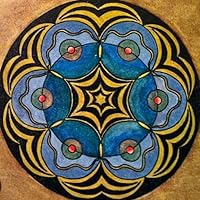
That there is this dichotomy between creation and destruction is good news for physicist Paul Davies, who has turned the question into a book: The Cosmic Blueprint: New Discoveries in Nature’s Creative Ability to Order the Universe. He must have lots to say because that.s quite the long title! And whether he is talking about new discoveries depends on your frame of reference: the book came out in 1988 (the cover illustration is from the revised 2004 edition which I have not read). My parents bought it for me around that time. Only now have I got around to reading it. As an aside, I.ve been weeding down my book collection. The happy booksellers Russell.s Books on Fort Street has been taking most of my secondary sources (ie books like this that are commentaries). My collection of primary sources (ie Shakespeare, the Bible, Nietzsche, and the original works that other people like to talk about) has been growing as a result. Perhaps primary sources make up three-quarters of my four bookcases now. I hope to weed things down some more. There.s no need really for me to have so many books since most of them are available at the library (and, if I did not already have it, I would have read the new revised edition)! But primary sources are nice to have because I.m always referring to them. And they are all marked up with notes as well. So, after seventeen years, I.ve finally finished this one! I should reward myself with a beer to celebrate the occcasion, since I.ve been looking at this book thinking I should read it for all this time!
Okay, so back to the book. In this book, Davies pits the destructive side of the cosmos against the creative side. Now it turns out, the creative side doesn.t have a fancy ‘law’ like the ‘Second Law’ (in case you.re wondering, and you should be if you don.t know, the First Law is one of the conservation laws). It doesn.t even have any real physicist approved monikers! Would you believe that? What it does go by are terms frightening to scientists such as Aristotelian teleology (a respectable theory in the Middle Ages), vitalism (respectable to New Age folks), Gaia concept (don.t ask), and other such terms. Davies refers to it with the much more respectable name of the ‘cosmic blueprint’. And the book is filled with examples of higher levels of order arising (consciousness, life, and DNA are big arguments). Even inanimate structures, such as Saturn.s rings, are held together by some force which eludes us. If the physical structure of the rings is put into a computer simulator, the longest they can last is a hundred years. Tops. Then they break apart. But obviously there.s something holding them together. Maybe the hand of God? Perhaps. But it.s surprising they haven.t been able to put it into an equation. Davies’ own view seems to lean towards the opinion that somehow the universe has brought about the conditions necessary for life so that consciousness can evolve. He points out that the conscious observer–which is required to break down quantum states (ie Schrodinger.s Cat)–seems to be a necessary part of the process. So, built into the deep structure or blueprint of the universe is this will to complexity which scorns the Second Law. An interesting question: is consciousness the vanity of the cosmos?
But the Second Law itself is no slouch. Well, first of all, unlike the ‘vital force’, it has a proper name and is associated with cool things like the irreversibility of the arrow of time! On the Second Law, Davies quotes the great Eddington. Sir Arthur Eddington to you:
The law that entropy always increases–the Second Law of Thermodynamics–holds, I think, the supreme position among the laws of Nature. If someone points out to you that your pet theory of the universe is in disagreement with Maxwell’s equations–then so much worse for Maxwell’s equations. If it is found to be contradicted by observation–well, the experimentalists do bungle things sometimes. But if your theory is found to be against the Second Law of Thermodynamics I can give you not hope; there is nothing for it but to collapse in deepest humiliation. And what does the Second Law imply for us mere mortals? Here.s what Bertrand Russell has to say:
All the labours of the ages, all the devotion, all the inspiration, all the noonday brightness of human genius, are destined to extinction in the vast death of the solar system, and the whole temple of Man’s achievements must inevitably be buried beneath the debris of a universe in ruins–al these things, if not quite beyond dispute, are yet so nearly certain that no philosophy which rejects them can hope to stand. Only within the scaffolding of these truths, only on the firm foundation of unyielding despair, can the soul’s habitation henceforth be safely built.
Wow. No kidding! I wonder if there.s a way to capitalize on this fear? Any entrepreneurs out there? Maybe someone can come up with a ‘Universe Heat Death Survival Kit’!
There is a lot of hand waving in this book about additional laws growing out of increasing levels of complexity. Yet the possibility remains that the presence of creative human beings can be the foundation of such additions.
I noticed that someone reviewing this book has given it one star with a warning that Davies is a denier of Darwinian evolution. So, I will clarify this misinterpretation in the hope that this accusation doesn’t deter someone from reading this book.
This book does not reject Darwinian evolution; instead, it recognises it as perhaps the most important biological theory we have on life. However, it is essential to emphasise that Darwin did not claim to have a theory regarding the origin of life. In 'Origin of Species,' he explicitly states that this remains unknown and that, although natural selection is a slow, gradual process, the precise origin of life is a mystery and science lacked the tools to fully investigate it. Did life originate from a primordial soup? Did life originate outside of Earth and arrive here on a meteorite?
In exploring these questions, Davies examines the assumptions within evolutionary theory, focusing on concepts of emergence and spontaneous order. It's interesting how we hold onto scientific theories like Darwin's with almost religious devotion. A conversation about emergence in the origin of life might be seen as blasphemous or challenging evolutionary theory. But Davies is exploring some vague areas where Darwin's theory may not fully explain phenomena such as self-organisation. This is an essential exploration, as the assumption that life originated spontaneously in a unique event is not a very satisfactory position, unless you believe in creationism or miracles.
Davies is presenting the viewpoint of a physicist acknowledging that reductionist physics faces fundamental challenges when explaining the phenomenon of life. Beginning with the expression of hereditary information from DNA through protein to an RNA intermediate, this process is still shrouded in mystery regarding how this “machinery” arose. As a physicist, Davies goes two levels below biology, surpassing chemistry into the deeper structure of the universe and space-time, discussing the complexity behind the “order”. This is where it gets fascinating to me; matter and energy adhering to the second law of thermodynamics in an open system tend to seek higher levels of organisation and complexity.
Science progresses through the discourse of theory. Even our beloved Darwin and Einstein—these theories are not set in stone; they are continuously supported by empirical evidence and developed. The fact of evolution, which we have observed, and the theory of evolution are not mutually exclusive. Davies never once denies the 'fact' of evolution; he is looking at the weaker areas of Darwin's theory which attempts to explain the process of evolution.
I give this book 5 stars, not because it is perfect. But because it exemplifies the writing of a brilliant, inquisitive mind, it delves deeply into arguably the most important questions for humanity.
"Meritum metody naukowej jest możliwość odzwierciedlania bądź modelowania zdarzeń w świecie rzeczywistym przy użyciu matematyki. [...] Sekwencja zdarzeń, jaka spotyka układ w świecie rzeczywistym, jest odzwierciedlona w matematyce. W tym sensie można stwierdzić, że matematyka potrafi naśladować rzeczywistość" (35).
"Niektórych naukowców tak zaszokowała ta sztuczka, że opowiedzieli się za tak zwaną mocną zasadą antropiczną, która stanowi, iż prawa natury muszą być takie, by na jakimś etapie mogła zaistnieć we wszechświecie świadomość. Innymi słowy, natura sama organizuje się w taki sposób, by wszechświat stał się samoświadomy. Mocną zasadę antropiczną można zatem potraktować jako rodzaj organizacyjnej metareguły, ponieważ ustala ona same prawa tak, by pozwoliły na pojawienie się złożonej organizacji" (270).
"W kategorii groteskowej pojawia się pojęcie wielu wszechświatów, które zakłada, że wszystkie światy kwantowe w superpozycji są równie prawdziwe" (280-281).
"Sam fakt, że wszechświat jest twórczy i że reguły pozwoliły na wyłonienie się złożonych struktur i ich rozwój aż do poziomu świadomości - innymi słowy, że wszechświat sam zorganizował swoją samoświadomość - jest dla mnie mocnym dowodem na to, iż 'coś się dzieje' za tym wszystkim. Wrażenie projektu jest uderzające" (337).
Yeah, so this book questions the validity of Darwinism and got some people freaked out, giving it one star. That's funny. You don't need Science to tell you Darwin's theory of evolution does not make sense. Thank you, Paul Davies, for a fine argument. I picked up this old book in a second-hand bookshop because I like Paul Davies, having read his other book "The Mind of God". Since it's an old publication, it was more like a review of old Science ideas and literature, which was fine, and even so, I did learn a few new things. On the whole, Davies was on the right track in his vision of a cosmic blueprint. Consciousness is fundamental in all of this, and I'm glad he hinted at that.
An interesting combination of Physics bleeding into biology and evolution; how does the things we know about physics and "reductionism" feed over into a viewpoint on life, and intelligent life, and the evolution / meanings of the "purpose" of things. This is an older book, 1988, so many things have progressed since it was written, but Mr Davies writes with great clarity and insight into complex topics. A nice progression from math (Complexity, Chaos, self-organization), then into biology, evolution, and the mind.
I'm surprised to find that this book was written in 1988, as most of the data it contains remains current and cutting-edge in the cosmic disciplines. I've enjoyed a couple of other books by the author, so I'm glad I gave this one a shot. I took my time with it and was definitely challenged by the physics content. It's going to take me a couple of weeks of thinking about the book to see how the data processes in my mind over time. I may need to go back and read this again, but the fact that I would do that speaks volumes as to how informative the book really is. Definitely worth a read if you're giving it a thought.
Póki autor trzymał się fizyki, chemii czy astronomii to jeszcze pisał z sensem. Jak zabrał się do snucia teorii na temat biologii, ewolucji, świadomości to zupęłnie przestały się trzymać kupy.