Comedy of Errors Taming of the Shrew Two Gentlemen of Verona Love's Labour's Lost Midsummer Night's Dream Merchant of Venice Merry Wives of Windsor Much Ado About Nothing As You Like It Twelfth Night Troilus and Cressida All's Well That Ends Well Measure for Measure King Henry VI. Part 1 King Henry VI. Part 2 King Henry VI. Part 3 King Richard III King John King Henry IV. Part 1 King Henry IV. Part 2 King Henry V King Henry VIII Titus Andronicus Romeo and Juliet Julius Caesar Hamlet Othello King Lear Macbeth Antony and Cleopatra Coriolanus Timon of Athens Pericles Cymbeline Winter's Tale Tempest Two Noble Kinsmen Sir Thomas More Venus and Adonis Rape of Lucrece Sonnets Lover's Complaint Passionate Pilgrim Phoenix and the Turtle
William Shakespeare was an English playwright, poet, and actor. He is widely regarded as the greatest writer in the English language and the world's pre-eminent dramatist. He is often called England's national poet and the "Bard of Avon" (or simply "the Bard"). His extant works, including collaborations, consist of some 39 plays, 154 sonnets, three long narrative poems, and a few other verses, some of uncertain authorship. His plays have been translated into every major living language and are performed more often than those of any other playwright. Shakespeare remains arguably the most influential writer in the English language, and his works continue to be studied and reinterpreted. Shakespeare was born and raised in Stratford-upon-Avon, Warwickshire. At the age of 18, he married Anne Hathaway, with whom he had three children: Susanna, and twins Hamnet and Judith. Sometime between 1585 and 1592, he began a successful career in London as an actor, writer, and part-owner ("sharer") of a playing company called the Lord Chamberlain's Men, later known as the King's Men after the ascension of King James VI and I of Scotland to the English throne. At age 49 (around 1613), he appears to have retired to Stratford, where he died three years later. Few records of Shakespeare's private life survive; this has stimulated considerable speculation about such matters as his physical appearance, his sexuality, his religious beliefs, and even certain fringe theories as to whether the works attributed to him were written by others. Shakespeare produced most of his known works between 1589 and 1613. His early plays were primarily comedies and histories and are regarded as some of the best works produced in these genres. He then wrote mainly tragedies until 1608, among them Hamlet, Romeo and Juliet, Othello, King Lear, and Macbeth, all considered to be among the finest works in the English language. In the last phase of his life, he wrote tragicomedies (also known as romances) and collaborated with other playwrights. Many of Shakespeare's plays were published in editions of varying quality and accuracy during his lifetime. However, in 1623, John Heminge and Henry Condell, two fellow actors and friends of Shakespeare's, published a more definitive text known as the First Folio, a posthumous collected edition of Shakespeare's dramatic works that includes 36 of his plays. Its Preface was a prescient poem by Ben Jonson, a former rival of Shakespeare, that hailed Shakespeare with the now famous epithet: "not of an age, but for all time".
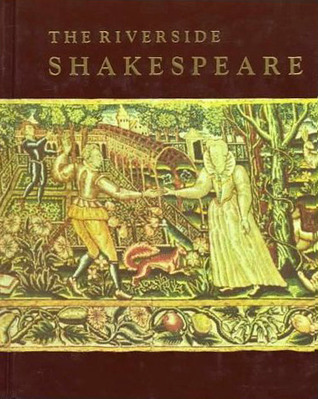
I've had this almost 2000 page book since I was an English major in college some thirty years ago. It has everything Shakespeare wrote, excellent footnotes explaining the meaning of the words and allusions that are obscure now, and wonderfully insightful essays at the beginning of each play.
If I were ever stuck alone on a desert island and had to pick five books to go with me, this would be one of them.
Need a comprehensive volume of all of Shakespeare's works? This book is for you.
How about a security system? I guarantee any burglar you bash over the head with this book is going to have at least a concussion, if not brain damage.
What about a doorstop? do you live in a drafty house with doors slamming all the time? You need one of these then, any door parked behind this tome is going nowhere.
Got kids? Are they too big for a high chair but still a little too short for a regular chair? Park one of these babies under their butt with a pillow on top. Problem solved!
Great literature with multiple household uses! I'd like to see a Kindle edition try and do that.
"The sole substitute for an experience which we have not ourselves lived through is art and literature." ~Alexander Solzhenitsyn
The quote above is precisely the reason I enjoy art and literature. I always love when a story takes me on a time traveling trip back to the past like the ones in this book.
After reading it for some months, I'm now more than halfway done with the plays in it. It's been so far so good. I enjoy walking down the memory lane reading them again.
My review here will be about my experience reading Shakespeare's works all these years as well as what I think about this book as a whole by comparing it with the previous edition. Yes, this will be an ongoing review which I'll edit along the way till I'm done reading everything.
So far, my rating hasn't changed yet but we shall see.
My Riverside Shakespeare is one of my most prized possessions. All battered and marked up* and with all kinds of ephemera jammed down into it. I don't really read from it anymore - it's much easier for me to buy a $3 used edition with just one play in it; Riverside is very large. But when I re-read Shakespeare I usually revisit the Riverside intros, which are excellent.
* I should note, it's marked up with the dumbest shit. I don't understand any of the notes I took in college.
Anyway, a while back Jason challenged me to rate Shakespeare from best to worst; because I want that list to live somewhere, here it is.
Hamlet Lear Tempest Cardenio Henry IV 1 and 2 and Henry V, as a trilogy Macbeth Othello As You Like It Winter's Tale Philip Marlowe, just in general Merchant of Venice Midsummer Night's Dream Richard II & III Julius Caesar Antony & Cleopatra Most of the comedies / the shittier of the tragedies Titus Henry VI King John Anything co-written with anyone Henry VIII
I won't say I've read all the entire book (I'm leaving King John and Henry VI for some time later)--but I think I've read enough to comment on it. A good edition of Shakespeare, with a general introduction, textual notes, and illustrations (including coloured plates).
Here's my review of Hamlet: The hero wears black, is a university student, writes poetry, studies philosophy at university. He's got a thing going with Ophelia. Horatio has his back. Following the death of his father and the remarriage of his mother, Hamlet finds himself questioning everything he had formerly believed. When some of his friends tell him they've seen a ghost, he sets out to investigate, with surprising results.
The play has a ghost, madness, melancholy poetry, meditations on suicide, self-reflexivity, radical doubt, political espionage and intrigue, rebellion, graveyard humor, a moment of Zen, a duel.
Shakespeare had a double task here: creating the fascinating mind of the prince, and then constructing a situation equal to testing his hero's estimable capacities. He succeeds at both.
Hamlet is sometimes thought of as the most "modern" of Shakespeare's plays. Among all of Shakespeare's characters, Hamlet is the one who would have been most capable of writing Shakesepeare's plays. I have heard it said that one spectator liked the play because it was "full of quotations."
I've recently re-read Othello, and think that it is one of the most "Jerry Springer-ish" of the dramas.
This one will probably always be on my currently reading shelf. Right now I am working on scenes from Richard III and Twelfth Night and monologues from Cymbeline and Henry IV, part ii, also the sonnets. My least favorite play so far is the Merry Wives of Windsor - the opening scene makes no sense and if Shakespeare wrote it he must have been drunk.
Now I'm working on a new scene from Twelfth Night and one from All's Well That Ends Well. The latter one I have never read so more on what I think about it later this week.
All's Well is nice, not my favorite comedy but nice nonetheless. Interesting use of rhyming couplets between Helena and the king. This play is awkward for me because Bertram and Helena seem ill-matched but maybe that makes it more realistic than some of the other plays about love. There also seems to be a stronger female presence than in other plays but the women are not very three dimensional for the most part. I think this play succeeds or fails based on the vision of the director and cast more so than one like Twelfth Night.
Measure for Measure is interesting. The "virtuous" characters have serious flaws and the villains are charming. Especially Lucio. There is a very similar subplot to All's Well whose moral runs along the lines of "If you have a wife or fiancee who you are avoiding while pursuing a virtuous maiden, don't make plans to deflower the maiden at midnight in the garden because the woman you meet will probably be your wife."
Tempest: Just revisited for the first time since a production in college (cast as Miranda turned it down to play a spirit in an ugly mustard leotard...) It is surprising to me what language stuck and what didn't. I have part of a song that often runs through my head that evidently comes from this play but I had forgotten where I learned it. It is much shorter than I remembered. Prospero is by far the most dimensional character but the other characters are nice archetypes. Love the comedy between Stephano, Trinculo, and Caliban. I think it is interesting that Caliban speaks in verse I would have expected prose from him. Anyway. lovely play. I hope I have the chance to play Miranda before I get too old.
Twelfth Night: Just revisited this for an audition. It is a wonderful comedy that holds up with few alterations in the modern world. Also three great characters for women. I was surprised by how much of the play is in prose but I suppose it makes sense because it is a comedy and so much of the action takes place between the servants. I remember seeing a wonderful production of this show at UCSB when I was in high school. I feel badly about how the audition went and I just realized it is making me reluctant to spend much time thinking about the play so maybe I will return and review it more objectively at a later date.
Coriolanus was a wonderful surprise. I wanted to read it because we were going to the opening night of OSF's production of it. In general I am not much of a history person and despite the fact that this is considered a tragedy I was pretty sure it was Roman history cleverly disguised. Anyway, I found the play to be very accessible, if rather long. The language, perhaps because so much is spoken by and with commoners, is very visceral. Lots of land and animal imagery (is a dragon an animal?) that I found to be particularly appealing. I also found the play to be philosophical particularly about the role of government and tension between classes, certainly a relevant discussion in any society and time period. I didn't find Caius Marcius, later Coriolanus, to be particularly likable, but he does say some wonderfully inflammatory things and his journey was interesting. The real revelation for me was Volumina, his mother. She is incredibly powerful and interesting, right down to her intriguing child-rearing philosophies. What a role. Can't wait until I am old enough to use her monologues as audition pieces. Also lots of humor in the play. Class tensions makes for some funny disagreements. I look forward to being surprised by other works in the canon.
Henry V: I chose the love scene in Act V as my final in Shakespeare class this year. I ADORE this scene. It is so sweet and romantic since the Henry doesn't speak much French nor Katherine much English but they both want it to work. It would be a thankless role in actuality since it is one of exactly two scenes that Katherine has in the play but it was perfect for in-class work. I enjoyed the play as a whole too. I know this is very dense of me, but this was the first play where I really began to understand how the histories are inked. It is really fun to watch characters (like Henry V) grow and develop throughout the plays. If I were actually in this one, I would probably want to be Pistol for all of the comic scenes. Speaking of the comedy, I think the French insult of sending Henry tennis balls when he wants to fight them is silly and delightful. I also like the pervasive use of dialects throughout.
Henry VI, Part 2: I'm working on a monologue from this play - Queen Margaret (who shares my exact birthday and exact wedding anniversary). It's actually quite interesting so far, perhaps one of the most delightful aspects is the number of insults. Virtually all of I.3 is a volley of viciousness. Fantastic. And then the play takes a turn for the bloody. I am really looking forward to seeing this staged.
Cymbeline: I had been planning on reading all of the plays set in Italy before my trip, but I don't think it's going to happen somehow. I am starting work on a monologue from this play so expediency trumps lofty aims.
Richard III: I just got cast as Lady Anne so I've read this play twice recently and will be reading it lots more in the New Year. I'm drawn to the number of roles there are for older women in this play. I think it will be fun to work with a group of accomplished actresses. I also love the two murderers and the constant wordplay. Richard seems to be having the most delightful time being rotten person. I hope our performance conveys the deliciousness of his actions. Lots about fate and prophecy in this, a feeling for the truth of the curse"may you receive everything your wish for".
Two Gentlemen of Verona: This is the summer show for SF Shakes. I think I want to audition for it but I need to read it first. Just finished and it's fine, lots and lots of plot similarities to other plays, some "All's Well", a touch of "Romeo & Juliet", a little hint of Arden forrest. My favorite character was Launce, a servant who has lots of clever dialogue and a priceless monologue about the trials and tribulations of being a dog owner.
Macbeth: Had an audition for an incredible production of this yesterday. Just re-read it. There's a reason this is a classic. Love all of the opposites ("fair is foul and foul is fair"). I was surprised by the relationship between the Mackers, there's a lot of love there. My impression going in was that Lady Mac was pure evil and Mac was weak, but they're so much more and I can totally see how things got out of hand. Reading this was like a treasure hunt because there are so many famous lines and I have seen so many pieces of this show in class. I'd read this again in a minute.
The Winter's Tale: I just re-read an edited version of this play for an audition I am attending. Still some lovely monologues and charming scenes. I have a hard time with some of the character's choices, they seem illogical to me but I think that means they are well written because they are behaving in that messy way things happen in real life. with such a large time span between the beginning of the play and the end, it is a challenge to know what character to try for. Will the characters be cast as they are at the start and aged for the second half or the other way around? i would really, really love the chance to work with this play in greater depth.
I've read this twice. Once as a teenage girl and again as a thirty year old adult, same edition. Shakespeare remains a true masterpiece. Some I liked better than others, but all were very good. King Lear, Romeo and Juliet, Macbeth, A Midsummers Nights Dream, Twelfth Night some of my favorites to name but a few. It took me two weeks to read this but I forgot to mark when I started this. I'm giving this a 4.5 ⭐ rounded up. Bravo!👏
Usé esta maravilla de libro (son las obras completas+historia+bio y demás joyitas sobre la época y el autor/es) cuando estudiaba un curso extensivo sobre este bardo (jaja traté de hacer un chiste ahí).
Es lo mejor que me pasó en mi vida estudiantil/profesional y ahora duerme en mi mesa de luz, en un lugar privilegiado, lejos de los libros normales.
Critically speaking, still the finest one-volume complete Shakespeare. Signet is refreshingly free of PC literary criticism. This edition is far superior to third-rate editions offered by Norton and other publishers that have been completely sold out to the dark side—namely, woke critical theory and noveau DEI frameworks.
I love this collection and I used this at University. It was damn heavy to log around but was a wonderful resource because of the detailed explanations and translations for some of the out dated terms used by Shakespeare in his plays. It is still proudly displayed on my "public" library book shelf at home ( my romance novels are in a special hidden storage room ). I loved the layout of the collection and the fact that each play and each section were prefaced by concise, analytical essays of introduction. There were lovely little illustrations for the plays as well. I think I studied only about 4 history plays, all the tragedies, all the comedies, The Tempest, The Winter's Tale, Romeo and Juliet, Julius Caesar, Antony and Cleopatry and a couple of the "problem plays". I never actually got around to studying the poems although I did read through a few of his lovely sonnets. My favourite play from Shakespeare will always be Much Ado About Nothing because I love Benedict so much and Beatrice was such a strong female character. I love Hamlet the most from among the tragedies because he was such a sexy tragic bastard and Shakespeare was a boss with his use of the Garden of Eden metaphor in that play. Lol. I wished Hamlet could have made his mind up already, though ! And I hated how poor Ophelia lost the will to live after he told her to go to a nunnery. Othello was probably the precursor for many a jealous obsessive asshole Harlequin Presents hero. Macbeth was too much of a p***y whipped asshole and King Lear's senile vanity was a bit too much to take at times. I preferred Julius Caesar to Antony and Cleopatra because there was more intrigue to analyze. And I will always have a special love for The Tempest because it's so epic ! I've always said that when I have a daughter I shall probably name her Miranda or Ariel.
It's taken me more than a year to read this I've been drifting in and out. It is of course massive. Mostly ploughed through it this year.
Does it even make sense to review Shakespeare? I think it does. But obviously it's impossible to speak as if this is absolved of context. There are of course people who don't know Bill and don't know about him but they were likely not raised in the UK, as I was. I'm interested in some aspects of that pretence though. Shakespeare is solidly at the centre of English writing and there's a lot of political scaffolding attached to that. Approaching it as if I _could_ answer the question 'do you recommend reading Shakespeare?' is a caprice I'm into.
Quick paragraph on editions - I got a hard copy of the Arden Shakespeare; it doesn't have annotations / footnotes; I actually read an ereader version called 'the complete works', based on the 1974 Riverside Edition. 99p. The reason I read it on an ereader is because the Arden Shakespeare is too big to read on my lap, and I didn't want to spend several months reading it on my desk. I am an idiot and don't think about these things, and habitually get a physical copy. I'd recommend not doing that because it's 2024 and we can have our massive books and read them in comfortable places, which in this context is the cake we are having and eating. I imagine an annotated edition would be larger. I imagine it would be easier to read also.
So there's a couple of points I'd like to make here which are kind of about the hermeneutics of Shakespeare, if I might be so bold. Shakespeare is not a holy text in the sense of there being a religious tradition but his work is certainly revered by the English establishment, and his work is often central to English identity. I think he's equally a large part of British identity, which is subtly different in ways I won't expand on here. In literary-cultural terms, Shakespeare is one of English writing's most important names.
A part of that relationship is how Shakespeare is writing in a form of English that is... coextensive with contemporary English. And I think it's an important point that I'll come back to - the language of Shakespeare is not the same that I speak, and however many people speak, in the 21st century. His is the beginnings of where the language is now but it is not the same. There are plenty of wee differences - the embedded sexism, plenty of words that have fallen into disuse and are archaic relative to Shakespeare's time. But there are differences at a level of grammar and syntax. The construction "Let us to..." is common and in contemporary English we'd have a verb in there but Bill doesn't need one. And the reason he doesn't need one is because his English is different to ours.
I'd imagine some readers would groan at this as a point so obvious as to be facile. But what I want to establish is that there's a lot about Shakespeare that's prohibitive to many readers. I read an edition without footnotes or annotations and that made a lot of it hard. I read an edition in English that is not the same modern English I know and use, and that made a lot of it hard to read. Part of the elegance of Shakespeare lies in the eldritch, ornate, rigorously mutable syntax. A large part of what renders Shakespeare prohibitive lies in precisely his mastery, and also his mastery of an English that is uncannily dissimilar to ours.
There's a political ramification that doubles back into a reading as well. So Shakespeare, in some senses, represents the peak of English writing to the world. And some of that is circumstantial. But some of it is related to the content. I read that Shakespeare is the beginnings of 'the history of England / Britain'. Prior to this the culture (writing) does not reflect the politics (lineage of monarchy). I think it's worth adjoining to that a context - Shakespeare is part of how the British establishment identifies itself. I mean that there are aspects, especially of the toothless histories (which are most of them), which are small-c conservative, and also big-c Conservative. Clueless French antagonists, dullard Welshmen, astonishingly outmoded antisemitism (not just Shylock - I think every mention of Jews is negative in a way that should be embarrassing for a national author).
It's not a particularly incisive criticism to say 'old writer is a bit racist' but my point is that Shakespeare reflects a part-jingoistic view of Britain itself, a Britain that writes about its own monarchy in effusive terms. And Shakespeare historically sits in the middle of some very volatile history that culminated in a republic (and then, notoriously, conservative recidivism took over and plagued the country every since). The way the culture embodies the politics is important and Shakespeare's history and politics tends towards an uncritical approach to royalty.
And there are relative criticisms - it's not fawningly positive. But in contemporary times Shakespeare represents a status quo with regards the political systems of the UK. Our national writer doesn't write women well and is pretty racist - though tellingly not always as racist as you might expect towards people we'd now call black.
I don't want this to seem like a shallow and lazy criticism - like 'old writers context was different and bad, boo'. I mean that part of the reason Shakespeare is 'the national writer' is because he writes the nation, he embodies conservative values that have been the political status quote since the 1600s.
And back to the prohibitive writing - it's telling also that the national writer is almost unbearably codified. It's a form of English that requires a lot of context and intellectual overhead to dig into. No surprise that a country ridden with class and elitism in its political structures should have a national writer who is largely opaque to most readers of the language _in its own country_ - let alone folk reading this in second languages etc.
We give this to children and expect them to understand it. I enjoyed it as a wain. But it's _difficult_ to read and young people, especially those who aren't that engaged with historical literature, are liable to end up feeling stupid when exposed to it. Most contemporaries (Johnson, Marlow, Greene etc) of Shakespeare are for specialists - degree + level academics or those with a particular bent. And that seems appropriate - there's a lot of context that makes that writing difficult. Plonking a difficult writer in the centre of our literary culture is... well, it's very classically English. It's wrong-headed.
Now I've said all that and it sounds like I'm not a fan of Shakespeare. That's not true. I struggled with a lot of this and I really should've read it more slowly. More on that in a sec. But it's all high quality. It's all densely suffused with a poetic style that is incisive and persuasive. It'll be weird reading other things now because I've lived with this very sing-songy flow for a few months. Instantly familiar and yet enormously durable. The stories are largely amazing, even if I could do with less 'the social tribunal' and 'alienated, hero returns in disguise' plots. I genuinely look forward to coming back to it - to see if I still find Timon a weirdly anxious, freighted little bitch, to see if Henry VI changed from a solid hero in part 1 to a bumbling fool in part 3, to see if I still read Lady Macbeth as a conniving dogshit... etc. These are living, full-bloodied people, characters who all sing by Shakespeare's hand but each with a subtly different tenor. For all the difficulty of reading this - and I have to stress, I feel like that isn't talked about enough - there's plenty to return to.
On how to read this - so I'm not going to presume to tell people how to read this. What I can tell you is that my way of reading didn't behove me well. I basically read it obsessively, rushing through, with a view to finishing it quickly. I brushed over parts. What I _should've_ done was to read it sparingly and slowly. I'll probably go for a play every other month or something next - rather than being paralysed by the 'must finish' principle, I'll do it at leisure. Because there's so much detail, constantly overwhelmingly detailed, I wolfed it down and didn't digest it well. I should probably read an annotated version, or at least give myself space to look up passages (there's no shortage of help online). It's a sumptuous complexity and I'd not recommend rushing, unless you're confident and familiar - the plays I've acted in as a teenager were more familiar than the ones that were new to me.
On consistency - by and large it's all worth reading. Much of the histories is dry, and much of the comedies are not that funny but principally there's very little that isn't woven with Shakespeare's astonishing capacity for these vocal rhythms that drill into your head (I had dreams in iambic pentameter). It's very noticeable where a play is questionably a Shakespeare play or where Bill has a lessened authorial voice (Henry VIII) but even so those act as contrast and relief from the other plays.
So really there's two points here - there's a strong political motivation to his elevation as 'our national writer' and that is often rum; but there's also a writer who is bastard complex, wily and witty and sharp and illuminating and often plain dumb, and that's worth reading. But doubly so worth reading with a view to dismantling the systems that elevate Shakespeare the nationalist, the maker of cheap jokes about the French, the antisemite.
I appreciate that a lot of what I've said here is covered at length everywhere because there is nothing left to say about Shakespeare. But I've said it now.
***I normally use my Riverside Shakespeare solely as a reference text, preferring the Everyman series for its ease of portability and short but helpful introductions. But I think it's only recently that the Two Noble Kinsmen has become an accepted part of the canon of Shakespeare, and hence does not appear in the Everyman series.***
A play at the end of Shakespeare's career, and one that was not even entirely his own, but shared with John Fletcher. And yet, it's a wonderful retelling of Chaucer's Knight's Tale. The questions of platonic and romantic relationships, chivalry and selfishness, the state and the individual, are just a few of the ones probed by both playwrights in this play.
"Our hearts / Are in his army, in his tent." (I.iii.16-17)
"I am not / Against your faith, yet I continue mine." (I.iii.97-98)
"That no man but thy cousin's fit to kill thee." (III.vi.43)
***This is also the case for Edward III, which apparently only entered the canon in the 1990s.***
"And where he sets his foot he ought to kneel." (I.i.81)
"To hear war beautified by her discourse. Wisdom is foolishness but in her tongue, Beauty a slander but in her fair face: There is no summer but in her cheerful looks, Nor frosty winter but in her disdain." II.i.39-43
"Devise for fair a fairer word than fair." II.i.85
"What, thinkest thou I did bid thee praise a horse?" II.i.98
"In violating marriage' sacred law You break a greater honor than yourself" II.i.260-261
"We have more sons Than one to comfort our declining age." III.iv.23-24
"If we fear not, then no resolved proffer Can overthrow the limit of our fate: For whether ripe or rotten, drop we shall, As we do draw the lottery of our doom." IV.v.146-149
"Ah, what an idiot hast thou made of life, To seek the thing it fears; and how disgrac'd The imperial victory of murd'ring Death!" IV.v. 151-154
"Since for to live is but to seek to die, And dying but beginning of new life." IV.v.159-160
"For I do hold a tree in France too good To be the gallows of an English thief." IV.v. 63-64
"Thy fortune, not thy force, hath conquer'd us. An argument that heaven aids the right." IV.ix.9-10
Finally found a book not on the Goodreads database! I read the single-volume Arden Edition of The Tempest (London: Bloomsbury, 2015), complete with text, footnotes and 160-page introduction. I loved the thoroughness of the editors but in some places they really laboured over the possible meaning of words, almost ignoring the fact that this was reasonably obvious from their sound and context.
That aside, this was a deeply informative and inspiring guide to Shakespeare's last and most enigmatic play. I see that they have included some of the possible sources and some adaptations of the play as appendices, which gives me a reason to return to this fabulous volume another time.
N.B.: This review and rating will not include any commentary on the plays and poetry itself, as the work of William Shakespeare run the gauntlet from superb to mediocre and I feel it would deter from the purpose of this book. However, I have rated the plays individually if one cares to check. What this review would focus on the functionality of this particular edition of the text.
The Riverside Shakespeare collects forty plays, five poems, 154 sonnets, and one elegy that are attributed in full or in part to William Shakespeare. The plays are divided into five sections: Comedies (13 plays), Histories (10 plays), Tragedies (10 plays), Romances (5 plays), and the Apocryphal (Edward III and sections of Sir Thomas Moore that are attributed to Shakespeare). A Funeral Elegy by W.S. is also present under the Poems section.
Each play and poem has a wonderfully written and well researched essays proceeding them (plays in multiple parts have one introductory essay). The plays and poems are divided into two-column texted on each page with a nifty glossary of words in the footnotes of each column. At the end of each play are textual notes, which is a tad cumbersome flipping back and forth.
Included are a plethora of essay about Shakespeare and his times, his works, his criticism, and his legacy. Furthermore, there are four appendices, four indexes (indices (?)), two helpful Genealogy Tables for certain historical plays, illustrations, and maps. Additionally, there are thirty-nine colored plates throughout the text, which could be better placed as they pop up during mid-text or plays at times.
All in all, The Riverside Shakespeare is a wonderful anthology and reference to the works of William Shakespeare – it may be too bold of this reviewer to say that this edition of the text may be the definitive collection for the works of William Shakespeare.
What a terrific introduction W. H. Auden wrote for this section. Worth the price of admission right there.
05-14-19
Phoenix and the Turtle, A Lover's Complaint, The Passionate Pilgrim
02-01-19
The Rape of Lucrece
10-15-18
Venus and Adonis
08-28-18
Two Noble Kinsmen
07-26-18
Henry VIII
much more interesting than i anticipated, and as a fan of "A Man for All Seasons" i could hear the places where it overlapped with Bolt's work.
04-15-18
The Tempest
09-03-17
A Winters Tale
07-11-17
Cymbeline
Much better than the introduction led me to believe. Yes, it's a bit neat at the end, and yes, may of the classic Shakespeare tricks are here. But all in all, compelling, interesting and well done.
05-27-17
Pericles
A Shakespeare play that experts think he only wrote 60% of? Well this is an interesting mish-mash...
01-16-17
Timon of Athens
Hypocritical senators, fairweather friends and a good man driven mad by humanity? Clearly a work of fiction...
06-05-16
Coriolanus
Fascinating - had neither read nor seen it performed before, nor knew the story, so i found the portrait of a hero at odds with his nation quite compelling.
03-23-16
Anthony & Cleopatra
Is it just me or is this play, not exactly a mess (it's obviously well-crafted and well-written), but just sort of a puzzle? Not exactly a love story, not exactly a tragedy, not exactly a history, not a comedy. What's the through-line? Antony's ambition? The tumultuous relationship between he and Cleopatra? I dunno.
02-15-16
MacBeth
01-02-16
King Lear
11-07-15
Measure for Measure
08-15-15
Othello
03-31-15
All's Well That Ends Well
01-09-15
Troilus & Cresieda
11-09-14
The Merry Wives of Windsor
10-02-14
Hamlet
06-02-14
Twelfth Night
05-06-14
As You Like It
10-18-13
Julius Caesar
08-15-13
Henry V
05-16-13
Much Ado About Nothing
03-28-13
Henry IV, Part Two
10-26-12
Henry IV, Part One
09-16-12
The Merchant of Venice
06-12-12
The Life and Death of King John
02-07-12
A Midsummer Night's Dream
12-20-11
Romeo & Julliet
06-25-11
Richard II
03-20-11
Love's Labour Lost
02-16-11
Two Gentlemen of Verona
05-07-10
The Taming of the Shrew - I love this play. Maybe that makes me a bad person, I don't know. I love the problems of it, I love watching directors and actors try to solve the problems of it, I love the wordplay, the banter, the elaborate deceptions - I just really enjoy it. I even enjoy the two filmed performances that I've seen - the Jonathan Miller version starring John Cleese and the Kirk Browning version featuring Marc Singer (yep, THAT Marc Singer). And you know what? After reading the introduction that precedes it here in this volume, I love it even more. The author points up elements and references and aspects that I had not considered before, making it even more interesting and compelling. Look, you may not like the play, and I respect it. But for me, this is one of Shakespeare's finest.
02-22-10
Titus Andronicus - You know, TS Eliot said this was the stupidest play ever written; and that's coming from the guy who penned "The Cocktail Party" so he knows from stupid. And while it was really violent, i didn't mind it. Sure the characters aren't as deep and profoundly drawn as in other plays, but i feel with this play you see the young author working his craft, learning, making mistakes (like there's way way too much going on, for example). And that's interesting. And frankly, if you made it as a movie today, i'm sure the crowds would eat it up as the great unwashed did back in the 1590s. Look, if you're only going to read, say, 5 plays by Shakespeare, I wouldn't put this on your list. But if you're interested in watching him develop, you could do worse. (Though you have to ask yourself, what the hell prompted him to pick this story...)
01-28-10
Richard III - like the Henrys, wish i had a more facile understanding of the details of the history so i could appreciate this more. That said, some great banter and Richard still emerges as a stunningly intriguing character. No wonder actors make their bones on him. Makes me want to see it live - or at least a movie.
10-09-09
Henry VI part 3 - okay, so i finished this trilogy. Richard III is poised to commit all manner of atrocity. Lots of blood, lots of gore, lots of guts. And interestingly, more complicated characters than in the previous two "parts" - not that they're consistent. Makes me want to learn more about the history, so i can come back to this play (of the three) and understand Shakespeare's take on it. That said, one can't come away from this play unaffected by Shakespeare's fear of the chaos of revolution and civil war. Good stuff.
04-24-09 Henry VI part 2 is apparently Shakespeare's earliest known work, and you can tell. It's clearly not one of his best unless you're well-versed in the history, but still, at times, greatness glimmers through.
02-01-09 Henry VI part 1 was better than i expected, but hampered by my ignorance of the players and the era. and, of course, like all plays, should be seen rather than read. nevertheless still good banter at points that even a dullard like me can appreciate.
03-02-08 A Comedy of Errors was very enjoyable. A little confusing, of course, and a little bit of the "deus ex machina" at the end, but you can forgive that because it's an early play and it never loses its light touch
When I took a course in Shakespeare at the University of Utah as an English major, I was required to buy this edition. I remember standing in the university bookstore with my mouth hanging open from sticker shock. I love Shakespeare and was excited for the class, but I couldn’t help but think of the The Complete Works edition I already owned. My high school English teacher had already told me it wasn’t a great version, but how different could it possibly be? I also had a well-worn paperback of Hamlet and knew that I could pick up paperback versions of the five or six plays that I would read in class for a lot less than the Riverside would cost me. I really didn’t believe the professor would kick me out of the class for not having THIS edition of the book. But I am a rule follower by nature, so I swallowed the bile in my throat and bought the book. I justified the expense by telling myself that I would one day read every play and poem written by Shakespeare. I would get my money’s worth out of this book.
The Shakespeare course was great. And no, not everyone in the class sprung for the Riverside Edition. In fact, the guy I sat next to in class shook his head at me in derision for buying it. He had picked up all of his paperbacks at a thrift store for a couple of bucks. On the first day, the professor informed us that we would be reading some of the lesser read plays. He assumed that we would have already studied the most famous plays. (He was right. I had already studied Hamlet twice by that point, and almost every other literature course I had taken in high school and in college included one of Shakespeare’s plays).
For the course we read: Titus Andronicus, The Taming of the Shrew, The Merchant of Venice, King Richard the Second, Othello, and The Tempest. This experience reinforced my personal goal of reading all of Shakespeare’s plays. I hated Titus, loved Othello, and became more determined to read them all, hoping to find some gems among the lesser read works.
Even though I love Shakespeare, reading all of the plays and poems is a daunting task, especially when it’s not assigned by a professor who will help explain things as you work your way through the play, so I put off my reading challenge for a good long time. So long, in fact, that in 2015, when I decided to get serious about reading all the plays, I decided to reread those that I had read in school, since all I remembered about Titus was the blood and gore and all I remembered about The Taming of the Shrew was that it didn’t quite end the way all the adaptations do.
So, I decided to read them all, but in what order? The Complete Works divides the plays by category: Comedies, Tragedies, Histories, and Romances. I was intimidated by the histories, so I didn’t want to stack them all in a row for myself. For the same reason, I didn’t want to read the plays chronologically, knowing that many of the histories were written one after the other. As I examined the plays, my own categories formed:
1. Plays that I hadn’t read that I was looking forward to reading (The Winter’s Tale, Twelfth Night)
2. Plays that I hadn’t read that I wasn’t much looking forward to reading (mostly the histories, but if I didn’t read them, then how would I know if there was a treasure among them? This, after all, was the point of reading them all.)
3. Plays that I HAD read and was looking forward to rereading (Hamlet, A Midsummer Night’s Dream)
4. Plays that I HAD read and was NOT looking forward to rereading (Julius Caesar, Titus Andronicus).
I seriously debated whether or not to force myself to reread the plays that I had not enjoyed. Even though I didn’t remember much about them, I had read them, so it wouldn’t be cheating to count them as read. But I wanted to review each play on Goodreads as I went, and I simply didn’t remember enough about some of them to give them a fair review. And what if my tastes had changed over the years? What if it was worth giving these plays another chance? So I included them, and once I divided all thirty-eight plays into those four categories, I noticed that they came out evenly: 13 plays each for categories 1 and 2, and six plays each for categories 3 and 4. Then I started to build my own order for reading the plays, balancing the ones that I wanted to read with those that I was reluctant to. I spaced out the histories. I spaced out the old-favorites. I started the list with Antony and Cleopatra, one I hadn’t read but was really excited about, and ended the list with All’s Well That Ends Well, because that felt like a cute thing to do.
My initial plan was to read one play per month, which would take just over three years, with the poems sprinkled in. In reality, it took me ten years. I started in January 2016 and finished December 2025. It still sounds completely reasonable to read one play per month, but I just didn’t do it. One reason is that the Riverside Shakespeare is HEAVY. Another reason is that I take notes as I read. When I sit down to read a play, it’s a whole project requiring a table, my Shakespeare journal (there are now four), a pen, and a highlighter. And toward the end of the challenge, I also needed bifocals to see the print. Sometimes, I would get on a kick and read several plays one right after the other. I only read two plays in 2019 and one in 2021. And the poems were more difficult to “sprinkle in” than I anticipated. I both loved and hated reading the poems and at times had to force myself through the sonnets. I often procrastinated, then gobbled up the long narrative poems.
I want to emphasize that I am not a Shakespearean scholar. I didn’t spend a lot of time in the footnotes. I didn’t crosscheck the history plays with the actual historical events. When I read Shakespeare, I’m reading it for the same reason I read anything else –I’m reading for a good story, well told. Many of Shakespeare’s plots are famously based on other works, but he adds in his own twists, often keeping the audience engaged and guessing. Of course, no one argues that Shakespeare’s language is stellar –his voice is distinct, his poetry is unparalleled, and he coined so many terms and phrases that we still use today. But what I really love about Shakespeare are his characters. The Nurse in Romeo and Juliet makes us laugh out loud. Ophelia’s downfall makes us cry real tears. And Viola. She is so brave, and spunky, and filled with love.
In the end, I accomplished what I set out to do. I read all the plays and poems that survive Shakespeare’s body of work (we know that at least one play is lost and surely there were others). I USED that Riverside Shakespeare (not only did I read it all, but I also used that giant book as a booster seat for toddlers, and a monitor stand for my computer). And I found some treasures that I don’t believe I would have ever read, if not for this ridiculous challenge. Cymbeline, Henry V, and rereading Titus, in particular, made this crazy challenge worth it.
A week after I completed the challenge, my dad, who knew I was reading all the plays, but didn’t know I had just finished, surprised me with a gift: a hardbound collection of The Complete Works of William Shakespeare that had belonged to his grandfather, Joseph Henry Stimpson. Dad had recently received them from his eldest sister, and he generously passed them on to me, even though he, too, loves Shakespeare. When I told him that I had just finished reading all of the completed works, he joked that I could start again from the beginning. My great-grandfather’s books are too precious and delicate to read, and I will never ever again read Timon of Athens, but I will reread many of the plays. Hamlet is too good not to.
I have reviewed every play and poem on Goodreads using the individual Folger’s editions (even those weren’t the versions I read), so I won’t review each play here. Instead, I’ll give a summary by category. (A note on my starred rankings: I reserved 5 stars for my absolute favorites and there was always something redeemable about a play to give it at least 2 stars –usually the language, if nothing else.)
Plays I hadn’t read and was looking forward to:
Antony and Cleopatra (January 2016) - ✰✰ Love’s Labour’s Lost (May 2016) - ✰✰✰ Henry VIII (January 2018) - ✰✰✰✰ Twelfth Night (July 2018) - ✰✰✰✰ The Comedy of Errors (January 2020) - ✰✰✰✰ The Two Noble Kinsmen (March 2020) - ✰✰✰ The Two Gentlemen of Verona (August 2020) - ✰✰✰✰ Much Ado About Nothing (February 2022) - ✰✰✰✰ Winter’s Tale (February 2022) - ✰✰✰✰ The Merry Wives of Windsor (December 2023) - ✰✰✰✰ As You Like It (February 2024) - ✰✰ Measure for Measure (June 2025) - ✰✰✰✰ All’s Well that Ends Well (December 2025) - ✰✰✰
Plays I hadn’t read and was reluctant to:
Cymbeline (February 2016) - ✰✰✰✰✰ Troilus and Cressida (July 2016) - ✰✰ Pericles, Prince of Tyre - (March 2018) - ✰✰ First Part of Henry VI (September 2018) - ✰✰✰ Second Part of Henry VI (December 2019) - ✰✰✰ Third Part of Henry VI (June 2020) - ✰✰✰ Coriolanus (December 2020) - ✰✰✰ Richard the III (January 2022) - ✰✰✰ First Part of Henry IV (July 2023) - ✰✰ Second Part of Henry IV (November 2023) - ✰✰ King John (January 2025) - ✰✰ Henry V (July 2025) - ✰✰✰✰ Timon of Athens (November 2025) - ✰✰
Plays I had read and wanted to read again:
Othello (March 2016) - ✰✰✰ Macbeth (June 2018) - ✰✰✰✰ Hamlet (March 2020) - ✰✰✰✰✰ The Taming of the Shrew (July 2021) - ✰✰✰ Romeo and Juliet (July 2023) - ✰✰✰✰✰ A Midsummer Night’s Dream (March 2025) - ✰✰✰✰✰
Plays I had read and did not want to read again:
The Merchant of Venice (October 2016) - ✰✰✰ The Tempest (January 2019) - ✰✰✰ King Lear (August 2020) - ✰✰✰ Julius Caesar (February 2022) - ✰✰✰ Richard II (December 2023) - ✰✰✰ Titus Andronicus (August 2025) - ✰✰✰✰
Excerpt of a play:
Sir Thomas Moore - ✰✰✰✰
The Poems:
The Sonnets (1-154) - ✰✰✰✰ Venus and Adonis - ✰✰✰✰ The Rape of Lucrece - ✰✰✰✰ A Lover’s Complaint - ✰✰✰ The Passionate Pilgrim - ✰✰✰ The Phoenix and Turtle - ✰✰✰
Before Gary loses his mind altogether about how much reading I do, I’ve been at this one since April of 2014. I list it as ‘new’ this year (as I did earlier with the NIV Study Bible—in its case also a different translation, something not applicable to Shakespeare) because all the scholarly apparatus is new to me: introductory essays, notes on source texts and variants, general chronology of other events during Shakespeare’s lifetime, critical surveys of performance history, etc., are new. I had read most of the plays before — with the exception of the ‘doubtful’ Edward III — as well as all the poems. I started reading the second Riverside edition while I was still teaching Shakespeare—which I have not been doing since 2015. My previous ‘standard’ edition had been that of Hardin Craig (1951), which my mother, then myself, then Michelle used in undergraduate study: three separate sets of marginalia, often in different colours. So the Riverside reading began for me in the spirit of Sir Georg Solti, who once mentioned that he would occasionally begin conducting Beethoven by starting with a new, unmarked score, rather than just repeat what he had previously done. I did not know at the time that I would soon no longer have quite the same professional need for the text. I finished it anyway. I tend to be like that. I did find the scholarly apparatus informative; there was always something new to consider about each text. And while I was reading it, I was in productions of The Comedy of Errors, Richard III, and Timon of Athens, so I used the ‘new stuff’ to some degree, even if not in the virtual or actual classroom. I won’t presume to review Shakespeare himself. We each have our views, some of them held very deeply, about which texts represent his peak achievements. For some, there are no troughs in the work. I tend more towards the view that Shakespeare could, on occasion, produce inferior work, that he was, in his own time and practice, at least as much a businessman (or theatre impresario) as he was an artist. I have my favourite bits, as well as passages that, after this third read through the entire canon, I will probably never see again. It annoys me that, having read three different collected Shakespeares, my total texts read still stands at three. Must go in and add each individual text, I suppose.
Oceans of ink have been written about Shakespeare's works, so I see no reason to add my two pence. As to this edition, though, I have many good things to say. It is an academic edition, and I am please with the book for a number of reasons.
First off, the book is attractive and well made. The hardcover is sturdy, the interior artwork is elucidating and fun, and the complete works are included, even the ones whose canonicity are only probable.
Different scholars write the general and individual work introductions, which is nice as it adds variety and exposes the reader to different approaches and views of the works.
The book is heavily glossed on the page where the text in question appears, which is great as you can simply look down to find the information. Most readers are not going to know all the nuances of Elizabethan English, so this glossing is vital to understanding ye olde utterances of The Bard.
There are various appendices dealing with the stage history of the works, original source material, and timelines as well as a bibliography and selected glossary at the end.
This book is my favourite by far of Shakespearean books in regard to completeness and reading aids. It also helps me get my exercise carrying it around the house as it clocks in at just over 2,000 pages. I read every one of them. You should, too.
Regarding the plays, they are written to be performed and are best enjoyed, in my opinion, in performance combined with reading. I read first and after and have no preference myself as to which should be done first, but I definitely recommend both. I personally found the BBC versions of the plays to be great as they are Englishmen and talented. The videos are free on youtube. The BBC set out to do all the plays, which is great because you can watch some of the lesser performed works. I am not sure the canonical views of the BBC and this book match 100%, so a few of the plays that were previously not considered Shakespearean may not be available. Still, watch those you can. Then, read this wonderful text (or vice-versa) for a deeper enjoyment of these works; they really are timeless and worth the time necessary to invest in the experience.
I’ve read a second play - King Lear and I will be going to the Theatre on the Round production on Sunday, September 15. Frank Kermode wrote the essay in the RE before the play and he asks why do people see Lear as such an achievement but the play is not as celebrated. He thinks Lear is more celebrated these modern days (a la the 1970s) because we - the heirs of the bomb - can imagine the sort of dystopic finale of Lear in very specific ways. I am not convinced but interesting. Lear interests me because of betrayal, self-delusion, fragility of governance …
———————————-
Richard III is what I read from this huge compendium. A teacher gave me this edition when I graduated from high school 44 years ago and so even though I can’t quite capture the one play correctly for a Goodreads entry, I will call out the name of the play in the review.
Watching the 1955 Olivier movie as well. And looking forward to seeing R3 in Chicago in March.
Finished 1984 in December, read Prophet Song this weekend and now a play about that tyrant, that “elvish-marked, abortive rooting hog”, that king who also rules by murdering the children, lovers, family of those who may question his right to establish his absolute power.
Finished off with The life of King Henry the Eighth. I read it side by side with the Yale edition published in 1925 and edited by John M. Berdan and Tucker Brooke because I like how the Yale edition plays are published in individual 4" x 6" blue cloth-covered volumes that you can hold easily in your hands. People get all caught up in studying Shakespeare, and I think that sometimes that gets in the way of remembering that the reason he's lasted this long is because he's a wonderful storyteller. What I like about him is how I'll be reading him and there's the action, and the story all moving along, and then Blammo, his characters do something that is so completely true and right to the heart of how people think and act, and those moments are magical.
Although I've read MOST of this anthology, I cannot honestly say that I've the whole thing.
But, almost all.
Henry VI, Parts I, II, & III, quite frankly were too daunting. They became laborious which was exactly the OPPOSITE experience of the rest of the plays, sonnets, and scholarship in this wonderful compilation.
So far I've read: - Hamlet (November 2009 - King Lear (January 2009) - Macbeth (December 2009) - Measure for Measure (March 2012) - Merchant of Venice (November 2009; March 2012) - Much Ado about Nothing (March 2010) - Othello (October 2009)
I sincerely disliked the format of this book. It was incredibly cumbersome. Additionally, the page formatting and location of textual notes interrupted my reading experience -- it was obtrusive and made reading Shakespeare more laborious than it has to be. I did enjoy the completeness of the volume, but feel that there must be a better reading experience for Shakespeare fans elsewhere.
Great comprehensive collection;the characters and stories are phenomenal classics. Once you get over the language differences by reading a little, it all starts to make sense; if it doesn't there are plenty of footnotes.