

What do you think?
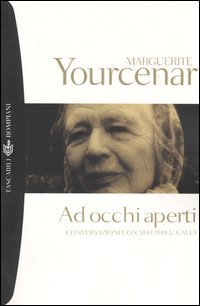
Ad occhi aperti. Conversazioni con Matthieu Galey
Quando si varca la soglia di 'Petite-Plaisance', sotto la veranda da cui pendono spighe di granturco, simbolo locale di prosperità, si ha la sensazione di penetrare direttamente in un luogo dove l'aria è diversa. Lo sguardo di Marguerite Yourcenar si posa sul visitatore, lo valuta, lo giudica, lontano e al tempo stesso gentile, con una vaga sfumatura di ironia. Poi, comincia a parlare, con la sicurezza di chi crede in ciò che dice... Così scrive Matthieu Galey nella presentazione di Ad occhi aperti", il testo in cui nel 1980 ha raccolto una serie di colloqui con la scrittrice.
266 pages, Paperback
First published January 1, 1980
About the author
Marguerite Yourcenar
213 books1,769 followersMarguerite Yourcenar, original name Marguerite de Crayencour, was a french novelist, essayist, poet and short-story writer who became the first woman to be elected to the Académie Française (French Academy), an exclusive literary institution with a membership limited to 40.
She became a naturalized U.S. citizen in 1947. The name “Yourcenar” is an imperfect anagram of her original name, “Crayencour.”
Yourcenar’s literary works are notable for their rigorously classical style, their erudition, and their psychological subtlety. In her most important books she re-creates past eras and personages, meditating thereby on human destiny, morality, and power. Her masterpiece is Mémoires d'Hadrien, a historical novel constituting the fictionalized memoirs of that 2nd-century Roman emperor. Her works were translated by the American Grace Frick, Yourcenar’s secretary and life companion.
Yourcenar was also a literary critic and translator.
She became a naturalized U.S. citizen in 1947. The name “Yourcenar” is an imperfect anagram of her original name, “Crayencour.”
Yourcenar’s literary works are notable for their rigorously classical style, their erudition, and their psychological subtlety. In her most important books she re-creates past eras and personages, meditating thereby on human destiny, morality, and power. Her masterpiece is Mémoires d'Hadrien, a historical novel constituting the fictionalized memoirs of that 2nd-century Roman emperor. Her works were translated by the American Grace Frick, Yourcenar’s secretary and life companion.
Yourcenar was also a literary critic and translator.
Ratings & Reviews
Friends & Following
Create a free account to discover what your friends think of this book!
Community Reviews
Displaying 1 - 29 of 29 reviews

March 14, 2023
Ako ne računam pojedine zbirke poezije, ovo je knjiga koju sam najviše puta pročitao u životu – sedam puta. Prvo čitanje se odigrao pre 15 godina i iščitao sam je levim okom, pošto sam na desnom ostao privremeno slep. Tog jula sam pored Širom otvorenih očiju prvi put pročitao Smrt u Veneciji, Tonija Kregera, Crnu menu i Velikog Mona. Spisak mi se danas čini kao savršena letnja lista dok se čeka dijagnoza. U životu sam uvek činio dosta grešaka, ali sam činio i nepogrešive izbore knjiga. Što nije mala stvar.
Reč je o razgovorima koje je Matje Galej načinio sa Margerit Jursenar na Pustim Bregovima, u njenom američkom domu. Knjiga je obavljena 1980. godine. U tom trenutku Margerit ima 77 godina, najveći deo književnog opusa je bio napisan, a za par meseci postaće član Francuske akademije, za sobom je imala i jedan interesantan život i zasigurno je imala šta da kaže. Ipak, Margerit je duboko mrzela ovu knjigu. Nakon izlaska, odbijala je da razgovara sa Galejom do kraja njegovog života. Tvrdila je da je previše odala o sebi, sumnjičava je bila u ono svoje “ja” (ono “ja” koje bi trebalo da izrazi zacementirani stav o nečemu), ali i da su mnogobrojna pitanja bila usmerena na teme koje je nisu zanimale. I zaista, dok se knjiga čita, oseća se netrepeljivost između Jursernarove i novinara, posebno kada zadire u njen privatni život ili prelazi na ideološku ravan.
Jursernarova mnogo više zvuči kao starodrevni, širokogrudni mudrac nego kao intelektualac. Ili, još slikovitije Jursernarova ima nešto od Sokrata, tao učitelja i Montenja. Njen odnos prema svetu je religijski u pravom i punom smislu reči svetosti kao i latinskog glagola religare, koji stoji u korenu reči religija, a koji znači povezivanje. Još kao devojka shvatila je da može da bira između rimokatoličanstva i kosmosa, te je bez imalo dvoumljenje izabrala vaseljenu. Tvrdi da je pripadnik više religija, da ima više domovina i da misleća bića nemaju rod, već vrline i mane. Upravo zbog tog humanističkog stava sa prezirom govori o svnim ideologijama, svim kutijama, idejama koje ponižavaju i unižavaju dostojanstvo nekog čoveka, ali i prema bilo kojem drugom partikularizmu i podeli na vrste i podvrste ljudi.
Trećina knjige se tiče razgovora o njenim književnim ostvarenjima, a dve trećine se bavi politikom, idejama i stavovima. O čemu god da Jursernarova uzme da govori, zvuči kao da je apsolutni autoritet u datoj oblasti (a spektar tema je širok od antičke lirike, šintoizma, Montenja, budizma preko naftnih mrlja, terorizma, televizije, prozvodnje mleka, do smrti, droga, bogova, najboljeg recepta za hleb, filma, Boba Dilana, ljubavi). Jeste da je reč o jednoj od osoba sa najširim humanističkim obrazovanjem ikada, ali autoritet pre proističe iz osećaja da je ovde svaki stav plod razmišljanja na određenu temu kako bi se živelo i razumeo kosmos, a ne slepog preuzimanja parola i varijacija fraza na određene teme.
i jedan od omiljenih trenutaka je kada je Matje pita: Ali kada budete završili tu knjigu, zar nećete imati utisak da ste zaokružili jedno delo i zatvorili ga? Jursernar odgovara: Ne zatvaram nikad ništa, čak ni svoja vrata.
Reč je o razgovorima koje je Matje Galej načinio sa Margerit Jursenar na Pustim Bregovima, u njenom američkom domu. Knjiga je obavljena 1980. godine. U tom trenutku Margerit ima 77 godina, najveći deo književnog opusa je bio napisan, a za par meseci postaće član Francuske akademije, za sobom je imala i jedan interesantan život i zasigurno je imala šta da kaže. Ipak, Margerit je duboko mrzela ovu knjigu. Nakon izlaska, odbijala je da razgovara sa Galejom do kraja njegovog života. Tvrdila je da je previše odala o sebi, sumnjičava je bila u ono svoje “ja” (ono “ja” koje bi trebalo da izrazi zacementirani stav o nečemu), ali i da su mnogobrojna pitanja bila usmerena na teme koje je nisu zanimale. I zaista, dok se knjiga čita, oseća se netrepeljivost između Jursernarove i novinara, posebno kada zadire u njen privatni život ili prelazi na ideološku ravan.
Jursernarova mnogo više zvuči kao starodrevni, širokogrudni mudrac nego kao intelektualac. Ili, još slikovitije Jursernarova ima nešto od Sokrata, tao učitelja i Montenja. Njen odnos prema svetu je religijski u pravom i punom smislu reči svetosti kao i latinskog glagola religare, koji stoji u korenu reči religija, a koji znači povezivanje. Još kao devojka shvatila je da može da bira između rimokatoličanstva i kosmosa, te je bez imalo dvoumljenje izabrala vaseljenu. Tvrdi da je pripadnik više religija, da ima više domovina i da misleća bića nemaju rod, već vrline i mane. Upravo zbog tog humanističkog stava sa prezirom govori o svnim ideologijama, svim kutijama, idejama koje ponižavaju i unižavaju dostojanstvo nekog čoveka, ali i prema bilo kojem drugom partikularizmu i podeli na vrste i podvrste ljudi.
Trećina knjige se tiče razgovora o njenim književnim ostvarenjima, a dve trećine se bavi politikom, idejama i stavovima. O čemu god da Jursernarova uzme da govori, zvuči kao da je apsolutni autoritet u datoj oblasti (a spektar tema je širok od antičke lirike, šintoizma, Montenja, budizma preko naftnih mrlja, terorizma, televizije, prozvodnje mleka, do smrti, droga, bogova, najboljeg recepta za hleb, filma, Boba Dilana, ljubavi). Jeste da je reč o jednoj od osoba sa najširim humanističkim obrazovanjem ikada, ali autoritet pre proističe iz osećaja da je ovde svaki stav plod razmišljanja na određenu temu kako bi se živelo i razumeo kosmos, a ne slepog preuzimanja parola i varijacija fraza na određene teme.
i jedan od omiljenih trenutaka je kada je Matje pita: Ali kada budete završili tu knjigu, zar nećete imati utisak da ste zaokružili jedno delo i zatvorili ga? Jursernar odgovara: Ne zatvaram nikad ništa, čak ni svoja vrata.

October 6, 2021
M. Yourcenar ile yapılmış bir “nehir söyleşi”. Kitaplarını çok beğenerek okuduğum yazarı daha yakından tanımak için iyi bir fırsat oldu. Söyleşi olduğundan sık sık tekrara düşülmüş, bu ise kitabın hacmini arttırmış (yaklaşık 400 sayfa). 30 bölümden oluşan söyleşide M. Yourcenar kitaplarının yazım süreçlerini, perde arkalarını, mesajlarını açıklıkla, samimiyetle anlatmış.
Tabii bir biyografi niteliğinde olan söyleşi ile yazarın babasıyla ilişkisini, hiç tanımadığını annesinin resmini ilk kez 35 yaşında, mezarını ziyaretini 55 yaşında yapmış olduğunu, sıradışı bir yaşamı olduğunu öğrenmek şaşırttıcı bir bilgi oldu. Çin ve Japon yazınına, Hint felsefe ve mitolojisine, özellikle Budizm’e ve Taoizm’e olan büyük tutkusunu, metafiziğe yakınlığını görmüş oldum. Çevre duyarlılığı, hayvan sevgisi üst seviyede. Bu arada muhalif ruh halini her zaman koruyan, sözünü esirgemeyen sert bir kişilik.
Kitabın yazarı MATTHIEU GALEY’in kendisini apolitik olarak tanımlayan Yourcenar’a yönelttiği “kendisine apolitik diyen her kişinin genelde sağcı oldugunu size söyleyerek, size bir şey ögretmiş olmayacagım” şeklindeki sorusuna (kışkırtıcı sorularından biri) cevabı “bırakın, bana kabul edilemeyecek kadar sert gelen bu yargıyı biraz düşüneyim, bu formül yalnızca sol düşünbilimin şu an için sağ politikaya üstün geldiğini kanıtlar” diye cevap vererek Galey’in sorusundaki saptamayı üstü kapalı kabul ettiğini de gösteriyor.
Dünya görüşünü, hayata bakışını ve beklentilerini, ırkçılığa ve feminizme dair düşüncelerini de özetle anlatmış M. Yourcenar. Çok keyifle okudum.
Tabii bir biyografi niteliğinde olan söyleşi ile yazarın babasıyla ilişkisini, hiç tanımadığını annesinin resmini ilk kez 35 yaşında, mezarını ziyaretini 55 yaşında yapmış olduğunu, sıradışı bir yaşamı olduğunu öğrenmek şaşırttıcı bir bilgi oldu. Çin ve Japon yazınına, Hint felsefe ve mitolojisine, özellikle Budizm’e ve Taoizm’e olan büyük tutkusunu, metafiziğe yakınlığını görmüş oldum. Çevre duyarlılığı, hayvan sevgisi üst seviyede. Bu arada muhalif ruh halini her zaman koruyan, sözünü esirgemeyen sert bir kişilik.
Kitabın yazarı MATTHIEU GALEY’in kendisini apolitik olarak tanımlayan Yourcenar’a yönelttiği “kendisine apolitik diyen her kişinin genelde sağcı oldugunu size söyleyerek, size bir şey ögretmiş olmayacagım” şeklindeki sorusuna (kışkırtıcı sorularından biri) cevabı “bırakın, bana kabul edilemeyecek kadar sert gelen bu yargıyı biraz düşüneyim, bu formül yalnızca sol düşünbilimin şu an için sağ politikaya üstün geldiğini kanıtlar” diye cevap vererek Galey’in sorusundaki saptamayı üstü kapalı kabul ettiğini de gösteriyor.
Dünya görüşünü, hayata bakışını ve beklentilerini, ırkçılığa ve feminizme dair düşüncelerini de özetle anlatmış M. Yourcenar. Çok keyifle okudum.

September 29, 2017
Si tratta di una lunga intervista presso la suggestiva dimora della grande scrittrice di lingua francese, sull'isola di Mount Desert all'etremo nord della costa atlantica statunitense.
M. Yorcenar è già una donna anziana di sterminata cultura e pacata saggezza.
Ha raggiunto un grande equilibrio interiore, con quella completezza di armonia tra sfera razionale, componente emotiva e dimensione spirituale.
Totalmente indifferente alle mode culturali e alle ideologie, sembra essere uscita incontaminata da conformismi e anticonformismi, parimenti deleteri, per essere semplicemente se stessa al livello più alto.
Dice infatti: "Ho sempre diffidato molto dell'attualità, in letteratura, in arte, nella vita. (...) Spesso non è che lo strato più superficiale delle cose" .
Vuole tuttavia rimanere in tutta umiltà coi piedi per terra : "Il contatto stretto col reale è qualcosa che mi sembra assolutamente essenziale, quasi misticamente essenziale", afferma. Ovviamente senza alcun cedimento al materialismo; anzi, riferisce: "La mia educazione religiosa si è fermata molto presto ma sono contenta di averla avuta, perché è una via di accesso all'invisibile, o al 'profondo', se si preferisce" .
La dimensione in cui vive è 'cosmica' : l'amore per ogni creatura conduce il suo impegno in ambito ecologista e in difesa degli animali. Il bisogno di sentirsi in armonia con il Tutto la pervade.
Un libro da leggere, rileggere, rileggere ...
M. Yorcenar è già una donna anziana di sterminata cultura e pacata saggezza.
Ha raggiunto un grande equilibrio interiore, con quella completezza di armonia tra sfera razionale, componente emotiva e dimensione spirituale.
Totalmente indifferente alle mode culturali e alle ideologie, sembra essere uscita incontaminata da conformismi e anticonformismi, parimenti deleteri, per essere semplicemente se stessa al livello più alto.
Dice infatti: "Ho sempre diffidato molto dell'attualità, in letteratura, in arte, nella vita. (...) Spesso non è che lo strato più superficiale delle cose" .
Vuole tuttavia rimanere in tutta umiltà coi piedi per terra : "Il contatto stretto col reale è qualcosa che mi sembra assolutamente essenziale, quasi misticamente essenziale", afferma. Ovviamente senza alcun cedimento al materialismo; anzi, riferisce: "La mia educazione religiosa si è fermata molto presto ma sono contenta di averla avuta, perché è una via di accesso all'invisibile, o al 'profondo', se si preferisce" .
La dimensione in cui vive è 'cosmica' : l'amore per ogni creatura conduce il suo impegno in ambito ecologista e in difesa degli animali. Il bisogno di sentirsi in armonia con il Tutto la pervade.
Un libro da leggere, rileggere, rileggere ...

August 6, 2019
marguerite yourcenar (rođena kao marguerite de crayencour - prezime je promijenila uz pomoć svog oca i kao plod igre slovima kad joj je bilo 19 godina, uoči njene prve objavljene knjige; izabiru slovo "Y" jer liči na drvo) najpoznatija je po remek-djelu "hadrijanovi memoari". u razgovorima s m. galeyom vođenima kroz nekoliko godina pred kraj svog života, daje duboki i široki uvid u svoj unutarnji život. već sama njena biografija je fascinantna: majka joj je umrla nekoliko dana nakon njenog rođenja i ostaje sama s ocem koji će joj biti ne samo otac, nego i mentor i prijatelj; do svoje 17. godine pročitala je cijelog shakespearea, tolstoja i dostojevskog, vergilija na latinskom, homera na grčkom; ulazila je u veze s muškarcima i sa ženama; na koncu se skrasila s družicom grace frick; postaje članicom belgijske kraljevske akademije i prva je žena primljena u francusku akademiju...
za shvaćanje ove knjige nije nužno, iako je poželjno, poznavanje njenog opusa. ja sam pročitala samo hadrijana, a nakon ove knjige razgovora zainteresirala me i za ostala svoja djela. ali knjige nisu samo ono o čemu marguerite priča (baš: "priča", knjiga je u formi "pitanje-odgovor" i to vrlo prirodno, baš kao u spontanom razgovoru), tu su razmišljanja i stavovi o religijama, o rasizmu, o ekologiji, o prevođenju, o snovima, o drogama, o novcu, feminizmu, televiziji... ostajem zadivljena koliko je ta žena... zdrava. koliko ima zdrava razmišljanja. i kad kažem "zdrava", mislim pritom kako bismo svi mi (ljudska bića) u svojim temeljima trebali misliti (i djelovati) na takav način. bazično jednostavno, bazično dobro, ispravno, pravično i pravedno, odgovorno... u suštini bića: dobrota i sklad. ali kad jedna tako obrazovana, načitana, osoba puna znanja govori o tome, to nisu samo floskule ni banalne fraze... to je najuzvišenija životna filozofija.
obavezna literatura za svakoga tko želi postati boljom osobom.
za shvaćanje ove knjige nije nužno, iako je poželjno, poznavanje njenog opusa. ja sam pročitala samo hadrijana, a nakon ove knjige razgovora zainteresirala me i za ostala svoja djela. ali knjige nisu samo ono o čemu marguerite priča (baš: "priča", knjiga je u formi "pitanje-odgovor" i to vrlo prirodno, baš kao u spontanom razgovoru), tu su razmišljanja i stavovi o religijama, o rasizmu, o ekologiji, o prevođenju, o snovima, o drogama, o novcu, feminizmu, televiziji... ostajem zadivljena koliko je ta žena... zdrava. koliko ima zdrava razmišljanja. i kad kažem "zdrava", mislim pritom kako bismo svi mi (ljudska bića) u svojim temeljima trebali misliti (i djelovati) na takav način. bazično jednostavno, bazično dobro, ispravno, pravično i pravedno, odgovorno... u suštini bića: dobrota i sklad. ali kad jedna tako obrazovana, načitana, osoba puna znanja govori o tome, to nisu samo floskule ni banalne fraze... to je najuzvišenija životna filozofija.
obavezna literatura za svakoga tko želi postati boljom osobom.
July 9, 2015
E' davvero giusto giudicare il pensiero di qualcuno? E' possibile farlo in maniera obiettiva, senza pregiudizi che siano positivi o negativi?
Non è semplice esprimere un giudizio su un libro di questo tipo, così come non è mai assoluta l'idea che abbiamo degli altri.
Marguerite Yourcenar in queste pagine si presenta e racconta, scrive nero su bianco una sfilza di pensieri, giudizi, opinioni ed esperienze guidata dalle intelligenti domande/affermazioni di Matthieu Galey.
Gli argomenti trattati sono moltissimi: il ruolo dello scrittore ed il rapporto con i personaggi, la solitudine, i crimini contro l'uomo e le altre forme di vita, il femminismo sono solo i primi esempi che mi vengono in mente "a caldo".
Ho letto diverse recensioni riguardanti questo volume e, in tutta sincerità, non mi ritrovo in nessuna di esse: non ho notato la "supponenza" delle classi agiate e, del resto, quando è diventata una colpa nascere in una famiglia appartenente a una determinata classe sociale? L'autrice osserva il mondo dal proprio punto di vista, così come tutti noi, ma sempre con spirito critico. Non mi hanno indignata determinati paragoni che, nel contesto del discorso, sono invece decisamente sensati e così via.
A prescindere dal trovarsi o meno d'accordo con la scrittrice, trovo che il modo in cui siano proposti e trattati i diversi spunti renda questo libro degno di essere letto.
Del resto perchè non riflettere un po' insieme alla Yourcenar?
E' un testo che fornisce un intelligente punto di vista da cui trarre ispirazione e con cui confrontarsi, cosa assai rara.
Non è semplice esprimere un giudizio su un libro di questo tipo, così come non è mai assoluta l'idea che abbiamo degli altri.
Marguerite Yourcenar in queste pagine si presenta e racconta, scrive nero su bianco una sfilza di pensieri, giudizi, opinioni ed esperienze guidata dalle intelligenti domande/affermazioni di Matthieu Galey.
Gli argomenti trattati sono moltissimi: il ruolo dello scrittore ed il rapporto con i personaggi, la solitudine, i crimini contro l'uomo e le altre forme di vita, il femminismo sono solo i primi esempi che mi vengono in mente "a caldo".
Ho letto diverse recensioni riguardanti questo volume e, in tutta sincerità, non mi ritrovo in nessuna di esse: non ho notato la "supponenza" delle classi agiate e, del resto, quando è diventata una colpa nascere in una famiglia appartenente a una determinata classe sociale? L'autrice osserva il mondo dal proprio punto di vista, così come tutti noi, ma sempre con spirito critico. Non mi hanno indignata determinati paragoni che, nel contesto del discorso, sono invece decisamente sensati e così via.
A prescindere dal trovarsi o meno d'accordo con la scrittrice, trovo che il modo in cui siano proposti e trattati i diversi spunti renda questo libro degno di essere letto.
Del resto perchè non riflettere un po' insieme alla Yourcenar?
E' un testo che fornisce un intelligente punto di vista da cui trarre ispirazione e con cui confrontarsi, cosa assai rara.
August 13, 2018
Pendant un cours de littérature française moderne, on avait parlé un tout petit peu de cette femme pas comme les autres qui fut en plus la première femme (belge !) à avoir été reçue à l’Académie française. J'ai tout de suite été intriguée par cette auteure qui m’a paru être d’une rare intelligence. J'ai donc voulu en savoir plus. Ce pour quoi je me suis procuré ce livre qui rassemble un ensemble d’interviews avec Mme Yourcenar réalisés par Matthieu Galey. Je sais par ailleurs déjà que dans cette chronique je ne serai pas en mesure de rendre autant justice à ce livre et à cette femme qu’il ne le devrait. Mais je l’essaierai quand-même…
J’ai beaucoup apprécié ma lecture. La forme du livre, qui se présente donc comme un interview (bravo, comme quoi je suis logique) où l’interviewer s’efface le plus possible et ceci à longueur de trois cents et quelques pages m’a paru très juste. Le livre se compose de chapitres traitants chacun d’un sujet particulier ce qui fait qu’on s’adonne à une lecture agréable et bien structurée. L’auteure nous présente ses points de vue sur des sujets très diversifiés et crée ainsi une image assez complète de sa façon de voir le monde. On n’en apprend par contre pas vraiment grand-chose sur sa vie personnelle (ou pas autant que n’aurais aimé en savoir en tout cas), peut-être parce que l’auteure elle-même affirme à plusieurs reprises qu’elle ne trouve pas très intéressant de parler de sa personne.
Ce que j’ai surtout aimé, c’est l’effet apesanteur qu’a eu ce livre sur moi. A chaque fois que je me suis replongée dans la lecture, j’ai retrouvé une femme très sage, très sereine, qui a une vision très claire sur des problèmes qui me préoccupent aussi assez régulièrement et dont je ne sais pas forcément très bien comment les aborder, tels que le réchauffement climatique, les misères qu’il y a dans ce monde, la distribution inégale des richesses et des opportunités etc. J’ai aussi été très émue par ses descriptions de ses rapports avec son père et avec ses amies et ses connaissances. Je me suis sentie très proche d’elle pendant toute ma lecture par son acharnement et son perfectionnisme en ce qui concerne son travail, par sa chaleur humaine, par son esprit philosophique et réfléchie, son appréciation des toutes petites choses etc. Il faut d’ailleurs aussi noter que je n’ai sûrement pas tout compris, tellement c’est philosophique et approfondi. Ce qui nécessitera sans doute encore de maintes relectures.
En gros, si vous avez envie d’une lecture qui vous en apprend un peu plus sur cette femme, son parcours, ses œuvres, ses opinions et que vous avez en plus envie de vous plonger dans une lecture très agréable et très instructive à part d’être douce et en même temps douloureuse par moments, alors foncez !
Une belle citation retenue : « J’ai compris aussi l’avantage de l’immobilité sur un point du monde : en regardant tourner les saisons sur un même lieu, on voyage toujours ; on voyage avec la terre. » (p.305)
J’ai beaucoup apprécié ma lecture. La forme du livre, qui se présente donc comme un interview (bravo, comme quoi je suis logique) où l’interviewer s’efface le plus possible et ceci à longueur de trois cents et quelques pages m’a paru très juste. Le livre se compose de chapitres traitants chacun d’un sujet particulier ce qui fait qu’on s’adonne à une lecture agréable et bien structurée. L’auteure nous présente ses points de vue sur des sujets très diversifiés et crée ainsi une image assez complète de sa façon de voir le monde. On n’en apprend par contre pas vraiment grand-chose sur sa vie personnelle (ou pas autant que n’aurais aimé en savoir en tout cas), peut-être parce que l’auteure elle-même affirme à plusieurs reprises qu’elle ne trouve pas très intéressant de parler de sa personne.
Ce que j’ai surtout aimé, c’est l’effet apesanteur qu’a eu ce livre sur moi. A chaque fois que je me suis replongée dans la lecture, j’ai retrouvé une femme très sage, très sereine, qui a une vision très claire sur des problèmes qui me préoccupent aussi assez régulièrement et dont je ne sais pas forcément très bien comment les aborder, tels que le réchauffement climatique, les misères qu’il y a dans ce monde, la distribution inégale des richesses et des opportunités etc. J’ai aussi été très émue par ses descriptions de ses rapports avec son père et avec ses amies et ses connaissances. Je me suis sentie très proche d’elle pendant toute ma lecture par son acharnement et son perfectionnisme en ce qui concerne son travail, par sa chaleur humaine, par son esprit philosophique et réfléchie, son appréciation des toutes petites choses etc. Il faut d’ailleurs aussi noter que je n’ai sûrement pas tout compris, tellement c’est philosophique et approfondi. Ce qui nécessitera sans doute encore de maintes relectures.
En gros, si vous avez envie d’une lecture qui vous en apprend un peu plus sur cette femme, son parcours, ses œuvres, ses opinions et que vous avez en plus envie de vous plonger dans une lecture très agréable et très instructive à part d’être douce et en même temps douloureuse par moments, alors foncez !
Une belle citation retenue : « J’ai compris aussi l’avantage de l’immobilité sur un point du monde : en regardant tourner les saisons sur un même lieu, on voyage toujours ; on voyage avec la terre. » (p.305)

Read
December 30, 2020Zanimljiva osoba, svesna svoje širine.

April 3, 2013
Impressive booklet, with interviews with Yourcenar, in which her erudition clearly shows. All her favorite subjects are enlightened. A must-read for the Yourcenar-fans.

July 18, 2011
yourcenar does have a number of worthwhile things to say about her life, her works etc. HOWEVER, she says a lot of irritating, completely wrongheaded things. for example: comparing killing animals for food with the holocaust. i suppose she was a product of her time but it doesn't make it any less irritating. she's so obviously an elite and she keeps on denying this, insisting that people are individuals, in control of their lives, which is so obviously said from a position of privilege.
i picked this up because i wanted to get a better sense of who she was. not entirely sure that i like what i saw, though it followed. still interested in her writing!
i picked this up because i wanted to get a better sense of who she was. not entirely sure that i like what i saw, though it followed. still interested in her writing!

July 11, 2012
"With Open Eyes" is a conversation with the wonderful writer Marguerite Yourcenar. She discusses everything from Greek literature to one of her favorite books...Gandhi's Autobiography! One really feels like you are sitting in the same room listening in on this fascinating discussion. I came away impressed by her intellect and her clear understanding of some complex literary arguments.

October 28, 2025
Una de mis preferidas. Se hace un poco tedioso cuando el entrevistador le pregunta por cuestiones políticas o de coyuntura, pero hay partes que justifican el libro

February 12, 2016
Everything Marguerite Yourcenar says is interesting, though the most bizarre is a long anecdote on going to dinner with Father Divine, the Harlem cult leader. Oddly enough he inspired the banquet passage from her Renaissance novel, The Abyss. Yourcenar is also an irritable crank, something I already knew from her repeated (and much deserved!) public jabs at Marguerite Duras, so even the most dubious opinions have an air of unmatched authority. Still this is full of fine, exacting observations. Subjects range from her father, characters and translations, to Rosseau, Comenius and Casanova.

November 2, 2019
Pour la première fois... mais hélas pas la dernière. Bon, pas mal. Ce genre d'écritures n'est pas commode ni facile. Disons que celui-ci est réussi. Il donne une image quasi complète de cet écrivain, en même temps que quelques vues sur le 'métier' d'écrivain.

September 1, 2018
Livro indispensável para os amantes da escritora Marguerite Yourcenar. Sabedoria de vida transmitida com clareza por meio de suas respostas ao conhecido jornalista literário Matthieu Galey.

March 4, 2024
Li a edição brasileira com tradução de Julio Castañom publicado pela Nova Fronteira.
Gosto de escrever e também de entender como as grandes obras foram imaginadas e passadas para o papel. O livro cumpre os dois objetivos. Venho de uma família francesa e reconheço no jeito de Marguerite algumas coisas de minhas tias avós. Uma preocupação de não concordar quando os termos não estão bem definidos na pergunta e não cair em armadilhas de perguntas simples. Considero Memórias de Adriano uma obra prima da literatura universal. Nesse livro de memórias a autora nos conta do trabalho insano que empreendeu, chegando a escrever e jogar fora pelo menos 2 versões completas antes de chegar onde queria. Da metade para o fim o livro ganha um impulso pois parece que a queda de braço dela com o entrevistador acaba (ou melhor, diminui) e surgem passagens lindas, frases memoráveis. Não precisa amar Marguerite Yourcenar para gostar desse livro. A sra tem ideias sobre tudo do mundo moderno e antigo, fala de poluição aquecimento global, extinção de animais, vegnismo, sofrimento animal, indústria que vende comida envenenada, tudo isso com a mesma intimidade que comenta sobre Montaigne, Descartes, Roma Antiga, budismo, pensadores japoneses e indus. Fala de sua juventude viajando pelo mediterrâneo, nadando nua em praias da grécia, fazendo amigos em toda parte e vivendo uma vinda simples numa ilha dos EUA, onde passa o natal com vizinhos, amigos. Uma aula de vida.
Gosto de escrever e também de entender como as grandes obras foram imaginadas e passadas para o papel. O livro cumpre os dois objetivos. Venho de uma família francesa e reconheço no jeito de Marguerite algumas coisas de minhas tias avós. Uma preocupação de não concordar quando os termos não estão bem definidos na pergunta e não cair em armadilhas de perguntas simples. Considero Memórias de Adriano uma obra prima da literatura universal. Nesse livro de memórias a autora nos conta do trabalho insano que empreendeu, chegando a escrever e jogar fora pelo menos 2 versões completas antes de chegar onde queria. Da metade para o fim o livro ganha um impulso pois parece que a queda de braço dela com o entrevistador acaba (ou melhor, diminui) e surgem passagens lindas, frases memoráveis. Não precisa amar Marguerite Yourcenar para gostar desse livro. A sra tem ideias sobre tudo do mundo moderno e antigo, fala de poluição aquecimento global, extinção de animais, vegnismo, sofrimento animal, indústria que vende comida envenenada, tudo isso com a mesma intimidade que comenta sobre Montaigne, Descartes, Roma Antiga, budismo, pensadores japoneses e indus. Fala de sua juventude viajando pelo mediterrâneo, nadando nua em praias da grécia, fazendo amigos em toda parte e vivendo uma vinda simples numa ilha dos EUA, onde passa o natal com vizinhos, amigos. Uma aula de vida.
December 31, 2024
Yourcenar was, indeed, a thoroughly original spirit. In this book, that is presented as an interview with Matthieu Galey, she is portrayed as a sage, living in a house on a remote island; and the book is full of wonders, wise observations, perceptive interpretations of history, and wit.
For instance, she speaks with wonder about the characters in her novels and how they experience life. It is as if her characters are alive, right now, around her. The way she speaks about them is so perceptive, that she might have been one of her own best readers.
She is open to having her creative methods as topic of conversation. She proves to have an almost scientific precision in her working method, e.g., in the empirically correct and true-to-life reconstruction and construction of a character. But also in, say, making translations of poems from Greek.
Throughout the book, treasures are often hidden in small clauses, such as « l’imagination, ou la sympathie, ce qui est la même chose » or « dans un écriture, dans un style, il existe une sorte de soubassement qui appartient en propre à la nature de l’auteur ; et encore je n’en suis pas sûr : la mise en œuvre finale dépend du sujet et du moment » (p222). Etc., etc.!
The book made me think about Montaigne’s Essais: her thoughts are as versatile as his, and cover as wide a range of subjects. The difference is of course the era: his was the 16th century, hers the 20th. I am tempted to give a quite comprehensive impression of what topics come to the table. She writes about:
• the way children perceive the world (p16)
• About style (p46)
• On truthfulness and sensitivity to reality (p58-59)
• About the nature of the here and now, its richness, and the comparatively overestimated importance of current events that are talked into us in literature, art and life (p63)
• About money and the bourgeois desire to secure the future, and thereby become a slave and lose freedom (p85)
• On homosexuality, bisexuality and the oppression or fashioning of homosexuality and on the necessity to combat regression to the suppression of freedom (p170-172)
• About magic and the surrogate effect it has on the human desire to gain control over the world; and about the role that gadgets also play in this, which keeps our entire economy going (p175) (ref. Stiegler, ref. Sennett)
• About the fact that the imagination may affect the truth in an essay (p183) [but also elsewhere of course, e.g. in research]
• About the fact that, according to Valery, untranslated, original text is actually translation, because the text arises from a completely personal experience ('self-language') and must then be translated into a language that is available to everyone (p193)
• On the similarity between poetry and prose and on the necessity of rhythm in poetry (p197-199)
• On genealogy and its meaning or meaninglessness (p202-205)
• On the description of characters by using the general human substance present in the writer himself (p211)
• On 'visitations': being in the company of imaginary figures for hours, e.g. from your own books, e.g. angels or boddhisatvas: an ascetic experience (p224)
• About identifying with your friends, and being able to live their lives (p226)
• On how we are and are not alone (p228)
• On how a writer can be useful to the reader (p233)
• On her taste for other writers (Tolstoy, Ibsen, Dostoevsky, Nietzsche) (p237)
• About her protest against certain then unseen injustices (population explosion, pollution of the planet, loss of biodiversity, the confrontations (with us and with God), the new and profound orientations of science (p238)
• About which attitude is appropriate towards the problems of the world ('avoir les yeux ouverts') (p239)
• On the totalitarian sides of American capitalism (and the consumerization of the citizen), with a great quote (p243)
• … and a beautiful, self-compassionate answer to the question of whether she has already achieved a certain degree of holiness (sainteté) (p244)
• On the difference between magic and religion (p245)
• On the nature of the presence of God (p248)
• About the ancient gods and the associated worldview of that time, so different from ours (p249)
• On the transition between religions and uncertain times (p250)
• About how quickly, and how unseen, times can change (p252)
• About what good education should teach her about racism; She has combative but also nuanced views on feminism; and ecological issues are central to her (p254)
• About the overpopulation of the planet and the hopelessness of the ecological question, whose solution actually requires humanity to change its mentality and moderate itself, which is unlikely to happen without an almost spiritual awareness, which has been given to only a few (p279)
• On politics, social justice and politics that is less central than the social question, which in turn is less central than the moral question of good and evil (p291)
• On animal rights and the quality of morality also with regard to people that can be measured by them (p293)
• On how her political involvement is expressed in particular in a strong commitment to nature and the environment (p294)
• About what it is like to be an animal and about how similar their experience is to that of us humans (p298)
• About friendship and love as a dance; In fact, she gives a beautiful metaphor for the quality of a good dialogue (p302)
• On the nature of respect, and again on friendship, with animals, plants and stones (and again with humans) (p302)
• About traveling in all kinds of ways (p305)
• On dying (p310)
• And about wisdom (p315)
What a book!
For instance, she speaks with wonder about the characters in her novels and how they experience life. It is as if her characters are alive, right now, around her. The way she speaks about them is so perceptive, that she might have been one of her own best readers.
She is open to having her creative methods as topic of conversation. She proves to have an almost scientific precision in her working method, e.g., in the empirically correct and true-to-life reconstruction and construction of a character. But also in, say, making translations of poems from Greek.
Throughout the book, treasures are often hidden in small clauses, such as « l’imagination, ou la sympathie, ce qui est la même chose » or « dans un écriture, dans un style, il existe une sorte de soubassement qui appartient en propre à la nature de l’auteur ; et encore je n’en suis pas sûr : la mise en œuvre finale dépend du sujet et du moment » (p222). Etc., etc.!
The book made me think about Montaigne’s Essais: her thoughts are as versatile as his, and cover as wide a range of subjects. The difference is of course the era: his was the 16th century, hers the 20th. I am tempted to give a quite comprehensive impression of what topics come to the table. She writes about:
• the way children perceive the world (p16)
• About style (p46)
• On truthfulness and sensitivity to reality (p58-59)
• About the nature of the here and now, its richness, and the comparatively overestimated importance of current events that are talked into us in literature, art and life (p63)
• About money and the bourgeois desire to secure the future, and thereby become a slave and lose freedom (p85)
• On homosexuality, bisexuality and the oppression or fashioning of homosexuality and on the necessity to combat regression to the suppression of freedom (p170-172)
• About magic and the surrogate effect it has on the human desire to gain control over the world; and about the role that gadgets also play in this, which keeps our entire economy going (p175) (ref. Stiegler, ref. Sennett)
• About the fact that the imagination may affect the truth in an essay (p183) [but also elsewhere of course, e.g. in research]
• About the fact that, according to Valery, untranslated, original text is actually translation, because the text arises from a completely personal experience ('self-language') and must then be translated into a language that is available to everyone (p193)
• On the similarity between poetry and prose and on the necessity of rhythm in poetry (p197-199)
• On genealogy and its meaning or meaninglessness (p202-205)
• On the description of characters by using the general human substance present in the writer himself (p211)
• On 'visitations': being in the company of imaginary figures for hours, e.g. from your own books, e.g. angels or boddhisatvas: an ascetic experience (p224)
• About identifying with your friends, and being able to live their lives (p226)
• On how we are and are not alone (p228)
• On how a writer can be useful to the reader (p233)
• On her taste for other writers (Tolstoy, Ibsen, Dostoevsky, Nietzsche) (p237)
• About her protest against certain then unseen injustices (population explosion, pollution of the planet, loss of biodiversity, the confrontations (with us and with God), the new and profound orientations of science (p238)
• About which attitude is appropriate towards the problems of the world ('avoir les yeux ouverts') (p239)
• On the totalitarian sides of American capitalism (and the consumerization of the citizen), with a great quote (p243)
• … and a beautiful, self-compassionate answer to the question of whether she has already achieved a certain degree of holiness (sainteté) (p244)
• On the difference between magic and religion (p245)
• On the nature of the presence of God (p248)
• About the ancient gods and the associated worldview of that time, so different from ours (p249)
• On the transition between religions and uncertain times (p250)
• About how quickly, and how unseen, times can change (p252)
• About what good education should teach her about racism; She has combative but also nuanced views on feminism; and ecological issues are central to her (p254)
• About the overpopulation of the planet and the hopelessness of the ecological question, whose solution actually requires humanity to change its mentality and moderate itself, which is unlikely to happen without an almost spiritual awareness, which has been given to only a few (p279)
• On politics, social justice and politics that is less central than the social question, which in turn is less central than the moral question of good and evil (p291)
• On animal rights and the quality of morality also with regard to people that can be measured by them (p293)
• On how her political involvement is expressed in particular in a strong commitment to nature and the environment (p294)
• About what it is like to be an animal and about how similar their experience is to that of us humans (p298)
• About friendship and love as a dance; In fact, she gives a beautiful metaphor for the quality of a good dialogue (p302)
• On the nature of respect, and again on friendship, with animals, plants and stones (and again with humans) (p302)
• About traveling in all kinds of ways (p305)
• On dying (p310)
• And about wisdom (p315)
What a book!

June 18, 2023
Ce recueil d'entretiens aurait été plus instructif pour moi si je n'avais pas lu l'autobiographie de Yourcenar et les notes qui suivent Mémoires d'Hadrien. Ceci étant, la transcription fidèle - il me semble - de ces entretiens nous permet de découvrir une personne arogante et imbue d'elle-même. Et ça n'enlève rien à l'extraordinaire intelligence ce cette immense écrivaine.
October 4, 2024
Madame Yourcenar the woman that you are alalalala a part des opinions un peu bancales sur le féminisme (même si je comprends en soit le pdv) j’ai marqué tellement de pages faudra que je repasse dessus at some point mais vraiment j’adore les interviews, les correspondances, les journaux d’auteur i need MOREEEE

March 20, 2021
Mais le besoin de voyage restait aussi puissant qu’un désir charnel et, depuis, j’ai « repris la route » et la reprendrai sans doute encore bien des fois, d’une manière ou d’une autre, jusqu’à ce que la force de le faire me soit enlevée.
p. 305
p. 305

October 4, 2021
Les propos de Marguerite Yourcenar recueillis par Matthieu Galey permettent de découvrir les oeuvres et les pensées de cet auteur dont l'actualité m'a surprise.

November 19, 2021
Cet excellent livre m’a remis en route pour lire ou relire l’oeuvre de Yourcenar. Quelle beauté et profondeur.

September 30, 2024
re brava

December 14, 2025
Les fans de Yourcenar apprécieront ces entretiens où elle parle beaucoup de ses œuvres. Même sans l'avoir beaucoup lue, Yourcenar reste un esprit érudit dont on peut apprécier la conversation.
Oui, parfois elle assène des trucs arbitraires ou qui font hausser les sourcils (on repassera pour le féminisme). Mais sa conscience écologique et son empathie pour les animaux forcent le respect, c'est assez rare parmi les écrivains et intellectuels de sa génération.
Oui, parfois elle assène des trucs arbitraires ou qui font hausser les sourcils (on repassera pour le féminisme). Mais sa conscience écologique et son empathie pour les animaux forcent le respect, c'est assez rare parmi les écrivains et intellectuels de sa génération.

June 26, 2026
oui bah "les yeux ouverts" elle est quand même bien réac la miss ...
genre ton livre préféré à 8 ans c'était Phèdre... pas à nous franchement !!!
genre ton livre préféré à 8 ans c'était Phèdre... pas à nous franchement !!!
February 12, 2016
Probably a biased five-star rating (being one long interview with one of my favourite writers) -- but there is no way I can rate this book any differently. Despite the often bland questions, a wealth of Ideas and insightful biographical facts pour through a straightforward prose, distilling a practical, no-nonsense view of the world not always apparent in the historical splendour of Yourcenar's own prose. To read, reflect, rebuild.

December 3, 2015
I want to read this interview online in English or French.
Read
June 27, 2014Read in French.
Displaying 1 - 29 of 29 reviews