GUSTAV KLIMT - THE WORLD "IN FEMALE FORM." GUSTAV KLIMT'S ART IS THROUGHLY FIN DE SIECLE. IT EXPRESSES THE APOCALYPTIC ATMOSPHERE OF VIENNA S UPPER MIDDLE-CLASS SOCIETY - A SOCIETY DEVOTED TO THE CULTIVATION OF AESTHETIC AWARENESS AND THE CULT OF PLEASURE. THE ECSTATIC JOY WHICH KLIMT AND HIS CONTEMPORARIES FOUND - OR HOPED TO FIND - IN BEAUTY WAS CONSTANTLY OVERSHADOWED BY DEATH. AND DEATH THEREFORE PLAYS AN IMPORTANT ROLE IN KLIMT'S ART. KLIMT'S FAME, HOWEVER, RESTS ON HIS REPUTATION AS ONE OF THE GREATEST EROTIC PAINTERS AND GRAPHIC ARTISTS OF HIS TIMES. PARTICULARLY HIS DRAWINGS, WHICH HAVE BEEN WIDELY ADMIRED FOR THEIR ARTISTIC EXCELLENCE, ARE DOMINATED BY THE EROTIC PORTRAYAL OF WOMEN, KLIMT SAW THE WORLD "IN FEMALE FORM." GOTTFRIED FLIEDL ALSO DISCUSSES THE SECESSION MOVEMENT AND KLIMT'S ROLE WITHIN THIS GROUP OF ARTISTS. EXAMINING KLIMT'S WORK AGAINST THE BACKGROUND OF HIS TIMES, HE GIVES AN APPRAISAL OF THE ARTIST WHILE AT THE SAME TIME RAISING THE CRITICAL ISSUES.
Que vamos a ver obras que nos gustan ya lo sabemos; aquí lo que importa es el formato. En este caso el formato es muy bueno: un libro adecuadamente grande, con buena impresión a color y con fotografías de buen tamaño, en las que se pueden apreciar bien las pinturas de Klimt. Asimismo, cuenta cosas interesantes acerca de la vida del autor e incluye fotografías del mismo, en su taller. Mejores haberlos haylos, pero este es de los buenos.
Since seeing an exhibit of paintings of Klimt at the Neue Galerie in New York City I have been infatuated by the artist. Some of his canvases are huge so these are not done justice by the small pages of an art book. Nevertheless from this book we do get the breath and scope of Klimt’s works – which are very unique. The portraits especially float before your eyes in a sensual tapestry of colours. As the author points out there is an aqua feel to them.
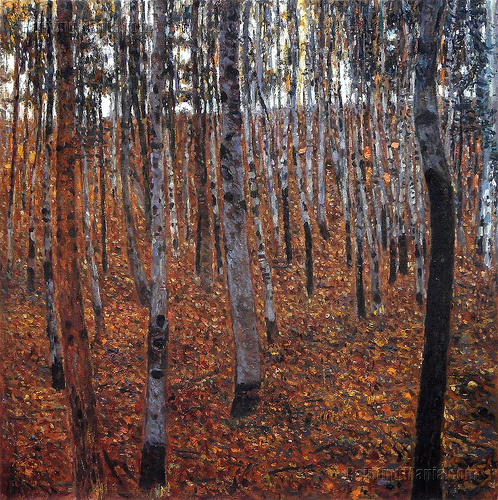
I did not always agree with the interpretations by the author – sometimes they are overly politicized, and sometimes unduly sexualized. The author did make the observation that Klimt’s landscapes are utterly devoid of people – and his people paintings, for the most part, do not have many recognizable outdoor or indoor features. So, at times, his explanations did get me thinking on different ways to view Klimt’s paintings.
And very sadly some of Klimt’s paintings were destroyed by German SS troops in May of 1945 at the very end of the war, which explains why the photo reproductions of them in the book are in black and white.
I was expecting to be more illuminated on the artists’ personal life, but because he wrote few letters and those around him even less, we know very little about what motivated him. This is sad because this would have shed light on this most personal of art forms. All we have is his art – and what a magnificent treasure it is!
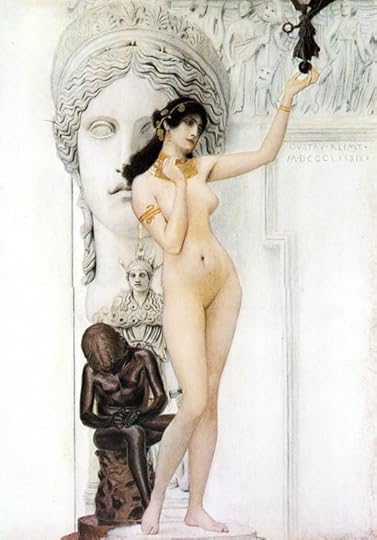
Allegory of Sculpture pencil with water colour 44 x 30 cm
This book mostly discusses Klimt from a social point of view, in its first half with the Secession (the artistic movement Klimt was part of until 1905). The group of artist's actions, famous expositions, ideas and of course their artistic works in contrast with the puritan society of Vienna in those days are heavily discussed. Are also brought up, Klimt's favourite subjects (Women -the three ages of women and along with it, fecondity, the painter's relation with his models- as well as erotic pieces, and the very few nature representations).
His artworks are cleverly dissected, revealing their recurring symbols and explaining their placements but his techniques are barely talked about.
Shortly, towards the last pages of the heavy volume we learn more about the man behind the painting, his close relatives and friends (Emilie Flöge in particular), his daily habits and mundane life.
I highly recommend this book if you have any interest in the artist, it isn't redundant and is very accessible even if you don't know much about Klimt's time or the arts. The reproductions are stunning, so much so that the photographs just like the paintings have a texturised look even on paper.
Art noveau/decorativa/erotica/simbolismo do xix são definitivamente um guilty pleasure - especialmente sob uma ótica mais matelialista, como é o caso aqui.
Primeiramente, as camadas que envolvem cada obra fazem delas intrigantes e mágicas:
"O tema desejado para Os Quadros das Faculdades 'A Vitória da Luz sobre a Obscuridade' tinha por objetivo uma apoteose, uma justificativa e uma glorificação das ciências racionais e da sua ação útil para a sociedade. Nos três quadros que lhe foram confiados: A Filosofia, A Medicina e A Jurisprudência, Klimt todavia rejeitou com veemência uma visão racional do mundo." • A Filosofia: "O destino é sempre o mesmo. Longe do saber frio e claro, longe também do mistério do mundo eternamente disfarçado, a espécie humana esforça-se por lutar pela felicidade, mas continua sempre a ser um instrumento nas mãos da Natureza que a utiliza para o seu objetivo imutável: a procriação.' [A obra] já não permite qualquer possibilidade de identificação com a história (...), recusa-se a ficar fixa no espaço e no tempo. A ideologia da burguesia decadente elimina o caráter histórico que ainda tinha sido o campo de orientação no historismo do século XIX, substituindo-o pela Natureza, que por seu lado não possui qualquer história, mas que conhece apenas um movimento circular intemporal que gira sobre si mesmo. Este ciclo suscita ambientes, emoções e sentimentos, mas nenhum saber ou reconhecimento - e, por conseguinte, também nenhuma representação de um domínio racional da Natureza, da subjugação da Natureza pelo Ser Humano. E é justamente sobre esta dinâmica da subjugação da Natureza, dinâmica reforçada pela técnica e desencadeada pelo capitalismo, que o otimismo progressita da burguesia se baseia." • A Medicina: "A vida desenrola-se entre o Tornar-se e o Morrer, e a própria vida, no seu caminho entre o nascimento e a morte, cria este profundo sofrimento para o qual Higia, a filha miraculosa de Esculápio, encontrou o remédio mitigador e curador." - Ernst Stöhr "A Higia de Klimt anuncia a ambiguidade na sua atitude hierática por meio de símbolos que a antiguidade grega lhe tinham dado: Higia, ela própria uma transformação da serpente em ser humano, oferece à serpente a taça cheia com água de Letes para beber o líquido das suas origens mais primitivas. Klimt proclama com isso a unidade da vida e da morte, a penetração da força vital instintiva e da dissolução individual." "Nada aqui indica a medicina como a arte curadora e a ciência que reconcilia o contraste entre a vida e a morte. Nessa concepção pessimista do eterno Tornar-se e da Morte, a medicina (Higia) apresenta-se como um mistério da esfinge." "O peso principal da alegorização dessa pintura é suportado pelas mulheres, que representam esse Tornar-se cíclico. (...) Klimt expôs a sua concepção de mundo como um protesto, uma contradição do passado, mas também como um projeto do futuro de uma nova cultura feminina." • A Jurisprudência: "A justiça aparece como uma força punidora e vingadora com ambições drásticas e sexuais. (...) As representantes da lei estão bem no cimo da composição, portanto, no ponto mais importante da hierarquia, mas a atenção do espectador concentra-se sobre as personagens que saltam primeiro à vista devido à sua grandeza: o velho representado como uma vítima e, com isso, o herói desta alegoria, encontra-se em baixo no primeiro plano do quadro, e as três "Erínias da Lei" que, na sua qualidade de executoras da justiça e míticas forças vingadoras, parecem aqui ser mais importantes que a própria justiça. (...) Klimt estava longe de pretender dirigir a sua crítica, em primeiro lugar, contra o papel político e social da justiça, transpondo-a, pelo contrário, para um domínio dos contos míticos, onde o medo masculino face à força vingadora do feminino oprimido e os fantasmas da punição está situado no centro: 'O medo da castração reina sobre a ação de Klimt e torna-se o centro: a vítima do sexo masculino - passiva, agachada, impotente - é prisioneira de uma armadilha viva, um polvo que a envolve como o regaço de uma mulher. As Fúrias que supervisionam a execução são mulheres fatais do "fin de siècle" e mênades gregas numa só pessoa. "O mundo da Lei de Klimt (...) faz lembrar a poderosa solução de "Orestes" de Aquiles. (...) Quando Atena construiu o seu tribunal para a sociedade, o Areópago, convenceu as Erínias a serem as suas protetoras e reprimiu a força destas, introduzindo-as no seu próprio templo. A razão e a cultura celebram assim o seu triunfo sobre o instinto e a barbaridade. Klimt inverte esse simbolismo antigo, devolve a sua força original às Fúrias e mostra que a Lei não ultrapassa nem o horror nem a violência e nada mais fez do que os esconder e legitimar. (...) Em A Jurisprudência, Klimt descreve o conflito entre o artista e a sociedade como um conflito essencialmente psicossexual, patente na representação impregnada de medo da ameaça do homem pela natureza instintiva da mulher."
A contextualização foi outro ponto que me chamou a atenção, porque permitiu entender melhor o que a busca da liberdade e o culto ao artista realmente significavam para a Secessão:
"A sagração da experiência artística tinha começado no final do século XVIII com a concepção burguesa do museu e traduziu-se na arquitetura do museu classicista e historicista. A arquitetura dos edifícios culturais do início do século XIX (...) ofereceu um enquadramento adaptado à experiência artística 'reveladora'. Já nessa época se atribuia uma certa importância à forma de entrada e saída desse 'templo da arte' e à passagem da esfera da cultura para a do mundo cotidiano e profano."
Além da transparência e da minuciosidade crítica com que o autor busca entender os acontecimentos pelo que realmente são:
"(...) por ocasião da exposição de arte de 1908, Klimt lamentou num discurso que as exposições da Secessão não conseguiram fazer 'penetrar a infiltração cada vez mais forte de toda a vida com intenções artísticas' e foi sobre esta infiltração que se fundou 'o progresso da civilização'. Estas pallavras mostram que Klimt confessou o fracasso do conceito da Secessão. Eliminar as fronteiras entre a arte e a vida em nome da arte era um dos objetivos da Secessão e da sua atividade expositora. A ideia de que a arte podia modificar a sociedade tinha já sido expressa no movimento das artes decorativas do século XIX (...). O artesanato, a indústria e a arte deviam formar uma unidade com vantagens para todos. O "aperfeiçoamento artístico dos produtos comerciais e industriais deviam servir para aumentar o seu volume de vendas e lucros, como também para a "cultura" da sociedade, uma cultura graças à qual se pensava poder interessar os artistas, os produtores, as pessoas cultas e "o povo"; pretendia-se com isso eliminar as barreiras sociais. Foi impossível à Secessão manter incondicionalmente a ideia da unidade da produção e recepção da arte após as crises econômicas e sociais registradas no final do século XIX. Fundações como as do o atelier vienense (1903) e a reforma da Escola das Arted Decorativas, que tinham por objetivo aproximar a formação da prática, tal como a política de exposições da Secessão, eram tentativas de satisfazer a antiga exigência de reforma a um novo nível. Contudo, o projeto da Secessão, tal como o dos ateliers vienenses que criavam produtos de luxo escolhidos para um círculo pequeno de pessoas de posses (e que fracassou também a nível econômico) era elitista. A Secessão transformou a função da cultura pública do museu na realização de uma missão estética que era apenas apoiada pelos artistas e que se dirigia a uma elite."
Astrologicamente, o que eu entendi foi que a arte é apresentada por esses artistas com suas características piscianas - em oposição ao cotidiano de virgem, e mestra do prazer leonino: 'A maior missão da arte não é a de ser um prazer, mas a de ensinar a ter este prazer. É neste sentido que a arte é um magnífico educador do ser humano' - Rudolf Lothar . Falar da aristocratização das massas também me remete a um idealismo quase platônico - principalmente considerando que esse movimento se opôs às correntes realistas, e não buscava uma visão exata da sociedade.
Catálogo da exposição de 1902 - O Friso de Beethoven: "A saudade da felicidade encontra o seu sossego na poesia. As artes conduzem-nos a um reino ideal onde só nós podemos encontrar a verdadeira alegria, a verdadeira felicidade e o verdadeiro amor."
Uma alegoria que centraliza o artista como herói. O autor questiona constantemente o narcisismo e o hedonismo dos artistas da Secessão (válido, né). Outro questionamento muito interessante é o da relação artista-modelo, em que Flidl já nos prepara para uma conversa honesta sobre a objetificação da mulher:
"Era o artista que podia limitar a liberdade dos modelos dos pontos de vista social, material e estético (o quadro A Esperança é um exemplo disso) e que era ele que decidia o olhar sobre a mulher. Os modelos eram justamente aqueles que se encontravam, naquela época, no fundo da escala da consideração social; não podiam dispor de si livremente e era-lhes vedada qualquer possibilidade de protesto. A determinação dos papéis femininos pelo artista masculino implicava evidentemente não apenas a 'descoberta' do erotismo e do sexual, mas simultaneamente também a redução do feminino quase exclusivamente ao erótico e ao sexual. É por isso e porque faltavam todas as condições culturais e sociais para o desdobrar de uma sexualidade feminina, livre de repressões, que não se podia falar de libertação em Klimt e nos seus modelos."
Agora, a questão mais polêmica, complexa, confusa e fastidiosa, que é a questão do gênero. Um dos pontos mais baixos em Klimt (junto com a questão elitista), e em seus contemporâneos. Temos em Klimt um canceriano (símbolo geralmente tomado por feminino) com Marte em Áries (masculino). Faz sentido que esta simbologia se manifeste em suas criações, em meio a conflitos e crises.
• O Beijo: "É do homem que emanam as -poucas - atividades do quadro. É ele que, no abraço, se esforça por fazer desaparecer os sexos e que procura a identificação com a mulher. Esta decorre do que se designou crise do masculino, ou, em termos político-sociológicos, crise do Eu liberal. Esta crise conduz também à descoberta das suas próprias facetas femininas. Em O Friso de Beethoven, estas tinham sido separadas e rejeitadas como "forças hostis" inquietantes. Em O Beijo, o reconhecimento da separação dos sexos também não é suportado. A imagem da mulher é literalmente incluída na do homem e subordinada ao princípio da masculinidade."
Novamente, o artista é o centro. Especificamente, as análises da obra indicam que a crise do artista e do burguês é simbolizada pela crise do Homem. Esta, representada pela incorporação do feminino. A feminilidade é reduzida à fragilidade. A mulher, retratada como algo incompleto. Falta-lhe o falo? Deseja o falo? Não é a realidade, a mulheridade é mais que uma ausência, mais que passividade. Mas isso poderia explicar a realidade interior do artista?
"Klimt não estava interessado em seu próprio ser-homem masculino - a sua frase 'não sou particularmente interessante' já foi citada - mas sim, e em toda a sua exclusividade, pelo ser-homem feminino. A procura de uma identidade em meio a crises culturais e pessoais não o levou a questionar sobre si próprio e sobre o fenômeno da bissexualidade descoberto por Freud, mas sim a tentar realizar sua identidade na imagem da mulher. Klimt não foi o único a ter esta ideia. Descreveu-se 'a nova valorização do feminino' como uma 'revalorização da feminilidade masculina', por expressões como 'feminização' ou 'autofeminização'." "Tem-se a tendência para fazer desaparecer da arte a imagem do homem, sendo monopolizada pela da mulher - mas pagando o preço da sua demmonização, mistificação ou fetichização. A sua imagem transformava-se em Judith, bruxas, seres míticos e seres naturais e monstros - ou numa tentação estética de produtos. Na Arte Nova, o corpo nu é descoberto para a publicidade."
A mulher de Klimt é, de fato, passiva, lânguida, objetificada e altamente erotizada. A própria passividade é atributo canceriano. Outro atributo é a introversão, a proteção de si mesmo, das emoções próprias, que é o pouco que se sabe do artista. Era um homem retraído e absorto em si mesmo. Criou um mundo de alegorias e idealismo focado no mistério que a feminilidade evoca a alguns artistas. Mas não se posicionou diretamente a respeito das suas criações. Deixou ele mesmo um mistério, da própria visão e proposta acerca da mulher.
This entire review has been hidden because of spoilers.
Considering that I just took a fictitious jaunt through historical Vienna alongside Klimt by way of Christopher Moore’s new novel, I figured that this was good incentive to pick up one of my many languishing art books and get into a slightly more academic treatise. Fortunately, any book that contains Klimt is guaranteed to have a certain level of glitz and glam thanks to the vibrancy of his artwork, and this book was no exception. Filled from cover to cover with Taschen’s signature high-quality reproductions, we are treated to a wealth of the artist’s output - even though the size of this volume can’t come close to the sheer heft of their definitive (and backbreaking) tome that was later released. What this volume may lack in completion, it more than makes up for in accessibility. It’s just the right size to reproduce and represent the artwork well, without getting over-wieldy to handle, and I was pleasantly surprised at how readable the text was. While the author clearly has an academic art history background and occasionally delved into minutiae that could have been ignored (though sometimes served as borderline-juicy historical gossip), the narrative was well constructed and sketched a well-cited overview of Klimt, his work, and the time period in which he was working. My only real complaint with this volume is that (in typical fashion) the artworks being discussed sometimes fell pages away from their discussion - but then again, I’m familiar enough at this point with Klimt’s work that it has become less of an actual complaint and more of a flittering eye-roll-inducing annoyance.
Gustav Klimt, the renowned Austrian artist, truly captured the essence of the world in female form through his mesmerizing paintings. His iconic works, such as "The Kiss" and "Portrait of Adele Bloch-Bauer I," showcase his distinctive style characterized by intricate patterns, rich colors, and sensual depictions of women. Klimt's art celebrates femininity and explores themes of love, beauty, and the human connection. His masterpieces continue to captivate audiences and leave a lasting impression. 🎨🌸
"Gustav Klimt, 1862–1918: The World in Female Form" is a remarkable book that explores the artistry of Gustav Klimt. It delves into his unique style, which often depicted women in a sensual and symbolic manner. The book offers a comprehensive look at Klimt's life, influences, and the themes he explored through his artwork. If you appreciate the beauty and symbolism in Klimt's paintings, this book is a wonderful choice to further explore his artistic world. 🎨📚😍
I love how the book included sketches, old photos of the painter and the city he lived in, paintings by other contemporary artists who inspired his work, as well as paintings of his that were destroyed during WW2. It follows a somewhat chronological order which helps you see his process and the evolution of Klimt's rich inner life with more clarity.
"Gustav Klimt, 1862–1918: The World in Female Form" is a captivating book that delves into the artistic world of Gustav Klimt. With his unique style and focus on portraying women, Klimt's artworks beautifully represent the essence of the world. This book is a must-read for art enthusiasts who appreciate Klimt's ability to capture the beauty and complexity of the female form.
This book was a delightful surprise! It's a heartwarming tale filled with charming characters and a beautiful message of friendship. I couldn't put it down.
The music's good, but the way you look at me makes my pulse race. Care to rewrite the rhythm of the night with a touch more... playful exploration that might lead to something unexpected?
Gottfried Fliedl’s Gustav Klimt, 1862-1918: The World in Female Form is an illuminating and erudite study of the Austrian painter’s oeuvre, positioning Klimt’s work within the broader cultural and socio-political contexts of fin-de-siècle Vienna. With scholarly precision and an evident appreciation for Klimt’s radical aesthetic, Fliedl presents a compelling narrative that weaves together biography, artistic philosophy, and feminist discourse, ultimately arguing that Klimt’s idealization of the female form was both a product of and a reaction to the shifting tides of early modernity.
At its core, the book explores how Klimt’s art navigates the tensions between eroticism and symbolism, decadence and innovation, tradition and rupture. Fliedl’s analysis extends beyond the immediate allure of Klimt’s gilded canvases to interrogate the ideological underpinnings of his vision. He engages with Klimt’s controversial status within the Viennese Secession, examining how the artist’s rejection of academic historicism paved the way for a distinctly sensual and decorative mode of expression. By situating Klimt within the intellectual ferment of Vienna—amid the writings of Freud, the music of Mahler, and the architecture of Otto Wagner—Fliedl underscores the painter’s contribution to a broader avant-garde movement.
One of the book’s greatest strengths is its nuanced discussion of the female figure in Klimt’s work. The author neither succumbs to the myth of Klimt as a mere hedonistic painter nor dismisses feminist critiques of his objectification of women. Instead, Fliedl offers a balanced reading, suggesting that Klimt’s figures—whether femmes fatales, ethereal muses, or maternal archetypes—embody the anxieties and aspirations of a rapidly transforming society. The interplay of eroticism and reverence in works like The Kiss and Judith I is explored through a lens that acknowledges both the limitations of Klimt’s perspective and his radical departure from patriarchal visual traditions.
Fliedl’s scholarship is supported by a wealth of visual material, making the book as visually engaging as it is intellectually rigorous. The high-quality reproductions allow for an immersive experience, inviting readers to linger over Klimt’s intricate patterns, golden surfaces, and enigmatic compositions. However, the book is not without its minor shortcomings. While Fliedl excels in historical and aesthetic analysis, his discussion of Klimt’s relationship with contemporaneous female artists—such as the overlooked contributions of Emilie Flöge—is somewhat underdeveloped. A deeper engagement with the gendered dynamics of artistic production in turn-of-the-century Vienna would have further enriched the study.
Ultimately, Gustav Klimt, 1862-1918: The World in Female Form is an essential text for scholars, art historians, and admirers of Klimt’s work alike. Fliedl’s ability to situate Klimt within a constellation of aesthetic and intellectual currents makes this book a significant contribution to the literature on Viennese Modernism. It is not merely a celebration of Klimt’s genius but a thoughtful meditation on the ideological currents that shaped—and were shaped by—his vision of the world in female form.
Got this book cheaply at a library book sale. I like the art of Gustav Klimt (even if I find him kind of pervy). He had aesthetic sense, a command of color and human likeness. This is one of those art coffee table books but I don't really want my kids to read it so it is on a shelf behind my bedroom door(which is still safe from them for the moment).
I didn't even read the entire book because I only needed some of the chapters for school (So I skipped everything about his childhood and nature paintings) ... Anyway Klimt was a (probably boring?) dude who made cool art & his models were tragically underrated + underpaid
I love his paintings...you can look at them for hours and hours and still discover new things. If I could have one original painting on my wall, I would choose "The Kiss".