

What do you think?
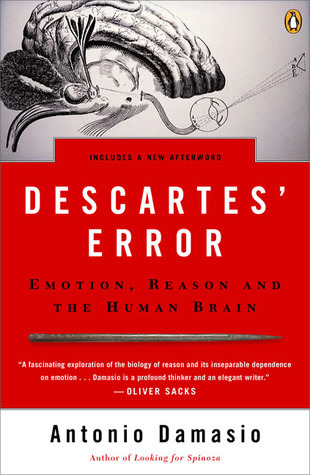
Descartes' Error: Emotion, Reason and the Human Brain
Since Descartes famously proclaimed, "I think, therefore I am," science has often overlooked emotions as the source of a person’s true being. Even modern neuroscience has tended, until recently, to concentrate on the cognitive aspects of brain function, disregarding emotions. This attitude began to change with the publication of Descartes’ Error in 1995. Antonio Damasio—"one of the world’s leading neurologists" (The New York Times)—challenged traditional ideas about the connection between emotions and rationality. In this wondrously engaging book, Damasio takes the reader on a journey of scientific discovery through a series of case studies, demonstrating what many of us have long suspected: emotions are not a luxury, they are essential to rational thinking and to normal social behavior.
336 pages, Paperback
First published January 1, 1994
About the author
António Damásio
48 books1,542 followersDamásio studied medicine at the University of Lisbon Medical School in Portugal, where he also did his medical residency rotation and completed his doctorate. Later, he moved to the United States as a research fellow at the Aphasia Research Center in Boston. His work there on behavioral neurology was done under the supervision of Norman Geschwind.
As a researcher, Dr. Damásio's main interest is the neurobiology of the mind, especially neural systems which subserve memory, language, emotion, and decision-making. His research has helped to elucidate the neural basis for the emotions and has shown that emotions play a central role in social cognition and decision-making. Damásio has formulated the somatic markers hypothesis.
As a clinician, he and his collaborators study and treat the disorders of behavior and cognition, and movement disorders.
Damásio's books deal with the relationship between emotions and feelings, and what are their bases in the brain. His 1994 book, Descartes' Error: Emotion, Reason and the Human Brain, was nominated for the Los Angeles Times Book Award and is translated in over 30 languages. His second book, The Feeling of What Happens: Body and Emotion in the Making of Consciousness, was named as one of the ten best books of 2001 by New York Times Book Review, a Publishers Weekly Best Book of the Year, a Library Journal Best Book of the Year, and has thirty foreign editions. Damásio's most recent book, Looking for Spinoza: Joy, Sorrow, and the Feeling Brain, was published in 2003. In it, Damásio explores philosophy and its relations to neurobiology, suggesting that it might provide guidelines for human ethics.
He is a member of the American Academy of Arts and Sciences, the National Academy of Science's Institute of Medicine, and the European Academy of Arts and Sciences. Damásio has received many awards including the Prince of Asturias Award in Science and Technology, Kappers Neuroscience Medal, the Beaumont Medal from the American Medical Association and the Reenpaa Prize in Neuroscience. He is also in the editorial board of many important journals in the field.
His current work involves the social emotions, decision neuroscience and creativity.
Prof. Damásio is married to Dr. Hanna Damásio, his colleague and co-author of several works.
(from: Wikipedia)
As a researcher, Dr. Damásio's main interest is the neurobiology of the mind, especially neural systems which subserve memory, language, emotion, and decision-making. His research has helped to elucidate the neural basis for the emotions and has shown that emotions play a central role in social cognition and decision-making. Damásio has formulated the somatic markers hypothesis.
As a clinician, he and his collaborators study and treat the disorders of behavior and cognition, and movement disorders.
Damásio's books deal with the relationship between emotions and feelings, and what are their bases in the brain. His 1994 book, Descartes' Error: Emotion, Reason and the Human Brain, was nominated for the Los Angeles Times Book Award and is translated in over 30 languages. His second book, The Feeling of What Happens: Body and Emotion in the Making of Consciousness, was named as one of the ten best books of 2001 by New York Times Book Review, a Publishers Weekly Best Book of the Year, a Library Journal Best Book of the Year, and has thirty foreign editions. Damásio's most recent book, Looking for Spinoza: Joy, Sorrow, and the Feeling Brain, was published in 2003. In it, Damásio explores philosophy and its relations to neurobiology, suggesting that it might provide guidelines for human ethics.
He is a member of the American Academy of Arts and Sciences, the National Academy of Science's Institute of Medicine, and the European Academy of Arts and Sciences. Damásio has received many awards including the Prince of Asturias Award in Science and Technology, Kappers Neuroscience Medal, the Beaumont Medal from the American Medical Association and the Reenpaa Prize in Neuroscience. He is also in the editorial board of many important journals in the field.
His current work involves the social emotions, decision neuroscience and creativity.
Prof. Damásio is married to Dr. Hanna Damásio, his colleague and co-author of several works.
(from: Wikipedia)
Ratings & Reviews
Friends & Following
Create a free account to discover what your friends think of this book!
Community Reviews
Displaying 1 - 30 of 593 reviews

February 28, 2013
OMG Damasio is a hand full.
I think he's trying to kill me.
The book starts out very readable (which is uncharacteristic of Damasio), then (about half way through) the book becomes nearly unreadable (which is typical of Damasio).
I am an educated reader. I teach affective and developmental psychology. I am not a researcher or a specialist but I can say that none of the material in this book is unfamiliar to me. But I'm often lost as to the larger point Damasio is trying to make.
I attribute this to Damasio's prolix writing style. Much of the book feels like he's barfing data onto page after page with out connecting any of it back to the central metaphor of the book.
I find this to be the case with a lot of European intellectuals. They (big generalization, lots of exceptions e.g. Dawkins) don't seem to value economy, clarity or functionality in their writing. The older I get, the more I respect writers who do.
I'll finish this book, I'll read the rest of his books, but dear god what a chore..
I think he's trying to kill me.
The book starts out very readable (which is uncharacteristic of Damasio), then (about half way through) the book becomes nearly unreadable (which is typical of Damasio).
I am an educated reader. I teach affective and developmental psychology. I am not a researcher or a specialist but I can say that none of the material in this book is unfamiliar to me. But I'm often lost as to the larger point Damasio is trying to make.
I attribute this to Damasio's prolix writing style. Much of the book feels like he's barfing data onto page after page with out connecting any of it back to the central metaphor of the book.
I find this to be the case with a lot of European intellectuals. They (big generalization, lots of exceptions e.g. Dawkins) don't seem to value economy, clarity or functionality in their writing. The older I get, the more I respect writers who do.
I'll finish this book, I'll read the rest of his books, but dear god what a chore..
November 27, 2012
I read Descartes' Error as an undergraduate. In grad school, I learned that my advisor's wife (herself a neuroscientist of some renown) had a very poor opinion of Damasio's work. However, by that point, this book had already changed my life.
Damasio provides here a popular account of research in neuroscience that started with the famous case of Phinneas Gage, who, upon having a railroad spike shoved through his head by an explosion, changed from being an upstanding, reliable citizen into a scurrilous bastard with a gambling problem. From this, as well as experimental work with other victims of brain damage, Damasio draws the conclusion that "reason" as we typically think of it is not an abstract process, but a fundamentally embodied one: the brain and the body are in constant communication, and the brain uses feedback from the body to evaluate, prune, and select for further exploration the branches of a decision tree that, for even the most minor of problems ("when should we get together next?") would be otherwise unmanageably large.
My interest in cognitive science and neuroscience were the natural outgrowths of my interest in computers and science fiction. I grew up, as did most people of my generation, with the metaphor of the mind as a computer, executing logical programs in a way that would have made Aristotle - and Descartes - proud. I knew from studies of psychology how apparently irrational the human mind could be, but until I read this book, I always thought the mind was, fundamentally, a separate thing from the body. This book convinced me they are, at least as we implement them, inseparable.
Damasio provides here a popular account of research in neuroscience that started with the famous case of Phinneas Gage, who, upon having a railroad spike shoved through his head by an explosion, changed from being an upstanding, reliable citizen into a scurrilous bastard with a gambling problem. From this, as well as experimental work with other victims of brain damage, Damasio draws the conclusion that "reason" as we typically think of it is not an abstract process, but a fundamentally embodied one: the brain and the body are in constant communication, and the brain uses feedback from the body to evaluate, prune, and select for further exploration the branches of a decision tree that, for even the most minor of problems ("when should we get together next?") would be otherwise unmanageably large.
My interest in cognitive science and neuroscience were the natural outgrowths of my interest in computers and science fiction. I grew up, as did most people of my generation, with the metaphor of the mind as a computer, executing logical programs in a way that would have made Aristotle - and Descartes - proud. I knew from studies of psychology how apparently irrational the human mind could be, but until I read this book, I always thought the mind was, fundamentally, a separate thing from the body. This book convinced me they are, at least as we implement them, inseparable.
January 28, 2009
Rene Descartes was a 17th French philosopher and scientist, often called the father of modern philosophy. Descartes argued that 'mind' is an essence that exists independent of 'brain' - this is known as 'Cartesian Dualism.' In 'Descartes' Error', Antonio Damasio argues persuasively that that mind is inextricably linked to brain - when you change the physical brain in specific, measurable ways, you induce specific and measurably changes in mind - personality and behavior.
Damasio illustrates this through numerous examples, drawn from patients who've exerienced brain damage due to trauma or disease, and emerged from the experience with a new personality and mental abilities.
Given the evidence, it's very difficult to argue that the 'mind' or 'soul' is a non-material essence that exists independent of the physical structure of the brain.
Damasio illustrates this through numerous examples, drawn from patients who've exerienced brain damage due to trauma or disease, and emerged from the experience with a new personality and mental abilities.
Given the evidence, it's very difficult to argue that the 'mind' or 'soul' is a non-material essence that exists independent of the physical structure of the brain.

July 22, 2025
In Descartes' Error, Antonio Damasio shows that the emotional center is essential to making rational decisions. The well-known case of Phineas Gage, a worker whose skull was pierced by a crowbar and who, although intellectually normal, became incapable of behaving coherently, remains famous. Ultimately, Damasio demonstrates that a degree of subjectivity is essential for effective behavior.

February 28, 2020
Two words: Very Dry.
Book is not suited for layman readers. If you have not taken a university-levelled neurobiology course, you will be lost. You must be familiar with neuroanatomy before diving into this book, it makes for a smoother read (but still very taxing).
Damasio's research a nutshell: emotions are just as equally important as reason in decision making. Patients with neocortical damage in prefrontal cortex of brain are unique cases of "functional beings without any affects" -- they maintain their IQ and all relevant physiological control, except the use of emotions. This results in alienation in all social circumstances. They essentially become social deviants, unable to make any effective (or acceptable) decisions in any situations.
BTW: descartes' OWN philosophy has nothing to do with this book. Rather, Damasio critiqued the schools of Rationality (and ancient Stoics for that matter) -- how it undermined the importance of FEELINGS in all capacities. Reason and logic? Not enough. If Reason and Logic were the ONLY qualities required to make effective decisions, then Damasio's patients would've been the "Ideal Rational Being". But instead these patients were shunned by family and friends, lost their jobs, cannot maintain any effective interpersonal relationships.
So, kids, feel those feels. go nuts.
Book is not suited for layman readers. If you have not taken a university-levelled neurobiology course, you will be lost. You must be familiar with neuroanatomy before diving into this book, it makes for a smoother read (but still very taxing).
Damasio's research a nutshell: emotions are just as equally important as reason in decision making. Patients with neocortical damage in prefrontal cortex of brain are unique cases of "functional beings without any affects" -- they maintain their IQ and all relevant physiological control, except the use of emotions. This results in alienation in all social circumstances. They essentially become social deviants, unable to make any effective (or acceptable) decisions in any situations.
BTW: descartes' OWN philosophy has nothing to do with this book. Rather, Damasio critiqued the schools of Rationality (and ancient Stoics for that matter) -- how it undermined the importance of FEELINGS in all capacities. Reason and logic? Not enough. If Reason and Logic were the ONLY qualities required to make effective decisions, then Damasio's patients would've been the "Ideal Rational Being". But instead these patients were shunned by family and friends, lost their jobs, cannot maintain any effective interpersonal relationships.
So, kids, feel those feels. go nuts.

January 7, 2009
I had an unusually ambivalent reaction to this book and alternated between being fascinated and being, well, slightly bored. I'd say that the book is good and the author has some excellent insights, but he gets a little long-winded at times and tends to meander. For the curious, Descarte's "error" was the separation of mind and body, and consequently, an artificial dichotomy between rationality and emotion. Damasio makes an excellent case on neurological grounds that rationality simply doesn't work without emotion.

July 8, 2018
3,5*
Não sou uma leitora prolifera em matérias como a que é abordada por António Damásio neste livro, mas também não é a minha primeira leitura sobre o tema.
No entanto, nesta obra, que começa de uma forma algo acessível ao leitor "comum" no que respeita a conceitos sobre o assunto, com o avançar da leitura, a complexidade dos termos adensa-se, tornando-os demasiado científicos ou académicos, o que me dificultou, a dada altura, a sua compreensão.
Mas acho que o barco chegou a bom porto e António Damásio ganhou, definitivamente, uma nova leitora.
A minha predilecção foi para o capítulo 7 da parte II sobre as emoções e sentimentos.
P. 257- "(...) a compreensão cabal da mente humana requer a adopção de uma perspectiva do organismo. (...) a alma e o espírito, em toda a sua dignidade e dimensão humana, são os estados complexos e únicos no organismo. Talvez a coisa que se torna mais indispensável fazermos no dia-a-dia, enquanto seres humanos, seja a de recordar a nós próprios e aos outros a complexidade, fragilidade, finitude e singularidade que nos caracterizam."
Não sou uma leitora prolifera em matérias como a que é abordada por António Damásio neste livro, mas também não é a minha primeira leitura sobre o tema.
No entanto, nesta obra, que começa de uma forma algo acessível ao leitor "comum" no que respeita a conceitos sobre o assunto, com o avançar da leitura, a complexidade dos termos adensa-se, tornando-os demasiado científicos ou académicos, o que me dificultou, a dada altura, a sua compreensão.
Mas acho que o barco chegou a bom porto e António Damásio ganhou, definitivamente, uma nova leitora.
A minha predilecção foi para o capítulo 7 da parte II sobre as emoções e sentimentos.
P. 257- "(...) a compreensão cabal da mente humana requer a adopção de uma perspectiva do organismo. (...) a alma e o espírito, em toda a sua dignidade e dimensão humana, são os estados complexos e únicos no organismo. Talvez a coisa que se torna mais indispensável fazermos no dia-a-dia, enquanto seres humanos, seja a de recordar a nós próprios e aos outros a complexidade, fragilidade, finitude e singularidade que nos caracterizam."

July 14, 2021
Una visione e una proposta di analisi neurologica e filosofica diametralmente opposte alla classica dicotomia cartesiana mente-corpo (res cogitans - res extensa). Damasio propone una mente nel corpo che dal corpo e con il corpo strettamente si lega. Non piu' razionalita' versus emozioni/sentimenti ma un connubio che si rivela indispensabile per la pianificazione a qualsiasi livello, sia quotidiano che ai massimi vertici dell'elaborazione razionale. I concetti espressi non sono semplici ma la capacita' di esposizione dell'autore e' notevole.

July 19, 2010
Ignore my bias of working in a body-centered cognitive neuroscience laboratory (whose nascence was likely inspired by researchers such as Demasio), but Demasio's theory resonates as a particularly well-informed "big-level" brain theory. I've read a number of others who attempt to explain away a lot of the mysteries of the brain by big-level theories, but Demasio turns out to build one of the more compelling set of explanations based mostly on evidence from his years of research in dissociation studies in neurology. Where others fail by skirting the issues of how neural structures and organization can lead to self consciousness and the link between mind and body, Demasio succeeds. His message is simple: we must not forget the entire biological organism when analyzing the brain.
The fallout from this main thesis is that proper "cool-headed reasoning", decision making, and logical thought is influenced by emotion, and vice versa. This symbiosis theme continues as we are taught to remember that the brain is part of the body, and the body is part of the brain. Forgetting the strong coupling between the two is denying the reality of the situation. A brain in a vat is no brain at all.
Stylistically, Demasio writes an engaging tale. The book is meant for a general audience, but I guess that most people unfamiliar with the brain structures, competing theories, and the general debate in philosophy of mind will find the content a bit heavy and must re-read certain passages. The book sags a bit in the middle (editor please!), but Demasio's theories of self to be found in the closing chapters are well worth the wait.
I won't delve too much into the implications for neuroscience, but Demasio's claim only makes our task to describe the brain all the more difficult. He sides with high-level theorists, pointing out that no matter how well we understand the constituent units of our neurological system, it is not sufficient to describe behavior until we account for the whole picture. This means that every high-level experiment needs to understand that behavioral results can be not only task-related but also influenced by background emotion, something difficult to measure and control.
Bref: He's successfully left me with some new ideas and has made a compelling thesis. Congrats.
The fallout from this main thesis is that proper "cool-headed reasoning", decision making, and logical thought is influenced by emotion, and vice versa. This symbiosis theme continues as we are taught to remember that the brain is part of the body, and the body is part of the brain. Forgetting the strong coupling between the two is denying the reality of the situation. A brain in a vat is no brain at all.
Stylistically, Demasio writes an engaging tale. The book is meant for a general audience, but I guess that most people unfamiliar with the brain structures, competing theories, and the general debate in philosophy of mind will find the content a bit heavy and must re-read certain passages. The book sags a bit in the middle (editor please!), but Demasio's theories of self to be found in the closing chapters are well worth the wait.
I won't delve too much into the implications for neuroscience, but Demasio's claim only makes our task to describe the brain all the more difficult. He sides with high-level theorists, pointing out that no matter how well we understand the constituent units of our neurological system, it is not sufficient to describe behavior until we account for the whole picture. This means that every high-level experiment needs to understand that behavioral results can be not only task-related but also influenced by background emotion, something difficult to measure and control.
Bref: He's successfully left me with some new ideas and has made a compelling thesis. Congrats.

May 6, 2026
Thinking with the Body: Beyond “Cogito ergo sum”
It is one of those essays that builds its reputation on a powerful idea and then spends a few hundred pages circling around it.
Personally I approach such technical books by trying to understand the core concepts and I don't worry too much if I don't get all the details, otherwise I would need a medical degree.
Damasio is writing at the intersection of neuroscience, psychology, and philosophy, so some level of technical opacity is almost inevitable. Trying to master every detail, down to neural pathways and clinical nuances, would be presumptuous.
What matters to me is grasping the conceptual shift he’s proposing: that emotion is not opposed to reason but constitutive of it. Once you understand that the case studies, the neurological mechanisms, the somatic marker hypothesis function more as supporting architecture than as essential knowledge.
The core claim is genuinely important. Against René Descartes, Damasio argues that reason and emotion are not separate, and that emotions are in fact necessary for rational decision-making. This was not just a philosophical correction, of the famous "cogito ergo sum", but a shift that helped reshape neuroscience.
The book is at its best when it grounds this idea in clinical reality. The case of Phineas Gage and similar patients makes the argument concrete: a person can retain logical reasoning and intelligence while losing the ability to make effective decisions in everyday life. The conclusion, now widely accepted, is that pure reason alone is not sufficient for functioning in the real world.
At the center of the book lies the somatic marker hypothesis, posits that emotional, bodily feelings "somatic markers" guide decision-making by signaling whether options are advantageous or risky. These signals (e.g., heart rate, skin conductance) are processed in the brain's ventromedial prefrontal cortex (VMPFC) to aid, rather than hinder, rational choices. Instead of evaluating every option from scratch, we rely on these embodied “markers” to narrow possibilities and orient our choices. It is an elegant concept, intuitive and easy to grasp, which explains why it has had such a lasting impact.
In the next quote Damasio clarifies that what we experience as “mind” is not a mysterious substance, but the result of physical changes in neural circuits that become subjective images. In other words, thoughts are not detached entities; they are the felt side of biological processes.
The second part is just as important. The brain is not primarily a reasoning machine, but a regulation system. Its job is to stay informed about three things: the body, itself, and the environment, in order to maintain a viable balance. Thought, prediction, and planning are extensions of this deeper function: survival.
However, the strength of the central intuition is also the book’s main limitation. Much of what Damasio presents as revolutionary reads today as a formalization of something we already suspect, namely that emotions play a crucial role in thinking. The somatic marker hypothesis gives this intuition a scientific framing, but it often feels more persuasive than definitively demonstrated. There is a sense of circularity in which examples support the theory and the theory explains the examples without producing a decisive conceptual advance.
The following passage is one of the clearest illustrations of the gap Damasio wants to expose: the difference between knowing and feeling.
The patient understands perfectly what the images represent and even recognizes that they should provoke a reaction. Yet nothing happens. The emotional response is absent, and crucially, he is aware of that absence. This creates a kind of split: cognition remains intact, but the bodily resonance is gone.
That is the key point. Meaning is not enough. You can grasp a situation intellectually, but without the emotional component, it becomes flat, inert, almost irrelevant. The world is understood, but not felt, and therefore not fully lived.
This is exactly what Damasio uses to support his broader claim: emotions are not decorations added to thought, they are what give thought weight and urgency. Without them, there is no proper prioritization, no real engagement, no effective decision-making.
At last, Damasio gives his opinion on a thought experiment that clarifies his general thesis: could the mind function normally even if reduced to a brain floating in isolation?
His argument hinges on a reversal of perspective. Instead of asking whether the brain can simulate reality, he asks what is missing when the body is removed. And his answer is crucial: what disappears is not just input, but the ongoing loop between brain and body. The body is not a passive receiver; it is an active “playing field” where states are constantly generated, modified, and fed back to the brain. These bodily states, once represented, form what he calls the foundation of the sense of being alive.
This is a decisive move. The mind is no longer just computation or representation; it is embodied regulation. Without the body, you don’t just lose sensations you lose the very grounding of experience.
The second part of the passage anticipates the obvious objection: what if we simulate the body perfectly? Damasio concedes that this might produce something like a mind, but in doing so, he turns the objection into support. A perfect simulation would effectively act as a “body surrogate”, confirming that the mind still depends on body-like inputs. In other words, even the most sophisticated version of the brain-in-a-vat thought experiment cannot escape embodiment—it can only recreate it artificially.
Decision-making is now seen as the result of multiple interacting systems, including emotion, habit, reward learning, and prediction, and emotions themselves are recognized as capable not only of guiding but also of distorting judgment. The somatic marker hypothesis remains influential, but no longer occupies the central explanatory role it once claimed.
It reads less like a final theory than like a decisive correction, one that opened the way for later developments without fully achieving the synthesis it proposes. Even so, it leaves behind a lasting insight: thinking is never purely rational, and its dependence on emotion is not a flaw but a condition of its effectiveness.
It is one of those essays that builds its reputation on a powerful idea and then spends a few hundred pages circling around it.
Personally I approach such technical books by trying to understand the core concepts and I don't worry too much if I don't get all the details, otherwise I would need a medical degree.
Damasio is writing at the intersection of neuroscience, psychology, and philosophy, so some level of technical opacity is almost inevitable. Trying to master every detail, down to neural pathways and clinical nuances, would be presumptuous.
What matters to me is grasping the conceptual shift he’s proposing: that emotion is not opposed to reason but constitutive of it. Once you understand that the case studies, the neurological mechanisms, the somatic marker hypothesis function more as supporting architecture than as essential knowledge.
The core claim is genuinely important. Against René Descartes, Damasio argues that reason and emotion are not separate, and that emotions are in fact necessary for rational decision-making. This was not just a philosophical correction, of the famous "cogito ergo sum", but a shift that helped reshape neuroscience.
The book is at its best when it grounds this idea in clinical reality. The case of Phineas Gage and similar patients makes the argument concrete: a person can retain logical reasoning and intelligence while losing the ability to make effective decisions in everyday life. The conclusion, now widely accepted, is that pure reason alone is not sufficient for functioning in the real world.
At the center of the book lies the somatic marker hypothesis, posits that emotional, bodily feelings "somatic markers" guide decision-making by signaling whether options are advantageous or risky. These signals (e.g., heart rate, skin conductance) are processed in the brain's ventromedial prefrontal cortex (VMPFC) to aid, rather than hinder, rational choices. Instead of evaluating every option from scratch, we rely on these embodied “markers” to narrow possibilities and orient our choices. It is an elegant concept, intuitive and easy to grasp, which explains why it has had such a lasting impact.
In the next quote Damasio clarifies that what we experience as “mind” is not a mysterious substance, but the result of physical changes in neural circuits that become subjective images. In other words, thoughts are not detached entities; they are the felt side of biological processes.
The second part is just as important. The brain is not primarily a reasoning machine, but a regulation system. Its job is to stay informed about three things: the body, itself, and the environment, in order to maintain a viable balance. Thought, prediction, and planning are extensions of this deeper function: survival.
My view then is that having a mind means that an organism forms neural representations which can become images, be manipulated in a process called thought, and eventually influence behavior by helping predict the future, plan accordingly, and choose the next action. Herein lies the center of neurobiology as I see it: the process whereby neural representations, which consist of biological modifications created by learning in a neuron circuit, become images in our minds; the process that allows for invisible microstructural changes in neuron circuits (in cell bodies, dendrites and axons, and synapses) to become a neural representation, which in turn becomes an image we each experience as belonging to us.
To a first approximation, the overall function of the brain is to be well informed about what goes on in the rest of the body, the body proper; about what goes on in itself; and about the environment surrounding the organism, so that suitable, survivable accommodations can be achieved between organism and environment.
However, the strength of the central intuition is also the book’s main limitation. Much of what Damasio presents as revolutionary reads today as a formalization of something we already suspect, namely that emotions play a crucial role in thinking. The somatic marker hypothesis gives this intuition a scientific framing, but it often feels more persuasive than definitively demonstrated. There is a sense of circularity in which examples support the theory and the theory explains the examples without producing a decisive conceptual advance.
The following passage is one of the clearest illustrations of the gap Damasio wants to expose: the difference between knowing and feeling.
The patient understands perfectly what the images represent and even recognizes that they should provoke a reaction. Yet nothing happens. The emotional response is absent, and crucially, he is aware of that absence. This creates a kind of split: cognition remains intact, but the bodily resonance is gone.
That is the key point. Meaning is not enough. You can grasp a situation intellectually, but without the emotional component, it becomes flat, inert, almost irrelevant. The world is understood, but not felt, and therefore not fully lived.
This is exactly what Damasio uses to support his broader claim: emotions are not decorations added to thought, they are what give thought weight and urgency. Without them, there is no proper prioritization, no real engagement, no effective decision-making.
During one of the very first debriefing interviews, one particular patient, spontaneously and with perfect insight, confirmed to us that more was missing than just the skin conductance response. He noted that after viewing all the pictures, in spite of realizing their content ought to be disturbing, he himself was not disturbed. Consider the importance of this revelation. Here was a human being cognizant of both the manifest meaning of these pictures and their implied emotional significance, but aware also that he did not "feel" as he knew he used to feel-and as he was perhaps "supposed" to feel?-relative to such implied meaning. The patient was telling us, quite plainly, that his flesh no longer responded to these themes as it once had. That somehow, to know does not necessarily mean to feel, even when you realize that what you know ought to make you feel in a specific way but fails to do so.
At last, Damasio gives his opinion on a thought experiment that clarifies his general thesis: could the mind function normally even if reduced to a brain floating in isolation?
His argument hinges on a reversal of perspective. Instead of asking whether the brain can simulate reality, he asks what is missing when the body is removed. And his answer is crucial: what disappears is not just input, but the ongoing loop between brain and body. The body is not a passive receiver; it is an active “playing field” where states are constantly generated, modified, and fed back to the brain. These bodily states, once represented, form what he calls the foundation of the sense of being alive.
This is a decisive move. The mind is no longer just computation or representation; it is embodied regulation. Without the body, you don’t just lose sensations you lose the very grounding of experience.
The second part of the passage anticipates the obvious objection: what if we simulate the body perfectly? Damasio concedes that this might produce something like a mind, but in doing so, he turns the objection into support. A perfect simulation would effectively act as a “body surrogate”, confirming that the mind still depends on body-like inputs. In other words, even the most sophisticated version of the brain-in-a-vat thought experiment cannot escape embodiment—it can only recreate it artificially.
There is a philosophical thought experiment known as the "brain in a vat", which consists of imagining a brain removed from its body, maintained alive in a nutrient bath, and stimulated via its now dangling nerves in precisely the same way it would be stimulated were it inside the skull.
Some people believe such a brain would have normal mental experiences. Now, leaving aside the suspension of disbelief required for imagining such a thing (and for imagining all Gedanken experiments), I believe that this brain would not have a normal mind. The absence of stimuli going out into the body-asplaying-field, capable of contributing to the renewal and modification of body states, would result in suspending the triggering and modulation of body states that, when represented back to the brain, constitute what I see as the bedrock of the sense of being alive. It might be argued that if it were possible to mimic, at the level of the dangling nerves, realistic configurations of inputs as if they were coming from the body, then the disembodied brain would have a normal mind. Well, that would be a nice and interesting experiment "to do" and I suspect the brain might indeed have some mind under those conditions. But what that more elaborate experiment would have done is create a body surrogate and thus confirm that "bodytype inputs" are required for a normally minded brain after all. And what it would be unlikely to do is make the "body inputs" match in realistic fashion the variety of configurations which body states assume when those states are triggered by a brain engaged in making evaluations.
Decision-making is now seen as the result of multiple interacting systems, including emotion, habit, reward learning, and prediction, and emotions themselves are recognized as capable not only of guiding but also of distorting judgment. The somatic marker hypothesis remains influential, but no longer occupies the central explanatory role it once claimed.
It reads less like a final theory than like a decisive correction, one that opened the way for later developments without fully achieving the synthesis it proposes. Even so, it leaves behind a lasting insight: thinking is never purely rational, and its dependence on emotion is not a flaw but a condition of its effectiveness.

February 3, 2011
Having read and become involved with his later books, I have gone to the first in a series which explains the difference between emotion and feeling, which makes the mind and body one again, and which profoundly disturbs the comfortable idea of any but conventional separation of 'reason' and the passions.
Damasio is of the 'sufficient but not necessary' strand when it comes to looking at the relationship between brain and mind: you can't be human with the attributes of feelings, emotions, memory and so on without a brain, but all of the attributes relate to things beyond the brain (in particular, the body). I'm a little puzzled as to why he looks forward to a time when 'we' will understand such a thing as aesthetic response. I am not sure, for one, that we are much further than Plato in beginning to understand aesthetics so finding even neural correlates with 'aesthetic states' seems conceptually doomed; more importantly it feeds into the current neuromanic slop that assumes with the intellectual grasp of a five year old that a mood state, a feeling, something like an aesthetic adjective are simple labels to 'things' that exist with the solidity of a stone. As I say, Damasio is aware of the dangers but sometimes, apart from inserted disclaimers, his enthusiasm for his subject tends to imply that while he is very good on the brain he has less of a grasp on the psychology, and of the immense conceptual complexities of enculturation.
For all sorts of reasons though, I'll give this five stars - not least because it's enjoyable and a highly accessible primer to some of the basic anatomy and hypothesised functions of the brain, and, most importantly, its embodiment: we separate brain from body only for conventional convenience. I find that Damasio's work fits (for me) with Lakoff and Johnson (especially relating to the embodied mind), Mark Turner (The Literary Mind), and Chambers, Clark et al (the extended mind).
Damasio is of the 'sufficient but not necessary' strand when it comes to looking at the relationship between brain and mind: you can't be human with the attributes of feelings, emotions, memory and so on without a brain, but all of the attributes relate to things beyond the brain (in particular, the body). I'm a little puzzled as to why he looks forward to a time when 'we' will understand such a thing as aesthetic response. I am not sure, for one, that we are much further than Plato in beginning to understand aesthetics so finding even neural correlates with 'aesthetic states' seems conceptually doomed; more importantly it feeds into the current neuromanic slop that assumes with the intellectual grasp of a five year old that a mood state, a feeling, something like an aesthetic adjective are simple labels to 'things' that exist with the solidity of a stone. As I say, Damasio is aware of the dangers but sometimes, apart from inserted disclaimers, his enthusiasm for his subject tends to imply that while he is very good on the brain he has less of a grasp on the psychology, and of the immense conceptual complexities of enculturation.
For all sorts of reasons though, I'll give this five stars - not least because it's enjoyable and a highly accessible primer to some of the basic anatomy and hypothesised functions of the brain, and, most importantly, its embodiment: we separate brain from body only for conventional convenience. I find that Damasio's work fits (for me) with Lakoff and Johnson (especially relating to the embodied mind), Mark Turner (The Literary Mind), and Chambers, Clark et al (the extended mind).

April 21, 2022
David Hubel, citado na contracapa deste livro, resume-o perfeitamente: Finalmente aqui está uma tentativa, feita por um dos mais importantes neurologistas do mundo, de sintetizar aquilo que se sabe sobre a actividade do cérebro humano. Tão simples quanto isso e, portanto, nada mais complicado; e Damásio compromete-se adicionalmente, na introdução, a escrever um livro como quem conversa com um amigo, que pouco ou nada sabe de neurologia, mas muito da vida: e, assim, mais ainda se complica a tarefa. O êxito resultante não pode, logo, ser nada menos que retumbante.
Claro, detalhado, acessível ao leigo e, mais importante que tudo, nunca árido ou entediante: para quem não percebe patavina de neurologia, como eu, e ainda assim compreendeu integralmente os argumentos postulados pelo autor, este livro não pode deixar de parecer um prodígio da comunicação científica. E Damásio tem um talento impressionante para expor a relevância quotidiana destes dados para o leitor que, incauto, tropeçou nestes meandros neurológicos sem saber muito bem como veio cá parar. Porque conhecer o cérebro e a forma como raciocinamos é também conhecermo-nos a nós mesmos, enquanto ser individual e enquanto espécie coletiva; e isto pode ajudar-nos a encontrar melhores formas de gerir as coisas humanas. Porque se há imensos riscos quando os cérebros e as mentes que vieram da natureza resolvem fazer de aprendiz de feiticeiro e influenciar a própria natureza, também é verdade que é arriscado não aceitar o desafio e não tentar minimizar o sofrimento. Os riscos de não se fazer coisa nenhuma são ainda maiores. Fazer apenas o que a natureza dita só pode agradar aqueles que não conseguem imaginar mundos melhores e alternativas melhores, àqueles que pensam que já estão no melhor dos possíveis mundos.
Claro, detalhado, acessível ao leigo e, mais importante que tudo, nunca árido ou entediante: para quem não percebe patavina de neurologia, como eu, e ainda assim compreendeu integralmente os argumentos postulados pelo autor, este livro não pode deixar de parecer um prodígio da comunicação científica. E Damásio tem um talento impressionante para expor a relevância quotidiana destes dados para o leitor que, incauto, tropeçou nestes meandros neurológicos sem saber muito bem como veio cá parar. Porque conhecer o cérebro e a forma como raciocinamos é também conhecermo-nos a nós mesmos, enquanto ser individual e enquanto espécie coletiva; e isto pode ajudar-nos a encontrar melhores formas de gerir as coisas humanas. Porque se há imensos riscos quando os cérebros e as mentes que vieram da natureza resolvem fazer de aprendiz de feiticeiro e influenciar a própria natureza, também é verdade que é arriscado não aceitar o desafio e não tentar minimizar o sofrimento. Os riscos de não se fazer coisa nenhuma são ainda maiores. Fazer apenas o que a natureza dita só pode agradar aqueles que não conseguem imaginar mundos melhores e alternativas melhores, àqueles que pensam que já estão no melhor dos possíveis mundos.

May 25, 2011
Damasio's book is terrific, and works both as an introduction and a good guide for those studying neuroscience and cognitive science. The scientific case studies are easily accessible and thorough (it features, by far, the most thorough assessment of the Phineas Gage case that I've come across) as are the discussions of circuitry. Damasio does use some unqualified terms, but he does a reasonable job at keeping the very technical discussions brief or relatively well qualified by the context of the case studies.
There are a lot of areas that Damasio glosses over, but that is largely because he is attempting to cover a fairly massive scope, in terms of science. The text really is about the science, and it is only towards the end that Damasio really begins to address the philosophical assessment, at all. There are some interesting methodological considerations for those who are approaching this book from the "philosophy of mind" bent, as I am. I strongly recommend paying attention to Damasio's relatively interchangeable use of functions usually seen as properties of mind, and the the circuitry of the brain. Damasio is a brilliant writer, and there is a lot of thought put into that particular assessment of causal relationships.
The assessments of evolutionary psychology are very interesting, though I do have some skepticism with regard to some of Damasio's claims about genetics and the development of the brain, as he is not entirely clear about the role of genetics in the emergence of structures in the brain. There's a sort of weird micro/macrostructure distinction that isn't entirely clear to me, and I wish that portion of the text had been more lucid.
That is really nit-picky, though. I think that, overall, this is one of the best books on the subject that I have come across. I really like Damasio's writing style, though the asides can be a little rough, and feel a bit disjointed. Overall, this is a terrific overview of the science and the repercussions on philosophical theories, both historical and contemporary. Damasio doesn't present this as a screed against Descartes (which would be gratuitous, as writers like Dan Dennett have already beaten that horse well to deal at this point) but instead allows his account of the brain to be taken in its proper philosophical context. Definitely a terrific text.
There are a lot of areas that Damasio glosses over, but that is largely because he is attempting to cover a fairly massive scope, in terms of science. The text really is about the science, and it is only towards the end that Damasio really begins to address the philosophical assessment, at all. There are some interesting methodological considerations for those who are approaching this book from the "philosophy of mind" bent, as I am. I strongly recommend paying attention to Damasio's relatively interchangeable use of functions usually seen as properties of mind, and the the circuitry of the brain. Damasio is a brilliant writer, and there is a lot of thought put into that particular assessment of causal relationships.
The assessments of evolutionary psychology are very interesting, though I do have some skepticism with regard to some of Damasio's claims about genetics and the development of the brain, as he is not entirely clear about the role of genetics in the emergence of structures in the brain. There's a sort of weird micro/macrostructure distinction that isn't entirely clear to me, and I wish that portion of the text had been more lucid.
That is really nit-picky, though. I think that, overall, this is one of the best books on the subject that I have come across. I really like Damasio's writing style, though the asides can be a little rough, and feel a bit disjointed. Overall, this is a terrific overview of the science and the repercussions on philosophical theories, both historical and contemporary. Damasio doesn't present this as a screed against Descartes (which would be gratuitous, as writers like Dan Dennett have already beaten that horse well to deal at this point) but instead allows his account of the brain to be taken in its proper philosophical context. Definitely a terrific text.

September 26, 2021
A vast, mysterious, and fascinating theme addressed by probably one of the greatest masters of neuroscience. The book covers the interaction between human rationality and feelings, how they are processed in our brains, how our bodies influence the whole process, and the resulting behaviors. An issue until not so long ago relegated mainly to philosophers (hence the reference to Descartes — cogito ergo sum, I think therefore I am), it has been increasingly elucidated by neuroscience, as detailed by the author.
Damásio’s premise is clear: the cliché which separates reason and emotion is simply wrong. Even though this seems obvious, the fact is that areas of knowledge (such as Economics, with its model of “Rational Man”) or even common sense (“listen to you heart”) have been affirming such separation, either just for methodological purposes or simply ignorance.
The book starts captivating, with an exciting narrative of a famous case of personality shift after an accident in a specific part of a person’s brain, even though all rational and organic functions were kept unaltered.
It is an outstanding read until about a third of the way through as the author refers to similar clinical cases and draws the differences in behavior depending on the part of the brain affected. Then, the author practically abandons anecdotes, and starts using dry, technical language to focus on his abstract theses describing how human brains work in processing different stimuli, the chains of reactions inside the brain and body involved, and the types of behavior produced. There are references to interesting research in the field here and there, though the book turns out to be mainly theoretical.
The book reflects the extreme difficulty in speaking to the greater public about neuroscience without counting on them holding prior knowledge of brain anatomy and human biology. If it weren’t for the general broad theme and thesis of the book and the anecdotal examples, mainly in the beginning and in one or another part in the middle, the book would be solely a technical book.
The general ideas and theses defended are inspiring anyway, making the read worthwhile for those interested in neuroscience.
Damásio’s premise is clear: the cliché which separates reason and emotion is simply wrong. Even though this seems obvious, the fact is that areas of knowledge (such as Economics, with its model of “Rational Man”) or even common sense (“listen to you heart”) have been affirming such separation, either just for methodological purposes or simply ignorance.
The book starts captivating, with an exciting narrative of a famous case of personality shift after an accident in a specific part of a person’s brain, even though all rational and organic functions were kept unaltered.
It is an outstanding read until about a third of the way through as the author refers to similar clinical cases and draws the differences in behavior depending on the part of the brain affected. Then, the author practically abandons anecdotes, and starts using dry, technical language to focus on his abstract theses describing how human brains work in processing different stimuli, the chains of reactions inside the brain and body involved, and the types of behavior produced. There are references to interesting research in the field here and there, though the book turns out to be mainly theoretical.
The book reflects the extreme difficulty in speaking to the greater public about neuroscience without counting on them holding prior knowledge of brain anatomy and human biology. If it weren’t for the general broad theme and thesis of the book and the anecdotal examples, mainly in the beginning and in one or another part in the middle, the book would be solely a technical book.
The general ideas and theses defended are inspiring anyway, making the read worthwhile for those interested in neuroscience.

March 13, 2020
طبق گفتهها و نظریات این کتاب، سرهای سریال futurama، ذهن سابق اون آدمها رو ندارن. چون همونطور که بدن به مغز وابستهست، مغز هم به بدن وابستهست و چیزی که بهش میگیم «ذهن» از تعامل اینها با هم ساخته میشه و مغز موقعیت بدن رو دائم آپدیت میکنه و چون اینها از سر به پایین رو دیگه ندارن، پس ذهنشون هم تغییر کرده.

در کنار این نکته که در اصل به عنوان مساله فلسفی «brain in a vat» مطرح شده بود، یکی دیگه از چیزهایی که اصلا بخاطرش کتاب رو شروع کردم، این بود که آیا در فرایند reasoning، احساسات و عواطف (داماسیو تمایز خیلی جالبی از این دو کلمه ارائه میده)، چیزی بجز عوامل ایجاد کننده بایاس هستن یا نه. این بایاس قابل حذفه یا نه و اینکه قابل حذف شدن هست یا نه. که داماسیو میگه کل فرایند استدلال و انتخاب، بدون احساسات و عواطف امکانناپذیره. این شرایط رو، فقط در وضعیت پاتولوژیک میتونیم ببینیم، که احساسات از کار میوفته، مغز به اطلاعات گذشتهش دسترسی داره و فرایند استدلال رو به خوبی انجام میده، اما به زندگی واقعی که میرسه، ناکارآمد میشه. چون چیزی که ما رو در مواجه شدن با شرایط پیچیده، نامعلوم و اغلب سریع زندگی شخصی و اجتماعی توانا میکنه، توانایی برچسب زدن چیزها و ارزشگذاری و دستهبندی اونهاست. پلاس اینکه برای استدلال، ما نیاز به یک مموری بیسیک و یک فوکوس بیسیک داریم، که احساسات باعث ترقی اونها میشن. در نهایت اینکه، در جریان بیماریهای مغزی خاص، مثل آسیب به قشر پرهفرونتال، استدلال و عواطف با هم نزول میکنن.
کتاب برای مخاطب عام نوشته شده، اما شخصا حس میکنم اگر کسی آشنایی حداقلی قبلی نداشته باشه با این موضوعات، برای نگه داشتن اطلاعات و ربط دادن اونها به هم دچار مشکل میشه، چون نثر کتاب به حد کافی گیجکننده هست.
در کنار این نکته که در اصل به عنوان مساله فلسفی «brain in a vat» مطرح شده بود، یکی دیگه از چیزهایی که اصلا بخاطرش کتاب رو شروع کردم، این بود که آیا در فرایند reasoning، احساسات و عواطف (داماسیو تمایز خیلی جالبی از این دو کلمه ارائه میده)، چیزی بجز عوامل ایجاد کننده بایاس هستن یا نه. این بایاس قابل حذفه یا نه و اینکه قابل حذف شدن هست یا نه. که داماسیو میگه کل فرایند استدلال و انتخاب، بدون احساسات و عواطف امکانناپذیره. این شرایط رو، فقط در وضعیت پاتولوژیک میتونیم ببینیم، که احساسات از کار میوفته، مغز به اطلاعات گذشتهش دسترسی داره و فرایند استدلال رو به خوبی انجام میده، اما به زندگی واقعی که میرسه، ناکارآمد میشه. چون چیزی که ما رو در مواجه شدن با شرایط پیچیده، نامعلوم و اغلب سریع زندگی شخصی و اجتماعی توانا میکنه، توانایی برچسب زدن چیزها و ارزشگذاری و دستهبندی اونهاست. پلاس اینکه برای استدلال، ما نیاز به یک مموری بیسیک و یک فوکوس بیسیک داریم، که احساسات باعث ترقی اونها میشن. در نهایت اینکه، در جریان بیماریهای مغزی خاص، مثل آسیب به قشر پرهفرونتال، استدلال و عواطف با هم نزول میکنن.
کتاب برای مخاطب عام نوشته شده، اما شخصا حس میکنم اگر کسی آشنایی حداقلی قبلی نداشته باشه با این موضوعات، برای نگه داشتن اطلاعات و ربط دادن اونها به هم دچار مشکل میشه، چون نثر کتاب به حد کافی گیجکننده هست.

January 23, 2021
خوندن این کتاب یک سفر هیجانانگیز بود. کاش عصبشناسهای بیشتری به نویسندگی کتابهای غیردرسی بپردازن (یا کاش من تعداد
بیشتری رو بشناسم).
در این کتاب، داماسیو با ادبیاتی شیرین به تصورات رایج و غلط از ارتباط بین منطق و احساس و مفاهیم جالبی مثل عصبشناسی تصمیمگیری، انتخاب، شناخت و ارتباط موجود زنده با جهان پیرامونش میپردازه.
برای من که تازه یکم نوروبیولوژی میدونم کتاب خیلی سنگینی بود و خوندنش یک سال طول کشید.
من با نسخه فارسی کتاب شروع کردم اما رسیدم به جاهایی که دیگه نفهمیدم چی رو چی ترجمه کردن و با نسخه انگلیسی ادامه دادم که به مراتب قابل فهمتر و شیرینتر بود.
جایزهی کتاب برای من اون صفحات آخرش بود که توضیح میده منظورش از خطای دکارت چیه.
اون یه ستاره رو به دو دلیل کم میکنم:
۱. بعضی مثالها رو وسط کتاب خیلی کش میداد و حوصلهم سر میرفت
۲. بعضی چیزا رو خودم به دلیل نقص دانش نورولوژی نمیفهمیدم و ارتباط برقرار نمیکردم.
بیشتری رو بشناسم).
در این کتاب، داماسیو با ادبیاتی شیرین به تصورات رایج و غلط از ارتباط بین منطق و احساس و مفاهیم جالبی مثل عصبشناسی تصمیمگیری، انتخاب، شناخت و ارتباط موجود زنده با جهان پیرامونش میپردازه.
برای من که تازه یکم نوروبیولوژی میدونم کتاب خیلی سنگینی بود و خوندنش یک سال طول کشید.
من با نسخه فارسی کتاب شروع کردم اما رسیدم به جاهایی که دیگه نفهمیدم چی رو چی ترجمه کردن و با نسخه انگلیسی ادامه دادم که به مراتب قابل فهمتر و شیرینتر بود.
جایزهی کتاب برای من اون صفحات آخرش بود که توضیح میده منظورش از خطای دکارت چیه.
اون یه ستاره رو به دو دلیل کم میکنم:
۱. بعضی مثالها رو وسط کتاب خیلی کش میداد و حوصلهم سر میرفت
۲. بعضی چیزا رو خودم به دلیل نقص دانش نورولوژی نمیفهمیدم و ارتباط برقرار نمیکردم.

December 7, 2016
very bad. the title takes on a literal meaning as this book is good for:
1. a further explication but just largely a complete repetition of Descartes' philosophy under the guise of a 'correction'
2. never pointing out any errors Descartes actually made, and falling in to all of the same traps Descartes did, most of which were pointed out in the 17th century.
1. a further explication but just largely a complete repetition of Descartes' philosophy under the guise of a 'correction'
2. never pointing out any errors Descartes actually made, and falling in to all of the same traps Descartes did, most of which were pointed out in the 17th century.
May 16, 2021
Um livro que a aborda o corpo, a mente, a razão e a emoção como entidades indissociáveis. Recheado de exemplos, reflexões filosóficas, conceitos técnicos e hipóteses científicas, a obra pode, à partida, parecer complexa para leigos, no entanto, está construída com uma elegância tal que o leitor facilmente compreende a mensagem que António Damásio pretende transmitir. O autor não só demonstra um profundo conhecimento do cérebro humano, como também tem uma facilidade invejável em comunicar algum desse conhecimento de modo a que o leitor o compreenda. Considero este livro um reflexo da inteligência, experiência e qualidade de António Damásio enquanto autor e neurocientista.

January 11, 2021
"Talvez a coisa mais indispensável que possamos fazer no nosso dia a dia, enquanto seres humanos, seja recordar a nós próprios e aos outros a complexidade, fragilidade, finitude e singularidade que nos caracterizam." Eis a minha frase eleita.
Damásio constrói uma hipótese integradora para explicar como a razão não pode ser dissociada da emoção. Classicamente, atribuímos ao processo de decisão características de uma tarefa factual, que sai prejudicada se contaminada pela emoção. À emoção e sentimentos, atribuímos uma experiência do ser com potencialidade de transcendência. Colocamos a razão na terra e a emoção no céu - lugares diametralmente opostos representando a dicotomia entre o corpo e a mente; o concreto e o intangível; o visível e o invisível. Tem-se mostrado que, de facto, o mais provável é que tenhamos estado errados por muito tempo. Decidir implica sentir. Damásio opõe-se ao conceito de um "eu" encapsulado no corpo e propõe um "eu" que se gera e se expressa no, através e com o corpo. Este, o corpo, passa a ser encarado não apenas como meio, mas como princípio, meio e fim de quem somos como indivíduos e, creio eu, como espécie também. O corpo como limite, mas também, e sobretudo, como interface bidirecional com o meio que nos rodeia. Corpo e mente não como prisão e extensão - como unidade.
Relativamente à parte que me toca, sinto que o Posfácio do livro merece uma nota de louvor pela reflexão (ainda que superficial) sobre as limitações e consequências de uma longa história de perspetiva dualista na Medicina Ocidental, que se reflete na "amputação do conceito de natureza humana" com que atualmente se pensa e trabalha.
Nota extra: Admito que, para quem não tem background em área médica/biologia, a linguagem possa nem sempre ser acessível, particularmente a partir de meio (a parte inicial é divertida e muito fácil de acompanhar para qualquer leitor). Ainda assim, a não compreensão da totalidade das especificidades neuroanatomicas/fisiológicas/biológicas não compromete a compreensão geral da teoria proposta.
Damásio constrói uma hipótese integradora para explicar como a razão não pode ser dissociada da emoção. Classicamente, atribuímos ao processo de decisão características de uma tarefa factual, que sai prejudicada se contaminada pela emoção. À emoção e sentimentos, atribuímos uma experiência do ser com potencialidade de transcendência. Colocamos a razão na terra e a emoção no céu - lugares diametralmente opostos representando a dicotomia entre o corpo e a mente; o concreto e o intangível; o visível e o invisível. Tem-se mostrado que, de facto, o mais provável é que tenhamos estado errados por muito tempo. Decidir implica sentir. Damásio opõe-se ao conceito de um "eu" encapsulado no corpo e propõe um "eu" que se gera e se expressa no, através e com o corpo. Este, o corpo, passa a ser encarado não apenas como meio, mas como princípio, meio e fim de quem somos como indivíduos e, creio eu, como espécie também. O corpo como limite, mas também, e sobretudo, como interface bidirecional com o meio que nos rodeia. Corpo e mente não como prisão e extensão - como unidade.
Relativamente à parte que me toca, sinto que o Posfácio do livro merece uma nota de louvor pela reflexão (ainda que superficial) sobre as limitações e consequências de uma longa história de perspetiva dualista na Medicina Ocidental, que se reflete na "amputação do conceito de natureza humana" com que atualmente se pensa e trabalha.
Nota extra: Admito que, para quem não tem background em área médica/biologia, a linguagem possa nem sempre ser acessível, particularmente a partir de meio (a parte inicial é divertida e muito fácil de acompanhar para qualquer leitor). Ainda assim, a não compreensão da totalidade das especificidades neuroanatomicas/fisiológicas/biológicas não compromete a compreensão geral da teoria proposta.

October 21, 2008
Antonio Damasio has written a fascinating book, taking as his point of departure a nineteenth century case of a man named Gage who had an iron spike neatly blown through his brain in a mining accident. Gage seemed to retain all of his faculties, amazingly enough, but failed in his later life due to emotional problems. Damasio, a neurologist, uses the case to explore the relationship between emotions and the neurological structure of the brain.
A friend recommended this book to me because of our mutual interest in the philosophical problem of free will, especially as illuminated by the nature of the emotions. Damasio addresses these problems by showing how emotions are related to a particular portion of the brain (ventro-medial cortex), and how emotions function on a basic level as instinctual (non-voluntary) responses to environmental situations. As animals evolve or as human beings grow up, the brain develops these instinctual responses to have a conscious, cognitive component (free, rational thinking) while still using the mechanisms of the primitive instincts.
Damasio reacts to Descartes by criticizing his mind-body dualism, although this is old hat. Seemingly everybody since Descartes has knocked the dualism and still made use of the mind-body distinction.
My favorite part is Damasio's discussion of how one's emotional life plays an important part in rational thinking, by recalling bodily feelings which give a coloration to this line of reasoning or that. My analogy would be that emotions are like the sound box of a guitar, which gives timber and resonance to the vibration of the strings. John Dewey quotes George Santayana as talking about the "hushed reverberations" which give richness to life. These are the emotions, as Damasio describes them neurologically.
A friend recommended this book to me because of our mutual interest in the philosophical problem of free will, especially as illuminated by the nature of the emotions. Damasio addresses these problems by showing how emotions are related to a particular portion of the brain (ventro-medial cortex), and how emotions function on a basic level as instinctual (non-voluntary) responses to environmental situations. As animals evolve or as human beings grow up, the brain develops these instinctual responses to have a conscious, cognitive component (free, rational thinking) while still using the mechanisms of the primitive instincts.
Damasio reacts to Descartes by criticizing his mind-body dualism, although this is old hat. Seemingly everybody since Descartes has knocked the dualism and still made use of the mind-body distinction.
My favorite part is Damasio's discussion of how one's emotional life plays an important part in rational thinking, by recalling bodily feelings which give a coloration to this line of reasoning or that. My analogy would be that emotions are like the sound box of a guitar, which gives timber and resonance to the vibration of the strings. John Dewey quotes George Santayana as talking about the "hushed reverberations" which give richness to life. These are the emotions, as Damasio describes them neurologically.

July 7, 2021
O que me vai na cabeça sobre este livro é tão rebuscado que o melhor que tentei arranjar uma forma sucinta de o explicar. Nietzsche apresentou a ideia de que o Iluminismo matou a ideia e a necessidade de Deus. Atrevo-me a dizer que, com este livro, Damásio apresentou a ideia que as neuro ciências mataram a ideia e a necessidade do dualismo de Descartes. Com Damásio, Descartes está morto.
E o mais extraordinário deste livro é que nem é um livro de filosofia, embora assim eu o tenha catalogado. É um livro de divulgação científica que explora a mente, o cérebro, o corpo, as emoções, os sentimentos e as tomadas de decisão como um único sistema formado de múltiplos mecanismos, todos eles físicos, sem por isso lhes diminuir a importância no contexto da experiência humana.
Pode-se acusar de uma visão materialista, quase mecanicista, mas a verdade é que essa acusação será um mero espantalho perante a evidência que é apresentada a favor da hipótese da indivisibilidade entre mente, cérebro e corpo. É por este motivo que digo que Damásio matou Descartes como Nietzsche matou Deus. Porque depois deste livro a hipótese de uma mente além do tecido mole do nosso cérebro e a sua relação com todas as funções física do nosso corpo está rejeitada.
No entanto Deus não morreu... e eu prevejo que o dualismo de Descartes também não irá morrer.
Um livro obrigatório que só peca pela escrita que, embora muito elegante, é complexa para um público leigo na área, como é o meu caso.
E o mais extraordinário deste livro é que nem é um livro de filosofia, embora assim eu o tenha catalogado. É um livro de divulgação científica que explora a mente, o cérebro, o corpo, as emoções, os sentimentos e as tomadas de decisão como um único sistema formado de múltiplos mecanismos, todos eles físicos, sem por isso lhes diminuir a importância no contexto da experiência humana.
Pode-se acusar de uma visão materialista, quase mecanicista, mas a verdade é que essa acusação será um mero espantalho perante a evidência que é apresentada a favor da hipótese da indivisibilidade entre mente, cérebro e corpo. É por este motivo que digo que Damásio matou Descartes como Nietzsche matou Deus. Porque depois deste livro a hipótese de uma mente além do tecido mole do nosso cérebro e a sua relação com todas as funções física do nosso corpo está rejeitada.
No entanto Deus não morreu... e eu prevejo que o dualismo de Descartes também não irá morrer.
Um livro obrigatório que só peca pela escrita que, embora muito elegante, é complexa para um público leigo na área, como é o meu caso.
November 3, 2009
I’ve been reading Damasio “backwards”. One of the first books I read three years ago to try to understand the neuroscientific view of consciousness was Damasio’s The Feeling of What Happens: Body and Emotion in the Making of Consciousness published in 1999. That gave me a solid grounding in Damasio’s view of embodied consciousness, which has become a foundation of my thinking. Later, I came across Damasio’s paper on the somatic marker hypothesis, which powerfully rejects the idea that abstract thinking can take place without a direct connection to the body’s bio-regulatory processes.
With this context, when I finally read Descartes’ Error, (probably Damasio’s most cited book), it had some of the characteristics of a quaint, historical document, making the case for embodied cognition as though it were a radical new idea: “Surprising as it may sound, the mind exists in and for an integrated organism.” I guess that shows the enormous impact Damasio himself (and others such as Edelman, LeDoux, etc.) have had in changing perceptions about consciousness in a mere fifteen years. Thanks to these ground-breaking neuroscientists, “we’ve come a long way, baby.”
I can only agree with the array of distinguished names that cite Descartes’ Error as a key book for understanding human consciousness. Through Damasio, Phineas Gage has become a household name (in certain households!) – the emblematic tragic figure whose prefrontal cortex was severely damaged in 1848, and whose consequent experiences paved the way for the neurological understanding of the prefrontal importance in regulation of emotion, complex decision-making and general executive functioning.
I think there are two fundamental take-aways from Damasio’s classic: (1) the mind is embodied and without this foundation, no approaches to higher cognitive functions or theories of consciousness have much validity, and (2) the prefrontal cortex (pfc) is the crucial mediator between our “innate regulatory circuits” and our self-aware consciousness, with its attributes of reason, willpower, symbolization, abstraction, etc.
Damasio’s work is a significant resource for my research project. However, an initial impression of my thesis of “the tyranny of the pfc” might be that it’s incompatible with Damasio. After all, if the pfc is the key bridge between bodily regulation and self-awareness, how can there be a “tyranny” of the pfc? And what sense does my distinction of conceptual and animate consciousness make if conceptual consciousness is fundamentally connected with animate consciousness? In fact, though, my approach is not only consistent with Damasio, it relies squarely on the work of Damasio and others for its evidence.
My argument is not that an individual’s prefrontal cortex is, by itself, a “tyrant” of our consciousness, but that our Western cultural milieu, imposed on an infant’s perceptions before s/he has even learned to speak, shapes the individual brain in such a way that our sense of identity and values give an inappropriate priority to pfc-mediated attributes (such as planning, reason, abstraction, logic, etc.) at the expense of a balanced self-identity emphasizing such attributes as integrated mind/body experience or full awareness of the present moment.
Here’s a key passage from the book which relates to my notion of a split between animate and conceptual consciousness:
From an evolutionary perspective, the oldest decision-making device pertains to basic biological regulation; the next, to the personal and social realm; and the most recent, to a collection of abstract-symbolic operations under which we can find artistic and scientific reasoning, utilitarian-engineering reasoning, and the developments of language and mathematics. But although ages of evolution and dedicated neural systems may confer some independence to each of these reasoning/decision-making ‘modules,’ I suspect they are all interdependent.
What Damasio describes as the “collection of abstract-symbolic operations” is essentially the same as my idea of “conceptual consciousness.” As he pointedly emphasizes, they are “interdependent.” But Plato, St. Augustine, Descartes and the whole momentum of Western civilization have idealized the conceptual consciousness as “the soul,” as the proof of our very existence, and as the foundation for science and civilization. It’s only when we begin to re-balance our values to give equal import to our bodily existence that we can begin to move towards a ‘democracy of consciousness.’
So thanks, Antonio Damasio, for your ground-breaking classic. Highly recommended for anyone with an interest in gaining a serious understanding of human consciousness.
With this context, when I finally read Descartes’ Error, (probably Damasio’s most cited book), it had some of the characteristics of a quaint, historical document, making the case for embodied cognition as though it were a radical new idea: “Surprising as it may sound, the mind exists in and for an integrated organism.” I guess that shows the enormous impact Damasio himself (and others such as Edelman, LeDoux, etc.) have had in changing perceptions about consciousness in a mere fifteen years. Thanks to these ground-breaking neuroscientists, “we’ve come a long way, baby.”
I can only agree with the array of distinguished names that cite Descartes’ Error as a key book for understanding human consciousness. Through Damasio, Phineas Gage has become a household name (in certain households!) – the emblematic tragic figure whose prefrontal cortex was severely damaged in 1848, and whose consequent experiences paved the way for the neurological understanding of the prefrontal importance in regulation of emotion, complex decision-making and general executive functioning.
I think there are two fundamental take-aways from Damasio’s classic: (1) the mind is embodied and without this foundation, no approaches to higher cognitive functions or theories of consciousness have much validity, and (2) the prefrontal cortex (pfc) is the crucial mediator between our “innate regulatory circuits” and our self-aware consciousness, with its attributes of reason, willpower, symbolization, abstraction, etc.
Damasio’s work is a significant resource for my research project. However, an initial impression of my thesis of “the tyranny of the pfc” might be that it’s incompatible with Damasio. After all, if the pfc is the key bridge between bodily regulation and self-awareness, how can there be a “tyranny” of the pfc? And what sense does my distinction of conceptual and animate consciousness make if conceptual consciousness is fundamentally connected with animate consciousness? In fact, though, my approach is not only consistent with Damasio, it relies squarely on the work of Damasio and others for its evidence.
My argument is not that an individual’s prefrontal cortex is, by itself, a “tyrant” of our consciousness, but that our Western cultural milieu, imposed on an infant’s perceptions before s/he has even learned to speak, shapes the individual brain in such a way that our sense of identity and values give an inappropriate priority to pfc-mediated attributes (such as planning, reason, abstraction, logic, etc.) at the expense of a balanced self-identity emphasizing such attributes as integrated mind/body experience or full awareness of the present moment.
Here’s a key passage from the book which relates to my notion of a split between animate and conceptual consciousness:
From an evolutionary perspective, the oldest decision-making device pertains to basic biological regulation; the next, to the personal and social realm; and the most recent, to a collection of abstract-symbolic operations under which we can find artistic and scientific reasoning, utilitarian-engineering reasoning, and the developments of language and mathematics. But although ages of evolution and dedicated neural systems may confer some independence to each of these reasoning/decision-making ‘modules,’ I suspect they are all interdependent.
What Damasio describes as the “collection of abstract-symbolic operations” is essentially the same as my idea of “conceptual consciousness.” As he pointedly emphasizes, they are “interdependent.” But Plato, St. Augustine, Descartes and the whole momentum of Western civilization have idealized the conceptual consciousness as “the soul,” as the proof of our very existence, and as the foundation for science and civilization. It’s only when we begin to re-balance our values to give equal import to our bodily existence that we can begin to move towards a ‘democracy of consciousness.’
So thanks, Antonio Damasio, for your ground-breaking classic. Highly recommended for anyone with an interest in gaining a serious understanding of human consciousness.

July 3, 2021
<>. ▪️El filósofo Descartes es conocido por su afirmación: "Pienso, luego existo". Una afirmación que pretende ratificar la separación entre el cuerpo y la mente, una concepción del ser humano con la que el neurocientífico Antonio Damasio no está de acuerdo. <> es una conversación científica con el lector que te da la oportunidad de conocer cómo funciona el cerebro, las emociones, la razón, el marcador somático, el cuerpo. Parte del famoso caso de Phineas Gage, un hombre con el que me encontré por primera vez en la carrera de Criminología ya que ha sido estudiado por numerosas disciplinas para entender el cerebro humano, sus lesiones y comportamientos. Gage sufrió un accidente donde una barra de metal le atravesó parte del cráneo, dejándole unas secuelas bastante curiosas. Podía hablar, caminar y escuchar sin problemas pero algo en su forma de ser parecía diferente. Phineas Gage había dejado de tener emociones sociales, hablaba de forma muy desagradable, no era capaz de tomar decisiones basadas en el futuro ni empatizaba con nadie. En cierta manera, su alma había cambiado por completo y era ahora una persona distinta. Damasio lo cuenta con mucha más sabiduría que yo y partiendo de esta lesión cerebral nos habla de muchas otras y nos invita a reflexionar sobre el cerebro y sus secretos. Es un libro bastante científico pero a mí se me ha hecho muy ameno. He aprendido desde cómo se forman nuestros pensamientos (la mayoría, imágenes mentales) hasta la forma en que se comunica nuestro cuerpo con la cabeza a través de los procesos neurales y cómo de relacionadas están las siempre separadas por la cultura popular: emoción y razón. Creo que es un manual indispensable que resume parte de lo que somos biológicamente de una forma científica y profesional pero también sencilla y para todo el mundo. Contiene imágenes y pequeñas digresiones donde se nos explica mejor, por ejemplo, la formación de las imágenes perceptuales, la arquitectura de los sistemas neurales, la anatomía del sistema nervioso y muchas otras temáticas que me parecen muy relevantes para comprender quiénes somos como especie. 🌹

May 4, 2014
You need to rely on "gut feelings" to make good decisions. People who can't process emotions, such as people with very specific types of brain damage, can think and act logically, but on a personal level, they lack the necessary judgment to navigate all the choices that need to be made to live effectively.
I had read about this "somatic marker hypothesis" in other places (Blink by Malcolm Gladwell and the Social Animal by David Brooks), so I was interested in reading the book where it came from. There is a lot of technical stuff in here about how brains work (neurobiology), and I did not have the patience or interest to try to understand this stuff, but I still thought it was interesting to see how the author lays out his theory.
One thing I thought was really interesting was the distinction the author makes between primary and secondary emotions and feelings. Primary emotions (e.g. fear of snakes) probably developed at a much earlier stage of evolution. They are instinctual emotions that exist in many animals, and they are processed in the amygdala and the brain's limbic system. Then there are secondary emotions (e.g. romantic love) that are processed in the prefrontal cortex. The author distinguishes emotions from feelings of basic universal emotions, feelings of subtle universal emotions and background feelings: "all emotions generate feelings if you are awake and alert, but not all feelings originate in emotions."
Descartes' error was to believe that mind and body were two separate things. According to this book, the error continues to influence us. For example, the author contends that in medical school, students generally do not study normal psychology, as if normal psychology is not a human bodily function. I thought it was really interesting to read the perspective of a scientist trying to understand the biological basis for thoughts and feelings who completely rejects the idea that they are somehow different from other bodily functions.
I had read about this "somatic marker hypothesis" in other places (Blink by Malcolm Gladwell and the Social Animal by David Brooks), so I was interested in reading the book where it came from. There is a lot of technical stuff in here about how brains work (neurobiology), and I did not have the patience or interest to try to understand this stuff, but I still thought it was interesting to see how the author lays out his theory.
One thing I thought was really interesting was the distinction the author makes between primary and secondary emotions and feelings. Primary emotions (e.g. fear of snakes) probably developed at a much earlier stage of evolution. They are instinctual emotions that exist in many animals, and they are processed in the amygdala and the brain's limbic system. Then there are secondary emotions (e.g. romantic love) that are processed in the prefrontal cortex. The author distinguishes emotions from feelings of basic universal emotions, feelings of subtle universal emotions and background feelings: "all emotions generate feelings if you are awake and alert, but not all feelings originate in emotions."
Descartes' error was to believe that mind and body were two separate things. According to this book, the error continues to influence us. For example, the author contends that in medical school, students generally do not study normal psychology, as if normal psychology is not a human bodily function. I thought it was really interesting to read the perspective of a scientist trying to understand the biological basis for thoughts and feelings who completely rejects the idea that they are somehow different from other bodily functions.

January 17, 2020
I give it a 3.5
In the beginning of the book, Damásio states that he wants to write as if he was giving a lecture to someone who knows nothing about neuroscience, although it seemed to me that it was not accomplished.
This book is not suited for those people.
The only reason why I didn't feel completely lost at the most technical parts of the book, was because I previously had an introductory neuroscience class at college. I wouldn't be able to understand most of it if it wasn't for that particular class, giving that he explains complex "stuff" way too briefly for a beginner to fully grasp what he's trying to teach.
On another note, he lost himself in thought, speculations and philosophies a lot, which made it hard for me to find the book captivating at some points.
Of course that not all of it was bad. I give it a 3.5 because I really feel like it helped me have a slightly deeper knowledge on the field. After all, that's what I was aiming with this reading: some learning experience.
In the beginning of the book, Damásio states that he wants to write as if he was giving a lecture to someone who knows nothing about neuroscience, although it seemed to me that it was not accomplished.
This book is not suited for those people.
The only reason why I didn't feel completely lost at the most technical parts of the book, was because I previously had an introductory neuroscience class at college. I wouldn't be able to understand most of it if it wasn't for that particular class, giving that he explains complex "stuff" way too briefly for a beginner to fully grasp what he's trying to teach.
On another note, he lost himself in thought, speculations and philosophies a lot, which made it hard for me to find the book captivating at some points.
Of course that not all of it was bad. I give it a 3.5 because I really feel like it helped me have a slightly deeper knowledge on the field. After all, that's what I was aiming with this reading: some learning experience.

January 9, 2019
This is a 25 year old book. Despite that, its insights about the necessity of emotions to function as a human being, and further more to act in a rational manner is still relevant and illuminating. I enjoyed it!

April 18, 2024
[avril 2024]
note : 3.5/5
j'en attendais beaucoup de ce livre et globalement j'ai été assez satisfaite! les notions globales sont très bien communiquées je trouve. l'idée c'est que : non, « Le cœur a ses raisons que la raison ne connaît point » (Blaise Pascal) est faux puisque les émotions (aka le cœur) joue un rôle important dans la prise de décision (aka la raison) et donc cette dernière est influencée par ce que nous connaissons/ressentons.
l'erreur de descartes dont damasio fait référence est son idée selon laquelle l'esprit est une entité indépendante du corps et que celui-ci existe par le simple fait d'être. or un cerveau sans corps, spoiler alert, ça fonctionne pas pareil et le cerveau puise une grande partie de ses stimuli du monde extérieur via le corps. l'esprit naît d'un réseau neuronal interne certes, mais sans stimuli extérieur il ne serait probablement pas ce qu'il est aujourd'hui.
j'ai quand même trouvé certaines longueurs, notamment l'intro qu'il développe assez longuement sur divers patients qu'il a eu. et même si c'est important pour le discours scientifique (donc dans le cercle universitaire) je pense clairement que ça aurait pu être raccourci pour un ouvrage de vulgarisation car en plus je pense que c'est assez pointu si on n'a pas de connaissances dans ce domaine.
idem vers le milieu, il développe assez longuement mais en vrai quand on a l'idée on a pas besoin de développer vingt autres exemples. encore une fois ça n'ajoute rien à la compréhension du message et ça alourdit même la transmission.
en revanche j'ai bcp aimé la troisième partie qui est un peu moins neuroanatomie et un peu peu plus neurobiologie (déformation professionnelle maybe) et que j'ai trouvé très intéressante! j'aurais même aimé qu'il passe un peu plus de temps dessus! comme il est médecin (neuropsychologue) il consacre plus de temps à la neuroanatomie ce qui fait sens, mais j'attendais un ouvrage un peu plus tourné vers la bio... à la fin il fait même une sorte de mini chap sur les conséquences philosophiques que cette découverte (raison et émotion sont liées) a, et c'était grave intéressant (même si je crois pas avoir tout compris). il y a aussi une petite a parte pour ce que ça implique dans la médecine et sur la façon dont on traite les patients (surtout en occident) qui était pertinent
bref, ça reste un bon livre de vulga quoique un peu lourd (mais dans ce cas sautez des paragraphes) et même si maintenant cette idée est quand même assez admise (je crois) on imagine bien l'effet que ça a pu avoir en 1994 (et encore ajd certaines réflexions ou expressions montrent bien que c'est une idée encore ancrée dans nos sociétés)
note : 3.5/5
j'en attendais beaucoup de ce livre et globalement j'ai été assez satisfaite! les notions globales sont très bien communiquées je trouve. l'idée c'est que : non, « Le cœur a ses raisons que la raison ne connaît point » (Blaise Pascal) est faux puisque les émotions (aka le cœur) joue un rôle important dans la prise de décision (aka la raison) et donc cette dernière est influencée par ce que nous connaissons/ressentons.
l'erreur de descartes dont damasio fait référence est son idée selon laquelle l'esprit est une entité indépendante du corps et que celui-ci existe par le simple fait d'être. or un cerveau sans corps, spoiler alert, ça fonctionne pas pareil et le cerveau puise une grande partie de ses stimuli du monde extérieur via le corps. l'esprit naît d'un réseau neuronal interne certes, mais sans stimuli extérieur il ne serait probablement pas ce qu'il est aujourd'hui.
j'ai quand même trouvé certaines longueurs, notamment l'intro qu'il développe assez longuement sur divers patients qu'il a eu. et même si c'est important pour le discours scientifique (donc dans le cercle universitaire) je pense clairement que ça aurait pu être raccourci pour un ouvrage de vulgarisation car en plus je pense que c'est assez pointu si on n'a pas de connaissances dans ce domaine.
idem vers le milieu, il développe assez longuement mais en vrai quand on a l'idée on a pas besoin de développer vingt autres exemples. encore une fois ça n'ajoute rien à la compréhension du message et ça alourdit même la transmission.
en revanche j'ai bcp aimé la troisième partie qui est un peu moins neuroanatomie et un peu peu plus neurobiologie (déformation professionnelle maybe) et que j'ai trouvé très intéressante! j'aurais même aimé qu'il passe un peu plus de temps dessus! comme il est médecin (neuropsychologue) il consacre plus de temps à la neuroanatomie ce qui fait sens, mais j'attendais un ouvrage un peu plus tourné vers la bio... à la fin il fait même une sorte de mini chap sur les conséquences philosophiques que cette découverte (raison et émotion sont liées) a, et c'était grave intéressant (même si je crois pas avoir tout compris). il y a aussi une petite a parte pour ce que ça implique dans la médecine et sur la façon dont on traite les patients (surtout en occident) qui était pertinent
bref, ça reste un bon livre de vulga quoique un peu lourd (mais dans ce cas sautez des paragraphes) et même si maintenant cette idée est quand même assez admise (je crois) on imagine bien l'effet que ça a pu avoir en 1994 (et encore ajd certaines réflexions ou expressions montrent bien que c'est une idée encore ancrée dans nos sociétés)

Read
February 22, 2025Es un libro muy interesante, claro y accesible.
Me empezó gustando un montón, pero luego desconecté mucho. No me llegan del todo las tesis centradas en lo biológico, y aunque al final aclara la importancia del contexto y de la individualización, me sigue pareciendo reduccionista.
Puedo coincidir también en que el dualismo ya no cuadra, pero aún así explicarlo todo a partir del cuerpo… ¿Podemos de verdad entender mejor las reacciones, por ejemplo, ante un cuadro o una sinfonía, a través de la activación de zonas cerebrales, desde la primarías a las de asociación; segregación de neurotransmisores; aceleración del ritmo cardiaco; conductancia de la piel…?
Pero, ¿por qué con ese cuadro concreto? ¿qué te dice esa canción? ¿son asociaciones, muchas veces inconscientes, o hay algo más?
¿Tanto tenemos que hacer científica la conducta y la psicología para darnos valor?
En fin, como diría María, podemos mapear hasta la saciedad el cerebro, pero el mapa no es el territorio.
Me empezó gustando un montón, pero luego desconecté mucho. No me llegan del todo las tesis centradas en lo biológico, y aunque al final aclara la importancia del contexto y de la individualización, me sigue pareciendo reduccionista.
Puedo coincidir también en que el dualismo ya no cuadra, pero aún así explicarlo todo a partir del cuerpo… ¿Podemos de verdad entender mejor las reacciones, por ejemplo, ante un cuadro o una sinfonía, a través de la activación de zonas cerebrales, desde la primarías a las de asociación; segregación de neurotransmisores; aceleración del ritmo cardiaco; conductancia de la piel…?
Pero, ¿por qué con ese cuadro concreto? ¿qué te dice esa canción? ¿son asociaciones, muchas veces inconscientes, o hay algo más?
¿Tanto tenemos que hacer científica la conducta y la psicología para darnos valor?
En fin, como diría María, podemos mapear hasta la saciedad el cerebro, pero el mapa no es el territorio.

April 25, 2021
Damásio takes us on a journey that explores the reasoning behind what we do, think and feel as humans. He does so by presenting real and interesting case studies at the same time as dilemmas that characterize us as human beings. The way Damásio explains how the mind correlates to our actions and its importance on our physical well being is absolutely riveting and worth reading!

January 20, 2025
Big brain energy here
Displaying 1 - 30 of 593 reviews