What do you think?
Rate this book


32 pages, Paperback
First published September 27, 1975


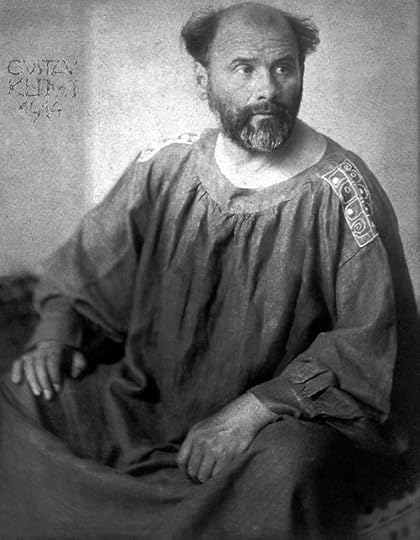
The sensuous flowing lines and decorative refinement, the literary symbolism and erotic allusions of Art Nouveau dominated the European art scene of the years around 1900. In Vienna the new style was supported by a group of artists who in 1897 decided to leave the Viennese artist association and constitue a more progressive group, the “Seccession”. Gustav Klimt became their president and artistic leader.
… which rejected traditional illusionist painting as well as the “light-realism” of the Impressionists. Increasingly, his compositions are oriented towards the picture plane, background and foreground are linked together by ornamental patterns, between which gently modeled areas of impressionistic texture set an accent of added aesthetic refinement. The contrast of richly detailed surfaces and large open spaces recalls the impact of Japanese woodcuts on Art Nouveau painting in general.Stegen notes that in some of the later paintings Klimt pushed this style to its limits, producing works in which “the picture content has become completely subordinate to the overall concept of decoration.” An example:
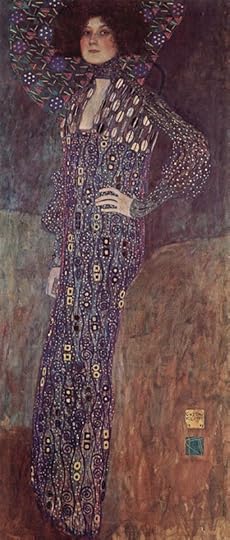
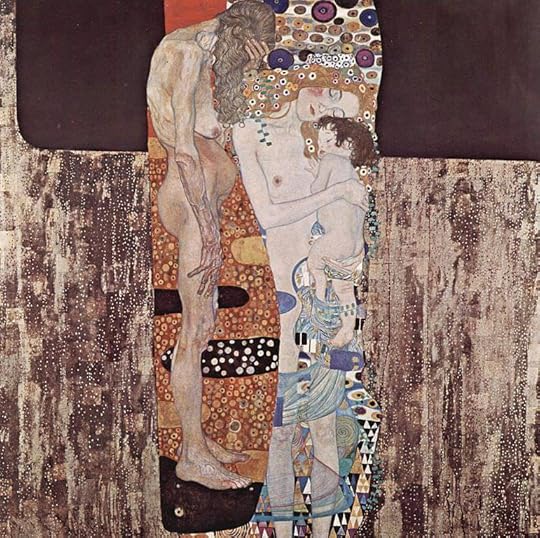
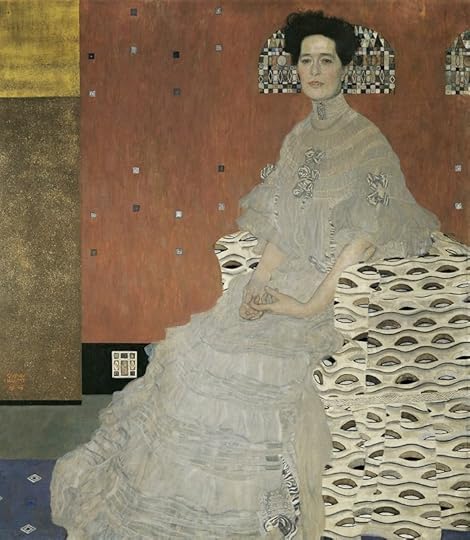
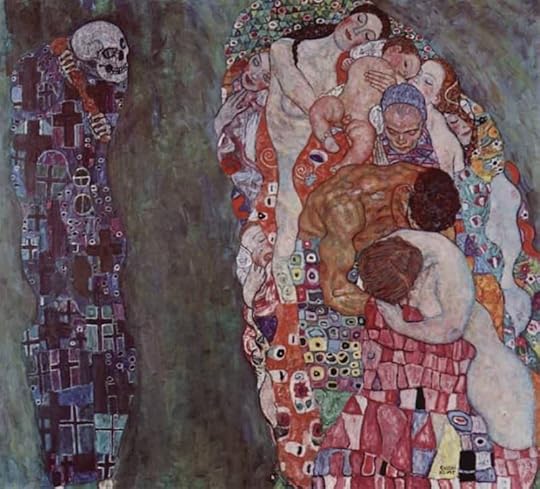
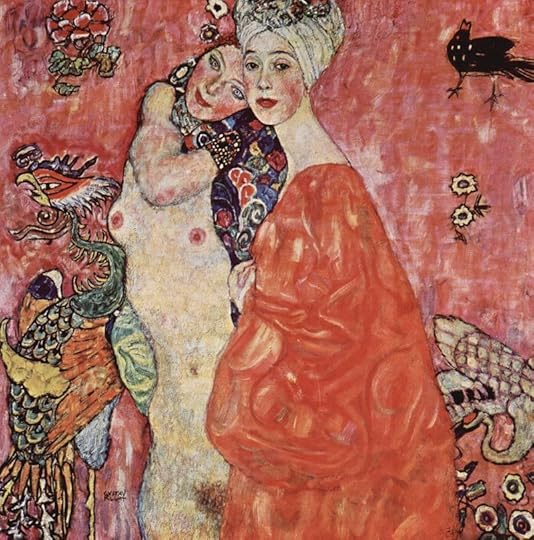
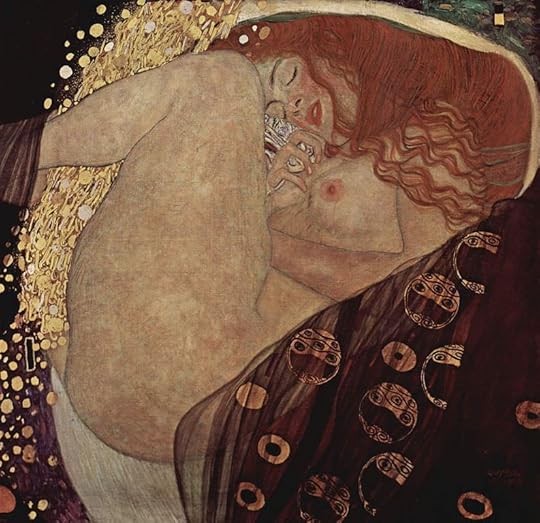
That Klimt was aware of this inherent danger is documented by the fact that he did not continue in this extreme formalization. The paintings of his last decade reflect a much greater spontaneity, a freer painterly treatment which fills his ornaments with life and his marvelous landscapes with a vibrant sense of light and energy.Following are some of my favorite Klimt paintings, all of which are reproduced in this poster book.