

What do you think?
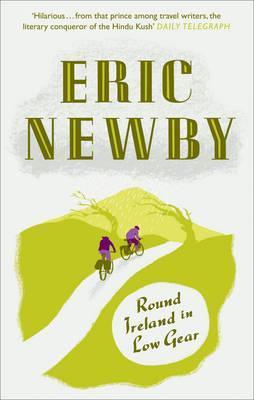
Round Ireland in Low Gear
'You've had some pretty crazy ideas in your life, Newby, but this is the craziest.' Grandmother Wanda Newby was exasperated after continuous rain, snow, and gales that knocked from her bike. Twice. To avoid other tourists, Eric Newby had decided that the depths of winter would be the very best time to explore Ireland by mountain bike. More astonishing still, he managed to persuade Wanda, his long-suffering wife and life-long co-traveller, to accompany him - mainly, she admitted, to 'keep him out of trouble'. Lashed by winter storms, fuelled by Guinness and warmed by thermal underwear, their panniers laden with antique books on Ireland, the elderly adventurers cycle the highways and byways, encountering hospitable locals, swaying saints and ferocious dogs. From the shores of Donegal to the holy mountains, Newby guides the reader on a tale of mishap and magic, all in his own peculiar style of humour and charm, relishing his never-ending curiosity of the world and his insatiable quest for adventure.
320 pages, Paperback
First published October 5, 1987
About the author
Eric Newby
43 books182 followersGeorge Eric Newby CBE MC (December 6, 1919 – October 20, 2006) was an English author of travel literature.
Newby was born and grew up near Hammersmith Bridge, London, and was educated at St Paul's School. His father was a partner in a firm of wholesale dressmakers but he also harboured dreams of escape, running away to sea as a child before being captured at Millwall. Owing to his father's frequent financial crises and his own failure to pass algebra, Newby was taken away from school at sixteen and put to work as an office boy in the Dorland advertising agency on Regent Street, where he spent most of his time cycling around the office admiring the typists' legs. Fortunately, the agency lost the Kellogg's account and he apprenticed aboard the Finnish windjammer Moshulu in 1938, sailing in what Newby entitled The Last Grain Race (1956) from Europe to Australia and back by way of Cape Horn (his journey was also pictorially documented in Learning the Ropes). In fact, two more grain races followed the 1939 race in which Newby participated, with the last race being held in 1949.
Newby was born and grew up near Hammersmith Bridge, London, and was educated at St Paul's School. His father was a partner in a firm of wholesale dressmakers but he also harboured dreams of escape, running away to sea as a child before being captured at Millwall. Owing to his father's frequent financial crises and his own failure to pass algebra, Newby was taken away from school at sixteen and put to work as an office boy in the Dorland advertising agency on Regent Street, where he spent most of his time cycling around the office admiring the typists' legs. Fortunately, the agency lost the Kellogg's account and he apprenticed aboard the Finnish windjammer Moshulu in 1938, sailing in what Newby entitled The Last Grain Race (1956) from Europe to Australia and back by way of Cape Horn (his journey was also pictorially documented in Learning the Ropes). In fact, two more grain races followed the 1939 race in which Newby participated, with the last race being held in 1949.
Ratings & Reviews
Friends & Following
Create a free account to discover what your friends think of this book!
Community Reviews
Displaying 1 - 30 of 53 reviews

April 26, 2015
Possibly more to do with the bitty pace I read it at due to it being essay season but this one dragged a little for me at times... A bit much extraneous historical detail and repetitive encounters with Oirish locals. I got the impression at times that the Newby's collective hearts weren't really in this one. Certainly Wanda's disappearance from the latter part of the adventure as she (rather sensibly) decided to cut her losses and return to England rather than plod up another rain soaked hill with Eric loses one of the major appeals of Newby's other writing. Still, three stars overall. 1980s Ireland, as Newby presents it here, is a staggeringly different society to anything I'm familiar with and it's worth it for that alone.

June 11, 2014
Firstly.... What were they 'bloddy' well thinking? Cycling round Ireland in winter - and they are no spring chickens. Absolutely mad.
Eric Newby has provided he and his wife with custom made, very heavy, over equipped mountain bikes that have 90 odd gears. He is travelling with a multitude of weighty guide books and bike tools in panniers and the amount of times they have to totally unpack and dismantle the bikes to lift them over barbed wire covered styles etc.. is ridiculous.
The best bits are provided by Wanda (the author's long suffering wife who goes along with his madness until she can stand it no more). I think I would have pushed he and his bike into a bottomless bog on a lonely stretch of backwater very early on in the piece.
He has them riding through sleet, snow, force 10 gales, lightning, horseflies, and every other kind of unpleasantness you can think of.
Besides that - Wanda has no idea how to use the 90 gears and I cant imagine how tough that ride would have been.
There is nowhere near enough of Wanda.... and way too much nitty gritty about every castle, bog, ruin, religious apparition etc. He gives us the history of each - back to the beginning of time... boring.
A good book to skim - although I didn't.
However, if it was designed to encourage people to visit Ireland, it has done the opposite to me. The favourite sport or pastime of the Irish seems to be 'messing' with tourists. That would do my head in.
Eric Newby has provided he and his wife with custom made, very heavy, over equipped mountain bikes that have 90 odd gears. He is travelling with a multitude of weighty guide books and bike tools in panniers and the amount of times they have to totally unpack and dismantle the bikes to lift them over barbed wire covered styles etc.. is ridiculous.
The best bits are provided by Wanda (the author's long suffering wife who goes along with his madness until she can stand it no more). I think I would have pushed he and his bike into a bottomless bog on a lonely stretch of backwater very early on in the piece.
He has them riding through sleet, snow, force 10 gales, lightning, horseflies, and every other kind of unpleasantness you can think of.
Besides that - Wanda has no idea how to use the 90 gears and I cant imagine how tough that ride would have been.
There is nowhere near enough of Wanda.... and way too much nitty gritty about every castle, bog, ruin, religious apparition etc. He gives us the history of each - back to the beginning of time... boring.
A good book to skim - although I didn't.
However, if it was designed to encourage people to visit Ireland, it has done the opposite to me. The favourite sport or pastime of the Irish seems to be 'messing' with tourists. That would do my head in.
May 24, 2023
Amusing tales of a winter in the 1980s spent cycling round Ireland with his wife (both in their 70s). Given that most places were closed in December-January 2022/2023, I don’t really know why he chose that time of year back in the 80s (lots of cycling past things which turned out not to be open)..best part was when his wife Wanda received a phone call to their B&B to alert her that her strawberry plants were fruiting. She got on the next ferry to go and make jam with them <3
August 17, 2015
Complain, complain, complain. Bad weather, quirky bikes, didn't like the people or the food. And not even funny. Too much detail about things that weren't important and glosses over things that might have been interesting. Poor Wanda.

July 2, 2009
Great read, hilarious, full of history of ire!

March 10, 2013
Well, I learned how NOT to travel around Ireland. There were some interesting parts and his writing style is quite humorous but for the most part, I was bored and miserable, just as they sounded.

November 27, 2018
" 'In the autumn of 1985, more or less on the spur of the moment, we decided to go back to Ireland. We were not going to travel in the guise of sociologists, journalists or contemporary historians. We were not going there, we hoped, to be shot at. We were going there to enjoy ourselves, an unfashionable aspiration in the 1980s ...'
"When Eric and Wanda Newby set out to find Ireland they set out on two wheels apiece. Their chosen mode of transport was described by The Bicycle Buyer's Bible as -- in one case -- a Crossfell and -- in the other -- a Wild Cat. To the Irish, they were simply 'boikes'. A whole catalogue of expensive essential extras later, one of the all-time greats of travel writing was equipped to journey round Ireland in low gear -- with Wanda 'to keep him out of trouble'.
"Lashed by storms of winter, fuelled by Guinness and warmed by thermal underwear, they set out on the travels along the highways and byways of the Isle of Erin, with every pannier packed with maps, spare parts and a veritable library of books on Ireland's stones and stories."
I started to give up on this book as the first 45 pages or so were too much about bikes: the different brands, the different classes, the different "expensive essential extras", etc. Very much TMI if you're not a bike aficionado, and I'm not.
But reading the bit about "Ireland's stone and stories" prompted me to rifle through the remaining pages, and it looks as though the author gets done faffing about with bike bits and actually begins to write about Ireland. So I'll give it another go.
"When Eric and Wanda Newby set out to find Ireland they set out on two wheels apiece. Their chosen mode of transport was described by The Bicycle Buyer's Bible as -- in one case -- a Crossfell and -- in the other -- a Wild Cat. To the Irish, they were simply 'boikes'. A whole catalogue of expensive essential extras later, one of the all-time greats of travel writing was equipped to journey round Ireland in low gear -- with Wanda 'to keep him out of trouble'.
"Lashed by storms of winter, fuelled by Guinness and warmed by thermal underwear, they set out on the travels along the highways and byways of the Isle of Erin, with every pannier packed with maps, spare parts and a veritable library of books on Ireland's stones and stories."
I started to give up on this book as the first 45 pages or so were too much about bikes: the different brands, the different classes, the different "expensive essential extras", etc. Very much TMI if you're not a bike aficionado, and I'm not.
But reading the bit about "Ireland's stone and stories" prompted me to rifle through the remaining pages, and it looks as though the author gets done faffing about with bike bits and actually begins to write about Ireland. So I'll give it another go.

September 24, 2025
Oh dear, this was reading in a very low gear. I’m a big fan of Newby’s writing, but this book really stretched the relationship.
It’s VERY thick with detailed ancient history, but frustratingly thin on the actual experiences of Newby and his long-suffering wife, Wanda. This could be, perhaps, because it was an unrelentingly tedious trip, beset by dire weather and the wrong choice of locomotion. Wanda gives up half way and I probably should have too.
As Newby himself concludes:
“there is a moment where one has to say, This is enough - something the reader may have said long ago.”
Quite.
It’s VERY thick with detailed ancient history, but frustratingly thin on the actual experiences of Newby and his long-suffering wife, Wanda. This could be, perhaps, because it was an unrelentingly tedious trip, beset by dire weather and the wrong choice of locomotion. Wanda gives up half way and I probably should have too.
As Newby himself concludes:
“there is a moment where one has to say, This is enough - something the reader may have said long ago.”
Quite.

November 19, 2025
Another wonderfully crafted book from Eric Newby, whose writing style is like the welcoming embrace from an old friend, as you arrive at their house, regardless of the time that’s passed since you last met, and with the promise of good food, drink and company as you are brought over the threshold for what you know will be a most enjoyable sojourn …
January 31, 2022
When last heard from in these pages, Eric and his indefatigable wife Wanda were traveling around the Mediterranean by various kinds of motorized conveyance. In Round Ireland in Low Gear, they are traveling around, not surprisingly, Ireland, by bicycle. What is surprising is that they chose to make this trip in the winter of 1985-1986, under completely horrible conditions.
They encountered rain, more rain, yet more rain, sleet, a little snow, gale force winds and a devastating thunderstorm that knocked out the electricity in much of rural Ireland. What was more, in pre cellphone days, they made this trip without reservations. Often, they arrived after dark at a village where they expected to find a hotel to spend the night and instead discovered that said hotel was closed for the season, along with nearly every other commercial enterprise in the town. This meant they had to pick up and ride more miles to find a bed and breakfast.
Along with ghastly weather, the Newbys encountered dozens of ruined castles, hill forts, ruined churches and great houses and odd religious sites which they conscienciously visited, often going miles out of their way in the dark and wet, to report to us. Also visited were places where the Irish had battled Cromwell, the Spanish (if you want to know the fate of the ships of the Spanish Armada, this is the book for you,) the Vikings, each other and various magical beings, such as the Tuatha De Danaan, "a tall race with magical propensities" who fought the Firbolgs, a short dark people, on the Plain of Southern Moytura.
I remember reading a children's book about Ireland and being impressed by how many different armies had invaded it. This book gives much more detail.
Along with descriptions of rain and ruins, Round Ireland contains many witty descriptions of the Irish people they encountered, issues with train timetables, bus drivers and the like, and appreciative passages about the bed and breakfasts where they finally found shelter and were saved from death by hypothermia. The reader cannot say that Newby has not done his research. On the first leg of their trip, Newby estimated he was carrying about 14 pounds worth of guidebooks, "most of which I by now realized I could have done without." "The question was," Newby continues, "which ones could I do without."
The book contains scraps of Irish poetry, including a ballad composed to commemorate the ambush in 1920, of two truck loads of British soldiers by the Irish Republican Army. The verse ends, "And the Irish Republican Army/Made balls of the whole fucking lot."
I love Eric Newby and his dry wit. If you find him amusing and are interested in rural Ireland, you will love this book. If you think he is a stuck up snot who makes fun of the locals, you will not love this book.
They encountered rain, more rain, yet more rain, sleet, a little snow, gale force winds and a devastating thunderstorm that knocked out the electricity in much of rural Ireland. What was more, in pre cellphone days, they made this trip without reservations. Often, they arrived after dark at a village where they expected to find a hotel to spend the night and instead discovered that said hotel was closed for the season, along with nearly every other commercial enterprise in the town. This meant they had to pick up and ride more miles to find a bed and breakfast.
Along with ghastly weather, the Newbys encountered dozens of ruined castles, hill forts, ruined churches and great houses and odd religious sites which they conscienciously visited, often going miles out of their way in the dark and wet, to report to us. Also visited were places where the Irish had battled Cromwell, the Spanish (if you want to know the fate of the ships of the Spanish Armada, this is the book for you,) the Vikings, each other and various magical beings, such as the Tuatha De Danaan, "a tall race with magical propensities" who fought the Firbolgs, a short dark people, on the Plain of Southern Moytura.
I remember reading a children's book about Ireland and being impressed by how many different armies had invaded it. This book gives much more detail.
Along with descriptions of rain and ruins, Round Ireland contains many witty descriptions of the Irish people they encountered, issues with train timetables, bus drivers and the like, and appreciative passages about the bed and breakfasts where they finally found shelter and were saved from death by hypothermia. The reader cannot say that Newby has not done his research. On the first leg of their trip, Newby estimated he was carrying about 14 pounds worth of guidebooks, "most of which I by now realized I could have done without." "The question was," Newby continues, "which ones could I do without."
The book contains scraps of Irish poetry, including a ballad composed to commemorate the ambush in 1920, of two truck loads of British soldiers by the Irish Republican Army. The verse ends, "And the Irish Republican Army/Made balls of the whole fucking lot."
I love Eric Newby and his dry wit. If you find him amusing and are interested in rural Ireland, you will love this book. If you think he is a stuck up snot who makes fun of the locals, you will not love this book.

December 1, 2016
I first read this book a couple of years after my first visit to the Emerald Isle, so my enjoyment was mixed with a generous helping of nostalgia. This time around, some 25 years later, it's perhaps even more so. The thing that struck me then, and now, was the masterful way in which Newby captured the quirky nature of the country, its people, and, most especially, its weather.
There's a simple reason for the vivid greenery of Ireland: it rains. A lot. Three days out of every four when I've toured in summer, and I spent the wettest September of my life on the Dingle Peninsula. So it's no surprise that a good portion of any travel tale will concentrate on precipitation.
To be continued...
There's a simple reason for the vivid greenery of Ireland: it rains. A lot. Three days out of every four when I've toured in summer, and I spent the wettest September of my life on the Dingle Peninsula. So it's no surprise that a good portion of any travel tale will concentrate on precipitation.
To be continued...

August 25, 2011
Greatly enjoyed it, as Newby and his wife toured Ireland about 10 years after my husband and I spent a month rambling around the entire coastline. Though his was a hardier and HARDER journey than ours(they traveled by bike, we by rental car,we covered the same ground in spots, so it was fascinating to see what had, and what had not, changed. I think we both saw the last of old Ireland.
The book was an unexpected treat found on a friend's Goodreads list.
The book was an unexpected treat found on a friend's Goodreads list.

August 27, 2011
It has taken me over fifty years to travel to the Emerald Isle, even though I lived within spitting distance of it for over a decade. Quiet what made Eric Newby, and his long suffering, testy, wife cycle around it I do not know but his ability to observe and record both geography and history at all levels is applied with the same zeal that he has used in much more dramatic locations. Wanda acts as a counterpoint to his enthusiasms and the results is both moving and funny.
May 29, 2016
Must I face the fact that Newby will nowhere ever recapture the joys of his Hindu Kush?
Where lies the difference?
Hindu Kush seemed to be more about him: alien cultures (Wales (!) and Afghanistan) shine a spotlight on his Englishness.
Here, we have rain, bikes, sandwiches, mythology, dessicated history. We learn little of him and little of the Irish.
Where lies the difference?
Hindu Kush seemed to be more about him: alien cultures (Wales (!) and Afghanistan) shine a spotlight on his Englishness.
Here, we have rain, bikes, sandwiches, mythology, dessicated history. We learn little of him and little of the Irish.
February 20, 2018
I’ve read several books in the genre of “Adventurous Spirit Takes on an Ill-Advised, Self-Powered Journey”. Many of these stories focus on the hijinks of the poorly-prepared traveller, but this one skews toward well-researched historical anecdotes and journal-like descriptions of the trip. Eric and Wandy Newby decide to bike around Ireland; unfortunately they plan their journey for December and are met with the inhospitable combination of bad weather and severely limited out-of-season tourist infrastructure. The pair soldier on through endless rain and occasional snow. You can almost picture their soaked reflections in the windows of the closed-for-season pubs and B+Bs.
Much of the book is comprised of seemingly random historical anecdotes about sites along their route. These can occasionally be interesting. There are some good details about the English/Irish conflicts, medieval celts, and multiple tales of Catholic apparitions that appeared before locals in recent times. Nothing ties these anecdotes together beyond the author’s interest in them, though. I found myself skimming through passages providing exhaustive information about the design of different fishing boats or the lineage of local monarchs. In some cases I tried using Google to follow up on obscure references and couldn’t even find relevant material in the first couple pages of search results.
Somewhat more successful are the author’s descriptions of his personal interactions with bartenders and innkeepers, even if these often devolve into an exercise of phonetically capturing the Irish accent. He laments the disappearing “old ways” of Ireland. The book was written in 1987 and it’s possible that the details he’s captured about peat cutters and thatched roof cottages have completely eroded from view.
This book is not a compelling page-turner, but it does capture the experience of touring outside the confines of the typical vacation experience.
Much of the book is comprised of seemingly random historical anecdotes about sites along their route. These can occasionally be interesting. There are some good details about the English/Irish conflicts, medieval celts, and multiple tales of Catholic apparitions that appeared before locals in recent times. Nothing ties these anecdotes together beyond the author’s interest in them, though. I found myself skimming through passages providing exhaustive information about the design of different fishing boats or the lineage of local monarchs. In some cases I tried using Google to follow up on obscure references and couldn’t even find relevant material in the first couple pages of search results.
Somewhat more successful are the author’s descriptions of his personal interactions with bartenders and innkeepers, even if these often devolve into an exercise of phonetically capturing the Irish accent. He laments the disappearing “old ways” of Ireland. The book was written in 1987 and it’s possible that the details he’s captured about peat cutters and thatched roof cottages have completely eroded from view.
This book is not a compelling page-turner, but it does capture the experience of touring outside the confines of the typical vacation experience.

March 31, 2022
Having read, "slowly down the Ganges" by the same author, I moved onto "Round Ireland in Low Gear." This was sometime in the 1980s and while the "Ganges" had been a slow read, "Round Ireland" was even slower and I eventually left it after a few chapters. In both cases, I think there were just too many details of places and sights that I had never seen or even heard of so I found it difficult to engage with or find great levels of interest in what I was reading. In recent year though I have rekindled my interest in cycling and having read quite a few cycling and cycle touring books (Graeme Obree, Alan Brown, Christopher Hough, Mike Carter), I decided to fish out "Round Ireland" and give it another try. I did find it easier going this time although at times it still reads like a travel guide (not the most engaging of topics unless you are actually at the location). The style is light-hearted rather than amusing or funny and although I did learn a fair amount about some of the sights in rural Ireland, I didn't learn anything about cycle touring (other than not to use wide off-road tyres which I had worked out for myself a long time ago). The last chapter seemed to have been cut short for some reason despite promising to be more interesting following a decision by the travellers to camp and avoid B&Bs but we are not provided with much detail regarding this shift in tact. This is not a bad book and Newby is a decent writer however, the pace of the book is on par with his cycling speeds making for a somewhat sedate choice of reading.

December 31, 2021
Eric and Wanda Newby decide, more or less on a whim, to visit parts of Ireland, travelling by bike. It might be thought eccentric that they choose to make the first of four trips during December (1985) and the following January, and so encounter a great deal of very wet, cold and windy weather – and commonly arrive at their destination in the dark. Much of the first two thirds of the book is rather preoccupied with the consequent discomforts and difficulties (not to mention dangers), amplified by the places they visit being very much ‘out of season’. This leads to some acerbic interactions, and insights to the nature of the Newby marriage.
There is a great deal on the history, architecture and sociology of the places they visit, with some fascinating observations on aspects of devout Catholic life in rural Ireland. The book is at its best, though, with Newby’s comments on the people that they meet, and on the events and circumstances he and Wanda encounter. Unfortunately, evidence of his well-known wit is more thinly spread than in some of his earlier books, although this picks up as the weather improves during their third and fourth visits, later in 1986.
This book will be enjoyed by fans of Eric Newby’s writing, and by those want a flavour of rural Ireland, although it is far from his best book.
There is a great deal on the history, architecture and sociology of the places they visit, with some fascinating observations on aspects of devout Catholic life in rural Ireland. The book is at its best, though, with Newby’s comments on the people that they meet, and on the events and circumstances he and Wanda encounter. Unfortunately, evidence of his well-known wit is more thinly spread than in some of his earlier books, although this picks up as the weather improves during their third and fourth visits, later in 1986.
This book will be enjoyed by fans of Eric Newby’s writing, and by those want a flavour of rural Ireland, although it is far from his best book.

October 3, 2021
It pains me to give just three stars to my favorite travel writer, especially for a book about a place that’s near and dear. The main problem is that Newby and his travel companion, heroic wife Wanda, have a rather miserable time on their several bike rides in Ireland, and therefore the reader has a miserable time, too. They chose to do most of their rides in the winter, when the weather is most dismal. They’re also visiting in the mid-1980s, and I was struck by how far Ireland has come since then in terms of tourist friendliness—the greatly improved resources, amenities, signage, food, etc. I wish Eric and Wanda could visit it now. Lastly, the final chapter, covering the Newbys’ journey all the way from northwest Mayo to Donegal feels rushed and abbreviated—just eight pages. I don’t know if Newby had a word limit or a deadline to abide by, or if he just couldn’t bear to spend any more time on the book, but it’s an unfortunate conclusion. On a positive note, I thoroughly enjoyed the first chapter, in which Newby recounts with great humor his and Wanda’s experience acquiring and assembling all their fancy cycling gear. The NY Times obituary for Newby summarized the book best: “a voyage whose damp agonies are described unsparingly.”
April 12, 2020
3.5 out of 5. Wow! As a travel book, this is a bit disappointing. However, as somebody who grew up in Ireland in the 80s it’s an interesting social history of that time. The book follows Eric Newby and his stoic, long-suffering and saintly wife, Wanda, as they cycle around Ireland IN WINTER!!! The result is day after day of wind, freezing rain, empty dark towns with closed shops and hotels. The visit takes place during a bitter divorce referendum in 1986 (which continued the ban on divorce), when the main entertainment in the country was provided by moving statues of the Virgin Mary. I can confirm that this is a very fair representation of that grim, dark, depressing period. So, it’s interesting to read Eric Newby’s perception of Ireland, and indeed he gives a very sympathetic portrayal.
That said, he doesn’t seem to enjoy his visit, and Wanda seemed to spend most of her time being flung off her bike or crying in frustration. The lack of joy becomes a bit depressing, and Eric doesn’t even bother writing up the last few weeks of the visit.
Worth a read if you’re interested in seeing what Ireland was like in the 80s.
That said, he doesn’t seem to enjoy his visit, and Wanda seemed to spend most of her time being flung off her bike or crying in frustration. The lack of joy becomes a bit depressing, and Eric doesn’t even bother writing up the last few weeks of the visit.
Worth a read if you’re interested in seeing what Ireland was like in the 80s.

December 31, 2023
Why any couple in their sixties would want to cycle a long distance anywhere in Great Britain in the thick of winter escapes most readers, but Eric and Wanda Newby decide to cycle in Ireland, where the rain never ceases and the wind is always in your face, no matter in which direction you travel. Mr Newby is that most charming of travel writers because, unlike colleagues such as Mr Thubron, he rarely takes himself seriously and his ready wit bubbles just below the surface right throughout the book. He describes superbly the dangers of cycling on the narrow Irish roads, the dreadful weather, the fact that his wife cannot ever find the right gears to operate her bicycle successfully, the welcome they receive in the various bed and breakfast establishments they visit, and the sullen beauty of the countryside and the spectacular viciousness of the sea along the coastline. You feel as if you're almost cycling alongside them. I have a couple of minor criticisms - non-cyclists will be irritated by the amount of time Mr Newby spends describing the technical specifications and features of their chosen steeds, and he generally goes overboard on the historic buildings and religious icons they come across on their journey. Nevertheless, this book is a great joy to read.

July 19, 2020
Well written. A lot of rain. But it's one of those travel books where they take a nice comfy break right in the middle of the 'journey' so I wasn't happy with that. On the other hand, their trip coincides in time with the time when I myself started cycling out west (Dublin - Connemara). What's more, Newby fought in WWII so - respect. I know that has nothing to do with the book, but it's a personal journey, and I'm personally well disposed to him.

February 28, 2026
Wonderful stuff. The history, the sights, and the people of the Republic of Ireland are all covered here to a delightful degree. The author always gets the tone just right, whether he's talking to a local about train times, or describing a terrible tragedy. The interjections of the long-suffering Wanda are so telling of their relationship. I'm regretting not grabbing a copy of A Short Walk in the Hindu Kush when I saw two copies in Oxfam last summer!
June 27, 2026
It is many decades since I have read any Newby. An exceptional writer but I am saddened with the ease with which falls into the centuries-old stereotypes of stage Irishry and irritatingly frequent linguistic mocking of the people who generally show him nothing but kindness. How very English…
His research into the earlier history of the island is excellent, however, and probably the only thing keeping me with this.
His research into the earlier history of the island is excellent, however, and probably the only thing keeping me with this.
May 21, 2018
Why anyone would want to bicycle around Ireland in winter is a question that hovers over this account and one the author's wife, Wanda, probably asked repeatedly as her husband shouted instructions on the proper bike gear to use. She eventually went home to try to save her strawberries There is much information on far-flung niches in Ireland and lots of rain.

July 28, 2020
I was biking a lot when I decided to read this. Some of the ancestors, McGinnis, are from County Mayo and I thought it would be fun to learn a bit. Weather. Won't go in winter. Some of the writing - history, geography, road stuff - was really good. I think I've gotten spoiled by Bryson. Great intro to the island and a fun read.
September 12, 2025
One of Newby's lesser works, primarily of interest to someone who seeks information about historic places off the beaten path in Ireland. I think needs exotic lands & danger to shine. Traffic & bad weather (horrible weather in fact) are the obstacles he faces in this book. Wanda plays a supporting role.

November 21, 2018
Disappointing. I had really enjoyed "Slowly down the Ganges" a few years ago. This didn't match it at all. Too much detail which ended up sounding the same from day to day. I only made it about a third of the way through when I decided it really just wasn't interesting enough to continue.

March 16, 2026
Some of Eric Newby’s hilarious quips and understatements. The book is a little disjointed but I guess so were the trips. The fabulous Wanda appears long suffering. Oh and the colourful Irish curse: “may the Little Lamb of God kick through the floor of heaven with his little hoof and kick your hairy arse straight into hell”

October 29, 2018
Very detailed but not the most interesting read unless you have been or are planning on visting Ireland.
June 14, 2020
Feels as if it is confused as to whether it is a book about cycling round Ireland or about the list of historical sites/events which Newby wishes to visit. Unsatisfactory.
Displaying 1 - 30 of 53 reviews