Jump to ratings and reviews
Rate this book

Der Rand des Horizonts

Rate this book
In der Leichenhalle wird ein junger Mann eingeliefert, der bei einer Hausdurchsuchung erschossen wurde. Spino, der gescheiterte Medizinstudent und Amateurdetektiv, macht sich auf die Suche nach seiner Identität.

Paperback

First published January 1, 1985

25 people are currently reading
823 people want to read

About the author

Antonio Tabucchi

149 books849 followers
Antonio Tabucchi was an Italian writer and academic who taught Portuguese language and literature at the University of Siena, Italy.

Deeply in love with Portugal, he was an expert, critic and translator of the works of the writer Fernando Pessoa from whom he drew the conceptions of saudade, of fiction and of the heteronyms. Tabucchi was first introduced to Pessoa's works in the 1960s when attending the Sorbonne. He was so charmed that, back in Italy, he attended a course of Portuguese language for a better comprehension of the poet.

Ratings & Reviews

What do you think?
Rate this book

Friends & Following

Create a free account to discover what your friends think of this book!

Community Reviews

5 stars
118 (10%)
4 stars
330 (28%)
3 stars
471 (41%)
2 stars
166 (14%)
1 star
60 (5%)
Displaying 1 - 30 of 132 reviews
Profile Image for Orsodimondo.
2,458 reviews2,432 followers
August 10, 2021
REBUS


Ancora una volta un finto thriller, un’indagine che sembra presa dalla cronaca, offre lo spunto per riflessioni che vanno ben oltre questa apparente struttura ‘gialla’. Vanno lontano, puntano al “filo dell’orizzonte”, dove probabilmente si annida la verità, che è la vera meta di questa novella, che è il vero obiettivo della letteratura.
Ma il filo dell’orizzonte è un luogo geometrico perché si sposta mentre noi ci spostiamo (nota a margine dello stesso Tabucchi).
E perché filo e non linea? Il primo è più elastico, più mobile, la seconda più rigida, più ferma.


E sembra di andare a cercare la testa perduta di Damasceno Monteiro, che apparirà undici anni dopo (1997, mentre questa novella è uscita nel 1986)

Spino (che non è Spinoza ma potrebbe essere un omaggio al filosfo olandese che Tabucchi amava) è un infermiere dell’obitorio. Appena ha visto arrivare quel cadavere ha capito subito che mancava qualche pezzo, che qualcosa non tornava: i barellieri si muovevano troppo lentamente, senza alcuna fretta, nessuno ha reclamato il corpo, e nessuno cerca di scoprirne l’identità. Chi è il morto?
Spino vuole dargli un nome, un’identità, e quindi una qualche forma di esistenza.


Come in “Notturno indiano”, che precede questo di due anni, chi conduce l’indagine finisce con il somigliare all’oggetto della sua ricerca, se non addirittura a identificarsi in esso: qui la moglie di Sara vedendo una foto del morto dice:
Con la barba e venti anni di meno potresti essere tu.

Una città di mare non precisata: somiglia a Genova, ma trattandosi di Tabucchi somiglia un po’ anche a Lisbona. Una finestra, il cielo, il mare, e dunque, l’orizzonte.
È chiaro che la ricerca non approderà a nulla, che alla fine vincerà come sempre il buio. Senza dramma, anzi con una risata.
Metafisica.


L’incipit, che è notevole:
Per aprire i cassetti bisogna girare la maniglia a leva, premendo. Allora la molla si sgancia, il meccanismo scatta con un lieve clic metallico, si mettono automaticamente in movimento i cuscinetti a sfera, i cassetti sono leggermente inclinati e scorrono da soli su piccole rotaie. Prima appaiono i piedi, poi il ventre, poi il tronco, poi la testa del cadavere. A volte, per i cadaveri non autopsiati, bisogna aiutare il meccanismo tirando con le mani, perché alcuni hanno il ventre gonfio che preme contro il cassetto superiore e ostacola il movimento. Gli autopsiati invece sono asciutti, come prosciugati, con quella specie di cerniera-lampo lungo il ventre e l'interno riempito di segature. Fanno pensare a bamboloni, a grandi fantocci di una rappresentazione finita buttati in un deposito di robe vecchie. A suo modo questo è un magazzino di vita.


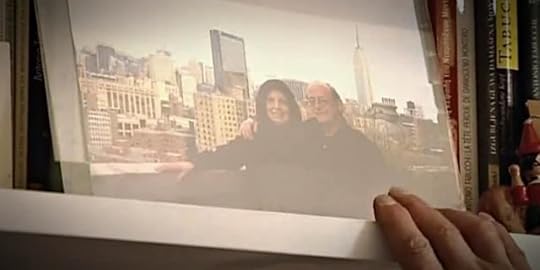
Antonio Tabucchi con Susan Sontang.
Profile Image for BlackOxford.
1,095 reviews70.3k followers
December 29, 2020
The Tragedy Of/In Self-Discovery

What are we but the intersection and connection of an infinite number of random things? Events, energy, primal matter, possessions, relations, ideas. And when we are no longer, don’t many of these things persist, vagrant parts of us? These are then discoverable by someone else who becomes part of them as they of him. And if that is so, how could the fate of anyone of us be separate from that of all others? Their lives are ours, particularly their tragedy, for which we have a right as well as duty to weep. A right because we were never separate. A duty because they may have wept for us.
Profile Image for Sawsan.
1,000 reviews
July 6, 2022
محاولة البحث عن الحقيقة قد تنتهي بالوصول إلى سراب
رواية صغيرة للكاتب الايطالي انطونيو تابوكي
مكتوبة بأسلوب تصويري لتفاصيل الأجواء والأماكن
يبحث فيها سبينو عامل المشرحة عن هوية شاب ميت
ويحاول تعريف ورسم هويته من خلال الصور والذكريات
رحلة بحث غامضة ورغبة في اكتشاف المجهول
وكلما ظن الانسان انه وصل لخط الأفق يجد الطريق ما زال مفتوحا أمامه
خط الأفق" هي ترجمة العنوان الأصلي للرواية
July 29, 2019
Ταξίδι υπαρξιακής αναζήτησης σε μια παλιά, γραφική, τυπική, Ιταλική πόλη, με μνημεία ζωής άλλων εποχών και τελετουργικά καθημερινής ονειροπόλησης στο πλαίσιο της χαμένης ελπίδας.
Για την αναζήτηση του διαφορετικού, της ιδέας, του γερασμένου ταξιδιού αναμονής, της εγκλωβισμένης φυγής, των παρωχημένων ψεμάτων διασκέδασης, των αναδρομών που συνδέουν
ύπαρξη- ανυπαρξία- ταυτότητα μνήμης, δέσμευση, εμμονή, ταυτοποίηση θανάτου και ενδείξεις ζωτικής λειτουργείας με αναπνοές ματαιοτήτων.

Μικρό και περιεκτικό, σύντομο ανάγνωσμα αλλά δυνατό, ζόρικο, αυτοκαταστροφικό, ζωογόνο, φιλοσοφικά αβίαστο και μαγικά ποιοτικό.

Το αγάπησα για την σκοτεινή διάθεση που διαχέει μέσα του, περιγραφική δεινότητα απο έναν αφηγητή μη διαθέσιμο πλέον για ανώνυμες ενδείξεις θανάτου. Βουτάει στην εμμονική ταύτιση και ψάχνει τον εαυτό του που γεννήθηκε σε ένα νεκροτομείο, ένα βράδυ Σαββάτου, σε μια γραφική παραλιακή πόλη με υπέροχη θέα απο ψηλά, παροπλισμένα υπερωκεάνια σε ερημικά ναυπηγεία και τελωνεία με σκουριασμένα κοντέινερ γεμάτα μελαγχολία.
Νοσταλγικό τοπίο θαλάσσιας αλμύρας και ατμοσφαιρικής οξείδωσης, χαοτικά αναπόδραστα κρυφά ραντεβού με φαντάσματα απο ξεθωριασμένες φωτογραφίες και ανεπίδοτα γράμματα σε γνωστές φιλίες και πολυκαιρισμένους έρωτες.
Γραφικές αυλές παλιών κινηματογράφων με αγαπημένες ταινίες της νιότης και μελωδίες μουσικής για χορούς που σμίγουν το τραγούδι με το μοιρολόι.

Εχει μέσα του συναξάρια απο εμπειρίες, θλίψεις, νοσταλγίες, πηγαιμούς, ανούσια ροή ζωής μεταμορφωμένους τόπους, στόχους, διαδικασίες, προσπάθειες, αντικείμενα που στερούνται νοήματος και νοητές καταστάσεις που στερούνται αντικειμένου.
Έσχατο έργο για την άκαρπη τέχνη του ζην και της επιβίωσης.

Σε όσα προανέφερα σχετικά με την γραμμή του ορίζοντα είμαι απόλυτα σίγουρη, πως έτσι, ακριβώς έτσι, όπως εγώ, έτσι, προσυπογράφει τους ισχυρισμούς μου και ταυτίζεται με τις απόψεις μου ξεκάθαρα...
Έτσι,
ισχυρίζεται ο Περέιρα.

😈😈
♥️🖤

Καλή ανάγνωση.
Πολλούς ασπασμούς.
Profile Image for Nick Grammos.
277 reviews156 followers
April 26, 2025
What connections was I meant to make when I found this book? Who sent me to find the answer? I had never spent so much on a hardcover book, $40, near half a weekly student's pay. The discovery is not unlike the protagonist, Spino's, search for a narrative to accompany the corpse that arrived in the marge, that he named: Carlo Nobodi.

"Chance is in fact this: our incapacity to grasp the nature of things"

Vanishing Point was the title of the book I picked up in Melbourne back in about 1988. A year or two later, Mr Tabucchi visited Australia for the Melbourne Writers Festival. I went along to a terrible room upstairs from a loud kitchen-bistro. The room was cavernous, no one could hear anything. There were nine people in the audience, one of those Q&A type of things. The interpreter did his best, but I can't remember a bloody thing about it except the tension in the room. I decided never to attend another one of these festival events.

I always wanted to write to Mr Tabucchi to apologise for the poor showing of Australians that night.

I undertook a search, but did not find him directly. Perhaps he already saw my apology through the horror in my eyes that night. Now that he is gone, an opportunity was lost to me.

I've read this books so many times and each time as a kind of search for identity, real or metaphysical. All searches start with an absence. We are all Nobodi.

ADDIT. APRIL 2025
I've been reading this book again in Greek translation. I enjoy it as much. The same lucid prose is on offer. I read each passage that I recognise so well as though fresh and new and simultaneously well travelled. We must all have books like this one that give a strange comfort through its own mystery. It reminds us of our mysterious selves. Not completely knowable, yet we hubristically think we do know. Like Spino, we add layers of meaning as we go on our search. They may be right, they may be true, or they may just be the narrative we need. Very clever, Mr T.
Profile Image for Eliasdgian.
432 reviews132 followers
June 23, 2019
Η αναζήτηση του παρελθόντος ενός αγνώστου ταυτότητας νεκρού ως μια ατέρμονα διαδρομή ενδοσκόπησης κι αυτογνωσίας. Σαν άλλος φαύλος κύκλος, σαν να είναι η γραμμή του ορίζοντα ο γεωγραφικός τόπος που θα προσδιορίσει το τέλος της αναζήτησης· έστω κι αν γνώριζες εξαρχής ότι κάθε φορά που πίστεψες ότι την προσέγγιζες, εκείνη ολοένα απομακρυνόταν. Ονειρώδες αφήγημα, απολαμβάνεται λέξη τη λέξη, σελίδα τη σελίδα, θωρώντας τη θάλασσα και τα περιγράμματα των πλοίων, των γλάρων και των σύννεφων που περνάνε πάνω της.
Profile Image for BookHunter M  ُH  َM  َD.
1,694 reviews4,642 followers
December 20, 2025
سيجارتي حشيش.
سنة أفيون
و كأس واحد من الويسكي المثلج
هذا هو كل ما تحتاجه لتفهم هذا الكتاب أو حتى لإكماله بسعة صدر
و أنا شخصيا أشك في اهتمامك بالقراءة من الأصل ان توافرت لك تلك الأشياء الثلاثة

هي نوفيلا قصيرة فلسفية على ما يبدو. أجمع الكل على ان رحلة سبينو لفك الطلاسم التي تحيط بهوية صاحب الجثة المجهرلة تشبه رحلك الحياة نفسها. و أن الحقيقة هي السراب بعينه فكلما ظننت أنك أمسكت بتلابيبها وجدتها أبعد ما يكون عن يداك.
أما أنا فلم أشعر بذلك و لم أجد في كل تلك التفاصيل المفككة الكثيرة المحشورة في جنبات القصة أي باعث على أي شيء عدا الملل.
قراءة سعيدة و بالطبع مرشحه للقراءة.
ما انا مش هتعذب لوحدي يعني.
Profile Image for Steven Godin.
2,782 reviews3,384 followers
June 22, 2024
3.7 stars

This is the first time I'd read Tabucchi, and had only heard of him before through some great reviews of his novel Requiem: A Hallucination, which I haven't yet read.
I knew nothing of this, so didn't know what to expect. About two-thirds of the way through, I was starting to think that things seemed vaguely familiar, but couldn't pinpoint who exactly Tabucchi reminded me of here.
And then it struck me—Patrick Modiano.
I could also see a little bit of Camus in there too, maybe even Calvino.

How could one small death in the huge belly of the world, an insignificant corpse with no name and no history be of such curiosity to a morgue attendant?

The Edge of the Horizon to me felt like part detective/mystery novel, part investigation into the nature of existence. I found it both shadowy and dark, and dreamy and touching. It's one of those novels that will frustrate some because it doesn't present us with all the answers, but I liked it more because of that. Impressive stuff.
Profile Image for Nickolas B..
367 reviews103 followers
September 19, 2017
Ένα βιβλίο σαν γεωμετρικός τόπος...
Όσο πλησιάζεις στην λύση του μυστηρίου τόσο αυτή απομακρύνεται από εσένα...
Ο Σπινο, ένας παρατηρητής, ένας άνθρωπος που βιώνει το υπαρξιακό άγχος, προσπαθεί να βρει το Ζενίθ ενός ορίζοντα εις μάτην.

Εκπληκτικός Ταμπούκι, εξαιρετική γραφή που δημιουργεί ένα απροσδιόριστο κλειστοφοβικό συναίσθημα.

5/5!
Profile Image for Ben Winch.
Author 4 books418 followers
September 21, 2019

Vanishing Point (AKA The Edge of the Horizon) is an incredible piece of writing. I’ve read it at least four times now, and each time I think, “Right, this time I’m gonna grasp it,” yet each time it slips through my fingers like smoke, while somehow managing not to seem slight or merely cryptic. In a way (and this only struck me on my last reading) it’s a lot like one of those Borges stories in which nothing much happens (“The Waiting”, say), but without the heavy, plodding sense of inevitability, of having been planned out before being born. Instead, while Tabucchi’s method and language recall Borges, his playfulness, his openness to life and his willingness to improvise are attributes entirely his own, and in weaving together these apparently disparate strands he creates a narrative rope so strong it can be strung across the void and the reader lured across it without that reader’s ever having noticed there was a chance to fall. In Borges, vertigo is ever-present; it’s the reason he writes and we read him, to feel the fear. But in Tabucchi, the journey across infinity is so sleepily seductive we forget to feel afraid, and only later, the journey over, do we think back with a chill on what we might have missed. Cue the scene in Vanishing Point where the hero, Spino, is talking on a payphone to his journalist friend about the possibility of his private investigation having stirred up trouble with the mob; the journalist is criticising his naivety, warning him of the risks, but Spino becomes distracted by a seagull which has landed next to the phonebox and which “stood there quietly watching him while at the same time hunting through its feathers with its beak.”

”There’s a seagull next to me, it’s right here near the phonebox, it’s as if it knew me.”

“What are you on about?... Listen, where did you find him? What did he tell you?”

“I can’t explain now. There’s a seagull here with its ears pricked, it must be a spy.”

“Don’t play the fool. Where are you? Where did you find him?” [...]

“Sorry, Corrado, have to say goodbye, it’s getting late. And then this seagull is getting annoyed, he wants to make a call, he’s waving his beak at me furiously.”


Later, at a graveyard where he has arranged a mysterious meeting, Spino encounters another seagull—or is it the same one? Again it acts familiar, “like a pet”, and he demands of it quietly, “Who are you? Who sent you? You were spying on me at the docks too. What do you want?”

Maybe isolated from its context the exchange seems meaningless, but at the moment it occurs in the narrative it’s anything but. And it’s quite believable: I think most of us have spoken to animals or to ourselves in this half-joking way; it’s a way of letting off steam that seems harmless yet can give rise (or give vent) to an unacknowledged superstition. All through Vanishing Point there are these moments, when Spino’s mind wanders across some boundary into the supernatural, yet Tabucchi’s genius is, every time, to keep us hanging—to not clarify whether it’s just Spino’s mind that has crossed this boundary or otherwise. Over a longer narrative this might be unsustainable, and over a shorter one it might be baffling, but in this—the most perfect of novellas and a cogent argument if ever there was one for the pre-eminence of that form—it’s uncanny, faultlessly sustained, sublime in the truest sense of the word. If the awe in Poe is that of the sheer rock-wall and the storm-swept sea, and in Borges that of the mirror-within-mirror and the labyrinth, in Tabucchi it’s the blue sky of summer and the (mistaken) sense of endlessness to which it gives rise that haunts us. In other words, Tabucchi’s is a lament for the passing of joy—the slow passing—something Poe, in whose hands joy always explodes on the first page never to return, could not have understood.

Vanishing Point, to speak more clearly, is a mystery, but a mystery left hanging at the point of its imminent solution. It could be it’s a parable about eternal return, or it could be nothing of the sort, but just the realistic story of a man haunted by that notion. It’s this duality that makes me hate the term “realism”, because simply to leave out all mention of what could not credibly be reported in a newspaper or encyclopaedia does not constitute a “realistic” view of the world. Tabucchi’s story is realistic, in that it telescopes an episode of heightened awareness in the life of a character into a handful of scenes that never stray from the credible. But, like Raymond Carver, Tabucchi is a master of suggestion, of leaving things out. And by leaving out any direct description of the supernatural he makes his story all the more magical, because he creates something close to an absolute identification with his character. Having read this, closely, many times, I am haunted by Spino’s experience as if it were mine, all the moreso because I know so little about him, because I could almost be him. There’s a chilling scene where Spino goes to his friend’s newspaper office looking for information about the dead man with whom he has become obsessed:

There was an atmosphere of impatience and nervous tension and Spino imagined that this death with its burden of tragedy was weighing down on the room, making the men feel feverish and vulnerable. Then somebody came through a door waving a piece of paper and shouting that the tanks had crossed the frontiers, and he named a city in Asia, some improbable place. And shortly afterwards another journalist working at a tele-printer went over to a colleague and told him that the agreements had been signed, and he mentioned another distant foreign city, something feasible perhaps out there in Africa, but as unlikely-sounding here as the first. And Spino realised that the dead man he was thinking of meant nothing to anybody; it was one small death in the huge belly of the world, and an insignificant corpse with no name and no history, a waste fragment of the architecture of things, a scrap-end. And while he was taking this in, the noise in that modern room full of machines suddenly stopped, as if his understanding had turned a switch reducing voices and gestures to silence. And in this silence he had the sensation of moving like a fish caught in a net; his body made a sudden involuntary jerk and his hand knocked an empty coffee cup off a table. The sound of the cup breaking on the floor started up the noise in the room again. Spino apologised to the owner of the cup, who smiled as if to say it didn’t matter, and Spino left.


Now if that isn’t the perfect combination of the reality we all see, touch and feel and something more (which we all sense) I don’t know what is. Antonio Tabucchi is—or was—the most adept magician I have come across in contemporary writing. That he was also the most humble makes his recent death especially saddening. Many times I’ve wondered whether his widely-acknowledged masterpiece Pereira Declares or his lesser-known Requiem was his greatest work; now I wonder if it might be Vanishing Point, which has both the dreaminess of Requiem and the moral and political awareness (if less explicit) of Pereira. In my edition (Vintage, 1993) the novella is accompanied by two brief collections of short pieces—some of them stories, some something else—all of which are interesting and at least one of which (the piece on Antero de Quental) is sublime. The translation, by Tim Parks, is excellent, and shows up the defects in the earlier story collection Little Misunderstandings of No Importance (also in Vintage), which seems all semi-colons and now-galloping now-halting over-long sentences that make reading less than the sheer pleasure it is here. What Tabucchi’s style is in Italian I’m obviously unclear, but Tim Parks’s English rendering is pretty much flawless. Vanishing Point gives the impression of having been hewn meticulously from an inspired tangle over years—and for this painstaking work, for the work of anyone like Tabucchi who would sooner create something small and quietly beautiful than something vast, brash and ugly, I am infinitely grateful. Thank you, Antonio Tabucchi, for showing us how it’s done.
May 26, 2015
Each letter planted precisely in place. Their falling into their designated space belied the writer’s craft in its quiet control building words, sentences, as though uncovered and awaiting to be discovered.

Of all things a mystery. A detective mystery replete with a corpse and a failed doctor working in a morgue monitoring a growing obsession identifying with a Jon Doe. Why, and where, anywhere on the cover, title page, squirreled away within the text, is there mention of this genre. But…Yet…It’s there in the crafted details, the tone, a developing speculation.

If for no other reason -and there are many other reasons-the book is worth reading for the opening pages and its immersion into this palpable world comprised of darkness in its varying shades. One of Tabucchi’s strengths is his ability to brushstroke in tones and ambiance without the brush’s presence, or his own. It and the gathered words embraced by paragraphs stepped in graduated strides move us from any genre dust into the mortician’s obsession with finding the information about who this nameless body devoid of any identifying data, any mark left on the world or meaning. We follow him, his hunt, the collection of evidence, dots placed on a page waiting to be connected.

As far as we know he has not been married nor does he have children. He does have a lover, their relationship sliding into the rigidity of ritual, the expected, who chides him to return to medical school to finish his degree even though he is middle aged. Their conversations compulsively turn to the regulated mumbles of fantasizing about vacations they will never take. Under Tabucci’s gentled hand, before we realize, the story unfolds into a quest for identity, relevance, meaning, by following the corpses trail. The question trailing the trail is to live or not live, to be or not to be. The degree of the obsession is ratcheted up in fine lithe steps. Each collection of information, evidence, leads to other plausible shreds leading the narrator to other lands, other people alive and breathing with their own economically revealed stories. Each dot is set in place.

The story of the story is whether the dots of life can be connected. If this is the way for the head of the morgue in this grungy part of the city to have his own corpse revived and brought back to life. The other possibility is the obsession to connect the dots of life with hopes it will shape the passage of time into meaning, is but another defense against the unknowables, unfathomed complexities, of existence. The deeper gone the further away he finds himself?
Profile Image for M. Sarki.
Author 20 books238 followers
March 1, 2014
Truly a mysterious book beautifully written. Tabucchi certainly kept me engaged throughout. I know no more today than when I started, but at least I felt a connection to the character Spino who wasn't afraid of the darkness. I believe this book was about looking into the unknown, not being afraid to, and in so doing still continuing to maintain a life of virtue. It is possible a second read would be beneficial for better understanding. But for some reason it doesn't feel like that kind of book for me.
Profile Image for Michael.
1,609 reviews210 followers
July 5, 2017
"Um die Schublade zu öffnen, muß man die Klinke wie einen Hebel betätigen und zugleich gegen die Lade drücken. Dann löst sich die Feder, der Mechanismus schnappt mit einem leisen metallischen "klick" ein, die Kugellager setzen sich automatisch in Bewegung, die Schubladen sind etwas geneigt und gleiten von selbst auf kleinen Schienen."
So beginnt Tabucchis Roman mit dem Titel DER RAND DES HORIZONTS, über den der Autor in einer Nachbemerkung schreibt: „Der Rand des Horizonts ist ja tatsächlich ein geometrischer Ort, denn er bewegt sich, wenn wir uns bewegen. Ich wünsche sehr, daß meine Figur ihn mit Hilfe eines Wunders erreicht hat, denn auch sie trug ihn im Auge.“
Auch wenn diese Erklärung auf den ersten Blick physikalisch und damit erklärbar wirkt, klingt für meine Geschmack auch eine reichliche Portion Metaphysik an.

Doch zurück zum ersten Satz. Die exakte Beschreibung der Mechanik, mit der sich die Schublade öffnet, spiegelt eine Faszination, wie sie die Künstler der Spätrenaissance an den Tag legten, wenn sie mit unglaublichem Einfallsreichtum Mechanismen für Sammelkästen und Kunstschränke ersonnen. Gesammelt wurden in diesen Schränken neben Kunstgegenständen gerne auch Tödlein und andere Allegorien auf die Vergänglichkeit, die den Betrachtern die Sterblichkeit des Menschen vor Augen führten.

Und so setzt Tabucchi seinen Roman fort:
"Zuerst kommen die Füße, dann erscheint der Bauch, dann der Rumpf, dann der Kopf des Leichnams."
Wir befinden uns also in einem Leichenschauhaus, und Spino, der dort angestellte Erzähler, besieht die Leiche eines frisch eingelieferten jungen Mannes, von dem man nichts weiß und der unter mysteriösen Umständen erschossen wurde.

Nun ist eine Leiche üblicherweise kein Sammelgegenstand, aber wenn ich die Anklänge auf die Sammelkästen, um eine Lesart zu gewinnen, weiterspinne, so bekommen wir es mit einem Erzähler zu tun, der möglicherweise dem Sammler wesensverwandt ist. Was ich damit meine: Ein Wesenszug des Sammlers ist es, dass er durch den Besitz der Dinge, die sich seinem Zugriff nicht entziehen können, die Distanz zwischen Subjekt und Objekt aufhebt und in gewissem Sinne über die Herrschaft über die Dinge auch eine Herrschaft über seine Welt erlangt.

Wende ich meine Lesart weiter an könnte man sagen, dass Spino, sich dem Geheimnis der Existenz, von Leben und Tod über die Leiche des Unbekannten annähert. Tatsächlich fragt er sich:
"Ist denn die Entfernung zwischen Lebenden und Toten wirklich so groß".

Diese Nähe spiegelt sich auch in der namenlosen Stadt, in der Spino lebt. Wie die menschlichen Körper zerfällt auch die Stadt mit der Zeit, und gerade in dem Viertel, dass am baufälligsten ist, befindet sich die Leichenhalle.

Es gibt einen deutlichen Bruch zwischen der Außenwelt und Spinos Leben: Illusionen (das Kino Lanterna Magica) und die "Dinge von vorgestern" (alte Wandschmierereien, Ränder von Weingläsern früherer Gäste, die auf den Marmortischen wie Hieroglyphen der Vergangenheit prangen) ebenso wie unterschiedliche Erwartungen und Lebenspläne (seine Freundin Sara möchte, dass Spino trotz seines Alters noch promoviert, während er diese Ambitionen nicht teilt, wie ihm auch ihre Romantik und Reiselust ein wenig fremd sind). Das ewige "Zu spät" hängt über der Beziehung.

Als der Tote gebracht wird, heißt es: "Totenballett, dessen Syntax er (d.i. Spino) nicht kannte".
Hieroglyphen, Syntax, Palimpseste: Es begegnen uns fremde und sich überlagernde Zeichensysteme.

Spino beginnt, auf eigene Faust zu ermitteln, wer der unbekannte Tote war und warum er sterben musste. Dabei fühlt er sich dem Verstorbenen auf seltsame Weise verbunden, verpflichtet. Auf die Frage, warum er solchen Anteil nimmt, lautet die Antwort: Weil er tot ist und ich lebe.

„(…) sie löschen seine Vergangenheit aus“, befürchtet Spino, und dem will er entgegen wirken.
Man gewinnt zunehmend den Eindruck, das Spino in seiner eigenen Existenz nicht zu Hause ist, dass die Suche vor allem auch seinem eigenen Leben einen Sinn geben soll.
Dabei treiben ihn seine Nachforschungen, die von außen betrachtet ins Leere laufen, in einen Zustand manischer Besessenheit, der ihm Züge eines Irren verleiht, wenn er Bekannte mit unverständlichen Andeutungen irritiert oder viel zu laut spricht.
„(W)er den Mut nicht hat, eine bestimmte Linie zu überschreiten, wird nie verstehen, sondern ist gezwungen, ein Leben lang zu spielen, ohne zu wissen, warum“, sagt er, und macht damit die Dringlichkeit seines Handelns deutlich.
Um sich selbst zu finden muss man, so Spino, „in alten Schubladen wühlen“. Voila, da ist es wieder, dass schon zu Beginn des Romans angeklungene Sammlermotiv, das immer wieder aufgenommen wird. Immer wieder begegnen uns im Buch die Schubladen, die durchsucht werden müssen.
Die Dinge, so scheint es mir, konkurrieren mit der Existenz des Toten, sind in der Überzahl und drohen sie zu ersetzen:
„(D)ie Kohlesäcke an den Wänden sahen aus wie in Schlaf versunkene menschliche Körper.“
Die Hoffnung, durch die Herrschaft über die Dinge auch Herrschaft über das Leben zu erlangen, hier scheint sie fraglich zu werden, sich ins Gegenteil zu verkehren.
Spino ermittelt bei einem Schneider, im Hafen, in einer Kaschemme, und während die Suche immer absurder wird, wirken die Bilder wie aus einem klischeehaften schwarzweiß-Krimi der 50er Jahre. An der Grenze zur Irrealität bewegt sich die Szene, als er einen Kellerladen aufsucht, in dem ein alter Mann einen Kräuterladen betreibt. Alles scheint voller versteckter Bedeutung und ist zugleich wahrscheinlich durch und durch unbedeutend.

„(A)ber gewiß fand es in ihm und in diesen Nachforschungen eine Erfüllung; auf eine andere und offenbar unzusammenhängende Weise, einer unerbittlichen Logik gehorchend wie einer unbekannten Geometrie: etwas, was sich intuitiv erkennen, sich jedoch nicht als rationale Ordnung oder als Grund formulieren ließ.“
Die Unfähigkeit, Zusammenhänge zwischen den existierenden Dingen wahrzunehmen, lässt uns überall Zufälle vermuten. Die „Erklärung“, die Spino schließlich für den Tod Carlo Nobodis (bei Joyce wäre es wohl HCE, der "Jedermann" gewesen) entwickelt, entzieht sich jeder Beweislage und übernimmt schließlich für ihn die Funktion eines sinnstiftenden Glaubens.
Die Schublade, die so auffällig oft im Roman vorkommt, wird schließlich entrümpelt, und Spino befreit sich von der Herrschaft der Dinge. Aber wird er ohne sie leben können?

Profile Image for Eddie Watkins.
Author 48 books5,558 followers
October 8, 2014
Read this through what I self-diagnosed as a scratched cornea at 2 o'clock this morning as if it were the last book I was physically capable of reading. Horrors! but appropriate... as it's a book about death and loss, and the desire to redeem that loss. The redemption, or attempt at redemption, is achieved by penetrating into the existential substratum of daily life, of run-of-the-mill consciousness. By focusing on the death of someone unknown to him, and by trying to unravel its mystery, the protagonist, Spino, achieves a state of profound compassion that plugs him into a kind of altered state of heightened awareness wherein the tiniest most mundane events become pregnant with significance. Sounds maybe hokey, but Tabucchi is a member of the BrotherSisterhood of Universal Literati, so he creates an atmosphere - and more than anything this is a novella of atmosphere, as the de Chirico painting on the cover suggests - where all that I have said remains unsaid (the key to non-hokeyness), providing this reader with more than enough tastes and suggestions and hints (and heaping spoonfuls of suspenseful menace) to provide transportation beyond momentary physical pain and into realms of those very strange pleasures (because weirdly non-verbal) high-grade literature provides.
Profile Image for Eddie Watkins.
Author 48 books5,558 followers
October 14, 2014
In an unspecified northern Italian city situated on an unspecified body of water a young unidentified man dies. The man working the morgue at the time becomes compassionately intrigued by this John Doe. He conducts an investigation of his own and uncovers some clues, but nothing terribly definitive. Then the book ends vaguely.

To this slim book's credit it has continued to linger in my mind, with little seemingly inconsequential details resurfacing in my memory to whisperingly proclaim their own minor significance to the narrative as a whole. Like an early scene set in a cafe where the narrator comments on the interlocking circular stains on the tabletop caused by years of use. In retrospect I see this image has a hazy metaphor (everything but the specificity of setting in this novel is hazy) for the narrator's perigrinations and clues uncovered as he attempts to solve the book's mystery.

But then the author loses some points for more obvious tropes, like giving one of the character's the name Noboldi, obviously meant to indicate anonymity, but in the context of the general vagueness of the book came off as heavy-heanded. Though that's a minor quibble.

For a moment during reading I thought this might be like Robbe-Grillet's Erasers, where the investigator is the murderer, but this wasn't so pat (not that R-G's book is pat either) and ended up being a rumination on the mystery of being itself and its relations to time's passage.

There was a possibly profound sense of mystery adumbrated in this book, though even this (possible) profundity hovered on the edge of profundity. So much of this book is hovery and vague, like milkweed seeds aloft on a grey day. It's not the sort of mysterious book that inspired me to "solve" its ambiguities (for which I'm always grateful), but it did leave me pondering vague cerebral shapes in the dark, grasping at Sienese straws.

Perhaps the entire book is an elaboration of the epigraph:

"'Having been' belongs in some way to a 'third kind', radically heterogeneous to both being and non-being." - Vladimir Jankelevitch


* Also, there's a cameo by Pessoa in the guise of one of his heteronyms (though using a different name). Tabucchi is obsessed with Pessoa.


Profile Image for Sladjana Kovacevic.
841 reviews20 followers
January 28, 2025
LINIJA HORIZONTA-ANTONIO TABUKI
✒️"Razmišljao je kako stvari imaju tu moć da se vraćaju i koliko od sebe samih vidimo u drugima."
✒️"Linija horizonta je, zapravo, geometrijska linija, jer se pomera kako se mi pomeramo. Mnogo bih voleo da ju je nekom čarolijom moj lik sustigao, jer i on ju je nosio u očima."
A. T.
🌅Junak ovog kratkog romana,kao i svi Tabukijevi junaci,traga za sobom.
🌅Kako se kreće u potrazi za identitetom N.N.lica,tako mu linija horizonta izmiče,večno nedohvatljiva.
Profile Image for Nate D.
1,653 reviews1,250 followers
February 8, 2016
A dissolving noir, alternatively translated as Vanishing Point, slight and poetic, and more driven by metaphysical underpinnings, it feels, than by actual plot mechanics. Though I say feels, as the specifics seem quite intangible, difficult to pin down, dissolving,as I said, as soon as you draw close.
Profile Image for Tretratti.
55 reviews1 follower
Read
February 18, 2018
"E ha pensato che c'è un ordine delle cose e che niente succede per caso; e il caso è proprio questo: la nostra impossibilità di cogliere i veri nessi delle cose che sono, e ha sentito la volgarità e la superbia con cui uniamo le cose che ci circondano."
Profile Image for Hakan.
227 reviews201 followers
November 14, 2025
tabucchi'nin temelde bir sözü, bir düşüncesi, bir önermesi var bu kısa roman için: insan kendini başkaları üzerinden keşfeder. düşününce hem basit ve net hem de üzerine binlerce sayfa yazılabilecek kadar karmaşık ve derin. tabucchi seksen sayfada, bu meseleyi bir düşünelim, biraz hissetmeye çalışalım tavrında tam olarak. ben bu romanda bunu yapabilirim diyor ve başarıyla yapıyor.

üst katmanda, olay örgüsünde de görünenden karmaşık ve çözülmeyi bekleyen şeyler var. bir süre çözümün peşinde olduğumuzu düşünüyoruz ancak sonra romanın merkezine bağlanarak şunu anlamaya çalışıyoruz: çözülebilir mi?..çözülmeli mi?..insan bir yerde kendini keşfetme yoluna girer, bir yol, bir arayış. yol bitebilir mi, aranan bulunabilir mi?..

tabucchi sorduruyor, düşündürüyor ama en önemlisi hissettiriyor. roman zaten başka ne yapsın. romanda şehrin havasını koklayabilirsiniz, karanlık sokaklarında dolaşabilirsiniz, insan kendini arayıştadır, şu denizi öyle seyredebilirsiniz, şu morga, mezarlığa öyle bakabilirsiniz, aradıkça değişen manzaraya, insana, eşyaya, tüm görünümlere bakabilirsiniz.
Profile Image for Azzurra Usher.
95 reviews13 followers
July 5, 2017
La morte misteriosa di un giovane ragazzo passa inosservata, magstralmente ignorata da una società distratta e sporca. Sullo sfondo, il vento del mar ligure e gli ambienti più sudici (che mi rimandano ad alcuni versi di De andré). Il protagonista, Spino (da Spinoza, come ci suggerisce Tabucchi dalla sua preziosa nota finale) si aggira madido di incombenze personali e ansie mai placate sulle scene di questo omicidio avvenuto e già dimenticato, per cimiteri monumentali, porticcioli maleodoranti e capannoni industriali. Non ci è dato sapere cosa sia accaduto in maniera diretta; al lettore viene chiesto di addentrarsi, con il protagonista, in questi luoghi evocativi e viene data la possibilità di costruire una storia più articolata (da un punto di vista letterario) sulle tracce della ricostruzione dell'io più intimo di Spino. Il destino di un uomo si incontra, si incrocia, si genera e si definisce con un altro destino, apparentemente incongruente e meno limpido, attraverso una morte che a pochi interessa, in maniera casuale. E la Verità e la Morte uniscono queste due esistenze. Chi era Ecuba per lui?

La scrittura di Tabucchi, come al solito, incanta.
Profile Image for Veromika.
324 reviews28 followers
September 1, 2025
If I was left with anything after finishing the book, it was with a deluge of dissatisfaction. My first source of the feeling was my feeble ability to understand the nuance of this delicately written book. I need to re-read. I have to. I must. The second source is the unresolved mystery of the book that is as central to its plot as it is inconsequential.

The Edge to Horizon is a story of warring themes led by a weary character. It is a tale of identity and how death violates it. It represents a dialogue between imagination and memory, stirred by a quest to recover a thread of connection that ties us all.

"But who's he to you?" he asked softly. "You don't know him, he doesn't mean anything to you."
"And you?" Spino said."Who are you to yourself? Do you realize that if you wanted to find that out one day you'd have to look for yourself, rummage in old drawers, get hold of evidence from other people, clues scattered here and there and lost? You'd be completely in the dark, you'd have to feel your way."


Who am I to anybody and who is anybody to me? Why should I care at all for an unknown corpse and what does this desperate effort tell about myself? Spino was a vague and mysterious protagonist. Between every sentence, I could sense a personal crisis that is driving him to uncover the life of an unidentified corpse. There are only a few intelligent allusions to this crisis, which never transform into any answers. He remains obscure, just like the truth he seeks. His personal relationships offer no insight into his mind and his mind is so rich and troubled that you could spend hours decoding it (i.e. decoding the narration)

Well, I just really have to read it again, and soon.

Profile Image for Fatima Al-Quwaie.
517 reviews105 followers
March 14, 2018
في رواية سراب ذات العوالم الغامضة. تنطلق الأحداث مع وصول جثة مجهولة الهوية إلى المشرحة جراء جريمة غامضة؛ لم يعرف أحد إلى من تعود الجثة. لكن سبينو، العامل في المشرحة، يقرر أن يتحرى القضية، يبحث عن أدلةٍ للغزٍ أشبه بالمتاهة، كلما أوشك أن يقبض على الحقيقة، أفلتت منه؛ من الحانات إلى أرصفة الموانئ، ومن مكاتب الصحيفة إلى المقابر، وفي مواعيد لا تكتمل، يتنقل باحثاً عن هوية الضحية وما خلف مقتله في دوامة تشبه البحث عن معنى الحياة أو عبثيتها.

البحث عن الحقيقة هي أهم الثيمات التي استند عليها تابوكي في الرواية، ويمكن وصفها بالمحرك الثابت لها. ولكن هل يمكن الوصول فعلاً إلى الحقيقة في هذا العالم الغوغائي؟
سراب رواية تمزج بين الواقع والمُتخيَل بأسلوب لا يخلو من المتعة.
Profile Image for Reem.
44 reviews2 followers
May 14, 2019
ثاني رواية اقراءها للكاتب انطونيو تابوكي
، والصراحة كل مرة يدهشني بكتابته وفلسفته
وكيف يجعل من رواية قليلة الصفحات تحتاج لفهم متعمق لكل سطر فيها
رواية بسيطة من حيث المفردات ولكنها ليست سهلة من ناحية الفهم ، تعتقد انك فهمتها مغزاها من القراءة الأولى
، ولكن تكون مخطئ
اعتقد يجب ان تقرأ عنها مراجعات كثيرة مع قراءتك لكي تتكون لديك الصورة !
Profile Image for Frabe.
1,196 reviews56 followers
July 25, 2018
Parte realistico - una sorta di giallo, raffinato -, poi scivola nel metafisico: ed è come se un solido si liquefacesse, un liquido poco a poco evaporasse... C'era del bello, anche, ma alla fine mi è rimasto ben poco. Peccato.
Profile Image for Özgür.
Author 1 book6 followers
September 28, 2019
Antonio Tabucchi

“Rastlantı, bizim olgular arasındaki gerçek bağı sezme yeteneksizliğimizdi; bizi çevreleyen şeyler arasında bağ kurmaktaki bayağılığımızı ve kibirliliğimizi kavradı.”
Profile Image for Roberta.
2,005 reviews336 followers
December 9, 2014
Dopo Sostiene Pereira, uno dei miei libri preferiti, non sapevo cosa aspettarmi. Certo, è una buona storia, velata da una certa malinconia non spiacevole. Però è troppo breve, troppo arioso per affezionarsi ai personaggi o alla storia.
Profile Image for Ameen Al-Maateeq.
4 reviews
November 13, 2017
لكل قدمين القدرة على تفكيك الدروب التشابكة أمامها. لكل حي غرور يؤهله لجمع عتبات مبعثرة بلا منطق، و تخمين طريق. الهندسة المجنونة التي تربط الأشياء تنبع من دواخلنا، و السراب المحض كائن أسطوري لا وجود له في الحياة. الأفق لا يخون العيون أبداً. الأفق لا يغادر العيون.
Displaying 1 - 30 of 132 reviews

Can't find what you're looking for?

Get help and learn more about the design.