Italy, 1944 - this is the setting of one of the most convincing and quietly magnificent stories about man and war that has ever been written. Here, (distilled from the experiences and observations of one who fought with them in the British infantry unit) is the mood of those who fought and died at Anzio. They’re task - to seize the Alban Hills and then Rome forty miles away. Instead, for more than four months, they sank into the mud of the Anzio plain and fought for their lives. Nothing has appeared since Erich Maria Remarque's All Quiet on the Western Front that can compare with this book's ability to penetrate the minds of men at war. There are no heroes, no heroines, no victories. This is a faceless, nameless, fragmented war. Even national differences - Britain, Italian, German, American - merge and are forgotten in this larger story of humanity. This story, in fact, does not need to be Anzio; it could be any battlefield where man has faced death.
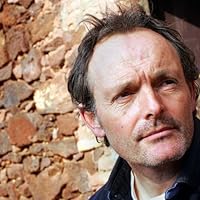
William Woodruff was born in 1916 into a family of Blackburn, Lancashire cotton workers. At 13 he left school and became a delivery boy in a grocer's shop. In 1933, with bleak prospects in the north of England, he decided to try his luck in London and migrated to the filth and squalor of the East End. Then in 1936 with the encouragement of a Jesuit priest and the aid of a London County Council Scholarship he went to Balliol College, Oxford. There he became an idealistic undergraduate who mingled with George Woodcock and Harold Wilson. During the Second World War he fought in North Africa and the Mediterranean region as a major and then a colonel. All these experiences formed the basis of a series of memoirs, including The Road to Nab End, originally published as Billy Boy, and Beyond Nab End, which emerged only years later.
After the war, he turned down the chance of a political career in favour of academia. He was lured to Harvard on a scholarship and remained in America teaching economic history in Illinois, Princeton and Florida, until he was 80. 61 published titles - hardbacks, softbacks and translations - bear his name.
In a commercial, profit-obsessed, morally derailed materialistic world preoccupied, it seems, in numbing children's minds and senses with so-called games about war - how/who/why is it ok to launch Call Of Duty Modern Warfare 2 during Armistice week? - Woodruff's words should be read aloud in school assemblies. This is the most vivid and masterful record of wretched war, laid out in absorbing prose that, unlike any video “game”, places you at the heart of the truth, the horror.
War is by its very nature divisive, lending heavily to the divisions that exist within literature concerning it. Whether the purpose be reminiscence or criticism, very often authors (and those who read their works) find themselves moving their view of war into two camps: those that are for certain wars, or those that are against them. Those who back one "side", and those who back the other. Those who deem this action necessary, and those who deem that same action despicable. Almost inherently, there is an unshakable division within those reading and writing about the subject.
Woodruff, however, leaps miles away from this division. He does not dwell too long on "enemy" and "friend", although this is a topic explored. He does not walk long in the mindset of "us" and "them", with emphasis placed upon the deification of the "good" and demonization of the "bad". In fact, in this book, there is oftentimes a vacillation between coherent linear movement and seeming chaos, momentary tea parties and civility amongst the charred bones and gaping craters of the battlefield. Woodruff captures, with quiet, haunting deftness, a gritty realism of war that writers often miss: the lack of division when it comes to the horror and emptiness experienced by those in the trenches. As he notes, in the face of such madness, nobility seems something to cling to, self-sacrifice something to grasp desperately as the mind threatens to flee. And yet, this nobility does not recognize borders, uniforms, or languages. It often does not make sense.
For that matter, Woodruff's "fictional" examination of the Anzio campaign during the conquest of Italy (in WWII) disquiets the reader with just how easily the lack of logic and "sense" fails to matter to the decision makers, the war leaders, and those who decide from afar. Men are not men, but numbers to throw at other, "enemy" numbers. Men are not men, but small flags on a large map, shuffled back and forth as ground is lost and gained.
There are reasons that this account of war has been compared in quality to such titles as "All Quiet on the Western Front", and held up by critics to be on the level of even the war accounts of ancient Greek writers. It is honest, open, and moving as only reality can be, stark and inescapable in its presence and tangibility.
This is billed as a novel, but to tell the truth, it's a series of very disturbing vignettes describing the intense personal horrors of a soldier fighting for his life in a war. As such, I was tempted to abandon it, the futility of writing such a thing and perhaps expecting others to learn from it almost as great as that of war itself. But then I think that is the true worth of this book; it brings the whole issue, politics and argument of war down the most basic: of one human bent on killing another, the only reason being to survive, minute-by-minute-hour-by-hour, day-by-day..
Of all the books I've read about war, this book stands with only two others: The End of It by Mitchell Goodman and The Forgotten Soldier by Guy Sajer. Unflinching and unsentimental, it captures horribly and lyrically the devastation of war that can neither crush the human spirit and its capacity for nobility nor blind it to beauty. This is the work of a soul at hard-won peace, having experienced and transcended the brutality of war.
There are not many characters described by name in this book. Rather the war itself is the main character. The futility and wastefulness of war is described in brilliant detail.
I wasn't sure how to rate this. How can you rate something where it outlines experiences of any war. I just didn't always follow the writing style, but then it was synonymous with the experience at the time.
A humbling historical account of the landings at Anzio, Italy in 1943 that forced a second front to be created in Europe prior to D-Day the following Spring.
Woodruff's personal account written following the war is human story of the highest calibre filled with the anxieties, cockiness and eventual despair of the armed forces, both Allied and Axis, on war. A strategic invasion with the backing of Churchill and a resilient and coordinated defence belies the numbness of sustained warfare, sleep deprivation, malnourishment on the troops doing the fighting on the ground. These aspects are detailed in a shocking but real manner and describes a foe that neither side anticipated but was as deadly as any bullet.
It's a slim (190 pages) account of the madness and horror of war as seen from the Allied landings on the beaches near Anzio, Italy. The facts of the landing are well-known; this is more about how it felt to be there, to see the effects on his fellows, the local population, and a bit of the opposing German army.
an authentic and infinitely sad account of the experiences of ordinary soldiers caught up in the horror of Anzio. War stripped of glory and justification- just futile pain and misery.
Good idea without the glamour of fighting a nasty battle in WW2. My uncle Tony was there (Anzio) so interested to get a glimpse of what he went through...it wasnt pretty.
Once I'd got over my initial disappointment that this book, being a fictional account of Operation Shingle, though based no doubt in no small part on the author's own experiences there, I soon settled into what is a powerful anti-war novel. It's slightly ethereal quality makes it more Remarque than Junger and there is very little action. Rather the observation lies on the periphery of the decisive events - a widow's letter of thanks to a lieutenant who had written to inform of her husband's death, returned to her because the officer had been killed in action; a small cohort of soldiers burying a father and son, who do so without lamplight so each would not see the tears on the others' faces - thus at once filling the account with humanity, and at the same time showing the gaping hole left within it by the conflict. There are some funny moments in the book, some actions by the authorities that will make your blood boil, but most often tender moments that might move even a cynical wretch like me.
Having read the authors "Nab End" books I wasn't sure what to expect when I picked up Vessel of Sadness. Its not a memoir in the true sense, nor is it an in depth study of the allied landings in Italy in 1944. What we have here friends, is a towering treatise on the human experiece of war. Fear, futility, despair, tragedy, love, death it's all here. William Woodruff lays it all out for us in an almost dreamlike literary masterpiece. This book stands shoulder to shoulder with the likes of All Quiet on the Western Front, The Naked and the Dead, The Things They Carried and other classics of the genre. Why is it not more well known? I'm still mulling that over.
An extraordinary book that brings together personal individual experiences of war instead of the broad view points of battles and manoeuvres that we normally hear of.
Heartbreaking and occasionally uplifting this always feels very authentic and terrifying.