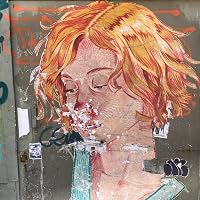
Like Shakespeare's Juliet, Annabella, accompanied by her down-to-earth nurse, is introduced to a series of suitors to her hand. Like Juliet, she finds all of them unsatisfactory - and rightly so, for the audience know that the nastiest of them is having an affair with her domineering aunt. Like Juliet, Annabella is wooed by a sensitive and passionate young man whose love she returns - but this young man happens to be her own brother, Giovanni. When they consummate their love and she, to avoid the scandal of extramarital pregnancy, agrees to marry her aunt's lover, the tragic outcome is inevitable. John Ford, writing his psychologically powerful and intellectually challenging tragedies in the early years of King Charles I's reign, is a playwright of the first rank, as 20th-century directors have shown both in the theatre and on film.
John Ford (baptised 17 April 1586 – c. 1640?) was an English Jacobean and Caroline playwright and poet born in Ilsington in Devon in 1586.
Ford left home to study in London, although more specific details are unclear — a sixteen-year-old John Ford of Devon was admitted to Exeter College, Oxford on 26 March 1601, but this was when the dramatist had not yet reached his sixteenth birthday. He joined an institution that was a prestigious law school but also a centre of literary and dramatic activity — the Middle Temple. A prominent junior member in 1601 was the playwright John Marston. (It is unknown whether Ford ever actually studied law while a resident of the Middle Temple, or whether he was strictly a gentleman boarder, which was a common arrangement at the time.)
It was not until 1606 that Ford wrote his first works for publication. In the spring of that year he was expelled from Middle Temple, due to his financial problems, and Fame's Memorial and Honour Triumphant soon followed. Both works are clear bids for patronage: Fame's Memorial is an elegy of 1169 lines on the recently-deceased Charles Blount, 1st Earl of Devonshire, while Honour Triumphant is a prose pamphlet, a verbal fantasia written in connection with the jousts planned for the summer 1606 visit of King Christian IV of Denmark. It is unknown whether either of these brought any financial remuneration to Ford; yet by June 1608 he had enough money to be readmitted to the Middle Temple.
Prior to the start of his career as a playwright, Ford wrote other non-dramatic literary works—the long religious poem Christ's Bloody Sweat (1613), and two prose essays published as pamphlets, The Golden Mean (1613) and A Line of Life (1620). After 1620 he began active dramatic writing, first as a collaborator with more experienced playwrights — primarily Thomas Dekker, but also John Webster and William Rowley — and by the later 1620s as a solo artist.
Ford is best known for the tragedy 'Tis Pity She's a Whore (1633), a family drama with a plot line of incest. The play's title has often been changed in new productions, sometimes being referred to as simply Giovanni and Annabella — the play's leading, incestuous brother-and-sister characters; in a nineteenth-century work it is coyly called The Brother and Sister. Shocking as the play is, it is still widely regarded as a classic piece of English drama.
He was a major playwright during the reign of Charles I. His plays deal with conflicts between individual passion and conscience and the laws and morals of society at large; Ford had a strong interest in abnormal psychology that is expressed through his dramas. His plays often show the influence of Robert Burton's The Anatomy of Melancholy.
While the theme of incestuous love is teased at in John Webster’s The Dulcess of Malfi, the controversial Tis Pity She’s a Whore smacks the Jacobean Theater audience with a brother-sister love. While the play outwardly condemns the abhorrent taboo with the presence of church leaders to provide moral and ethical authority figures, Ford challenges the audience his audience with his juxtaposition of this otherwise-romantic love between Giovanni and Annabella with the normal yet abhorrent relationships among Hippolita and the men in her lives, including her legal relationship with her husband Richardetto. It would seem as if that the accepted normal love relationship in the tragedy are even more monstrous than the condemned love affair among the siblings. And probably with the intent of critiquing the Church as well, Ford ends his tragedy not with the just sermon from a friar but with a greedy Cardinal demanding that he collects all the jewels of the numerous deceased for the Church. So it seems that the only triumphant character in the end is the uptight and unforgiving Church figures.
Ford pushes a very modern idea: how one can be a helpless tragic character if he does not conform with the ideals of the society or of any institution. For the first scene of the play, Giovanni is repentant and is aware of his sin by loving his sister sexually. While he can easily be the target of many criticisms and hatred, he defends himself by proclaiming the truth in all sincerity. He does love his sister and we believe him. Yet the audience is also reminded that it is not right as the presence of the Friar would remind us that in Christianity, this incestuous love is damnable. But if we remove the presence of religion and recall how some kingdoms in the past had and promoted incestuous marriages in order to keep power and money in the family. The incest case between Giovanni and Annabella are not as grave or as horrifying as that of Oedipus and Jocasta, but the audience are constantly reminded that it is.
The more we see the other suitors of Annabella, we are more reminded of how the incestuous relationship with Giovanni, if one considers everything about the other suitors, seem much better than what Grimaldi, Soranzo, and Bergetto are offering. None of these men love Annabella as much as Giovanni does. Even Florio, their father, does not understand Annabella at all. It is also quite remarkable that the only unfortunate character who does not condemn the relationship is Putana, who from her name alone, reminds us of the pitiful title of the play, as well as the condemnation that she would endure under the scrutinizing eyes of the other characters. Her mutilation, blinding, and burning at stake are all symbolic of the societal and religious judgment on the people who would support this taboo. Without being given a chance to explain herself, she is degraded into and regarded a witchlike fiend which should be punished and killed without remorse.
In an otherwise romantic Romeo-and-Juliet-type of play, where their environment are full of hatred and are not in love, we see that the accepted man-woman relationships are heavily flawed. Hippolita, being the central figure of three relationships--with her husband Richardetto who is seeking revenge against her and Soranzo, with Soranzo whom she had a previous relationship with, and Vasques who pretends to love her--are all sour and ugly relationships which are full of nothing but evil intentions and quests for vengeance and betrayals. Towards the end, these characters deserve their fate: Hippolyta is betrayed by Vasques for her betrayal of her husband, Soranzo is stabbed by Giovanni for damning his beloved Annabella and for exposing their love, Vasques is banished into exile where his multiplicable loyalties will be reduced to none, and it seems that Richardetto is avenged and is alive for being able to resist his further intentions of exacting his vengeance upon those who wronged him.
The stabbing of Annabella by Giovanni is not murderous but almost suicidal as well. Giovanni has killed a part of him by doing so and thus is protecting Annabella from the unforgiving world she lives in. Her heart skewered on Giovanni’s sword can be seen as an act of vengeance towards the entire world who want to see their relationship end; by doing so, he would feel the satisfaction of having won against the unaccepting world around them while displaying (literally) and unabashedly how he captured the heart of the one he loves and damn them all who wouldn’t understand.
But as the play ends with a quote that echoes the title, the tragedy sends the final word where Annabella is judged and pronounced a whore, the same way how vindictive moralistic authority figures and supporters would when they encounter such a rebellious and immoral person who challenges the norm. Ford, even though he ends with this sentence, a judgment remark, it is entirely possible that he is actually sending off a question or a challenge beyond the final sentence of the play: what do we call those people who see the Annabellas of the world as whores?
This entire review has been hidden because of spoilers.
The wildest Romeo and Juliet fanfiction you’ll ever read, complete with nurse, friar, and star-crossed lovers—who just happen to be brother and sister. It’s a play without a moral center, with no one to root for and no one to love, just bitter, deluded, vengeful men circling around a woman neither virtuous nor fallen, pitiable nor admirable. A strange confusion of a play, but well worth any Romeo and Juliet fan’s time.
I suppose this is cheating as I went to see this last night at The Globe's indoor theatre (having read it many years ago), but since the production was very text focussed -and after all it is drama, I feel I can justify it!
Published in 1633, the play is a direct, often humorous and finally bloody tragedy. Annabel is an eligible virgin of marriageable age who has many suitors vying for her hand: a well connected soldier, and eligible bachelor and a young blustering fool. Unfortunately when her brother, Giovanni, declares his passionate love for her and she reciprocates, the relationship becomes incestuous, she becomes pregnant and the stage is set for disaster.
Ford highlights the hypocrisy of Italian society through the characters of the self absorbed lovers and the cardinal who is happy to both protect a murderer and assimilate the dead families' fortunes. It is impossible not to look at the play through modern eyes and see that all the women are incarnations of lust in some form or other and inevitably all die grisly deaths. However, the men come out of it no better: with perhaps the exception of the friar who wisely high tails it out of Parma before the final scene, or the father who dies of a heart attack once he hears his son's confession. All others are corrupt, fools, liars, murderers, vain, self obsessed or vengeful psychopaths!
I'd like to think that Ford was writing sensationalist drama to pay the bills rather than a reflection of contempory society. Anabelle, despite her inevitable damnation, comes across as the most rational and loyal of all the characters. Hence the cardinal's final summary 'tis pity she's a whore' becomes a parody of judgement when compared to Lodovico's conclusion in Othello.
“Of one so young, so rich in Natures store, Who could not say ‘tis pity she’s a whore?” ATE LEFT NO CRUMBS putana was lowkey racist so fuck her but this book was ruthless its so funny
This was actually one of the easier plays to read: fast paced, with measured dialogues, and lots of character drama. It was Game of Thrones lite in all in incestual, gory details. I quite enjoyed the sheer theatricality of it all. Specially the part where the father, on learning his children's scandalous secret, promptly dies of shock in the middle of his tirade! Delicious stuff really! 4 stars.
I have such mixed feelings about this play... I need to see it live to see if my hatred for Giovanni is justified and if some of the decisions feel as forced.
Okay this was intense. I went into this story knowing absolutely nothing apart from the fact that it's a family tragedy. I found it very interesting to see how this play dealt with a subject that is still highly controversial (incest).
From BBC Radio 3 - Drama on 3: Compassionate and disturbing, John Ford's great story of doomed love between a brother and sister in this new, visceral production for radio, intercut with the music of Jimi Hendrix and Nick Cave.
Annabella ..... Jessie Buckley, Giovanni ..... Damien Molony Signor Florio ..... Niall Buggy, Putana ..... Fenella Woolgar, Friar Bonaventura ..... Oliver Cotton. Lord Soranzo ..... Matthew Pidgeon, Vasques ...... Enzo Cilenti, Hippolita ..... Indira Varma. Grimaldi ..... Gary Duncan, Cardinal ..... Neil McCaul, Officer ..... Adam Fitzgerald Dorando ..... Tayla Kovacevic-Ebong. The original song - In Deep - composed by Jules Maxwell, and sung by Jessie Buckley, Indira Varma, and Abby Andrews Introduction by Professor Emma Smith from Hertford College, Oxford.
Adapted and directed by Pauline Harris.
Further info:-
Jessie Buckley stars in her first radio appearance as Annabella. Credits include War and Peace for BBC One, The Last Post - BBC One and Taboo. She played Anne Egermann in the West End revival of Stephen Sondheim's A Little Night Music. Buckley played the part of Emily Strong in Rosamunde Pilcher's four-part TV adaptation of her book Shades of Love. She appeared opposite Jude Law in Michael Grandage's West End production of Henry V at the Noël Coward Theatre, and played Perdita in the Kenneth Branagh Theatre Company's production of The Winter's Tale.
Three stars, because despite an overall farcical quality, rarely does a classic manage to shock a modern reader familiar with the likes of Game of Thrones. Conversely, one has to wonder whether Ford influenced George RR Martin at all, because this play has many of the same elements that make GoT so shockingly twisted: sibling incest, gratuitous murder (at weddings and birthday feasts, even!), and Machiavellian characters (Vasques is an unsung Lord Baelish, Soranzo could put Robert Baratheon to shame, and Putana reminded me strongly of Grand Maester Pycelle).
The plot feels a little exaggerated at times, maybe even a little cartoonish, but the play is saved from an overall impression of clumsiness by the incredibly well-written characters of the two incestous siblings, Giovanni and Annabella. Giovanni could be the love child of Cersei Lannister and Rodion Raskolnikov, twisted, murderous and brilliant as he is. Meanwhile Annabella plays an ingénue in front of the whole world, but when faced with someone she dislikes, like Soranzo or Bergetto, she is capable of acidic wit, even to the point of cruelty; she is both Madonna and whore, and reminded me a little of Helen of Troy, damned by her beauty and plagued by half-regrets. As opposed to Giovanni, there is actual goodness in Annabella: in the end, she is one of the few redeemable characters of the play, which is ironic considering she was the trigger for the storm of murder that swept Parma.
Martin Wiggins’s excellent annotations and introduction in the New Mermaids edition sets out how effectively the play undercuts social niceties with the disturbing nature of human desire. What stuck out to me was the instances where the audience’s own observation of the action is noted by the play – with characters talking about how their decisions will be judged by airy spirits or posterity once all is revealed. Soranzo insists the whore deserves no pity, while the Cardinal’s final line “tis pity she’s a whore” is unsatisfying. The play works because it hovers above such judgements, and leaves the audience ambivalent about what they’ve just seen.
During my fourth and last year at Union Theological Seminary my nextdoor neighbors in Hastings Hall were a Zen Buddhist and a Conservative Jewess. The latter, a native of New York, invited me and another friend, a Baptist from Texas, to spend Spring break with her up in the Catskills, visiting with her family and various of her friends.
While up in Washington Irving country the three of us went to see a theatre company perform John Ford's 'Tis Pity She's a Whore. It wasn't Broadway, but the actors, all of them young, presented this tragedy with gusto, with much shouting, much swordplay, one murder following upon another. It was such exuberantly great fun that I took this 'tragedy' to be a comic farce.
It was during this trip, while staying in a reputedly haunted 17th century house, 'Salisbury Manor', outside the town of Leeds, that I had my one and only experience of a 'ghost'.
It’s kind of tough to know what to say or think about this one. It’s a play from about 1630, closely related to the genre of Jacobean revenge plays, which are notorious for trying to get the audience’s attention by shocking them. Sure enough, we open Act 1 Scene 1 with a clever young man, just back from a foreign university, strolling down the street with a friar and casually talking about how much he wants to have sex with his sister. No no no, that’s wrong, says the friar, and the young man then launches into a flowery sophistical digression justifying himself. They argue. God will punish sin, says the friar, and don’t you pull that atheist crap on me, ‘cause you’re not at university any more and you can’t get away with that kind of egghead stuff ‘round here. The young man halfheartedly vows to try praying, repenting and fighting his lusts. Will it work, or will he be Swept Away by a Forbidden Love?
I’ll try to limit the spoilers for now, but I don’t feel too bad disclosing that things keep getting more transgressive from there, almost as if that’s the author’s conscious objective. After all, if the audience is there to be shocked, then each successive act has to have something to keep them that way. By the end of the play we have multiple dead bodies (bloody and otherwise) scattered about the stage, and someone is running around babbling insanely while brandishing a heart impaled on a dagger. Also, he’s swordfighting. It’s unclear whether he puts down the dagger with the heart on it before taking up swordplay.
Described thus, it sounds almost as silly as The Courier’s Tragedy, the absurd fictional parody of Jacobean revenge plays described in Thomas Pynchon’s The Crying of Lot 49. And one can almost understand why the Puritans of the time periodically closed down the theaters in fits of moralistic contempt.
And yet there’s more here. The obvious, casual misogyny of the title has a double edge to it. Again, no spoilers yet, but when the line occurs in the play, it’s a brutally, casually dismissive statement by a character who plainly has no idea what he’s talking about (and doesn’t care.)
Lots of people die in this play, but I find myself particularly thinking about the women. Why should we pay more attention to them? Well, to my mind, the title is a pre-emptive slap in the face of the reader/audience, saying in essence “notice this!” Notice the way the women are treated. Okay, let’s notice.
(End of no-spoiler pledge, by the way. Stop reading if such things matter to you.)
There are four female characters. One is a frankly amoral old woman who gives really bad personal-relationship advice; one is a wife who has been seduced and betrayed by a lover, two are unmarried virgins. One of the latter is no longer a virgin by the end of act one. Of these four, three die in various more-or-less horrible ways. Can you guess which three?
Bingo! It’s the old sex-equals-death trope, familiar to us from such classic works of literature as Halloween and Friday the 13th.
But which one does the title refer to? The author dangles the anticipated title-drop until the very end, seeming inviting us to guess who it refers to. Who’s the “whore”? What do we mean by “whore”, anyway?
Putana, whose name literally means “whore”, is a stunningly bad chaperone for a young woman. When leaving Annabel and her brother Giovanni to talk privately in the first act, she mutters in a snide aside to the audience that if he were anybody else, she’d take a cut of Annabel’s fee. It turns out she’s not actually joking. Shortly afterward she knowingly colludes in enabling brother-sister incest, saying almost literally, “if it feels good do it.” (Act 2, Scene 1: “[I]f a young wench feel the fit upon her, let her take anybody, father or brother, all is one.”) This is like the compliasant Nurse of Romeo and Juliet turned up to 11. It’s like she wants her good-girl charge to be corrupted, and enjoys watching it happen. She’s the unfiltered voice of the id, of biological urges that totally ignore reason and custom. What ever possessed Annabel’s father to hire this creature? If not the “whore” of the title, she’s certainly far from being a good guide or “tutoress” for anybody, and her “joking” comments about payment suggest that she’s not above prostituting the female body, even the body of someone whose virtue and reputation she’s supposed to protect.
And Annabel. The golden girl, the much-desired ingenue sought after by literally all of the eligible bachelors in town. She’s totally unimpressed with all of them, and understandably so. They’re an unimpressive lot: a second-rate bungler who never gets anything right; a blithering idiot who’s literally too stupid to live; and an arrogantly amoral, hypocritical ass who has already seduced, abandoned, and publicly betrayed at least one married woman. (Putana helpfully tells her this, then suggests that she marry the seducer because he’s a Real Man who knows how to Handle a Woman. Ugh.) No wonder her glib brother, freshly back from university and spouting all kinds of fine-sounding words, seems more attractive. Perhaps she should have noticed that he’s a bit too good at persuading himself with those fine-sounding words, and talking himself into all sorts of ideas and actions that boring conventional thinkers would recoil from. And, yeah, there’s that whole brother-sister thing. (But Putana says it’s okay!) Annabel doesn’t initiate her own disaster, though she does participate willingly once it’s proposed to her. But however foolish and misguided she may be at this stage, the play makes it clear that she’s motivated by actual affection for Giovanni, not by the prospect of cynically trading sex for money or social advancement or anything else that a literal prostitute would take in payment for services. In fact, Annabel and Giovanni are the only couple in the play who act like genuine lovers, who actually seem to like each other and be happy with each other. We can even speculate that if the two of them were to abscond to some distant town under fake identities, they might actually live together quite happily. But this is not the case. Giovanni is too entranced by his delusional dreams of lovers’ utopia to see the real-world disaster looming ahead of them, much less to take any action to avoid it. Annabel sees the disaster all too clearly when she gets pregnant. This is of course a reality check which inevitably hits women much harder than it hits men. And this is arguably the point at which she realizes that however much she loves him, Giovanni’s finely-worded flights of fancy primarily serve to amuse him, and will not save her from disaster. She’s the one who has to deal with the real-world consequences of their actions, while he continues to live in a fantasy world that becomes increasingly detached from the play’s grim reality. Far from benefiting from trading sex for worldly gain, Annabel’s been lured into disaster by sincere, if foolish, affection.
Hippolyta was once a good girl, too. A formerly chaste wife, she’s been seduced, abandoned and publicly disgraced by a lover who pursued her relentlessly, then casually ditched her once he got what he wanted. But she’s no passive creature to be acted on by men and then ignored. She’s furious, and she’s trying every scheme she can think of to get revenge on the traitorous son-of-a-bitch. This does not work out well, as she is once more betrayed by a man she unwisely trusts. You can hardly blame her for spitting with rage while she dies. She let herself be seduced, gained nothing but (perhaps) momentary pleasure from the experience, and bitterly regretted it. Does this make her a “whore”?
And what about Philotis, the one female character who survives the play? She is a “good girl”, a virgin who remains such, but not really by choice or principle. It’s just that she’s so docile and passive and obedient to her uncle that she seems to have literally no agency, no wishes or desires or passions of her own, good or bad. When told by her uncle to marry a blithering twit on a moment’s notice, she obediently glides off to do so, no questions asked, even when the uncle crudely pushes the marriage in words that sound very much like a pimp. (III.v: “[w]hen we have done what’s fit to do, then you may kiss your fill, and bed her too.”). When that goes horribly wrong, she doesn’t seem too upset about it, she just continues doing what her uncle says, and trots off to join a convent. You could make a case that the marriage her uncle proposes is much like prostitution, a bluntly described trade of sex for social position with no hint of personal affection whatsoever. It fails to happen not because she prefers anything different, but through blind chance when the hapless groom is mistakenly slaughtered by a bungling assassin. Philotis the passive good girl turns out to be basically a female-shaped figure with not much more agency than a blowup doll. Of course, seeing what sex leads to in the twisted world of this play, who can really blame her for being glad to say Goodbye to All That? (IV.ii: “Farewell, world, and worldly thoughts, adieu! Welcome, chaste vows; I yield myself to you.”) And she ends up being the Final Girl, although not by choice. She’s so boring it hardly seems to matter.
So. Which is the “whore”? Anybody who’s read this far has probably already read the play as well, and we know that as the Cardinal in the final scene is opportunistically giving orders for everybody’s fortunes to be confiscated and handed over to the Church, his offhand derisive comment is directed at Annabel, of whom he has only the most desultory knowledge. The play’s bitter irony is that of all the four female characters, she’s the only one who’s had a sexual relationship based on honest, genuine affection and mutual desire, not on deception or the prospect of trading sex for gain. Putana really does live down to her name in attitude, if not in deed; Hippolyta betrayed her spouse; Philotis, while technically a virgin (and even a nun) at the end, didn’t particularly seek out that outcome, she just passively let herself be led by her uncle wherever he told her to go, including the prospect of being wedded and bedded for the sake of a socially useful connection to a rich father in law, and drifted into the convent more or less by accident when that didn’t work out.
But because Annabel’s sincerely affectionate sexuality has gotten her “in trouble” with a socially unacceptable mate, she’s slapped with the dismissive, insulting label of “whore”. One can’t help but wonder whether the author’s provocative title is intended to question that label, and the ludicrously inapt set of values and judgements that lie behind it, almost as much as it is intended to grab the audience’s attention with prurient interest.
incest... interesting... i just don't think it ever said much that i haven't heard before. it's like creating something for the shock value, before the actual trope came to literature. moral of the story: don't have sex with your relatives??? specifically, your siblings? idk.
Ça commence par notre héros Giovanni qui ne veut plus se laisser dicter sa conduite par l'église et donc évidemment moi je me dit go la rébellion contre des règles religieuses strictes, j'adore. Sauf qu'immédiatement après il déclare qu'il veut marier sa sœur et là je me dit dude.... Pourquoi tu me force à être du bord de l'église là... j'aime pas ça...
C'était absolument hilarant les personnages sont intenses les dialogues sont absurdes, personne n'a de sentiments mitigés ou ambigus tout le monde est à 100% dans son délire. Que ce soit pour marier quelqu'un qu'ils connaissent à peine ou pour buter quelqu'un qu'il connaissent à peine plus tout les personnages prennent les décision les plus drastiques possibles à chaque instants (et le meurtre est TOUJOURS la solution).
Je sais que courant littéraire valeur historique blablabla mais parfois il faut prendre un texte pour ce qu'il est et c'était ridiculement divertissant!
The most remarkable thing about this play is its language. In my review of The Shoemaker's Holiday, I noted how simplified the language was (at least in comparison to Shakespeare), but that certainly is not the case with 'Tis a Pity She's a Whore. The language, rhythm and rhyme all came together in a beautiful manner that, if I was judging this play on its language alone, could have easily led me to mistake it for one of Shakespeare's tragedies. It's extremely well written, which makes its story easier to appreciate.
The story itself is... unique. I honestly didn't know very much about this play before I started reading it, so its focus on incest came as a huge surprise. Ford doesn't go into that much detail about the relationship itself, but there are still enough descriptions and romantic speeches to make you feel uncomfortable. That probably should be a bad thing, but it actually made me appreciate the play a lot more; it's just so powerful, and its ability to make you feel uncomfortable is, in a weird way, a part of its charm.
For the most part, the characters in this play are also very engaging. There's one particular character - Vasques - who is just so evil. He's the generic Machiavellian character that so often appears in plays written during this period, but there's something about Vasques - perhaps a level of detail - that makes his actions truly haunting.
What I Didn't Like:
Although I really enjoyed Vasques' character, I did, at times, find his motivations a little difficult to understand. He only really explains his reasons for doing things at the end of the play, but I would have appreciated a few explanations earlier on. This was probably the case with a few of the characters in this play, particularly towards its conclusion - everything just happens so quickly, and it can be hard to make sense of it all.
My other main complaint with 'Tis a Pity She's a Whore is a bit of a strange one: in a way, it doesn't feel like one play, but two. There is the light-hearted play where several suitors all compete for Annabella's affections, and then there is the one that comes after - the one where the light-heartedness really is a thing of the past, as violence takes over.
Overall:
'Tis a Pity She's a Whore is shockingly original. It's well written, fantastically engaging and conveys a huge amount of drama in only a few pages. The scenes are short, the characters are varied (although all a little bit evil), and, strikingly, it's not all that outdated. It's surprising, but there is still a lot of relevance to this play (the incest aside).
Enjoyed it more -- enjoyed it quite a bit -- on second reading. In fact, I'm no longer willing to sign on to any of the negative remarks below. Maybe it helped to know in advance that the incest theme was so prominent, so I could stop saying "wait, what, really?" and pay more attention to everything else going on.
I feel a little bit about writing only a short retraction of a long negative review, but John Ford won't be too offended I reckon.
---
"'Tis Pity She's a Whore" is kind of wonderful, and kind of appalling, for its window into the strange world of 380 years ago, a world every bit as strange as our own.
I've read this with an organized reading group, and I'm sure I'll have a better understanding of it once the conversation kicks off. But it will be a tough sell to get me to think of this as a "good" play. It is, first of all, ridiculously lurid; it's all about enthusiastic incest, it has (counts on fingers) no less than five mostly gruesome on-stage deaths; and at one point has a character running around brandishing another character's recently-removed heart. What this is all ABOUT, other than to just to shock, is beyond me.
Well, every age has its messy thrillers, but this is no Pulp Fiction, nor even a Titus Andronicus. Only one character (Vasques) ever becomes very interesting; the others are all in lesser (Philotis) or greater (Giovanni) measure just tools of the plot, which needs to force its way through a rather dodgy logic so that there can be a spectacular swordfight at the end. Not that there's anything worng with spectacular swordfights at the end. This one, though, is undercut by a few more pages of lame dialog, minor characters having tangential conversations that shed no light on and lend no natural conclusion to everything that's just happened. Right down to the last, inaccurate word, it's a big ol' clunker of an ending.
So say I now. We'll see if I come running back after the group discusses the book to erase the above and rave about how very wonderful this play really is, once you get it.
Transgression. Transgression. And, oh yeah, more transgression. What bloody good play (sorry, couldn't help it). I read since I'm going to a production by the UK's Cheek by Jowl pretty soon, and had absolutely no idea what it was about. Let me sum it up for you: incest. Which is bad-ass in it's own right, plus there are some really cool lines, for example, the title. And also this stage direction: "Giovanni enters carrying a knife with a heart on it." Not kidding.
There is a lot more going on in this play than that, and the intro was filled with a history of its analysis and themes. But that is hardly my field, so I'll leave for the pros. Really looking forward to seeing the play now, especially when Giovanni walks onto stage with a heart on a knife. Yummy!