With her black hair, red lips, and lily-white skin, Summer is as beautiful as her father's garden. And her life in the mountains of West Virginia seems like a fairy tale; her parents sing and dance with her, Cousin Nancy dotes on her, and she is about to get a new baby brother. But when the baby dies soon after he's born, taking Summer's mama with him, Summer's fairy-tale life turns grim. Things get even worse when her father marries a woman who brings poisons and magical mirrors into Summer's world. Stepmama puts up a pretty face, but Summer suspects she's up to no good - and is afraid she's powerless to stop her.
This Snow White tale filled with magic and intrigue during the early twentieth century in Appalachia will be hard to forget.
Jane Yolen was a novelist, poet, fantasist, journalist, songwriter, storyteller, folklorist, and children’s book author who wrote more than three hundred books. Her accolades include the Caldecott Medal, two Nebula Awards, the World Fantasy Award, three Mythopoeic Awards, the Kerlan Award, two Christopher Awards, and six honorary doctorate degrees from colleges and universities in Massachusetts and New Hampshire. Born and raised in New York City, the mother of three and the grandmother of six, Yolen lived in Massachusetts and St. Andrews, Scotland.
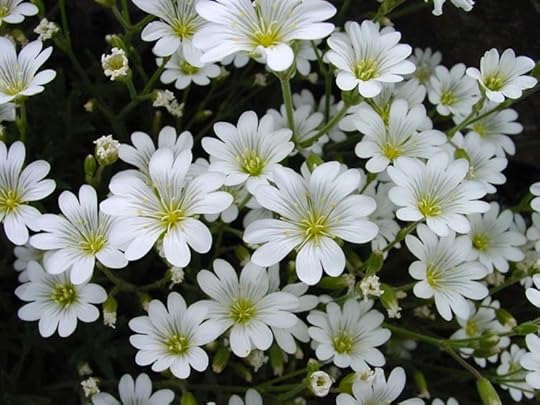
Snow in Summer is Jane Yolen’s 2011 middle grade/young adult retelling of Snow White, set in the Appalachian hills of West Virginia in the 1940s. The main character is Snow in Summer, a girl named by her mother after the white Cerastium flowers that carpet their front yard.
Her mother dies in childbirth when Summer is seven years old, and her father completely withdraws in his grief, neglecting Summer, who gets along with the help of her mother’s best friend Nancy. When Summer is eleven, her father is entranced by a sophisticated, cruel woman who married him to get her hands on the land he owns. Her father’s health begins to fail (helped along by Stepmama), but he barely hangs on, as does Summer. Her stepmother, who calls her “Snow,” treats her harshly and isolates her from Nancy and everyone else in her life. Stepmama is secretly a user of black witchcraft, complete with potions, a magic mirror, and other trappings of her “Craft.”
The story is told in first person, primarily by Snow in Summer herself, but periodically there is a chapter from Nancy’s or Stepmama’s point of view. Nancy mostly discusses her concerns about Snow in Summer; Stepmama, while assuring us that she is “not a wicked woman,” meditates her plans for “Snow”: either win her trust and bring her to the Craft (which plan includes, by the way, stealing seven years of Snow’s life to maintain Stepmama’s youth), or kill Snow and use her heart for witchcraft purposes. There’s an intriguing conflict between the two parts of Snow in Summer’s name, with those who love her calling her “Summer” and those with evil intentions calling her “Snow.” This is also echoed in the dichotomy between her joyful life as a very young girl and the painful years after her mother dies and her stepmother joins her family.
Snow in Summer has an unusual (for fantasy) Depression-era Appalachian setting, with a touch of magical realism. Summer’s father, for example, has magical “green fingers” (like a green thumb, only better) and Cousin Nancy assures Summer that the caul from her birth has magical properties. This rather realistic setting is combined with more fantastical elements of black witchcraft and German fairy tales ― a combination that sometimes seems rather disjointed. The “dwarves,” for example, are six rather short, wiry miners from Germany: they have a younger, seventh brother who is studying at the university, but then they also have a peculiarly intelligent pet bear who guides (or drives) Summer to their mountain home and then protects her from danger … albeit not entirely successfully. It’s a bit meta when Summer specifically mentions being familiar with the Snow White fairy tale, and she’s fully aware of her evil stepmother’s magical mirror and her plans to use a Hunter to kill her, but she still frustratingly and inexplicably makes the same near-fatal mistake that the Snow White made in the original tale.
As part of Stepmama’s diabolical plans, she infiltrates and uses a creepy evangelical church that focuses on “signs” like being able to survive snakebites and drinking poison. Vilifying a group’s religious beliefs, even if they seem misguided, ridiculous or repugnant, may leave some readers with an uncomfortable feeling. Similarly, the black magic practiced by Stepmama, although not described in a great amount of detail, is rather creepy and may be off-putting for some young, sensitive readers.
While Jane Yolen’s writing is evocative and thoughtful, as usual, Snow in Summer is a bit of a slow, odd story ― until the ending, which feels rather rushed. Despite its weaknesses, I recommend this to readers who are fond of unusual fairy tale retellings with some darkness.
Set in the Appalachian mountains in the early 1900s, this retelling of the beloved fairytale Snow White combines elements both old and new.
Summer and her father are grieving the loss of their mother and wife when a strange woman with strange powers enters their lives. Soon, Summer's life is a nightmare that she cannot escape from.
Comparable to other modern renditions of fairytales such as Ella Enchanted and Beastly. Also a coming of age story, especially applicable to young tween girls. -Tiffany J.
Jane Yolen conjures a Grimm fairytale in the depths of the Appalachian wilds in Snow in Summer. In a voice appropriate for the place and time (late 1930s) Snow-in-Summer Morton tells us how, when she was seven, her mama died, and her father retreated so deep into his grief he may has well have died, too. Summer has been mostly raised by her kind Cousin Nancy…
…until the day Papa brought a strange woman back from the old graveyard and married her. Summer’s stepmama, an unfriendly creature incapable of a genuine smile, insists on calling the girl Snow, and this is one of a hundred hints that something is terribly wrong.
While Summer narrates most of her tale, Cousin Nancy occasionally interjects her worries about the child and her rebuffed attempts at help, while the Stepmother lets us in on her sinister motives for taking over this grieving family, slowly isolating father and daughter from their community support network.
When Summer hits puberty, her Stepmama’s horrid plan—involving stolen years and the consumption of a human heart—can finally be put in motion. Afraid for her life, the girl, pursued by a hunter, flees into the wilds…
The only major problem I had with this book is that the character standing in for Snow White’s prince only appears in the last five pages or so. We know that he likes books and he’s nice, and that’s all. The emphasis of the book, granted, is on the fractured family in the tale, not the romance, but Willy sounded like a fine young man and I would have loved to hear more about him.
Everything else is quite enjoyable. Yolen’s narrative voice feels authentic, and the three developed characters—Summer, Nancy, and the Stepmother—are simple but vivid.
There is quite a bit of talk about menstruation, childbirth, and the blood shed during both, making the book inappropriate for very young readers. Any kid twelve years or older should be fine.
The positive portrayal of Catholicism is a welcome touch.
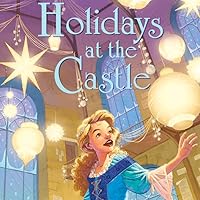
Mia Araujo's cover art is right up there with Kinuko Craft's paintings for Juliet Marillier's Wildwood books. It's a beautiful painting containing dozens of plot-relevant details. More covers should look like this!
A wonderful, strange, and deliciously creepy version of Snow White. Set in the mountains of West Virginia during the mid-Twentieth Century, Yolen doesn't have to get bogged down with creating a whole new fantasy world, instead she assumes you understand the setting, and uses spare language to tell you the story in her own way. I couldn't put this down!
Okay, not to be rude, but if Jane Yolen is the "Hans Christian Andersen of America," then I'm Emily freaking Bronte.
What is WITH the lousy Snow White books lately? Have people suddenly decided to put forth NO effort in adapting this tale?
Sadly, this one really should have been good, because its premise was actually sort of brilliant. A 1930s Snow White living in the mountains with a stepmother who attends a snake handling church and has a fixation with poisons? SIGN ME UP! It's kind of like The Brother's Grimm Tale meets V.C. Andrews' Heaven!
Except the novel fails to deliver. Things are set up, never explained. And this is actually OKAY if you set up a story TO be an unexplained "telling" tale (look, I'm not the biggest fan of the film "Pan's Labyrinth", particularly because it makes me sob angry ugly tears when it gets to the ending, but it's a good example of a story that doesn't try, NOR CLAIM TO TRY, to explain its own premise beyond 'here it is, goodbye' and moderately succeeds); but this book never attempted to be that.
We never find out what the stepmother's deal is, for one thing. We hear a lot of gibberish in her garbled POVs about taking seven years from her stepdaughter's life and the girl being too strong or some such rubbish but this is never explained or expanded on. Was the stepmother just looking for an excuse to kill this child? The ONLY part of her evil plot that was explained was wanting to take Snow White's (Summer's) father's land. Also we're told she got her magic mirror from her master whom she killed even though she loved him, but we're never told what/who he was. Which is vexing because so much of the character's feelings, reactions, and how she treats others (notably Summer) is centered around her supposed relationship with this enigma.
Secondly, Summer is one of those characters whose intelligence appears to wax and wane with the needs of the author's plot. When she needs to be smart, she is. When she needs to be an idiot, she totally is. I HATE when writers do that. It's LAZY. And if there is one pet peeve I have as a fellow writer myself, it's lazy people who get published while I work my butt off and spend my lonely, broke late afternoons re-labeling the emails in my rejection folder. (Yeah, I may be a little bitter, but I'm not WRONG). Look, there IS no such thing as a perfect book or a perfect characterization, but when an author PUTS FORTH EFFORT IT SHOWS and that more than makes up for it. Where was the effort in this book? Summer could have been a GREAT character. Simply because she is a people-pleaser and it is VERY RARE we get a people pleaser as a main character because most writers find them spineless and sadly don't bother writing those types of personalities. Yolen's character just showcases WHY this distain for people-pleasers exists instead of proving it wrong.
What I hate most about this book's laziness is that it's a children's book. It's like saying, oh kids are dumb, why do they deserve well-plotted/characterized literature?
On that subject, by the way, this SHOULD NOT have been a children's book. If Yolen had a more tongue-and-cheek style she could have gotten away with it, but with how she writes, she really needed to just throw in the towel, expand the story, dark themes included, and market it to YA instead of middle-grade. Instead she just glosses over the dark stuff and makes it very condescending as a whole.
Also what the bloody heck was the point of the romance in this book? We literally never even get to see the eventual blissfully wedded couple meet or engage in so much as a simple conversation. It's like Yolen just stared down at the almost finished book and went, "Oh, crap, there's no 'prince'! We can't have Snow White without a Prince Charming! What about Hunter? No wait, he's older, it's creepy, and this is a middle grade book... um... Uh... I know, the dwarfs' brother! Problem solved." Ugh. She should have just not had a romance at all if it was going to be this freaking lazy.
Not a great Snow White book at all. I'm open to recommendations if any commenters know of better ones.
Jane Yolen’s latest novel, Snow in Summer, is a wonderful addition to her series of reinvented fairy tales. Like her earlier Briar Rose, this is a dark retelling of a Grimm fairy tale—in this case, Snow White instead of Sleeping Beauty. It follows a girl named Snow in Summer, who tells the tale of her childhood in retrospect as she grows up in the mountains of West Virginia. It was published in November of 2011 by Philomel.
To clear a few things up Over and over again I’ve seen this book described as a “Depression-era Snow White.” It’s really not. Summer, as the protagonist prefers to be called, gives us enough information to deduce that she was born in 1937, at the very end of the Great Depression. Most of the action takes place when Summer is between the ages of eight and fourteen, and therefore between the years of 1945 and 1951. Granted, Summer is a poor girl growing up in a poor community for which not much had changed since the 1930s, but, for me, most of the flavor of this book comes from the culture of that region of Appalachia and not from the time period itself. The book is populated with the folk music and traditions of the Scotch-Irish people that predominate that area of the United States, and those influences situate the book in its time and place far more solidly than any reference to exterior socioeconomic or political happenings could.
Not the story you thought it was As with other fairy tale retellings by Yolen, Snow in Summer is a dark tale. Unlike many versions of Snow White which place the majority of action after Snow White leaves her father and stepmother to live with the seven dwarfs, Yolen places most of the action while Summer is still living with her parents. There’s a great deal of introduction to Summer and her father before the wicked Step-mama ever shows up. Once that occurs, the main thrust of the book then turns to Summer’s relationship with her Step-mama. Since we all know that Snow White and the Wicked Stepmother do not get along, it should hardly surprise you that this relationship is outright abusive and Yolen does not hold back on that front.
Short and sweet As with all of Yolen’s work, the writing here is par excellence. Yolen is a master at telling her readers exactly what they need to know in as little time as possible with such style and grace that you never feel rushed through something, and you never feel confused. This is a relatively short book and a very quick read, but it’s still satisfying for all of that. There are no unanswered questions and no pieces of plot left to dangle in dark corners. As usual with Yolen, the prose is simply exquisite. Because of its relative simplicity but its very dark subject matter, it’s hard to place this book in any one age category. The library I borrowed this book from has it in its juvenile chapter book section, meant for children under the age of twelve. While the book is presented in such a way that I have no doubts that many children that age will be able to grasp it, the subject matter itself will push many others to qualify it as a young adult book. Because of the wonderful writing style, I’m also sure that adults looking for a quick read will not be disappointed, either.
Why you should read this book? If you’re a fan of Jane Yolen, or if you’re a fan of retold fairy tales, this is a wonderful selection. If you’re looking for a well-written book for young readers, look no further! However, if the subject of child abuse makes you uncomfortable in any way, this is not the book for you. It is very plain, very in your face, and very frankly discussed. Nothing is glossed over for your comfort. Granted, the book is such a quick read that you don’t spend much time with it, but do be warned.
Woohoo! A young adult fairy tale retelling that wasn't dripping with irritating tropes and insta-love! So, I quite liked this one. It's a retelling of Snow White, set in post-Depression/WWII West Virginia, definitely an interesting setting for this tale. Although there were some magical elements (I'd categorize this book as magical realism), this gritty retelling was focused more on the relationship between Summer and her stepmama. The part with the seven dwarves almost felt tacked on to the end because it took so long to get there, but it worked; it wasn't the focus of the story.
There were a few things that weren't explained well or didn't make entire sense....but that would fit with it being a fairy tale, right?
Can't say I've ever read a fairy tale retelling that included a crazy Pentecostal church, but here we are.
I think I'll be adding this one to my collection of fairy tales.
Lots to like, but also lots of wtf & annoying things.
Intense enough for YA, with snake-handling 'Christians' and a near rape and a near murder and plenty of poison. But the heroine is a 'tween for most of the book. (I'd be very uncomfortable having 8-10 yo children read this, but that's the shelf it's on at the library.) Also, she knows her fairy tale tropes very well, as she repeatedly tells us, but willfully denies that she needs to be careful around this scary new wife who has changed her father's behavior so much.
Also it's awfully disrespectful of the good folk of West Virginia and of dwarfs and of Germans. And of grieving men. And of quiet women like Nancy, who, like Summer, was only brave when things had gone too far, instead of earlier, when heading off the evil before it latched on would have been so much more helpful. The wicked woman's back story is fascinating, but, again, intense & mature.
Also it's told in retrospective first-person, so we know she survives just fine. Despite all the foreshadowing dumped in randomly... and you know I cannot stand "but I didn't think about it then, and wouldn't pay attention until it was far too late...."
But when ppl are called upon, they do come through. And the ending, while rushed, is apt & satisfactory.
And there are some great insights and some beautiful writing.
"I kept thinking about the fairy tale... about the good girl who spoke in diamonds and pearls, the bad girl in vipers and toads. Both seemed an uncomfortable gift. Either way, their own voices were lost."
I refuse to recommend this, and I will be glad when this month is over and I don't feel compelled to read more by Yolen. But I can't fault the readers who did love this, either. So, can't rate.
Snow-in-Summer Morton’s life changed forever at age seven when her mother died in childbirth, leaving her alone and her father, Lemuel, with a broken heart. Cousin Nancy, the widow of Summer’s father’s favorite cousin who was recently killed in World War II, helps to care for Summer after her father slips into a deep, dark grief unable to cope with the death of his beloved wife. One day, four years later, now eleven-year old Summer is shocked when Lemuel returns with a mysterious but beautiful woman. Cousin Nancy and the rest of the townsfolk in Addison, West Virginia fear that Lemuel has become bewitched by the enchanting woman. When Lemuel quickly marries her, Summer hopes that she, her father and her new Stepmama will be able to form the family she’s longed for. As the years pass, however, Summer begins to realize that Stepmama is far from loving. Stepmama seems to have Lemuel in some kind of spell causing him to become withdrawn and unaware. In the meantime, Summer is subjected to abuse and eerie behavior at the hands of the woman, while Cousin Nancy can only look on in worry about her goddaughter. One day, Summer happens into Stepmama’s room where she encounters a strange mirror that seems to speak to her. The mirror warns of danger, danger that threatens to end in Summer’s death. Will Summer ever be able to escape the clutches of the woman that has appears to have bewitched the entire town and save her father’s life?
From award-winning author Jane Yolen comes this enchanting re-telling of the classic Snow White story set in 1940s Appalachia. The author is clearly a masterful storyteller as Snow in Summer flows easily and quickly from start to finish. Although it is relatively short, the characters are well-thought out and effective in allowing the reader to venture into the world of Addison, West Virginia. Yolen’s enthusiasm for the town, which she states in the beginning was the birthplace of her late husband’s family, is evident throughout the book. The rolling mountains, lush greens, and simple way of life all play an important role in setting the tone of the novel. Although Summer’s story is based on a very well-known tale, Yolen’s interpretations make for a fresh take on the classic. Summer’s creepy Stepmama as well as her kindly Cousin Nancy help narrate the plot, allowing the reader to see exactly what is going on inside the mind of the “wicked stepmother.” Overall, an excellent novel for tweens, teens or anyone who is a fan of Snow White or the American south.
I picked this novel up by chance after seeing that Jane Yolen was the author (I am very familiar with her books for younger children.) I was surprised by how much I enjoyed this quiet but intriguing version of Snow White! One of my favorite parts of the novel was the setting. It is clear that Yolen has a passion for the area, it being the home of her husband’s family, and I thought that all of the local names for plants, customs of the people of Addison, and the time period were very charming. I would highly recommend this novel to tweens, teens, or adults. It is short but excellent!
Snow in Summer sounds as if it has an interesting premise. As a retelling of “Snow White” in West Virginia, it leads readers to expect a unique, more contemporary twist on the fairytale, perhaps like Suzanne Weyn’s retellings of “The Frog Prince” (Water Song) and “Rumpelstiltskin” (The Crimson Thread). Unfortunately, Snow in Summer is rather dull and barely draws on its setting at all.
If not for the summary, it might be difficult to tell that the book is in fact set in West Virginia. Summer might mention the fact once or twice, and she is clearly living in some mountains where it is much more common to be Protestant than to be Catholic—but none of this adds anything to the story. Summer’s father has a unique connection with the land, which contributes to the plot, but it is fair to say that Yolen could have put him anywhere with enough land to farm on—a fantasy land, a real one, a different country or a different time period—and the book would barely change.
It is important, however, that her father has this land because most of the book is actually about him, at least indirectly. The book is an enormously long set-up explaining his grief over his wife’s death, how he then meet’s Summer’s stepmother, and how the stepmother plots to destroy him so she can take the land for herself. Summer narrates all this, but she is a rather passive character. The parts of the book not about her father tend to be her excuses for why she allowed her stepmother to take advantage of her—basically that she was just so young and did not know any better.
The whole “Snow White” part kicks in only at the very end of the story. Summer encounters the magic mirror a few times, but the attempted murder, little men, death, and marriage occur very quickly all bunched together at the end of the book. It is extremely unsatisfying. And although there is a marriage, there is no romance at all. Several years magically pass without mention in the book between the point where Summer meets her future husband and when she actually marries. (Incidentally, Summer loves fairytales and even mentions “Snow White” at one point; this is very disconcerting to readers, but strangely meaningless to her since she falls for the old woman at the door act anyway.)
Snow in Summer is essentially a lot of set-up and very little substance. Yolen tries to make the tale original with the stepmother’s unique form of magic, but the explanations are so vague it is unclear what exactly this is, and with the setting, but she does not take advantage of it. The book is rather disappointing.
A very different re-telling of Snow White. One of the weird things about it is Summer (the Snow White character) loves to read fairy tales - one of which is Snow White.... so it's a little odd that the main character, who has read the story of snow white doesn't recognize that same story unfolding again with her.
It was an okay book but it was mostly just something for me to read - I was kind of bored with it. Luckily it was an easy light read.
Questions not answered: What "power" does the caul have? Why did it affect the stepmother? I don't get it. How could a bear be a pet? I mean really. If there was a whole 'church' of people who used magic like the stepmother why didn't other people know about it - and then recognize the stepmother as the witch she was? Why were there 7 brothers (the dwarf characters) and 6 of them were actually small men, while one was not... Did schools in the 1930's really have home ec classes? When Summer mentioned she learned to hem in home ec that kind of surprised me. So... the white owl that Summer saw twice - I'm guessing that is supposed to be her mother some-how since the mirror said she would she her twice... but why a white owl? Each chapter is told by someone - mostly Summer, but a few chapters are titled - Cousin Nancy Remembers, or Stepmother Remembers... but then at the end the Stepmother dies, so.... how could she remember and tell her side of the story. . . . . . just wondering.
So... the story just seemed lacking - with lots of unanswered questions, strange things happening (the evil church scene was really weird), and to be honest I didn't really care about the characters. I didn't care that the father was under a spell and slowly dying, I didn't care about Cousin Nancy, I didn't care that Summer was almost killed and had to run for her life or that she was almost killed again...
I wouldn't really recommend this to anyone. I just didn't enjoy it.
A light weight Snow White retelling that is set in the 1940's WV Appalachian mountains. Snow in Summer's mother dies in childbirth when Summer is a child, and her father mourns heavily. A few years later he is enchanted by a mysterious woman who knows magic and secretly wants to kill him so she can sell his property to the railroad barons. At first she wants to take Summer as her apprentice, but when she isn't so easily molded, she decides to have her killed too. While the story had a good start with an evocative magical-realism plot and accurate details of that region (cougars called painters, cauls & a snake handling church), it veered off into a rushed and odd ending.
I know Jane Yolen is a masterful storyteller, and I suppose the book is well enough written, but I just didn't enjoy it at all. (And I generally like fairy tale retellings; I love the "Once Upon a Time" series and Robin McKinley's "Beauty" is one of my favourite books ever.) This story, however, is a strange mashup of Snow White and the gritty, daily life of post WWII rural Virginia that doesn't really work. Worst of all, it is just plain grim. There is little in the way of redemptive qualities, hope or happiness until it wraps up in a facile way in the final few pages. I wanted to like it more and kept hoping it would get better, but found I was dragging myself through the whole way. C-
Jane Yolen is a wonderful American children’s author known for her interest in fairy tales and folklore. I have read and enjoyed many of her books, in particular The Devil’s Arithmetic and Briar Rose. Snow in Summer is a reworking of the Snow White fairy tale, set in the hillbilly mountains of West Virginia during the Great Depression. The story is both familiar and unfamiliar, as the best fairy tale retellings are. It is not her finest work, but a must-read for anyone interested in the imaginative use of fairy tales.
Snow in Summer by Jane Yollen is one of my favorite book. This book is a about a beautiful girl "Snow" who lives with her father she was about to get a new baby brother but the baby die soon after he's born, taking snows mother with him. Soon after Snows mother died, his dad decided to marry another woman. Unfortunately the woman was a witch she was using magic powers and magic mirrors in order to kill snows dad.
This was a clever retelling of the story of Snow White, somewhat modernized (1930s West Virginia) yet keeping some of the elements of magic. I enjoyed it.
I struggled with the idea of writing a review for this book, as I’ve read works written by Jane Yolen and haven’t meshed with them, so I want to be fair with my assessment. In the forward, Yolen mentions that this is expanded from a short story. It probably should have remained as a short story. The reasons why are: 1) pacing 2) character development 3) world building. We’ll start with the pacing. We get this whole focus on Summer’s mother and father and the town and the Mortons, and how her father has green magic. Great, sure, we’re building something. Yet this is never brought into the action of the story. It’s this lush beginning that is never used. The story of “Snow White” doesn’t begin until near the end of the book, and Summer spends a chapter or two with the “dwarves.” She spends a month with them. That’s it. The rest of the time we hear about her abuse from her stepmother, which goes on for a long time. Chapter after chapter focuses on her evil. That’s fine, but then to write off the actual story with one or two chapters? Are we sure you wanted to write about Snow White? It was dark but the pacing made the abuse seem gratuitous, because ending was rushed and “oh everything ended up fine!” The second aspect was character development. The father is built up and…fades away. You hardly see him until the last chapter. He is an insanely selfish character that is given excuse after excuse. The only reason he stays alive is that the land in his name is important to the railroad being built, which the stepmother wants. That goes absolutely no where and is not referenced at the end at all. Cousin Nancy - why? She does add an element of the world to the story, and I suppose there’s realism there, for Summer’s father ignores her for years straight because he is just too manly in his grief to…feed his daughter. Summer suffers and suffers and suffers and then oh! She’s okay now, with the men. For a month. Like I referenced before, it made the abuse seem gratuitous because that’s basically what the story ended up being about. Witchcraft and evil were basically characters who took up the whole story. Good triumphs, but it’s not truly explored or given a definitive moment. Which leads us to world building. It’s developed and then set aside. Summer’s father has green magic. Does nothing with it. The witchcraft is referenced over and over and still is vague, despite southern gothic scenes regarding religion. Summer is special. Except no she’s not. Except yes she is. No she’s not. Summer is a victim. There. That’s what the story is about. This isn’t a story about Snow White. This was an Appalachian exploration between Snow White and her stepmother, and the evil she suffered. It may have worked if it had been a longer book. I doubt it. It should have stayed a short story, and likely been stronger for it.
This entire review has been hidden because of spoilers.
excuse me it's been HOW LONG since I read a fairy tale novel? ? April??? EXCUSE ME??? who am i.gif
Anyway, what the heck, huge identity crisis about that but let's move on. Snow in Summer was really quite good. Its historical setting in the not-so-distant past placed it in an interesting in-between spot between a contemporary reimagining and a more traditional retelling, which it navigated beautifully. The main thing I can't forgive this book for is how perfectly it would have held up one of my points in a paper I wrote two years ago in YA lit but Alas, we must forgive the cruel twists of time. (The protagonist kept reading her books of fairy tales, talk about conversing explicitly with the existing tradition). Plus I cited Briar Rose a ton, so Yolen got her due.
A great retelling with just enough interesting 'solutions' to the tale's problems of logic to keep me intrigued, while not being /too/ invested in sucking the magic and illogical parts out of the tale . Didn't try to sell us on a romance, which I appreciated. A really great, simple, straightforward, still intriguing retelling of Snow White I would recc to any fairy tale novelization enthusiast, especially one who has read a disappointing retelling recently and needs a palate cleanser.
Yolen does a fantastic job of creating an almost tangible atmosphere. It's a dark tale, with a wildness that threatens to overtake the fairytale-esque order that should be requisite for a retelling. Somewhat like vines often take over an orderly garden. I was okay visiting but didn't want to live there. And that's actually a positive point. It's hard for me to be so totally immersed in a story.
I also had a hard time keeping track of Summer's age before 13. And there are a few other patchy bits as well. It's a bit too dark to be included in my library's middle grade collection(the 26 year old and the 13 year old thing just crossed my line---especially because it wasn't really specified for the potential kid reader that it's not okay... and then Villy shows up and is 18? Half your age +5 is a great rule). And Nancy deserved better. But I'm rather bitter...
This entire review has been hidden because of spoilers.
If you enjoy fairytale retellings, I think you will like this one. Jane Yolen sure can write. I prefer a straight fairytale retelling rather than a mash-up. This was Snow White, but it had quite a few pieces from other tales. Enh. If you read this expecting the excellence of Briar Rose, you will be disappointed. If you come to it just expecting an Appalachian version of Snow White, I think you'll enjoy it.
I really enjoyed this Great Depression Era interpretation of Snow White! It was enjoyable teen fiction. Everything from the traditional fairy tale was very well adapted. Fun and easy read.
I’ve always wanted to read a Jane Yolen novel (I KNOW) so when I came across Snow in Summer, a retelling of Snow White, I thought it would be a perfect place to start.
The story is set in a small town in West Virginia in the 40s and it follows the story of Snow in Summer, a child who is 7 years old when her mother dies. After her death, Summer’s father, Lemuel, is grief-stricken: he barely acknowledges Summer’s existence and spends most of his nights at his wife’s graveside, fading away little by little. Their Cousin Nancy, out of love and devotion for Summer and her father, is the one who brings Summer up – helping as much as she can. Until the one day when Lemuel comes back home accompanied by a beautiful stranger, who is to be his new wife. Both Nancy and Summer know that Lemuel is besotted – magically so – but neither can do much and thus Summer’s life with her stepmother begins. At first, Summer is thankful for the attention she gets, even if that attention comes in increments and followed by orders. But soon it becomes clear that the stepmother is not only consuming Lemuel’s vitality but she also has an evil plan for Summer.
Snow in Summer is kind of a book of parts:
The first two thirds of the novel are slow paced, developing the story beautifully, but the final third is a fast-paced mess. Summer’s childhood and the first years of her life with her stepmother make up for the best part of the novel. The biggest chunk of the novel is devoted to her relationship with her father (and his lack of fathering) and with Cousin Nancy. Those were beautifully done; I felt Lemuel’s grief for the loss of his mother, as I felt Summer’s grief and frustration at having a living father who simply did not care enough for her. Cousin Nancy was also an interesting character with her unrequited love for Lemuel and her attempt to help Summer as much as she could. When the Stepmother comes into the story and becomes Summer’s guardian there is a shift in the story as Summer is submitted to horrible abuse. I felt the emotional toll was well explored: she is kept apart from Nancy and everything she knows and there is certainly an element of Stockholm Syndrome here as Summer is at first, grateful for any morsel of attention she gets.
This is also where an element of magic is introduced: the stepmother is an adept of the “craft” and has a magic speaking mirror; the Stepmother had used her magic to ensnare Lemuel’s and she also hopes to have Summer becoming an adept as well. When she realises that is not going to happen, the events following the stepmother’s attempt to kill Summer catapult the story into its last part. Whereas up to that point we had a story that had been slowly developed, all of a sudden events happen furiously fast: Summer is taken by the hunter, she manages to escape and join these people living in the forest and the story progresses as we all know. There are a few minor differences though especially with regards to the “prince” who is just thrown in there at the last minute to save Summer. The real “romance” though comes only as an epilogue in which Summer just tells us that theirs is One True Love and that’s it.
The similarities with the original Snow White story are glaring and the strange thing is how Summer knows about fairytales and even mentions Snow White but it never occurs to her that she is living the same story – not even when she sees the magic mirror. This mixture of awareness and lack of awareness was kind of strange and not quite well explained. The setting is interesting but not really fully incorporated in the novel to a point where I felt this could have been a story set anywhere, any time – the setting never really came alive for me.
Although I loved the prose and Summer’s voice, I was kind of disappointed in the story and how it progressed. There was something that just didn’t jibe with me – even though I loved parts of the story, and despite its fast-paced ending, the story proved to be kind of dull, actually. So, all things considered, this first foray into the words of Jane Yolen was not a successful one. But given how her books are so well-praised, I am pretty sure I just picked the wrong one to start with. Oh, well, maybe next time?
As Mark Twain was to the birth of American folklore, so Jane Yolen is to the next generation of Americana. Yolen is able to take classic Old World folk tales, clothe them in distinctly American cultures, mores, and histories, and present a story which gives a nod to its European roots while remaining uniquely American.
Snow in Summer is no different. At its heart, you will find the traditional Snow White fairy tale: evil stepmother/wicked witch, potions and poisons, magic mirror, the hunter, even the dwarfs who mine for precious minerals and the infamous apple (though this time it takes the form of apple kuchen). But this Snow White is set in a very rural Appalachia community, specifically a small town in West Virginia in the 1940-50's. Add in the folklore rooted in those very mountains and valleys--stories of haints and green magic, the power of rowan berries and garlic, and, most importantly, babies born with a caul--the mysterious sect of snake-handlers and their practice of faith-healing and speaking in tongues, miracle testimony and the belief in their immunity to poisons and venom, as well as those animals who have their own long and storied folktale history such as the snake, the owl, the fox, and the bear, and you've got a completely new perspective on an old story. And a beautifully haunting, lyrical, evocative perspective it is.
Snow White is known as Snow in Summer, her name coming from the little white flowers covering the yard.
The Snow in Summer plant, Cerastium tomentosum
We see the bulk of her story from her perspective, from the death of her mother, when she's known as Summer (because, as Summer's Cousin Nancy relates to her in a well-told tale: ”Your daddy laughed and said, 'We gonna call her all that? Snow in Summer? Don't you think she's too tiny for such a big name?' 'We gonna call her Summer,' your mama told him. 'It's warm and pretty, just as warm and pretty as she is.'”), to the arrival of Stepmama, who decided Snow was a better name (the changes in Snow in Summer's name are obvious, yet important signals in plot development), to the final, fulfilling conclusion. To add depth to the tale and to the characters, certain chapters are told from either Stepmama's or Cousin Nancy's perspectives, infrequent enough to add a piquant flavor to Snow's tale without becoming a distraction.
The novel is an expansion of Yolen's short story, "Snow in Summer," originally published in the anthology Black Heart, Ivory Bones. I'm sure I read that story as I love the anthologies produced by Ellen Datlow and Terri Windling, all of them involved with fairy tale retellings, but it's been so long ago, I'd forgotten all the details of the short story, making the book a nicely unfamiliar tale for me.
What makes Snow White the most difficult fairy tale to retell?
Snow in Summer was strange, but not in a good way. In this version, Snow White is called "Snow in Summer", shortened to "Summer". She was born with a caul over her head, which is supposed to mean that she will see dead people according to the superstitious. (Btw, a "caul" is like a hood made of skin that sometimes covers the heads of babies when they are born)
Summer's mom died giving birth to her second child (who also died). Her father falls apart. He spends most of his time singing and playing his banjo next to his wife's grave and leaves all the work for his daughter and her mother's best friend Nancy. So far, so morose.
One day, he comes home with a beautiful, strange woman on his arm. She is Summer's new stepmother who is also a black witch and a Satanist, although of course, no one figures that out until later. She plans to spend the next seven years siphoning off her new husband's life before she does the same to Summer.
I have always wondered why Snow White's father was blind and stupid enough to marry a woman so obviously evil. Where was he the whole time that the Evil Queen was treating Snow White like slave labor? As this story would have it, he was gullible, selfish, cowardly, and too lost in his own grief to recognize the danger that she posed to his daughter.
Her stepmother is horrible to Summer. She makes her scrub the floor with her own toothbrush and verbally and physically abuses her. When Nancy finds out, she makes her a protective charm from a photograph and Summer's baby caul.
When her husband's life is almost used up, Summer's stepmother tries to get her to allow her to steal her life in exchange for training in dark magic. Summer refuses and her stepmother sends a psychopathic teenage boy to kill her, eat her heart, and scatter her bones. Forewarned by her stepmother's magic mirror, Summer escapes into the forest. She finds a house inhabited by six men where she lives for a while until her stepmother tracks her down and uses a poisonous snake to kill her.
Before she passes out, Summer throws her caul into her stepmother's face, causing her skin to melt away like candlewax. The "dwarves" take Summer to the hospital and she survives. Later, she marries the seventh "dwarf".
This entire review has been hidden because of spoilers.
This review is also available on my blog, Read Till Dawn.
Snow in Summer is a Snow White retelling moved to a 1930's small-town setting, and while going in I was really excited about all the potential (especially because it's written by Jane Yolen!), I finished the book with a wrinkle on my brow and a "what in the world did I just read?" look in my eye. Because this book was weird. Just flat-out, honest-to-goodness weird.
For one thing, I wasn't really comfortable with the Satanic vs. Christian themes throughout the book. I think Stepmama is supposed to be some sort of Satanic something-or-other, i.e. a witch, and that alone is really creepy. When you add in the horribly scary church she takes Summer to later in the book and the disgusting caul Summer's Christian aunt/godmother gives her for protection (the caul=a piece of membrane that covered Summer's face when she was born), I was supremely uncomfortable. And grossed out. I mean, can it get much more disgusting than a salted, dried piece of old membrane? The answer is an emphatic no!
I do like the way Yolen took so many different aspects from the original story and twisted them around (like the way the main character's name is "Snow in Summer," and her mother called her "Summer" but her step-mother calls her "Snow"), and I've never read a Snow White story like Snow in Summer. But whereas Yolen's Sleeping Beauty retelling Curse of the Thirteenth Fey (my review) twisted everything in really cool ways that made an awesome new story, Snow in Summer twists things in ways that are . . . well, they're twisted. And repelling. And I really didn't like it.
I don't know, maybe other people would like this book better. I can't really think of any situation in which I would recommend this book, but I suppose if anyone asked me for a really funky/creepy retelling of Snow White with weird religious undertones, this would be my go-to suggestion. Because I don't think any other book fits the bill.
Okay first...the cover is amazing. It's what made me decide to read the book in the first place (that and knowledge of Jane Yolen's writing) and know, looking at it after finishing the book...there are so many little pieces from the story tied in.
Snow in Summer is a beautiful little girl, but, as often happens to such little girls, tragdey has struck. Her mama, in the process of giving birth to her new baby brother, has died, along with the baby. Summer is sad, obviously, but her sorrow is nothing compared to her father's. Lem was once a joyous man, singing to his wife and daughter, and even to his plants to "make them grow better." But now...he's just a shell. He seems to have forgotten that he even has a daughter most of them time, and it's up to Cousin Nancy to take care of Summer. Still, they get along well enough for some years. And then...Stepmama comes, bringing with her all kinds of evil.
Really, it wasn't anything like I expected. (Not that I had that many expectations, but still.) I was surprised. I'm not really sure why, even now. Maybe because of the way Stepmama was evil. From the moment she was introduced, she gave me the creeps. And in the church I was getting seriously scared for Summer! All kinds of horrors go on in places like that. Usually villians in fairy tales aren't creepy, exactly. You know exactly what to expect from them. But anyways, it was a good book. I really enjoyed the ending =)
I picked this up from the children's section of the library the other day because I love fairy tale retellings, and the cover is nice. However, it was one of those where the whole way through I kept waiting for it to get better and felt like I'd wasted my time when I was done. It was just too dark for me. The stepmother was creepy--really EVIL and we had to hear too much about it (I think it'd be disturbing for kids). The "___ Remembers" chapters were fine for characters who were still alive at the end, but kind of weird considering the witch is dead by the end (this is Snow White, we all know how it ends so I'm not considering it a spoiler). It was just gloomy for the first 3/4 of the book. I think I would have liked it better had the last 1/4 taken up most of the book. There's also the strange part of Summer knowing the story of Snow White already... Considering all the set up for the story, it would have been nice to have Summer help her father more (instead of just "tell Father he's free"--after all, we read a few times that he was "fighting" the magic, but we couldn't see any evidence of it) and see things more with Nancy and Lem, instead of just the epilogue type last chapter.
All in all, I've decided that there are a lot of great books out there and I have limited time, so the next time I feel like I'm wasting my time as I read a book, I should trust my instincts and pick up something else. (Especially in this one--after all, I knew how it would end!).
“I excused myself because I was only twelve. Because I worried about Papa. Because I wanted a real mama. Because I was, somehow, all alone. But those were only excuses. I acquiesced, plain and simple.
No-- I promised myself. If I am truly becoming a woman by this pain, I should act like one.” -- Snow In Summer, Jane Yolen
Snow in Summer has lost her mother. She has lost her father first to grief and now to a witch. Now “stepmother” bides her time so that when Snow In Summer loses her childhood she can take her very life essence as well.
Snow White is re-imagined among the folkways of a small mountain town in rural West Virginia. Cousin Nancy looks after the young Snow In Summer after the loss of her mother keeping the house clean and keeping memories alive, that is, until Summer’s father comes home under the spell of a woman who insists on calling Summer… Snow. The tale is told forward through narration and backwards as key characters remember the events unfolding.
As usual, Jane produces well formed, engaging characters and authentically captures life in Appalachia as she spins an old world tale that finds a perfect home in a part of America that hearkens back to a bygone time and finds mystery and magic alive on the slopes of its misty mountains. I happen to live on the edge of these mountains and enjoyed the mention of places I know. I also enjoyed following Summer who I found to be an earnest, honest and wholly good child battling a consuming, manipulative evil.