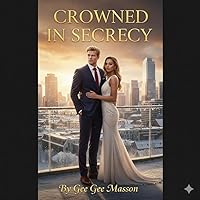
LG’s very first romance novel, from 1988, with a forced seduction
Claire Fletcher was adopted at age four and had an idyllic childhood until her parents died in a tragic accident when she was 10. From then on, the begrudging legal guardian of sweet-natured, shy, little Claire was her paternal grandfather, Adam Fletcher, who was a cold, callous, domineering narcissist. Claire’s father was Adam’s least favorite offspring, because he was nothing like Adam in temperament. For that reason alone, Adam would have resented having responsibility for any biological grandchild of that son, but his prejudicial resentment was massively increased due to Claire’s not being blood kin.
At the start of this story, Claire is 23 years old, and apart from being sent to boarding school until age 16—when Adam insisted her schooling end—she has spent all of her life at Adam’s poorly maintained mansion on his rundown estate called Ranbury, in Yorkshire, England. For the past seven years, she has worked for miserly Adam as an unpaid housekeeper, receiving for her diligent efforts nothing but room and board. Adam’s only other servants are the poorly paid cook and gardener, Maisie and Sam Morley, who are in their 70s and live in a derelict cottage on the estate. This kindly couple have offered the only consistent, supportive, human connection that Claire has known since her parents died, with one sporadic exception. Over the years, during his very occasional visits to Ranbury, Claire has received casual doses of big-brotherly attention from her cousin, Dane Fletcher, who is around seven years older than her. However, Dane quarreled with Adam during his last visit three years ago, and he has not been back since.
Claire is a slender redhead who is 5’1” tall. A little over a year ago, she fell in love with a maintenance worker on the Ranbury estate named Max, who is around her age and, at 5’5”, is what diminutive Claire considers a perfect size. After a few months of deepening friendship, Claire fell in love with Max, who assured her his dreams were the same as hers, a home and a family, and when he proposed, she accepted. But when she told Adam about her plan to marry Max, he raged at Claire and threw Max off the estate. Claire desperately wanted to flee to London with her fiancé, in order to get away from her horrible grandfather, but two major obstacles stood in her way: poverty and family loyalty. Claire had no marketable skills, and Max had nowhere to take her and could not support himself, let alone a wife. In addition, Adam informed Claire that he had terminal cancer and demanded that she stay and add to her current household tasks the grueling duties of an unpaid private nurse. Because Claire has the passive disposition of a born doormat, and had been in the habit of offering obedience and loyalty to Adam for over a decade—even though he never expressed any gratitude for her faithful service—her immediate impulse was to agree. And that impulse was strengthened by the fact that compassionate, loyal Claire believed it was her moral obligation to serve her grandfather in whatever way he needed during his final illness, because he didn’t dump her into foster care during her vulnerable childhood and teens, and he has continued to give her a place to live in her early adulthood. However, during the final year of his existence, Adam made her life a living hell, because he constantly, vindictively nagged and complained about the quality of her unpaid nursing care. No details are given in this novel about what Claire’s nursing care would have inevitably entailed, but the reader can easily imagine how ghastly it would be for a tiny, physically weak, shy virgin, with no nursing training whatsoever, and no calling for the nursing profession, to bathe, provide bedpan services, and prop up and turn over in bed an old man who was much larger and heavier than she.
At the start of this story, Adam has finally died, and his funeral is attended by all four of his grandsons, including Dane. At the reading of Adam’s will, Claire is shocked to learn that Adam has left his entire estate to her—which all of his relations, including Claire, had long assumed was worth a fortune (in spite of the mansion and grounds looking anything but prosperous). But Claire’s bequest has a cruel condition attached: she may only inherit if she marries one of Adam’s grandsons. There are only two who are unmarried: obnoxiously patronizing Carter, who blatantly assumes Claire will marry him and obviously plans to take over her inheritance for himself. And her cousin, Dane, who is a wealthy, successful businessman, to whom her inheritance, whatever it might be, would be insignificant. Claire urgently needs her inheritance, but it is unthinkable to her to marry anyone but Max. Unfortunately, without a big infusion of cash, it could be many years before they can marry, if they ever can. And she also very much wants to help Maisie and Sam, whom Adam heartlessly ignored in his will. It suddenly occurs to her that there is a possible solution to her dilemma. She asks Dane to become her groom in a marriage of convenience, explaining eagerly that it wouldn’t have to last very long. After she has gained her inheritance, they can have the marriage annulled. At first perpetual-bachelor Dane flatly refuses, insisting that Claire should have long since moved on from her teenage crush on him at age 16—a circumstance she is enormously embarrassed to discover that he had been aware of at the time. But when she assures him that she is engaged to Max and has no designs on Dane himself, he thinks it over and agrees.
This “classic” contemporary romance from 1988 is LG’s very first published romance. As such, it contains themes that she has not offered in her romance novels in decades, including:
1. An enraged, sexual-assault seduction of the heroine. Outright rape of the heroine by the hero is something that occurred quite frequently in historical romances many years ago, starting in 1972 with The Flame and the Flower by Kathleen E Woodiwiss. At that time in history, marital rape was still legal everywhere in the USA. Nebraska was the first state to outlaw it in 1975, without calling it “rape,” and it wasn’t until 1993 that marital rape was outlawed in all 50 states. Around that time, in the early 1990’s, sexual-assault presented as “romance” began to disappear in both historical and contemporary romance novels.
2. Single point of view (POV) of the heroine. From the beginning of Harlequin Presents (HP) in 1973 until around the mid-1990’s, only the heroine’s POV was typical in their novels. From that point on, in both the HP and Harlequin Romance lines, its authors would very occasionally (perhaps 1,000 words of a 50,000-word novel) delve into the hero’s head. Typically the hero’s POV is used to set the story in motion, by revealing in his thoughts his absolutely wrong impression of the heroine as a bad person. Starting in the late 1980’s, single-title, contemporary romances of about 70-90,000 words first appeared in the marketplace, but it wasn’t until the mid-1990’s that it began to be a genre tradition for those romances to include an almost 50%, co-equal amount of the hero’s POV compared to the heroine’s. That percentage of the hero’s POV has never been included in any of LG’s HP novels, to this day. At most, she includes maybe 5% of the hero’s POV. Keeping his thoughts unknown helps to extend the romantic conflict that the hero’s motivation is an anxiety-producing mystery to the heroine.
3. The heroine drinks champagne while pregnant. It wasn’t until 1980, after a Surgeon General’s warning, that American women started avoiding alcohol during pregnancy. Apparently British women didn’t get the memo about fetal alcohol syndrome until years later.
4. Condoms are never mentioned. It was during the rise of the AIDS epidemic, around the mid-1980’s, that education on safe sex became extremely important in the USA, and American authors began including condoms overtly in their sex scenes. Again, apparently British authors didn’t catch onto this important issue for some years after American authors did.
Themes in this novel that have remained a constant in LG’s romances all these years:
1. The main romantic conflict arises from the wealthy hero mistakenly believing that the heroine is a gold-digger. He also frequently, hypocritically, applies a double-standard by condemning the heroine (who is always a virgin, or if this is a reunion romance, has been celibate for many years) for supposedly having had a fraction of the number of lovers that he himself has had. He is convinced that, even beyond how repugnant in and of themselves he finds these character flaws in the heroine, her moral deficiencies have somehow either directly, or indirectly, caused harm to himself or someone in his family, and he is determined to get revenge. In the case of this novel, Dane mistakenly decides, after marrying Claire, that she tricked him into marriage in order to rip him off financially.
2. Accidental pregnancy caused when the heroine loses her virginity. Right from this very first book, and continuing to this day, this is a consistent trope in LG novels. I have read all 130 books she has written, to date, and I believe there are no more than about 4-5 of her novels that exclude an accidental pregnancy.
3. Twins. A huge percentage of LG’s accidentally pregnant heroines have twins. Unusually, in this novel—unlike her more medically realistic later books where the twin births in LG’s novels invariably are delivered by caesarean—the twins in this book are delivered vaginally with zero complications. And though they are four weeks premature and underweight (which is typical for twins), they do not end up in an NICU.
4. A Cinderella heroine who is a downtrodden doormat. Quite a few of LG's heroines, as is the case with Claire in this novel, are either commanded by a dictatorial relation to leave school at age 16, or sacrificially volunteer to do so, in order to be an unpaid servant and nurse to a sick relative, usually always an elderly woman but, uniquely, in only this book, the sick relative is an old man, her grandfather. This relative unrepentantly takes complete advantage of the heroine’s gentle, nurturing disposition and, in addition to being ungrateful, is cold and critical toward her in the manner of Cinderella’s Evil Stepmother. After the sick relative finally dies, the heroine is flat broke and has no marketable skills besides being an unpaid nurse—and she has no desire to go back to school for years and gain the training required to pursue that as a paid career. Which is the case for Claire. It is at this low point that she typically meets the billionaire, arrogant, alpha hero. Which is also the case for Claire.
5. Billionaire, arrogant, alpha hero. Since LG has always written for HP, this type of hero is an absolute requirement of that line. However, for the first 40 years or so, up until around 2011, HP heroes were called “millionaires” or “tycoons.” There has always been a huge social-power disparity between the hero and the heroine in LG’s HP novels—and those of most all HP authors—because he is über-rich and she is, at most, middle class. Up until about 20 years ago, the disparity has often been at the level of King Cophetua and the Beggar Maid, as in this book. The way the hero’s extreme wealth is overtly displayed in LG’s novels is as follows: showering the heroine with designer clothing and jewels; owning expensive property in many parts of the world (in this book he has no private island, but that features prominently in the real estate of virtually all of LG’s Greek billionaires, in particular), a cordon bleu personal chef, a yacht, a private jet, an extremely expensive car and/or a chauffeured limousine. Interestingly, in later years, LG’s heroes have always had four or five bodyguards. But this, her first novel, does not contain them.
6. The hero has “bronze” skin, and the heroine has porcelain skin. Interestingly, this hero is one of the very few (maybe two at most) heroes LG has ever written who has blond hair. Most likely because all of her heroes, even the two blondes, are men of color, with a bronze complexion (which is No. 5 on the Fitzpatrick scale, a medium-brown skin tone). Though I must admit that brown skin seems to be an unspoken expectation for *all* romance heroes, virtually without exception, even in historical romances where the hero is a white aristocrat who never goes in the sun. In contrast, every single one of LG’s heroines has a porcelain complexion (No. 1 on the Fitzpatrick scale) and either white-blonde or red hair, and blue or green eyes, with only one or two exceptions in the form of a “black Irish” heroine with black hair and blue eyes.
7. Euphemistic descriptions in sex scenes. Prior to the 1980’s, sex did not occur on the page in any line of Harlequin romances, and after that time, though it did occur on the page in the HP line, it has never been a major part of the story, and descriptions of any body parts below the waist have always involved euphemisms. LG’s novels have consistently followed this formula.
8. No foul language. HP novels have never contained foul language, and LG’s novels reflect that.
OVERALL OPINION
This novel is what is called a “classic” or “vintage” romance, because it was published long ago. Unfortunately, it has not aged well, because times have drastically changed since it was written almost 35 years ago. In fact, LG never writes heroes like this one anymore, for good reason, and HP has allowed this book to fall out of print in its original form, only re-releasing it as a greatly truncated, manga ebook. However, avid fans of LG who wish to read everything she has ever written can locate this novel in its 1988 paperback form as a used book.
I rate this novel as follows:
Heroine: 3 stars
Hero: 2.5 stars
Subcharacters: 3 stars
Melodramatic Romance Plot: 3.5 stars
Forced Seduction by 2022 standards: 1 star
Forced Seduction by 1988 standards: 3 stars
Writing: 3 stars
Overall: 2.7 stars, rounded to 3 stars