

What do you think?

Dymer
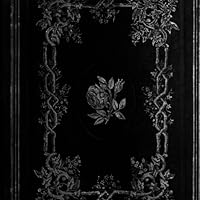
Written in 1926 before Lewis' conversion. This is a work of narrative poetry. It is similar in some ways to Lewis's first work "Spirits in Bondage", which was also a poetic work. It has the same dark feeling that the first one did. What is interesting is that the first book is called "Spirits in Bondage", and the cover of this work has a soul breaking free of bondage. Yet the tale is ultimately a sad one. This is essential reading for all C. S. Lewis fans, and helps show the evolution of his thought and faith from an angry and lonely atheist to a leading light of Christian thought in the 20th century. The cover is from the original 1926 edition. The text includes Lewis' introduction to the 1950 republication. As far as we can see "Dymer" has only been published as a separate work four times. 1926, 1950, 1998 and 2002. This is the fifth time. But uniquely this is the first time the work has ever been published in eBook format. We have endeavoured to stay true to the original formatting, while at the same time fixed any obvious errors we found. C. S. Lewis' 1950 As its original appearance in 1926, Dymer, like many better books, found some good reviews and almost no readers. The idea of disturbing its repose in the grave now comes from its publishers, not from me, but I have a reason for wishing to be present at the exhumation. Nearly a quarter of a century has gone since I wrote it, and in that time things have changed both within me and round me; my old poem might be misunderstood by those who now read it for the first time. I am told that the Persian poets draw a distinction between poetry which they have ‘found’ and poetry which they have ‘brought’: if you like, between the given and the invented, though they wisely refuse to identify this with the distinction between good and bad. Their terminology applies with unusual clarity to my poem. What I ‘found’, what simply ‘came to me’, was the story of a man who, on some mysterious bride, begets a which monster, as soon as it has killed its father, becomes a god. This story arrived, complete, in my mind somewhere about my seventeenth year. To the best of my knowledge I did not consciously or voluntarily invent it, nor was it, in the plain sense of that word, a dream. All I know it is that there was a time when it was not there, and then presently a time when it was. Every one may allegorise it or psychoanalyse it as he and if I did so myself my interpretations would have no more authority than anyone else’s.
105 pages
First published January 1, 1926
Ratings & Reviews
Friends & Following
Create a free account to discover what your friends think of this book!
Community Reviews
Displaying 1 - 27 of 27 reviews

January 14, 2021
C.S. Lewis wrote it. You know I was going to give it five stars, duh. 🤷♀️
December 29, 2016
C.S. Lewis was a brilliant mind and a great author. Dymer is one of Lewis' first published pieces - an epic poem that lacks epic scope and vision; in short, it is not a brilliant book.
The titular main character Dymer is born into "The Perfect City," a seemingly dystopian society where individual thought is eschewed in favor of the homogeneous collective. Dymer is awoken from this reverie and in running from it to pursue Life, leaves the door open to chaos behind him and strange adventures ahead.
Lewis began writing Dymer at a young age, and the book lacks maturity and depth. The character of Dymer is explored little, and the action carries little coherence and seemingly minor significance as well. Despite its drawbacks, one aspect worth of note is that this rhymed epic poem does read well in verse.
Altogether, this is a disappointing aberration in the catalogue of a beloved author.
The titular main character Dymer is born into "The Perfect City," a seemingly dystopian society where individual thought is eschewed in favor of the homogeneous collective. Dymer is awoken from this reverie and in running from it to pursue Life, leaves the door open to chaos behind him and strange adventures ahead.
Lewis began writing Dymer at a young age, and the book lacks maturity and depth. The character of Dymer is explored little, and the action carries little coherence and seemingly minor significance as well. Despite its drawbacks, one aspect worth of note is that this rhymed epic poem does read well in verse.
Altogether, this is a disappointing aberration in the catalogue of a beloved author.

Want to Read
December 7, 2016Jerry Root's Splendor in the Dark is an in-depth look at Dymer.
Wikipedia entry.
Wikipedia entry.

September 15, 2024
The shouting mood had withered from his heart;
The oppression of huge places wrapped him round.
A great misgiving sent its fluttering dart
Deep into him—some fear of being found,
Some hope to find he knew not what. The sound
Of music, never ceasing, took the rôle
Of silence and like silence numbed his soul.
I only chanced upon this, because I was looking for something to read during meal times while I was on silent retreat. I know I'm not a talker, but it feels so weird to eat (and stare out in space) in silence, with people on the same table. Hahaha!
I chose C.S. Lewis because I wanted the material to be in theme at least.
Anyway. Hindi ko gets. Char lang.
The blurb has a summary basically of what it's all about.
Most I couldn't be bothered. But for those that did, I like them.
Once the lying spirit of a cause
With maddening words dethrones the mind of men,
They’re past the reach of prayer. The eternal laws
Hate them. Their eyes will not come clean again,
But doom and strong delusion drive them then
Without ruth, without rest ...

July 22, 2024
Strange. Glad I read it, but I don’t plan to read it again.

October 9, 2022
It took me until canto three to get into Dymer, but from there, I was hooked. Canto three bears the romantic influence of Wordsworth on a young Lewis. Dymer is nine cantos in length, and my audiobook was approximately two hours long. If you would like to read this extensive poem, I would suggest eliminating all possible distractions! Closing my eyes and lying down while listening created a fantastic imaginative canvas. Dymer is haunting, gripping, beautiful. It is not always Lewis's best writing, but to me, his person comes through so clearly. You can feel where his pen wrote quickly, and then on other lines, where he deliberated. Highly recommended for lovers of C.S. Lewis!

September 18, 2020
I'm torn on this one. There were some good sections and some lovely phrasing, but I'm not sure I fully understood the entire plot.

January 4, 2025
Narrative poem that speaks volumes to where the brilliant author was at entering adulthood. While set in a dystopia and written in the style of classical and Greek epics, Dymer is the familiar struggle of coming of age and search for identity and significance. Very much like a prewar and precoversion 17 year old C.S. Lewis. Little like mixing the odyssey, pilgrims progress, and Ecclesiastes.
In this story the protagonist chafes under the controlling systems he was raised in, but after condemning them and fleeing he has no idea what to do with his freedom. It goes on to explore the cost rebellion, pursuit of desire, and the constant duality that exists internally between base desire and living with purpose.
While there are several parts that were profound to me, there were times I was lost. I also don’t agree with what the ending seemed to communicate.
In this story the protagonist chafes under the controlling systems he was raised in, but after condemning them and fleeing he has no idea what to do with his freedom. It goes on to explore the cost rebellion, pursuit of desire, and the constant duality that exists internally between base desire and living with purpose.
While there are several parts that were profound to me, there were times I was lost. I also don’t agree with what the ending seemed to communicate.
July 14, 2025
"Joy flickers on the razor-edge of the present and is gone."
"Breathe not! Speak not! Walk gently. Someone’s here,
Why have they left their house with the door so wide?
There must be someone..."
"More light. Another step, and still more light
Opening ahead. It swilled with soft excess,
His eyes yet quivering from the dregs of night,
And it was nowhere more and nowhere less:
In it no shadows were. He could not guess
Its fountain. Wondering round around he turned:
Still on each side the level glory burned."
"With victory, with the voice of charging spears,
And in white lands long-lost Saturnian years."
"The sound of music, never ceasing, took the rôle
Of silence and like silence numbed his soul."
"Breathe not! Speak not! Walk gently. Someone’s here,
Why have they left their house with the door so wide?
There must be someone..."
"More light. Another step, and still more light
Opening ahead. It swilled with soft excess,
His eyes yet quivering from the dregs of night,
And it was nowhere more and nowhere less:
In it no shadows were. He could not guess
Its fountain. Wondering round around he turned:
Still on each side the level glory burned."
"With victory, with the voice of charging spears,
And in white lands long-lost Saturnian years."
"The sound of music, never ceasing, took the rôle
Of silence and like silence numbed his soul."
This entire review has been hidden because of spoilers.

January 4, 2025
This narrative poem by Lewis, his first (?) published work was not easy for me to follow. It felt archaic, which I think was intentional on Lewis's part, and I would've been very confused without the annotations in the edition I have.
What I appreciate about this poem is getting a glimpse of Lewis's intellectual and imaginative genius from a young age. And there are hints of the faith he did not yet have, but was on the journey toward possessing.
Now I need read Jerry Root's commentary on this poem in the book Splendor in the Dark.
What I appreciate about this poem is getting a glimpse of Lewis's intellectual and imaginative genius from a young age. And there are hints of the faith he did not yet have, but was on the journey toward possessing.
Now I need read Jerry Root's commentary on this poem in the book Splendor in the Dark.

June 19, 2025
Dymer is an epic poem composed by C.S. Lewis of Chronicles of Narnia fame. The protagonist Dymer is raised in a perfectly ration, Plato's Republic-style utopian state. Dymer rebels against the barren rationalism of his life and flees to the wilderness. There he undergoes many spiritual and Idealistic tests in a quest to determine what is real and purposeful.

November 6, 2025
Honestly might be less of a rating or more but I am not a good judge because listening to it on audible, which might have been the wrong choice to understand this book. I also have a hard time with metaphoric and poetic driven literature. It is a difficult read for sure.
Reading it, instead of audible, is my suggestion.
Reading it, instead of audible, is my suggestion.
September 4, 2023
An interesting poem and sad one. It bears a second reading in time.

January 15, 2024
I liked Spirits in Bondage much more. I’m not sure I have the stamina for this kind of long narrative poetry. Not badly written but just not for me.

July 7, 2024
I'd like to read this again some time.

Read
March 18, 2025See the chapter titled Dymer in Jack by George Sayers.

January 9, 2026
This is a bit hard to understand and I’ll have to reread when I’ve read more, but such a cool story. One of the only two books written by non-Christian Lewis.

January 14, 2026
Interesting to listen to this book read by a calming voice.
August 10, 2026
Lewis didn't think he was a poet. Oh yes he was.

May 10, 2026
Very Nietzschean in mood (though I’m not sure if there’s any direct influence), though especially towards the end you could tell it sort of wanted to become Arthurian. Really interesting how much it shares with Pilgrim’s Regress.
Also: hundred year publication anniversary!
Also: interesting that he first describes earth as the “shadow lands” here.
Also: hundred year publication anniversary!
Also: interesting that he first describes earth as the “shadow lands” here.

Read
January 6, 2026A neat look into young Lewis. Fast enough that its shortcomings don’t ruin the surreal experience.

November 2, 2018
This is part of my (Re)Read CSL in Publishing Order project. It should have preceded Pilgrim's Regress; whoops. The volume I read was a re-released edition, with a preface from Lewis looking back at his earlier work. He notes that he did not so much compose the storyline as it came to him (at age 17): a man who begets a beast, which, on killing him, becomes a god.
I read that very summary in the preface, but forgot it entirely as I read the poem, because the bulk of the poem doesn't spend as much time on that. There's a canto of Dymer leaving the Perfect City (a now-typical sort of picture of an authoritarian society) for some wild and beautiful country; he eventually comes upon a building, open to his entry, with lovely music and rich clothes and a rich feast and, eventually, a beautiful woman to sleep with. When he wakes, she has disappeared. The bulk of the poem, to my reading, is his search for her. He instead finds a shrivelled old woman; a dying soldier who curses Dymer's name (not knowing with whom he speaks), a deadly magician, and, finally, a man hunting a brute. Dymer realizes this brute is his offspring, volunteers to face it, and (in one, perhaps two verses out of ~270) is struck down. The brute turning god had left my mind entirely by the time I got to it. The way that transformation is written reminded me of nothing so much as the end of Moana, where Te Ka is restored to the lovely Te Fiti. The denouement is just as sudden, too: there's a new god and the poem ends. Who knows what fallout occurs thereafter.
As usual, reading Lewis's earlier writing diverts me; the tropes or images I know he will use later on strike me with their echoes: the fine clothes of Cairn in The Magician's Nephew (and at the end of That Hideous Strength); the feast on the star's island in Voyage of the Dawn Treader; the man's journey in Pilgrim's Regress and Out of the Silent Planet and Perelandra.
Also, while other readers are not generally impressed by CSL's narrative poetry, I found myself pleased with the regularity of his meter, the generally unforced quality of his rhyme, and his skilled enjambment. It is sometimes beautiful, and almost always clear in drawing the scene.
I read that very summary in the preface, but forgot it entirely as I read the poem, because the bulk of the poem doesn't spend as much time on that. There's a canto of Dymer leaving the Perfect City (a now-typical sort of picture of an authoritarian society) for some wild and beautiful country; he eventually comes upon a building, open to his entry, with lovely music and rich clothes and a rich feast and, eventually, a beautiful woman to sleep with. When he wakes, she has disappeared. The bulk of the poem, to my reading, is his search for her. He instead finds a shrivelled old woman; a dying soldier who curses Dymer's name (not knowing with whom he speaks), a deadly magician, and, finally, a man hunting a brute. Dymer realizes this brute is his offspring, volunteers to face it, and (in one, perhaps two verses out of ~270) is struck down. The brute turning god had left my mind entirely by the time I got to it. The way that transformation is written reminded me of nothing so much as the end of Moana, where Te Ka is restored to the lovely Te Fiti. The denouement is just as sudden, too: there's a new god and the poem ends. Who knows what fallout occurs thereafter.
As usual, reading Lewis's earlier writing diverts me; the tropes or images I know he will use later on strike me with their echoes: the fine clothes of Cairn in The Magician's Nephew (and at the end of That Hideous Strength); the feast on the star's island in Voyage of the Dawn Treader; the man's journey in Pilgrim's Regress and Out of the Silent Planet and Perelandra.
Also, while other readers are not generally impressed by CSL's narrative poetry, I found myself pleased with the regularity of his meter, the generally unforced quality of his rhyme, and his skilled enjambment. It is sometimes beautiful, and almost always clear in drawing the scene.
This entire review has been hidden because of spoilers.

February 11, 2019
Pre-Christian Lewis
I'm not sure how well I would have followed this had I not been reading a good deal of the background behind Lewis's writing. I did enjoy the read, however; in large part because of my interest in the author
I'm not sure how well I would have followed this had I not been reading a good deal of the background behind Lewis's writing. I did enjoy the read, however; in large part because of my interest in the author

September 15, 2017
This epic poem gives the reader some insight into the thinking of the pre-Christian C. S. Lewis. This is a must read for those who are interested in Lewis's development as a thinker and writer.

October 20, 2024
If fever dreams were to be summed up in a story, it would be this. (I still have no idea what this poem was about.)

December 10, 2024
Melancholy poems from back when he was still trying miserably to deny God's existence.
Displaying 1 - 27 of 27 reviews