

What do you think?
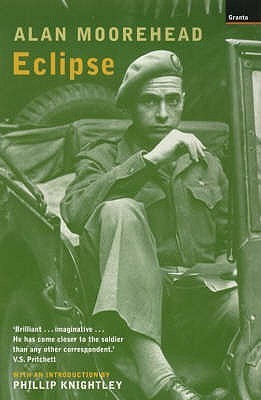
Eclipse
Alan Moorehead was a newspaper correspondent in World War II, celebrated as a master of reportage. This is his narrative of the last years of the war, throughout which he was constantly at the heart of the conflict: from the Italian front, to exhorting D-Day troops with Montgomery, on the beach for De Gaulle's return to France, preceding the forces into Paris to find Hemingway and his militia having liberated the Ritz, to the surrender of German forces, country by country. Written in 1945, the book not only seeks to cut a crystal line of narrative through the huge mass of detail, but to capture with concision and acuity the states of mind of the occupied peoples as they were liberated. This edition of Eclipse is published with a new introduction by Phillip Knightley.
Paperback
First published January 1, 1945
About the author
Alan Moorehead
94 books98 followersAlan Moorehead was lionised as the literary man of action: the most celebrated war correspondent of World War II; author of award winning books; star travel writer of The New Yorker; pioneer publicist of wildlife conservation. At the height of his success, his writing suddenly stopped and when, 17 years later, his death was announced, he seemed a heroic figure from the past. His fame as a writer gave him the friendship of Ernest Hemingway, George Bernard Shaw and Field Marshall Montgomery and the courtship and marriage of his beautiful wife Lucy Milner.
After 1945, he turned to writing books, including Eclipse, Gallipoli (for which he won the Duff Cooper Prize), The White Nile, The Blue Nile, and finally, A Late Education. He was awarded an OBE in 1946, and died in 1983.
After 1945, he turned to writing books, including Eclipse, Gallipoli (for which he won the Duff Cooper Prize), The White Nile, The Blue Nile, and finally, A Late Education. He was awarded an OBE in 1946, and died in 1983.
Ratings & Reviews
Friends & Following
Create a free account to discover what your friends think of this book!
Community Reviews
Displaying 1 - 11 of 11 reviews

February 16, 2026
This is yet another brilliant book by Alan Moorehead. If you're interested in WWII or the River Nile, buy any of his books and you will not be disappointed. Moorehead was a journalist who followed the British Army through the North African Campaign, through Sicily and Italy, then landed on D-Day and went through to the end of the war in Germany. Being Australian but writing for the British Daily Express, the UK's most popular newspaper at the time, Moorehead was not as biased towards the British as some other journos, though he always tempered his criticisms of the military leadership with a good understanding of the strategic and tactical position. The generals trusted him and he was able to speak with them many times.
This book, Eclipse, begins in north east Sicily a short time before the Allies landed in southern Italy. He describes his experiences in detail – not just what was happening on the front line but what he and his companions got up to: the wine, where they stayed, the people they met and how the civilians were coping. It is as much a social history as a military one in some ways.
He moves on to England and describes what it felt like to be locked up in a transit camp just before D-Day – no-one was allowed to leave once they entered in case news reached the wrong ears what was about to happen. Once in France he followed the British Army all the way to Germany, though also spent some time with the Americans. He was an admirer of Field Marshal Bernard Montgomery and General Omar Bradley, among others.
As the war progressed Moorehead became disillusioned with the modern style of war; in order to reduce casualties, the Allies adopted the policy of bombing and shelling a town or village to bits before entering it. Unfortunately, the German armies became accustomed to this and just hid until it was over, then came out again to man their machine guns and artillery, so it was the local civilians who often seemed to suffer the most.
Moorehead's writing is wonderful. It's detailed, moving, sometimes poetic and conveys a real sense of what war is like for individual people as well as giving the strategic objectives of the military. An excellent history written just after the end of the war, so it is immediate and fresh. He didn't have access to all the sources available to modern historians but he did a great job in this immensely readable book.
This book, Eclipse, begins in north east Sicily a short time before the Allies landed in southern Italy. He describes his experiences in detail – not just what was happening on the front line but what he and his companions got up to: the wine, where they stayed, the people they met and how the civilians were coping. It is as much a social history as a military one in some ways.
He moves on to England and describes what it felt like to be locked up in a transit camp just before D-Day – no-one was allowed to leave once they entered in case news reached the wrong ears what was about to happen. Once in France he followed the British Army all the way to Germany, though also spent some time with the Americans. He was an admirer of Field Marshal Bernard Montgomery and General Omar Bradley, among others.
As the war progressed Moorehead became disillusioned with the modern style of war; in order to reduce casualties, the Allies adopted the policy of bombing and shelling a town or village to bits before entering it. Unfortunately, the German armies became accustomed to this and just hid until it was over, then came out again to man their machine guns and artillery, so it was the local civilians who often seemed to suffer the most.
Moorehead's writing is wonderful. It's detailed, moving, sometimes poetic and conveys a real sense of what war is like for individual people as well as giving the strategic objectives of the military. An excellent history written just after the end of the war, so it is immediate and fresh. He didn't have access to all the sources available to modern historians but he did a great job in this immensely readable book.

October 1, 2018
Moorehead was a British war correspondent and wrote this in 1945, a few months after WWII ended. I didn't know that Eclipse was the code name for the Allied last operation in Europe. I was a little leery as I saw he was going to delve into battles & strategy of the European front, but this was immensely readable! He was there through most of it from Africa to the surrender, although this focused on the last 2 year push through Europe. Amazing narrative and insightful commentary.
As I was getting ready to take back to the library, I decided I wanted to annotate a couple of items. On the chapter about Occupied Paris, especially when the Gestapo dominated & terrorized. Moorhead mused on how know one knew who to trust anymore. "the Parisians fell into a fearful and hateful silence with one another."
" The whole fabric of normal society which in the end is based on trust began to give way. " It makes me think what is going on here, related to the lack of trust in the media & institutions. Erodes at our society's cohesiveness. I know, it's not at the level of worrying about being grabbed from your home and tortured; but worrying nonetheless.
"A man summed it all up to me on one revealing trenchant phrase: "I'll tell you what liberation is. It's hearing a knock on my door at 6AM and knowing it's the milkman."
And then the commentary on how propaganda on both sides colored how we viewed one another.
"Everyone went into Germany with a mass of prejudices and a profound ignorance, even those who spoke German and knew Germany before the war." When the allied forces reached the banks of the Rhine, "for most it was their first experience with large numbers of German civilians" " It was the beginning of an immensely complicated relationship between ourselves and the defeated, a story that kept changing its plot, so the farther you went on with it the more it altered its direction and was full of loose ends and contradictions leading nowhere. As soon as you discovered evil and malice in one place you were immediately confronted with kindness and genuine innocence in another..." And all this, no matter where you went or what you did, was placed against the unending tragedy and physical ruin of the country."
And there was the problem of all those foreigners who had been captured and sent to work in factories and mines. Semi-slaves, not left behind without adequate food or clothing to fend for themselves. "All the Nazi flags and parades and conquests in the end were based on this one thing-slave labor."
Amazing to look back now on how Europe bounced back from such dislocation and devastation.
As I was getting ready to take back to the library, I decided I wanted to annotate a couple of items. On the chapter about Occupied Paris, especially when the Gestapo dominated & terrorized. Moorhead mused on how know one knew who to trust anymore. "the Parisians fell into a fearful and hateful silence with one another."
" The whole fabric of normal society which in the end is based on trust began to give way. " It makes me think what is going on here, related to the lack of trust in the media & institutions. Erodes at our society's cohesiveness. I know, it's not at the level of worrying about being grabbed from your home and tortured; but worrying nonetheless.
"A man summed it all up to me on one revealing trenchant phrase: "I'll tell you what liberation is. It's hearing a knock on my door at 6AM and knowing it's the milkman."
And then the commentary on how propaganda on both sides colored how we viewed one another.
"Everyone went into Germany with a mass of prejudices and a profound ignorance, even those who spoke German and knew Germany before the war." When the allied forces reached the banks of the Rhine, "for most it was their first experience with large numbers of German civilians" " It was the beginning of an immensely complicated relationship between ourselves and the defeated, a story that kept changing its plot, so the farther you went on with it the more it altered its direction and was full of loose ends and contradictions leading nowhere. As soon as you discovered evil and malice in one place you were immediately confronted with kindness and genuine innocence in another..." And all this, no matter where you went or what you did, was placed against the unending tragedy and physical ruin of the country."
And there was the problem of all those foreigners who had been captured and sent to work in factories and mines. Semi-slaves, not left behind without adequate food or clothing to fend for themselves. "All the Nazi flags and parades and conquests in the end were based on this one thing-slave labor."
Amazing to look back now on how Europe bounced back from such dislocation and devastation.

March 2, 2017
Wouldn't mind 4.5 stars. A very well-written, even-handed account of the last two years of the European war. Wistful at times, usually very personal, always very sensitive to the people around the armies who are impacted by the comings and goings of battle. Many examples of the author's personal courage in pressing forward into often unknown territory -- not that he brags about it -- it just happens!
The viewpoint is British, which is a nice change from much of what I've read. Also deals with the last days of the war (actually, just the surrender) in Denmark and Norway, which is new to me.
Many uncommon photos.
4/2/25: Was shelving another book in my "history/memoirs" section and noticed this book and didn't have a real memory of reading it. So looked up my review and now I think I will read it again! So much for those 250+ books on my "owned/unread" list, to say nothing of the 600+ on my total "want to read" shelf.
The viewpoint is British, which is a nice change from much of what I've read. Also deals with the last days of the war (actually, just the surrender) in Denmark and Norway, which is new to me.
Many uncommon photos.
4/2/25: Was shelving another book in my "history/memoirs" section and noticed this book and didn't have a real memory of reading it. So looked up my review and now I think I will read it again! So much for those 250+ books on my "owned/unread" list, to say nothing of the 600+ on my total "want to read" shelf.
September 24, 2025
A most enjoyable read. I have read many books on both world wars but this little book is a gem of descriptive content. The author is a war correspondent and details his experiences following allied forces from Sicily to end of the war in Germany. His use of words paints pictures that transport the reader to the events that are being represented in our minds.

November 24, 2007
Some of the best first person war reportage Ive ever read. The great scenes of WWII on the western front from a first row seat. Some amazing little moments while history is playing itself out around him. I could read Alan Moorehead right the phone book. Written months after the war ended, its a bit handicapped to contemporary audiences for not knowing stuff that would come out later, takes the unalloyed heroic view of Monty, and scoffs at the Germans being so freaked out about the idea of getting caught behind Russian lines, suggesting they are just suffering from red hysteria. But a beautiful account of the invasion of europe from sicily all the way up to berlin. Read just for the scene of when Moorehead and a few friends decide at the end of the war to climb in a plane and fly up to norway and singlehandedly take the nazi surrender.

September 22, 2011
A very well written first person account of the Second World War. The author, wo wrote it just months after the end of the war, realy puts you in his shoes. Let's you walk, where he walked, let's you see what he saw. A must-read.
August 24, 2020
Fascinating stuff!
Other reviewers have commented on the obvious aspects, but the part that struck me the most was the incompetence of the political planning around the invasion of Italy and the handling of the Balkans. The entire strategy appears to have been driven by wishful thinking and fantasy. So we get surreal beliefs around Yugoslavia and Tito, and ideas that sound utterly insane to our ears, like the suggestion that these countries would, after the war, revert to monarchies.
What's important, of course, is that all this sounds so depressingly familiar; exactly what we saw in Iraq, and before that in Vietnam. On the one hand we have The Establishment, certain that its manichean simplistic view of the world (one type of communism, all evil; one type of islam, all evil) is all that is necessary to put together a plan. On the other hand we have the exiles and entrepreneurs in The Capital, happy to tell The Establishment whatever it wants to hear.
We have been led to believe that this incompetence is something new and postwar, that the Present at the Creation generation were somehow uniquely skilled in their insight and ability. Apparently not!
So why do we not hear much about these cases?
I'm guessing it's some combination of
- mostly these were Britain's decisions and responsibilities. The US political establishment could make no hay from them. And for most people, most of the time, what good is history if you can't use it to beat up someone else?
- what happened after the end of the war: Germany, the Iron Curtain, Fall of China, Korea; were so much more momentous that these more minor details got lost and forgotten. The US was hegemon, Britain was retreating to West of Suez, who cared about mistakes made a few years ago regarding some minor Mediterranean countries?
But it MATTERS! Perhaps if someone at the time had made more of a big deal of this, had pointed out just how easy it is to build a political/military strategy upon a house of sand, just how easy it is to believe what you want to believe, just how utterly untrustworthy are a foreign country's emigre's (particularly those spoiling for a fight) we might have had a wiser political class over the next two generations?
There are other interesting small details all the way through. For example Moorehead is well aware of the existence of the Bengal famine (though puts the number at 3/4 million, presumably that was the number believed at the time) but puts it in the context of everything else in the war.
(There were 300,000 famine deaths in Greece, there were 670,000 or so just from the Siege of Leningrad, there was Holland.)
Moorehead points out, and I think was clear to everyone writing and planning at the time, that war sucks, and it sucks for everyone. Much of the writing since then, especially by the generations born after the war, is not interested in this sort of synoptic view; all that matters is "how the war hurt my tribe, and how that shows that [the system] hates us". Prioritizing "how my tribe was hurt" over the total horror of war for everyone was, of course, the Adolf Hitler strategy; and mainly leads to the urge for a rematch...
So, yeah, read Alan Moorehead. And think of the big picture whenever you hear special pleading about how one group suffered in the past. (It's not only emigres who have an agenda...)
Other reviewers have commented on the obvious aspects, but the part that struck me the most was the incompetence of the political planning around the invasion of Italy and the handling of the Balkans. The entire strategy appears to have been driven by wishful thinking and fantasy. So we get surreal beliefs around Yugoslavia and Tito, and ideas that sound utterly insane to our ears, like the suggestion that these countries would, after the war, revert to monarchies.
What's important, of course, is that all this sounds so depressingly familiar; exactly what we saw in Iraq, and before that in Vietnam. On the one hand we have The Establishment, certain that its manichean simplistic view of the world (one type of communism, all evil; one type of islam, all evil) is all that is necessary to put together a plan. On the other hand we have the exiles and entrepreneurs in The Capital, happy to tell The Establishment whatever it wants to hear.
We have been led to believe that this incompetence is something new and postwar, that the Present at the Creation generation were somehow uniquely skilled in their insight and ability. Apparently not!
So why do we not hear much about these cases?
I'm guessing it's some combination of
- mostly these were Britain's decisions and responsibilities. The US political establishment could make no hay from them. And for most people, most of the time, what good is history if you can't use it to beat up someone else?
- what happened after the end of the war: Germany, the Iron Curtain, Fall of China, Korea; were so much more momentous that these more minor details got lost and forgotten. The US was hegemon, Britain was retreating to West of Suez, who cared about mistakes made a few years ago regarding some minor Mediterranean countries?
But it MATTERS! Perhaps if someone at the time had made more of a big deal of this, had pointed out just how easy it is to build a political/military strategy upon a house of sand, just how easy it is to believe what you want to believe, just how utterly untrustworthy are a foreign country's emigre's (particularly those spoiling for a fight) we might have had a wiser political class over the next two generations?
There are other interesting small details all the way through. For example Moorehead is well aware of the existence of the Bengal famine (though puts the number at 3/4 million, presumably that was the number believed at the time) but puts it in the context of everything else in the war.
(There were 300,000 famine deaths in Greece, there were 670,000 or so just from the Siege of Leningrad, there was Holland.)
Moorehead points out, and I think was clear to everyone writing and planning at the time, that war sucks, and it sucks for everyone. Much of the writing since then, especially by the generations born after the war, is not interested in this sort of synoptic view; all that matters is "how the war hurt my tribe, and how that shows that [the system] hates us". Prioritizing "how my tribe was hurt" over the total horror of war for everyone was, of course, the Adolf Hitler strategy; and mainly leads to the urge for a rematch...
So, yeah, read Alan Moorehead. And think of the big picture whenever you hear special pleading about how one group suffered in the past. (It's not only emigres who have an agenda...)
November 10, 2024
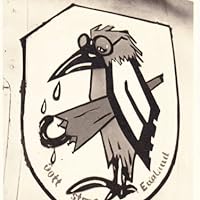
Funny thing is, in this book, Moorehead includes Lt. Rocholl’s vivid ‘Salerno diary’—supposedly recovered from his ‘dead’ body. But here’s the twist: Rocholl, an officer in the 16. Panzerdivision, actually survived the war. Years later he came across this account and was baffled, wondering how his diary ended up in American hands.
January 28, 2025
A brilliant memoir/history of World War II from the Italian campaign to Normandy to the end of the war.

July 8, 2017
I had to keep reminding myself that Moorehead wrote this book in 1945. It is just astounding that he was able to write with such insight into the high level strategy of the European theater of WWII, and just months after the war ended. One of the best overall views of the European portion of the war I've read. It is such a far reaching subject that no one book can encompass every detail, but he does a good job here. He does have a focus on the British contribution, since he was a journalist attached to Montgomery, but overall it should be in the list of classics of its kind.
He does include some detail on his personal experience covering the war while with Montgomery, in addition to the analysis. Towards the end there are some amazing stories about his experiences in Denmark and Norway at the very end of the war. I've read so much about this analysis of the strategic portion of the war that a lot of it was not new to me, so I would have liked a bit more info on his own experience, it's a minor complaint though. I will have to seek out more of his work, especially his two volumes on the Nile river.
He does include some detail on his personal experience covering the war while with Montgomery, in addition to the analysis. Towards the end there are some amazing stories about his experiences in Denmark and Norway at the very end of the war. I've read so much about this analysis of the strategic portion of the war that a lot of it was not new to me, so I would have liked a bit more info on his own experience, it's a minor complaint though. I will have to seek out more of his work, especially his two volumes on the Nile river.

September 26, 2010
This journalist's view of the Allied campaign in Europe is a good mix of the soldiers' everyday wartime efforts, the civilians' plight and the strong personalities of those in command. It does a good job of showing how devasting and destructive many years of war can be on those who suffered through it, but also shows how sometimes human kindness peeks through the utter chaos and gives us a glimpse of hope among the ruins.
Displaying 1 - 11 of 11 reviews