

What do you think?

Sisters of Fortune: America’s Caton Sisters at Home and Abroad
Perfect for fans of the Emmy Award–winning series Downton Abbey, whose creator, Julian Fellowes, raved that Sisters of Fortune is “absolutely fascinating”—a real-life Jane Austen story, that follows the fabulous Caton sisters, the first American heiresses to take Europe by storm.Based on intimate and previously unpublished letters written by the sisters, this is a portrait of four lively and fashionable women in early nineteenth century America. Much of it is told in their own voices as they gossip about prominent people of their time, advise family members on political and financial strategy, soothe each other’s sorrows, and rejoice in each other’s triumphs. Descended from one of the nation’s founding fathers and raised to be educated, independent, and opinionated young women, Marianne, Bess, Louisa, and Emily Caton traveled to England in 1816 and won coveted places at the highest levels of Regency society by virtue of their charm, intelligence, and great beauty. An unusual, remarkable true story of money, love, and life at the top, Sisters of Fortune is a romantic family history and an inside look at the adventures of America’s original blue-blooded girls.
421 pages, Kindle Edition
First published January 1, 2010
Ratings & Reviews
Friends & Following
Create a free account to discover what your friends think of this book!
Community Reviews
Displaying 1 - 30 of 75 reviews

December 25, 2016
I found the writing a bit bland. The majority of the book was based upon written correspondence; they were a rather lackluster family. Either that or the author made them sound that way.
This book would be an excellent resource for those studying real estate in the United States of the 1770s-1860s, the stock market of the mid 1800s, or the role of Catholicism in England. Lots of info on those topics. But as a general read, I'd skip it.
This book would be an excellent resource for those studying real estate in the United States of the 1770s-1860s, the stock market of the mid 1800s, or the role of Catholicism in England. Lots of info on those topics. But as a general read, I'd skip it.

June 23, 2011
Sisters of Fortune follows the glamorous lives of three American sisters and heiresses in early 19th-century Europe, and the life of their somewhat less glamorous youngest sister Emily who decided to stay at home and have four children instead.
The Carroll Caton sisters came from an unusual family in that thanks to the influence of their grandfather (one of the signers of the American Declaration of Independence) they were encouraged to marry for love and had substantial personal fortunes which were fiercely protected from the predatory hands of fortune-seeking suitors, and which they learnt to manage personally from a very young age. The sisters were therefore unusually free to make their own mistakes, both in love and in finance. As a result of this, some of them married unusually late for the time, in particular Bess, who probably was in a manner of speaking one of the first women to prefer a career in finance to marriage and children.
*I don't consider spoiler alerts to apply to biographies, but if you do, it is best to stop reading now or jump to the last two paragraphs*
Their grandfather's lessons on economics seem to have paid off, as most of the sisters' mistakes belong to the love department: their biographies provide a sobering insight into the consequences of marrying for love in the Regency period, when it was almost impossible to really get to know your fiancé intimately before the wedding and when appearances meant everything and often concealed an empty bank account. Most men do not appear in the best light in this book, and many (the sisters' father and the eldest sister Marianne's two husbands in particular) tend to disappear after the wedding and only be mentioned again when they become indebted (which happens quite often) or risk bankruptcy and find themselves having to ask their wives for financial help or to use their acquaintances to find a more remunerative employment.
It was really interesting to read about the considerable influence these upper-class ladies and their "petticoat politics" could have on lords, kings and queen. This is particularly true for Marianne, the eldest, who married Lord Wellesley when he was Lord Lieutenant of Ireland and then spent a considerable part of her life trying to find him and her brothers-in-law further employment and also to keep her own husband from exceeding his income, which was much lower than hers. She was also the sister who had the most unhappy marriages, and was the Duke of Wellington's life-long love: although their relationship remained platonic he was one of the sisters' closest friends throughout their lives in England, even after Marianne married his elder brother. One of the most strange and amusing passages of the book relates a typical entertainment at Wellington's house, which apparently consisted of men racing through corridors while dragging ladies sitting on carpets (I'm still unsure how that would work).
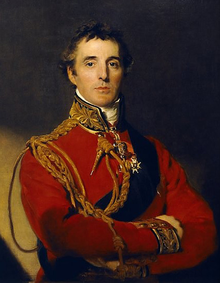
This is the Duke of Wellington at 48, when he met the sisters. Can you imagine him dragging you and your empire dress on a carpet? I can't think about it without giggling. I love it when books show the silly side of historical figures!
The book dedicates almost equal attention to the sisters' love life and their financial strategies, although unsurprisingly, I didn't enjoy the examination of their ability as speculators as much as the rest of the book. It was really slow going and I didn't understand most of it, except that their wealth was so immense that I have difficulty grasping it.
The accounts of the political machinations that formed part of the historical backdrop to the sisters' lives were also long-winded and very, very boring for someone like me who has little knowledge of 19th century British and American politics. The historical setting is instead interestingly and clearly presented. The sisters lived in a really interesting era and met personally an incredible array of important historical figures, from George Washington to Queen Victoria. Given their status as wives of British peers it is however unclear to me how the author can state that they remained fierce republican women throughout their lives: while I have no doubts they were proud to be Americans and to have been raised as citizens rather than subjects, Marianne's status as lady-in-waiting to the queen of Britain strikes me as being distinctly at odds with a "proud republican heritage".
Financial and political sections aside, this book is everything you could possibly want in a biography if you're in love with Jane Austen's novels: there are balls, beautiful ephemeral white gowns, hooped skirts, feathers, diamonds, mean gossip whispered behind a fan, town houses, country houses, spa towns, hunting expeditions, and lots and lots of money. However, what is also emphasized is the sisters' attachment to each other and to their family: their lives are reconstructed mainly with the help of the hundreds of letters which they sent each other and their American relatives, and which show the strength of their love for their beloved mother and grandfather in spite of 15 years of separation.
The Carroll Caton sisters came from an unusual family in that thanks to the influence of their grandfather (one of the signers of the American Declaration of Independence) they were encouraged to marry for love and had substantial personal fortunes which were fiercely protected from the predatory hands of fortune-seeking suitors, and which they learnt to manage personally from a very young age. The sisters were therefore unusually free to make their own mistakes, both in love and in finance. As a result of this, some of them married unusually late for the time, in particular Bess, who probably was in a manner of speaking one of the first women to prefer a career in finance to marriage and children.
*I don't consider spoiler alerts to apply to biographies, but if you do, it is best to stop reading now or jump to the last two paragraphs*
Their grandfather's lessons on economics seem to have paid off, as most of the sisters' mistakes belong to the love department: their biographies provide a sobering insight into the consequences of marrying for love in the Regency period, when it was almost impossible to really get to know your fiancé intimately before the wedding and when appearances meant everything and often concealed an empty bank account. Most men do not appear in the best light in this book, and many (the sisters' father and the eldest sister Marianne's two husbands in particular) tend to disappear after the wedding and only be mentioned again when they become indebted (which happens quite often) or risk bankruptcy and find themselves having to ask their wives for financial help or to use their acquaintances to find a more remunerative employment.
It was really interesting to read about the considerable influence these upper-class ladies and their "petticoat politics" could have on lords, kings and queen. This is particularly true for Marianne, the eldest, who married Lord Wellesley when he was Lord Lieutenant of Ireland and then spent a considerable part of her life trying to find him and her brothers-in-law further employment and also to keep her own husband from exceeding his income, which was much lower than hers. She was also the sister who had the most unhappy marriages, and was the Duke of Wellington's life-long love: although their relationship remained platonic he was one of the sisters' closest friends throughout their lives in England, even after Marianne married his elder brother. One of the most strange and amusing passages of the book relates a typical entertainment at Wellington's house, which apparently consisted of men racing through corridors while dragging ladies sitting on carpets (I'm still unsure how that would work).
This is the Duke of Wellington at 48, when he met the sisters. Can you imagine him dragging you and your empire dress on a carpet? I can't think about it without giggling. I love it when books show the silly side of historical figures!
The book dedicates almost equal attention to the sisters' love life and their financial strategies, although unsurprisingly, I didn't enjoy the examination of their ability as speculators as much as the rest of the book. It was really slow going and I didn't understand most of it, except that their wealth was so immense that I have difficulty grasping it.
The accounts of the political machinations that formed part of the historical backdrop to the sisters' lives were also long-winded and very, very boring for someone like me who has little knowledge of 19th century British and American politics. The historical setting is instead interestingly and clearly presented. The sisters lived in a really interesting era and met personally an incredible array of important historical figures, from George Washington to Queen Victoria. Given their status as wives of British peers it is however unclear to me how the author can state that they remained fierce republican women throughout their lives: while I have no doubts they were proud to be Americans and to have been raised as citizens rather than subjects, Marianne's status as lady-in-waiting to the queen of Britain strikes me as being distinctly at odds with a "proud republican heritage".
Financial and political sections aside, this book is everything you could possibly want in a biography if you're in love with Jane Austen's novels: there are balls, beautiful ephemeral white gowns, hooped skirts, feathers, diamonds, mean gossip whispered behind a fan, town houses, country houses, spa towns, hunting expeditions, and lots and lots of money. However, what is also emphasized is the sisters' attachment to each other and to their family: their lives are reconstructed mainly with the help of the hundreds of letters which they sent each other and their American relatives, and which show the strength of their love for their beloved mother and grandfather in spite of 15 years of separation.

January 7, 2014
I've had this book in my To Be Read pile for some time. I finally picked it up and I'm so glad that I did!
I had read a lot about the "Dollar Princesses" of the Gilded Age: American Heiresses who married into the European aristocracy (ie: Jennie Jerome, who was Winston Churchill's mother and her sisters) and saw "Downton Abbey's" Cora as an example. I had not realized that this had been going on as far back as the founding of the U.S.
The Caton sister's grandfather, Charles Carrollton, was one of this nation's Founding Fathers as well as an early proponent of eduction for women. His earned wealth allowed his granddaughters to grow up to be very independent and well educated women, 3 of whom ended up spending most of their adult lives living in Europe and moving about in high society as a result of their wealth and connections. The Duke of Wellington and his family not only became close friends of the Caton sisters, but family as well.
In addition to biographical aspect of this book, I really enjoyed finding out more about the Carroll/Caton family as there are counties, towns and other landmarks named for them here in Maryland.
Initially, it took me a little while to get into this book, but once hooked, I couldn't put it down. The author has a writing style that is easy to follow and the interesting lives these 4 sisters lead, makes me wish that I hadn't waited so long to read it.
I highly reccommend this book to people interested in U.S. history or U.S. and European society of the first half of the nineteen century - most specifically pertaining to women. And I'd also recommend this to anyone looking to learn more about the history of the state of Maryland.
I had read a lot about the "Dollar Princesses" of the Gilded Age: American Heiresses who married into the European aristocracy (ie: Jennie Jerome, who was Winston Churchill's mother and her sisters) and saw "Downton Abbey's" Cora as an example. I had not realized that this had been going on as far back as the founding of the U.S.
The Caton sister's grandfather, Charles Carrollton, was one of this nation's Founding Fathers as well as an early proponent of eduction for women. His earned wealth allowed his granddaughters to grow up to be very independent and well educated women, 3 of whom ended up spending most of their adult lives living in Europe and moving about in high society as a result of their wealth and connections. The Duke of Wellington and his family not only became close friends of the Caton sisters, but family as well.
In addition to biographical aspect of this book, I really enjoyed finding out more about the Carroll/Caton family as there are counties, towns and other landmarks named for them here in Maryland.
Initially, it took me a little while to get into this book, but once hooked, I couldn't put it down. The author has a writing style that is easy to follow and the interesting lives these 4 sisters lead, makes me wish that I hadn't waited so long to read it.
I highly reccommend this book to people interested in U.S. history or U.S. and European society of the first half of the nineteen century - most specifically pertaining to women. And I'd also recommend this to anyone looking to learn more about the history of the state of Maryland.

August 10, 2011
I thoroughly enjoyed this book - I could scarcely put it down, which is an achievement indeed for a non-fiction book. It documents the lives of the first of what later became known as the 'dollar princesses', American heiresses who came to England to marry into the titled nobility. Although that's perhaps unfair to the Carroll sisters, as that was never their aim, as it was with later woman such as Jennie Churchill, for example.
They were born into a wealthy 'aristocratic' Maryland family - their grandfather was one of the Signers of the Declaration of Independence, indeed the last surviving Signer - and they inherited great wealth. Their family was unusual for the time in encouraging the girls to a great deal of independence, both in deed and in thought, and they all fought to keep control of their own lands, investments and finances until the end of their lives.
Marianne was the great love of the Duke of Wellington and eventually married his older brother; Louisa became the Duchess of Leeds; Bess was a great mover and shaker in the early stock markets; Emily was the homebody, the only one to settle in Maryland and have children. This book really brings their thoughts and feelings to live through their letters, and it's a wonderful read, really warm and engaging. You really come to care about the sisters, almost to know them, and I was sad to come to the end of this book. I will look forward to reading more from this historian.
They were born into a wealthy 'aristocratic' Maryland family - their grandfather was one of the Signers of the Declaration of Independence, indeed the last surviving Signer - and they inherited great wealth. Their family was unusual for the time in encouraging the girls to a great deal of independence, both in deed and in thought, and they all fought to keep control of their own lands, investments and finances until the end of their lives.
Marianne was the great love of the Duke of Wellington and eventually married his older brother; Louisa became the Duchess of Leeds; Bess was a great mover and shaker in the early stock markets; Emily was the homebody, the only one to settle in Maryland and have children. This book really brings their thoughts and feelings to live through their letters, and it's a wonderful read, really warm and engaging. You really come to care about the sisters, almost to know them, and I was sad to come to the end of this book. I will look forward to reading more from this historian.
May 18, 2024
The writing is a solid 3.5, but as a lover of history and how women's lives have shaped history or been shaped by history I enjoyed it enough to give it a 4.

September 14, 2012
I really wish there were half stars! This was four and a half stars. I rounded up because it is one of the very best non-fiction works I have ever read. I gave it four and a half because towards the end, it loses focus on the women and concentrates on the political and financial upheavals of England, Europe and America. Granted these things are important and I didn't mind the extra history lesson, but the true glory of the book is the women and their stories.
It is not an easy, breezy read; although at times it reads more like historical fiction than non. But it is most certainly an enjoyable, intelligent read full of details that are always backed up with evidence. When reading Biographies, you sometimes get the distinct feeling that the love the author has for his/her subject has ultimately created an entirely biased account. I never got that feeling here. Yes, Wake has admiration for the subjects she presents, but the true depth of love and admiration come from their contemporaries accounts of them. And Wake presents not only the good, but the envious bad as well (especially on the part of Elizabeth Patterson Bonaparte).
Jehanne (how do you pronounce that?!) Wake's research is phenomenal. The rich history drawn out by Wake and described in ways that seem fully tangible is completely supported by the letters written by the main characters and numerous supporting characters. I can't help wondering how many years it must have taken her to find it all, organize it and then write about it in such a present, thoughtful way. If history had always been presented this way, I would have pursued higher degrees in it!
I like immensely the way Wake described their childhood and made it clear that all four women were influeced in unusual ways for their time, which helped to make them the incredible women they came to be. I do wonder, however, how really "loyal" these 'Republic American heiresses' and granddaughters of Charles Carroll of Carrollton, the longest living signer of the Declaration of Independence, whose life-long influence of his family is blatant, could marry into a world that their home country had vehemently fought to expel. It seems to me that they were not as loyal to America as they simply were to one another and the family they left behind. I can clearly see though that they did lead their lives in a "take it as it comes" way and their desire to go to England orginated in the declining health of Marianne and a desire to visit with their father's family, not in a desire to seek titled husbands. Che sera sera.
All that said and done, I did LOVE this book. The people are strong and the history is rich and colorful. I learned way more than I bargained for when I choose to read it, which frankly, makes it even better!!
It is not an easy, breezy read; although at times it reads more like historical fiction than non. But it is most certainly an enjoyable, intelligent read full of details that are always backed up with evidence. When reading Biographies, you sometimes get the distinct feeling that the love the author has for his/her subject has ultimately created an entirely biased account. I never got that feeling here. Yes, Wake has admiration for the subjects she presents, but the true depth of love and admiration come from their contemporaries accounts of them. And Wake presents not only the good, but the envious bad as well (especially on the part of Elizabeth Patterson Bonaparte).
Jehanne (how do you pronounce that?!) Wake's research is phenomenal. The rich history drawn out by Wake and described in ways that seem fully tangible is completely supported by the letters written by the main characters and numerous supporting characters. I can't help wondering how many years it must have taken her to find it all, organize it and then write about it in such a present, thoughtful way. If history had always been presented this way, I would have pursued higher degrees in it!
I like immensely the way Wake described their childhood and made it clear that all four women were influeced in unusual ways for their time, which helped to make them the incredible women they came to be. I do wonder, however, how really "loyal" these 'Republic American heiresses' and granddaughters of Charles Carroll of Carrollton, the longest living signer of the Declaration of Independence, whose life-long influence of his family is blatant, could marry into a world that their home country had vehemently fought to expel. It seems to me that they were not as loyal to America as they simply were to one another and the family they left behind. I can clearly see though that they did lead their lives in a "take it as it comes" way and their desire to go to England orginated in the declining health of Marianne and a desire to visit with their father's family, not in a desire to seek titled husbands. Che sera sera.
All that said and done, I did LOVE this book. The people are strong and the history is rich and colorful. I learned way more than I bargained for when I choose to read it, which frankly, makes it even better!!

February 20, 2017
for Jane Austen bookclub; this was an interesting peek into the predecessors of the later Buccaneers, especially with the current Masterpiece theater production of Victoria on.

September 11, 2016
This is a biography of the four Caton sisters, granddaughters of Charles Carroll, one of the signers of the Declaration of Independence. The four women lived at an exciting time, at the beginnings of the republic. They were wealthy and well-connected, and managed to retain ownership of their money at a time when that was rare for women. And three of them also spent half their lives in England, and were woven into the many political disputes of the early 19th century there.
So there’s a lot going on, but this book is never particularly exciting, and I had a hard time getting through it. The problem is the abundance of detail. Certainly you can admire the amount of research the author did, but too often the book meanders into tangential explanations of uninteresting things.
Boredom first hit me when I was reading the chapters detailing the sisters’ social successes on the continent. Lots of parties, lots of peripheral characters. Then when they marry, the political machinations began to get a little tedious. In power, out of power, back and forth. The book never really picked up, and the snooziest chapter was the one on the sisters’ investment strategies.
At the end of the book, I didn’t feel that I knew the sisters any better. They still seemed rather like cardboard cutouts. It’s a portrait of an era - but without any exciting characters, it all seems like background.
So there’s a lot going on, but this book is never particularly exciting, and I had a hard time getting through it. The problem is the abundance of detail. Certainly you can admire the amount of research the author did, but too often the book meanders into tangential explanations of uninteresting things.
Boredom first hit me when I was reading the chapters detailing the sisters’ social successes on the continent. Lots of parties, lots of peripheral characters. Then when they marry, the political machinations began to get a little tedious. In power, out of power, back and forth. The book never really picked up, and the snooziest chapter was the one on the sisters’ investment strategies.
At the end of the book, I didn’t feel that I knew the sisters any better. They still seemed rather like cardboard cutouts. It’s a portrait of an era - but without any exciting characters, it all seems like background.

March 14, 2016
While I greatly anticipated enjoying this book, I found it dull and dry. Reading five pages felt like reading 50. I did not want to stop reading but there are too many good history books to be read to waste my time reading a bad one.
Read
January 5, 2016This was a well-written book about four sisters who lived through the War of 1812.
In stock at my online store.
http://carpe-librum.myshopify.com/pro...
In stock at my online store.
http://carpe-librum.myshopify.com/pro...

January 6, 2018
“Remarkably quickly after their arrival, Bess and Louisa were known to be fashionable unmarried girls with a fortune who must therefore want husbands.” (page 111).
If you’re a fan of Jane Austen or Edith Wharton, you’ll love this real-life story of four sisters who took England by storm in the early nineteenth century. Marianne, Bess, Louisa, and Emily were all wealthy American heiresses raised to be educated, politically and financially savvy, fashionable, and fiercely independent, and all of them wound up marrying English aristocrats (in some cases several in succession). Decades before the first of the “dollar princesses” arrived, Marianne became the first American marchioness and courtier when she became a lady-in-waiting to Queen Adelaide. Meanwhile, Louisa married the son of a duke (and eventually became Duchess of Leeds) and Bess married a baron.
This provided some interesting insight into early Anglo-American relations – while political relations began to thaw after the end of the War of 1812, social attitudes were significantly chillier and some of the sisters’ marriages were bitterly opposed by their English in-laws. However, both political and social attitudes changed for the worst after the Panic of 1837 and the subsequent defaulting of several states on their debt, which dramatically affected British banks as well as American banks. While not mentioned, the nearly contemporaneous Oregon boundary dispute probably didn’t help. While the sisters’ social positions and British titles protected them, this wasn’t true for most Americans in Britain. Things got so bad it looked like a third Anglo-American war might break out, and because of this climate, the US return of the fully restored HMS Resolute had an incredibly dramatic impact.
I also found it interesting that, while the rights of women at the time were restricted on both sides of the Atlantic, English women seemed to have even fewer rights to their own property than American women. The book includes an account of how some people in England were resentful that Marianne’s husband did not have access to her wealth, which had been previously ring-fenced as “her own absolute property” and then put into a trust. However, if Marianne had been English, all her property would have automatically become her husband’s and she would not have retained any control over it. In addition, most states in the United States had enacted Married Women’s Property Laws well before England. Connecticut’s 1809 statute enabling married women to write wills independently of their husbands was an early example, and by the 1850’s the majority of states had gone even further in equalizing the legal rights of married and unmarried women. But England did not enact its Married Women’s Property Law until 1882, and married women who wanted to exercise any control over their money and how they invested it had to take the legal precaution of listing their accounts in the name of either a single or widowed female friend. Hence Bess (who was the last of the sisters to marry) managed accounts that actually belonged to Marianne and Louisa. And when Bess did marry in her late forties, she put all her American assets in one trust and all her British in another and then specified that they were for her sole and separate use, which had the practical effect of allowing her to retain the same amount of control over it that she would have had if she had remained single.
I enjoyed the fact that the sisters’ story was primarily told through their letters, which allowed me to see their individual personalities better. The family tree at the beginning was extremely helpful, especially since the Carroll family had three branches, and they didn’t always harmoniously interact. I also appreciated how the amounts of money listed in British pounds were also translated into dollars, as it gave me some better perspective, although I’m still not sure whether the dollar amounts corresponded to the amounts then or now; a note at the beginning explaining the amounts and perhaps some rough conversion factors would have helped immensely. I also wish there had been a little more detail on Richard Caton – the sisters’ father. But overall, a good read.
If you’re a fan of Jane Austen or Edith Wharton, you’ll love this real-life story of four sisters who took England by storm in the early nineteenth century. Marianne, Bess, Louisa, and Emily were all wealthy American heiresses raised to be educated, politically and financially savvy, fashionable, and fiercely independent, and all of them wound up marrying English aristocrats (in some cases several in succession). Decades before the first of the “dollar princesses” arrived, Marianne became the first American marchioness and courtier when she became a lady-in-waiting to Queen Adelaide. Meanwhile, Louisa married the son of a duke (and eventually became Duchess of Leeds) and Bess married a baron.
This provided some interesting insight into early Anglo-American relations – while political relations began to thaw after the end of the War of 1812, social attitudes were significantly chillier and some of the sisters’ marriages were bitterly opposed by their English in-laws. However, both political and social attitudes changed for the worst after the Panic of 1837 and the subsequent defaulting of several states on their debt, which dramatically affected British banks as well as American banks. While not mentioned, the nearly contemporaneous Oregon boundary dispute probably didn’t help. While the sisters’ social positions and British titles protected them, this wasn’t true for most Americans in Britain. Things got so bad it looked like a third Anglo-American war might break out, and because of this climate, the US return of the fully restored HMS Resolute had an incredibly dramatic impact.
I also found it interesting that, while the rights of women at the time were restricted on both sides of the Atlantic, English women seemed to have even fewer rights to their own property than American women. The book includes an account of how some people in England were resentful that Marianne’s husband did not have access to her wealth, which had been previously ring-fenced as “her own absolute property” and then put into a trust. However, if Marianne had been English, all her property would have automatically become her husband’s and she would not have retained any control over it. In addition, most states in the United States had enacted Married Women’s Property Laws well before England. Connecticut’s 1809 statute enabling married women to write wills independently of their husbands was an early example, and by the 1850’s the majority of states had gone even further in equalizing the legal rights of married and unmarried women. But England did not enact its Married Women’s Property Law until 1882, and married women who wanted to exercise any control over their money and how they invested it had to take the legal precaution of listing their accounts in the name of either a single or widowed female friend. Hence Bess (who was the last of the sisters to marry) managed accounts that actually belonged to Marianne and Louisa. And when Bess did marry in her late forties, she put all her American assets in one trust and all her British in another and then specified that they were for her sole and separate use, which had the practical effect of allowing her to retain the same amount of control over it that she would have had if she had remained single.
I enjoyed the fact that the sisters’ story was primarily told through their letters, which allowed me to see their individual personalities better. The family tree at the beginning was extremely helpful, especially since the Carroll family had three branches, and they didn’t always harmoniously interact. I also appreciated how the amounts of money listed in British pounds were also translated into dollars, as it gave me some better perspective, although I’m still not sure whether the dollar amounts corresponded to the amounts then or now; a note at the beginning explaining the amounts and perhaps some rough conversion factors would have helped immensely. I also wish there had been a little more detail on Richard Caton – the sisters’ father. But overall, a good read.
October 5, 2017
If you are from Maryland and like history, you will probably find this fascinating. The book gives great insights into life of the upper class during the time just before, during and after the American Revolution. It also gives a very interesting view into how women of means navigated society at the time despite having few rights.
It focuses on the Carroll family which was one of the wealthiest family's in the country. As the book talks about their different homes I realized that a lot of the historic houses in Baltimore and Annapolis were owned by one member or another of the Carroll family.
There were 4 Caton sisters (yes, that is how Catonsville got its name) who were granddaughters of Charles Carroll of Carrollton, signer of the Declaration of Independence. Three of the four ended up moving to England and marrying various nobles there and having a close relationship and possibly an affair with the Duke of Wellington who defeated Napoleon.
So the book not only gives insights into US history and what was going on at the time, even greater insight into a lot of the prime movers in early Maryland history, but a glimpse into the life of the aristocracy of Regency era England. They were hard partiers, staying up until 3 or 5 am or dawn and then sleeping until 1 PM.
It was also really interesting to see how the financial world worked during that time period. The book went into detail about the machinations the sisters had to go to to keep control of their money when usually it went to the husband. Also how they invested. Apparently they were quite savvy and because of all the parties they went to with movers and shakers, they got insider information that would be illegal today but allowed them to grow their money. Some (but apparently not the sisters) were ruined by certain speculations.
One random tidbit is that at the beginning of the book when Bonaparte was still in power in France, the Empire style of dress was popular and Betsy (Patterson) Bonaparte from Baltimore brought the style back to the US and scandalized everyone since the dresses were somewhat see through. Everyone started wearing this minimal type of dress although not apparently in see through versions. At the end of the book, with Victorian styles now fashionable, the young women thought the Empire style comical and dated. Funny that modern styles are much more like the styles of 1800 than later.
Speaking of Victoria, it turns out that the sisters were friends with her and Marianne was a lady in waiting to her at times both when she was a princess and later when she became queen. Seems odd to think of a young Queen Victoria when all the pictures you see are at the end of her life.
So it was a wide ranging book but I felt it gave a very good look at life at that time for the upper crust. The ending was a bit disappointing. It just kind of tailed off. But I imagine that is because the sisters got old and weren't doing all that much compared to their younger selves and therefor there wasn't as much to write about.
It focuses on the Carroll family which was one of the wealthiest family's in the country. As the book talks about their different homes I realized that a lot of the historic houses in Baltimore and Annapolis were owned by one member or another of the Carroll family.
There were 4 Caton sisters (yes, that is how Catonsville got its name) who were granddaughters of Charles Carroll of Carrollton, signer of the Declaration of Independence. Three of the four ended up moving to England and marrying various nobles there and having a close relationship and possibly an affair with the Duke of Wellington who defeated Napoleon.
So the book not only gives insights into US history and what was going on at the time, even greater insight into a lot of the prime movers in early Maryland history, but a glimpse into the life of the aristocracy of Regency era England. They were hard partiers, staying up until 3 or 5 am or dawn and then sleeping until 1 PM.
It was also really interesting to see how the financial world worked during that time period. The book went into detail about the machinations the sisters had to go to to keep control of their money when usually it went to the husband. Also how they invested. Apparently they were quite savvy and because of all the parties they went to with movers and shakers, they got insider information that would be illegal today but allowed them to grow their money. Some (but apparently not the sisters) were ruined by certain speculations.
One random tidbit is that at the beginning of the book when Bonaparte was still in power in France, the Empire style of dress was popular and Betsy (Patterson) Bonaparte from Baltimore brought the style back to the US and scandalized everyone since the dresses were somewhat see through. Everyone started wearing this minimal type of dress although not apparently in see through versions. At the end of the book, with Victorian styles now fashionable, the young women thought the Empire style comical and dated. Funny that modern styles are much more like the styles of 1800 than later.
Speaking of Victoria, it turns out that the sisters were friends with her and Marianne was a lady in waiting to her at times both when she was a princess and later when she became queen. Seems odd to think of a young Queen Victoria when all the pictures you see are at the end of her life.
So it was a wide ranging book but I felt it gave a very good look at life at that time for the upper crust. The ending was a bit disappointing. It just kind of tailed off. But I imagine that is because the sisters got old and weren't doing all that much compared to their younger selves and therefor there wasn't as much to write about.

April 11, 2020
In the introduction, the reader is promised a fascinating biography about a foursome of sisters that were ahead of their time, financially and politically literate, a rarity for the 1800s.
What the reader gets is a meandering book that's a hundred pages too long, filled with a dizzying amount of names and places (I can track a large cast of characters fairly well, and even I had trouble keeping up with it all). Jehanne Wake, the author, spends 3/4 of the book transcribing every social event the sisters ever attended in minute detail. I love learning about period society, and even I found it all incredibly boring. She glosses over slavery within the plantocracy of Maryland, writing the excuse that the sisters grew up as "friends" with the slave girls that their grandfather gave them as birthday "gifts", but gives no condemnation (or even any commentary).
She fawns over the oldest sister, Marianne, for nearly all of the book. According to Wake, Marianne beautiful, sweet and perfect in nearly every way. Perhaps her only fault is that she entered two bad marriages, and even that isn't depicted as an actual issue.
When Wake does get down to talking about the incredible financial intelligence of the sisters, it's in the last 3o pages (out of 349) of the book.
Overall, a disappointing read.
What the reader gets is a meandering book that's a hundred pages too long, filled with a dizzying amount of names and places (I can track a large cast of characters fairly well, and even I had trouble keeping up with it all). Jehanne Wake, the author, spends 3/4 of the book transcribing every social event the sisters ever attended in minute detail. I love learning about period society, and even I found it all incredibly boring. She glosses over slavery within the plantocracy of Maryland, writing the excuse that the sisters grew up as "friends" with the slave girls that their grandfather gave them as birthday "gifts", but gives no condemnation (or even any commentary).
She fawns over the oldest sister, Marianne, for nearly all of the book. According to Wake, Marianne beautiful, sweet and perfect in nearly every way. Perhaps her only fault is that she entered two bad marriages, and even that isn't depicted as an actual issue.
When Wake does get down to talking about the incredible financial intelligence of the sisters, it's in the last 3o pages (out of 349) of the book.
Overall, a disappointing read.
June 8, 2017
This book ranks among the best biographies I have read of people living in the distant past. America's Caton sisters were royalty in Maryland and in the fledgling republic: wealthy, intelligent, educated, and beautiful; so when three of them traveled to England they took the nobility by storm. Marianne, the eldest, was beloved by the Duke of Wellington, and his sponsorship of the sisters went a long way toward their acceptance by society. Emily stayed home, married a Scotsman, and helped maintain the family's properties and finances. All four were especially astute in financial matters, as were many other wealthy women of the day. Only Emily had children, but all of the sisters endured years of trauma and tragedy. An impressive amount of research went into this book, most of which required reading their letters and journals and the letters and journals of people who knew them, and which helped to reveal their individual personalities to a striking degree.
April 16, 2021
Interesting insights to politics and life of late 18th and early 19th century. Despite the author obvious attempt to make the sisters likeable--or perhaps because of it--I couldn't warm up to any of them. I found their words and actions were contradiction. They said they were true republicans yet they not only chose to live in England but also marry into nobility (one became a duchess, the other a marchioness, and the their sister a wife of baronet). It was said that they loved their grandfather, yet after they moved to England they didn’t make serious effort to see their old grandfather before he died. It was strange that the author mentioned that the Duchess of Wellington was always kind to them and a great friend, yet at the same time, it was said that Marianne was the duke’s true love. Did the author want readers to sympathize with Marriane? Well, not this reader. I had a word for a woman who did that to her friend--not a good one obviously. The author even went so far by blaming the duke’s failing marriage on the duchess by implying that she was unworthy woman--unlike saintly, perfect, intelligent Marianne. These kind of treatment went on and on in this book. Everytime the sisters had a conflict with other person, the author would quickly assured the reader that all this three perfect women (excluding Emily since she’s rarely the focus of the story) did nothing wrong and proceed to make the others seemed like the villain.
Out of four sisters, I want to read more about Emily and her canadian husband. Alas, the focus was more on Marianne, the eldest sister. I wanted to tear my hair everytime the author mentioned how beautiful, how intelligent, how ethereal she was, and how every man she met fell madly in love with her 🙄
Out of four sisters, I want to read more about Emily and her canadian husband. Alas, the focus was more on Marianne, the eldest sister. I wanted to tear my hair everytime the author mentioned how beautiful, how intelligent, how ethereal she was, and how every man she met fell madly in love with her 🙄
November 13, 2018
I really enjoyed this biography of the Caton sisters of Maryland. I've lived in Maryland for over 20 years, but don't know a lot of Maryland history since I didn't go to school here. Jehanne Wake, in addition to a detailed account of the lives of the 4 Caton sisters also includes information about the history of Maryland and the Carroll family. Their grandfather, Charles Carroll was one of the signers of the Declaration of Independence, and in fact was the last of the signers to die since he lived to be 95 years old.
The book is very well written, and the chapters flow into each other making it an extremely enjoyable read.
The book is very well written, and the chapters flow into each other making it an extremely enjoyable read.

December 20, 2019
Excellent, well researched and an absorbing read. Only criticism is that after a very detailed story up to nearly the end, the last 20 years of the 4 sisters' lives were skimmed through in just a few pages at the end. It was as if the author decided well they lived rich lives up until this point but now there's nothing left and they just died one after the other, which in actual time was 20 years between the first and last of the sisters dying. Bit of a rush job! Apart from that it was a great history and easy to read.

August 9, 2023
This was my second try at reading this book and I’m glad I did. It does start off slow but once you get into the story it’s very captivating, interesting and well written. There are chapters that don’t feel completely relevant to the story of the sisters like the economy and British government. There are areas that I wished they would have covered more in like the offspring of the sisters but Overall I really enjoyed this book.

June 17, 2025
This is a very interesting book, telling the story of the Caton sisters born into a wealthy family in America, lots of history about the family and the founding of America and it's states. Also covers the French Revolution, Napoleonic Wars to name a few. It covered America, France/Europe and England and Ireland helping to put together what was happening where during the late 1700's to mid/late 1800's in an interesting and informative way.
Five stars from me!
Five stars from me!
January 27, 2024
Starts off by romanticising growing up in the American South and slavery. Where it does mention slavery or slave owners, it's glossed over and the slave owners are represented as pleasant people whose slaves are treated like children. Doesn't acknowledge the true history. Makes me doubt the authors bias to the family and sisters throughout the rest of the book.
December 4, 2022
I enjoyed this book as it was a bridge between Revolutionary America and Georgian/Victorian England. It still amazes me how they lived their lives, financed by immense wealth, and yet still were not happy in their situations. Truly, wealth does not buy happiness.

December 9, 2021
Absolutely fascinating and rich in historical scenes! I would highly recommend this book. As Julian Fellows put it...”I envy the people who have still to read it.”

January 18, 2023
Super interesting, the Catons should be more well known!
July 21, 2024
It could be a bit slow but at 70% it pretty much began to craaawl. I wouldn’t recommend.

Read
March 3, 2019Thoroughly enjoyed it. Contains a lot of fascinating little snippets of life, from the girls' extensive studies and feminine arts learned at home, to their excitement over politics and life in Washington city, the robust way of life and the booming fur trade in Canada, their uncommon shrewdness in finances and investments, witnessing the effects of the War of 1812 and other upheavals, to the fact that their family estate was very small for the numbers of guests they often had--often with 20 or so young people sleeping in one room--and yet their home was magnetic and attractive, with frequenting guests including the Jeffersons and the Madisons.
Bear in mind this is not a fast-moving, flowery novel--I love those too, but I appreciate that the author did an amazing job researching, and kept the book very factual. I thought it was very entertaining considering she had to write it based on only known facts on the Caton sisters.
Bear in mind this is not a fast-moving, flowery novel--I love those too, but I appreciate that the author did an amazing job researching, and kept the book very factual. I thought it was very entertaining considering she had to write it based on only known facts on the Caton sisters.

February 19, 2017
Wow. What a glorious piece of research and information, about early America and Regency England. Having never heard of the Carroll Catons, I was surprised to learn what a major part they played in the forming of our country. The sisters were each very interesting, loyal to each other, leaders of society on both sides of the Atlantic. The family was exceedingly rich for the time, even for our time! I have been reading about American heiresses in England. Our library had this book, but I was hesitant to divert to American women. No worry, it was exactly up my alley.

December 21, 2016
Sisters of Fortune is the biography of the Canton sisters, the four granddaughters of Charles Carroll of Carrollton, one of the signers of the Declaration of Independence. As this implies, the girls came from an extremely privileged (and wealthy) background.
Perhaps unusually, all four of them were raised to be smart, independent women. They could discuss politics, knew why they thought and believed the way they did, were money savvy (and even invested!), and they even chose who they were going to marry (OK, this was the Regency era so I'm not sure if that's normal or not).
The bulk of the book is about when three of the four sisters went to England. They were: Marianne, Elizabeth (Bess), and Louisa. The one who stayed behind was Emily. And in the end, all three of those who went ended up married to British aristocracy and assimilated into British society, well before the age of the American 'Dollar Princess'.
This book is fascinating and detailed. It's a little formal, as are most biographies, but still very readable. If you're interested in how the upper class of that time lived, then you're in for a treat.
And by the way, I don't think that I have a favourite sister. I think all four of them are amazing and admirable women. They all chose different paths, but they had their own agency throughout, which is the most important thing (not gonna make any judgements on who has the happy ending).
If you're into biographies, then you should definitely get this. I really enjoyed reading it, and not only is it pretty rare to see how women acted in history (at least in history books), and I think transatlantic incidences are even rarer. (Of course, this is based on my limited history knowledge, since I didn't take formal lessons past O Levels).
This review was first posted at Inside the mind of a Bibliophile
Perhaps unusually, all four of them were raised to be smart, independent women. They could discuss politics, knew why they thought and believed the way they did, were money savvy (and even invested!), and they even chose who they were going to marry (OK, this was the Regency era so I'm not sure if that's normal or not).
The bulk of the book is about when three of the four sisters went to England. They were: Marianne, Elizabeth (Bess), and Louisa. The one who stayed behind was Emily. And in the end, all three of those who went ended up married to British aristocracy and assimilated into British society, well before the age of the American 'Dollar Princess'.
This book is fascinating and detailed. It's a little formal, as are most biographies, but still very readable. If you're interested in how the upper class of that time lived, then you're in for a treat.
And by the way, I don't think that I have a favourite sister. I think all four of them are amazing and admirable women. They all chose different paths, but they had their own agency throughout, which is the most important thing (not gonna make any judgements on who has the happy ending).
If you're into biographies, then you should definitely get this. I really enjoyed reading it, and not only is it pretty rare to see how women acted in history (at least in history books), and I think transatlantic incidences are even rarer. (Of course, this is based on my limited history knowledge, since I didn't take formal lessons past O Levels).
This review was first posted at Inside the mind of a Bibliophile

August 27, 2014
This book is a delight. As much a page-turner as the best Regency Romance novel, it is also fascinatingly informative, and beautifully written.
It is a plot twist that the bravest of Romance authors would have dared: a party of post-Revolutionary wealthy young sisters is presented to English society, and one of them because the love of the Duke of Wellington's life.
Note to Georgette Heyer fans: this event takes place in the heart of that author's period, and a plethora of first-person material, in the form of letters and diary entries exist to support it. And yet Heyer never mentioned this event. Can we conclude that she did not like Americans? Or Republicans (in the original sense of the word)? Or both?
Can there be spoilers in a biography? If so, don't read anymore of this review; go enjoy the book!
Yes, Spoilers Follow:
That Mrs. Patterson, when she was widowed, afterward married the wrong brother, and found herself Vicereine of Ireland, Marquesse of Wellesley, and married to the wrong guy, is another great plot twist, and a wonderful insight on Mrs. Patterson's mind.
Don't miss the adventure of the other trading company that another sister married in to, culminating in a peer being tried for murder.
I got this book from the library, but before I was halfway through, I had not only bought it, but also the author's other biography, of Queen Victoria's artist daughter, Princess Louise.
In retrospect, I think this is the Platonic ideal of biographies, as delightful as it is instructive. And I didn't even mention the other sister, who becomes Duchess of Leeds, or their neighbor, who marries a brother of Napoleon. Page turner! Honestly! Enjoy!
It is a plot twist that the bravest of Romance authors would have dared: a party of post-Revolutionary wealthy young sisters is presented to English society, and one of them because the love of the Duke of Wellington's life.
Note to Georgette Heyer fans: this event takes place in the heart of that author's period, and a plethora of first-person material, in the form of letters and diary entries exist to support it. And yet Heyer never mentioned this event. Can we conclude that she did not like Americans? Or Republicans (in the original sense of the word)? Or both?
Can there be spoilers in a biography? If so, don't read anymore of this review; go enjoy the book!
Yes, Spoilers Follow:
That Mrs. Patterson, when she was widowed, afterward married the wrong brother, and found herself Vicereine of Ireland, Marquesse of Wellesley, and married to the wrong guy, is another great plot twist, and a wonderful insight on Mrs. Patterson's mind.
Don't miss the adventure of the other trading company that another sister married in to, culminating in a peer being tried for murder.
I got this book from the library, but before I was halfway through, I had not only bought it, but also the author's other biography, of Queen Victoria's artist daughter, Princess Louise.
In retrospect, I think this is the Platonic ideal of biographies, as delightful as it is instructive. And I didn't even mention the other sister, who becomes Duchess of Leeds, or their neighbor, who marries a brother of Napoleon. Page turner! Honestly! Enjoy!

November 5, 2021
Fascinating. Jehanne Wake shares a wealth of information from her meticulous research into the lives of the four Caton sisters: Marianne, Elizabeth, Louisa, and Emily.
Born into the wealthy Maryland plantocracy, the sisters claimed the enviable American heritage of being granddaughters of the last living (and sole Catholic) signer of the Declaration of Independence, Charles Carroll. Moreover, the women were (most unfairly) blessed with beauty and intellect as well as fortune. After charming society in the early American Republic, three of the sisters emigrated to England where their personal charms, connections, and undoubtedly fortunes granted them entrée into the uppermost echelons of English aristocracy.
Preceding the famed Buccaneers by a generation, the Caton sisters by turns socialized, influenced, and married into the finest families. Marianne, the Marchioness Wellesley upon her marriage to Richard Wellesley, won the respect and ardent love of the Duke of Wellington (yes, that Duke of Wellington) who happened to be her husband's brother.
Wake follows the sisters over the span of their lives, from their early bucolic years spent on the vast acreage of Carrollton to the legacies they left to relatives and to their beloved Catholic church. Well-researched and compelling, I found this joint biography simply fascinating.
Born into the wealthy Maryland plantocracy, the sisters claimed the enviable American heritage of being granddaughters of the last living (and sole Catholic) signer of the Declaration of Independence, Charles Carroll. Moreover, the women were (most unfairly) blessed with beauty and intellect as well as fortune. After charming society in the early American Republic, three of the sisters emigrated to England where their personal charms, connections, and undoubtedly fortunes granted them entrée into the uppermost echelons of English aristocracy.
Preceding the famed Buccaneers by a generation, the Caton sisters by turns socialized, influenced, and married into the finest families. Marianne, the Marchioness Wellesley upon her marriage to Richard Wellesley, won the respect and ardent love of the Duke of Wellington (yes, that Duke of Wellington) who happened to be her husband's brother.
Wake follows the sisters over the span of their lives, from their early bucolic years spent on the vast acreage of Carrollton to the legacies they left to relatives and to their beloved Catholic church. Well-researched and compelling, I found this joint biography simply fascinating.
April 27, 2011
It was incredibly interesting to read through this tale, and to read of tale of women in the 1800's who thought about more than just fancy parties and pretty shoes. The Caton sisters were educated, loving, and captivating, and it was a pleasure to get to know them better. However, this novel could have benefitted from an intense editing as there were spelling mistakes, grammatical errors, and the like; not to mention that while the author obviously researched this book intensely, the readers - in my opinion - would have been better served actually seeing some of the sisters myriads of letter or by getting a chance to read more of the sisters correspondence for themselves, and then being able to make a judgement for oneself on the emotion or intent of the letter; instead of being told what the sisters felt. I felt directed, almost too strongly, through the story instead of being able to flow through the story more naturally and feel with these wonderful women.
Displaying 1 - 30 of 75 reviews