Jump to ratings and reviews
Rate this book

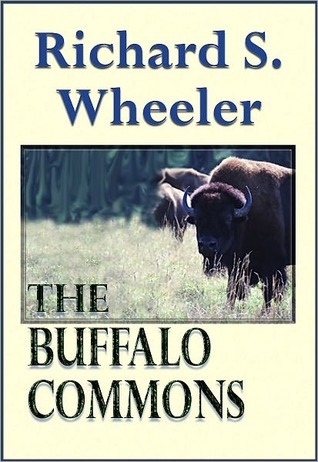
The Buffalo Commons

Rate this book
This is about a man with a dream. The wealthy Laslo Horoney wants to restore the High Plains to its original estate, stocked with buffalo, elk, deer, wolves, and native grasses. The novel is also about an established ranching family that has run cattle on these disputed plains for generations and loves the land in its own way. And also about environmentalists and stock growers and government bureaus who have their own designs on the depopulated Great Plains. The rancher, Cameron Nichols, and his wealthy adversary, each with a vision of the good earth, wrestle with each other and with outsiders, over the lonely grasslands of Montana and surrounding states.

382 pages, Nook

First published March 1, 1998

4 people are currently reading
47 people want to read

About the author

Richard S. Wheeler

124 books66 followers
Librarian Note: There is more than one author in the Goodreads database with this name. See this thread for more information.

There are other authors with this name. One writes Marine Corps history. Another, Civil War history. Another writes in the political sciences.

Richard S. (Shaw) Wheeler was born in Milwaukee in 1935 and grew up in nearby Wauwatosa.

Ratings & Reviews

What do you think?
Rate this book

Friends & Following

Create a free account to discover what your friends think of this book!

Community Reviews

5 stars
20 (34%)
4 stars
23 (39%)
3 stars
9 (15%)
2 stars
5 (8%)
1 star
1 (1%)
Displaying 1 - 13 of 13 reviews
Profile Image for J.T. Harding.
Author 11 books69 followers
March 18, 2011
I bought this because I'm planning a novel set in Montana and wanted to get some background about ranching and the state. I expected a quick read, skimming for relevant passages, but ended up enthralled at the story of a family coming to terms with the end of their way of life.

The main emphasis switches between the Nichols family and the erosion of the business, their life and their family and billionaire Laslo Horoney's attempts to set up a huge wilderness area for buffalo which would encompass the Nichols' ranch. Horoney is presented in a sympathetic light and his motives are well drawn. The Nichol's family are brought to life and their pain and confusion as their world falls apart around them draws the reader in

The story proceeds at a liesurely pace but that is no bad thing as the characters and events grow in your head over a period of time. A few of the side characters are lightly drawn, ciphers for environmental activists, and the ending is rather deux ex machina, or rather deux ex presidento.

Overall not quite five stars, but a good solid four.
4,062 reviews84 followers
November 6, 2021
The Buffalo Commons by Richard S. Wheeler (Tom Doherty Associates 1998) (Fiction -
Western) (3585).

This is a great Western story in which the underlying theme is the dream of restoring the Great Plains of the American West to its “natural (pre-human) state.” This recalls an epoch in which vast herds of bison roamed the Plains free from the influence (interference) of ranching / farming / hunting interests (read “all of humanity”). These were the days when all of earth’s natural systems were in balance and where the rise of new species of flora and fauna and the extinction of existing species are recognized as reminders that the wheel of time is counted in centuries or millennia rather than in human lifespans.

The Buffalo Commons is a contemporary tale set on a vast but isolated Montana cattle ranch which has been operated by a single family for generations. Their idyllic existence is threatened when endangered wolves move onto the range.

This is the story of a ranching family that finds its land and its way of life under siege from all sides, it seems: environmentalists, conservationists, and federal, state, and local governmental interests all threaten the ranch’s very existence.

Make no mistake. This is as “Green” a volume as they come. There is no question as to where the author’s sympathies lie. The direct actions of Earth First! sympathizers and their attendant acts of “monkeywrenching” are met with grudging acceptance and unspoken approval.

I admire the effort that author Richard S. Wheeler put into this one.

My rating: 7.25/10, finished 11/6/21/ (3585).

Profile Image for Roland Cheek.
Author 27 books11 followers
February 23, 2013
I just finished your book, "Buffalo Commons" and wish to tell you what a fine job you did on it. I'm dismayed that a guy so interested in Treasure State conservation never knew about the title until I read a Ron Scheer's review on Goodreads; then to find you wrote the book 15 years ago! My only excuse is that it was released before I joined Western Writers; that and the fact that I've lately been both retiring and otherwise engaged contributed to my ignorance. At any rate, "Buffalo Commons" is a fine read reflecting our modern world and modern Montana with both plot and storyline that could only be produced by an inside-Montanan who was thorough in research and damn near perfect in rendition. Nothing changes, does it? "Buffalo Commons" might've been written just yesterday about tomorrow. Alcoholism. Wildlife. Domestic livestock raising. Domineering government bureaucrats. Run-amuck subjective science. Stage acting politicians. Overburdened private families. Stubborn ranchers. Wealth. Privilege. Did you overlook or bypass any Montana- or Western America-thing in your depiction?
840 reviews6 followers
April 16, 2017
It's interesting how one's view of a book is shaped by the time at which one reads it. That's what kept going through my mind as I enjoyed this unforgettable novel.

The annotation from the catalog of the National Library Service for the Blind and Physically Handicapped reads:

"A wealthy benefactor dreams of restoring a vast Montana grassland to its natural state, where wolf and buffalo can roam freely. But his noble dream threatens the local ranchers and farmers, who oppose the plan in order to protect their traditional way of life."

That gives a good idea of the plot; now let me tell you why you should read it.

Don't worry if you have almost no knowledge of the issues which fuel this debate. Wheeler does an outstanding job of educating his readers. I knew next to nothing about any of this; in fact, while I had an intellectual understanding of why these things were important, I really didn't care very much one way or the other. However, as I got to know the characters who populate this book, that changed rather dramatically. I came to care about their concerns and to understand why these issues mattered so very much to them. (such is the power of great fiction.)

What stands out for me is that, while the author clearly holds a particular point of view which becomes evident at the end of the book (and which he confirms in a brief afterword), he does an amazing job of presenting various perspectives. This is not a situation where we have one side against the other; because of the varying opinions we hear, we come to understand the complexity of the issues being explored. It is refreshing to see characters modify the stances they take as a result of talking to those on the "other side" and actually considering what they have to say. It's true that I found the ending to be just a little too neat, but at a time when many people seem so unwilling to look at any opinion which doesn't match their own and where things tend to be viewed as black or white, right or wrong, good or bad, this novel presents a welcome reminder that things aren't as simple as all that and that, if we start to honor our differences and truly listen to one another, there's hope for the future.
Profile Image for Nolan.
3,723 reviews39 followers
March 23, 2017
This is one of the best and most accurate depictions of the interaction and reaction among ranchers, environmentalists, and those who are interested in conservation without forcing the federal government to do it all in the American west. And even though this was written in the ‘90s, essentially nothing has changed in the west. Its residents are still sharply divided over how federal lands should be managed and how much land should be preserved by the federal government. This is a fictional account, but your life will be changed by it; no matter which side of this you come down on, all sides are so well presented that you will be kicked and beaten out of your comfort zone and forced to look at the issue of environmental concerns versus the concerns of multi-generational ranchers in an arid region where livelihoods are lost in a single parched season.

Cam Nichols and his family have been running their ranch in Eastern Montana for nearly a century. Family members haven’t always been kind to the land, over grazing it in lean and difficult years, but Cam is among those who understands that mistreating the land means economic loss to his family, and he has been diligently working to revive those damaged areas of his acreage.

Laslo Horoney is a billionaire who wants to purchase land in Montana, South Dakota, and Wyoming and turn it into a vast conservancy where buffalo can again exist in the hundreds of thousands as they did before the white settlers of the 19th century destroyed both the herds and their habitats. He has managed to acquire most of the land he needs, but Cam Nichols simply won’t sell. He and his family are tied too closely to the land to ever let it go.

Impassioned environmentalists are also interested in changing the land Cam Nichols owns. They prefer a solution in which the federal government procures the acreage and spends federal money on its modification. So intent are they that one of them illegally purchases wolves from western Canada and drops the wolves onto Nichols’ land where they go about finding and killing his cattle, since natural prey are harder to find.

It is against this highly charged and emotional backdrop that decisions must be made that will forever alter the landscape and livelihoods of men and women of various persuasions. You will be fascinated with the arguments of the environmentalists, find yourself cheering for the billionaire who wants to create a private solution to the problem, and ache for the Nichols family who simply want to be left in peace to work their acreage. So emotionally divisive is this issue that one of the Nichols children agrees with the environmentalists.

But is the logic of the environmentalist group flawed? Was there really ever a time when the prairie wilderness was a kind of Eden wherein the noble native American was ever a wise steward of the land? There are lots of reasons to question this perspective, and if you read this, you’ll be forced to look at every side of this debate and concede points to all sides. That’s where the excellence of this book worked for me. Rarely does a book force me to really look hard at the side of an issue I’m so convinced I’m not on, and when I finished this, I could honestly say that I could successfully argue all points, some with more passion than others.

The only down side for me was the characterization of the environmentalist elite guy. He’s just a bit too bizarre to be real, although I’m sure his techniques and tactics have indeed been used in real-life situations. Men like the billionaire, a wolf biologist, and a university professor are almost heroic in their efforts, but so is Cam Nichols in a different way.

If you’re looking for a book that portrays the American rancher as a thick-headed bully who wants nothing more than to ensure that he ekes out every drop of profit the land can give, you’re probably about to read the wrong book. The Buffalo Commons dramatically points out that there are no lop-sided villains and no lop-sided heroes in this issue. It is thoughtfully written, and it rattled me around in and out of my comfort zone pretty dramatically. Granted, it’s early in the year, but this is easily the best and most thoughtful book I’ve read in 2017. Those who care little or nothing about the residents of the American West will probably want to skip this. But those who understand what it’s like for good or evil to have your state predominantly owned by the federal government will find this worthy of your time.
Profile Image for Catherine.
237 reviews
August 5, 2013
This is a story set in eastern Montana where a ranch family is holding out against a bilionaire who wants their land to create a free range buffalo herd. All of the land around the family's holdings has been bought up by the billionaire who is trying to force them to sell by isolating them. The family has been on the land for generations and scraped out a living ranching cattle. They are good land stewards and see themselves as having become part of the land itself.

I gave the book four stars partly because I'm familiar with this area of Montana and have a friend who ranches along the Musselshell River to the north of where this story is set. I can picture the land and the patches of badland that extend out into eastern Montana from western North Dakota. I've seen the ground cactus bloom in the spring and the parched grasses during the heat of summer. It's a beautiful place, a perfect setting for this story.
Profile Image for Lee Prescott.
Author 1 book175 followers
February 19, 2021
A great book about a great idea - rewilding the prairie. The writer tackles the subject avoiding a dogmatic approach from one viewpoint or another and the story is all the better for it. I believe this is actually happening now - if the book played a part in that, then good on you Mr Wheeler!
Profile Image for Jerry Mingus.
16 reviews
December 16, 2016
Didn't finish the book. The story plot was good. However the book was more a treatise on how the Western Grasslands were developed and set aside.
This entire review has been hidden because of spoilers.
Profile Image for Will.
147 reviews1 follower
March 10, 2021
Just good enough to finish. Dialogue wasn’t compelling but the controversy over the very real proposal of a Buffalo Commons was pretty interesting.
Profile Image for Ron.
761 reviews145 followers
February 8, 2013
Written in the late 1990s, Richard Wheeler’s novel is set in what was then (and still is) the near future. A Ted Turner style billionaire, Laslo Horoney, has been buying up ranchland in Eastern Montana, Wyoming, and South Dakota to create a grassland wilderness preserve. He plans to stock it with bison and other species of wildlife for whom this vast region of prairie was once home.

Sounds like a great idea, except for a ranching family, the Nicholses, who decide not to sell out to him. Ranching is tough, but they don’t want to give up their livelihood or the property that has been the family home for generations. “Pain and struggle make the deepest, toughest roots of all,” Cameron Nichols tells Horoney. The novel is a long account of the conflict and eventual friendship that develop between them. . .

Read my review at my blog.
9 reviews
June 23, 2010
This is the second of Richard Wheeler`s books I have read. A novel of one of the most controversial issues of the modern west when good people with good intentions clash over their ideas of what the earth is and how live must be lived on it.
Displaying 1 - 13 of 13 reviews

Can't find what you're looking for?

Get help and learn more about the design.