

What do you think?

Auguste Rodin
French Sculptor Auguste Rodin once wrote that "one has only to look at a human face to find a soul, no feature deceives; hypocrisy is as transparent as sincerity. The inclining of the brow, the least furrowing of a look may reveal the -secrets of the heart." Rodin was fortunate to have as his -secretary Rainer Maria Rilke, one of the most sensitive poets of our time. These essays discussing Rodin’s work and development as an artist are as revealing of Rilke as they are of his subject. Written in 1903 and 1907, these meditations mark the entry of the poet into the world of letters. The book sheds light on the profound psychic connection between the two great artists, both masters of giving life to the invisible within the visible, concerned with "the unnoticed, the small, the concealed . . . with the profound and surprising unrest of living things." Over a dozen -reproductions of Rodin’s little known water-colors and drawings will accompany the essays.
Rainer Maria Rilke, born in Prague in 1875, is arguably the greatest German poet since Goethe. His major works include his Duino Elegies, The Sonnets to Orpheus, The Notebooks of Malte Laurids Brigge, The Book of Hours, and Letters to a Young Poet.
Daniel Slager (Translator) is an editor at Harcourt and a contributing editor to Grand Street. His translations of texts by Bertolt Brecht, Franz Kafka, and Heiner Müller have been widely acclaimed, and his renderings of Durs Grünbein, Marcel Beyer, Felicitas Hoppe, and Terézia Mora have marked these authors’ first publications in the U.S.
William Gass (Introduction) is the author of four novels and five books of essays. He has been the recipient of grants from the Rockefeller, Lannan, and Guggenheim foundations. He has received two National Book Critics Circle Awards for Criticism. Gass lives in St. Louis where he is the Director of the -International Writers Center.
Rainer Maria Rilke, born in Prague in 1875, is arguably the greatest German poet since Goethe. His major works include his Duino Elegies, The Sonnets to Orpheus, The Notebooks of Malte Laurids Brigge, The Book of Hours, and Letters to a Young Poet.
Daniel Slager (Translator) is an editor at Harcourt and a contributing editor to Grand Street. His translations of texts by Bertolt Brecht, Franz Kafka, and Heiner Müller have been widely acclaimed, and his renderings of Durs Grünbein, Marcel Beyer, Felicitas Hoppe, and Terézia Mora have marked these authors’ first publications in the U.S.
William Gass (Introduction) is the author of four novels and five books of essays. He has been the recipient of grants from the Rockefeller, Lannan, and Guggenheim foundations. He has received two National Book Critics Circle Awards for Criticism. Gass lives in St. Louis where he is the Director of the -International Writers Center.
88 pages, Hardcover
First published January 1, 1903
About the author
Rainer Maria Rilke
1,939 books7,345 followersA mystic lyricism and precise imagery often marked verse of German poet Rainer Maria Rilke, whose collections profoundly influenced 20th-century German literature and include
The Book of Hours
(1905) and
The Duino Elegies
(1923).
People consider him of the greatest 20th century users of the language.
His haunting images tend to focus on the difficulty of communion with the ineffable in an age of disbelief, solitude, and profound anxiety — themes that tend to position him as a transitional figure between the traditional and the modernist poets.
His two most famous sequences include the Sonnets to Orpheus , and his most famous prose works include the Letters to a Young Poet and the semi-autobiographical The Notebooks of Malte Laurids Brigge .
He also wrote more than four hundred poems in French, dedicated to the canton of Valais in Switzerland, his homeland of choice.
People consider him of the greatest 20th century users of the language.
His haunting images tend to focus on the difficulty of communion with the ineffable in an age of disbelief, solitude, and profound anxiety — themes that tend to position him as a transitional figure between the traditional and the modernist poets.
His two most famous sequences include the Sonnets to Orpheus , and his most famous prose works include the Letters to a Young Poet and the semi-autobiographical The Notebooks of Malte Laurids Brigge .
He also wrote more than four hundred poems in French, dedicated to the canton of Valais in Switzerland, his homeland of choice.
Ratings & Reviews
Friends & Following
Create a free account to discover what your friends think of this book!
Community Reviews
Displaying 1 - 30 of 61 reviews

November 15, 2013
Writers work with words, sculptors with actions — POMPONIUS GAURICUS
Rodin was solitary before he was famous
And fame, when it arrived, made him perhaps even more solitary
For in the end, fame is no more than the sum of all the misunderstandings
that gather around a new name
They surround the name, but not the work
We remember how small human hands are
How quickly they tire and how little time is given to them to create
We long to see these hands, which have lived the lives of hundreds of hands
We wonder whose hands these are
Who is this man?
Only a life in which everything is present and alive
in which nothing is lost to the past
can remain young and strong, and rise again and again to create great works
The time may come when this life will have a story
a narrative with burdens, episodes, and details
They will all be invented
There was stone that seemed in no way mortal
Surely this art could come to the aid of an age tormented by conflicts that were almost all invisible
Its language was the body
but when had this body last been seen?
It was buried under layer upon layer of clothes, renewed perpetually by the latest styles
But beneath this protective crust, the ripening soul was changing the body
even as it was working breathlessly on the human face
The body has been transformed. If we were to uncover it now
it would probably have a thousand expressions for everything nameless
Painters dreamed of this body
But sculpture, to which the body belonged, did not know it yet
And the man to whom [the task] was given was unknown
[He] was a dreamer whose dream got into his hands
Rodin [was] simply a force of nature
Rodin was possessed of a patience so deep it almost makes him anonymous
“One must never hurry”
He possessed the strength of those upon whom some great work is waiting
the silent endurance of those the world needs
A sculpture did not require a wall
It didn’t even require a roof.
It was simply a thing that could stand on its own
It had to become somehow untouchable
removed from the influence of chance and time
in the context of which it stands solitary and luminous, like the face of a visionary
The most essential element of this work was a thorough understanding of the human body
He explored its surface, searching slowly
It consisted of infinite encounters between things and light
There were encounters that seemed endless
There was never one without life and movement
Now there was only an endless variety of living planes
Now it became a matter of mastering life in all its fullness
Rodin seized upon life as he saw it all around him
Life, which appeared on faces
Here there was no deception
It was here that he found the spirit of his age
Human beings had become temples — all of one God
He read widely
He was often to be seen on the streets of Brussels reading a book
yet we can’t help but wonder if these books were but a pretext for a deep absorption in himself
Divine Comedy for the first time was a great revelation
He saw the suffering bodies of another generation
He saw, across the span of countless days, a century stripped of its clothes
and he recognized the poet’s great and unforgettable judgment on his age
From Dante he came to Baudelaire
This was no tribunal of judgment
no poet ascending on the hand of a shadow to heaven
Here, rather, was a simple human being
a mere mortal who suffered like everyone
A man sat motionless before Rodin
he studied this face it became clear that it was full of motion
full of disquiet and crashing waves
Living human beings didn’t speak to him in those years
Stones spoke
As is so often the case with Rodin, one hardly dares ascribe meaning to it
There are thousands
Thoughts pass over this sculpture like shadows
and in the wake of each of them it rises new and enigmatic, lucid and nameless
Rodin searched for bodies touching at many places
bodies whose contact was more intense stronger, and less restrained
The more points of contact there were for two bodies
the more impatiently they came together like chemicals of great affinity
and the more stable and organic was the new whole they made together
What was your life like?
“Good.”
Did you have any enemies?
“None that could keep me from my work.”
And fame?
“It made work a duty.”
And friends?
“They expected work from me.”
And women?
“I learned to admire them in the course of my work.”
But you were young once?
“Then I was like all the rest. You know nothing when you are young; that comes later, and only slowly”
Isadora Duncan: He began to knead my whole body as if it were clay
while from him emanated heat that scorched and melted me
Rodin was solitary before he was famous
And fame, when it arrived, made him perhaps even more solitary
For in the end, fame is no more than the sum of all the misunderstandings
that gather around a new name
They surround the name, but not the work
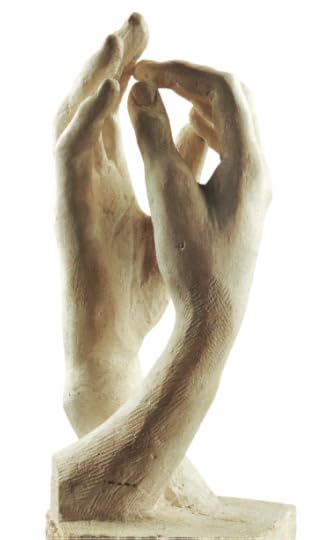
We remember how small human hands are
How quickly they tire and how little time is given to them to create
We long to see these hands, which have lived the lives of hundreds of hands
We wonder whose hands these are
Who is this man?
Only a life in which everything is present and alive
in which nothing is lost to the past
can remain young and strong, and rise again and again to create great works
The time may come when this life will have a story
a narrative with burdens, episodes, and details
They will all be invented
There was stone that seemed in no way mortal
Surely this art could come to the aid of an age tormented by conflicts that were almost all invisible
Its language was the body
but when had this body last been seen?
It was buried under layer upon layer of clothes, renewed perpetually by the latest styles
But beneath this protective crust, the ripening soul was changing the body
even as it was working breathlessly on the human face
The body has been transformed. If we were to uncover it now
it would probably have a thousand expressions for everything nameless
Painters dreamed of this body
But sculpture, to which the body belonged, did not know it yet
And the man to whom [the task] was given was unknown
[He] was a dreamer whose dream got into his hands
Rodin [was] simply a force of nature
Rodin was possessed of a patience so deep it almost makes him anonymous
“One must never hurry”
He possessed the strength of those upon whom some great work is waiting
the silent endurance of those the world needs
A sculpture did not require a wall
It didn’t even require a roof.
It was simply a thing that could stand on its own
It had to become somehow untouchable
removed from the influence of chance and time
in the context of which it stands solitary and luminous, like the face of a visionary
The most essential element of this work was a thorough understanding of the human body
He explored its surface, searching slowly
It consisted of infinite encounters between things and light
There were encounters that seemed endless
There was never one without life and movement
Now there was only an endless variety of living planes
Now it became a matter of mastering life in all its fullness
Rodin seized upon life as he saw it all around him
Life, which appeared on faces
Here there was no deception
It was here that he found the spirit of his age
Human beings had become temples — all of one God
He read widely
He was often to be seen on the streets of Brussels reading a book
yet we can’t help but wonder if these books were but a pretext for a deep absorption in himself
Divine Comedy for the first time was a great revelation
He saw the suffering bodies of another generation
He saw, across the span of countless days, a century stripped of its clothes
and he recognized the poet’s great and unforgettable judgment on his age
From Dante he came to Baudelaire
This was no tribunal of judgment
no poet ascending on the hand of a shadow to heaven
Here, rather, was a simple human being
a mere mortal who suffered like everyone
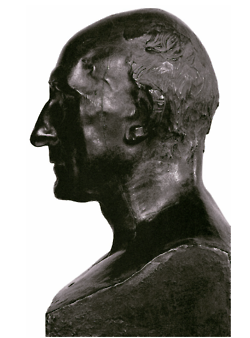
A man sat motionless before Rodin
he studied this face it became clear that it was full of motion
full of disquiet and crashing waves
Living human beings didn’t speak to him in those years
Stones spoke
As is so often the case with Rodin, one hardly dares ascribe meaning to it
There are thousands
Thoughts pass over this sculpture like shadows
and in the wake of each of them it rises new and enigmatic, lucid and nameless
Rodin searched for bodies touching at many places
bodies whose contact was more intense stronger, and less restrained
The more points of contact there were for two bodies
the more impatiently they came together like chemicals of great affinity
and the more stable and organic was the new whole they made together
What was your life like?
“Good.”
Did you have any enemies?
“None that could keep me from my work.”
And fame?
“It made work a duty.”
And friends?
“They expected work from me.”
And women?
“I learned to admire them in the course of my work.”
But you were young once?
“Then I was like all the rest. You know nothing when you are young; that comes later, and only slowly”
Isadora Duncan: He began to knead my whole body as if it were clay
while from him emanated heat that scorched and melted me

Read
January 27, 2022Video review: https://youtu.be/qriiSe2oAWo

July 26, 2009
I was assigned this book from a class i was taking at Stanford....the class was canceled, but I still read the book. A great poet(Rilke) writing a book about a great artist!! I thought this was a great combination. Rilke actually lived and worked with Rodin, and wrote a sensitive accounting of genius, or what being an artist means...I loved this book...

Want to Read
May 11, 2014Free download available at Project Gutenberg.

February 22, 2026
Fascinating not just as a study of Rodin, but also as a study of Rilke's creative progress during the five years which passed between the writing of parts one and two. And of course, an intro from the inimitable William Gass can only elevate the affair.

January 3, 2022
Starting 2022 with Rodin through the eyes of Rilke thanks to a winter walk in Paris twilight and a chance encounter with "The Kiss".
Delicate and poetic, the book gently touches upon the very outline of the Rodin's sculptures, avoiding any detailed analysis of the works the author greatly admired. Moreover, Rilke himself confirms, quoting Rodin, that talking about them would be a useless and time-consuming task. He urges the readers to see them for what they are, stopping short of any conclusions, watching the lines intertwine and the planes change as the light and shadow alters them.
Predictably, essays like this tell you just as much about the author himself. The frustration Rilke experiences at Rodin's works being misunderstood by the general public is almost palpable. Now and again he draws parallels between his subject and the Renaissance and classical or even mediaeval sculpture, showing Rodin in a much greater historical context, establishing not only his heritage, but also placing him on a different level altogether. Rilke insists that in his sculptures Rodin uncovers something both primal and biblical, something so exquisitely modern and progressive, larger than life itself.
You can feel the inner tension of Rodin's sculptures between the lines, that sheer excitement over the moment of creation when the stone becomes a kiss, a touch, a fall, an interminable movement under the surface.
Delicate and poetic, the book gently touches upon the very outline of the Rodin's sculptures, avoiding any detailed analysis of the works the author greatly admired. Moreover, Rilke himself confirms, quoting Rodin, that talking about them would be a useless and time-consuming task. He urges the readers to see them for what they are, stopping short of any conclusions, watching the lines intertwine and the planes change as the light and shadow alters them.
In Rodin’s work there are hands, independent little hands, which are alive without belonging to any single body. There are hands that rise up, irritable and angry, and hands whose five bristling fingers seem to bark like the five false heads of Cerberus. There are hands that walk, hands that sleep and hands that wake; criminal hands weighted with the past, and hands that are tired and want nothing more, hands that lie down in a corner like sick animals who know no one can help them. But then hands are a complicated organism, a delta in which life from the most distant sources flows together, surging into the great current of action. Hands have stories; they even have their own culture and their own particular beauty. We grant them the right to have their own development, their own wishes, feelings, moods, and occupations.
A hand lying on the shoulder or thigh of another body no longer belongs completely to the one it came from: a new thing arises out of it and the object it touches or grasps, a thing that has no name and belongs to no one, and it is this new thing, which has its own definite boundaries, that matters from that point on.
Predictably, essays like this tell you just as much about the author himself. The frustration Rilke experiences at Rodin's works being misunderstood by the general public is almost palpable. Now and again he draws parallels between his subject and the Renaissance and classical or even mediaeval sculpture, showing Rodin in a much greater historical context, establishing not only his heritage, but also placing him on a different level altogether. Rilke insists that in his sculptures Rodin uncovers something both primal and biblical, something so exquisitely modern and progressive, larger than life itself.
You can feel the inner tension of Rodin's sculptures between the lines, that sheer excitement over the moment of creation when the stone becomes a kiss, a touch, a fall, an interminable movement under the surface.

Read
July 25, 2026Avez-vous bien travaille? -Rodin ,bu soruyla selamlar değer verdiği kimseleri ; eğer cevap evetse sorulacak başka bir şey kalmamıştır-içiniz rahat olsun: Çalışan mutludur çünkü.
Rodin, Rönesans'dan gelen heykel anlayışını yıkmış, kimi zaman sert eleştirilere maruz kalmış, aynı zamanda Camille Claudel ile olan ilişkisi ile dikkatleri çeken bir sanatçı. Hatta Camille Claudel'in Rodin'den daha yetenekli olduğu ve Rodin'in gölgesinde kaldığı da söyleniyor. Şair Rilke, Rodin hakkında bir monografi yazmak için Rodin ile görüşür ve onun yanında bir süre yaşar. Bu süreç boyunca Rodin'e olan hayranlığı da artar Rilke'nin. Bitmez tükenmez bir çalışma azmi vardir Rodin'in. Yaptığı heykeller edebiyat dünyasından izler de taşır. Baudelaire'den Dante'ye ,Balzac ve Victor Hugo'ya uzanan izler vardır heykellerinde. Aynı zamanda heykeller de bir varolus kaygısı da mevcuttur. Sanat zaten bir varoluş kaygısının sonucu degil midir ? Bu ince kitap bu heykellerin oluşma süreçlerini Rodin'in sanata, yasama ve insana bakışını Rilke'nin gözünden anlatıyor bize. Herkes sever mi, bilmem ama benim gibi heykel sanatına aşıksanız seversiniz. İyi okumalar
Rodin, Rönesans'dan gelen heykel anlayışını yıkmış, kimi zaman sert eleştirilere maruz kalmış, aynı zamanda Camille Claudel ile olan ilişkisi ile dikkatleri çeken bir sanatçı. Hatta Camille Claudel'in Rodin'den daha yetenekli olduğu ve Rodin'in gölgesinde kaldığı da söyleniyor. Şair Rilke, Rodin hakkında bir monografi yazmak için Rodin ile görüşür ve onun yanında bir süre yaşar. Bu süreç boyunca Rodin'e olan hayranlığı da artar Rilke'nin. Bitmez tükenmez bir çalışma azmi vardir Rodin'in. Yaptığı heykeller edebiyat dünyasından izler de taşır. Baudelaire'den Dante'ye ,Balzac ve Victor Hugo'ya uzanan izler vardır heykellerinde. Aynı zamanda heykeller de bir varolus kaygısı da mevcuttur. Sanat zaten bir varoluş kaygısının sonucu degil midir ? Bu ince kitap bu heykellerin oluşma süreçlerini Rodin'in sanata, yasama ve insana bakışını Rilke'nin gözünden anlatıyor bize. Herkes sever mi, bilmem ama benim gibi heykel sanatına aşıksanız seversiniz. İyi okumalar

January 31, 2021
Μια ανάλυση εμβάθυνση στο έργο του γλύπτη από έναν άνθρωπο που λατρεύει τον καλλιτέχνη και ήταν και προσωπικός του φίλος . Αξίζει … το ξαναδιάβασα μετά από την επίσκεψη μου στο μουσείο Rodin για να εμβαθύνω περισσότερο και σίγουρα το εκτίμησα δεν μια συνδυαστική εμπειρια . Είναι ωραιο να μιλας για έναν καλλιτέχνη και να μένεις στην ουσια και το έργο του δίνοντας πληροφορίες χρήσιμες στον αναγνώστη . Μια ωραια συνάντηση καλλιτέχνη και ποιητικής ψυχής .
August 14, 2008
I can't imagine a better companion than Rilke for an exploration of the beauty and meaning imbued in Rodin's work.
June 12, 2017
Taught me a new way to see.
May 15, 2026
God, thank you for archipelago
Gass’s intro overstays its welcome
would like to know what Borglum thought about this. if he did read it, I’m guessing he saw himself as Rodin 2 but in completing The Shrine felt unworthy.
a bit bizarre that Rilke sees the universal in what Rodin brings into form, but then lifts Rodin above all mortals.
Rilke unintentionally proves that coding modernity as uniquely antithetical to stasis vav pr*mitivity is moronic. (modernity and stasis are not real).
I don’t think I have ever posted a quote from something before in a review, but please look at what Rilke said about _The Eternal Idol_: “she looks down as if from the height of a silent night, down at the man whose face is buried in her breasts as if in myriad blossoms.”
Gass’s intro overstays its welcome
would like to know what Borglum thought about this. if he did read it, I’m guessing he saw himself as Rodin 2 but in completing The Shrine felt unworthy.
a bit bizarre that Rilke sees the universal in what Rodin brings into form, but then lifts Rodin above all mortals.
Rilke unintentionally proves that coding modernity as uniquely antithetical to stasis vav pr*mitivity is moronic. (modernity and stasis are not real).
I don’t think I have ever posted a quote from something before in a review, but please look at what Rilke said about _The Eternal Idol_: “she looks down as if from the height of a silent night, down at the man whose face is buried in her breasts as if in myriad blossoms.”

October 22, 2025
Not to be dramatic but I see the world differently now.

December 17, 2025
the book collects rilke's reflections on rodin from his time as the sculptor's secretary. i am not a huge rodin fan but i enjoy his sketches and found aspects of his biography charming. certainly interesting to see how rodin's ideas (particularly surrounding the erotic) influenced rilke. i am not sure which translation i read.

October 6, 2014
I read this cover to cover probably three or four times before I could convince myself to move on to a new subject. The musings of Rodin's poetic companion were an inspiration to this new student of Rodin's complete and thorough mastery of his unrelenting purpose to capture the intent of the existence of each of his subjects. Will return to this again and again when I need a dose of something plainly pretty.

November 17, 2021
A nice overview of Rodin, by his secretary, Rilke. I certainly didn't realize that connection before reading. Also that Rodin worked in clay and had assistants do castings from his finished pieces. Finally I had no idea regarding Rodin's drawing output, which was quite significant along with he apparently didn't look at what he was drawing, but only the subject as he drew? Quite impressive and leads me to possibly reading a full biography along with a revisit to the Rodin Museum.

June 8, 2014
This was a LibriVox audiobook!
https://librivox.org/auguste-rodin-by...
https://librivox.org/auguste-rodin-by...

September 23, 2022
Auguste Rodin, a French sculptor, claimed to be the founder of modern sculpture. Im not an expert in the field, so I dont know if he was a good one. By browsing google images, I can say that I liked only 50% of his works.
This is not an autobiography; that would have been interesting. This book is written by Rainer Maria, an art critic that wrote 100 plus pages of a book full of nice words about his work. Without disrespecting the art critics, a book about an artist should contain extensive biographical data, how he grew up, what he liked and disliked, etc.
Converting into words the image of a sculpture, her interpretation was not good nor satisfactory enough for me. I find it a bit of so-called newsjacking, using a famous dead person by trying to promote your name.
Anyhow, just do a quick google search for "the thinker" to see his most famous work. It is said that it resembles Michelangelo's work. Also, his Lion work reminded me of the Lions found at Konstanoupolis but stolen by the crusaders and now found in Venice. But how am I to judge such a great artist? We all need inspiration, and we all copy something in our life.
This is not an autobiography; that would have been interesting. This book is written by Rainer Maria, an art critic that wrote 100 plus pages of a book full of nice words about his work. Without disrespecting the art critics, a book about an artist should contain extensive biographical data, how he grew up, what he liked and disliked, etc.
Converting into words the image of a sculpture, her interpretation was not good nor satisfactory enough for me. I find it a bit of so-called newsjacking, using a famous dead person by trying to promote your name.
Anyhow, just do a quick google search for "the thinker" to see his most famous work. It is said that it resembles Michelangelo's work. Also, his Lion work reminded me of the Lions found at Konstanoupolis but stolen by the crusaders and now found in Venice. But how am I to judge such a great artist? We all need inspiration, and we all copy something in our life.

July 29, 2020
These are impressions of a fine poet on a great sculptor whom he met personally and spent some time. Only seeing a large display of Rodin's works like those at the Cantor Arts Center on the campus of Stanford University in Palo Alto, California, surpasses this fine writing.
I first saw Rodin’s sculptures at the Philadelphia Art Museum in the early 1970’s. There was an exhibition of his works I heard about and I decided on seeing it quite suddenly one Saturday but arrived too late in the day to see much of it. I left New York City about noon and though this distance normally takes about two hours I did not arrive at the museum until about 4:30 PM on account of huge traffic. I was admitted at no charge because the Museum was closing in 30 minutes. I remember about three copies of “The Thinker” from the exhibit which is about what I knew about Rodin at that time.
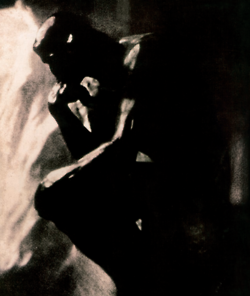
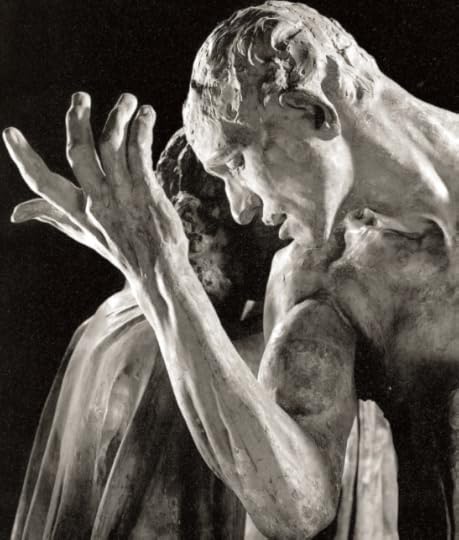
Rainer spends time on several Rodin’s works: “The Man with the Broken Nose, The Man of Primal Times, Citizens of Calais, Balzac, The Kiss, Hell Gate, The Thinker.” Rainer writes about them like a poet that he was.
I first saw Rodin’s sculptures at the Philadelphia Art Museum in the early 1970’s. There was an exhibition of his works I heard about and I decided on seeing it quite suddenly one Saturday but arrived too late in the day to see much of it. I left New York City about noon and though this distance normally takes about two hours I did not arrive at the museum until about 4:30 PM on account of huge traffic. I was admitted at no charge because the Museum was closing in 30 minutes. I remember about three copies of “The Thinker” from the exhibit which is about what I knew about Rodin at that time.
Rainer spends time on several Rodin’s works: “The Man with the Broken Nose, The Man of Primal Times, Citizens of Calais, Balzac, The Kiss, Hell Gate, The Thinker.” Rainer writes about them like a poet that he was.

August 30, 2021
‘ Avez-vous bien travaillé ? ‘ ( iyi çalıştınız mı ? ) sevdiği her insanı bu sorusuyla selamlar Rodin çünkü çalışan mutludur....
Rodin’in içinde inanılmaz güç stokları barındıran basit ve bütünsel doğası için bu çözüm mümkündür; dehası için bir gereklilikti; ancak bu şekilde dünyayı zapt edebiliyordu. İnsanlar gibi değil, doğanın çalıştığı gibi çalışmak, buydu onun yazgısı.
Son dönemde okuduğum en etkileyici anlatım diline sahip kitaptı. Rilke ait okuduğum ilk kitap olduğu için onun mükemmel anlatımı ve Rodin’i anlatıyor olması benim için fazlaca sürükleyeci geçen zamanlar oldu. Rodin’nin sanatının inceliklerini, yazılardan dışarı taşan duygu ifadeleriyle bütünleştirmek muazzam bir yazarlık ile karşı karşıya kalındığının hissine seni davet edip satırlarla adeta karıştırıyor.
Rodin’in içinde inanılmaz güç stokları barındıran basit ve bütünsel doğası için bu çözüm mümkündür; dehası için bir gereklilikti; ancak bu şekilde dünyayı zapt edebiliyordu. İnsanlar gibi değil, doğanın çalıştığı gibi çalışmak, buydu onun yazgısı.
Son dönemde okuduğum en etkileyici anlatım diline sahip kitaptı. Rilke ait okuduğum ilk kitap olduğu için onun mükemmel anlatımı ve Rodin’i anlatıyor olması benim için fazlaca sürükleyeci geçen zamanlar oldu. Rodin’nin sanatının inceliklerini, yazılardan dışarı taşan duygu ifadeleriyle bütünleştirmek muazzam bir yazarlık ile karşı karşıya kalındığının hissine seni davet edip satırlarla adeta karıştırıyor.

October 5, 2026
This is a really interesting study in the development of Rilke's poetics, rather than as a study of Rodin.
Rilke is my favourite poet, and I have been chewing on the Ninth Elegy for years, trying to 'figure it out'. It's almost a shame it took me so long to look into Rilke's influences, as now it seems very obvious. The cosmogony that informs the Ninth Elegy is that of 'God' as sculptor of all 'Things', and humanity as its viewers that dignify their reality with witness. Rodin, the great sculptor, was his inspiration for this.
Auguste Rodin' is a monograph and lecture on Rodin written and delivered in 1903 and 1907, but it bears undeniable precursors to the Ninth Elegy which was published in 1922, as if one can see the poem forming there in its most primitive and vulnerable form.
Given that, the writing in the first text - the monograph - bears in my opinion a lot of Rilke's artistic immaturity. I found the introduction beautiful, but following that it was 100 or so pages of equally dense devotions; it quickly feels overdone, over-interpreted, but even worse, the thickness of the writing totally obscures the subject matter that is Rodin and Rodin's sculptures. I cannot even tell sometimes what he is describing.
At this same time, Rilke was writing The Book of Hours, which is by form and content devotional, but I think that the strictness and sparseness of the form confer more gravity to his words and we do see Rilke at his best. At prose-length, Rilke's devotional affect becomes overbearing.
There are some few instances where we do enjoy the privilege of clear seeing, that actually bring us into closer intimacy with Rodin's work and care:
"He goes far afield. He doesn't settle on the first or second impression, or on those that follow: He observes and makes notes. He notes movements unworthy of discussion, turns and halfturns, forty reductions and eighty profiles. ... Rodinn developed his memory into a resource that is at once reliable and always ready."
But they are far and few in between paragraphs like these, which circle around strange equivocations. They project either some ineffable mystery or some grand mythical narrative (a confusing alternation between lack of meaning and intense, high-confidence meaning), sometimes culminating in some meditation on capital-L 'Life' that does not at all seem to follow from the concrete object described:
"A mysterious greatness emanates from this group. As is so often the case with Rodin, one hardly dares ascribe meaning to it. There are thousands. Thoughts pass over this sculpture like shadows, ad in the wake of each of them it rises new and enigmatic, lucid and nameless. ... Something of a purgatory lives in this work. A heaven is near, but not yet attained; a hell is near, and not yet forgotten."
By the time we get to Rilke's lecture, however, there is a marked change in writing. He describes the sculpture in plainer, more sober terms that allow them to speak for themselves. His philosophical reflections are also clearer, and less angled at some insistence on having a direct channel to 'God':
"the longer one looks, the simpler the content becomes, until one sees simply: things."
"One almost has the sense that singular art objects [the sculptures] ... are not forced to contribute their own beauty to a general sense of contentment that has nothing to do with them. Someone once said that they are kept there like beautiful animals, and this does capture Rodin's relation to the things around him." (This motif of caged animals recurs in 'The Panther', Rilke's Dinggedicht poem which was directly inspired by his time observing Rodin.)
It feels obvious that Rilke has spent enough time with Rodin to start to absorb his artistic maturity and point-of-view, which is two things:
1) The creation of beauty is not the creation of beauty, but it is only imitation of that which is already beautiful and singular (the prior world of 'Things'). Beauty therefore the product of accurate witness, observation - concrete facts. Solid, hard, enduring, much like marble.
2) There is no waiting for inspiration; only work. This point of view is actually the natural conclusion from the prior point. Rodin's consistent work ethic which prevailed even through grief and artistic rejection and belittlement is a testament to an undying inspiration precisely because he believes that all surrounding (the 'Things') are already singular and beautiful.
Rilke therefore seems to make a transition, or integration, from the purely subject-driven / mystical frame into one that integrates objectivity also, thus becoming whole.
I think that both of these points unify into a fundamentally religious view (that 'God' creates all things good), and so does Rilke, as he concludes his lecture in praise of the 'Things', which are objects in-themselves - and also the Ninth Elegy.
I've been talking about their similarity, so let's get to the rub! Here is a passage from 'Auguste Rodin' in Rilke's later lecture:
"A simple cabbage leaf from the garden boasts of it, and rightly so. It shimmers merrily in the water, and it fills the trees with happiness. And how it takes possession of men and women when they relinquish their striving. How well te little houses stand just as they should, in perfect harmony. And how gloriously the bridge leaps across the river at Sèvres ..."
And from Ninth Elegy:
"Why, if it's possible to spend this span
of existence as laurel, a little darker than all
other greens, with little waves on every
leaf-edge (like the smile of a breeze), why, then,
must we be human and, shunning destiny,
long for it?...
Oh, not because happiness,
that over-hasty profit of loss impending, exists.
...
The wanderer does not bring a handful of earth,
the unutterable, from the mountain slope to the valley,
but a pure word he has learned, the blue
and yellow gentian. Are we here perhaps just to say:
house, bridge, well, gate, jug, fruit tree, window--
at most, column, tower... but to say, understand this, to say it
as the Things themselves never fervently thought to be.
...
Here is the time for the unutterable, here, its country.
Speak and acknowledge it. More than ever
the things that we can live by are falling away,
supplanted by an action without symbol."
🥹🥹🥹🥹🥹🥹🥹🥹🥹🥹🥹🥹🥹🥹
🥹🥹🥹🥹🥹🥹🥹🥹🥹🥹🥹🥹🥹🥹
[N.T.S. - read and compare Hölderlin.]
---------------------------------------------------------------------------------------------
Other quotes:
"One must never hurry." - Rodin
"The unseen, small, nameless, and seemingly superfluous works were no less filled with this deep inner force, with this rich an astonishing disquiet of life. Even the stillness, where there was stillness, consisted of hundreds of motive moments held in equilibrium."
"When others began to doubt him, he no longer had any doubt in himself. All that was behind him."
"We learned - at least in the world of painting - to see and believe that an artistic whole doesn't necessarily coincide with the oridnary whole-thing, and that, apart from their agreement, new unities come about, new associations and relations, new equilibriums."
"He made him just as God made the first man, without intending to produce anything but life itself, nameless life."
"Hands have stories; they even have their own culture and their own particular beauty. We grant them the right to have their own development, their own wishes, feelings, moods, and occupations."
"He designed his Things and their planes in relation to space, and it is this that gives them that greatness and independence, that indescribable maturity, which distinguishes them from all other things."
"Rodin's development has provided a sign for all the arts in this confused age. One day people will recognise what made this artist so great: that he was a worker who desired nothing more than to give himself completely, with all his strength, to the humble and difficult world of his craft. There was a kind of renunciation of life in this, but with patience he gained itback: for the world came to his work."
"And as for what we call mind and soul and love: are they not all just a subtle change on the small surface of a nearby face?"
"Consider for a moment how much work would be required for an artist who wished to master all surfaces; after all, no one thing is like another. He wasn't concerned with knowing the body in general, nor the face or the hand (none of which exists anyhow); but rather all bodies, all faces, all hands."
"Where to find a patience adequate to his craft? This worker renewed it endlessly with love."
"[he] claims that there is no such thing as inspiration, but only work, one recognises instantly that inspiration has become constant for this artist, and that he no longer feels it come on because it never leaves him, and one understands the basis of his uninterrupted fruitfulness."
"And when the love of work failed, poverty drove him to it. Poverty, without which his life would be unthinkable; he never forgot that it made him one with the animals and flowers, having nothing among all those who have nothing, who depend on God alone."
Rilke is my favourite poet, and I have been chewing on the Ninth Elegy for years, trying to 'figure it out'. It's almost a shame it took me so long to look into Rilke's influences, as now it seems very obvious. The cosmogony that informs the Ninth Elegy is that of 'God' as sculptor of all 'Things', and humanity as its viewers that dignify their reality with witness. Rodin, the great sculptor, was his inspiration for this.
Auguste Rodin' is a monograph and lecture on Rodin written and delivered in 1903 and 1907, but it bears undeniable precursors to the Ninth Elegy which was published in 1922, as if one can see the poem forming there in its most primitive and vulnerable form.
Given that, the writing in the first text - the monograph - bears in my opinion a lot of Rilke's artistic immaturity. I found the introduction beautiful, but following that it was 100 or so pages of equally dense devotions; it quickly feels overdone, over-interpreted, but even worse, the thickness of the writing totally obscures the subject matter that is Rodin and Rodin's sculptures. I cannot even tell sometimes what he is describing.
At this same time, Rilke was writing The Book of Hours, which is by form and content devotional, but I think that the strictness and sparseness of the form confer more gravity to his words and we do see Rilke at his best. At prose-length, Rilke's devotional affect becomes overbearing.
There are some few instances where we do enjoy the privilege of clear seeing, that actually bring us into closer intimacy with Rodin's work and care:
"He goes far afield. He doesn't settle on the first or second impression, or on those that follow: He observes and makes notes. He notes movements unworthy of discussion, turns and halfturns, forty reductions and eighty profiles. ... Rodinn developed his memory into a resource that is at once reliable and always ready."
But they are far and few in between paragraphs like these, which circle around strange equivocations. They project either some ineffable mystery or some grand mythical narrative (a confusing alternation between lack of meaning and intense, high-confidence meaning), sometimes culminating in some meditation on capital-L 'Life' that does not at all seem to follow from the concrete object described:
"A mysterious greatness emanates from this group. As is so often the case with Rodin, one hardly dares ascribe meaning to it. There are thousands. Thoughts pass over this sculpture like shadows, ad in the wake of each of them it rises new and enigmatic, lucid and nameless. ... Something of a purgatory lives in this work. A heaven is near, but not yet attained; a hell is near, and not yet forgotten."
By the time we get to Rilke's lecture, however, there is a marked change in writing. He describes the sculpture in plainer, more sober terms that allow them to speak for themselves. His philosophical reflections are also clearer, and less angled at some insistence on having a direct channel to 'God':
"the longer one looks, the simpler the content becomes, until one sees simply: things."
"One almost has the sense that singular art objects [the sculptures] ... are not forced to contribute their own beauty to a general sense of contentment that has nothing to do with them. Someone once said that they are kept there like beautiful animals, and this does capture Rodin's relation to the things around him." (This motif of caged animals recurs in 'The Panther', Rilke's Dinggedicht poem which was directly inspired by his time observing Rodin.)
It feels obvious that Rilke has spent enough time with Rodin to start to absorb his artistic maturity and point-of-view, which is two things:
1) The creation of beauty is not the creation of beauty, but it is only imitation of that which is already beautiful and singular (the prior world of 'Things'). Beauty therefore the product of accurate witness, observation - concrete facts. Solid, hard, enduring, much like marble.
2) There is no waiting for inspiration; only work. This point of view is actually the natural conclusion from the prior point. Rodin's consistent work ethic which prevailed even through grief and artistic rejection and belittlement is a testament to an undying inspiration precisely because he believes that all surrounding (the 'Things') are already singular and beautiful.
Rilke therefore seems to make a transition, or integration, from the purely subject-driven / mystical frame into one that integrates objectivity also, thus becoming whole.
I think that both of these points unify into a fundamentally religious view (that 'God' creates all things good), and so does Rilke, as he concludes his lecture in praise of the 'Things', which are objects in-themselves - and also the Ninth Elegy.
I've been talking about their similarity, so let's get to the rub! Here is a passage from 'Auguste Rodin' in Rilke's later lecture:
"A simple cabbage leaf from the garden boasts of it, and rightly so. It shimmers merrily in the water, and it fills the trees with happiness. And how it takes possession of men and women when they relinquish their striving. How well te little houses stand just as they should, in perfect harmony. And how gloriously the bridge leaps across the river at Sèvres ..."
And from Ninth Elegy:
"Why, if it's possible to spend this span
of existence as laurel, a little darker than all
other greens, with little waves on every
leaf-edge (like the smile of a breeze), why, then,
must we be human and, shunning destiny,
long for it?...
Oh, not because happiness,
that over-hasty profit of loss impending, exists.
...
The wanderer does not bring a handful of earth,
the unutterable, from the mountain slope to the valley,
but a pure word he has learned, the blue
and yellow gentian. Are we here perhaps just to say:
house, bridge, well, gate, jug, fruit tree, window--
at most, column, tower... but to say, understand this, to say it
as the Things themselves never fervently thought to be.
...
Here is the time for the unutterable, here, its country.
Speak and acknowledge it. More than ever
the things that we can live by are falling away,
supplanted by an action without symbol."
🥹🥹🥹🥹🥹🥹🥹🥹🥹🥹🥹🥹🥹🥹
🥹🥹🥹🥹🥹🥹🥹🥹🥹🥹🥹🥹🥹🥹
[N.T.S. - read and compare Hölderlin.]
---------------------------------------------------------------------------------------------
Other quotes:
"One must never hurry." - Rodin
"The unseen, small, nameless, and seemingly superfluous works were no less filled with this deep inner force, with this rich an astonishing disquiet of life. Even the stillness, where there was stillness, consisted of hundreds of motive moments held in equilibrium."
"When others began to doubt him, he no longer had any doubt in himself. All that was behind him."
"We learned - at least in the world of painting - to see and believe that an artistic whole doesn't necessarily coincide with the oridnary whole-thing, and that, apart from their agreement, new unities come about, new associations and relations, new equilibriums."
"He made him just as God made the first man, without intending to produce anything but life itself, nameless life."
"Hands have stories; they even have their own culture and their own particular beauty. We grant them the right to have their own development, their own wishes, feelings, moods, and occupations."
"He designed his Things and their planes in relation to space, and it is this that gives them that greatness and independence, that indescribable maturity, which distinguishes them from all other things."
"Rodin's development has provided a sign for all the arts in this confused age. One day people will recognise what made this artist so great: that he was a worker who desired nothing more than to give himself completely, with all his strength, to the humble and difficult world of his craft. There was a kind of renunciation of life in this, but with patience he gained itback: for the world came to his work."
"And as for what we call mind and soul and love: are they not all just a subtle change on the small surface of a nearby face?"
"Consider for a moment how much work would be required for an artist who wished to master all surfaces; after all, no one thing is like another. He wasn't concerned with knowing the body in general, nor the face or the hand (none of which exists anyhow); but rather all bodies, all faces, all hands."
"Where to find a patience adequate to his craft? This worker renewed it endlessly with love."
"[he] claims that there is no such thing as inspiration, but only work, one recognises instantly that inspiration has become constant for this artist, and that he no longer feels it come on because it never leaves him, and one understands the basis of his uninterrupted fruitfulness."
"And when the love of work failed, poverty drove him to it. Poverty, without which his life would be unthinkable; he never forgot that it made him one with the animals and flowers, having nothing among all those who have nothing, who depend on God alone."

April 8, 2022
This is the book published by Peregrine Smith Books, Gibbs Smith Publisher. Translated by Robert Firmage. Copyright, 1979.
Much has been made of the relationship of the young Rilke to the accomplished Rodin -- perhaps the most often quote thing is Rodin's command "to work constantly," which Rilke felt guilty about for most of his life, except for those months he exploded into work. And the other thing, that Rodin told the young poet to go out and look at "things." From which came the incredibly influential "thing-poems" (ding-gedichte) that sent Rilke off in a whole new direction and have kept many of us working ever since.
This monograph on Rodin is a complete homage to the master from the apprentice in another medium (and temporary secretary). But Rilke moves easily into the spiritual realms that include whatever it was that was so effective in Rodin's monumental sculpture. For one things he registers the importance of the gesture in Rodin's work. By that he doesn't mean the "gesture" as it is found in the work of the Abstract Expressionists, which is the remnant of the artist's movement on the application of paint (although there is something of that in the Rodin applied clay), but Rilke is talking about the gestures of the statues themselves as they reach into the void, bringing the air around them into the sculpting.
And then, of course, there is the "thingness" of it all. The thing embodying nothing but itself. "The earliest images of gods were ... attempts by men to shape, out of animal and human realms which they perceived, something that didn't die with them, something permanent, the next highest order: a thing."
So this little monograph, occasionally derided, makes us thing a bit differently about Rodin, but it helps a lot with understanding some essential things about Rilke.
Much has been made of the relationship of the young Rilke to the accomplished Rodin -- perhaps the most often quote thing is Rodin's command "to work constantly," which Rilke felt guilty about for most of his life, except for those months he exploded into work. And the other thing, that Rodin told the young poet to go out and look at "things." From which came the incredibly influential "thing-poems" (ding-gedichte) that sent Rilke off in a whole new direction and have kept many of us working ever since.
This monograph on Rodin is a complete homage to the master from the apprentice in another medium (and temporary secretary). But Rilke moves easily into the spiritual realms that include whatever it was that was so effective in Rodin's monumental sculpture. For one things he registers the importance of the gesture in Rodin's work. By that he doesn't mean the "gesture" as it is found in the work of the Abstract Expressionists, which is the remnant of the artist's movement on the application of paint (although there is something of that in the Rodin applied clay), but Rilke is talking about the gestures of the statues themselves as they reach into the void, bringing the air around them into the sculpting.
And then, of course, there is the "thingness" of it all. The thing embodying nothing but itself. "The earliest images of gods were ... attempts by men to shape, out of animal and human realms which they perceived, something that didn't die with them, something permanent, the next highest order: a thing."
So this little monograph, occasionally derided, makes us thing a bit differently about Rodin, but it helps a lot with understanding some essential things about Rilke.

November 20, 2019
To have the pleasure to explore a Rodin book is, naturally, a sheer delight—such is my bias, I admit—and I have nothing but good things to say about the art throughout the work. But to find out before beginning that the legendary Rainer Maria Rilke wrote it? Now that's a privilege. Unsurprisingly, it is written with a focus and passion from one who is not only a master of verse and prose, but who is also a supreme aesthete.
Obviously I'm gushing, but if you appreciate Rodin and Rilke, then you'll probably feel similarly; I cannot overstate how much I encourage that one should not just read this volume, but consume it with the same rapturous delight that clearly captivates Rilke when he was writing it.
Obviously I'm gushing, but if you appreciate Rodin and Rilke, then you'll probably feel similarly; I cannot overstate how much I encourage that one should not just read this volume, but consume it with the same rapturous delight that clearly captivates Rilke when he was writing it.
February 20, 2017
Robin sculptures measured in centimeters smaller than wished.
I have seen at the Baltimore Museum of Art in Baltimore amongst the Matisse paintings of the Cone sisters I saw a six foot figure of "The Thinker". Over life size.
I have seen at the Baltimore Museum of Art in Baltimore amongst the Matisse paintings of the Cone sisters I saw a six foot figure of "The Thinker". Over life size.

March 22, 2021
This book is a tribute to Rodin and his sculptures written by Rilke. The writing itself is poetic art. It would be nice to find a version of this that had pictures of the sculptures as they are described.

August 24, 2014
The prose is a bit difficult to get into, but there are some really great and perceptive passages here and there.

October 10, 2016
Will need to return and hopefully soon. Torn between reading so many other books.

July 30, 2017
Come on! Rilke's words describing Rodin's genius. How can this not be brilliant?

Want to Read
October 4, 2022Found THE most perfect book on the planet at the thrift store can’t wait to read this
June 15, 2024
An extremely beautiful, dedicated homage to Rodin, Rilke's teacher in Art matters for quite a while —imagine the privilege. In this essay, Rilke tells us about Rodin's life while he analyzes the ways the sculptor has perceived nature, reality through the description of some of his works. If sometimes the exhaustive descriptions may become boring, there's always the counterpoint of beauty provided by Rilke genius coming up, sooner or later. And so, I think this is a great complement if one is trying to get a hold on Rodin —of course, Rodin himself has a couple of articles, so those are surely useful too. Some of the most beautiful paragraphs, cites:
"He pledged himself to a humble and difficult beauty that he could oversee, summon and direct. The other beauty, the great beauty, had to come when everything was prepared, as animals come to a drinking-place in the forest in the late night when nothing foreign is there."
"Here in the body Rodin found the world of his time as he had recognized the world of the Middle Ages in the cathedrals. A universe gathered about this veiled mystery - a world held together by an organism was adapted to this organism and made subject to it. Man had become church and there were thousands and thousands of churches, none similar to the other and each one alive. But the problem was to show that they were all of One God."
"He evolved one great simplification out of many confusions as Christ brought unity into the confusion of a guilty people by the revelation of a sublime parable. He fulfiled an intention of nature, completed something that was helpless in its growth. He disclosed the coherences as a clear evening following a misty day unveils the mountains which rise in great waves out of the far distance.Full of the vital abundance of his knowledge, he penetrated into the faces of those that lived about him, like a prophet of the future. This intuitive quality gives to his portraits the clear accuracy and at the same time the prophetic greatness which rises to such indescribable perfection in the figures of Victor Hugo and of Balzac.To create an image meant to Rodin to seek eternity in a countenance, that part of eternity with which the face was allied in the great course of things eternal. Each face that he has modeled he has lifted out of the bondage of the present into the freedom of the future, as one holds a thing up toward the light of the sky in order to understand its purer and simpler forms. Rodin's conception of Art was not to beautify or to give a characteristic expression, but to separate the lasting from the transitory, to sit in judgment, to be just."
"He pledged himself to a humble and difficult beauty that he could oversee, summon and direct. The other beauty, the great beauty, had to come when everything was prepared, as animals come to a drinking-place in the forest in the late night when nothing foreign is there."
"Here in the body Rodin found the world of his time as he had recognized the world of the Middle Ages in the cathedrals. A universe gathered about this veiled mystery - a world held together by an organism was adapted to this organism and made subject to it. Man had become church and there were thousands and thousands of churches, none similar to the other and each one alive. But the problem was to show that they were all of One God."
"He evolved one great simplification out of many confusions as Christ brought unity into the confusion of a guilty people by the revelation of a sublime parable. He fulfiled an intention of nature, completed something that was helpless in its growth. He disclosed the coherences as a clear evening following a misty day unveils the mountains which rise in great waves out of the far distance.Full of the vital abundance of his knowledge, he penetrated into the faces of those that lived about him, like a prophet of the future. This intuitive quality gives to his portraits the clear accuracy and at the same time the prophetic greatness which rises to such indescribable perfection in the figures of Victor Hugo and of Balzac.To create an image meant to Rodin to seek eternity in a countenance, that part of eternity with which the face was allied in the great course of things eternal. Each face that he has modeled he has lifted out of the bondage of the present into the freedom of the future, as one holds a thing up toward the light of the sky in order to understand its purer and simpler forms. Rodin's conception of Art was not to beautify or to give a characteristic expression, but to separate the lasting from the transitory, to sit in judgment, to be just."

April 18, 2025
I am shooketh to my core to be giving any Rilke book a 1-star, but here we are. Before you even get to Rilke's biography of Rodin, you have to sit through the horrendous rants of William H. Gass. Feast your eyes on some of his words:
"Babies often allow wives to feel they have done their sexual duty and husbands to feel they have been warned: what the house now holds will hold them."
"A beauty that we could sentimentalize by thinking, for a moment, that even decrepit whores in this wonderful world are lovely, when, of course, they are not."
"Yet the great sculptor would eventually prove to be a crude rude clown ... caught in the curves of female connivance and flattery."
The stories he tells of Rodin are genuinely disturbing and nauseating even as he clearly tries to make him into the ultimate bad boy of the Arts, but I'll let you discover that for yourself (why should I be the only one to suffer through this?). Take this cute lil' nugget about the time Rodin was commissioned to create a sculpture after the death of Honoré de Balzac, and he created a huge-headed Balzac with a full erection. Rilke poetically describes it as "the image of a creator in all his hubris erect in his own motion as in a vortex that inhales the whole world into his seething head". If you want to get really angry, Google Camille Claudel and what became of her after Rodin ended their affair. If that's not your jam, then Google how he treated the sculptors and foundry workers who physically created his sculptures. Hint: Rodin never sculpted in marble or bronze, but he liked receiving his guests covered head to toe in dust and carrying a chisel.
Rilke himself is described as equal parts servile, sycophantic and envious of Rodin's success. He seems not to see or care about the way he treated women (including Madame Rodin) or himself, for that matter -during their first visit together, Rodin was less than enthusiastic about Rilke, until years later when Rilke grew in his fame and thus became worthy of breathing the same air as Rodin (not as an equal mind you, but as his secretary).
I truly can't wrap my mind around this book, and I can't understand how someone as discerning and sensible as Rilke wrote and published such superficial, false flattery about a man as complicated and morally grey as Rodin. The writing in this book is just one stomach-churning sentence after another.
Yuck.
Happy I picked it up because it reminded me that everyone has big flaws, including someone as universally revered as Rainer Maria Rilke, who seems to have had plenty and then some.
P.S. His poetry is still absolutely wonderful, and that can never be ruined for me.
"Babies often allow wives to feel they have done their sexual duty and husbands to feel they have been warned: what the house now holds will hold them."
"A beauty that we could sentimentalize by thinking, for a moment, that even decrepit whores in this wonderful world are lovely, when, of course, they are not."
"Yet the great sculptor would eventually prove to be a crude rude clown ... caught in the curves of female connivance and flattery."
The stories he tells of Rodin are genuinely disturbing and nauseating even as he clearly tries to make him into the ultimate bad boy of the Arts, but I'll let you discover that for yourself (why should I be the only one to suffer through this?). Take this cute lil' nugget about the time Rodin was commissioned to create a sculpture after the death of Honoré de Balzac, and he created a huge-headed Balzac with a full erection. Rilke poetically describes it as "the image of a creator in all his hubris erect in his own motion as in a vortex that inhales the whole world into his seething head". If you want to get really angry, Google Camille Claudel and what became of her after Rodin ended their affair. If that's not your jam, then Google how he treated the sculptors and foundry workers who physically created his sculptures. Hint: Rodin never sculpted in marble or bronze, but he liked receiving his guests covered head to toe in dust and carrying a chisel.
Rilke himself is described as equal parts servile, sycophantic and envious of Rodin's success. He seems not to see or care about the way he treated women (including Madame Rodin) or himself, for that matter -during their first visit together, Rodin was less than enthusiastic about Rilke, until years later when Rilke grew in his fame and thus became worthy of breathing the same air as Rodin (not as an equal mind you, but as his secretary).
I truly can't wrap my mind around this book, and I can't understand how someone as discerning and sensible as Rilke wrote and published such superficial, false flattery about a man as complicated and morally grey as Rodin. The writing in this book is just one stomach-churning sentence after another.
Yuck.
Happy I picked it up because it reminded me that everyone has big flaws, including someone as universally revered as Rainer Maria Rilke, who seems to have had plenty and then some.
P.S. His poetry is still absolutely wonderful, and that can never be ruined for me.
Displaying 1 - 30 of 61 reviews