

What do you think?

Everything Passes
A mysterious web of solitude, love, illness, and loss is seamlessly woven into a captivating historical and personal narrative in this poignant yet concise novel. As three characters move through their increasingly haunting lives, they discover how to piece together their past and recreate connections.
66 pages, Paperback
First published October 28, 2006
About the author
Gabriel Josipovici
55 books76 followersGabriel Josipovici was born in Nice in 1940 of Russo-Italian, Romano-Levantine parents. He lived in Egypt from 1945 to 1956, when he came to Britain. He read English at St Edmund Hall, Oxford, graduating with a First in 1961. From 1963 to 1998 he taught at the University of Sussex. He is the author of seventeen novels, three volumes of short stories, eight critical works, and numerous stage and radio plays, and is a regular contributor to the Times Literary Supplement. His plays have been performed throughout Britain and on radio in Britain, France and Germany, and his work has been translated into the major European languages and Arabic. In 2001 he published A Life, a biographical memoir of his mother, the translator and poet Sacha Rabinovitch (London Magazine editions). His most recent works are Two Novels: 'After' and 'Making Mistakes' (Carcanet), What Ever Happened to Modernism? (Yale University Press), Heart's Wings (Carcanet, 2010) and Infinity (Carcanet, 2012).
Ratings & Reviews
Friends & Following
Create a free account to discover what your friends think of this book!
Community Reviews
Displaying 1 - 23 of 23 reviews

June 11, 2023
A room.
He stands at the window.
And a voice says: Everything passes. The
good and the bad. The joy and the sorrow.
Everything passes
Everything Passes, the title immediately reminds me of the famous phrase- This too shall pass, which essentially means that everything in life is ephemeral and would not last indefinitely. Everything in life, good and bad, sorrow and joy, virtuous and evil, everything passes eventually, or does it really?
link: source
As we open this tiny gem by the contemporary modernist, we come across a room having a man standing at the window, looking through the cracked pane and contemplating about his life amidst a voice saying that everything passes. The premise at once sets up the tone for a pensive rumination on life, weaved around the poetic prose filled with melancholy of life. The reader is made to return to the room again and again, to produce a rhythmic pulsating melody in which the narrator dances back and forth into the various stages of his life. The room becomes the wormhole for the narrator’s stream of life as he surreptitiously jumps various timelines, and the womb for the author from which this tiny little book comes to life.
The narrator of the poetic novel (or novella) proclaims that the trouble with most works of literature is that they face you head on, however, life just slips past us, and we hardly notice it. It reminds me of a contrasting thought from Simple Passion by Anne Ernaux wherein the narrator declares that the act of writing delays the shame of being exposed to the world as one has to go through the ignominy only after it gets published. Nonetheless, the author of Everything Passes has been able to put across a narrative which is truly alive in every sense, and which slips past us as soon as we notice it, just like real life.
The room with its window, cracked pane, greyness, and the silence, act as a primordial soup from which the fragments of life of the narrator- Felix- take birth and come into existence. As we find with most of the works of the author, the narrator here too deals with art. Felix is a man of art and culture, and he sets up extraordinary standards for creativity and culture, he applies these high standards to himself and the people associated with him as if he has monopoly on the truth. The narrative takes a Beckettian turn as we see a sparse narrative has been pulled off here with in between phases of melancholic contemplation wherein the much is left to the reader for putting together.
The narrative is built upon the swift dialogues between various characters, the dialogues put forth the clues for the reader who has the responsibility to carefully assemble them for arranging the whole narrative together; it is like peeling off layer by layer to the core and thereby get startled by its beauty as a whole. These characters act as vehicles to portray the melancholic silence of the life of Felix. We come across his exasperating struggle in the relationship with his first wife, Sally, whose memories keep rising from the forgone days to haunt him with guilt, in the background of tormenting questions of his children in the present time, and we watch all this with bated breath as he stands by the window in the room of his contemplation. The overbearing and imperious attitude of him towards his protégé, Brian shows his insecurity and vulnerability as a mentor, which shows his frailty; however, the romantic walks with his second wife, Lotte, through art galleries fills your heart with joy as if love is flowing from it, like a stream of water, which only gets compounded by watching him swinging his son high and high to brim his son's heart with jubilation.
We see a series of contemplative discourses over the fiction of Rabelais as we expect from Gabriel Josipovici. As per Felix, Rabelais invented modern prose fiction as he was not bothered about his audience (unlike authors like Shakespeare who exactly knew their audiences), and in way he was the spokesperson for no one but himself, it is only in the hindsight that we realize that the character of Felix perhaps takes a cue from Rabelais and comes up as a spokesperson for only himself.
The author has been able to weave a moving and poetic narrative about solitude, loneliness, love, passion, illness through the background of solaces of art, only to as clear and elusive as the art itself is. The contemplation of life through the suspended existence of a man, Felix, makes us ponder upon our understanding of life, its enigmas, mystery, and its beauty. The idea of this suspended existence of the main character is left for the reader to interpret as it may represent days before one's death, the death itself or the most astonishing option- the deathliness you feel while you are still alive, as if your existence has been cut off from the stream of life and your become just a shadow of yourself- a non-being lingering in a kind of limbo wherein you may not come across any savior, not now, perhaps never.
link: source
This is the third book by Gabriel Josipovici that I read, and he does not disappoint me this time as well. The book may be slim in the volume but not in its impact and probably that’s why it would be appropriate to call it a novel because of its sheer scope, and because of the impact it creates through its economic, compressed, and sparse narrative which has been written to give it a poetic hue. It may perhaps not be an exaggeration to call it a prose poem on solitude of human existence.
The quality of the prose may ascertain from the fact that the capability Josipovici has to produce significant impact through simple prose, the richness of his prose springs up from the definitive moments he creates through his prose and thereby catapults the narrative by these moments. The simple story of a man, Felix, manages to open a plethora of perspectives to ponder upon, ranging from art, silence, suffering, loneliness, to our being itself. As I finish the story, I immediately flip through the pages once again to not let it slip past me, but perhaps everything passes except the effect it leaves, which lingers upon my consciousness.
And again the room
And he stands at the window.
And the voice says: Everything passes. The
good and the bad. The joy and the sorrow.
Everything passes.
You are dead
And though seem to be alive
I am dead too.
You moved to the other world
I transcended to the nether world.
You left unfulfilled existence
I remain suspended here
Lingering between life and death.
The orderly existence of mine
Seems to me be divine
The great loss of you
Still dominating my mind
Though I tried
But unable to find
How to be unconfined.
He stands at the window.
And a voice says: Everything passes. The
good and the bad. The joy and the sorrow.
Everything passes
Everything Passes, the title immediately reminds me of the famous phrase- This too shall pass, which essentially means that everything in life is ephemeral and would not last indefinitely. Everything in life, good and bad, sorrow and joy, virtuous and evil, everything passes eventually, or does it really?
link: source
As we open this tiny gem by the contemporary modernist, we come across a room having a man standing at the window, looking through the cracked pane and contemplating about his life amidst a voice saying that everything passes. The premise at once sets up the tone for a pensive rumination on life, weaved around the poetic prose filled with melancholy of life. The reader is made to return to the room again and again, to produce a rhythmic pulsating melody in which the narrator dances back and forth into the various stages of his life. The room becomes the wormhole for the narrator’s stream of life as he surreptitiously jumps various timelines, and the womb for the author from which this tiny little book comes to life.
The narrator of the poetic novel (or novella) proclaims that the trouble with most works of literature is that they face you head on, however, life just slips past us, and we hardly notice it. It reminds me of a contrasting thought from Simple Passion by Anne Ernaux wherein the narrator declares that the act of writing delays the shame of being exposed to the world as one has to go through the ignominy only after it gets published. Nonetheless, the author of Everything Passes has been able to put across a narrative which is truly alive in every sense, and which slips past us as soon as we notice it, just like real life.
The room with its window, cracked pane, greyness, and the silence, act as a primordial soup from which the fragments of life of the narrator- Felix- take birth and come into existence. As we find with most of the works of the author, the narrator here too deals with art. Felix is a man of art and culture, and he sets up extraordinary standards for creativity and culture, he applies these high standards to himself and the people associated with him as if he has monopoly on the truth. The narrative takes a Beckettian turn as we see a sparse narrative has been pulled off here with in between phases of melancholic contemplation wherein the much is left to the reader for putting together.
The narrative is built upon the swift dialogues between various characters, the dialogues put forth the clues for the reader who has the responsibility to carefully assemble them for arranging the whole narrative together; it is like peeling off layer by layer to the core and thereby get startled by its beauty as a whole. These characters act as vehicles to portray the melancholic silence of the life of Felix. We come across his exasperating struggle in the relationship with his first wife, Sally, whose memories keep rising from the forgone days to haunt him with guilt, in the background of tormenting questions of his children in the present time, and we watch all this with bated breath as he stands by the window in the room of his contemplation. The overbearing and imperious attitude of him towards his protégé, Brian shows his insecurity and vulnerability as a mentor, which shows his frailty; however, the romantic walks with his second wife, Lotte, through art galleries fills your heart with joy as if love is flowing from it, like a stream of water, which only gets compounded by watching him swinging his son high and high to brim his son's heart with jubilation.
We see a series of contemplative discourses over the fiction of Rabelais as we expect from Gabriel Josipovici. As per Felix, Rabelais invented modern prose fiction as he was not bothered about his audience (unlike authors like Shakespeare who exactly knew their audiences), and in way he was the spokesperson for no one but himself, it is only in the hindsight that we realize that the character of Felix perhaps takes a cue from Rabelais and comes up as a spokesperson for only himself.
The author has been able to weave a moving and poetic narrative about solitude, loneliness, love, passion, illness through the background of solaces of art, only to as clear and elusive as the art itself is. The contemplation of life through the suspended existence of a man, Felix, makes us ponder upon our understanding of life, its enigmas, mystery, and its beauty. The idea of this suspended existence of the main character is left for the reader to interpret as it may represent days before one's death, the death itself or the most astonishing option- the deathliness you feel while you are still alive, as if your existence has been cut off from the stream of life and your become just a shadow of yourself- a non-being lingering in a kind of limbo wherein you may not come across any savior, not now, perhaps never.
link: source
This is the third book by Gabriel Josipovici that I read, and he does not disappoint me this time as well. The book may be slim in the volume but not in its impact and probably that’s why it would be appropriate to call it a novel because of its sheer scope, and because of the impact it creates through its economic, compressed, and sparse narrative which has been written to give it a poetic hue. It may perhaps not be an exaggeration to call it a prose poem on solitude of human existence.
The quality of the prose may ascertain from the fact that the capability Josipovici has to produce significant impact through simple prose, the richness of his prose springs up from the definitive moments he creates through his prose and thereby catapults the narrative by these moments. The simple story of a man, Felix, manages to open a plethora of perspectives to ponder upon, ranging from art, silence, suffering, loneliness, to our being itself. As I finish the story, I immediately flip through the pages once again to not let it slip past me, but perhaps everything passes except the effect it leaves, which lingers upon my consciousness.
And again the room
And he stands at the window.
And the voice says: Everything passes. The
good and the bad. The joy and the sorrow.
Everything passes.
You are dead
And though seem to be alive
I am dead too.
You moved to the other world
I transcended to the nether world.
You left unfulfilled existence
I remain suspended here
Lingering between life and death.
The orderly existence of mine
Seems to me be divine
The great loss of you
Still dominating my mind
Though I tried
But unable to find
How to be unconfined.
September 7, 2020
This book is Just under 60 pages sparsely populated by the worlds, many of them repeated a few times. But Josipivoci has done it again. And again it is different from everything by him I've read before. The sentences here are like strikes on a piano keyboard - one note, both hands, another note, pause; the first note repeated... Like someone is playing a melody with staccato...
There were a few pages in the middle when I was initially disappointed. I thought he have tried something overused and tired. But no. He managed to pull it through with the style. He managed to create a loop and save it from the banal.
Quite often, the authors are consciously or subconsciously self-referential. There is also a line in this text which would summarise my impression:
"I like the fact that it doesn’t so much begin as simply appear, not so much end as disappear. I like that very much."
There were a few pages in the middle when I was initially disappointed. I thought he have tried something overused and tired. But no. He managed to pull it through with the style. He managed to create a loop and save it from the banal.
Quite often, the authors are consciously or subconsciously self-referential. There is also a line in this text which would summarise my impression:
"I like the fact that it doesn’t so much begin as simply appear, not so much end as disappear. I like that very much."

October 18, 2020
This is the third novel (novella?) I have read by Gabriel Josipovici. After reading ‘The Cemetery in Barnes’ (2018) and ‘Contre-Jour: A Triptych After Pierre Bonnard’, I decided I really liked this author. I could not totally understand his two works, but I understood enough of the novels/novellas that I knew I wanted to explore this guy’s works further. And this one did not disappoint. 😊
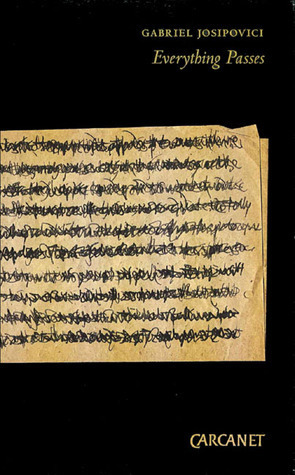
The cover of the book shows a page of handwriting and the handwriting is in layer after layer after layer so not one word in unrecognizable. That page is referred to near the end of the book.
The structure of paragraphs of this 60-page book is like this, taken from p. 27-28:
When she has done cleaning the house his daughter makes the tea.
She says — There’s no need to think about these things now.
— I’m not.
— Give it time, his daughter says.
— Time?
Oh, Dad! She says.
She brings the pot to the table. — You may find, she starts.
— Please, he says, holding up a hand.
She kisses him. — I’m going now, she says.
— You’re not going to have any tea?
— I can’t. I need to get back.
— Yes, he says.
— You’ll be all right?
— Yes.
— I’ll call in tomorrow. But ring if you need anything.
— Yes.
He hears her get her coat and leave.
He sits in the empty house.
🤔
That’s the whole book, written almost as if it’s a poem, but it’s not.
Luminaries that are referred to in this novella (there, I labeled it!) are Rabelais, Chaucer, Dante, Shakespeare, and Luther among others. And ‘Danae,’ a painting of a woman exposing one of her breasts, by Jan Grossaert (1478-1532) [https://www.wga.hu/html_m/g/gossart/0...].
The man at the center of the novella is Felix also called ‘Fee’ also called ‘dad’ (by his children). I took two pages of notes, trying to follow the characters and how they were related to one another. I can say by book’s end I did not understand all of it, but I was still satisfied. I am not sure anybody will fully understand what this author is writing…but I don’t mean that as a criticism. This guy is good! I have a ways to go to get through his oeuvre…he has written about 20 novels. He is a Professor Emeritus at the University of Sussex in the UK. The last novel he wrote was published in 2018 so I hope he is still writing. 😊 His works are published by Carcanet Press.
Reviews:
(if you are going to read this book, I would read this afterwards. It’s best to enjoy this book without knowing too much about stuff in the book: http://www.readysteadybook.com/BookRe...
https://pechorinsjournal.wordpress.co...
https://litlove.wordpress.com/2007/11...
The cover of the book shows a page of handwriting and the handwriting is in layer after layer after layer so not one word in unrecognizable. That page is referred to near the end of the book.
The structure of paragraphs of this 60-page book is like this, taken from p. 27-28:
When she has done cleaning the house his daughter makes the tea.
She says — There’s no need to think about these things now.
— I’m not.
— Give it time, his daughter says.
— Time?
Oh, Dad! She says.
She brings the pot to the table. — You may find, she starts.
— Please, he says, holding up a hand.
She kisses him. — I’m going now, she says.
— You’re not going to have any tea?
— I can’t. I need to get back.
— Yes, he says.
— You’ll be all right?
— Yes.
— I’ll call in tomorrow. But ring if you need anything.
— Yes.
He hears her get her coat and leave.
He sits in the empty house.
🤔
That’s the whole book, written almost as if it’s a poem, but it’s not.
Luminaries that are referred to in this novella (there, I labeled it!) are Rabelais, Chaucer, Dante, Shakespeare, and Luther among others. And ‘Danae,’ a painting of a woman exposing one of her breasts, by Jan Grossaert (1478-1532) [https://www.wga.hu/html_m/g/gossart/0...].
The man at the center of the novella is Felix also called ‘Fee’ also called ‘dad’ (by his children). I took two pages of notes, trying to follow the characters and how they were related to one another. I can say by book’s end I did not understand all of it, but I was still satisfied. I am not sure anybody will fully understand what this author is writing…but I don’t mean that as a criticism. This guy is good! I have a ways to go to get through his oeuvre…he has written about 20 novels. He is a Professor Emeritus at the University of Sussex in the UK. The last novel he wrote was published in 2018 so I hope he is still writing. 😊 His works are published by Carcanet Press.
Reviews:
(if you are going to read this book, I would read this afterwards. It’s best to enjoy this book without knowing too much about stuff in the book: http://www.readysteadybook.com/BookRe...
https://pechorinsjournal.wordpress.co...
https://litlove.wordpress.com/2007/11...

Read
May 27, 2026If you like white space
you might like this
Or if you like a book so thin like a bookmark
you can wedge it inside another book you’re reading.
“His face at the window.
Greyness. Silence.
The crack in the pane.
His face at the window.
Silence.
Or a book that feels like the collected stage directions of Samuel Beckett. But he’s not mentioned.
… And a voice says: Everything passes. The good and the bad.
The joy and the sorrow. Everything passes.
Back and forth it all goes and you don’t know where you are but it’s OK because Rabelais is discussed.
And Shakespeare because he wrote for an audience, and he could see them from the stage.
But what of Rabelais? He couldn’t see his audience. He had the printing press. He knew the disconnect between himself and the audience. Paper. Now we have streaming. We could be on a space station.
He wrote for other writers. And only they understood him. For his immediate readers, Rabelais gave them bawdiness. They seemed to like it. He had no peers, imagine that, being the only novelist in the world!. Novelists who read novelists came after he died. At least he knew they were out there somewhere, even if he passes, like everything does.
And it’s so short, I should read it again, it’s so thin, I have lost it somewhere inside another book I started reading, somewhere in the house.
And the cover looks like the Dead Sea Scrolls. Or like a palimpsest and so I wonder if that's relevant.
you might like this
Or if you like a book so thin like a bookmark
you can wedge it inside another book you’re reading.
“His face at the window.
Greyness. Silence.
The crack in the pane.
His face at the window.
Silence.
Or a book that feels like the collected stage directions of Samuel Beckett. But he’s not mentioned.
… And a voice says: Everything passes. The good and the bad.
The joy and the sorrow. Everything passes.
Back and forth it all goes and you don’t know where you are but it’s OK because Rabelais is discussed.
And Shakespeare because he wrote for an audience, and he could see them from the stage.
But what of Rabelais? He couldn’t see his audience. He had the printing press. He knew the disconnect between himself and the audience. Paper. Now we have streaming. We could be on a space station.
He wrote for other writers. And only they understood him. For his immediate readers, Rabelais gave them bawdiness. They seemed to like it. He had no peers, imagine that, being the only novelist in the world!. Novelists who read novelists came after he died. At least he knew they were out there somewhere, even if he passes, like everything does.
And it’s so short, I should read it again, it’s so thin, I have lost it somewhere inside another book I started reading, somewhere in the house.
And the cover looks like the Dead Sea Scrolls. Or like a palimpsest and so I wonder if that's relevant.

October 25, 2021
Well, that was strange... Josipovici subtitles this 'A Novel' but it's barely even a novella, more a cross between a poem and a short story. It's a joke on his part, I suspect. Repetition and bare description are used to great effect, as is the sparse dialogue (set out in that same idiosyncratic way he reports it in Hotel Andromeda).
What Josipovici gives us are a series of sketches in a sketchbook, the pages of which are mostly blank. It is up to us, to fill in the blanks. As with other works by this author, the reader receives the gift of space. And as so often with Josipovici, there's a conundrum at its heart. It's not quite clear what's going on.
Ostensibly, an old man has exiled himself to an empty apartment, there to mourn his second wife and to reflect upon a few key moments from his life. His son and daughter visit or call him. He wants nothing but to stand at the window, gazing out. This brief piece seems to be about estrangement, that of the central character from his first wife, his writing protégé, his son, his daughter... And then the doubt comes. Is this room the moment before his death, a place where he must choose to return to life or step through the doorway to join the woman he loves? I think I shall have to read it again though I shall probably remain none the wiser. And therein lies the beauty. I may also need a re-read to decide whether Everything Passes is slight but atmospheric or truly profound.
This is the fifth of Josipovici's fictions that I've read and so far he has maintained his record for producing unique works, each similar, after a fashion, and yet utterly different too. Quite a feat.
What Josipovici gives us are a series of sketches in a sketchbook, the pages of which are mostly blank. It is up to us, to fill in the blanks. As with other works by this author, the reader receives the gift of space. And as so often with Josipovici, there's a conundrum at its heart. It's not quite clear what's going on.
Ostensibly, an old man has exiled himself to an empty apartment, there to mourn his second wife and to reflect upon a few key moments from his life. His son and daughter visit or call him. He wants nothing but to stand at the window, gazing out. This brief piece seems to be about estrangement, that of the central character from his first wife, his writing protégé, his son, his daughter... And then the doubt comes. Is this room the moment before his death, a place where he must choose to return to life or step through the doorway to join the woman he loves? I think I shall have to read it again though I shall probably remain none the wiser. And therein lies the beauty. I may also need a re-read to decide whether Everything Passes is slight but atmospheric or truly profound.
This is the fifth of Josipovici's fictions that I've read and so far he has maintained his record for producing unique works, each similar, after a fashion, and yet utterly different too. Quite a feat.

September 26, 2013
This short prose work is a curious and haunting rumination on loss, the passing of time, the abandonment of family, and people who like to write Rabelais criticism. Making use of strangely effective repetitions, blank space, conspicuous absence of invading overarching narrator, tagless dialogue, the novel is richer upon re-reading (only two for me), and is another fine experiment from a stunning and under-read modernist master with a cool name pubbed by Carcanet, who are sometimes on-the-money.

January 4, 2019
Gabriel Josipovici writes short story/novellas, as stand alone works. It is impossible not to read this work a second time, immediately. Characters who are unknown to the reader do and say things that take us by surprise. It’s like meeting somebody for the first time at a social gathering. You give them the benefit of the doubt, and then doubts creep in as things are said and opinions expressed that take you back. Bereavement has been written about as often as love. Josipovici approaches the subject, as ever, with an economy of description and conflates the two sensations.
I’ve read a few Josipovici novellas recently, and he often focuses on a giant of history, of literature, and cajoles the reader to go discover more. In Everything Passes it’s Rabelais, described by father to daughter as the inventor of modern prose fiction. (Cervantes and Sterne get an honourable mention too).
I think this is a clever technique. I’m reading something ostensibly so simple, but something which is drawing on our author’s knowledge of, and homage to, the greats of literature.
There are other Josipovici staples in Everything Passes. The narrator is not especially nice, despite his bereavement. Men and women aren’t living happily ever after. It all conspires to keep the reader on edge.
Quite masterful
I’ve read a few Josipovici novellas recently, and he often focuses on a giant of history, of literature, and cajoles the reader to go discover more. In Everything Passes it’s Rabelais, described by father to daughter as the inventor of modern prose fiction. (Cervantes and Sterne get an honourable mention too).
I think this is a clever technique. I’m reading something ostensibly so simple, but something which is drawing on our author’s knowledge of, and homage to, the greats of literature.
There are other Josipovici staples in Everything Passes. The narrator is not especially nice, despite his bereavement. Men and women aren’t living happily ever after. It all conspires to keep the reader on edge.
Quite masterful
April 13, 2012
Easily one of the best books I've ever read, and a virtually unknown masterpiece. Josipovici is a genius, and this work, a miracle of languorous compression--read it and you'll see the oxymoron is no oxymoron--is absolutely unforgettable.

February 17, 2014
http://msarki.tumblr.com/post/7763926...
If I hadn't discovered the writer Ágota Kristof I would never have heard of this man. Gabriel Josipovici wrote an introduction to her short memoir titled The Illiterate and I was so impressed with his comments and his style that I thought he would be a good enough writer to take a chance on reading. It is astonishing to me the number of books Gabriel Josipovici has published, not to mention the many different genres he has been involved with including both long and short fiction, plays, essays, and literary criticism. It is even more astounding to me that he is not better read and known of more widely. I believe his personal focus has been zeroed in on his own writing rather than the marketing of his good name. I respect him for this and count him as a model of professional behavior for all serious artists no matter their choice of media and expression.
On first read this slender volume of sixty pages is at once recognized as being among the highest quality of literature. Poetic, dramatic, and certainly lyrical. It is written in a manner that even seems important. Moments of dagger-like clarity bristle within a sparseness almost Beckettian in form if not also in its ambiguities. But there is something about the narrative that reminded me also of the very best of Paul Auster. Nothing in the entire oeuvre of Paul Auster even comes close to this book except for one example titled Travels in the Scriptorium which was brilliant in its execution. Much of the same foreboding tone can be found in both of these works, but in total, Everything Passes is the far superior work.
I believe that serious readers somehow find their way into understanding a worthy text. Others of us need rather to be taught how to read and devour difficult, and perhaps ambiguous, material. My position as stated for reading literature is no different than it was during my long career regarding the use and appreciation of building materials. If the product looks good from a distance it should look even better the closer one gets face to face to it. Even a repeated and focused gaze should provide the observer with an even more aesthetic value attached to the object. If it does not, then do not buy it. Most materials do not pass this extreme test and it is a sorry fact that few people do the exercises necessary to even get to this understanding of aesthetic value in art of any kind.
On my second read, less than a day later, I indeed found the book to be richer and better understood than the first time. Names seemed to matter more to me and the characters emerged from the text with more meaning for me. I actually began to distinguish between the voices speaking. Most everything that was previously unclear to me became illuminated and the ambiguity lessened in large degrees the closer I examined the text. This type of literature is easily discounted for its brevity and lack of convention. I understand this phenomenon in a most personal way. This brevity and ambiguity is the basis of my own early work found especially in my first book titled Zimble Zamble Zumble. I would bet that anyone who spends an adequate amount of time with this poetry would come away carrying an attractive bundle of feeling for the text and an understanding based on what you brought of yourself to the page. It has been mentioned to me in the past by my editor that I did create entire worlds within the confines of these short poems, and for that reason he always wondered why I would ever want to change to writing a longer form of prose when I could already succeed with so much less. Needless to say, I am tooting my own horn here. But my early work is a perfect example in light of discussing the book, Everything Passes. After reading this novel multiple times now I find I am the better for it. The aesthetic value of this work will ultimately be judged by history, but it specifically needs, and has to start, with readers like me.
If I hadn't discovered the writer Ágota Kristof I would never have heard of this man. Gabriel Josipovici wrote an introduction to her short memoir titled The Illiterate and I was so impressed with his comments and his style that I thought he would be a good enough writer to take a chance on reading. It is astonishing to me the number of books Gabriel Josipovici has published, not to mention the many different genres he has been involved with including both long and short fiction, plays, essays, and literary criticism. It is even more astounding to me that he is not better read and known of more widely. I believe his personal focus has been zeroed in on his own writing rather than the marketing of his good name. I respect him for this and count him as a model of professional behavior for all serious artists no matter their choice of media and expression.
On first read this slender volume of sixty pages is at once recognized as being among the highest quality of literature. Poetic, dramatic, and certainly lyrical. It is written in a manner that even seems important. Moments of dagger-like clarity bristle within a sparseness almost Beckettian in form if not also in its ambiguities. But there is something about the narrative that reminded me also of the very best of Paul Auster. Nothing in the entire oeuvre of Paul Auster even comes close to this book except for one example titled Travels in the Scriptorium which was brilliant in its execution. Much of the same foreboding tone can be found in both of these works, but in total, Everything Passes is the far superior work.
I believe that serious readers somehow find their way into understanding a worthy text. Others of us need rather to be taught how to read and devour difficult, and perhaps ambiguous, material. My position as stated for reading literature is no different than it was during my long career regarding the use and appreciation of building materials. If the product looks good from a distance it should look even better the closer one gets face to face to it. Even a repeated and focused gaze should provide the observer with an even more aesthetic value attached to the object. If it does not, then do not buy it. Most materials do not pass this extreme test and it is a sorry fact that few people do the exercises necessary to even get to this understanding of aesthetic value in art of any kind.
On my second read, less than a day later, I indeed found the book to be richer and better understood than the first time. Names seemed to matter more to me and the characters emerged from the text with more meaning for me. I actually began to distinguish between the voices speaking. Most everything that was previously unclear to me became illuminated and the ambiguity lessened in large degrees the closer I examined the text. This type of literature is easily discounted for its brevity and lack of convention. I understand this phenomenon in a most personal way. This brevity and ambiguity is the basis of my own early work found especially in my first book titled Zimble Zamble Zumble. I would bet that anyone who spends an adequate amount of time with this poetry would come away carrying an attractive bundle of feeling for the text and an understanding based on what you brought of yourself to the page. It has been mentioned to me in the past by my editor that I did create entire worlds within the confines of these short poems, and for that reason he always wondered why I would ever want to change to writing a longer form of prose when I could already succeed with so much less. Needless to say, I am tooting my own horn here. But my early work is a perfect example in light of discussing the book, Everything Passes. After reading this novel multiple times now I find I am the better for it. The aesthetic value of this work will ultimately be judged by history, but it specifically needs, and has to start, with readers like me.

Read
April 9, 2021—Rabelais, he says, is the first author in history to find the idea of authority ridiculous.
She looks at him over her coffee-cup. —Ridiculous? she says.
—Of course, he says. For one thing he no longer felt he belonged to any tradition that could support or guide him. He could admire Virgil and Homer, but what had they to do with him? Homer was the bard of the community. He sang about the past and made it present to those who listened. Virgil, to the satisfaction of the Emperor Augustus, made himself the bard of the Roman Empire. He wove its myths about the past together in heart-stopping verse and so gave legitimacy to the colonization and subjugation of a large part of the peninsula. But Rabelais? If enough people bought his books he could make a living out of writing. But he was the spokesman of no one but himself. And that meant that his role was inherently absurd. No one had called him. Not God. Not the Muses. Not the monarch. Not the local community. He was alone in his room, scribbling away, and then these scribbles were transformed into print and read by thousands of people whom he'd never set eyes on and who'd never set eyes on him, people in all walks of life, reading him in the solitude of their rooms...
Apart from what this interesting piece says about Rabelais, I found myself thinking about writers today who may want to simply scribble away in their rooms and never set eyes on the people who eventually read their words but once they've published their first book, they no longer can. They soon discover they have to publicize their book themselves, give readings, give interviews, post constantly on their web pages or on Twitter or on Instagram, write blurbs for other writer's books, pander to publishers, to critics, to readers. They may have less freedom than Virgil!
I hope Josipovici manages to retain a measure of independence...
She looks at him over her coffee-cup. —Ridiculous? she says.
—Of course, he says. For one thing he no longer felt he belonged to any tradition that could support or guide him. He could admire Virgil and Homer, but what had they to do with him? Homer was the bard of the community. He sang about the past and made it present to those who listened. Virgil, to the satisfaction of the Emperor Augustus, made himself the bard of the Roman Empire. He wove its myths about the past together in heart-stopping verse and so gave legitimacy to the colonization and subjugation of a large part of the peninsula. But Rabelais? If enough people bought his books he could make a living out of writing. But he was the spokesman of no one but himself. And that meant that his role was inherently absurd. No one had called him. Not God. Not the Muses. Not the monarch. Not the local community. He was alone in his room, scribbling away, and then these scribbles were transformed into print and read by thousands of people whom he'd never set eyes on and who'd never set eyes on him, people in all walks of life, reading him in the solitude of their rooms...
Apart from what this interesting piece says about Rabelais, I found myself thinking about writers today who may want to simply scribble away in their rooms and never set eyes on the people who eventually read their words but once they've published their first book, they no longer can. They soon discover they have to publicize their book themselves, give readings, give interviews, post constantly on their web pages or on Twitter or on Instagram, write blurbs for other writer's books, pander to publishers, to critics, to readers. They may have less freedom than Virgil!
I hope Josipovici manages to retain a measure of independence...

December 25, 2016
This book is described as a novel on its title page—
Everything Passes
A Novel
—but at a mere sixty pages and with a lot of white space in between scenes (you can't really call them paragraphs in the traditional sense) this both looks and feels like a work of poetry. When it was handed to me as a gift (and, apparently, off my Amazon wish list although I'd completely forgotten putting it there or why I might've wanted to read the book) I assumed it was a book of poems; it certainly has that feel.
I've seen some of Beckett's later prose works marketed as novels when there've been barely enough words in them to call them short stories. The argument for doing so has all to do with density; these are compressed novels. If you're willing to accept that as a definition then this is what we have here, a novel stripped to the bone where every line counts.
It opens with, and revolves around, the following scene which we keep returning to:
A room.
He stands at the window.
And a voice says: Everything passes. The
good and the bad. The joy and the sorrow.
Everything passes.
Very Beckettian. Reminiscent of the woman in Rockaby or the man in A Piece of Monologue and so often in Beckett's later plays there's a voice that doesn't belong to the man or woman we're watching on the stage; Eh Joe and Footfalls are good examples.
A man is standing at a window remembering. It seems like he's grieving. His wife perhaps? Occasionally he's interrupted by the phone (which he's never quick to answer) or when one of his two children visit to see how he is. Predictably his daughter finds herself doing housework when she visits; his son is more concerned with trying to get his dad to get over whatever's happened without coming across as unsympathetic to what the man's going though.
The text is basically linear but that's about the only way in which our author is charitable. It's a long time, for example, before we even learn the man's name when his wife calls him 'Fee' which we learn later is short for Felix. Paul Griffiths, in his review for Ready Steady Book breaks the story into the following sections:
1-7: the room
8-24: a mildly erotic, probably teenage encounter in a garden, later understood to have involved the protagonist and a cousin, Lotte, who was to become his second wife
25-34: dialogues in which the protagonist, evidently a literary scholar and a writer himself, speaks of Rabelais as the inventor of prose fiction and the first author writing for an audience of strangers
35-47: the protagonist’s loss of his first wife, Sally, to a favourite pupil, Brian
48-57: Lotte and the protagonist get together again
58-80: the protagonist describes a near-death experience to George, a colleague visiting him
It helps a little but—and in this respect he's very like Beckett—this is not a book you read for the story. This is an emotional journey which is especially interesting because the protagonist is clearly an intellectual and not an especially likeable one at that. Has his intellect let him down or even defeated him perhaps? Is his vigil at the window some kind of penance?
Perhaps Josipovici believes he's included all necessary clues but, again, as with Beckett, there's a feeling he's been niggardly. There's an interesting interview with Vicoria Best for Numéro Cinq which sheds some light on the book's origins. In an essay on 'The School of Giorgione' Walter Pater's asserted that "All art constantly aspires towards the condition of music," not a statement you'd find Beckett arguing against and the interview reveals another similarity between Josipovici's writing and Beckett's, its musicality.
This is a book that needs to be reread. If only more books were as short to make rereading less of a consideration.
Everything Passes
A Novel
—but at a mere sixty pages and with a lot of white space in between scenes (you can't really call them paragraphs in the traditional sense) this both looks and feels like a work of poetry. When it was handed to me as a gift (and, apparently, off my Amazon wish list although I'd completely forgotten putting it there or why I might've wanted to read the book) I assumed it was a book of poems; it certainly has that feel.
I've seen some of Beckett's later prose works marketed as novels when there've been barely enough words in them to call them short stories. The argument for doing so has all to do with density; these are compressed novels. If you're willing to accept that as a definition then this is what we have here, a novel stripped to the bone where every line counts.
It opens with, and revolves around, the following scene which we keep returning to:
A room.
He stands at the window.
And a voice says: Everything passes. The
good and the bad. The joy and the sorrow.
Everything passes.
Very Beckettian. Reminiscent of the woman in Rockaby or the man in A Piece of Monologue and so often in Beckett's later plays there's a voice that doesn't belong to the man or woman we're watching on the stage; Eh Joe and Footfalls are good examples.
A man is standing at a window remembering. It seems like he's grieving. His wife perhaps? Occasionally he's interrupted by the phone (which he's never quick to answer) or when one of his two children visit to see how he is. Predictably his daughter finds herself doing housework when she visits; his son is more concerned with trying to get his dad to get over whatever's happened without coming across as unsympathetic to what the man's going though.
The text is basically linear but that's about the only way in which our author is charitable. It's a long time, for example, before we even learn the man's name when his wife calls him 'Fee' which we learn later is short for Felix. Paul Griffiths, in his review for Ready Steady Book breaks the story into the following sections:
1-7: the room
8-24: a mildly erotic, probably teenage encounter in a garden, later understood to have involved the protagonist and a cousin, Lotte, who was to become his second wife
25-34: dialogues in which the protagonist, evidently a literary scholar and a writer himself, speaks of Rabelais as the inventor of prose fiction and the first author writing for an audience of strangers
35-47: the protagonist’s loss of his first wife, Sally, to a favourite pupil, Brian
48-57: Lotte and the protagonist get together again
58-80: the protagonist describes a near-death experience to George, a colleague visiting him
It helps a little but—and in this respect he's very like Beckett—this is not a book you read for the story. This is an emotional journey which is especially interesting because the protagonist is clearly an intellectual and not an especially likeable one at that. Has his intellect let him down or even defeated him perhaps? Is his vigil at the window some kind of penance?
Perhaps Josipovici believes he's included all necessary clues but, again, as with Beckett, there's a feeling he's been niggardly. There's an interesting interview with Vicoria Best for Numéro Cinq which sheds some light on the book's origins. In an essay on 'The School of Giorgione' Walter Pater's asserted that "All art constantly aspires towards the condition of music," not a statement you'd find Beckett arguing against and the interview reveals another similarity between Josipovici's writing and Beckett's, its musicality.
This is a book that needs to be reread. If only more books were as short to make rereading less of a consideration.

September 10, 2020
c.f. The Years
— Like water, he says to George. Yes. Like water.
— I don't know how long I remained, bent over the page, he says. But it was a long time. A long time. I wondered if I would be able to hold out. If my fingers would be able to stand it. But of course they did. I did. Till it was done.
— I stopped, he says. I closed my eyes. I was exhausted. As if I had finally done what I had been put in the world to do.
— I bent my shoulders, he says to George, who nods and strokes his moustache. I bent my shoulders and let my arms hang down. I stayed like that for a long time. A long long time. And then I opened my eyes and began to look over what I had written.
— The page was black, he says. It was black with marks. Thick with them. Nothing was legible. And the page underneath was white. With the traces of writing where I had pressed on the page above. And the traces gradually disappeared as I turned one page after the other, until there was nothing but whiteness. Pure whiteness. Page after page.
— I hadn't turned the page, he says. Not once. All the time I was writing. I hadn't turned the page.
[53]
— I could see myself in the empty room, he says to George, who nods and strokes his moustache. I could see myself at the window.
— Sometimes, he says to George, my feet echoed on the bare boards. Sometimes there was only silence. Greyness and silence. Inside the room and out. Greyness and silence.
— Sometimes, he says, I could hear the cries of children in the playground below, and sometimes I could hear the distant hum of city traffic. But most of the time there was just greyness and silence, greyness and silence, and my face at the window, looking out.
[57]
December 19, 2008
Outstanding. One of the best books I've ever read.

Read
April 24, 2012A short novel that has generated much response among serious readers, as seen about halfway down the page here,
http://gabrieljosipovici.org/news.shtml
and rightly so. A short and substantial work.
http://gabrieljosipovici.org/news.shtml
and rightly so. A short and substantial work.

February 26, 2016
Josipovici accomplishes in 60 pages what some writers fail to do in 300: tell an engaging story by leaving just the right amount untold.

July 29, 2026
A short novel appearing in sparse form as if it were prose poetry. Josipovici is a highly regarding novelist and literary scholar with a specific interest in modernism.
The story unfolds around an emotionally withholding literary scholar named Felix as he navigates his relationships to his son and daughter with intermittent flashbacks to when he would spend time in a children’s playground with them. When his son asks him why their mother had left when they were young children Felix simply says, “perhaps she didn’t like us”.
This contriteness is repeated in most of other dealings with young authors seeking his guidance and approval and women he interacts with including what appears to be his second wife.
We often see Felix staring outside a cracked windowpane overlooking a garden and playground:
"A man stands by a window. A voice says: Everything passes. The good and the bad. The joy and the sorrow. Everything passes."
When a younger writer, Brian, shows him his work Felix does not like his trying to be "elegant" and urges him to be more daring and face "fear" in himself and his readers.
Felix rhapsodizes on Rabelais being the first modern writer, describing him as "alone in his room scribbling away."
Later in complimenting another piece of Brian’s writing:
"I like it. I like the fact that it doesn’t so much begin as simply appear, not so much end as disappear. I like that very much."
When his second wife discusses leaving him for the younger writer she "loves" and all he can muster is cynicism:
"In love? Do you think you’re in a film or something."
Near the end, Felix experiences a euphoric moment in which he starts writing effortlessly and shares the moment with a friend. I will not describe this any further other than to say it turns to be a cruel joke, as if this is what he deserves for being aloof and highly opinionated.
I found this very short novel to be fascinating. Josipovici is a unique writer who brings a sense of irony along with his intellectual powers of literary criticism.
Two other of his works I have enjoyed were his, Golberg Variations, and, What Ever Happened to Modernism?
The story unfolds around an emotionally withholding literary scholar named Felix as he navigates his relationships to his son and daughter with intermittent flashbacks to when he would spend time in a children’s playground with them. When his son asks him why their mother had left when they were young children Felix simply says, “perhaps she didn’t like us”.
This contriteness is repeated in most of other dealings with young authors seeking his guidance and approval and women he interacts with including what appears to be his second wife.
We often see Felix staring outside a cracked windowpane overlooking a garden and playground:
"A man stands by a window. A voice says: Everything passes. The good and the bad. The joy and the sorrow. Everything passes."
When a younger writer, Brian, shows him his work Felix does not like his trying to be "elegant" and urges him to be more daring and face "fear" in himself and his readers.
Felix rhapsodizes on Rabelais being the first modern writer, describing him as "alone in his room scribbling away."
Later in complimenting another piece of Brian’s writing:
"I like it. I like the fact that it doesn’t so much begin as simply appear, not so much end as disappear. I like that very much."
When his second wife discusses leaving him for the younger writer she "loves" and all he can muster is cynicism:
"In love? Do you think you’re in a film or something."
Near the end, Felix experiences a euphoric moment in which he starts writing effortlessly and shares the moment with a friend. I will not describe this any further other than to say it turns to be a cruel joke, as if this is what he deserves for being aloof and highly opinionated.
I found this very short novel to be fascinating. Josipovici is a unique writer who brings a sense of irony along with his intellectual powers of literary criticism.
Two other of his works I have enjoyed were his, Golberg Variations, and, What Ever Happened to Modernism?

May 30, 2024
This is a wisp of a book, 58 pages, a short-story really, when you consider that a dozen or 15 times this passage like poetry appears (sometimes with minor variations):
His face at the window.
Greyness. Silence.
The crack in the pane
His face at the window.
Silence.
An older man is depressed, ill, dying. He reviews his life and focuses on the death of his wife. A son and daughter come to visit and tend to him. He doesn't want to be bothered.
We learn he was an author and a sharp critic - too sharp according to his deceased wife - to a young man who used to bring writing to him for his critique.
In the process he tells us that Rabelais was the first modern writer who knew that he was not writing for an in-person audience.
There's not much here. The blurb tells us “…three characters move through their increasingly haunting lives, they discover how to piece together their past and recreate connections.” The story is too short for me to see that develop. I much prefer another short book I read by him: The Cemetery in Barnes
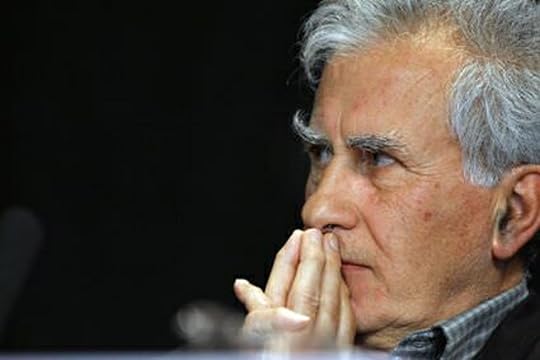
The author initially led a very international life. He was born in Nice in 1940 and, because he had some Jewish ancestry, hid out during the war with his mother in a small village in the French Alps. Then he went to school in Cairo and then to college in England where he settled. He became a professor and writes in English. Cemetery is probably his best known and highest-rated book, although he has published about a dozen novels (including Goldberg: Variations) as well as academic books and collections of essays.
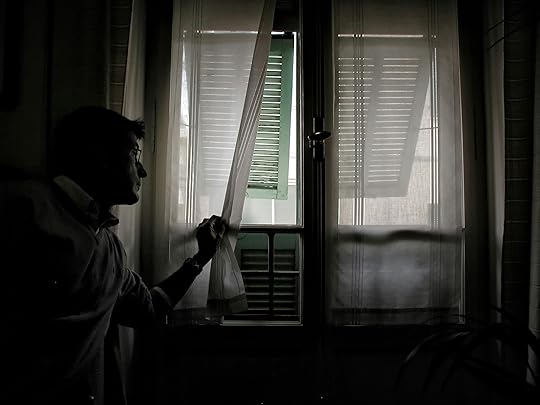
Top photo by Marco Bianchetti on unsplash.com
The author from ndbooks.com
His face at the window.
Greyness. Silence.
The crack in the pane
His face at the window.
Silence.
An older man is depressed, ill, dying. He reviews his life and focuses on the death of his wife. A son and daughter come to visit and tend to him. He doesn't want to be bothered.
We learn he was an author and a sharp critic - too sharp according to his deceased wife - to a young man who used to bring writing to him for his critique.
In the process he tells us that Rabelais was the first modern writer who knew that he was not writing for an in-person audience.
There's not much here. The blurb tells us “…three characters move through their increasingly haunting lives, they discover how to piece together their past and recreate connections.” The story is too short for me to see that develop. I much prefer another short book I read by him: The Cemetery in Barnes
The author initially led a very international life. He was born in Nice in 1940 and, because he had some Jewish ancestry, hid out during the war with his mother in a small village in the French Alps. Then he went to school in Cairo and then to college in England where he settled. He became a professor and writes in English. Cemetery is probably his best known and highest-rated book, although he has published about a dozen novels (including Goldberg: Variations) as well as academic books and collections of essays.
Top photo by Marco Bianchetti on unsplash.com
The author from ndbooks.com
February 10, 2019
It was beyond me.

December 30, 2016
An old man stands in a room, staring out the window, listening to the sounds of children in a playground below. Incomplete snippets of conversations – shuffled into chronological disorder – appear on the pages of the slim book I am reading. Conversations between the man – Felix – and his two wives, between Felix and his son and his daughter at various stages in their lives. The conversations with the second wife and his friends often drift into the subject of literature. Felix listens to Beethoven’s String Quartet in A minor, opus 132 and stares out the window some more.
Gabriel Josipovici’s Everything Passes (Carcanet, 2006) is a rich and suggestive novelette that is only 60 pages long including oodles of white space. It reads like poetry with every sentence resonating with possibilities. During the brief time that it took for me to read and reread the book, I realized that Josipovici had cunningly fractured the reader’s viewpoint so that we observe the characters and the sequence of events from multiple perspectives simultaneously – as if looking through the compound eye of an insect. Everything in Everything Passes takes place in the present tense, so it is ambiguous whether Josipovici is deliberately presenting the fragments to us in random order or whether we are witnessing the order in which Felix is recalling memories. Is the reader inside Felix’s mind or an observer watching the observer as he stares out the window? Or both.
Felix has one great and final obsession – to write down his theory on how literature became modern (a topic Josipovici considers at length in his 2010 book What Ever Happened to Modernism?). But the writing won’t come.
There are two main events in Everything Passes, but it is not clear which happens first. Felix has a heart attack and is saved by an injection into this heart, a “red hot needle.” And one day the writing suddenly starts to flow.
Depending on the reader’s predilection, the outcome, which I won’t reveal, is either a moment of heartbreaking sadness or of joyous release. Probably, it’s both.
Read the full review at my blog: https://sebald.wordpress.com/2017/01/...
Share this:
Gabriel Josipovici’s Everything Passes (Carcanet, 2006) is a rich and suggestive novelette that is only 60 pages long including oodles of white space. It reads like poetry with every sentence resonating with possibilities. During the brief time that it took for me to read and reread the book, I realized that Josipovici had cunningly fractured the reader’s viewpoint so that we observe the characters and the sequence of events from multiple perspectives simultaneously – as if looking through the compound eye of an insect. Everything in Everything Passes takes place in the present tense, so it is ambiguous whether Josipovici is deliberately presenting the fragments to us in random order or whether we are witnessing the order in which Felix is recalling memories. Is the reader inside Felix’s mind or an observer watching the observer as he stares out the window? Or both.
Felix has one great and final obsession – to write down his theory on how literature became modern (a topic Josipovici considers at length in his 2010 book What Ever Happened to Modernism?). But the writing won’t come.
There are two main events in Everything Passes, but it is not clear which happens first. Felix has a heart attack and is saved by an injection into this heart, a “red hot needle.” And one day the writing suddenly starts to flow.
Depending on the reader’s predilection, the outcome, which I won’t reveal, is either a moment of heartbreaking sadness or of joyous release. Probably, it’s both.
Read the full review at my blog: https://sebald.wordpress.com/2017/01/...
Share this:

August 6, 2023
another disappeared review
October 12, 2012
A beautiful example of minimalist writing. He creates father-son relationships and family life in 300 words... The book was set on my creative writing MFA, it's clever and I'm sure I'll examine some of the scenes and use the techniques in my own writing. However, this one is for academic writers only. I read it a week ago and I can't remember any of it. I found it utterly unmemorable, somewhat boring and no fun to read. Let's put it this way, there's a reason 50 Shades of Grey has shifted a lot more copies.
February 22, 2015
3rd 9\8/19
4th 9/18/25
4th 9/18/25


April 27, 2008
Somehow not even as good as Alex Garland's The Coma.
Displaying 1 - 23 of 23 reviews