

What do you think?

In mezzo scorre il fiume
Ci sono rari libri che sembrano fatti di niente e alla fine dei quali ci si trova a navigare nel tutto e precisamente su un fiume. «Alla fine tutte le cose si fondono in una sola, e un fiume la attraversa»: così leggiamo nelle ultime righe di questo romanzo – e in quel momento la frase ci pare perfettamente chiara. Ma come ci si arriva? Ascoltando la storia di due fratelli del Montana che hanno la passione della pesca a mosca in luoghi magnifici e deserti. Nulla di più elementare, si direbbe. Eppure, i due fratelli erano cresciuti nell’idea che niente nella vita fosse altrettanto arduo, misterioso e solenne: «Nella nostra famiglia non c’era una chiara linea di demarcazione tra religione e pesca a mosca». E a poco a poco scopriamo come la pesca a mosca abbia la peculiarità di attirare le più strane complicazioni, che coinvolgono birra, cazzotti, sfide virili, memorabili zie presbiteriane, una pellerossa dai capelli lucenti, una avventuriera dalle natiche equamente tatuate con le lettere LOVE, un vecchio predicatore (il padre) che legge il Vangelo in greco lungo il fiume e dice poche parole che vanno lontano, come queste: «Per mio padre, tutte le cose buone – dalle trote alla salute eterna – derivavano dalla grazia, e la grazia dall’arte, e l’arte non è una cosa facile». Mentre la tensione che regge il tutto è data dal rapporto fra due fratelli, i due pescatori, che si studiano in ogni dettaglio, si amano – e non si capiscono: sino a un lacerante finale, che rivela come siano «proprio le persone con cui viviamo, che amiamo e che dovremmo conoscere meglio, a eluderci». Per raccontare queste storie occorreva soprattutto un certo tono – asciutto, laconico, senza inflessioni, che ci fa pensare subito a un film di John Ford o a una lirica di Robert Frost tradotti in prosa. Così, da una materia che è insieme lieve e tragica, è nato un «fosco idillio americano, di cui la lingua può andare fiera» (Robert M. Adams). In mezzo scorre il fiume è apparso per la prima volta nel 1976.
153 pages, Paperback
First published May 1, 1976
About the author
Norman Maclean
45 books431 followersLibrarian Note: There is more than one author in the GoodReads database with this name. See this thread for more information.
Born in Clarinda, Iowa, on December 23, 1902, Maclean was the son of Clara Davidson (1873-1952) and the Rev. John Maclean (1862-1941), a Scottish Presbyterian minister, who managed much of the education of the young Norman and his brother Paul (1906-1938) until 1913. The family relocated to Missoula, Montana in 1909. The following years were a considerable influence on and inspiration to his writings, appearing prominently in the short story The Woods, Books, and Truant Officers (1977), and semi-autobiographical novella A River Runs Through It (1976).
Too young to enlist in the military during World War I, Maclean worked in logging camps and for the United States Forest Service in what is now the Bitterroot National Forest of northwestern Montana. The novella USFS 1919: The Ranger, the Cook, and a Hole in the Sky and the story "Black Ghost" in Young Men and Fire (1992) are semi-fictionalized accounts of these experiences.
Maclean attended Dartmouth College, where he served as editor-in-chief of the humor magazine the Dartmouth Jack-O-Lantern; the editor-in-chief to follow him was Theodor Geisel, better known as Dr. Seuss. He was also a member of the Sphinx (senior society) and Beta Theta Pi. He received his Bachelor of Arts in 1924, and chose to remain in Hanover, New Hampshire, and serve as an instructor until 1926—a time he recalled in "This Quarter I Am Taking McKeon: A Few Remarks on the Art of Teaching." He began graduate studies in English at the University of Chicago in 1928. Three years later he was hired as a professor at University of Chicago, where he received three Quantrell Awards for Excellence in Undergraduate Teaching. On 24 September 1931 Maclean married Jessie Burns (died 1968), a red-headed Scots-Irish woman from Wolf Creek, Montana. They later had two children: a daughter Jean (born in 1942), now a lawyer; and a son, John (born in 1943), now a journalist and author of Fire on the Mountain: The True Story of the South Canyon Fire (1999), and two other books, Fire & Ashes (2003) and The Thirtymile Fire: A Chronicle of Bravery and Betrayal (2007).
In 1940, Maclean earned his doctorate from the University of Chicago where during World War II he declined a commission in Naval intelligence to serve as Dean of Students. During the war he also served as Director of the Institute on Military Studies, and co-authored Manual of Instruction in Military Maps and Aerial Photographs. At the University of Chicago, Maclean taught Shakespeare and the Romantic poets, and he produced two scholarly articles, "From Action to Image: Theories of the Lyric in the Eighteenth Century" and "Episode, Scene, Speech, and Word: The Madness of Lear." (The latter essay elaborates a theory of tragedy that Maclean would revisit in his later work; the essay is available here.) From approximately 1959 to 1963, Maclean worked on a book about George Armstrong Custer and the Battle of the Little Big Horn that he never completed, but from which excerpts were recently published. During his last decade on the Chicago faculty, Maclean held an endowed chair as William Rainey Harper Professor of English. After his retirement in 1973, he began, as his children Jean and John had often encouraged him, to write down the stories he liked to tell. His most acclaimed story, A River Runs Through It and Other Stories was published in 1976, the first work of original fiction published by the University of Chicago Press. This title was nominated by a selection committee to receive the Pulitzer Prize in Letters in 1977, but the full committee ignored the nomination and did not award a Pulitzer in that category for the year. A River Runs Through It was adapted into a motion picture directed by Robert Redford
Born in Clarinda, Iowa, on December 23, 1902, Maclean was the son of Clara Davidson (1873-1952) and the Rev. John Maclean (1862-1941), a Scottish Presbyterian minister, who managed much of the education of the young Norman and his brother Paul (1906-1938) until 1913. The family relocated to Missoula, Montana in 1909. The following years were a considerable influence on and inspiration to his writings, appearing prominently in the short story The Woods, Books, and Truant Officers (1977), and semi-autobiographical novella A River Runs Through It (1976).
Too young to enlist in the military during World War I, Maclean worked in logging camps and for the United States Forest Service in what is now the Bitterroot National Forest of northwestern Montana. The novella USFS 1919: The Ranger, the Cook, and a Hole in the Sky and the story "Black Ghost" in Young Men and Fire (1992) are semi-fictionalized accounts of these experiences.
Maclean attended Dartmouth College, where he served as editor-in-chief of the humor magazine the Dartmouth Jack-O-Lantern; the editor-in-chief to follow him was Theodor Geisel, better known as Dr. Seuss. He was also a member of the Sphinx (senior society) and Beta Theta Pi. He received his Bachelor of Arts in 1924, and chose to remain in Hanover, New Hampshire, and serve as an instructor until 1926—a time he recalled in "This Quarter I Am Taking McKeon: A Few Remarks on the Art of Teaching." He began graduate studies in English at the University of Chicago in 1928. Three years later he was hired as a professor at University of Chicago, where he received three Quantrell Awards for Excellence in Undergraduate Teaching. On 24 September 1931 Maclean married Jessie Burns (died 1968), a red-headed Scots-Irish woman from Wolf Creek, Montana. They later had two children: a daughter Jean (born in 1942), now a lawyer; and a son, John (born in 1943), now a journalist and author of Fire on the Mountain: The True Story of the South Canyon Fire (1999), and two other books, Fire & Ashes (2003) and The Thirtymile Fire: A Chronicle of Bravery and Betrayal (2007).
In 1940, Maclean earned his doctorate from the University of Chicago where during World War II he declined a commission in Naval intelligence to serve as Dean of Students. During the war he also served as Director of the Institute on Military Studies, and co-authored Manual of Instruction in Military Maps and Aerial Photographs. At the University of Chicago, Maclean taught Shakespeare and the Romantic poets, and he produced two scholarly articles, "From Action to Image: Theories of the Lyric in the Eighteenth Century" and "Episode, Scene, Speech, and Word: The Madness of Lear." (The latter essay elaborates a theory of tragedy that Maclean would revisit in his later work; the essay is available here.) From approximately 1959 to 1963, Maclean worked on a book about George Armstrong Custer and the Battle of the Little Big Horn that he never completed, but from which excerpts were recently published. During his last decade on the Chicago faculty, Maclean held an endowed chair as William Rainey Harper Professor of English. After his retirement in 1973, he began, as his children Jean and John had often encouraged him, to write down the stories he liked to tell. His most acclaimed story, A River Runs Through It and Other Stories was published in 1976, the first work of original fiction published by the University of Chicago Press. This title was nominated by a selection committee to receive the Pulitzer Prize in Letters in 1977, but the full committee ignored the nomination and did not award a Pulitzer in that category for the year. A River Runs Through It was adapted into a motion picture directed by Robert Redford
Ratings & Reviews
Friends & Following
Create a free account to discover what your friends think of this book!
Community Reviews
Displaying 1 - 30 of 1,165 reviews

November 3, 2020
Reading Road Trip 2020
Current location: Montana
This is my 700th review for Goodreads.
(This one's for you, Dad).
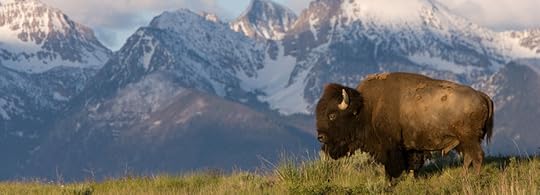
My father was never much of a traveler, so it was a big deal when we convinced him one year to fly out west to our home in Colorado and then drive north with us to visit Yellowstone National Park.
Dad was a fisherman. Not a fly fisherman, but the kind that “fish[ed] with worms” and bait. He was a man who loved fishing and who always appreciated the great outdoors. He was the perfect candidate for this particular trip.
He loved it, loved almost every moment of it, as far as I could tell. It was as if he couldn't stop being startled by Yellowstone, by its crazy and almost supernatural beauty, and the whole trip he was quieter than usual, murmuring his appreciation and surprise.
As we drove out of the north end of the Park, leaving Wyoming behind and entering Montana, we were greeted with a sudden burst of white and blue that was so awe-inspiring, my dad, who had a rich baritone voice like Johnny Cash, declared from the front passenger seat of the car, “Well, my God. . .”
Those of you who have been to Montana will understand: “Well, my God. . .” Within minutes of entering the state, you're pulling on your fleece and saying corny shit like, “This is God's country.” Or, “This is big sky country.” You can't stop staring. It's a wonder you don't crash your car.
It is no place for small fish or small fisherman.
Several famous stories have been set in this stunning place, the best, of course, being Larry McMurtry's Lonesome Dove (there is no point in arguing this with me, ever). And, keep in mind that Thomas Savage's The Power of the Dog is not to be ignored, either.
This short novel, A RIVER RUNS THROUGH IT, is quite possibly the most famous one for inspiring a film by the same name, that highlights the beauty that is Montana.
And as a story it is . . . oh, so inspiring, too.
I felt like the chatter and bubble and sparkle of the river that runs through this story filled every one of my senses.
Though this is a novel about fly fishing (and I do mean a novel about fly fishing), it is so much else, too.
It is a story about family, more specifically about two very different brothers who love each other and love fly fishing, but don't quite rely on each other in their time of need.
It turns out, “you can love completely without complete understanding,” and from the foreshadowing throughout this story you are aware that it is going to involve a painful loss at some point.
Life always does, doesn't it?
There were tears for me here, especially since last Friday was the sixth anniversary of my father's passing, but, to conjure my dad with this read was such a gift. I felt like he was reading the book right over my shoulder.
Old fishermen never really die anyway, do they?
Current location: Montana
This is my 700th review for Goodreads.
(This one's for you, Dad).
My father was never much of a traveler, so it was a big deal when we convinced him one year to fly out west to our home in Colorado and then drive north with us to visit Yellowstone National Park.
Dad was a fisherman. Not a fly fisherman, but the kind that “fish[ed] with worms” and bait. He was a man who loved fishing and who always appreciated the great outdoors. He was the perfect candidate for this particular trip.
He loved it, loved almost every moment of it, as far as I could tell. It was as if he couldn't stop being startled by Yellowstone, by its crazy and almost supernatural beauty, and the whole trip he was quieter than usual, murmuring his appreciation and surprise.
As we drove out of the north end of the Park, leaving Wyoming behind and entering Montana, we were greeted with a sudden burst of white and blue that was so awe-inspiring, my dad, who had a rich baritone voice like Johnny Cash, declared from the front passenger seat of the car, “Well, my God. . .”
Those of you who have been to Montana will understand: “Well, my God. . .” Within minutes of entering the state, you're pulling on your fleece and saying corny shit like, “This is God's country.” Or, “This is big sky country.” You can't stop staring. It's a wonder you don't crash your car.
It is no place for small fish or small fisherman.
Several famous stories have been set in this stunning place, the best, of course, being Larry McMurtry's Lonesome Dove (there is no point in arguing this with me, ever). And, keep in mind that Thomas Savage's The Power of the Dog is not to be ignored, either.
This short novel, A RIVER RUNS THROUGH IT, is quite possibly the most famous one for inspiring a film by the same name, that highlights the beauty that is Montana.
And as a story it is . . . oh, so inspiring, too.
I felt like the chatter and bubble and sparkle of the river that runs through this story filled every one of my senses.
Though this is a novel about fly fishing (and I do mean a novel about fly fishing), it is so much else, too.
It is a story about family, more specifically about two very different brothers who love each other and love fly fishing, but don't quite rely on each other in their time of need.
It turns out, “you can love completely without complete understanding,” and from the foreshadowing throughout this story you are aware that it is going to involve a painful loss at some point.
Life always does, doesn't it?
There were tears for me here, especially since last Friday was the sixth anniversary of my father's passing, but, to conjure my dad with this read was such a gift. I felt like he was reading the book right over my shoulder.
Old fishermen never really die anyway, do they?

May 18, 2011
My younger brother and I had a conversation growing up that went something like this:
Him: “I can’t wait to get out of here. I’m never coming back when I leave. What about you?”
Here I would always put on the most innocent of grins and reply: “Oh, I’ll never leave South Dakota, brother. It needs me here, like I need it.”
At that we would both start laughing because he knew I had just done a poor impression of Norman talking to his own brother, Paul, the mysterious brother who has wanderlust and dark secrets.
Time has passed for both my brother and I; he has been in two wars, I remained in South Dakota and started teaching at one of the colleges. Occasionally, he’ll reference this conversation on the phone but his voice belies the fact that he misses what he left. I think that is the point of A RIVER RUNS THROUGH IT. We are all destined to be some place. Some of us will try to create this place. Some of us will try to run from that place. But no matter that we do, that place will always call to us. Haunt us.
This short novel, novella really, is about family and fly-fishing and religion, three mainstays of South Dakota. It was easy to transplant myself within the story, as I grew up with many of the same experiences that the Maclean boys did, albeit a bit different considering age differences of those brothers to my brother and me. I romped through woods with my fly-reel, looking for a perfect place to not only fish, for fishing was really a secondary prize, but also to seek a silence that is only offered in the most remote of locales. Perhaps my sentimentality about ths book has taken me captive with age and time. But that is okay.
Boss, if you’re reading this, I miss you. Always remember that I’ll be here. Waiting. Thinking. Hoping for your arrival.
HIGHEST POSSIBLE RECOMMENDATION
Him: “I can’t wait to get out of here. I’m never coming back when I leave. What about you?”
Here I would always put on the most innocent of grins and reply: “Oh, I’ll never leave South Dakota, brother. It needs me here, like I need it.”
At that we would both start laughing because he knew I had just done a poor impression of Norman talking to his own brother, Paul, the mysterious brother who has wanderlust and dark secrets.
Time has passed for both my brother and I; he has been in two wars, I remained in South Dakota and started teaching at one of the colleges. Occasionally, he’ll reference this conversation on the phone but his voice belies the fact that he misses what he left. I think that is the point of A RIVER RUNS THROUGH IT. We are all destined to be some place. Some of us will try to create this place. Some of us will try to run from that place. But no matter that we do, that place will always call to us. Haunt us.
This short novel, novella really, is about family and fly-fishing and religion, three mainstays of South Dakota. It was easy to transplant myself within the story, as I grew up with many of the same experiences that the Maclean boys did, albeit a bit different considering age differences of those brothers to my brother and me. I romped through woods with my fly-reel, looking for a perfect place to not only fish, for fishing was really a secondary prize, but also to seek a silence that is only offered in the most remote of locales. Perhaps my sentimentality about ths book has taken me captive with age and time. But that is okay.
Boss, if you’re reading this, I miss you. Always remember that I’ll be here. Waiting. Thinking. Hoping for your arrival.
HIGHEST POSSIBLE RECOMMENDATION

September 2, 2019
Written in 1976, Norman Maclean’s
A River Runs Through It
feels timeless, in the best possible way. There’s something so soothing about being in and among nature, without the noise or hustle of deadlines, and losing yourself in those moments where you can feel at one with something larger, more profound than the everyday-ness of life that we get caught up in.
”In our family, there was no clear line between religion and fly fishing.
Religion is a part of this story, as the father is a Presbyterian minister, but it is subdued, as is the father - a quietly contemplative man not prone to the extreme, or nonsense. But the real religion is fishing to the two brothers, Norman and Paul; to their father it is where he revives himself, drawing on ideas to share with his congregation.
”My father was very sure about certain matters pertaining to the universe. To him, all good things – trout as well as eternal salvation – come by grace and grace comes by art and art does not come easy.
“So my brother and I learned to cast Presbyterian-style, on a metronome.”
I’ve wanted to read this since I saw the movie whenever it first came out in whatever format it was then – probably VHS tapes. I think it took me at least three times to watch it all the way through, between work and traveling for work, I was worn out. But then, I watched it all the way through, and the first thing I remember saying to my kids was along the lines of: pack your bags, we’re moving to Montana.
”The canyon was glorified by rhythms and colors.”
Generally, I prefer to read the book before seeing the movie, but I had never even heard of the movie, let alone that it was a book before then. What I remember most at the time was thinking how much that “kid” who played Paul (Brad Pitt) looked so much like a younger version of Robert Redford.
All of the charm of the movie is inside these pages, and all of the charm of this book is inside the movie. I can’t think of another book turned into a movie that I can say that about – still, I love being able to pause, to highlight, to re-read sections of a page over and over until it becomes a part of me.
”Then in the Arctic half-light of the canyon, all existence fades to a being with my soul and memories and the sounds of the Big Blackfoot River and a four-count rhythm and the hope that a fish will rise.
“ Eventually, all things merge into one, and a river runs through it. The river was cut by the world’s great flood and runs over rocks from the basement of time. On some of the rocks are timeless raindrops. Under the rocks are the words, and some of the words are theirs.
“I am haunted by waters.”
To read this quietly shared story about art of fly-fishing, religion, families, love, parental anguish, and the art of living an honest, grateful life is to spend a moment in perfection.
I shall remain haunted.
”In our family, there was no clear line between religion and fly fishing.
Religion is a part of this story, as the father is a Presbyterian minister, but it is subdued, as is the father - a quietly contemplative man not prone to the extreme, or nonsense. But the real religion is fishing to the two brothers, Norman and Paul; to their father it is where he revives himself, drawing on ideas to share with his congregation.
”My father was very sure about certain matters pertaining to the universe. To him, all good things – trout as well as eternal salvation – come by grace and grace comes by art and art does not come easy.
“So my brother and I learned to cast Presbyterian-style, on a metronome.”
I’ve wanted to read this since I saw the movie whenever it first came out in whatever format it was then – probably VHS tapes. I think it took me at least three times to watch it all the way through, between work and traveling for work, I was worn out. But then, I watched it all the way through, and the first thing I remember saying to my kids was along the lines of: pack your bags, we’re moving to Montana.
”The canyon was glorified by rhythms and colors.”
Generally, I prefer to read the book before seeing the movie, but I had never even heard of the movie, let alone that it was a book before then. What I remember most at the time was thinking how much that “kid” who played Paul (Brad Pitt) looked so much like a younger version of Robert Redford.
All of the charm of the movie is inside these pages, and all of the charm of this book is inside the movie. I can’t think of another book turned into a movie that I can say that about – still, I love being able to pause, to highlight, to re-read sections of a page over and over until it becomes a part of me.
”Then in the Arctic half-light of the canyon, all existence fades to a being with my soul and memories and the sounds of the Big Blackfoot River and a four-count rhythm and the hope that a fish will rise.
“ Eventually, all things merge into one, and a river runs through it. The river was cut by the world’s great flood and runs over rocks from the basement of time. On some of the rocks are timeless raindrops. Under the rocks are the words, and some of the words are theirs.
“I am haunted by waters.”
To read this quietly shared story about art of fly-fishing, religion, families, love, parental anguish, and the art of living an honest, grateful life is to spend a moment in perfection.
I shall remain haunted.
June 21, 2023
🌳🏔️ The story of two brothers growing up in Montana and learning to fly fish from their father, a pastor. The prose is strong, vivid and poetic. A tragic tale but also one that ripples with life, like the waters of a stream or pond.

January 22, 2011
This book is so good I have trouble telling people about it. This might be because it is so easy to start off with, "Well, it's this book about fly fishing..." The truth is the book IS about fly fishing: but more than that it is about life, family, love, brotherhood, and growing up. It is the first novel the University of Chicago Press published, and if you read it, you'll understand why. The lyricism of the words, the eloquence of the imagery, and the poignancy of the story combine to make this what really should be considered an essential American classic. It reads like good poetry, flows like a river, and I recommend it to anyone and everyone.

November 3, 2020
What a consolation. The late professor Norman Maclean's autobiographical novella so eloquently becomes a fine piece of literature in itself. Weaving metaphors- of rivers & of fly-fishing- a meditation on life.
"Eventually, all things merge into one & a river runs through it. "
"Eventually, all things merge into one & a river runs through it. "

August 15, 2024
En algunas familias, decir «te quiero» sería una extravagancia. Para eso están los gestos, los silencios y, con un poco de suerte, un río.
Norman Maclean construyó El río de la vida con esos materiales: un pastor presbiteriano, sus dos hijos —muy distintos entre sí—, las montañas de Montana y la pesca con mosca, que en esta casa ocupa aproximadamente el espacio reservado en otras a la religión, la política o las discusiones sobre quién se ha terminado el vino. Aquí la religión también está presente, desde luego, pero cuesta saber dónde acaba el sermón y empieza el río.
El narrador, un Norman apenas separado del autor, recuerda su juventud y, sobre todo, a Paul, su hermano menor. Lo observa e intenta comprenderlo. Paul entra en escena con la luminosidad peligrosa de quienes parecen dominar aquello que los demás apenas consiguen aprender. Es un pescador extraordinario, orgulloso, divertido, imprevisible y dueño de una elegancia que alcanza su forma más pura con una caña entre las manos. Paul pesca como un músico capaz de apartarse del compás sin perder el ritmo. Fuera del agua, la vida se le vuelve bastante menos obediente: el alcohol, el juego y las peleas van estrechando peligrosamente el espacio a su alrededor.
La historia avanza alrededor de esa relación fraternal y de una pregunta que Maclean prefiere plantear mediante escenas: ¿hasta dónde puede ayudarse a alguien a quien se ama? Norman y su padre advierten el rumbo que está tomando Paul y buscan una manera de acercarse. Lo quieren y tratan de ayudarlo, sin saber qué necesita ni qué estaría dispuesto a aceptar de ellos.
Maclean escribe desde la vejez, cuando los recuerdos ya han perdido sus bordes más precisos y, sin embargo, conservan intacto su peso. El narrador sabe cosas que el muchacho todavía ignoraba. Esa doble mirada permite que una excursión de pesca sea al mismo tiempo una aventura familiar, una ceremonia y una despedida que nadie reconoce como tal mientras está sucediendo. La emoción nace de esa diferencia temporal: los personajes viven hacia delante y Norman, muchos años después, escribe como quien interroga a un fantasma. Vuelve sobre aquellas escenas y repasa las señales que entonces no supo leer.
La prosa posee una limpieza engañosa. Las frases parecen sencillas hasta que uno descubre todo lo que llevan debajo: humor, culpa, admiración, teología y una tristeza administrada con una contención casi feroz. El padre de Norman obligaba a sus hijos a escribir textos y después les pedía que los redujeran a la mitad. Maclean debió de aprender bien la lección: en estas páginas apenas sobra una palabra y la precisión nunca se exhibe. En muchas frases se reconoce incluso la mecánica de un lance de pesca con mosca: preparación, suspensión y una última palabra que cae justo donde debía. De aquella enseñanza queda una ironía dolorosa: Norman aprendió a ordenar las frases y terminó escribiendo sobre la persona a quien nunca consiguió leer del todo.
La comparación con Hemingway surge casi sola: hombres que se entienden mejor mientras hacen algo juntos, conversaciones en las que lo importante circula por debajo y un paisaje observado sin azúcar añadido. Pero la afinidad más profunda quizá sea la de William Maxwell: la memoria familiar, la culpa y las preguntas que llegan tarde y el intento de reconstruir con unas pocas escenas aquello que ya no puede repararse.
Para el padre, el río forma parte de un orden espiritual, y la pesca con mosca permite acercarse a él mediante arte, aprendizaje y atención. Paul alcanza allí una gracia que parece natural en él y que fuera del agua no sabe conservar.
Conviene advertir que aquí la pesca ocupa muchas páginas. Pero también puede disfrutarlas alguien incapaz de distinguir una trucha de una lubina y que probablemente sostendría la caña por el extremo equivocado. El humor aligera con frecuencia esa gravedad: Maclean sabe ser muy divertido cuando los ritos familiares se cruzan con borracheras, torpezas y visitantes a quienes el río les queda grande. Explica lo necesario y dirige poco a poco la atención hacia la mirada de quien contempla al pescador. Importa la curva del sedal, sí, aunque importa mucho más lo que Norman alcanza a ver en su hermano cuando el sedal cruza el aire.
Paul es el gran misterio del libro. Maclean evita convertirlo en diagnóstico, símbolo o caso clínico. Lo recuerda como se recuerda a una persona amada: con orgullo, irritación, ternura y una cantidad considerable de preguntas sin contestar. Paul puede resultar encantador y exasperante en la misma página. Su hermano lo conoce desde niño y descubre, como tantos hermanos, que la intimidad familiar permite saber muchas cosas de alguien sin llegar necesariamente a comprenderlo.
El padre pesa en la historia de otra manera. Su fe combina severidad y amplitud; en el afecto, es un hombre reservado y poco dado a las grandes exhibiciones. Ha enseñado a sus hijos a leer la Biblia, a escribir con claridad y a lanzar una mosca sobre el agua con un movimiento exacto. Al final, debe aceptar el límite de todas esas enseñanzas. Puede transmitir una fe, una disciplina y una manera de mirar. Pero educar a una persona no equivale a protegerla de sí misma, por mucho empeño que ponga uno en la tarea.
El río de la vida es una novela corta, aunque dentro cabe una familia entera. Su brevedad aumenta su fuerza: Maclean selecciona unos pocos días, algunas conversaciones y varias tardes junto al Blackfoot, y deja que los años se acumulen alrededor. El resultado posee la densidad de esos recuerdos familiares que parecen insignificantes hasta que el tiempo revela que allí estaba todo.
La edición española de Libros del Asteroide incluye además Leñadores, proxenetas y «Tu camarada, Jim» y Servicio forestal de Estados Unidos, 1919. Son dos narraciones igualmente autobiográficas que amplían el paisaje humano de Maclean hacia el trabajo físico, la camaradería masculina, la dureza del Oeste y sus años de juventud. Su carácter es más episódico y áspero, con una marcada veta cómica; el centro emocional del volumen, sin embargo, sigue estando en El río de la vida, alrededor de Paul.
El Blackfoot atraviesa la historia como una memoria más antigua que la familia. Allí quedan depositados los gestos, las conversaciones y todo aquello que padre e hijos no consiguen decirse de frente. El río los reúne, ofrece a Paul su instante de plenitud y proporciona al narrador una manera de regresar a los muertos sin fingir que puede recuperarlos.
Maclean consigue que una tarde de pesca cargue con el peso de una vida entera. Por eso, cuando alguien diga que pescar consiste en sacar peces del agua, quizá lo mejor sea no discutir. Basta con ponerle este libro en las manos.
DC
Norman Maclean construyó El río de la vida con esos materiales: un pastor presbiteriano, sus dos hijos —muy distintos entre sí—, las montañas de Montana y la pesca con mosca, que en esta casa ocupa aproximadamente el espacio reservado en otras a la religión, la política o las discusiones sobre quién se ha terminado el vino. Aquí la religión también está presente, desde luego, pero cuesta saber dónde acaba el sermón y empieza el río.
El narrador, un Norman apenas separado del autor, recuerda su juventud y, sobre todo, a Paul, su hermano menor. Lo observa e intenta comprenderlo. Paul entra en escena con la luminosidad peligrosa de quienes parecen dominar aquello que los demás apenas consiguen aprender. Es un pescador extraordinario, orgulloso, divertido, imprevisible y dueño de una elegancia que alcanza su forma más pura con una caña entre las manos. Paul pesca como un músico capaz de apartarse del compás sin perder el ritmo. Fuera del agua, la vida se le vuelve bastante menos obediente: el alcohol, el juego y las peleas van estrechando peligrosamente el espacio a su alrededor.
La historia avanza alrededor de esa relación fraternal y de una pregunta que Maclean prefiere plantear mediante escenas: ¿hasta dónde puede ayudarse a alguien a quien se ama? Norman y su padre advierten el rumbo que está tomando Paul y buscan una manera de acercarse. Lo quieren y tratan de ayudarlo, sin saber qué necesita ni qué estaría dispuesto a aceptar de ellos.
Maclean escribe desde la vejez, cuando los recuerdos ya han perdido sus bordes más precisos y, sin embargo, conservan intacto su peso. El narrador sabe cosas que el muchacho todavía ignoraba. Esa doble mirada permite que una excursión de pesca sea al mismo tiempo una aventura familiar, una ceremonia y una despedida que nadie reconoce como tal mientras está sucediendo. La emoción nace de esa diferencia temporal: los personajes viven hacia delante y Norman, muchos años después, escribe como quien interroga a un fantasma. Vuelve sobre aquellas escenas y repasa las señales que entonces no supo leer.
La prosa posee una limpieza engañosa. Las frases parecen sencillas hasta que uno descubre todo lo que llevan debajo: humor, culpa, admiración, teología y una tristeza administrada con una contención casi feroz. El padre de Norman obligaba a sus hijos a escribir textos y después les pedía que los redujeran a la mitad. Maclean debió de aprender bien la lección: en estas páginas apenas sobra una palabra y la precisión nunca se exhibe. En muchas frases se reconoce incluso la mecánica de un lance de pesca con mosca: preparación, suspensión y una última palabra que cae justo donde debía. De aquella enseñanza queda una ironía dolorosa: Norman aprendió a ordenar las frases y terminó escribiendo sobre la persona a quien nunca consiguió leer del todo.
La comparación con Hemingway surge casi sola: hombres que se entienden mejor mientras hacen algo juntos, conversaciones en las que lo importante circula por debajo y un paisaje observado sin azúcar añadido. Pero la afinidad más profunda quizá sea la de William Maxwell: la memoria familiar, la culpa y las preguntas que llegan tarde y el intento de reconstruir con unas pocas escenas aquello que ya no puede repararse.
Para el padre, el río forma parte de un orden espiritual, y la pesca con mosca permite acercarse a él mediante arte, aprendizaje y atención. Paul alcanza allí una gracia que parece natural en él y que fuera del agua no sabe conservar.
Conviene advertir que aquí la pesca ocupa muchas páginas. Pero también puede disfrutarlas alguien incapaz de distinguir una trucha de una lubina y que probablemente sostendría la caña por el extremo equivocado. El humor aligera con frecuencia esa gravedad: Maclean sabe ser muy divertido cuando los ritos familiares se cruzan con borracheras, torpezas y visitantes a quienes el río les queda grande. Explica lo necesario y dirige poco a poco la atención hacia la mirada de quien contempla al pescador. Importa la curva del sedal, sí, aunque importa mucho más lo que Norman alcanza a ver en su hermano cuando el sedal cruza el aire.
Paul es el gran misterio del libro. Maclean evita convertirlo en diagnóstico, símbolo o caso clínico. Lo recuerda como se recuerda a una persona amada: con orgullo, irritación, ternura y una cantidad considerable de preguntas sin contestar. Paul puede resultar encantador y exasperante en la misma página. Su hermano lo conoce desde niño y descubre, como tantos hermanos, que la intimidad familiar permite saber muchas cosas de alguien sin llegar necesariamente a comprenderlo.
El padre pesa en la historia de otra manera. Su fe combina severidad y amplitud; en el afecto, es un hombre reservado y poco dado a las grandes exhibiciones. Ha enseñado a sus hijos a leer la Biblia, a escribir con claridad y a lanzar una mosca sobre el agua con un movimiento exacto. Al final, debe aceptar el límite de todas esas enseñanzas. Puede transmitir una fe, una disciplina y una manera de mirar. Pero educar a una persona no equivale a protegerla de sí misma, por mucho empeño que ponga uno en la tarea.
El río de la vida es una novela corta, aunque dentro cabe una familia entera. Su brevedad aumenta su fuerza: Maclean selecciona unos pocos días, algunas conversaciones y varias tardes junto al Blackfoot, y deja que los años se acumulen alrededor. El resultado posee la densidad de esos recuerdos familiares que parecen insignificantes hasta que el tiempo revela que allí estaba todo.
La edición española de Libros del Asteroide incluye además Leñadores, proxenetas y «Tu camarada, Jim» y Servicio forestal de Estados Unidos, 1919. Son dos narraciones igualmente autobiográficas que amplían el paisaje humano de Maclean hacia el trabajo físico, la camaradería masculina, la dureza del Oeste y sus años de juventud. Su carácter es más episódico y áspero, con una marcada veta cómica; el centro emocional del volumen, sin embargo, sigue estando en El río de la vida, alrededor de Paul.
El Blackfoot atraviesa la historia como una memoria más antigua que la familia. Allí quedan depositados los gestos, las conversaciones y todo aquello que padre e hijos no consiguen decirse de frente. El río los reúne, ofrece a Paul su instante de plenitud y proporciona al narrador una manera de regresar a los muertos sin fingir que puede recuperarlos.
Maclean consigue que una tarde de pesca cargue con el peso de una vida entera. Por eso, cuando alguien diga que pescar consiste en sacar peces del agua, quizá lo mejor sea no discutir. Basta con ponerle este libro en las manos.
DC

February 18, 2013
Why does "The Catcher in the Rye" hold such fascination for Americans? Was it because of all the swear words in it? The fantastically awful narrator?
When I think about American literature that deserves to be read and lauded this book shoves up to first place. It is truly an American book, full of marvel and wonder and space. "A River Runs Through It" is only one of the stories in the book--each better than that last. Better still is: "USFS 1919: The Ranger, the Cook, and a Hole in the Sky". Unbearably beautiful, and what a story!
When I think about American literature that deserves to be read and lauded this book shoves up to first place. It is truly an American book, full of marvel and wonder and space. "A River Runs Through It" is only one of the stories in the book--each better than that last. Better still is: "USFS 1919: The Ranger, the Cook, and a Hole in the Sky". Unbearably beautiful, and what a story!

July 30, 2019
I have read this book many times and its one of a handful I try to read every few years to see if the story has changed for me, to marvel over the way Norman Maclean had with the English language, and to get back to one of the stories that help form my worldview.
A while back I read a story that posited that we are not our brothers keeper and that supposition was terrifying. As I'm older, I realize how tender the story is of a brother who his family could not help, did not know how, but marveled at the beauty he was when he was behind a fly rod. Maybe just like that, they helped him.
Edit: As I get older, I still marvel over this Norman Maclean's story about his family, and specifically, the role we have to help our family members who can't or won't be helped.
I am haunted by waters.
A while back I read a story that posited that we are not our brothers keeper and that supposition was terrifying. As I'm older, I realize how tender the story is of a brother who his family could not help, did not know how, but marveled at the beauty he was when he was behind a fly rod. Maybe just like that, they helped him.
Edit: As I get older, I still marvel over this Norman Maclean's story about his family, and specifically, the role we have to help our family members who can't or won't be helped.
I am haunted by waters.

September 6, 2019
Innamorata del film, rileggo dopo molti anni questo libro meraviglioso. Ricordavo che l'argomento principe fosse la pesca, ma non che fosse così soverchiante. Eppure, tra una pesca a mosca e un gioco di polso da eseguire in quattro tempi tra le dieci e le due, spuntano cose come questa. «Dava sempre l'impressione al suo compagno di volerlo lasciare indietro, o di averlo già lasciato indietro. È una sensazione strana, meravigliosa e alquanto imbarazzante, stringere tra le braccia una donna che cerca di staccarti da terra, e non riuscire a seguirla». Farsi sorprendere da frasi così mentre stai per saltare quattro pagine di digressione sul lancio perfetto della lenza è come diventare "cascata che ripresasi dallo shock di essere caduta, torna indietro a vedere perché". E ne vale maledettamente la pena.

Did Not Finish
December 8, 2018Abandoning for now. Probably just not the right time.

January 29, 2020
The first line is as perfect as any first line, in any book. And it quickly devolves to many pages of clever, jocular manly-speak, not unlike listening to sports broadcasters. It's a short book, and I began to question, during this long section, why this is a classic. It's okay, and some of it is very funny, but it was like sitting down next to a tongue-in-cheek type of wise guy at a bar. But then it had this very memorable scene, and I could finally see how it got made into a movie. And there's the fishing, that I like...but still I could not see the lasting value of this book. Finally it became clear in the last 25 pages, which are poetry. And having the sister that I have, I understood the things behind the fishing so well, and there were a few scenes which said so clearly and so simply what you feel in this kind of scenario. So, I don't know. It wasn't as consistently beautiful as I'd hoped, but it was worth a read.
May 8, 2008
Every word of this story fits precisely with the one before and after it. The result is a seamless whole that carries the reader through time and place into the soul of the River itself. The book IS a River. And I am haunted by its waters.

January 16, 2013
I read this book for a third time on assignment from a class I'm auditing at the University of Colorado, a class taught by Patricia Limerick of the Center of the American West. The story is iconic western literature.
Here we read in novella format the essentially autobiographical story of the author's painful memories of his relationship with his beloved brother, who lives on in his consciousness as the Michelangelo of fly-fishing.
The retelling of the story, written when the author was in his seventies, reflects its Scottish-Presbyterian roots in his family upbringing. The reader must listen closely, read closely between the lines, to hear the deep heartbreak that is its driving energy.
At least 80% of the narrative is of the river, the mountains and forests, and most especially the art of fly-fishing. The story of the family could be removed from the pages and an interesting travelogue would remain. I read reviews that refer to the fishing as an extended metaphor, but my perspective tells me its primarily function is to serve as a hiding place for the author, a buffer to help him moderate the intensity of the pain he continues to bear from his failed longings to help a man bent on self-destruction.
I have visions of the author retreating to his writing cottage, laboring fully for the two years it reportedly took him to write a this short novel/long story. I suspect much of his time was spent in silent reverie.
Later made into a film of surpassing beauty by Robert Redford, the story lives on as an enduring classic of mountain life.
Here we read in novella format the essentially autobiographical story of the author's painful memories of his relationship with his beloved brother, who lives on in his consciousness as the Michelangelo of fly-fishing.
The retelling of the story, written when the author was in his seventies, reflects its Scottish-Presbyterian roots in his family upbringing. The reader must listen closely, read closely between the lines, to hear the deep heartbreak that is its driving energy.
At least 80% of the narrative is of the river, the mountains and forests, and most especially the art of fly-fishing. The story of the family could be removed from the pages and an interesting travelogue would remain. I read reviews that refer to the fishing as an extended metaphor, but my perspective tells me its primarily function is to serve as a hiding place for the author, a buffer to help him moderate the intensity of the pain he continues to bear from his failed longings to help a man bent on self-destruction.
I have visions of the author retreating to his writing cottage, laboring fully for the two years it reportedly took him to write a this short novel/long story. I suspect much of his time was spent in silent reverie.
Later made into a film of surpassing beauty by Robert Redford, the story lives on as an enduring classic of mountain life.
June 2, 2025
first Billy told Anna to read it, because she was moving to Montana; then everywhere I looked, I was besieged by fly fishing media. with it being one of my dad's favorite books, my hand was forced, and so I re-read a book I hadn't thought about since I was a freshman in high school. and I'm so glad that I did! a river runs through it is probably a perfect novella, in my eyes. every word is positioned with such precision; the writing is simple, clean, and so so gentle, aching with the unsaid, even as it delivers page after page of breathtaking descriptions. when I first read it, all I remembered was loss& fishing, but without any real feeling behind either. while this remains an apt memory, I'm so grateful to have revisited it --- and I certainly will not be soon forgetting the experience.

September 9, 2013
Something one really has a passion doing he often sees the entirety of human existence in it. Many chess grandmasters, for instance, have written their auto-biographies with titles like 'Chess is Life' or 'How Chess Imitates Life' or some such. Golfers, basketball players or martial arts practitioners (like Bruce Lee) see patterns, principles and lessons in the sports they indulge in which they claim teach us about life in general and how to properly live it. And so is it here: fly fishing in the great rivers of Montana. The reader, in fact, gets a broad hint of this right at its opening sentence which goes:
"In our family, there was no clear line between religion and fly fishing."
The reader who casts his eyes through it may get the feeling (like I did) that sometimes the author is stretching the analogy a little bit too far already, very close to likening God himself to a river fish (he didn't say that) and often may roll his eyes, in an amused disbelief, that the author could, for instance, suggest that fishermen like him are better at grasping eternity than anyone else--
"The body and spirit suffer no more sudden visitation than that of losing a big fish, since, after all, there must be some slight transition between life and death. But, with a big fish, one moment the world is nuclear and the next it has disappeared....Poets talk about 'spots of time,' but it is really fishermen who experience eternity compressed into a moment. No one can tell what a spot of time is until suddenly the whole world is a fish and the fish is gone. I shall remember that son of a bitch forever."
In any case, even if you disregard the fact that the story follows the rote formula of getting an old man (or woman, as in the movie Titanic) to narrate about his recollection of the past, his reminiscences about his loved ones who had died (especially those who perished in the prime of their lives), and his own personal what-could-have-beens, I'd say this probably has one of the most poignant endings in the whole of literature, whether fiction or non-fiction--
"Now nearly all those I loved and did not understand when I was young are dead, but still I reach out to them.
"Of course, now I am too old to be much of a fisherman, and now of course I usually fish the big waters alone, although some friends think I shouldn't. Like many fly fishermen in western Montana where the summer days are almost Arctic in length, I often do not start fishing until the cool of the evening. Then in the Arctic half-light of the canyon, all existence fades to a being with my soul and memories and the sounds of the Big Blackfoot River and a four-count rhythm and the hope that a big fish will rise.
"Eventually, all things merge into one, and a river runs through it. The river was cut by the world's great flood and runs over rocks from the basement of time. On some of the rocks are timeless raindrops. Under the rocks are the words, and some of the words are theirs.
"I am haunted by waters."
I am not, however, haunted by waters. I live in the city and its remaining rivers are shallow, polluted and without any fish. But we have great malls, and more are being built! So if I were to write a story like this, I'll end it with something like: "Eventually, all our childhood playgrounds merge into one, and a mall is built on it. ...I am haunted by fastfoods."
"In our family, there was no clear line between religion and fly fishing."
The reader who casts his eyes through it may get the feeling (like I did) that sometimes the author is stretching the analogy a little bit too far already, very close to likening God himself to a river fish (he didn't say that) and often may roll his eyes, in an amused disbelief, that the author could, for instance, suggest that fishermen like him are better at grasping eternity than anyone else--
"The body and spirit suffer no more sudden visitation than that of losing a big fish, since, after all, there must be some slight transition between life and death. But, with a big fish, one moment the world is nuclear and the next it has disappeared....Poets talk about 'spots of time,' but it is really fishermen who experience eternity compressed into a moment. No one can tell what a spot of time is until suddenly the whole world is a fish and the fish is gone. I shall remember that son of a bitch forever."
In any case, even if you disregard the fact that the story follows the rote formula of getting an old man (or woman, as in the movie Titanic) to narrate about his recollection of the past, his reminiscences about his loved ones who had died (especially those who perished in the prime of their lives), and his own personal what-could-have-beens, I'd say this probably has one of the most poignant endings in the whole of literature, whether fiction or non-fiction--
"Now nearly all those I loved and did not understand when I was young are dead, but still I reach out to them.
"Of course, now I am too old to be much of a fisherman, and now of course I usually fish the big waters alone, although some friends think I shouldn't. Like many fly fishermen in western Montana where the summer days are almost Arctic in length, I often do not start fishing until the cool of the evening. Then in the Arctic half-light of the canyon, all existence fades to a being with my soul and memories and the sounds of the Big Blackfoot River and a four-count rhythm and the hope that a big fish will rise.
"Eventually, all things merge into one, and a river runs through it. The river was cut by the world's great flood and runs over rocks from the basement of time. On some of the rocks are timeless raindrops. Under the rocks are the words, and some of the words are theirs.
"I am haunted by waters."
I am not, however, haunted by waters. I live in the city and its remaining rivers are shallow, polluted and without any fish. But we have great malls, and more are being built! So if I were to write a story like this, I'll end it with something like: "Eventually, all our childhood playgrounds merge into one, and a mall is built on it. ...I am haunted by fastfoods."

August 3, 2015
A la postre, todas las cosas se funden en una sola, y por ella fluye un río.¡Qué tedio! Está preciosamente escrito, sin embargo no veía la hora de que se terminara. Muy pesado, lleno de descripciones largas que no dicen nada. Historias insulsas. Lo mejor de este libro son la prosa y cómo Maclean termina los relatos.
Todo lo que tenía que pasar había pasado, todo lo que tenía que ser visto ya era historia. Aquel fue uno de esos momentos en los que nada queda salvo una abertura en el cielo y una historia que narrar... y quizá algo parecido a un poema.

July 23, 2008
"In our family, there was no clear line between religion and fly fishing. We lived at the junction of great trout rivers in western Montana, and our father was a Presbyterian minister and a fly fisherman who tied his own flies and taught others .... I am haunted by rivers."
And so begins master storyteller Norman Maclean's tale of his family in early 20th century Montana. The book is a classic.
And so begins master storyteller Norman Maclean's tale of his family in early 20th century Montana. The book is a classic.

January 1, 2017
Very spiritual and eloquent story about the difficulties of family relationships, and dealing with the death of loved ones. . . and fly fishing.

August 12, 2021
He encontrado este libro como el resultado de una búsqueda de novelas ambientadas y que reflejasen la forma de vida y la cultura del estado de Montana. Dentro de unas semanas voy a pasarme unos días en El parque Glaciar en la frontera con Canadá y no quería llegar tan ignorante como soy. Y vaya si he dado con un libro perfecto, uno que ha superado con mucho mis humildes expectativas. Además es un libro que viene con película, y la película es Buena!!!......Que pena haya escrito tan poco este señor, dueño de una maestría narrativa que no enviaría nada de don Hemingway por ejemplo. No quiero dejar de mencionar que por años, en distintos viajes por el oeste de los Estados Unidos, mientras manejaba por carreteras bordeada por ríos y montañas deslumbrantes, solía ver con el mayor desinterés, casi como si fueran invisibles, a los aburridos pescadores con mosca. Huelga decir que de hoy en adelante, al terminar El Rio De La Vida, mi opinión acerca de esa actividad ha dado un giro del 360 grados ganando todo mi respeto y admiración.

July 22, 2013
There’s not much I can write about this novella that would do it justice but I’ll try.
It’s lyrical and poetic and simple and beautiful. The prose is elegant and direct and there’s a grace to every moment of it – even when the subject matter is a drinking,fighting or whores. Norman Maclean writes like Hemingway, if Hemingway had gained a bit of wisdom and dropped the over-arching need to prove something to his readers or himself.
It is, a great read. It’s also a page-turner. I find it hard to read current ‘literature’. All the men in those books are usually college professors or some other ‘doesn’t sweat while working’ profession that the author has had some contact with while getting his MFA. Maclean writes about men, plain and simple.
It’s lyrical and poetic and simple and beautiful. The prose is elegant and direct and there’s a grace to every moment of it – even when the subject matter is a drinking,fighting or whores. Norman Maclean writes like Hemingway, if Hemingway had gained a bit of wisdom and dropped the over-arching need to prove something to his readers or himself.
It is, a great read. It’s also a page-turner. I find it hard to read current ‘literature’. All the men in those books are usually college professors or some other ‘doesn’t sweat while working’ profession that the author has had some contact with while getting his MFA. Maclean writes about men, plain and simple.

January 4, 2020
Every single time I read this book, I realize it’s more perfect than I thought. The writing is beautiful. The description of fly fishing somehow makes you feel you’re the one fishing. Maclean also used fishing and trying to be in the mind of a fish to communicate our inability, as hard as we try, to truly understand those we love and want to help the most. The story resonates deeply, and there’s a reason I try to read it every year.

January 14, 2026
Why am I crying from a book about fly fishing? Beautifully written story. Gives the same vibes as death comes for the arch bishop but set in Montana

July 30, 2024
This book is like the very best of Hemingway's prose maintained for an entire novella.
September 8, 2025
It’s beautiful. And will make me too emotional if I let it.

January 24, 2021
"It is those we live with and love and should know who elude us."
"My father was very sure about certain matters pertaining to the universe. To him, all good things--trout as well as eternal salvation--come by grace and grace comes by art and art does not come easy."
This short story or novella was really a treat. On the surface, probably 75% of it is about fly fishing, which I know nothing about. The fly fishing accounts, though, are really used to riff on family relationships, natural beauty, and even religion. I was struck especially by the relationship between the two brothers and how they uniquely related to their parents. The setting in Montana, the religious musings, and the author's subtle humor were also highlights for me.
"My father was very sure about certain matters pertaining to the universe. To him, all good things--trout as well as eternal salvation--come by grace and grace comes by art and art does not come easy."
This short story or novella was really a treat. On the surface, probably 75% of it is about fly fishing, which I know nothing about. The fly fishing accounts, though, are really used to riff on family relationships, natural beauty, and even religion. I was struck especially by the relationship between the two brothers and how they uniquely related to their parents. The setting in Montana, the religious musings, and the author's subtle humor were also highlights for me.

June 7, 2018
Really incredible book about family and nature. I thought it had powerful themes about how hard it is to help people:
Each one of us here today will at one time in our lives look upon a loved one who is in need and ask the same question: We are willing to help, Lord, but what, if anything, is needed? For it is true we can seldom help those closest to us. Either we don't know what part of ourselves to give or, more often than not, the part we have to give is not wanted. And so it is those we live with and should know who elude us. But we can still love them — we can love completely without complete understanding.

June 8, 2020
Tres pequeñas novelas en las que se pone de manifiesto la naturaleza de la zona (Missoula) y la pesca, mucha pesca, demasiada pesca. Llegué aquí tras un muy buen recuerdo de la película de Robert Redford y debo decir que tuve que quedarme con él, en este caso (no soy muy fan de la pesca con mosca) creo que la película desarrolla mejor personajes e historia.
De los otros dos relatos poco que decir, continuistas en la forma y en el continente pero con historias que para mi gusto carecen de "chicha".
De los otros dos relatos poco que decir, continuistas en la forma y en el continente pero con historias que para mi gusto carecen de "chicha".
September 29, 2023
“it is those we live with and love and should know who elude us”

August 6, 2017
Σ'αυτή την νουβέλα βασίζεται η ομότιτλη ταινία, σε σκηνοθεσία Ρόμπερτ Ρέντφορντ και με πρωταγωνιστή τον Μπραντ Πιτ. Αν και η ταινία είναι πασίγνωστη και κατά τα φαινόμενα πολύ ωραία, δεν την έχω δει. Τώρα όμως που διάβασα το βιβλίο, μπορώ άνετα να το κάνω (μάλιστα ανήκει και στην ταινιοθήκη μου!). Λοιπόν, ο Νόρμαν Μακλίν γράφει για τον (κάπως) παράξενο αδερφό του και την ιδιαίτερη σχέση που είχε μαζί του, αλλά και για την κοινή τους αγάπη για το ψάρεμα (με ή χωρίς μύγα) στους μεγάλους ποταμούς της Μοντάνα. Με λιτό τρόπο ο Μακλίν σκιαγραφεί το πορτρέτο του αδερφού του, καθώς και την τρέλα που μπορεί να έχουν κάποιοι άνθρωποι για το ψάρεμα και την φύση. Η γραφή είναι όμορφη και λιγάκι ιδιαίτερη, με ωραίες περιγραφές των τοπίων και ίσως με μια ποιητική διάθεση σε διάφορα σημεία. Στην όλη ιστορία μπορεί να διακρίνει κανείς λεπτό χιούμορ και μπόλικη μελαγχολία. Γενικά είναι ένα ωραίο βιβλίο που μπορεί να δημιουργήσει κάμποσα συναισθήματα και το ιδανικότερο είναι ο αναγνώστης να το διαβάσει με μια κάποια προσήλωση και χωρίς βαβούρα τριγύρω, για να απολαύσει την ομορφιά της γραφής και της ιστορίας.
Displaying 1 - 30 of 1,165 reviews