What do you think?
Rate this book


237 pages, Paperback
First published January 1, 1992


Dr. Selwyn and I had a long talk prompted by his asking whether I was ever homesick. I could not think of any adequate reply, but Dr. Selwyn, after a pause for thought, confessed (no other word will do) that in recent years he had been beset with homesickness more and more. When I asked where it was that he felt drawn back to, he told me that at the age of seven he had left a village near Grodno in Lithuania with his family.
Even as a child I used to be horrified when the frog pond was frozen over, and we played curling on the ice, and I would suddenly think of the darkness under my feet. And now, nothing but black water all around, day in, day out, and the ship always seeming to be in the selfsame place. Most of my fellow travellers were sea-sick. Exhausted they lay in their berths, their eyes glassy or half closed. Others squatted on the floor, stood leaning for hours against a wall, or tottered along the passageways like sleepwalkers. For a full week, I too felt like death.
Since mid May 1969 – I shall soon have been retired for fifteen years – I have spent my life out of doors here, in the boathouse or the apiary, depending on the weather, and I no longer concern myself with what goes on in the so-called real world. No doubt I am now, in some sense, mad; but, as you may know, these things are merely a question of perspective.
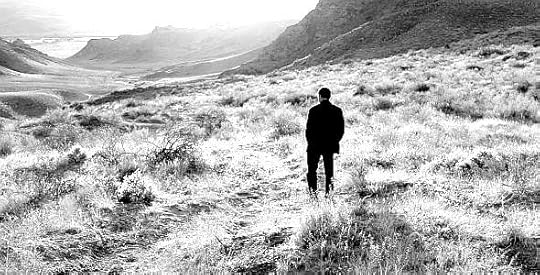
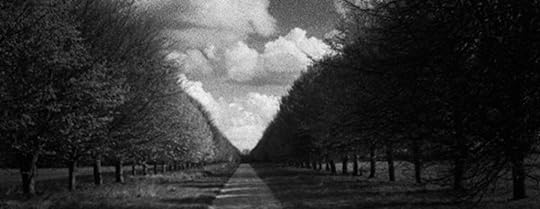
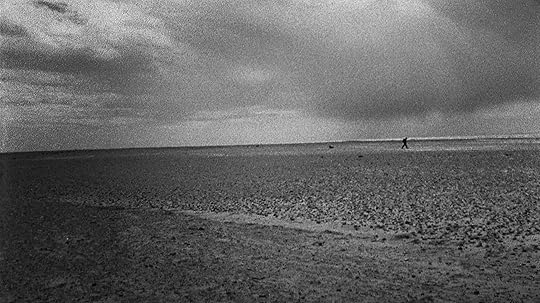

There is neither a past nor a future. At least, not for me. The fragmentary scenes that haunt my memories are obsessive in character. When I think of Germany, it feels as if there were some kind of insanity lodged in my head. Probably the reason why I have never been to Germany again is that I am afraid to find that this insanity really exists. To me, you see, Germany is a country frozen in the past, destroyed, a curiously extraterritorial place, inhabited by people whose faces are both lovely and dreadful.Four lives, four emigrants and four solitudes bound together by one common tragedy, dealing in their own way with the vagueness of their destiny inflicted by the treacherous forces of World Wars. There are unkempt houses and well-tended gardens, the grandeur of Moab Mountains and Lasithi Plateau and snapshots’ depicting the same fateful longing of being at home that has plagued the mankind since time immemorial. This book epitomizes the intensity of screaming silence, anguish and beauty; like that of Van Gogh’s The Starry Night and Munch’s Scream. Sebald has explored the word ‘Emigrant’ here by moving further and further away from its standard meaning and offered us the purity of a sublime visual. Going to a strange land, living among strangers and recapturing past through blurry mental impressions to once again retain the citizenship of a land one originally belongs to even if such native place has mercilessly entangled the lifelines of billion people.

‘..for that reason, telling stories was as much a torment to him as an attempt at self-liberation. He was at once saving himself, in some way, and mercilessly destroying himself.’


“I stood before it [the grave] for some time, not knowing what I should think ... I felt increasingly that the mental impoverishment and lack of memory that marked the Germans and the efficiency with which they had cleaned everything up, were beginning to affect my head and nerves.”