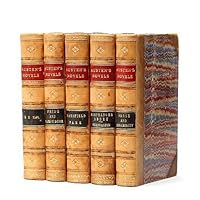
................................................................................................
................................................................................................
JANE AUSTEN, HER LIFE AND LETTERS:
A Family Record
(by W. Austen-Leigh and R. A. Austen-Leigh) (1913)
................................................................................................
................................................................................................
A further work by some members of another generation of descendants of Jane Austen's brothers, this book is intended to supplement accounts of her life then existing, with more information and a more distant point of view, as the authors state in a very well written preface.
It begins to be so already in the first chapter, chronology of her life. And it continues in the first chapter, adding a wealth of detailed information to the accounts in existence before. It's
Written in a concise manner, it's extremely difficult to select quotes from this, so much of it is worth noting. That's so, despite by now having read memoirs by her nephew, and more than a couple of other biographical accounts of Jane Austen.
................................................................................................
................................................................................................
Table of contents
................................................................................................
................................................................................................
Preface
Chronology of Jane Austen's Life
Chapter I Austens and Leighs (1600-1764)
Chapter II Steventon (1764-1785)
Chapter III Warren Hastings and the Hancocks (1752-1794)
Chapter IV Family Life (1779-1792)
Chapter VI Romance (1795-1802)
Chapter V Growth and Change (1792-1796)
Chapter VIII Godmersham and Steventon (1798-1799)
Chapter IX The Leigh Perrots and Bath (1799-1800)
Chapter X Change of Home (1800-1801)
Chapter XI Bath Again (1801-1805)
Chapter XII From Bath to Southampton (1805-1808)
Chapter XIII From Southampton to Chawton (1808-1809)
Chapter XIV Sense and Sensibility (1809-1811)
Chapter XV Pride and Prejudice 1812-1814
Chapter XVI Mansfield Park (1812-1814)
Chapter XVII Emma (1814-1815)
Chapter XVIII Persuasion (1815-1816)
Chapter XIX Aunt Jane (1814-1817)
Chapter XX Failing Health (1816-1817)
Chapter XXI Winchester (1817)
Appendix The Text of Jane Austen's Novels
'MANSFIELD PARK'
'EMMA'
'NORTHANGER ABBEY'
Chapter VII Authorship and Correspondence (1796-1798)
'PERSUASION'
Bibliography
A Family Record
................................................................................................
................................................................................................
................................................................................................
................................................................................................
Preface
................................................................................................
................................................................................................
"Since 1870-1, when J. E. Austen Leigh[1] published his Memoir of Jane Austen, considerable additions have been made to the stock of information available for her biographers. Of these fresh sources of knowledge the set of letters from Jane to Cassandra, edited by Lord Brabourne, has been by far the most important. These letters are invaluable as mémoires pour servir; although they cover only the comparatively rare periods when the two sisters were separated, and although Cassandra purposely destroyed many of the letters likely to prove the most interesting, from a distaste for publicity.
"Some further correspondence, and many incidents in the careers of two of her brothers, may be read in Jane Austen's Sailor Brothers, by J. H. Hubback and Edith C. Hubback; while Miss Constance Hill has been able to add several family traditions to the interesting topographical information embodied in her Jane Austen: Her Homes and Her Friends. ... "
"During the last few years, we have been fortunate enough to be able to add to this store; and every existing MS. or tradition preserved by the family, of which we have any knowledge, has been placed at our disposal."
"The Memoir must always remain the one firsthand account of her, resting on the authority of a nephew who knew her intimately and that of his two sisters. We could not compete with its vivid personal recollections; and the last thing we should wish to do, even were it possible, would be to supersede it. We believe, however, that it needs to be supplemented, not only because so much additional material has been brought to light since its publication, but also because the account given of their aunt by her nephew and nieces could be given only from their own point of view, while the incidents and characters fall into a somewhat different perspective if the whole is seen from a greater distance. Their knowledge of their aunt was during the last portion of her life, and they knew her best of all in her last year, when her health was failing and she was living in much seclusion; and they [vii] were not likely to be the recipients of her inmost confidences on the events and sentiments of her youth.
"Hence the emotional and romantic side of her nature—a very real one—has not been dwelt upon. No doubt the Austens were, as a family, unwilling to show their deeper feelings, and the sad end of Jane's one romance would naturally tend to intensify this dislike of expression; but the feeling was there, and it finally found utterance in her latest work, when, through Anne Elliot, she claimed for women the right of 'loving longest when existence or when hope is gone.'"
"A third point is the uneventful nature of the author's life, which, as we think, has been a good deal exaggerated. Quiet it certainly was; but the quiet life of a member of a large family in the England of that date was compatible with a good deal of stirring incident, happening, if not to herself, at all events to those who were nearest to her, and who commanded her deepest sympathies."
"Both in the plan and in the execution of our work we have received much valuable help from another member of the family, Mary A. Austen Leigh.[2]
................................................................................................
................................................................................................
Chronology of Jane Austen's Life
................................................................................................
................................................................................................
Some new information here for those who have already read the memoir by her nephew, such as
"1783
"Mrs. Cawley having moved to Southampton, Jane nearly died there of a fever. Mrs. Cooper (her aunt) took the infection and died (October)."
................................................................................................
................................................................................................
Chapter I Austens and Leighs (1600-1764)
................................................................................................
................................................................................................
"At the end of the sixteenth century there was living at Horsmonden—a small village in the Weald of Kent—a certain John Austen. From his will it is evident that he was a man of considerable means, owning property in Kent and Sussex and elsewhere; he also held a lease of certain lands from Sir Henry Whetenhall, including in all probability the manor house of Broadford in Horsmonden. What wealth he had was doubtless derived from the clothing trade; for Hasted[4] instances the Austens, together with the Bathursts, Courthopes, and others, as some of the ancient families of that part 'now of large estate and genteel rank in life,' but sprung from ancestors who had used the great staple manufacture of clothing. ... "
"John Austen died in 1620, leaving a large family. [2] [5] Of these, the fifth son, Francis, who died in 1687, describes himself in his will as a clothier, of Grovehurst; this place being, like Broadford, a pretty timbered house of moderate size near the picturesque old village of Horsmonden. Both houses still belong to the Austen family. ... One of his sisters married into the family of the Stringers (neighbours engaged in the same trade as the Austens), and numbered among her descendants the Knights of Godmersham—a circumstance which exercised an important influence over the subsequent fortunes of the Austen family."
................................................................................................
"The young squire and his son held gentle sway at Broadford through the eighteenth century; but much more stirring and able was the next brother, Francis. He became a solicitor. Setting up at Sevenoaks 'with eight hundred pounds and a bundle of pens,' he contrived to amass a very large fortune, living most hospitably, and yet buying up all the valuable land round the town which he could secure, and enlarging his means by marrying two wealthy wives. ... "
"Francis's son by his first wife (known as Motley Austen) rounded off the family estate at [4] Sevenoaks by purchasing the Kippington property. Motley's third son, John, eventually inherited the Broadford estate. Francis's two most distinguished descendants were Colonel Thomas Austen of Kippington, well known as M.P. for Kent, and the Rev. John Thomas Austen, senior wrangler in 1817.
"Both the two next brothers of Francis Austen adopted the medical profession. Thomas, an apothecary at Tonbridge, had an only son, Henry, who graduated at Cambridge, and, through his uncle's interest, held the living of West Wickham for twenty years. His descendants on the female side are still flourishing.
"William, the surgeon, Jane Austen's grandfather, is more immediately interesting to us. He married Rebecca, daughter of Sir George Hampson, a physician of Gloucester, and widow of another medical man, James Walter. By her first husband she had a son, William Hampson Walter, born in 1721; by her second she had three daughters, and one son, George, born in 1731. ... George Austen (Jane's father), who had lost both his parents when he was six years old, continued under the care of his stepmother. However, all that we know of his childhood is that his uncle Francis befriended him, and sent him to Tonbridge School, and that from Tonbridge he obtained a Scholarship (and subsequently a Fellowship) at St. John's College, Oxford [5] —the College at which, later on, through George's own marriage, his descendants were to be 'founder's kin.' ... "
"The Walter family settled in Lincolnshire, where they have held Church preferment, and have also been well known in the world of sport. Phila's brother James seems to have been at the same time an exemplary parson, beloved by his flock, and also a sort of 'Jack Russell,' and is said to have met his death in the hunting-field, by falling into a snow-drift, [6] at the age of eighty-four. His son Henry distinguished himself in a more academical manner. He was second wrangler in 1806, and a Fellow of St. John's. Nor was he only a mathematician; for in June 1813 Jane Austen met a young man named Wilkes, an undergraduate of St. John's, who spoke very highly of Walter as a scholar; he said he was considered the best classic at Cambridge. She adds: 'How such a report would have interested my father!' Henry Walter was at one time tutor at Haileybury, and was also a beneficed clergyman. He was known at Court; indeed, it is said that, while he declined higher preferment for himself, he was consulted by George IV and William IV on the selection of bishops."
"Both these branches of the Leigh family descended from Sir Thomas Leigh, Lord Mayor of London, behind whom Queen Elizabeth rode to be proclaimed at Paul's Cross. He was rich enough and great enough to endow more than one son with estates; but while the elder line at Adlestrop remained simple squires, the younger at Stoneleigh rose to a peerage. The latter branch, however, were now rapidly approaching extinction, while the former had many [7] vigorous scions. The family records have much to say of one of the squires—Theophilus (who died in 1724), the husband of Mary Brydges and the father of twelve children, a strong character, and one who lived up to fixed, if rather narrow, ideas of duty. We hear of his old-fashioned dress and elaborate bows and postures, of his affability to his neighbours, and his just, though somewhat strict, government of his sons. It is difficult to picture to oneself a set of modern Oxford men standing patiently after dinner, in the dining-parlour, as Theophilus's sons did, 'till desired to sit down and drink Church and King.' ... "
"Cassandra's father, Thomas, was the fourth son of Theophilus Leigh. An older and better known brother was another Theophilus, Master of Balliol for more than half a century."
"Cassandra Leigh's youth was spent in the quiet rectory of Harpsden, for her father was one of the more conscientious of the gently born clergy of that day, living entirely on his benefice, and greatly beloved in his neighbourhood as an exemplary parish-priest. ... His peaceful wife, Jane Walker, was descended on her [9] mother's side from a sufficiently warlike family; she was the daughter of an Oxford physician, who had married a Miss Perrot, one of the last of a very old stock, long settled in Oxfordshire, but also known in Pembrokeshire at least as early as the fourteenth century. They were probably among the settlers planted there to overawe the Welsh, and it is recorded of one of them that he slew 'twenty-six men of Kemaes and one wolf.' A contrast to these uncompromising ancestors was found in Mrs. Leigh's aunt, Ann Perrot, one of the family circle at Harpsden, whom tradition states to have been a very pious, good woman. Unselfish she certainly was, for she earnestly begged her brother, Mr. Thomas Perrot, to alter his will by which he had bequeathed to her his estates at Northleigh in Oxfordshire, and to leave her instead an annuity of one hundred pounds. Her brother complied with her request, and by a codicil devised the estates to his great-nephew, James, son of the Rev. Thomas Leigh, on condition that he took the surname and arms of Perrot.[11] Accordingly, on the death of Mr. Thomas Perrot at the beginning of 1751, James Leigh became James Leigh Perrot of Northleigh. ... "
"Northleigh, for some reason or other, did not suit its new owner. He pulled down the mansion and sold the estate to the Duke of Marlborough, buying for himself a property at Hare Hatch on the Bath Road, midway between Maidenhead and Reading. ... "
"George Austen perhaps met his future wife at the house of her uncle, the Master of Balliol, but no particulars of the courtship have survived. The marriage took place at Walcot Church, Bath, on April 26, 1764, the bride's father having died at Bath only a short time before. Two circumstances connected with their brief honeymoon—which consisted only of a journey from Bath to Steventon, broken by one day's halt at Andover—may be mentioned. The bride's 'going-away' dress seems to have been a scarlet riding-habit, whose future adventures were not uninteresting; and the pair are believed to have had an unusual companion for such an occasion—namely, a small boy, six years old, the only son of Warren Hastings by his first wife. We are told that he was committed to the charge of Mr. Austen when he was sent over to England in 1761, and we shall see later that there was a reason for this connexion; but a three-year-old boy is a curious charge for a bachelor, and poor little George must have wanted a nurse rather than a tutor. In any case, he came under Mrs. Austen's maternal care, who afterwards mourned for his early death 'as if he had been a child of her own.'[12]"
................................................................................................
................................................................................................
Chapter II Steventon (1764-1785)
................................................................................................
................................................................................................
"Steventon is a small village tucked away among the Hampshire Downs, about seven miles south of Basingstoke. ... "
"The surrounding country is certainly not picturesque; it presents no grand or extensive views: the features, however, being small rather than plain.[14] It is, in fact, an undulating district whose hills have no marked character, and the poverty of whose soil prevents the timber from attaining a great size. We need not therefore be surprised to hear that [12] when Cassandra Leigh saw the place for the first time, just before her marriage, she should think it very inferior to the valley of the Thames at Henley. Yet the neighbourhood had its beauties of rustic lanes and hidden nooks; and Steventon, from the fall of the ground and the abundance of its timber, was one of the prettiest spots in it. The Rectory had been of the most miserable description, but George Austen improved it until it became a tolerably roomy and convenient habitation. It stood 'in a shallow valley, surrounded by sloping meadows, well sprinkled with elm-trees, at the end of a small village of cottages, each well provided with a garden, scattered about prettily on either side of the road. ... "
"'But the chief beauty of Steventon consisted in its hedgerows. A hedgerow in that country does not mean a thin formal line of quickset, but an irregular border of copse-wood and timber, often wide enough to contain within it a winding footpath, or a rough cart-track. Under its shelter the earliest [13] primroses, anemones, and wild hyacinths were to be found; sometimes the first bird's nest; and, now and then, the unwelcome adder. ... "
"The usefulness of a hedgerow as a place where a heroine might remain unseen and overhear what was not intended to reach her ears must have impressed itself early on the mind of our author; and readers of Persuasion will remember the scene in the fields near Uppercross where Anne hears a conversation about herself carried on by Captain Wentworth and Louisa Musgrove. The writer had possibly intended to introduce a similar scene into Mansfield Park, for, ....