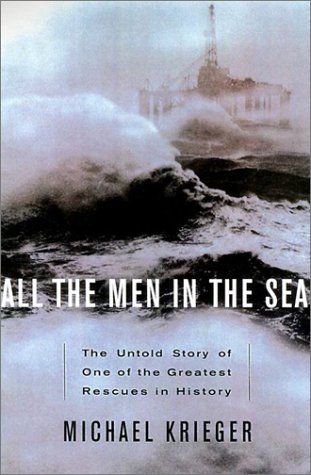
One of the most exciting sea rescues of the twentieth century occurred during a hurricane in the Gulf of Mexico in 1995. Ever since, lawsuits have made it almost impossible to find out the complete story of what happened. Now Michael Krieger tells the heroic truth of this astonishing drama. All the Men in the Sea begins in a cloud of silt peppered with 400-pound groupers 160 feet below the surface at the bottom of the Mexican Gulf where two divers are about to complete their work on a section of pipeline leading from the offshore oil field to the Yucatan Peninsula. The divers had to finish their section of pipeline so that the diving company could get their $27 million payment for the project. The company was behind schedule, but when Hurricane Roxanne approached, the divers had to return to the barge on the surface and its decompression chamber. Any mishap that might force them to leave this chamber prematurely would result in every blood vessel in their bodies popping like a champagne cork. Hundreds of workers lived on the barge, but the divers were the elite. It was the diver supervisor who told the barge's captain that company officials back in Louisiana had decided that instead of going in to shore for safe harbor, the barge and everyone on it would ride out the hurricane under tow by the three tugboats standing by. It was a fateful decision. At first the hurricane seemed to pass by, but when it made a U-turn and came back, the massive towlines connecting the tugs and the barge broke in steep 30-foot seas and 90-mile-an-hour winds. More than two hundred men abandoned ship into the raging watery catastrophe, none of them with any real hope of surviving. There was no one there to help them. Everyone knew tugboats couldn't rescue men in seas like that... As the sea crashed over them, the tugboat captains turned their vessels sideways to the massive, relentless waves, risking capsize and certain death. Those in the water who managed to hang on to wind-blasted, wave-tumbled life rafts were hauled over the side with no more than a second to lose before being sucked into the propellers. Hour after hour into the night, lone survivors bobbed in the turmoil, waiting for salvation -- and almost every one of them received it, thanks to the modest unsung heroes working the rugged tugboats. Ultimately, All the Men in the Sea is their story on a night of unparalleled bravery and determination.
The DLB-269 and all the men aboard her were floating victims. Their attacker would be named Roxanne.
In a contest between ship versus hurricane, take the hurricane.
With All The Men In The Sea, author Michael Krieger vividly captures the now largely forgotten loss of the undersea pipe laying barge DLB-269 and the daredevil rescue of more than 200 men from storm-tossed waters by a trio of tugs in the midst of Hurricane Roxanne which pummeled the Yucatan peninsula and nearby seas in 1995. Daring a hurricane and assuming that these monstrous storms will follow a predictable path has been the folly of many a mariner and (as my maritime bookshelf shows) doomed many a vessel to slip beneath the waves.
DLB-269, an unpowered ocean-going barge tasked with laying undersea pipelines for Mexico’s petroleum industry, made the decision to ride out an approaching Hurricane Roxanne at sea instead of seeking shelter in port. Towed by two tugboats, the aging barge with its multi-storied Clyde crane in the stern, initially dodged the storm – though the battering it took created serous internal flooding – but when Roxanna unexpectedly stalled, then turned back, the hurricane hit DLB-269 and her two small escorts with renewed fury, eventually sinking the barge and putting its crew into the water.
Krieger sequences a series of very bad decisions that led to catastrophe while detailing the steadily worsening conditions on the barge and its eventual swamping by towering 40-foot seas. Working from a number of eye-witness accounts, Krieger offers a vivid and terrifying picture of the last moments of the barge as men frantically leap into the sea, struggling to survive amid terrifying waves and spume, and of the heroic efforts of the nearby boat captains and crews to pluck men from the surging waters. It’s a white-knuckle survival story that is a tense as it gets and grittily described by Krieger’s expert pen. Remarkably, some 222 men were pulled from water by the heroic tugboats and even more crazily, 15 workers survived by never leaving the barge(!) -- clinging to the superstructure of the barge’s giant crane, which remained just above the waves even as the rest of barge sank to the sea bottom.
Shipwreck stories are a favorite of mine and this one is a good one, well-told, heroic, heartrending and dramatic. It, like many disaster stories, ends on a sour note as victims’ families and survivors received little consolation or compensation after the tragedy. It would take years (and the 9-11 terrorist attacks and other similar mass causality events) to fully awaken the public (and government) to the damage post-traumatic stress from catastrophic disasters causes to both survivors and rescue workers.
For readers who enjoy reading true events of survival, there is more than enough contained within these pages to satisfy. The sea is merciless when whipped up by a hurricane. Although I have been a sailor and am a bit familiar with bad weather at sea, I cannot imagine what these men went through-what with forty-foot waves pounding them and eighty mile an hour plus winds shrieking across the sky-as they realize their barge is sinking and they must jump into the sea.
This is a good book but not a great book. The core of the story is compelling but the layout of events caused me some confusion, because the timeline is a bit disjointed at times. I think a better editor would have been able to smooth some of this out. I also think the book could have included more details of Hurricane Roxanne as well as showing the track of the storm. (Its track was unusual.) If the author had access to or knowledge of the track of DLB 269 and its sinking location, that information could have been included in pictorial form along with more pictures of the barge and crew. NWS storm photos would have been nice too.
But don't let the above cause you to turn away from reading this book. They are minor details. What the men went through to survive and the heroic feats of boat handling their rescuers performed to save them, is nothing short of amazing. Author and journalist Michael Krieger does a nice job of making sure their stories are told so that these men get their due and their history is preserved. Do yourself and them a favor by giving this book a read and learning their story. You won’t soon forget it.