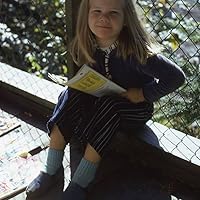
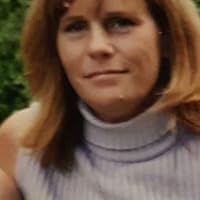
Barbara Comyns was educated mainly by governesses until she went to art schools in Stratford-upon-Avon and London. Her father was a semi-retired managing director of a Midland chemical firm. She was one of six children and they lived in a house on the banks of the Avon in Warwickshire. She started writing fiction at the age of ten and her first novel, Sisters by a River, was published in 1947. She also worked in an advertising agency, a typewriting bureau, dealt in old cars and antique furniture, bred poodles, converted and let flats, and exhibited pictures in The London Group. She first married in 1931, to an artist, and for the second time in 1945. With her second husband she lived in Spain for eighteen years.
I am a huge fan of Barbara Comyns (1907-1992) and my enthusiasm remains as strong as ever after reading this book, the last book that was published by her (in 1989 in UK, published in 1990 in US). I am giving this a solid 4 stars... Her oeuvre has been overlooked but thankfully some of her books are about to be re-issued (‘A Touch of Mistletoe’ and ‘Who was Changed and Who was Dead’: Daunt Books Publishing, June 2021). 🙂
She has the capability unlike nearly every other author I am acquainted with to make me burst out laughing when I don’t expect it. This novel involves a woman in her 30s, Amy Doll, raising a 13-year-old teenage daughter in a brothel - yes indeed…. Mrs. Doll, widowed, is having trouble making ends meet and so has allowed four old ladies to turn the upper level of her residence into a house of ill repute which old men tend to visit…. she and her daughter, Hetty, live on the lower level. So I’m reading along early in the novel and Comyns is describing Hetty to the reader and I come across this: • She said her prayers every night and inevitably ended with, ‘And, please God, can I have a hen?’ She no longer wished for a hen, but had ended her prayers that way for nearly ten years.
There are many other gems in this slight book (155 pages). Comyns can be quite dark in her novels. I’ve read ‘The Vet’s Daughter’ (1959), ‘Our Spoons Came from Woolworth’s (1950), ‘Sisters by a River’ (1947), and ‘Mr. Fox (1987). Quite dark but also within those books a streak of humor runs through them…it’s hard to describe and it’s hard to compare her to others (in searching for ways to describe her style) …indeed, Maggie O’Farrell says “Quite simply, Comyns writes like no one else”. I gotta agree! 😊 • Poor old Martin, he was two years younger than me, and I remember, when we were very young, he used to cry at night and yell that there was a mouse in his cot, and one night our old nurse told him not to be so silly and pulled the bedclothes back and out jumped a mouse. • This was bittersweet….” Both old women sat over the breakfast table dreaming of the past, real and imagined, until the telephone…shrilled.”
Supposedly Graham Greene who was instrumental in gaining her recognition early on in her writing career did not like this novel as much as her others… This is from The forgotten genius of Barbara Comyns, By Lucy Scholes https://unbound.com/boundless/2019/03... : Disappointment with her writing features heavily – although she can’t know that the best books of her career are behind her, she’s clearly struggling – including the weeks she spends waiting to hear whether Graham Greene, who had praised her ‘strange offbeat talent’ in The Vet’s Daughter, liked what was to be her final book, The House of Dolls. He didn’t, I’m afraid to report, and I have to admit I agree with him, since compared to the strange surreal brilliance of her previous novels it’s a rather unremarkable work. The news leaves Comyns decidedly deflated though. ‘Nothing to look forward to now,’ she writes.
This is not the Comyns I went looking for, but it is the one I bought—the only one I hadn’t read yet that was reasonably priced. Of those I’ve read, it seems the least autobiographical of her works, only one brief phrase causing me to think the event sprung from her real life.
At the start I detected a whiff of Muriel Spark, but that went nowhere, as did an overarching plot, which ended with a whimper. It may just be that the kind of humor Comyns employed for this work isn’t my thing. Her characters are interesting and quirky, but quirkiness for only quirkiness’s sake doesn’t work for me. Plus there are a few too many characters who aren’t needed, not even for plot contrivances, though maybe to show the different choices women had. It’s as if Comyns, who was eighty-one at the time of the book’s publication, knew she wouldn’t have time to use them somewhere else.
Though not as propulsive as her other works, it is well written.
First published in 1989, The House of Dolls shares the same offbeat sensibility as Comyns’ earlier work, blending darkly comic humour and surreal imagery with the realities of day-to-day life. As in Our Spoons Came from Woolworths, there are several emotions on display here, ranging from optimism and hope to endurance and stoicism to despondency and poignancy. It’s a wonderfully funny book, one of my favourites by this supremely talented writer!
The novel is set in a Kensington boarding house during the swinging ‘60s. Amy Doll, a widow in her mid-thirties, has four female boarders – all middle-aged or elderly, all divorced or widowed and cast adrift from any immediate family. Low on funds and in need of support to pay the rent, the ladies have turned their hands to a little light prostitution, fashioning a sort of ‘lounge’ for elderly gentlemen in Amy’s gold and crimson drawing-room. As Amy explains to her friend Doris…
‘…I thought it would make a nice sitting-room for my ladies; but you should see what they have done with it. It looks real wicked somehow, and they’ve added to the mirrors and there’s a sort of bar, all done up with bamboo, where they serve drinks, at a profit, of course; only, there’s always one who drinks behind the others’ backs and that causes trouble. It’s all very worrying; but there it is. There’s little I can do to alter things: they’re too strong for me, especially that Berti.’ (p. 5)
Central to this operation are Berti and Evelyn – both stick-thin and well past their prime. With her dyed red hair and skin-tight clothes, Berti is the more formidable of the pair, a rather nosy, bawdy woman who proves difficult for Amy to control. Almost as troublesome is Evelyn – ‘a poor man’s version of Berti’ with her blue rinse and slightly tragic air. The two women are forever arguing – mostly over petty jealousies, frequently fuelled by drink. Completing the quartet are Augustina (commonly known as the Señora), easily the most sensible of the group, and Ivy, a timid middle-aged woman who finds herself roped into her housemates’ enterprise, much to her discomfort.
What a fantastic opening line: “Amy Doll, are you telling me that all those old girls upstairs are tarts?” Amy is a respectable widow and single mother to Hetty; no one would guess her boarding house is a brothel where gentlemen of a certain age engage the services of Berti, Evelyn, Ivy and the Señora. When a policeman starts courting Amy, she feels it’s time to address her lodgers’ profession and Hetty’s truancy. The older women disperse: move, marry or seek new employment. Sequences where Berti, who can barely boil an egg, tries to pass as a cook for a highly exacting couple, and Evelyn gets into the gin while babysitting, are hilarious. But there is pathos to the spinsters’ plight as well. “The thing that really upset [Berti] was her hair, long wisps of white with blazing red ends which she kept hidden under a scarf. The fact that she was penniless, and with no prospects, had become too terrible to contemplate.” She and Evelyn take to attending the funerals of strangers for the free buffet and booze. Comyns’ last novel (I’d only previously read Who Was Changed and Who Was Dead) is typically dark, but the wit counteracts the morbid nature. It reminded me of Beryl Bainbridge, late Barbara Pym, Lore Segal, and Muriel Spark.
One of Comyns late trio of novels written in her 80s, here taking an apparent light comic mode quite different from her works of 20 to 40 years before, but strongly characterized and with a characteristic social insight into the lives of her female subjects, here those fading into their twilight years, widowed or vocationless an figuring out how to scrape by. (The comedy belied by actually rather bleak realities). I was encouraged to see that even here, after setting up the opportunity for melodramatic misadventures of a kind that a Hollywood screenwriter would pounce upon, Comyns has little interest in such predictable paths, settling instead for something less familiar, manipulative, or implausible.
More of a 3.5 because it is perfectly written, as expected, but I feel a bit disappointed and I'm not sure why. There is a slight air of pointlessness to it, I think, a bit like I've just been listening to a chatty woman tell me about these people she knows, and then this happened, and then this, and then there it was. Nothing wrong with that, I suppose.
Edit because I forgot to ask: is there a good reason Goodreads won't let us have half stars? Give us a half star, Goodreads!
Like all Barbara Comyns’ novels this is an offbeat, sometimes funny, sometimes sad, sometimes uncomfortable novel with unforgettable characters. Her books start as stories of domestic life with quirky characters and we think those quirks will be the focus of the story, but then Comyns presents some shocking twist, in this case it’s women of a certain age who turn to prostitution to supplement their meager income. This is my fifth Comyns books and my least favorite, but it is still a four star book for me.
Amy Doll, a widow with a 14 yr old daughter, has 4 women boarders, all over the age of 50, who for various reasons find themselves estranged from their families and alone in the world with very little income. Following the lead of the older and exotic Spanish woman, the other 3 women pool their resources to create a sort of lounge with alcohol for a few old men, regulars, who come once or twice a week for drinks and “company.” We don’t hear much from two of the “tarts,” but the two who are front stage, Evelyn and Berti, are outrageous and their antics are sometimes uncomfortable to read because we feel humiliated for them. Comyns wrote this bawdy story, published in 1989, when she was 80 years old, so her depiction of prostitution by older, “blue haired” ladies as unremarkable is remarkable.
While the four older women are trying to get by, drinking, fighting with each other or sharing gossip, poor Amy Doll is trying to raise her odd, slightly slow (she fears,) daughter, run the house, and carry on her own budding romance with a police officer who Amy initially fears is onto the goings on upstairs. Comyns packs a lot into a small novel.
What I feel makes this dark comedy worthwhile is how fully formed the characters are and how familiar their world is, so even in the cringe worthy moments when we are embarrassed for them or witness them being spiteful and petty we recognize that they want what we all want-love, validation, acceptance.
I think this is what Comyns does best: she shows us that no matter how unusual, how exceptional, or how desperate the situation in which her characters find themselves, she always presents the characters as utterly unexceptional and not very different than any of us in the end.
This is pretty decent for an 82-year old, but it’s less a novel than notes towards one. Featuring the usual Comyns cast of eccentrics but not her eccentric prose style, it’s for Comyns completists only.
Excellent - a joy to read, and a ‘new’ author for me. Only 150 pages, but full of acerbic humour and razor sharp descriptions of ‘the House of Dolls’. Mrs Dolls is a respectable but timerous widow, who has somehow allowed her lodgers to establish a brothel - but it’s one where both the ‘ladies’ and their clients are in their twilight years. The story is set in London in the 1960s, and some of this intrudes gently through the character of Hetty, Mrs. Dolls’ daughter, who is however very young and naive for her age - 13/14. I was reminded rather of Barbara Pym’s writing, and I was disappointed that the library had only two other Comyns titles, one on CD and the other as an e-book. I see she’s been published in Virago before, so a visit to the Oxfam bookshop first I think...
The House of Dolls is the story of Amy Doll, her daughter Hetty and her lodgers. They live in a large old house in 1960’s London and they all struggle with their place in England’s class society.
The lodgers are middle aged/ elderly women who have fallen from grace. A mix of likeable and unlikeable characters who are scraping together their pennies to get by. They eat beans and sardines, they bicker and clothes, they twitch at curtains and wear long fake eyelashes. They end up running a sort of brothel from the upstairs sitting room.
The novel is more about aging and class, than about the smutty undertones. Widowed Amy struggles to know where she stands and parenting alone. The older women are cantankerous and confused, they hate how tawdry their lives have become. Hetty is a sweet shining light, she just wants to be left alone to make mosaics, read Anna Karenina and rescue kittens.
This was a perfect novel to end my Comyn’s cycle. I loved the focus on older women and the bittersweet moments of pudding at the kitchen table. I am so sad I can’t read her other novels that are now out of print and near impossible to get hold of but maybe one day more publishers will recognise the brilliance of Barbara Comyns.
The House of Dolls was Barbara Comyns’ last book, published in 1989 when she was eighty. Her wicked wit and eye for the dark side of life is as evident here as it was in the novels that made her name many years before. It’s the story of a distinctly peculiar boarding house run by Amy Doll and her teenage daughter Hetty. Her mismatched assortment of ageing lady lodgers spend their time gossiping, undermining each other and, to make ends meet, running a discreet brothel from the top floor of the house. Comyns has great fun with her bitchy and once-genteel cast of characters, putting them through challenges as they try their hands at various forms of straight employment, all of which end in disaster, but despite showing us their very human weaknesses and with a typical air of disgust at some of their ways (noticeably the awful party they throw to celebrate the wedding of the youngest of them), there are (mostly) happy endings all round.
primo babs; just like e.g. who has changed, you the reader are stationed in cozy velvet armchair complete w/ antimacassar but always w/ the knowledge that comyns has her hand on the lever for the trapdoor underneath. evelyn & berti's misadventures trying gig work def a highlight
A rather limp outing from the author of the sumptuous Our Spoons Came From Woolworths. Amy Doll, a widow in her mid-30s, finds that she’s unwittingly become a Madam when she rents out rooms to older women who turn the upstairs of Amy’s house into something of a grannies’ bordello. Elderly gentlemen, most of them quite unpleasant, trudge in and out but for the most part Amy shrugs this off, taking issue only with the noise her teenage daughter Hetty might hear. Hetty is not allowed upstairs after hours, and Amy plays the radio at top volume. When a gallant policeman falls for Amy and starts showing up tend her garden (literally), we can see the trouble ahead. We just don’t care terribly much. The best passages of the novel occur away from the house, where Hetty fosters a clandestine friendship with a wealthy but mentally unbalanced neighbourhood man. The innocence of their attachment – they spend hours in an abandoned garden together, creating mosaics out of trashed china and other bits and pieces – is the perfect respite from the bawdy old ladies and their failing attempt at a last, lucrative hurrah. The book is, for the most part a piffle (though I also liked the chapter in which one of the pensioner prostitutes tries to make a new life for herself as a personal chef, briefly serving a memorable boss from the lower rungs of Hell, who after hurtling at breakneck speed through a litany of required dishes, impossible schedules and house rules, adds, “We can’t stand kitchen noises. It puts us off our game.”)
"Well past their prime, the four ladies who live upstairs at Mulberry Grove remember better days of parties and servants when rent was something to be collected. Or that's what they pretend. Nowadays they remember the rent only too well. But with the help of a little makeshift prostitution, the wages of sin is security.
"Once a servant herself, Amy Doll is now the timid and reluctant 'madam' to her genteel lodgers of higher class and lower morals. Keeping her daughter in ignorance of her 'aunts' goings-on is quite hard enough without the additional attentions of a friendly policeman keen on gardening. What would the Kensington Post have to say?
"Not that the 'little business' is without its occupational hazards: the Senora has plans to return to Spain, and Ivy is suddenly in love with a dentist. and with the onset of winter and seasonal dearth -- even death -- of gentleman friends, what will become of Evelyn and Berti?" ~~back cover
This is a funny little book (156 pages), but it's also a sad little book. The shenanigans and prevarications of Berti and Evelyn are pathetic, and the fact of the matter is they are both in their 60s with no retirement and are living hand to mouth in terror of losing what little security they might have. So while it's easy to be amused by their little subterfuges and pathetic attempts at keeping up a brave front, the reality underneath gives the reader food for thought, and some sympathy for the elderly.
The last of Comyns' novels takes us into the lives of elderly 'prostitutes' living in a boarding house in 1960s London. Comic and full of pathos this is maybe not as strong as some of her other works but still is an exquisite piece of characterisation. I continue to be confused as to why she is not more widely read.
A very (too) short, quaint and typical British novel with interesting characters. This was the first Barbara Comyns novel I've read in more than 20 years! It was good to know I still enjoy her writing style; I'll definitely start searching for some of her other novels that I haven't read yet.
Read it when I was quite young, so a lot of it made no sense to me. But, definitely a book I'm going to re-read now that I'm older and a lot more mature.
Not as brilliant as the vets daughter or quite as fun as our spoons but a very funny book AND a quick read. I love the idea of sixty plus prostitutes plying their trade with the Old Boy network.
What an overlooked little gem! It's the early 1960s in London, and times are a-changing. Amy Doll, a former domestic servant who knows her place in life, is running a small boarding house. Alas, the middle-aged to elderly ladies of reduced means who make up her clientele have decided to add to their limited financial resources by entertaining equally aged gentlemen for money. Amy's dreamy teenage daughter, Hetty, has no idea what all these male visitors to her upstairs "aunties" really mean, and Amy is determined to keep it that way. Her anxieties only increase when a policeman comes around asking questions and seems inclined to keep visiting.
I really enjoyed the book, as indicated by the 4-star rating. There's something tragicomic about the story. On one hand I smiled at the indomitable boarders' plans for making money, throwing parties, getting themselves invited to free meals and generally freeloading on more well-heeled relatives and friends. The total disconnect between Amy's concerns about the respectability of her boarding house and the raffish insouciance of the aunties was very funny, especially when the latter throw a raucous party.
On the other hand, there is a background of hard economic challenges in the lives of these impoverished women. One ekes out a living by selling knitting yarn, another receives a remittance from a straight-laced brother who wants her to stay out of his life, a third has a small annuity... There was also something very pathetic in the stories some of the aunties tell their friends (and themselves) about past glories - in the course of the book these stories became more and more grandiose - rich parents, a big mansion, servants galore.
The alternation between comic and pathetic doesn't always work, but it worked in this book!
"The House of Dolls" features a landlady, Mrs. Doll, who rents four upstairs bedrooms in her house to aging tarts. Comyns presents them in several ways with delicious contradictions that are all too human. The wit is palpable, what we might call "grim humor" because nobody has money and everyone has to figure out how to get by. Few are suited for any profession but the "oldest".
I recommend Comyns to those who enjoy Barbara Pym, Anne Tyler, Elizabeth Taylor and other 20th century women writers. She has more spark and soul than Ivy Compton-Burnett and Muriel Spark for the most part. Amy Doll is the landlady and she is confident that her four old tarts would never do anything "nasty" in front of her teenaged daughter, Hetty, aged 14. Her tenants include Bertha Jago, called Berti: "Her skinny knees turned in slightly, as if misshapedn from dancing the Charleston too much in her youth." Ivy Rope, the trim widow, once worked in "Harrods but it had caused her to have haemorrhoids".
This novel fits in nicely with the theme of "communities of last resort" explored so well by Elizabeth Taylor in "Mrs. Palfrey at the Claremont" and Pym in "Quartet in Autumn" as well as "Memento Mori' by Spark--which also mixes misery and humor to great effect.
The tart, seedy, comic and despairing world of the aging English single woman of the sixties, one who lacks friends, fortune or vocation - this is a specialty of a certain type of novelist and Barbara Comyns, along with Barbara Pam and Anita Brookner and yes, even Muriel Spark. The anxiety and stress for a generation of women who were expected to marry, mother and function without a fuss - what happens when things go pear-shaped? In Comyns' last novel, some of this sort of women turn to prostitution and it goes about as well as can be expected. Much tea and gin is drunk, tears are shed and swearing abounds but somehow it comes out in the end - perhaps. The bitterness overwhelms the humanity, ultimately.
Barbara Comyns deserves to be much better known, that's for sure, and it's a pity NYRB Classics only picked up "Our Spoons" (although it does remain my favorite so far). There's nothing doll-like about any of the characters who inhabit this curious novel. Doll is the last name of Amy, a young widow with a teenage daughter who makes ends meet by renting the top floor of her house. However, her 4 lady tenants are so cash-strapped that they resort to occasional prostitution to pay the rent. Although she is dead-scared of falling foul of the law by not reporting them, Amy is too kind and clueless to throw them out. The most enterprising of the amateur prostitutes is Augustina, the daughter of Barcelona butchers. Badly treated by her family after she refused to have sex with her first boss, Augustina is no longer afraid of anything and uses her "gentlemen friends" to amass a nice little nest-egg. Thanks to Augustina, the meek shop assistant Ivy also starts to entertain gentlemen callers, and eventually falls in love with and marries a very decent dentist. The most colorful, but also the saddest characters are Berti and Evelyn, 2 divorced women who've made a mess of their lives. Originally from a middle-class background, they've alienated all their relatives and constantly lie to each other, to Amy and to themselves about their past. In their early sixties, they survive mostly on booze and cigarettes. Eventually a local policeman starts courting Amy, who initially suspects him of spying on her unofficial brothel. When he proposes, Amy confesses her secret, and they decide to evict the ladies. Neither Berti nor Evelyn is remotely likable, yet their pathetic tribulations are as touching as they hilarious. An unusual story with a delightful set of oddballs.
The Doll House is a very English comedy. It pokes fun at class, English food, service, and a group of elderly women who resort to prostitution to make ends meet. It’s not always funny and at times seems mean spirited, so it is not my favorite of her novels. I guess that’s why even though this was written in the 1960’s it didn’t see print until the late 1980’s.
Mrs. Doll runs a respectable rooming house for older women. Well, she did until they all turned to the oldest profession. The characters are well-drawn and funny. The book also highlights the dilemma of women without private incomes or husbands in the twentieth century. Barbara Comyn's book is a romantic romp with a serious undertone.