I hadn't read a 'Dungeons and Dragons' book since the first Dragonlance Trilogy many years ago. I remembered 'Dragons of ......' being a fun series, but being turned off of Dragonlance when it all started being about Raistlin (I know everyone else loves him, but god can I not stand mummy's-favorite-OC). My other experience with tie-in series to things has been... ...mixed. I've read a good chunk of 'Arkham Horror' novels, which bat about 50% "pretty fun" and 50% "Boy howdy this was not good". Going even further back into distant years I used to read lots of magic the gathering books, yet even as a teenager I think they tended to let me down, my imaginings of the world of MTG teased into being by the cards always more vivid, intricate, and serious than the novels ever were.
I also read a few books based on Blizzard properties, but the less said about those the better.
The point is that I've developed a deep-seated distrust of books that written as tie-ins to a property. You can make movies and games out of books with some success, but reversing those batteries and making books out of movies and games seems like a recipe for disaster.
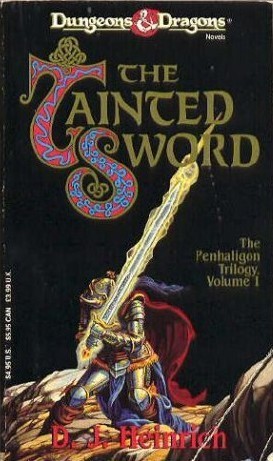
And yet, when I saw this delightfully simple cover in the bookstore, emblazoned with "Dungeons and Dragons" at the top, I was intrigued. I'd been yearning for some good, honest high fantasy adventure, and this seemed the ticket. So I picked it up and bought it.
And you know what, it didn't disappoint. There's knights. There's dragons. There's wizards and witches. There's daring-do, peasants, and magic. It was fun, and i want to read the next one.
I'm not entirely without criticism, however. D.J. Heinrich has that problem that always stands out to me like a sore thumb, which is a lack of confidence in himself and a distrust of his audience, in that so many things that COULD go unsaid instead go said. Characters will ponder things to themselves, and then a moment later another person will say the same thing out loud. "I wonder if this character notices this..." someone will think, and then the person they're thinking about will say "Hey, I noticed..." and so on.
It's astounding how swift of a pace the book is, because Heinrich seems unable to transition from one moment to a later moment at times. Every action is described, everything is acted out, and no moment is left to the wind to be assumed. In fights every sword-stroke is described. Were Heinrich even SLIGHTLY less skilled of an author I think I might have tossed the book down, weary of having to read EVERYTHING that happens. Yet, where other books have frustrated me on this account, Heinrich succeeds in compelling me. The characters all stray close to being D&D stereotypes, with characters 'joining the party' just because that's what happens in a D&D story, but everyone was just likeable enough (or held their tongues at the right time, and didn't need to be present in EVERY scene), that they remained personable. Heck, I wanted to finish so I'd get the answered to things like "Golly gee, WILL Flinn gain his Knighthood bacK?" I actually ended up caring and getting invested.
So there it is, my big ol' thumbs up for a book that felt like it shouldn't have been so good, but was. Time to track down the sequels!