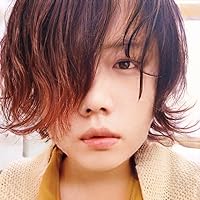
Kenzaburō Ōe (大江 健三郎) was a major figure in contemporary Japanese literature. His works, strongly influenced by French and American literature and literary theory, engages with political, social and philosophical issues including nuclear weapons, social non-conformism and existentialism.
Ōe was awarded the Nobel Prize in Literature in 1994 for creating "an imagined world, where life and myth condense to form a disconcerting picture of the human predicament today."
There was a tremendous difference between these dead and bodies that were cremated im mediately after death. The corpses floating in the tank possessed the solidity and the inde pendence of consummate "objects." But those others were still moving slowly away from consciousness, traversing an ambiguous middle ground, when they were incinerated: they didn't have time to become perfect objects. I stared at the "objects" crowding the tank, at the dead who had completed the perilous transition. There was nothing uncertain or temporary about them, they were solid, stable "objects" just like the floor and the tank and the skylight; the thought made me shiver with excitement.
Of course we're objects. And pretty ingeniously put together at that. A man who's cremated as soon as he dies never knows the sense of volume and weight, or the feeling of solidity you get when you're an object.
It sounded right to me. Death was an object. But I had only comprehended it as an aspect of consciousness. Death as an object began where consciousness ended. And death off to a good start, enduring for years in a tank of alcohol, was waiting to be dissected."
Ōe Kenzaburō wrote this short story in 1958, but the 'shock' factor buried within every other carefully crafted sentence still persist to this day. A French literature student takes on a part-time job shifting corpses meant for teaching medical students, from one 'tank' filled with formaldehyde and alcohol to another. He is accompanied by a girl on this job, guided by a superintendent. They go about this task as the hours slip by, and with each tick of the clock, the protagonist slips a bit further into a rabbit hole. From thinking of the dead bloated corpses as mere objects, he soon starts thinking of himself as one with them- I stood there stupidly while a great weariness bloomed, mushroomed through my body. That was a living person. And the living, who were equipped with consciousness, wrapped them selves in thick, mucous membranes and rejected me. I had stepped into the world of the dead. And when I returned to the midst of the living, everything became difficult, I had just taken my first fall. Maybe I had become too deeply involved in this work and wouldn't be able to get out: it was an ominous feeling.
And then, we also get to peek into his thoughts as he gets an erection after seeing a thirteen year old female corpse's flower bud.
A stark contrast is offered to this scene of death and rot, with the girl being revealed as pregnant. She had decided on getting an abortion and thus had taken the job to afford it.
"What do you think would happen if I let things go as they are?" the girl said. "I'd be assuming a terrible responsibility, just by doing nothing for nine months. My feelings about my own life are uncertain enough as it is, yet I'd be giving birth to another new un certainty. It would be just as serious as murdering somebody. All I'd have to do is wait without doing anything and it would be just as serious as that."
The ironical humour of the matter comes to light later, as she decides to keep the child after hauling corpses all day long. This hope, is in turn squashed again by Kenzaburō when she slips and falls, deeming the life of her baby as uncertain.
Ōe writes about war as well, not unlike majority of Japanese authors, but uses an army deserter's corpse to introduce the conversation, with the protagonist answering the dead's unvoiced questions.
"Nobody can be as convincing as I am, no matter how clear his thoughts on war are. Because I soak here without moving, just the way I was when they killed me."
I saw the bullet wound in the soldier's side; it was shaped like a withered flower petal, darker than the skin around it, thickly discolored.
"Do you remember the war? You must have been just a child?"
"I was growing up", I said to myself-- "all during that long war. I grew up at a time when the only hope from day to unhappy day was that the war would end. And the air was so thick with signs that hope remained that I was suffocated and felt that I was dying. The war ended, the adults digested its corpse in minds like stomachs, the indigestible solids and the mucus were excreted- but I had nothing to do with all that. And before we even realised what had happened, our hopes had faded away like mist."
His theme, if one can speak of themes apart from specific books, is the dignity of man, or rather the indignity to which society exposes him. Most of Ōe's characters are young people like himself and most of them are in flight, seeking in sex and violence and the most insidious brands of self-deceit, as an escape from the humiliations of living in a depraved world.
The story ends in medias res, with the dead being hauled out of the tank and into a truck headed towards a crematorium. The old corpses were to be cremated, and replaced in turn with new corpses. Kenzaburō doesn't allow the reader to know what becomes of the protagonist or the girl as the outcome is unimportant, for Ōe is primarily concerned with what happens to a man when he is confronted with abnormality and in how he degrades himself in attempting to escape degradation.
This entire review has been hidden because of spoilers.
Superb! It’s fascinating how he covers a variety of themes even though they share similar sceneries, subjects, and styles. I like many of the clumsy descriptions about characters’ sense experiences (especially the smell). They make me want to write myself.
“Do you remember the war? You must have been just a child?
I was growing up, I said to myself—all during that long war. I grew up at a time when the only hope from day to unhappy day was that the war would end. And the air was so thick with signs that hope remained that I was suffocated and felt that I was dying. The war ended, the adults digested its corpse in minds like stomachs, and the indigestible solids and the mucus were excreted—but I had nothing to do with all that. And before we even realised what had happened, our hopes had faded away like mist.”
These are the best of Oe's early works that I truly admire. "Shiiku" (En title: Prize Stock) was just so great; I felt nothing but so impressed. The vivid images on the story remains still on my head; it was shocking and thrilling, but Oe described the truth about human's conditions and the world pretty well.