

What do you think?

Catwoman (1989) #1-4
Catwoman: Her Sister's Keeper
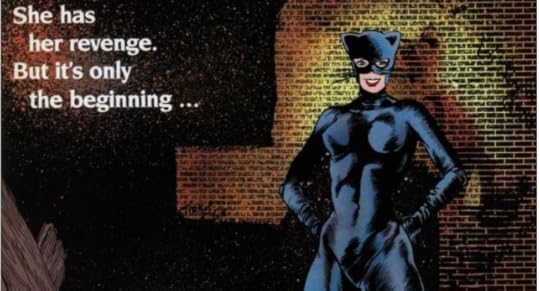
Her Sister's Keeper is a Catwoman storyline written by Mindy Newell with illustrations by J.J. Birch. It's published in the 1989 Catwoman mini-series, marking the first time Selina Kyle received her own title. This is Newell's second Catwoman story, following her arc The Tin Roof Club in Action Comics Weekly. The story is a companion piece to Frank Miller's Batman: Year One, expanding on Kyle's actions during that story. This series is one of many Post-Crisis reboots, establishing Catwoman's origin story in the New Earth continuity following Crisis on Infinite Earths.
104 pages, Paperback
First published May 1, 1989
About the author
Mindy Newell
92 books6 followersMindy Newell is an American comic book writer and editor, and also a nurse. She was married with the colorist John Higgins.
Ratings & Reviews
Friends & Following
Create a free account to discover what your friends think of this book!
Community Reviews
Displaying 1 - 30 of 123 reviews

June 9, 2020
Catwoman volume one, yep, the first solo Catwoman series, issues t to 4. Mindy Newell's 'for mature readers' origin of Catwoman, is actually very dark, and also pretty good! 7 out of 12.
2013 read
2013 read

December 24, 2020
Set during the events of Frank Millar's Batman Year One, Her Sister's Keeper explores Selina Kyle's early life as a dominatrix for hire in the red light district of Gotham. After she's found bloody and on the verge of death in the streets near a local church, she's saved by a nun and wakes up in the hospital the next day. After being pressured by cops and further humiliated by her pimp, she decides to take advantage of the new cat suit her pimp had made for her to disguise herself and pay him back for all the damage he's caused.
I actually enjoyed this little side story slightly more than Batman Year One. It's a simple revenge story, but it felt more intimate, personal and easier to follow for newcomers. I also tend to really enjoy the female characters of Gotham, so exploring the demented city from an abused girl's point of view offered some new perspectives.
***
If you're looking for some dark ambient music for reading horror, dark fantasy and other books like this one, then be sure to check out my YouTube Channel called Nightmarish Compositions: https://www.youtube.com/channel/UCPPs...
I actually enjoyed this little side story slightly more than Batman Year One. It's a simple revenge story, but it felt more intimate, personal and easier to follow for newcomers. I also tend to really enjoy the female characters of Gotham, so exploring the demented city from an abused girl's point of view offered some new perspectives.
***
If you're looking for some dark ambient music for reading horror, dark fantasy and other books like this one, then be sure to check out my YouTube Channel called Nightmarish Compositions: https://www.youtube.com/channel/UCPPs...

November 22, 2024
The first Catwoman mini-series!
It coincides with Batman: Year One and that could’ve been cool. Unfortunately, I felt like the scenes from Year One were forced in. There wasn’t a fluid flow between the scenes we’d already seen and the new story.
(Also, we don’t actually get every Selina scene from Year One!)
To me, that was the overall problem with this series; the story flow was not well done. There were moments that were jumped past when it could’ve given some needed context.
I loved seeing how (and who from) Selina learned to defend herself.
I wish we’d gotten to see where Sel got the idea to, and how she gained the skill of being a cat burglar.
Adding to that, I wish we actually got to see the Catwoman in action. Even just a few pages (with no text!) That would’ve been really cool.
In the end though the story wasn’t really about that aspect of ‘The Cat’.
I appreciated the attempt to give us a more three dimensional character. I’m glad I read the building blocks of such an iconic character.
It coincides with Batman: Year One and that could’ve been cool. Unfortunately, I felt like the scenes from Year One were forced in. There wasn’t a fluid flow between the scenes we’d already seen and the new story.
(Also, we don’t actually get every Selina scene from Year One!)
To me, that was the overall problem with this series; the story flow was not well done. There were moments that were jumped past when it could’ve given some needed context.
I loved seeing how (and who from) Selina learned to defend herself.
I wish we’d gotten to see where Sel got the idea to, and how she gained the skill of being a cat burglar.
Adding to that, I wish we actually got to see the Catwoman in action. Even just a few pages (with no text!) That would’ve been really cool.
In the end though the story wasn’t really about that aspect of ‘The Cat’.
I appreciated the attempt to give us a more three dimensional character. I’m glad I read the building blocks of such an iconic character.

July 6, 2019
I'm not sure how to feel about this one. I like the main characters but there's just something off about it. The story is fast paced in a bad way, feels like I missed some pages. The lack of backstory for a few characters leaves a lot of questions unanswered. Kinda disappointing.

October 26, 2021
I would have been unlikely to have read this, except that the title was tucked into the list of "Modern Batman" titles. But this is definitely not a Batman book, this is Catwoman, through and through, with some intersection with Batman: Year One.
This is a deeply moving account of how Selina Kyle -- no longer the socialite thief of the 1930's and onward, now a runaway-turned-prostitute -- becomes Catwoman when faced with cascading crises from pimp, police, family, and the Caped Crusader. We also get a little rework, I think, of a scene from Batman: Year One, now from Selina's POV.
I'm stuck between 3 and 4 stars for this -- there are some flaws in the dialog, where the bubbles seem to be in the wrong order, and characters are talking past each other -- or maybe this is what the author intended, but the style confused the message for me. The art is good but not the spectacular scenes we can expect today. I'm going upgrade the rating to 4 stars, because the artists give us two things often forgotten in superhero(ine) comics: women of realistic proportions, and the costumes that aren't walking future wardrobe malfunctions.
This is a deeply moving account of how Selina Kyle -- no longer the socialite thief of the 1930's and onward, now a runaway-turned-prostitute -- becomes Catwoman when faced with cascading crises from pimp, police, family, and the Caped Crusader. We also get a little rework, I think, of a scene from Batman: Year One, now from Selina's POV.
I'm stuck between 3 and 4 stars for this -- there are some flaws in the dialog, where the bubbles seem to be in the wrong order, and characters are talking past each other -- or maybe this is what the author intended, but the style confused the message for me. The art is good but not the spectacular scenes we can expect today. I'm going upgrade the rating to 4 stars, because the artists give us two things often forgotten in superhero(ine) comics: women of realistic proportions, and the costumes that aren't walking future wardrobe malfunctions.
May 9, 2025
Mulher Gato Ano Um se passa em paralelo a Batman Ano Um de Frank Miller, e assim como a HQ do Homem Morcego, vai tratar dos primeiros dias de atuação da Selina como Mulher Gato. Inclusive, há uma cena desse encadernado que aparece também no gibi do Batman.
O interessante de "comparar" essas duas obras, é traçar uma correlação de como os personagens possuem tragédias em suas vidas, mas por conta de suas condições socioeconômica, tomam rumos totalmente diferentes.
Enquanto que o Batman perde os pais, mas tem o apoio do Alfred e da Leslie e todo o dinheiro possível, a Selina se torna órfã e vai para as ruas, tenta se virar e conhece a realidade cruel que muita gente encara dia a dia. Ela se torna prostituta e trabalha para um cafetao chamado Stan, que logo nas primeiras páginas a espanca e deixa-a desacordada em um beco.
A partir daí, como o próprio nome do capítulo diz, ela passa por uma metamorfose, saindo de uma posição de submissão ao Stan para uma mulher que vai combate-lo. Com ajuda de um "treinador", ela aprende a se defender e lutar, para que não sofra mais nas mãos de Stan.
Somado ao treinamento, Selina se depara com uma aparição do Batman, e vendo ele escapando da polícia de forma magistral, ela se inspira nele e começa a usar um uniforme de gata para se aventurar pela noite e confrontar Stan.
Em sequência, no capítulo Babilônia, o significado de Porta de Deus e/ou Grande Confusão, condiz muito com o que ocorre, pois aqui a trama começa a tomar um rumo envolvendo sequestro de uma pessoa importante para a Selina, bem como investigações policiais se intensificam em torno da Mulher Gato.
Em seguida, em Batismo Gótico, temos uma grande atuação da Mulher Gato em uma primeira missão importante de resgate, que culmina em consequências marcantes na vida de Selina, e acredito que serve como um marco para a atuação da personagem.
O desfecho da trama é uma consagração da Selina como Mulher Gato, em que ela acolhe essa identidade e inicia suas atividades como a anti-heroina e ladra que conhecemos.
É curioso refletir em relação ao Ano Um do Batman e da Mulher Gato, pois a jornada da Selina é muito mais atrelada a necessidade de sobrevivência, do que a vingança e/ou ser o símbolo de medo aos bandidos. A Selina quebra com o paradigma de submissão em busca de uma vida melhor, sendo algo mais individual do que coletivo.
Minhas ressalvas quanto a essa história, são em relação a colorização, que está bem estranha; e a respeito da continuidade de roteiro. Em alguns momentos, a quebra de uma cena à outra, ou até mesmo uma continuação dos personagens envolvidos, ocorre de maneira abrupta, parecendo até mesmo que o leitor está acompanhando a história em ordem errada de quadros ou que há um erro de paginação.
O interessante de "comparar" essas duas obras, é traçar uma correlação de como os personagens possuem tragédias em suas vidas, mas por conta de suas condições socioeconômica, tomam rumos totalmente diferentes.
Enquanto que o Batman perde os pais, mas tem o apoio do Alfred e da Leslie e todo o dinheiro possível, a Selina se torna órfã e vai para as ruas, tenta se virar e conhece a realidade cruel que muita gente encara dia a dia. Ela se torna prostituta e trabalha para um cafetao chamado Stan, que logo nas primeiras páginas a espanca e deixa-a desacordada em um beco.
A partir daí, como o próprio nome do capítulo diz, ela passa por uma metamorfose, saindo de uma posição de submissão ao Stan para uma mulher que vai combate-lo. Com ajuda de um "treinador", ela aprende a se defender e lutar, para que não sofra mais nas mãos de Stan.
Somado ao treinamento, Selina se depara com uma aparição do Batman, e vendo ele escapando da polícia de forma magistral, ela se inspira nele e começa a usar um uniforme de gata para se aventurar pela noite e confrontar Stan.
Em sequência, no capítulo Babilônia, o significado de Porta de Deus e/ou Grande Confusão, condiz muito com o que ocorre, pois aqui a trama começa a tomar um rumo envolvendo sequestro de uma pessoa importante para a Selina, bem como investigações policiais se intensificam em torno da Mulher Gato.
Em seguida, em Batismo Gótico, temos uma grande atuação da Mulher Gato em uma primeira missão importante de resgate, que culmina em consequências marcantes na vida de Selina, e acredito que serve como um marco para a atuação da personagem.
O desfecho da trama é uma consagração da Selina como Mulher Gato, em que ela acolhe essa identidade e inicia suas atividades como a anti-heroina e ladra que conhecemos.
É curioso refletir em relação ao Ano Um do Batman e da Mulher Gato, pois a jornada da Selina é muito mais atrelada a necessidade de sobrevivência, do que a vingança e/ou ser o símbolo de medo aos bandidos. A Selina quebra com o paradigma de submissão em busca de uma vida melhor, sendo algo mais individual do que coletivo.
Minhas ressalvas quanto a essa história, são em relação a colorização, que está bem estranha; e a respeito da continuidade de roteiro. Em alguns momentos, a quebra de uma cena à outra, ou até mesmo uma continuação dos personagens envolvidos, ocorre de maneira abrupta, parecendo até mesmo que o leitor está acompanhando a história em ordem errada de quadros ou que há um erro de paginação.

December 17, 2019
Mindy Newell has planted the seeds for an interesting origin story, but failed to water them. The poor execution is backed up by mediocre art that gives zero aesthetic to the comic book.
August 14, 2025
This was a nice surprise. Catwoman: Her Sister's Keeper is a dark, seedy miniseries that has the feel of Year One Batman, but it's arguably more aligned with the tone of Mike Grell's Green Arrow. The story of Selina Kyle's early days as a dominatrix and prostitute is unflinching, with heavy themes of rape, murder, and prostitution throughout. This brutal reality, particularly after her abusive pimp Stan leaves her for dead, acts as the catalyst for her transformation. Inspired by the new vigilante in Gotham, she decides to create a persona of her own, not just for survival but to fight back against the exploitation she's endured.
The series handles Selina's character pretty damn well. It portrays her as so angry, but keeping a lot of it in, until it explodes, which worked really effectively. The decision to use very little exposition allows the reader to experience her anger and desperation firsthand. Holly was a great side character who helped ground the narrative and show the kind of life Selina was fighting to escape. The police were assholes, but this worked perfectly with Catwoman's standoffish personality, making her vigilantism feel justified. Even the art, while not great, was solid enough to maintain the gritty, year one vibe and deliver on the story's bleak atmosphere.
The final confrontation is a pivotal moment, as the plot escalates when Stan kidnaps Selina's estranged sister, a nun named Maggie. This forces Selina to fully embrace her Catwoman identity and confront her past head-on. She finally gets her revenge and saves her sister, solidifying her new path as an anti-hero. It was a perfect, self-contained story. Overall, it's a really good, dark take that stands on its own as a definitive origin for the character. It's a 4 out of 5.
The series handles Selina's character pretty damn well. It portrays her as so angry, but keeping a lot of it in, until it explodes, which worked really effectively. The decision to use very little exposition allows the reader to experience her anger and desperation firsthand. Holly was a great side character who helped ground the narrative and show the kind of life Selina was fighting to escape. The police were assholes, but this worked perfectly with Catwoman's standoffish personality, making her vigilantism feel justified. Even the art, while not great, was solid enough to maintain the gritty, year one vibe and deliver on the story's bleak atmosphere.
The final confrontation is a pivotal moment, as the plot escalates when Stan kidnaps Selina's estranged sister, a nun named Maggie. This forces Selina to fully embrace her Catwoman identity and confront her past head-on. She finally gets her revenge and saves her sister, solidifying her new path as an anti-hero. It was a perfect, self-contained story. Overall, it's a really good, dark take that stands on its own as a definitive origin for the character. It's a 4 out of 5.
December 1, 2025
I have this hypothesis on why Catwoman's first series (1989), collected in this volume, by Mindy Newell is so bad, and I blame Frank Miller's Batman for it. Mindy first wrote Catwoman in Action Comics Weekly #611-614 (1988), in that story she deals with violent subjects, death, crime, corruption, but there's also heart and an appropriate dose of dark humor. But the most important, Newell style before Frank Miller is compressible and engaging, not weirdly truncated with characters acting and saying things like disjointed machines made to shock the audience. Catwoman's first series was made to accompany Batman: Year One by Miller, which saw Selina being an underage prostitute and trying to get revenge, something out of Sin City, rape, fetish and pimps, same old same old for Miller. Then DC decided this was going to be canon and invited Newell, who did a terrific job writing Selina in Action Comics Weekly, to make it so.
The results are appalling, Newell tries and fails to emulate Miller's weird dialogues and ethos, abandoning her style to fit his narrative. I've seen other readers saying this is a mature series, I think the exact opposite is true: this is what a teenage boy would consider adult, not because it develops heavy themes, but because it exploits a determined aesthetic, of what is perceived as unsettling and "realistic", without ever managing to properly explore the reasons and the implications of such narrative choices. This is as much fantasy as any other superhero comic book story, only this was not very entertaining. The art is grotesque.
Needless to say I'm not a fan of the "dark age", post-Watchmen, Miller uninspired edgy style of the late 80s and the 90s, however I treat those stories as bizarre artifacts produced in this medium, products of their time and poor decision making, capturing in a way the spirit of that period. I'd prefer Mindy Newell had the liberty to write Catwoman the way she was interested, in her style, not as a companion book for someone else's vision.
The results are appalling, Newell tries and fails to emulate Miller's weird dialogues and ethos, abandoning her style to fit his narrative. I've seen other readers saying this is a mature series, I think the exact opposite is true: this is what a teenage boy would consider adult, not because it develops heavy themes, but because it exploits a determined aesthetic, of what is perceived as unsettling and "realistic", without ever managing to properly explore the reasons and the implications of such narrative choices. This is as much fantasy as any other superhero comic book story, only this was not very entertaining. The art is grotesque.
Needless to say I'm not a fan of the "dark age", post-Watchmen, Miller uninspired edgy style of the late 80s and the 90s, however I treat those stories as bizarre artifacts produced in this medium, products of their time and poor decision making, capturing in a way the spirit of that period. I'd prefer Mindy Newell had the liberty to write Catwoman the way she was interested, in her style, not as a companion book for someone else's vision.
March 25, 2024
I believe this was the very first Catwoman solo series, which is strange considering this came out in 1989 and Catwoman had been around nearly 50 years at the time. This series ties directly into Batman Year One, and this was really the story that launched Catwoman as a popular solo character.
This is almost like a "deleted scene" version of Batman Year One that focuses on Catwoman, as we get to see more of what she was up to at the time. This is gritty, and Catwoman is presented as a mature, real character rather than the almost silly character she'd been in the past.
This is really a key series for Batman fans, and especially Catwoman fans.
This is almost like a "deleted scene" version of Batman Year One that focuses on Catwoman, as we get to see more of what she was up to at the time. This is gritty, and Catwoman is presented as a mature, real character rather than the almost silly character she'd been in the past.
This is really a key series for Batman fans, and especially Catwoman fans.

November 30, 2018
I was surprised at how much I liked this. The dialogue had a good rhythm and the characters stayed interesting.
December 22, 2023
(Zero spoiler review) 3.25/5
A solid if unspectacular series debut to one of my favourite characters. released within the absolute heyday of comics (in my opinion). The late eighties were truly were the golden years. And though this one doesn't exactly add anything of significance to the time period, it was still imbued with much of what made that time period great. The art was quintessentially late 80's even if it wasn't even that great. The heavy ink and simple colours were lovely to stare at. The idea was fine, even if the execution wasn't pulling up trees so to speak. Gotham was really coming into it's one during that time, still transitioning from the cheese of decades past to the dark and dirty, disheveled city we all know and love. There is a maturity to the script that is sorely lacking these days, with the seedy underbelly of Gotham's east end forming a wonderful backdrop.
It's not so easy to find these days, although if you can, it's well worth a read. I wouldn't go dropping any serious cash on it in the secondary market though. 3.25/5
OmniBen.
A solid if unspectacular series debut to one of my favourite characters. released within the absolute heyday of comics (in my opinion). The late eighties were truly were the golden years. And though this one doesn't exactly add anything of significance to the time period, it was still imbued with much of what made that time period great. The art was quintessentially late 80's even if it wasn't even that great. The heavy ink and simple colours were lovely to stare at. The idea was fine, even if the execution wasn't pulling up trees so to speak. Gotham was really coming into it's one during that time, still transitioning from the cheese of decades past to the dark and dirty, disheveled city we all know and love. There is a maturity to the script that is sorely lacking these days, with the seedy underbelly of Gotham's east end forming a wonderful backdrop.
It's not so easy to find these days, although if you can, it's well worth a read. I wouldn't go dropping any serious cash on it in the secondary market though. 3.25/5
OmniBen.

May 16, 2018
A few years ago, I made a chronology for how to read modern Batman. I was focused quite a bit on creating the order, as opposed to just reading the books for enjoyment, so now I'm going back to see how the chronology holds up.
This is a companion story to Batman: Year One, and serves as a more in-depth origin for Selina Kyle. In my original review I mentioned that the snappy patter was really dated in this version, and while that's still true, there are a couple of thing that have aged well in this comic. For example, the hero cop in this story is Black, which is nice balance to the fact that the only Black character in Year One is a drug addict. It's also become more interesting to see the first kiss between Catwoman and Batman, given that they are about to be married in the current continuity.
While this certainly doesn't rise to the Classic status of Year One, it is still a somewhat enjoyable, if a little choppy, read. The interior art by J.J. Birch is far superior to the cover on the collection.
I recommend this for fans of current DC continuity, Catwoman enthusiasts, people who like their police drama to be filled with pop culture references (that are thirty years out of date), and people who wish there were a little bit more focus on Selina Kyle in Batman's origin.
This is a companion story to Batman: Year One, and serves as a more in-depth origin for Selina Kyle. In my original review I mentioned that the snappy patter was really dated in this version, and while that's still true, there are a couple of thing that have aged well in this comic. For example, the hero cop in this story is Black, which is nice balance to the fact that the only Black character in Year One is a drug addict. It's also become more interesting to see the first kiss between Catwoman and Batman, given that they are about to be married in the current continuity.
While this certainly doesn't rise to the Classic status of Year One, it is still a somewhat enjoyable, if a little choppy, read. The interior art by J.J. Birch is far superior to the cover on the collection.
I recommend this for fans of current DC continuity, Catwoman enthusiasts, people who like their police drama to be filled with pop culture references (that are thirty years out of date), and people who wish there were a little bit more focus on Selina Kyle in Batman's origin.

July 27, 2014
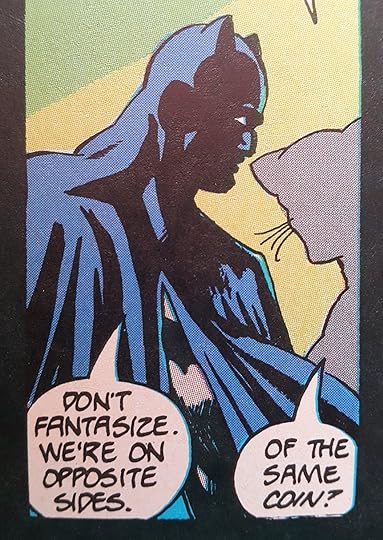
It was a good idea to expand the story of Catwoman from "Batman Year One". But the whole creative team was a huge disappointment. The writing. The pencils. The colors. All of it. What a wasted chance.

July 9, 2020
I loved reading this. A quintessential Batman and Catwoman story, in a gritty crime noir take, dripping with 1980s Gotham City nostalgia. Clearly influential for the modern Catwoman character; in Tim Burton’s “Batman Returns” film and the animated series, as well as how Selina and Bruce’s relationship is now written in the comics.

February 26, 2017
Some interesting story, maybe even compelling. Some mediocre art sprinkled with some truly terrible panels. Absolutely ridiculous dialog for the pimp Stan. Overall very uneven -- a few parts worth a '4' and other parts barely a '2', so call it a '3'

May 7, 2020
This should have been so much better. The basic story is good and has some decent ideas. Unfortunately, the writing is mediocre with Poor dialogue, pacing and structure. It the book equivalent of a poorly directed b-grade tv show.

March 7, 2025
Outro quadrinho da série Ano Um, que faz parte da boa iniciativa da PaniniTM em trazer os diversos títulos relacionados com esse selo para o Brasil. A diferença aqui é que essa minissérie da Mulher-Gato só ficou conhecida no Brasil como Ano Um. Isso por causa da Editora Abril. Lá fora se chama Catwoman: My Sister Keeper. Quando li essa minissérie pela primeira vez, ainda no especial da Editora Abril, eu achei sensacional, principalmente com as relações que traçava com o Ano Um do Batman. Mas relendo atualmente achei menos interessante do que tinha lido. Talvez porque dessa vez notei que as cores estavam lavadas, algo que não sei se é proposital, se é coisa dos arquivos digitais ou se foi problema na edição brasileira. Na edição da Abril isso passava batido porque o papel que se trabalhava naquela época também tinha uma qualidade menor e as edições eram mais furrecas mesmo. De toda forma, para fãs da Mulher-Gato e do Ano Um de Miller e Mazzucchelli este encadernado é uma ótima pedida, ainda mais para aqueles que nunca tiveram contato com a gênese de Selina Kyle.

August 14, 2025
Official rating: 2.5
I don’t have the paperback, but since Goodreads doesn’t have the Kindle version, this will have to do.
Given that this trade is tied directly to Batman: Year One, it felt right to jump into Selina Kyle’s “origin”/side story. This was her first-ever solo run, and while it’s far from the best, it’s a decent start. The plot’s actually there, with some solid themes sprinkled in, and it even gives us an early glimpse at her whole adversary-slash-lover duo with the Bat, which, honestly, is the highlight. That said, it uses entire panels straight out of Year One, and the pacing drags a bit (could have been shortened to 3 issues). Some extra context (especially for the side characters) would’ve helped.
As it stands, it’s a passable read, but nothing essential unless you’re really into Catwoman. There are other runs and takes from here on out that sound way more interesting. Still doesn't take that she is a compelling character, and a complex one at that.
P.S. I’ll be diving into a few more Bat trades in the mainline continuity before hopping over to Miller’s The Dark Knight Returns, which I will read before Batman: The Long Halloween, for sure.
I don’t have the paperback, but since Goodreads doesn’t have the Kindle version, this will have to do.
Given that this trade is tied directly to Batman: Year One, it felt right to jump into Selina Kyle’s “origin”/side story. This was her first-ever solo run, and while it’s far from the best, it’s a decent start. The plot’s actually there, with some solid themes sprinkled in, and it even gives us an early glimpse at her whole adversary-slash-lover duo with the Bat, which, honestly, is the highlight. That said, it uses entire panels straight out of Year One, and the pacing drags a bit (could have been shortened to 3 issues). Some extra context (especially for the side characters) would’ve helped.
As it stands, it’s a passable read, but nothing essential unless you’re really into Catwoman. There are other runs and takes from here on out that sound way more interesting. Still doesn't take that she is a compelling character, and a complex one at that.
P.S. I’ll be diving into a few more Bat trades in the mainline continuity before hopping over to Miller’s The Dark Knight Returns, which I will read before Batman: The Long Halloween, for sure.

October 7, 2026
I like this book, it's okay, I've always loved the interpretation of Catwoman once being a sex worker, it adds another layer to her deep devotion to ensuring the protection of vulnerable parties like sexworkers, the poor, and women in general. But yeah, it was definitely written in the late 80s. I also don't think she has much of an interesting character here, beyond her interactions with her sister. Stan is a forgettable villain.

January 7, 2025
3,5 ⭐ é uma boa história pra conhecer melhor como surgiu a Mulher-gato, ela se passa no mundo de Ano Um e me deixou curiosa pra ler essa hq também. em resumo, gostei. admito que gostaria de ter tido um pouco mais do batman, rs.
May 1, 2022
Disjointed and nonsensical

December 15, 2025
Selina’s backstory is so sad and I love her so muc and I love Batman. Could do without the misogyny in this tho but

December 26, 2024
My 2nd comic book! So cool! Melia Glubka is my teacher ❤️
November 21, 2020
This ties in quite closely with 'Batman: Year One'. Some sections, especially in the first issue, are taken directly from Year One but without much of the context surrounding them, so they may not make a lot of sense to readers unfamiliar with the Batman title (e.g. is that Bruce Wayne fighting the pimp and, if so, why does he have a large scar?). 'Catwoman', however, isn’t given the full ‘prestige treatment’ and the art and colouring is a little bit lacking. The story itself is interesting and involves Selina Kyle’s relationship with her nun sister, who is kidnapped by Kyle’s vicious pimp as revenge for Selina's growing independence. Upon the recommendation of a caring cop, Catwoman is trained by Ted Grant (AKA Wildcat), and I don’t know if this was traditionally part of Catwoman’s origin but it’s a nice touch, as are the believable motivations behind Selina's adoption of the costume and Catwoman persona. The story is told without narration and the dialogue is mostly used sparingly, and I enjoyed this aspect of the comic. On the other hand, some of the dialogue was stilted and it could be difficult to interpret the meaning of the conversation. Also some of the art felt a bit mediocre, with inconsistently rendered faces and expressions.
A nice companion to Batman: Year One and an interesting origin story for Catwoman, but it is unfortunately not quite up to the same standard in writing or art.
A nice companion to Batman: Year One and an interesting origin story for Catwoman, but it is unfortunately not quite up to the same standard in writing or art.

August 15, 2014
Art: J.J. Birch's art isn't very good even by 1989's comic standards. It has its moments. Some of the police officers and the nuns have decent looking faces but Batman looks bad and Catwoman is horrible. Not only is the character design concept bad (I hated this design in Batman Year One), but it's poorly executed in drawing as well. Add the fact that certain pages were ripped right of Year One and throw on one of the most abysmal covers ever to disgrace a Graphic and you end up with a really low art score. Art gets a 2.
Writing: This is actually some of the worst writing in a comic I've ever seen. Mindy Newell must have taken a failed script she wrote for an ABC After School Special which has a message of: Stay in school or you'll become a runaway that ends up as a prostitute, with a protective older sister type who likes to dress up in a S&M costume that your pimp gave her so she can rob people and beat up said pimp and this will bring the law down on you, and you'll end up getting beat up by the stereotypical dirty cop and have to go live with nuns. Mindy Newell then decides to force this crap story to line up Frank Miller's Batman Year One. Then, there are the jump cuts to somewhere else or some time else when the scene you are reading doesn't feel complete yet. It is like watching a movie where part of the reel was damaged and the damaged part was cut out and the film spliced back together with parts missing. The end result being probably the lamest Catwoman story ever written. Writing gets a 2.
During the mid to late 1980's and on into the early 1990's Marvel Comic's sales were blowing DC out of the water. During this time period DC only had a handful of comics that were truly great. Watchmen, The Dark Knight Returns, and The Killing Joke are examples of that greatness. This Catwoman graphic is at the opposite end of that spectrum. With its terrible art and even worse story, it is easy to see why Marvel was winning the war in sales because DC was churning out so much crap like this.
Writing: This is actually some of the worst writing in a comic I've ever seen. Mindy Newell must have taken a failed script she wrote for an ABC After School Special which has a message of: Stay in school or you'll become a runaway that ends up as a prostitute, with a protective older sister type who likes to dress up in a S&M costume that your pimp gave her so she can rob people and beat up said pimp and this will bring the law down on you, and you'll end up getting beat up by the stereotypical dirty cop and have to go live with nuns. Mindy Newell then decides to force this crap story to line up Frank Miller's Batman Year One. Then, there are the jump cuts to somewhere else or some time else when the scene you are reading doesn't feel complete yet. It is like watching a movie where part of the reel was damaged and the damaged part was cut out and the film spliced back together with parts missing. The end result being probably the lamest Catwoman story ever written. Writing gets a 2.
During the mid to late 1980's and on into the early 1990's Marvel Comic's sales were blowing DC out of the water. During this time period DC only had a handful of comics that were truly great. Watchmen, The Dark Knight Returns, and The Killing Joke are examples of that greatness. This Catwoman graphic is at the opposite end of that spectrum. With its terrible art and even worse story, it is easy to see why Marvel was winning the war in sales because DC was churning out so much crap like this.

August 6, 2012
Set during the events of Batman: Year One (even going so far as to reprint whole panels from Frank Miller's story), this miniseries describes the origin of Catwoman. As in Year One, Selina Kyle is practicing the world's oldest profession before donning the cat suit and turning to burglary. Selina's sister, a nun, is concerned about her and ends up getting dragged into Selina's world. Most of the miniseries is concerned with a weird conflict between Selina, Selina's sister, and her pimp*; the final issue focuses instead on some police corruption and involves more Batman.
The artwork isn't bad, but it's just OK in my opinion. The story was a little muddled and had some problems thematically. Its attempts to tie the Catholic faith in with Selina's situation mostly fell flat, and the comparisons of Batman's worldview with Selina's felt a little heavy-handed. The miniseries is mostly notable for its depiction of Catwoman's early days. Catwoman fans and readers interested in the character's history will find this interesting, but more general readers can probably steer clear. 2 stars.
*Selina's sister (the nun) ends up roaming the streets of Gotham, looking for Selina. The police want to discourage this (for some reason) and so threaten to arrest her for solicitation(!?!). Undeterred by these (very illegal) threats, she wanders along until she attracts the notice of Selina's ex-pimp, Stan. Stan, who has been fighting with Selina and is pretty much crazy, ends up kidnapping the nun in order to...well I'm actually not sure what Stan's goals are. Anyway, this gives a reason for Selina to come after Stan in earnest.
The artwork isn't bad, but it's just OK in my opinion. The story was a little muddled and had some problems thematically. Its attempts to tie the Catholic faith in with Selina's situation mostly fell flat, and the comparisons of Batman's worldview with Selina's felt a little heavy-handed. The miniseries is mostly notable for its depiction of Catwoman's early days. Catwoman fans and readers interested in the character's history will find this interesting, but more general readers can probably steer clear. 2 stars.
*Selina's sister (the nun) ends up roaming the streets of Gotham, looking for Selina. The police want to discourage this (for some reason) and so threaten to arrest her for solicitation(!?!). Undeterred by these (very illegal) threats, she wanders along until she attracts the notice of Selina's ex-pimp, Stan. Stan, who has been fighting with Selina and is pretty much crazy, ends up kidnapping the nun in order to...well I'm actually not sure what Stan's goals are. Anyway, this gives a reason for Selina to come after Stan in earnest.
Displaying 1 - 30 of 123 reviews