The Sleeping Father begins with a divorced dad who inadvertently combines two incompatible anti-depressant medications, goes into a coma, has a stroke, and emerges with brain damage. His teenage son—the protagonist of the book, Chris—and his teenage daughter—Cathy—inherit money from their grandfather and decide to rehabilitate him on their own. decide to make one. Absent an adequate father, the children decide to make one, bringing with it a host of difficulties and opportunities. Chris tries everything from sex to capitalism in his search for guidance on the path to adulthood and Cathy, believing her secular Jewishness inadequate in the provision of a benign & divine Father, looks to Catholicism for solace and meaning. The Sleeping Father explores the shift in the way Americans think about mental away from regarding ourselves as being shaped by our upbringings and toward regarding ourselves as being shaped by the chemicals in our bloodstreams. The American family, in this novel, emerges as a microcosm of larger social institutions; Moms and Dads as in-home teachers, priests, presidents, and CEOs. In focusing on the Schwartz family in crisis, Sharpe addresses the larger crisis in faith and authority in contemporary American life.
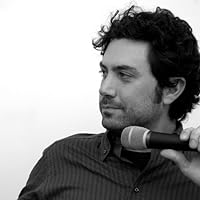
Matthew Sharpe (born 1962) is a U.S. novelist and short story writer. Born in New York City, but grew up in a small town in Connecticut. Sharpe graduated from Oberlin College in Ohio. Afterwards, he worked at US Magazine until he went back to school at Columbia University, where he pursued an MFA. Since then, he has been teaching creative writing at various institutions including Columbia University, Bard College, the New College of Florida, and Wesleyan University. Sharpe says he started writing fiction at age ten but was finally inspired and encouraged to be a writer after reading Sam Shepard's play La Turista when he was 21.
Matthew Sharpe is the author of the novels Nothing Is Terrible (Villard, 2000), The Sleeping Father (Soft Skull, 2003, translated into nine languages), Jamestown (Soft Skull, 2007) and You Were Wrong (Bloomsbury, 2010) as well as the short-story collection Stories from the Tube (Villard, 1998). He teaches creative writing at Wesleyean University. His stories and essays have appeared in Harper's, Zoetrope, BOMB, McSweeney's, American Letters & Commentary, Southwest Review, and Teachers & Writers magazine.
I discovered Matthew Sharpe, one of many underappreciated novelists swirling around a sea of undue obscurity, through Krok's DFW-comparison-raising review of You Were Wrong. Based on my trust of Krok's taste in the fine arts and my largely reflexive adherence to DFW-comparisons, I had to check it out. I quickly purchased You Were Wrong and devoured it one night while getting pretty tanked and jacked up on Irish whiskey infused coffee. Soon after this doubly intoxicating experience, I purchased the rest of Sharpe's output and tore through all three remaining novels and a short story collection rather quickly. I documented my love of one of these books so far, but haven't given any thoughts on the others yet, despite a thorough enjoyment of all of them, until now.
The Sleeping Father falls in line with a form and style of storytelling that is now very, painfully, recognizable, to the point of cliché-and-anti-cliché-backlash in the realm of so-called independent films: The Quirky Disfunctional Family Drama (QDFD). The last of these sort of films I was able to enjoy without succumbing to kneejerk backlash was The Royal Tenenbaums way back in the heady daze of 2002. Since then, with Little Miss Sunshine being a glaring example, this basic form has become more of a bottom-line-padding commodity and less of an authentic artform, and has given birth to a long, pathetically unself-aware lineage of poorly Xeroxed derivations. However, despite reading this in 2010, I was able to look beyond the fact that good things eventually become bad cliches and simply appreciate this book as the sad-funny-compelling story that it is. The fact that it was written in the early Aughties (i.e., 2000's) made it feel more forgivable than were it written after the further passé-solidification of the QDFD form and having already read and really enjoyed Sharpe's work, which, of course, primed me with a positive inclination before even reading the opening sentence.
The story mainly revolves around a single family that is more troubled than quirky, but some quirk remains. The titular father is in a coma, the son does some typical and untypical stuff with drugs and sex, the daughter similarly with religion rather than drugs, the dad's flawed but highly sympathetic, et cetera. Despite some QDFD tropes, I still found myself really engaged and caring about the fate of the characters. There's plenty of death-anxiety tension sewn into the narrative fabric, something I tend to find compelling, even if the method of delivery isn't surrounded by a perfectly flawless execution.
Sharpe's writing remains pretty top-notch throughout, as with all of his work, and the only real flaws here are the occasional tiny swells of what feels like an overindulgence in the QDFD details. I'd recommend any of his other novels over this one, but calling this a relatively flawed book when held up to the others is still a huge compliment.
This book is unusual and hard to describe. Primarily a story of a divorced family with two teenage children that live with their father. The father accidentally takes the wrong medication and becomes brain damaged but before any of this began I have to believe this family was different. The children are independent, intelligent, and loyal to their father, if disrespectful. Though I really don't know children like this, there are flashes of truth through out this book of the angst of adolescence. I will think about this book for some time.
After accidentally combining antidepressants, Bernie Schwartz lapses into a coma, waking to discover he has severe brain damage and is no longer able to speak or think coherently. His son, Chris – alternately adoring and abusing his neurologist – devises a rehabilitative regime founded almost entirely on misinformation, while his daughter, Cathy, attempts to channel her newfound Catholic fervour into her father’s recovery.
The meat of Sharpe’s narrative isn’t exactly joyful, yet it is observed and delivered with a rare perfection and such impeccable comic timing that its vivacity somehow overcomes its sorrow. The certainty and unfaltering skill of his writing will make you trust him as he assures, even in the midst of tragedy, the world is a place of “angst, angst everywhere and nothing to be feared”.
This is the freshest and most touching book I’ve read in months, and though sometimes it made me cry, it’s still making me laugh.
Dammit, Matthew Sharpe. I was all ready to claim you as the genius that only I knew about, based on the awesomeness of You Were Wrong. Alas, this novel is merely decent. It's written in a somewhat more timid version of the newer book's flavor-crystal-explosion prose style, and it is just kind of a basic family novel with not much original going on, and it is oppressively quirky at times. But, enough good writing to keep me engaged.
Eh... nah. I'm honestly rather puzzled by all the people who found this funny - I can't remember being even the slightest bit amused at any point. Boring book full of irritating characters, particularly the protagonist who just so happens to be a complete, exceedinly annoying twat.
Dopo le recensioni sulla fiducia, oggi inauguriamo una nuova categoria di recensioni, ovvero quelle che “prima è meglio se leggi il libro”, perché se leggi questa recensione e non hai ancora letto il libro magari poi ci rimani male.
Potremmo fare così: tu leggi la recensione anche se non hai letto il romanzo, poi quando sto per scrivere contenuti nocivi alla tua salute di lettore che vuole gustarsi questo libro, allora inserisco una parola chiave il cui significato è: “Attenzione! Quello che seguirà è un commento ostile, però il romanzo merita lo stesso, ok?”
La parola chiave di questa recensione è: “il maiale salta lo steccato”
Svolgimento:
A volte ti chiedi come sia possibile che prima di essere pubblicati certi libri siano scartati da più di venti case editrici e pensi non è vero, non ci credo, è impossibile, poi ti ricordi dei tuoi inizi, allora pensi va bene, può essere, però insomma, ma in che mondo viviamo?
Certi testi sono così oggettivamente belli che come fa un editore ad essere così sbadato? Cosa legge al posto dei manoscritti? Possibile che tutti e venti gli editori che hanno letto “Gli Schwartz” di Matthew Sharpe erano tutti e venti ubriachi?
Peggio per loro, e meglio per l’editore che lo ha pubblicato per primo, visto che poi questo libro è entrato nella classifica dei bestseller in America che certo, la classifica dei bestseller non è mica sempre sinonimo di qualità – vedi classifica bestseller nostrani – ma in questo caso è proprio così.
In questo caso, oltre all’autore e all’editore, a guadagnarci è soprattutto il lettore, che appena apre il libro si ritrova dentro un romanzo illuminato da una scrittura esemplare, di quelle che ogni tanto ti fermi a rileggere ciò che hai appena letto, perché ci sono delle frasi che ti hanno colpito ma non ti hanno fatto male, e questo è un dono che personalmente non trovo mica in tutti i libri che leggo, altrimenti non sarei qui a scriverne.
“Gli Schwartz”, pubblicato in Italia da Einaudi, è un romanzo doloroso ma scritto con una penna a sfera, di quelle con la punta arrotondata che non aggrediscono il foglio e meno ancora il lettore. “Gli Schwartz” è il nome di una famiglia al cui vertice troviamo il padre, Bernie Schwartz, un uomo sull’orlo avanzato di una crisi depressiva: il divorzio è ormai lontano anni luce così come la ex moglie, Lila Munroe, domiciliata a Heart Valley, California, mentre la famiglia Schwartz si trova a Bellwether, Connecticut. Non so se con questo ho dato l’idea della distanza, ma se in geografia siete esperti quanto me, posso dirvi che per passare dalla California al Connecticut è necessario andare in aeroporto. Lila Munroe è lontana dalla famiglia Schwartz, mentre Bernie Schwartz è vicino alla sua famiglia, ovvero i due figli Chris e Cathy. Il primo è un ragazzino di diciassette anni inquieto e ribelle sia alla vita che all’acne. Con la prima è ancora in fase di studio e cerca di fronteggiarla come può, con la seconda invece ha già capito che non c’è più niente da fare.
Chris Schwartz non può più fare niente nemmeno con la sorella Cathy, adolescente ribelle come lui ma solo verso l’ebraismo, che cerca di combattere con un’ostinata fede cattolica nella sua forma più teorica, ovvero quella non praticante, essendo la famiglia Schwartz ebrea.
Bernie Schwartz è dunque l’elemento adulto che si prende cura dei propri figli anche se l’unica cosa che riesce a prendere è il Prozac, fino al giorno in cui non lo prende più perché riesce a prendersi un ictus, seguito da un coma; al suo risveglio saranno i suoi ragazzi a rieducarlo al mondo: insieme ricominceranno a dare i nomi alle cose, agli alberi, alle nuvole e alla morte. Insieme capiranno la differenza tra un abbraccio e uno stupro. Insieme canteranno poesie e fumeranno sigarette al mentolo. Insieme scopriranno “tutte le cose del mondo” grazie anche alla lista compilata dal migliore amico di Chris, Frank Dial, e all’aiuto scrupoloso ed efficiente della dottoressa Danmeyer.
Questo libro di storie dentro alle storie, contiene lacrime, risate, riflessioni, biciclette, eredità, oceani, santi, macchine, suicidi, alberi, domande, stelle, pistole, cambiamenti, sesso, ospedali, mail, poesie. Questo libro contiene la storia di una famiglia che ne passa di tutti colori come se passare tutti i colori fosse il normale paesaggio che si vede dal finestrino della macchina mentre si percorre la strada della vita. Questo libro contiene frasi un po’ come quest’ultima però completamente diverse, era solo per fare un esempio più brutto possibile.
Ecco perché, se dovessi proprio trovare qualcosa di brutto in questo romanzo, e badate bene che qui il maiale salta lo steccato, potrei dire che “Gli Schwartz”, romanzo di Matthew Sharpe, attualmente docente di scrittura creativa alla Columbia University, a volte pecca un po’ troppo di scrittura creativa: sebbene esemplare in quanto a costruzione, non è sempre immediata agli occhi del lettore.
Certe costruzioni di frasi che per avere un senso potrebbero fare il loro effetto già da svestite, vengono rivestite da Matthew Sharpe con giri di parole che talvolta le appesantiscono, privandole del loro significato originale.
Certo, ce ne fossero di scrittori che rivestono le parole come il nostro amico Matthew Sharpe. Autori che incartano le frasi come se fossero un regalo e poi ci mettono anche il fiocco. Però diciamo che non è sempre necessario incartare tutte le parole, a volte basterebbe anche solo consegnarle nello stato in cui si trovano nella mente dell’autore.
Ora guardatevi intorno: c’è il maiale che sta saltando lo steccato. La diretta conseguenza di questo tipo di scrittura, sono i personaggi: a parte il padre Bernie, che per buona parte del romanzo parla come un uomo che è appena uscito da un coma dopo un ictus, il modo di porsi del resto della famiglia compresi tutti i personaggi di contorno è piuttosto inverosimile.
È impossibile che tutti quanti in questo libro, anche nelle parti più impreviste, abbiano un uso della parola che sembra studiato a tavolino però con davanti un leggio. Meno ancora è possibile immaginarsi una tale profondità di pensieri in bocca a due ragazzini, che per quanto intelligenti, non ce li vedo mica a parlare così a sedici e diciassette anni. I ragazzini di quell’età che conosco io parlano tutti in un altro modo. Però non sono mai stato a Bellwether, Connecticut. Magari la mia sensazione è dovuta a un’errata percezione di moto: dovrei iniziare a viaggiare di più.
Lode dunque a Matteo Colombo che ci ha fatto viaggiare traducendo così bene la complessa scrittura creativa di Matthew Sharpe, e lode all’autore, che ignorando tutti questi maiali che mentre scriveva gli saltavano dallo steccato, è riuscito comunque a creare un ottimo romanzo, di quelli che si divorano al posto del cibo quando hai fame e in frigo non hai niente, però hai libri come questo sul comodino, che per noi lettori esigenti è sempre un gran bel nutrimento.
Tuttavia, se a uno gli piace il maiale e in tema di carne non riesce a fare l’indifferente, possiamo aggiungere che il passaggio prima e dopo ictus di Bernie è troppo veloce. Il lettore non fa in tempo a conoscere Bernie, che ben presto se lo ritrova in un letto di ospedale, in coma, e subito dopo nulla è più come prima.
Io da lettore avrei preferito affezionarmi un po’ di più al personaggio di Bernie, prima di godermelo rintronato. Avrei voluto conoscere meglio Bernie Schwartz prima del coma, perché per quel poco che mi aveva fatto scoprire Matthew Sharpe, Bernie Schwartz mi era sembrato uno su cui contare, una figura curiosa e tutta da scoprire. Invece così ho scoperto poco o niente. Non sono riuscito a fare troppi paragoni tra il prima e il dopo. E quando un lettore non riesce a fare paragoni, come quando il maiale salta lo steccato, un po’ ci rimane male.
Ci sono così tanti colpi di scena uno dietro l’altro in questo romanzo, che come minimo Matthew Sharpe avrebbe dovuto prevedere almeno seicento pagine in più, tanto la fatica sarebbe stata solo del traduttore, il lettore di certo non se ne sarebbe mica accorto.
Al contrario, il lettore avrebbe apprezzato, e in questo caso avrebbe pure evitato di scrivere recensioni come questa, con maiali che saltano da tutte le parti, quando invece l’unica cosa che deve saltare all’occhio è solo la straordinaria avventura della famiglia Schwartz, una storia che come tutte le storie non è immune da difetti, perché diciamo la verità: chi non ne ha?
"Al padre di Chris Schwartz dovettero sbagliare la dose di Prozac, perché un giorno, svegliandosi, si ritrovò il lato destro della faccia addormentato. Fu la seconda scoperta di un viaggio che il padre di Chris aveva intuito l’avrebbe portato a chilometri di distanza dal rifugio provvisorio della salute. La prima scoperta era stata, naturalmente, quella depressione per cui il Prozac avrebbe dovuto essere la cura, scoperta compiuta non da Bernard Schwartz ma da suo figlio, Chris. Era stato Chris a rendersene conto per primo, perché così andavano le cose in quella famiglia. L’anima del padre e l’anima del figlio erano collegate per analogia. Non esisteva tic o sbalzo d’umore dell’uno che non fosse rappresentato anche nel suscettibile bagaglio dell’altro"
Una commedia senza buoni sentimenti, ironica, imprevedibile, che non annoia fino all'ultima pagina. Molto interessante il ritratto della famiglia ebrea borghese nella provincia americana, come quello delle parallele crisi che i protagonisti attraversano: i due figli adolescenti, il padre gravemente depresso, la madre trasferitasi in California a seguito del divorzio. Finale con inserto in stile b-movie, che sarebbe piaciuto a Quentin Tarantino. Traspare dalla scrittura, seppur in traduzione, il fatto che l'a. sia docente di scrittura creativa in diversi college statunitensi.
This is a hard book to review. Parts of it are good but overall it feels like it's trying too hard to be clever/funny. I couldn't connect to Chris at all - practically everything he said annoyed me. I didn't dislike it as such, it was just okay. 2.5 stars, rounded up to 3.
I honestly didn't expect much but i hugely enjoyed this book! Odd throughout but woven together with heart and a truthfulness about family that is refreshing.
Thoroughly entertaining and written with intelligent prose, a sharp wit, and delicious irony. His characters irresistibly pulled me along as I turned the pages. A wonderful novel.
"Chris took Frank's excellent point and did a kind of uptight middle-class suburban Jewish version of letting it all go, which to the casual observer might resemble not letting any of it go." - p. 18
"How come Chris didn't get to become anything? Why did he have to go on being Chris until death rent him asunder from himself?" - p. 34
"You're so lovely, but I can't remember if your name is Lila or Layla." "That all depends." "On what?" "On whether I'm having sex with someone or having sex with myself." "What?" "It's a joke." "It is?" "About transitive and intransitive verbs." -p. 69
"The things in your life that suck right now--and the specialized way that the things in your life suck right now suck--will not continue indefinitely." - p. 86
"That's very nicely done. Subtle and sophisticated for a Catholic girl. Why don't you premaritally go fuck yourself." - p. 90
"What is rape?" "Rape is when two people have sex and only one of them wants to." "I think I raped your mother." -p. 155
"Shiva is mourning. I cover the mirrors and the windows of my house. I stay at home and sit on a low stool. People come over and console me. I don't cook for them, they bring food. It's a sort of miserable social occasion that it would be nice if you and your sister could be here for." - p. 161
"Even to irreligious Chris, this rabbi was an asswipe, eschatalogically speaking. He was beyond Reformed, he was Overhauled." - p. 166
I have mixed feelings about The Sleeping Father. On the one hand, the characters were creative and well developed, the plot was deep and relatively interesting, and the irony was symbolic, to say the least. Cathy, a Jewish/Catholic good girl/pregnant teen, and her brother Chris, an obnoxious, sarcastic misogynist, were entertaining, but I didn't feel any connection to them. I didn't pity them or really care what they were doing. I found Chris' interactions with most other characters completely unrealistic. In fact, I lost interest in the entire plot whenever it took a turn for the fantastic. The book was so ironic that the irony came to be expected. The disturbing twist Sharpe puts on the father-son relationship is a central theme, but some other twists seemed unnecessary. The author clearly put a lot of thought into the plot and characters. It was an impressive effort but I just couldn't get into it. Overall, The Sleeping Father? wasn't a terrible book, I just didn't like it. Perhaps it's because the subject was a bit of a downer or the characters were "strange" (for lack of a better word.) Or maybe because the plot was too complex yet boring at the same time. Who knows, I just wasn't feeling it...
I remember the characters in this book making some decisions that I felt like I couldn't understand, or would never make, but I think what works about that is that it's pretty accurate to the way things work in real life; often I feel perplexed by people's choices, and mostly, even if I ask and get an answer about why someone did what they did, I eventually have to just accept that individuals are mysterious and unpredictable and we don't always get to know what makes someone else tick. Interestingly, I think that in literature we are used to being given all the pieces, and it can seem disconcerting when we think we know exactly what a character will or will not do, and then they do not deliver.
Um so I need to write a love letter to Mathew Sharpe that reads Dear Mathew Sharpe, I have fallen deeply and truly in love with the contents of your head. Or rather, I've fallen for the quality no, system no, agent which organizes those contents into beautiful and sprawling sentences. And truly, I believe no one else might understand you/your head agent as I do, unless it's Matt Lauer, Meredith Vieira, Ann Curry, Al Roker (especially him), Gene Shalit and who so ever else be part of the Today Show Book Club, though I cannot account for them. Please use the term Higledy Pigledy as often as possible. With Warmest Regards, Heidi McKye. But Please don't tell him of my love as I'm fairly positive he'll just think I'm some sort of creepoid. Thanks.
Bernard Schwartz is divorced, depressed, and due to the accidental mixture of Prozac with another different antidepressant, in a coma. He later awakes with brain damage, diminishing his ability to think or speak coherently. He is the father of a self-absorbed, sarcastic son, Chris, and a jewish daughter, Cathy, turned to the catholic religion in an attempt to find the meaning of life. Their mom is away in California, living the dream that does not include a family.
This book was hilarious and full of sarcasm. The characters were creative and well developed, with an interesting plot. The author’s writing style, combined with the irony of the Schwartz’s dysfunctional family, fits perfectly. Well worth the read.
A clever, absurdist family portrait catalyzed by a father's stroke. The book begins in familiar territory -- a relatively well-off Connecticut familly, divorced, kids self absorbed, mom in California -- until the father mixes anti-depressants and has a stroke, thrusting the kids into adulthood far too early, and launching a series of painful convulsions between brother and sister, between brother and friend, and sister and friend, and mother and father, and son and doctor, and mother and doctors father, and... well you understand. Sharpe has some great deadpan moments and I enjoyed the read.
A me è piaciuto moltissimo. Riesce a raccontare una famiglia disastratissima in modo simpatico, le riflessioni sono tutte venate da un'onnipresente vena di humour nero, alcune scene poi sono esilaranti, così come certi scambi di battute. I personaggi sono uno più strambo dell'altro, all'inizio, ma poi ci si abitua come se fossero all'ordine del giorno. Pungente, amaro e ironico, davvero consigliato. Paragoni con l'a detta di tutti simile "Le correzioni" di Franzen non ne posso fare, ma questo merita senz'altro.
many, many times in this book, i rolled my eyes at the complete implausibility of plot points and ridiculous dialogue, a la wes anderson in print. but there were strong moments of truth and i laughed out loud a few times and am now happy i read it. in the vein of catcher in the rye, portnoy's complaint, heartbreaking work of staggering genius and a rash of films (heartbreak kid, chumscrubber, thumbsucker, rocket science).
The characters are brilliantly unique and well developed, with the author paying particular interest to recreating what such extraordinarily bright teenagers would say and think if they were being truly honest with themselves. Not a terribly uplifting book but it does make the reader think about what life might be like living with a mostly incapacitated father as his two children must quickly switch places and be the heads of the house/ teachers/ organizers.
This book was hilarious and heart-wrenching. The constant sarcasm that permeates the book is owned by no one voice, but collectively by everyone. Which makes it the novice book that it is. But, there were parts (the dodge-ball chapter for example) that I will remember until my dying day. If you like over-the-top sarcasm and black humor, then this will be a feast for you.
After reading an interview with Sharpe in Glimmer Train Stories literary journal I searched out this novel. The troubled quirky family, as others have noted, seems a literary cliche at this point, but Sharpe manages to keep this story fresh and noteworthy in the rich characterization and the psychological explorations.
Normally I hate books with a tight focus on family life, but this book is so insightful and funny and human that it overcame my prejudices and won me over immediately. Brilliant, brilliant, brilliant.
This was one of my favorite books I've read in a long, long while. Shakespeare would be proud of the true "comedy" nature of this tale of teenage angst and learning how to maneuver in a world that is not so friendly.
i liked this story, a bunch of narcissistic characters trying to deal with tragedy, accidents, family, love, and growing up too fast. matthew sharpe has a clever mind and a quick wit, most of which materialized through chris's character. a little depressing, but enjoyable over all.
I did not enjoy this book, it started out mildly interesting but the frankly ridiculous dialogue got on my nerves very soon. I finished it, hoping it would get better, but the characters and events are absurd and implausible.