

What do you think?

The Storyteller's Daughter: One Woman's Return to Her Lost Homeland
The vivid, often startling memoir of a young woman shaped by two dramatically disparate worlds. Saira Shah is the English-born daughter of an Afghan aristocrat, inspired by his dazzling stories to rediscover the now lost life their forebears presided over for nine hundred years within sight of the minarets and lush gardens of Kabul and the snow-topped mountains of the Hindu Kush. Part sophisticated, sensitive Western liberal, part fearless, passionate Afghan, falling in love with her ancestral myth-chasing Afghanistan-Shah becomes, at twenty-one, a correspondent at the front of the war between the Soviets and the Afghan resistance. Then, imprisoning herself in a burqa, she risks her life to film Beneath the Veil, her acclaimed record of the devastation of women's lives by the Taliban. Discovering her extended family, discovering a world of intense family ritual, of community, of male primacy, of arranged marriages, and finding at last the now war-ravaged family seat, she discovers as well what she wants and what she rejects of her extraordinary heritage.
About the Author: Saira Shah lives in London and is a freelance journalist. She was born in Britain of an Afghan family, the daughter of Idries Shah, a writer of Sufi fables. She first visited Afghanistan at age twenty-one and worked there for three years as a freelance journalist, covering the guerilla war against the Soviet occupiers. Later, working for Britain's Channel 4 News, she covered some of the world's most troubled spots, including Algeria, Kosovo, and Kinshasa, as well as Baghdad and other parts of the Middle East. Her documentary Beneath the Veil was broadcast on CNN.
253 pages, Paperback
First published January 28, 2003
About the author
Saira Shah
5 books39 followersWriter, reporter, and documentary film maker, Shah is daughter of Afghan author Idries Shah and sibling to Tahir Shah and Safia Shah. She is named after her grandmother, Scottish writer Saira Elizabeth Luiza Shah, who wrote as Morag Murray Abdullah.
Her film credits include Beneath the Veil, Death in Gaza, and Unholy War.
Her film credits include Beneath the Veil, Death in Gaza, and Unholy War.
Ratings & Reviews
Friends & Following
Create a free account to discover what your friends think of this book!
Community Reviews
Displaying 1 - 30 of 170 reviews

September 18, 2021
LA FIGLIA DEL CANTASTORIE
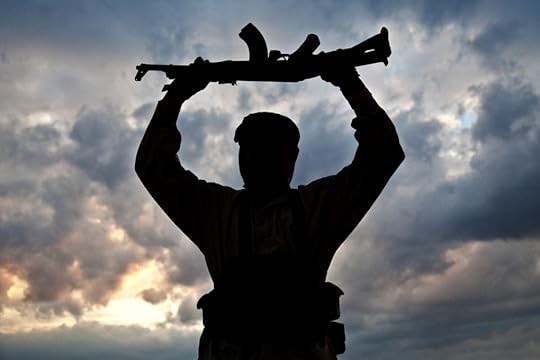
Saira Shah è una giornalista e documentarista che ha scritto questo e un altro libro: un memoir e reportage, mentre l’altro credo sia un romanzo.
In originale intitolato La figlia del cantastorie (The Storyteller’s Daughter) è uscito nel 2003 e copre vent’anni della sua vita e di quella del suo paese d’origine, l’Afghanistan, attraverso i suoi viaggi da reporter e da figlia che torna al paese che conosce solo per i racconti di nonni, padre e parenti vari (tutti residenti in Inghilterra da decenni, dove Saira Shah è nata nel 1964), paese che non ha mai visitato prima, mai visto.
I viaggi cominciano quando lei ha ventuno anni e proseguono per un quarto di secolo, fino a quando gli americani invadono il paese, conquistano Kabul e sconfiggono i talebani (tutto il contrario di quanto appena successo, per quanto possa sembrare incredibile – motivo che mi ha spinto a saperne di più su storia, vicende politiche, e paese).
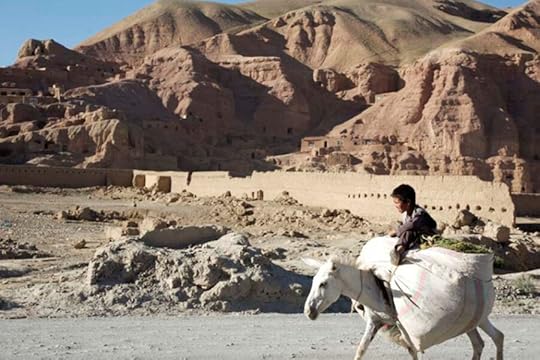
Viaggi che partono sempre dal limitrofo Pakistan, dalla città di Peshawar.
Viaggi che dopo l’atterraggio in aeroporto prevedono sempre lunghe soste in Pakistan, la frontiera con l’Afghanistan attraversata a piedi, perfino giorni e settimane su e giù per montagne alte anche cinquemila metri, dove perfino la semplice respirazione è un problema. Scortata da mujaheddin o da contrabbandieri (e a volte le stesse persone svolgono entrambe le funzioni). E dopo la sfiancante camminata, con rischio di congelamento e assideramento, a volte a bordo di uno scassato mezzo a motore, a volte a dorso di mulo a cavallo.
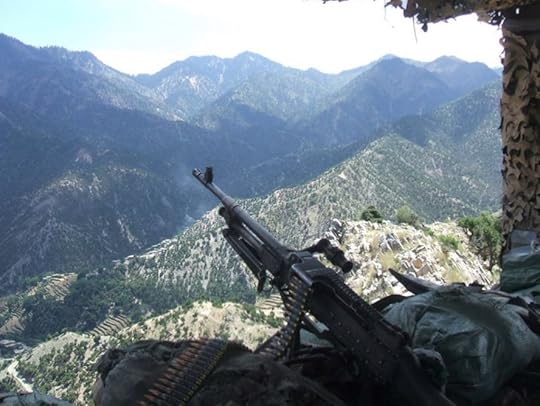
Saira Shah è lì quando ci sono i russi, e gli americani finanziano e aiutano la resistenza (ma alcuni ufficiali mujaheddin vendono missili Stinger agli Iraniani e la CIA non apprezza).
Quando dopo aver scacciato i russi sembra che il paese possa tornare al suo periodo d’oro, gli anni Settanta dello scorso secolo.
Ma poi i talebani prendono il potere e succede quello che sappiamo.
Saira Shah è lì poco prima e poco dopo le Twin Towers, scrive, testimonia, filma, si sente spettatrice ma anche tanto partecipe: quella è la terra d’origine della sua famiglia, la sua gente, lei che da sempre è in bilico tra Occidente e Oriente, nata a Londra da padre afgano e madre persiana, cresciuta nel Kent, nella campagna british per eccellenza.
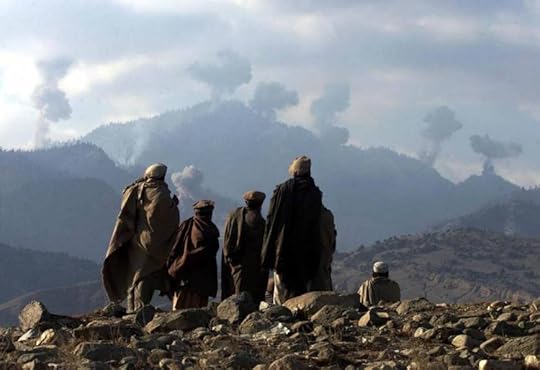
Ma il sangue chiama. La famiglia paterna ha oltre un millennio di storia alle spalle, vanno indietro fino a prima del profeta Maometto, erano i signori e padroni di Pargham. Saira cresce circondata e imbevuta di racconti che oscillano tra storia, mito, favola. Vuole conoscere quel paese per lei leggendario, vuole andare a immergere i suoi panni nel fiume di quella cultura. E appena ha l’età, 21 anni, s’inventa giornalista, riceve un incarico e parte. Con tutte le difficoltà dell’essere donna in quella parte di mondo.
E così finalmente corona un sogno nato quando era bambina e imparava a memoria quei racconti.
E scopre che la sua gente può avere la pelle chiara dei turchi, gli occhi obliqui dei mongoli, i capelli biondi dei guerrieri macedoni di Alessandro, il naso adunco degli arabi: sono molte le varietà somatiche a indicare le tracce degli innumerevoli invasori di questa terra che gli stessi afghani indicano così: quando dio terminò di fare il mondo gettò ridendo gli scarti che gli erano rimasti. E così fu creato lo straziato Afghanistan.
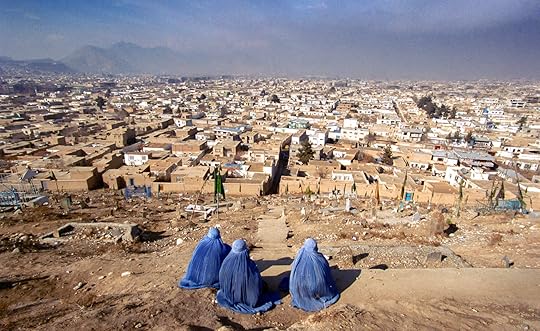
Adesso mi trovo in un mondo dove mi è proibito mostrare il volto, smaltarmi le unghie o far volare un aquilone. Nulla è troppo futile perché gli studenti della legge islamica possano proibirlo. Persino i sacchetti di carta sono banditi – nell’eventualità che quella carta abbia recato accidentalmente il Sacro Nome di Allah, con conseguente rischio di profanazione. Allah deve tenerci proprio tanto alle sottigliezze. È in corso un serio dibattito su quale sia per la legge islamica il modo più accettabile di punire un omosessuale, se gettarlo giù dal minareto più alto ovvero fargli crollare addosso un muro di mattoni.
Non è permesso nulla che non sia specificamente previsto dal Corano o che non rientri nelle azioni documentate del Profeta (Maometto): e quindi, dato che Maometto è morto nel 632 dopo Cristo, le azioni che possono essere documentate sono pochissime, e sicuramente escludono la maggior parte di quelle considerate “normali” in buona parte della Terra nel terzo millennio d.C.
Si pensi, per esempio, che problema scaturisce dalla proibizione di immagini di essere viventi (umani o animali) quando si tratta della foto di un passaporto: passi per il promo piano di un uomo (ma non oltre il pp, mai figura intera). E per le donne? Come le riconoscono col burqa?
E come riconoscono uomini e donne quando le date di nascita sono indicative, comprese in un lasso di tempo che può variare di diversi anni?
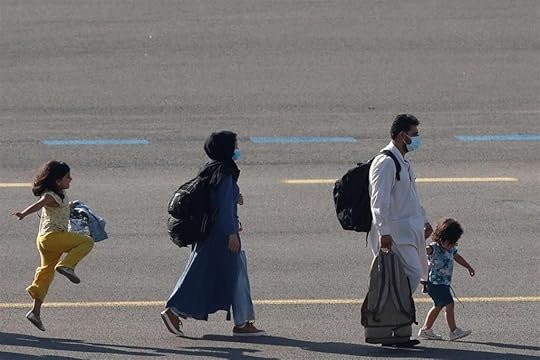
Bello e potente mix di storia e storie personali, di miti e leggende, di poesia e citazioni, di cronaca, di appunti di viaggio, alternando io loro noi, partecipe appassionata ma senza mai dimenticare che in Inghilterra l’humour è elemento portante.
La guerra con la Russia causa un milione e mezzo di morti e quattro milioni di esiliati (su una popolazione di trentotto milioni).
Di quella con gli americani non ci sono cifre.
Per alcuni esiliati alla fine il viaggio si è ripetuto avanti e indietro quattro volte: fuggiti all’invasione dei russi, poi dalle granate dei mujaheddin, dalle atrocità dei talebani, infine dalle bombe americane del 2001.
Infine?
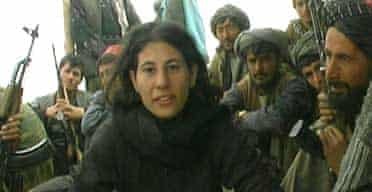
Saira Shah in action.
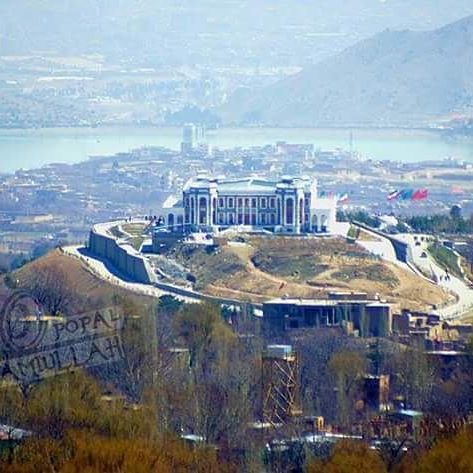
Paghman svetta dall’alto su Kabul: è stata la storica residenza della famiglia Shah che l’ha persa emigrando in Inghilterra.
Saira Shah è una giornalista e documentarista che ha scritto questo e un altro libro: un memoir e reportage, mentre l’altro credo sia un romanzo.
In originale intitolato La figlia del cantastorie (The Storyteller’s Daughter) è uscito nel 2003 e copre vent’anni della sua vita e di quella del suo paese d’origine, l’Afghanistan, attraverso i suoi viaggi da reporter e da figlia che torna al paese che conosce solo per i racconti di nonni, padre e parenti vari (tutti residenti in Inghilterra da decenni, dove Saira Shah è nata nel 1964), paese che non ha mai visitato prima, mai visto.
I viaggi cominciano quando lei ha ventuno anni e proseguono per un quarto di secolo, fino a quando gli americani invadono il paese, conquistano Kabul e sconfiggono i talebani (tutto il contrario di quanto appena successo, per quanto possa sembrare incredibile – motivo che mi ha spinto a saperne di più su storia, vicende politiche, e paese).
Viaggi che partono sempre dal limitrofo Pakistan, dalla città di Peshawar.
Viaggi che dopo l’atterraggio in aeroporto prevedono sempre lunghe soste in Pakistan, la frontiera con l’Afghanistan attraversata a piedi, perfino giorni e settimane su e giù per montagne alte anche cinquemila metri, dove perfino la semplice respirazione è un problema. Scortata da mujaheddin o da contrabbandieri (e a volte le stesse persone svolgono entrambe le funzioni). E dopo la sfiancante camminata, con rischio di congelamento e assideramento, a volte a bordo di uno scassato mezzo a motore, a volte a dorso di mulo a cavallo.
Saira Shah è lì quando ci sono i russi, e gli americani finanziano e aiutano la resistenza (ma alcuni ufficiali mujaheddin vendono missili Stinger agli Iraniani e la CIA non apprezza).
Quando dopo aver scacciato i russi sembra che il paese possa tornare al suo periodo d’oro, gli anni Settanta dello scorso secolo.
Ma poi i talebani prendono il potere e succede quello che sappiamo.
Saira Shah è lì poco prima e poco dopo le Twin Towers, scrive, testimonia, filma, si sente spettatrice ma anche tanto partecipe: quella è la terra d’origine della sua famiglia, la sua gente, lei che da sempre è in bilico tra Occidente e Oriente, nata a Londra da padre afgano e madre persiana, cresciuta nel Kent, nella campagna british per eccellenza.
Ma il sangue chiama. La famiglia paterna ha oltre un millennio di storia alle spalle, vanno indietro fino a prima del profeta Maometto, erano i signori e padroni di Pargham. Saira cresce circondata e imbevuta di racconti che oscillano tra storia, mito, favola. Vuole conoscere quel paese per lei leggendario, vuole andare a immergere i suoi panni nel fiume di quella cultura. E appena ha l’età, 21 anni, s’inventa giornalista, riceve un incarico e parte. Con tutte le difficoltà dell’essere donna in quella parte di mondo.
E così finalmente corona un sogno nato quando era bambina e imparava a memoria quei racconti.
E scopre che la sua gente può avere la pelle chiara dei turchi, gli occhi obliqui dei mongoli, i capelli biondi dei guerrieri macedoni di Alessandro, il naso adunco degli arabi: sono molte le varietà somatiche a indicare le tracce degli innumerevoli invasori di questa terra che gli stessi afghani indicano così: quando dio terminò di fare il mondo gettò ridendo gli scarti che gli erano rimasti. E così fu creato lo straziato Afghanistan.
Adesso mi trovo in un mondo dove mi è proibito mostrare il volto, smaltarmi le unghie o far volare un aquilone. Nulla è troppo futile perché gli studenti della legge islamica possano proibirlo. Persino i sacchetti di carta sono banditi – nell’eventualità che quella carta abbia recato accidentalmente il Sacro Nome di Allah, con conseguente rischio di profanazione. Allah deve tenerci proprio tanto alle sottigliezze. È in corso un serio dibattito su quale sia per la legge islamica il modo più accettabile di punire un omosessuale, se gettarlo giù dal minareto più alto ovvero fargli crollare addosso un muro di mattoni.
Non è permesso nulla che non sia specificamente previsto dal Corano o che non rientri nelle azioni documentate del Profeta (Maometto): e quindi, dato che Maometto è morto nel 632 dopo Cristo, le azioni che possono essere documentate sono pochissime, e sicuramente escludono la maggior parte di quelle considerate “normali” in buona parte della Terra nel terzo millennio d.C.
Si pensi, per esempio, che problema scaturisce dalla proibizione di immagini di essere viventi (umani o animali) quando si tratta della foto di un passaporto: passi per il promo piano di un uomo (ma non oltre il pp, mai figura intera). E per le donne? Come le riconoscono col burqa?
E come riconoscono uomini e donne quando le date di nascita sono indicative, comprese in un lasso di tempo che può variare di diversi anni?
Bello e potente mix di storia e storie personali, di miti e leggende, di poesia e citazioni, di cronaca, di appunti di viaggio, alternando io loro noi, partecipe appassionata ma senza mai dimenticare che in Inghilterra l’humour è elemento portante.
La guerra con la Russia causa un milione e mezzo di morti e quattro milioni di esiliati (su una popolazione di trentotto milioni).
Di quella con gli americani non ci sono cifre.
Per alcuni esiliati alla fine il viaggio si è ripetuto avanti e indietro quattro volte: fuggiti all’invasione dei russi, poi dalle granate dei mujaheddin, dalle atrocità dei talebani, infine dalle bombe americane del 2001.
Infine?
Saira Shah in action.
Paghman svetta dall’alto su Kabul: è stata la storica residenza della famiglia Shah che l’ha persa emigrando in Inghilterra.

April 17, 2018
This book was first published in 2004, which relates, perhaps, different events than the current, but the deeper truths behind cruelties of war, dispossession and dislocation of millions of people did not change, in fact, it became worse.
Afghanistan have become a country where murder, death, the ending of a life, left no room for conscience, regret or tears. Where fighting is a job opportunity, and where drug and weapon smuggling are the game of politicians from different countries. A fascinating but very sad read.
The prose is in the journalese style. The emotions behind it is left for the reader to discover. It has a powerful impact.
Doris Lessing sums up this book perfectly:
Afghan by descent, but brought up in England, she claims to have thought herself half Western liberal, half wild Afghan warrior. To try and resolve this conflict she went to Afghanistan at the time of the Soviet invasion and was propelled into the world of the mujahidin. She was twenty-one years old, and beautiful: dangerous some would think, but she spoke Farsi, knew all their traditions; they treated her as one of them. Her courage is such that even reading about some of her exploits is frightening. This book will speak not only to the many people who admire the Afghan people and pity their ordeals, but to those like Saira Shah who owe allegiance to two cultures … more and more of them now in the world.Saira Shah shares her memories of discovering the country of her parents when she becomes a journalist and travel to Pakistan and Afghanistan to find her father's paradise. She grew up with the old stories he shared and his nostalgia of a life before politics and international warfare in these countries destroyed everything. Beautiful gardens, unforgettable vistas made room for human suffering on an unimaginable scale.
Few invaders cared for this desolate crossroads of Asia where, the Afghans say, when God finished making the world, he laughed and threw down his rubbishShe kept going back to find the other half of herself.
Two people live inside me. Like a couple who rarely speak, they are not compatible. My Western side is a sensitive, liberal, middle-class pacifist. My Afghan side I can only describe as a rapacious robber baron. It revels in bloodshed, glories in risk and will not be afraidDespite the suffering and hardships, her paternal country grew on her. Captured her soul.
I began my quest for truth peddling lies in the offices of Fleet Street editors. I spoke fluent Persian; I was personally known to most of the mujahidin leaders; I was an experienced reporter, hardened to combat. Even as I uttered these outrageous falsehoods, I marvelled that anyone could believe them. I didn’t realize it then but, unconsciously, I was following in the footsteps of the very myths I was trying to put behind me.This is a deeply heartfelt story. I was at times so traumatized that I just couldn't continue reading. Yet, the well-written prose of this documentary memoir kept me coming back. Saira Shah shares her experience behind the documentary film she made and the challenges they had to endure to introduce the outside world to a region of the world where many people still haven't seen airplanes and where some groups live so remote, that they were, by the grace of God, not affected by the war.
Afghanistan have become a country where murder, death, the ending of a life, left no room for conscience, regret or tears. Where fighting is a job opportunity, and where drug and weapon smuggling are the game of politicians from different countries. A fascinating but very sad read.
The prose is in the journalese style. The emotions behind it is left for the reader to discover. It has a powerful impact.
Doris Lessing sums up this book perfectly:
‘This is a remarkable and essential book about Afghanistan which succeeds in describing the people of that country — men and also women — their identities, hopes, fears, generosity and cruelties, all of which have too long been buried under the rubble of endless geopolitical clashes. It is alive with detail, emotion, myth, fable, bleeding reality and those laughs and freedoms which arise defiantly out of the darkest of times to assert the human spirit. Saira Shah’s descriptions of her relatives - Auntie Soraya with her folded painted face, for example — are written from the position of an intimate who is also an outsider with values which do not forgive the unforgivable. The murders, threats, violence of life in the Afghanistan she has previously only known in the stories fail to really disarm this brave woman with enviable verve and imagination.’In the end I cried for the little children.

December 7, 2007
This book is a MUST-READ! If I could give it more than 5 stars I would. Why? Because it is a marvelous balancing act of the stories, myths and philosophical beliefs of Afghanistan and a clear presentation of historical facts, Afghanistan's passage from the Soviet take-over in 1980 to the mujahidin control 1992-1996 and thereafter Afghanistan under the Talibans through 2001 and 9/11. The author's struggle wih her own Afghan identity is a very important part of the book. It helps the reader further understand the Afghan character. Even better than A Thousand Splendid Suns.

September 3, 2021
Se volete capire qualcosa dell’Afghanistan, terra di guerre infinite, di tribù perennemente in lite tra loro, di etnie, di predoni e di profughi, di islam e di sufi, se volete capire cosa si nasconde dietro questa terra sfortunata cercando di comprenderla dal di dentro, non affannatevi a seguire le cronache, ma percorrete gli ultimi quarant’anni della sua storia con Shah Saira, documentarista di origini per metà afgane e metà inglesi.
Alla ricerca del mito di un paese narratole da bambina da un padre esule, nostalgico autore di libri sul Sufismo, solo ventunenne entra di nascosto nel paese da giornalista per seguire il filo delle leggende sentite da bambina, e ritrovare il luogo incantato che aveva popolato la sua infanzia. E lo farà altre volte, viaggiando, sotto un burka, o vestita da uomo, tra montagne desolate, o tra panorami mozzafiato, sotto lanci di granate, parlando con abitanti di villaggi sperduti, facendosi accompagnare da mujaheddin rozzi e squinternati, da Pasthun focosi e deliranti, arrendendosi pian piano alla perdita del suo mito.
“Questo paese è pieno di uomini che sanno solo combattere, non hanno nessun modo di guadagnarsi da vivere, sono pieni di armi e cercheranno di far durare la guerra il più possibile. Se arrivasse la pace sarebbero tutti disoccupati: che ne sanno loro della semina o della mietitura, dello scrupoloso ricostruire ciò che la guerra ha dissipato da troppo tempo?”
Ha gli occhi aperti su quello che resta di un popolo ricco di etnie, di storia, di cultura, ma che è comunque discendente di antiche tribù di predoni: “agli americani, invece di riempire di dollari gli integralisti islamici per liberare il Paese dai sovietici prima, e cercare Bin Laden poi, sarebbe bastato l’antico metodo: denaro, cavalli e terre. Chiunque avrebbe loro consegnato i capi di Al Quaeda nel giro di pochi mesi.” Infatti gli occidentali, e non solo loro, non avevano capito che, combinando l’imprevedibilità dei membri delle tribù locali con il fanatismo dell’islam, dopo la ritirata dell’armata Rossa i mujaheddin avevano venduto la loro fedeltà a quei Talebani che li pagavano con abbondante denaro pakistano, saudita e statunitense. “C’è sempre qualcuno che ha armi o soldi a sufficienza per comprare qualcun altro in questo paese”. Avrebbero capito solo tardi che, mentre i mujaheddin, nella loro rozzezza tipica afgana erano interessati al denaro e al sesso (violenza, stupri) il Mullah Omar pensava alla giustizia islamica.
Unica nota di speranza viene dalle donne, dalla loro curiosità che si spinge oltre il muro del burka, della fame di conoscenza, del desiderio di fuggire oltre i limiti imposti da una cultura che li imprigiona in una vita angusta: le parole della preside di una scuola femminile sono luce in un mondo buio di violenza e imprevedibilità. “Le mie alunne sognano di diventare medico, ingegnere, giornalista. Io insegno loro che quando saranno cresciute dovranno cercare di cambiare questo nostro paese arretrato, dove le donne non hanno nessun ruolo”.
Chissà ora cosa accadrà di quella scuola.
Ma non manca la dolcezza dei proverbi sufi, delle leggende che l’autrice ricorda dai racconti della sua infanzia, e i saluti che usa quando incontra un anziano. “Che tu non sia mai stanco”, una dolcezza tutta orientale che si ritrova nei riti verso l’ospite, che vengono da quel mondo mistico del Sufismo che ormai ha lasciato il posto a qualcos’altro.
Lettura consigliatissima.
Alla ricerca del mito di un paese narratole da bambina da un padre esule, nostalgico autore di libri sul Sufismo, solo ventunenne entra di nascosto nel paese da giornalista per seguire il filo delle leggende sentite da bambina, e ritrovare il luogo incantato che aveva popolato la sua infanzia. E lo farà altre volte, viaggiando, sotto un burka, o vestita da uomo, tra montagne desolate, o tra panorami mozzafiato, sotto lanci di granate, parlando con abitanti di villaggi sperduti, facendosi accompagnare da mujaheddin rozzi e squinternati, da Pasthun focosi e deliranti, arrendendosi pian piano alla perdita del suo mito.
“Questo paese è pieno di uomini che sanno solo combattere, non hanno nessun modo di guadagnarsi da vivere, sono pieni di armi e cercheranno di far durare la guerra il più possibile. Se arrivasse la pace sarebbero tutti disoccupati: che ne sanno loro della semina o della mietitura, dello scrupoloso ricostruire ciò che la guerra ha dissipato da troppo tempo?”
Ha gli occhi aperti su quello che resta di un popolo ricco di etnie, di storia, di cultura, ma che è comunque discendente di antiche tribù di predoni: “agli americani, invece di riempire di dollari gli integralisti islamici per liberare il Paese dai sovietici prima, e cercare Bin Laden poi, sarebbe bastato l’antico metodo: denaro, cavalli e terre. Chiunque avrebbe loro consegnato i capi di Al Quaeda nel giro di pochi mesi.” Infatti gli occidentali, e non solo loro, non avevano capito che, combinando l’imprevedibilità dei membri delle tribù locali con il fanatismo dell’islam, dopo la ritirata dell’armata Rossa i mujaheddin avevano venduto la loro fedeltà a quei Talebani che li pagavano con abbondante denaro pakistano, saudita e statunitense. “C’è sempre qualcuno che ha armi o soldi a sufficienza per comprare qualcun altro in questo paese”. Avrebbero capito solo tardi che, mentre i mujaheddin, nella loro rozzezza tipica afgana erano interessati al denaro e al sesso (violenza, stupri) il Mullah Omar pensava alla giustizia islamica.
Unica nota di speranza viene dalle donne, dalla loro curiosità che si spinge oltre il muro del burka, della fame di conoscenza, del desiderio di fuggire oltre i limiti imposti da una cultura che li imprigiona in una vita angusta: le parole della preside di una scuola femminile sono luce in un mondo buio di violenza e imprevedibilità. “Le mie alunne sognano di diventare medico, ingegnere, giornalista. Io insegno loro che quando saranno cresciute dovranno cercare di cambiare questo nostro paese arretrato, dove le donne non hanno nessun ruolo”.
Chissà ora cosa accadrà di quella scuola.
Ma non manca la dolcezza dei proverbi sufi, delle leggende che l’autrice ricorda dai racconti della sua infanzia, e i saluti che usa quando incontra un anziano. “Che tu non sia mai stanco”, una dolcezza tutta orientale che si ritrova nei riti verso l’ospite, che vengono da quel mondo mistico del Sufismo che ormai ha lasciato il posto a qualcos’altro.
Lettura consigliatissima.

July 10, 2013
I came across this book by chance, and have been riveted by it. As Saira Shah's journeys into Afghanistan lead her to see into, then beyond, her romantic dreams of its culture, we accompany her step by step. Her writing is vivid and immediate, capturing images of individuals, war in mountains and in towns and the many ways in which strong traditional ties hold people into place like great steel cables.
It is no mean achievement that the her insights remain fresh and relevant even though the book was published 10 years ago.
Doris Lessing is quoted on the front cover as saying 'This is an extraordinary book by a remarkable young woman. There is not likely to be a better one about Afghanistan'. It is brilliant AND highly readable.
It is no mean achievement that the her insights remain fresh and relevant even though the book was published 10 years ago.
Doris Lessing is quoted on the front cover as saying 'This is an extraordinary book by a remarkable young woman. There is not likely to be a better one about Afghanistan'. It is brilliant AND highly readable.

October 21, 2008
This book was very eye-opening. I loved the insights about the Afghani myths and culture. However, by the end of the book, I was really tired about listening to her wax philosophical and whiny about how she couldn't reconcile her eastern heritage with her western upbringing, and about how she couldn't find herself, when there were actual atrocities and horrors unfolding all around her.
At one point, after she had knowingly dishonored her family and her beloved uncle by moving in with her boyfriend, she recounted how a mujahadin who had been protected and supported by her uncle had destroyed his home when he ran out of money and were no longer able to be of assistance. Instead of expressing sadness over what had befallen her uncle and his family, she bemoaned the fact that her idealized vision of the noble mujahadin had been destroyed. I found this a little bit distasteful. Then, at the end of the book, she compared her childhood in Kent, England, to that of three young Afghani girls who had been raped by the Taliban after seeing their mother murdered in front of them. She wondered if they could possibly want to escape, just like she had wanted to do as a teen. My thought was "yeah, they probably do. But not because they're naive girls bored with their upper-class lifestyle. It probably has more to do with the fact that their countrymen are being murdered, their family has been destroyed, and they are starving to death." I know she was there to chronicle the disaster, a very worthy and necessary cause, but she was there for decades, put a lot of people's lives in danger in her attempts to enter Afghanistan and cover the war, and she only made one weak attempt to help anyone. It's a little strong to say that I found her to be self-absorbed, but I'm kind of leaning toward that conclusion.
At one point, after she had knowingly dishonored her family and her beloved uncle by moving in with her boyfriend, she recounted how a mujahadin who had been protected and supported by her uncle had destroyed his home when he ran out of money and were no longer able to be of assistance. Instead of expressing sadness over what had befallen her uncle and his family, she bemoaned the fact that her idealized vision of the noble mujahadin had been destroyed. I found this a little bit distasteful. Then, at the end of the book, she compared her childhood in Kent, England, to that of three young Afghani girls who had been raped by the Taliban after seeing their mother murdered in front of them. She wondered if they could possibly want to escape, just like she had wanted to do as a teen. My thought was "yeah, they probably do. But not because they're naive girls bored with their upper-class lifestyle. It probably has more to do with the fact that their countrymen are being murdered, their family has been destroyed, and they are starving to death." I know she was there to chronicle the disaster, a very worthy and necessary cause, but she was there for decades, put a lot of people's lives in danger in her attempts to enter Afghanistan and cover the war, and she only made one weak attempt to help anyone. It's a little strong to say that I found her to be self-absorbed, but I'm kind of leaning toward that conclusion.
February 20, 2016
An elegy for Afghanistan by a journalist who was there during the war with Russia and went back after the towers were destroyed; unlike a lot of these books, it was written by someone of Afghani descent, the daughter of Idries Shah, who did so much to popularize Sufism in the West. So, in addition to the appalling stories and tales of Western misunderstanding, Saira Shah explores her roots, grapples with her love for the country of her ancestors, and finds her relatives. The relatives, by the way, furnish the source of one of the best stories I have ever read, as one tries to marry the teenage Shah off to a local man only to be outwitted by a maiden aunt. Her descriptions of the forbidding landscape are lyrical, her untangling of the even more convoluted and treacherous politics clear, her passion for the country and its people deep and genuine. She quotes Rumi (who lived in what is now Afghanistan) and the Gulistan with ease. Books by Westerners on the Afghan conflict tend to focus on the educated class because that is who the authors can speak to directly. For the first time, I felt as though I was reading an author who understood the many Afghans who are not and whose purpose was to convey their feelings and even words effectively, perhaps because she could converse with them in their languages. There are the usual stories of American malfeasance, parachuting supplies in of things that Afghans do not eat, and in any case usually to the wrong people, the vigorous market in the Stinger weapons that Charlie Wilson fought so hard to give the mujahedin. The refugees in Pakistan produced great amounts of aid and investment, most of it going to service organizations, local businessmen and, Shah is honest enough to point out, journalists. Shah is heartbreaking on what she could not do, not finding the lovely, peaceful Afghanistan of her family lore in violent ruin and failing to help even the subjects of a documentary she filmed. She is beyond heartbreaking on a number of other stories, which should be read rather than paraphrased here. I will limit myself to Abdul Haq, the mujahedin who in exile argued for a peaceful approach in what had been the Afghan tradition of side-switching, only to be executed by the Taliban shortly after he returned to implement his ideas. There are many tragedies in this book, but perhaps the greatest is Shah's perception that the way of Abdul Haq is gone, that there is a generation of people who grew up during these violent decades and have lost everything but the one thing they know how to do, which is to make war.

January 18, 2014
Looking at the Storyteller's daugher again. Seems very current. The Storyteller's Daughter tells you what was really going on in Afghanistan.'When you meddle with the foundations of society, the whole structure tumbles down. The woman were the bricks at the bottom of the pile. No wonder the city is just a pile of rubbish.' It is finely written and deeply disturbing. To not read it would be like never eating an olive.
Just re-read it and if you ask me I missed a lot on a first read and a second skim. Pretty much explains and predicts current ciruumstancs. Can't avoid getting ones feet wet. October 2020.
Just re-read it and if you ask me I missed a lot on a first read and a second skim. Pretty much explains and predicts current ciruumstancs. Can't avoid getting ones feet wet. October 2020.

December 14, 2009
Liked the historical aspect of the book but author's personal journey lacked real depth for my interest. It seemed like a soul searching channel 4 news report - and how soul searching does that ever get?!

September 19, 2013
A well-done memoir of a young woman seeking her roots, restless in the land where she was born (in Britain) but feeling very much at home in the land of her forefathers - Afghanistan. Saira Shah recalls the stories her father shared with her and her siblings growing up - about his parents and the land of beautiful mountains, crisp streams, the wonderful food and the warmth and camaraderie of family and friends. She was fortunate to have had the opportunity to visit Afghanistan as a young girl and experience the land firsthand, including the unexplainable pull that country had on her. At twenty-one, she heads to Afghanistan as a novice investigative reporter during the Soviet occupation of Afghanistan and travels with the rebels under extremely dangerous situations. As she immerses herself in all things Afghan, we are afforded the opportunity - through her eyes - to live and experience the richness of the Afghan culture, the warmth of its people and the art of storytelling handed down through the ages. A great read (or listen, as I did) and well paced book that ended way too soon.

August 3, 2017
Le descrizioni della antica casa avita, con le piante da frutto e le fontane con le piastrelle blu, mi hanno fatto immaginare l'Afghanistan (pre-bombe americane, pre-talebani, pre-urss, pre-tutto) come una specie di paradiso terrestre.
Ben scritto, ben documentato e mai noioso.
Ben scritto, ben documentato e mai noioso.
December 13, 2020
afghanistan seems to retain much that has gone from western societies. excess at a personal level: of generosity ('how dare you ask me for a *small* favour?', the giving away of savings to help struggling strangers) and of pique (homicide as a response to a critical news article) and the endless warfare that europe practised until 1945 and the EU helped change its focus. the landscape sounds immense and near pristine (lack of industrialization a silver lining from all of that warfare?).
for all the excesses, the many stories that are referenced suggest a wise culture. but the still powerful taliban seem the antithesis of sayings such as 'the ink of the learned is holier than the blood of the martyr'. saira is a valiant and observant guide to all this, showing yet again the potential strength of mixed cultures.
for all the excesses, the many stories that are referenced suggest a wise culture. but the still powerful taliban seem the antithesis of sayings such as 'the ink of the learned is holier than the blood of the martyr'. saira is a valiant and observant guide to all this, showing yet again the potential strength of mixed cultures.

December 5, 2008
It's hard to know what to say about this book. I said a lot of it in the journal entry for the audio version. I am so glad I was introduced to this book. It's such a great "Current Events" class without all the traditional dry "clip an article from the paper and come to class prepared to talk about it". I don't know if it makes sense or not, but one of the things about this book that resonates with me is her desire to call a country her own. My dad was in the (American) Air Force, and although I love travel and change, there have been many times in my life that I felt I didn't have a place to call "home", and when people ask where I'm from, I often don't have an answer.
I love this: "For the first time in my life I was nufus-dar, the Afghan term that means literally 'having people' - but which conveys a sense of safety and belonging. I had found my tribe." For years when living far from family, my family made family from friends around us. The other funny thing to me about that is that the word "nufus" is also about people in Turkish. When we lived in Turkey, we noticed that as you entered each town, you'd see a sign with the name of the town, and underneath it the population count. The word for "population" was "nufus"!
Here's something else that struck me, and I'll end with this:
I love this: "For the first time in my life I was nufus-dar, the Afghan term that means literally 'having people' - but which conveys a sense of safety and belonging. I had found my tribe." For years when living far from family, my family made family from friends around us. The other funny thing to me about that is that the word "nufus" is also about people in Turkish. When we lived in Turkey, we noticed that as you entered each town, you'd see a sign with the name of the town, and underneath it the population count. The word for "population" was "nufus"!
Here's something else that struck me, and I'll end with this:
It struck me that a sense of humour may be the opposite of fanaticism, or at least its antidote. It is difficult to dream of martyrdom if you can see the funny side of life. Of course, the great Afghan poet Jalaluddin Rumi got there centuries before me, and said it better: "If you have no sense of humour, then you have an incompleteness in your soul."

August 8, 2017
I didn't know anything about the author before reading this book. I'd heard of her documentary Beneath the Veil, but have not watched it. Therefore, I didn't have any previously established expectations coming into this book.
What surprised me is how much more of an identity narrative it was than a discussion of events (several of them extraordinary) that the author experienced. And because I didn't pick up the book to read about that -- I picked up the book in an effort to learn and understand more about Afghanistan's recent history and how the author was uniquely positioned to discuss that -- I was a little disappointed. The book is interesting -- fascinating, even. The author has a gumption that registers to epic levels. She witnessed the unfolding of a time when the roots of extremism were sown, even though she admits herself she didn't understand it all while it was happening. She brings in a lot of ancient tales and fables, and references to Rumi's poetry, which I loved and which definitely lived up to what I thought I'd read based on the title alone. However, I didn't expect the book to jump around quite so much. The reader is taken through an intense experience and then, almost formulaically, given a relevant fable and then thrust forward into another time and place in the author's life, often without quite understanding the real facts of what happened. I think that's what bothered me the most. I didn't ever feel like I was given the "real facts" -- as though they weren't important enough for the author to give to us. For example, she discusses the mujahid leader she accused of selling arms to Iran in one of her journalistic pieces, and even describes her meeting with him afterward -- but she doesn't give his name. Why not? His name clearly appeared in her reporting at the time, so it can't be a secret. It just added to the overall feeling of being fed bits and pieces of a whole picture. I did glean some new bits of information from the book, which I enjoyed, such as references to the Nuristanis and the Kochis. But that is not the purpose of this book. (And such is the danger of autobiographies. I know.)
I realize that sometimes authors write things for the public, and sometimes they write things for themselves. It seems as though this was likely written more as a cathartic piece for the author herself -- perhaps with some coaxing from editors along the way. Quite frankly, I found a few lines utterly puzzling. After discussing how she feels part Eastern, part Western (an understandable sentiment with a particular set of difficulties), there is almost an attempt at a climax when she states that finally she couldn't reconcile the two and her Western side took over when she set up house as an unmarried woman with the Swiss reporter she had been working closely with. My practical side thought -- really? This is the moment? Because clearly a) escaping an arranged marriage and b) working as a single woman journalist in Pakistan at the edge of Afghanistan and traveling into Afghanistan regularly (having to disguise herself as a boy sometimes and having to cover herself with the burqa at others) puts her solidly in the Western camp. She's constantly coming against barriers set in place by "Eastern" culture and finding ways to scale them -- not always quietly, either-- and she admits to frequenting Western bars and hotels during her stay in that region as well. Why pick the moment when she decides to live with her reporter partner as the ultimate time when the "Western side won"? It almost felt... cliche. I'm going to fault the editor(s) for that one. It just didn't make sense.
Anyway, what one comes away with in the book is the immensity of both the tragedy and the peculiar strength of Afghanistan and the ways in which those things ripple through the ages to today. I must go to books to experience Afghanistan in any way -- I admit I'll never go to see it in person. However, books are where we all must go to experience the Afghanistan of the past. Ever changing, ever mysterious, tragically changed and scarred forever and yet still enchanting -- it has the potential to pull us all under its spell.
What surprised me is how much more of an identity narrative it was than a discussion of events (several of them extraordinary) that the author experienced. And because I didn't pick up the book to read about that -- I picked up the book in an effort to learn and understand more about Afghanistan's recent history and how the author was uniquely positioned to discuss that -- I was a little disappointed. The book is interesting -- fascinating, even. The author has a gumption that registers to epic levels. She witnessed the unfolding of a time when the roots of extremism were sown, even though she admits herself she didn't understand it all while it was happening. She brings in a lot of ancient tales and fables, and references to Rumi's poetry, which I loved and which definitely lived up to what I thought I'd read based on the title alone. However, I didn't expect the book to jump around quite so much. The reader is taken through an intense experience and then, almost formulaically, given a relevant fable and then thrust forward into another time and place in the author's life, often without quite understanding the real facts of what happened. I think that's what bothered me the most. I didn't ever feel like I was given the "real facts" -- as though they weren't important enough for the author to give to us. For example, she discusses the mujahid leader she accused of selling arms to Iran in one of her journalistic pieces, and even describes her meeting with him afterward -- but she doesn't give his name. Why not? His name clearly appeared in her reporting at the time, so it can't be a secret. It just added to the overall feeling of being fed bits and pieces of a whole picture. I did glean some new bits of information from the book, which I enjoyed, such as references to the Nuristanis and the Kochis. But that is not the purpose of this book. (And such is the danger of autobiographies. I know.)
I realize that sometimes authors write things for the public, and sometimes they write things for themselves. It seems as though this was likely written more as a cathartic piece for the author herself -- perhaps with some coaxing from editors along the way. Quite frankly, I found a few lines utterly puzzling. After discussing how she feels part Eastern, part Western (an understandable sentiment with a particular set of difficulties), there is almost an attempt at a climax when she states that finally she couldn't reconcile the two and her Western side took over when she set up house as an unmarried woman with the Swiss reporter she had been working closely with. My practical side thought -- really? This is the moment? Because clearly a) escaping an arranged marriage and b) working as a single woman journalist in Pakistan at the edge of Afghanistan and traveling into Afghanistan regularly (having to disguise herself as a boy sometimes and having to cover herself with the burqa at others) puts her solidly in the Western camp. She's constantly coming against barriers set in place by "Eastern" culture and finding ways to scale them -- not always quietly, either-- and she admits to frequenting Western bars and hotels during her stay in that region as well. Why pick the moment when she decides to live with her reporter partner as the ultimate time when the "Western side won"? It almost felt... cliche. I'm going to fault the editor(s) for that one. It just didn't make sense.
Anyway, what one comes away with in the book is the immensity of both the tragedy and the peculiar strength of Afghanistan and the ways in which those things ripple through the ages to today. I must go to books to experience Afghanistan in any way -- I admit I'll never go to see it in person. However, books are where we all must go to experience the Afghanistan of the past. Ever changing, ever mysterious, tragically changed and scarred forever and yet still enchanting -- it has the potential to pull us all under its spell.
August 13, 2013
Growing up in Kent, England, Saira Shah was a long way from her parents' homeland, Afghanistan. But her father's stories steeped her in the culture of the old country, and she yearned to visit the magic kingdom that she was sure was her true home. From her first visit at seventeen, she was hooked, even though the reality of Afghanistan she found as a journalist was very different from the beautiful dream she chased. Embedding herself with the mujahidin who fought the invading Soviet troops, she climbed frozen mountains and dodged bullets, a lone woman dressed as a man, watching warriors die in front of her eyes. She witnessed the defeat of the Soviets and the evolution of the Taliban and its religious-military tyranny. In 2001 she again risked her life sneaking into Afghanistan in a burqa to make the CNN documentary Beneath the Veil and later returning in a futile effort to get three girls orphaned by war into a school.
Shah's courage is awe-inspiring. As a woman and a journalist, she sought the truth about Afghanistan for both herself and the outside world. She never found the mythical kingdom she hoped for, but she opens our eyes to the real history and people of this remote and mysterious place where millions have been displaced and killed, including American troops. Her revelation of the many tragedies of the Afghan people make those sacrifices a little more understandable.
PS The day after writing this I found a review of her new novel in The New York Times Book Review 8/11/13.
Shah's courage is awe-inspiring. As a woman and a journalist, she sought the truth about Afghanistan for both herself and the outside world. She never found the mythical kingdom she hoped for, but she opens our eyes to the real history and people of this remote and mysterious place where millions have been displaced and killed, including American troops. Her revelation of the many tragedies of the Afghan people make those sacrifices a little more understandable.
PS The day after writing this I found a review of her new novel in The New York Times Book Review 8/11/13.
December 18, 2008
English born Saira Shah's was weaned on her father's stories of a lush and majestic land, instilling in her the desire to search for her Afghani roots. As an adult her longing to find her ancestral land takes her into the violence and upheaval of an Afghanistan torn apart by years of invaders. It's a difficult, though moving, story of the time she spent as a journalist in a land she beautifully describes.
I now have a much better grasp of Afghanistan's convoluted history and the mindset of it's people.
At one point when the Northern Alliance and the Talliban are attacking and counter-attacking, Shah asks what the point of all this is. The soldiers looked at her as if she were mad. They said "It is war. This is Afghanistan." For people who's land has been destroyed by decades of abuse and who no longer have or even know what had been their traditional means of making a living, she was told, "This country is full of men who know nothing except how to fight. They have no other way to earn a living. They have plenty of weapons and they will try to keep on fighting in any way they can."
In the end, although the mythical Afghanistan is gone the author discovers her true bequest - her father's stories that she carries in her heart.
I now have a much better grasp of Afghanistan's convoluted history and the mindset of it's people.
At one point when the Northern Alliance and the Talliban are attacking and counter-attacking, Shah asks what the point of all this is. The soldiers looked at her as if she were mad. They said "It is war. This is Afghanistan." For people who's land has been destroyed by decades of abuse and who no longer have or even know what had been their traditional means of making a living, she was told, "This country is full of men who know nothing except how to fight. They have no other way to earn a living. They have plenty of weapons and they will try to keep on fighting in any way they can."
In the end, although the mythical Afghanistan is gone the author discovers her true bequest - her father's stories that she carries in her heart.

April 8, 2012
Part memoir, part reportage, this beautifully written book is also an inquiry into the nature of myth, identity, and the limits of human endurance. Born in England and raised on the memories of her Afghan father's homeland, the author journeys as a young journalist to Afghanistan during the Soviet Occupation in the 1980s, traveling with the mujahidin rebels, who with massive infusions of weapons from the CIA eventually drive out the Russians and then quickly succumb again to an equally destructive civil war and the inevitable tyranny of the Taliban. A witness to these struggles and the widespread human misery they caused, Shah is present again in 2002 as the Americans retaliate in response to the 9/11 attacks.
Through it all, she ponders her deep identification with the people of this war-torn land, fired by the cultural myths that have sustained them through millenia of invasions, occupations, and civil strife, where fierce tribal allegiances and a fatalistic fearlessness make death, brutality, and suffering a common experience. Over a period of 15 years, her belief in the myths is tested, and she begins to fully comprehend not only the immensity of the human cost of the war but the extreme difficulty of making a difference for those of its casualties most in need of help.
Writing with a skilled reporter's powers of acute observation and an ability to convey images of people, places, and events in vivid and compelling prose, Shah interweaves stories, Afghan poems and sayings, and even humor, with accounts of her work as a journalist behind the lines. Readers unfamiliar with the last 50 years of Afghan history may be disoriented as Shah tells her own story, skipping as it does from one point in time to another. But read along with books like Christina Lamb's "The Sewing Circles of Herat" and Jason Eliot's "An Unexpected Light," she provides insights into her subject that are revealing, moving, and often riveting. Definitely recommended.
Through it all, she ponders her deep identification with the people of this war-torn land, fired by the cultural myths that have sustained them through millenia of invasions, occupations, and civil strife, where fierce tribal allegiances and a fatalistic fearlessness make death, brutality, and suffering a common experience. Over a period of 15 years, her belief in the myths is tested, and she begins to fully comprehend not only the immensity of the human cost of the war but the extreme difficulty of making a difference for those of its casualties most in need of help.
Writing with a skilled reporter's powers of acute observation and an ability to convey images of people, places, and events in vivid and compelling prose, Shah interweaves stories, Afghan poems and sayings, and even humor, with accounts of her work as a journalist behind the lines. Readers unfamiliar with the last 50 years of Afghan history may be disoriented as Shah tells her own story, skipping as it does from one point in time to another. But read along with books like Christina Lamb's "The Sewing Circles of Herat" and Jason Eliot's "An Unexpected Light," she provides insights into her subject that are revealing, moving, and often riveting. Definitely recommended.

February 1, 2019
To be honest, I read this accidentally. I was trying to read The Storyteller's Daughter: A Retelling of the Arabian Nights and instead read The Storyteller's Daughter: One Woman's Return to Her Lost Homeland. This is a situation where it really pays to read past the colon haha. It actually took me about 80-100 pages to realize that this wasn't going to turn into the book I thought it was and did some googling to verify the mistake. At that point, I was too far in and it was interesting so I kept going and I ended up being happy that I made the mistake. Since I was "born into" the war, I have never really thought about the middle east in any complexity at all and I, quite literally, didn't know anything about it besides that we're at war with them (and who exactly is "them"?). This book made me realize that I have a lot more reading to do on this war, as well as pre-war Afghanistan.

June 19, 2016
Da ich ein persönliches Interesse an Afghanistan habe, griff ich sofort zu, als ich dieses Buch bei einem Flohmarkt entdeckte. Das Ziel mehr über das Land zu erfahren, hat das Buch nur begrenzt erfüllt. Es ist vielmehr die Sammlung verschiedener Episoden aus dem Leben der Autorin (Tochter eine Afghanischen Vater, aber mit schottischer Großmutter) als selbsternannte Kriegskorrespondentin in Afghanistan. Zugleich hat es Züge einer "coming of age" Geschichte. Schließlich ist die Autorin im Alter von 21 Jahre unter dem Vorwand ihre Familie in Peshawar in Pakistan zu besuchen als Mann verkleidet in Afghanistan eingereist um mit den Mudschahedin hautnah die Kämpfe gegen die Sowjets zu erleben. Dabei haben sich ihre romantische Vorstellung vom ehrenhaften Freiheitskämpfer schon bald in Luft aufgelöst. Zugleich, aber, hat sie aber ihre Liebe zum Land und das Mitgefühl für die von einem scheinbar ewigen Krieg geplagten Menschen nie verlassen.

October 16, 2007
This is a remarkable book, Saira Shah takes us on a journey from an English childhood, laced with Afghan myths handed down from her father, to the terrors and complexities of present-day Afghanistan.. at eh end of it you are left with the truest sense of this magical country together with the recognition that exceptional English writer is also unmistakably Afghani..
The book is alive with detail, emotion, myth, fable, bleeding reality and the author's struggle with her different selves; mild-mannered girl from rural England, and fiery daughter of Afghan nobility, fueled by the untenable passion of her ancestry .. She speaks to those who serve two cultures; more and more of them now in today's world...
A great author! A wonderful book
The book is alive with detail, emotion, myth, fable, bleeding reality and the author's struggle with her different selves; mild-mannered girl from rural England, and fiery daughter of Afghan nobility, fueled by the untenable passion of her ancestry .. She speaks to those who serve two cultures; more and more of them now in today's world...
A great author! A wonderful book

July 12, 2010
So this book made it clear to me that I knew little of Afghanistan with any real understanding. I had read The Kite Runner and A Thousand Splendid Suns, but I still didn't have a clear picture of all the various ethnic groups and struggles that have taken place during the past 30+ years. This book was beautiful and horrid and confusing all at the same time. It was hard for me to keep track of all the places and people, but that just added to my understanding of the chaos that has ensued there. What I particularly liked about this book is that ultimately, it was the author's quest to discover a beautiful and perhaps mythical Afghanistan that few of us in the West are familiar with at all. I was glad to be privy to this view.
February 19, 2011
This book did enrich my understanding of the Afghan culture, mostly post Soviet invasion. But I did struggle a bit with her preoccupation of stalking the Afghan myth that she grew up which was mostly dispelled by the end of the book, and her seeming lack of sensitivity to the overwhelming suffering she must have encountered. Maybe she felt it but did not express it - who knows. But I do greatly admire her incredible courage - this is one very brave woman.

October 30, 2012
A girl journey's back to Afghanistan and realizes the war-torn country isn't the mythical paradise from her childhood stories. I could have told you that. Just annoyed by the author whose journey felt selfish and most of her pain and suffering avoidable. A sad story.
July 16, 2009
This book had potential...but somehow whether it was the timing or my place in life, her story just didn't compel me to keep reading.

January 24, 2012
I don't think I would recommend this book. The writer was so scattered all over the place. I had a hard time keeping track to who and what was happening.

November 1, 2013
An informative personal journey.
June 19, 2017
This documents the journey of a 21 year old journalist who seeks to "reconcile my incompatible world's of East and West." Her memoir is moving, very interesting and remarkably mature.

September 29, 2020
Gostei muitíssimo deste livro.
Gostei da forma como a autora escreve, gostei da "fórmula" encontrada para misturar e fazer corresponder histórias de encantar com a realidade crua e cruel.
Um livro excelente.
Gostei da forma como a autora escreve, gostei da "fórmula" encontrada para misturar e fazer corresponder histórias de encantar com a realidade crua e cruel.
Um livro excelente.

August 12, 2024
Noioso. Per nulla avvincente. Confuso nel ripercorrere gli avvenimenti
December 17, 2018
I have stumbled on a number of books and biographies on the theme of the moral ambiguities of the war journalist and Saira Shah is a very personal take on the topic. It tells the story of a British-Afghan woman who is drawn back to the land of her parents through a mixture of a story lover's idealism,a thirst for adventure and a need for some connection with her family and culture. Interestingly, Shah keeps plenty of her character hidden as well. She ends up somehow aloof, as if the journalist/daughter/Afghan identity she his painting acts as a shield to the truly private. There is something of an act about The Storyteller's Daughter, a self-dramatisation that makes the book seem a little superficial. But that's a harsh criticism - Shah has written a revealing and powerful piece of autobiography, as well as a telling piece of reportage on the traumatic history of Afghanistan.
She attempts to create Afghan history and identity through traditions of oral storytelling, through romanticised legends and adventures, but she also looks at the actually historical events that have shaped Afghan attitudes and the the nature of Islam in her country of origin. One of the most interesting sections describes, for example, the waves of destruction wrought by Gengis Khan as he rode his hoards across Asia, the irreparable damage done to the country's infrastructure and agriculture. She traces the key points in history that have contributed to Afghanistan's modern troubles. It's a little sparse on details but forms an interesting backdrop to modern war stories. Similarly, she describes elements of Islam that define Afghanistan but don't conform to the extremist positions of Islamic groups active in the region today, especially in relation to the positions of men and women in society. In effect, she is attempting a rescue of Afghanistan's reputation and, through it, shows her passion and love for her culture, language and stories.
She also shows a journalistic passion for the big story. One particularly powerful scene depicting some foreign dignitaries observing a violent, horse-led traditional sport highlights her burning hunger for history and stories in all their gory glory as she admits to feeling a satisfying, blood-thirsty longing to ride to war, to experience that thrill. A lot of the book recounts daring, foolhardy journalistic ventures which offer awful and fascinating insights into Afghanistan at war and the psyche of extremists, rebels and soldiers. The descriptions of the men using anti-aircraft missile launchers is one example. It highlights Shah as an effective, brave journalist. Somehow she portrays a distance as well, shown through her burning fascination for the horrors she witnesses. There is no the cynicism of Sacco but neither is their a sense of personal connection and emotion that one might expect after the build up and the drama of her personal voyage of discovery.
It's hard to explain just what didn't work for me in The Storyteller's Daughter. It's a daring, interesting and revealing read but somehow the autobiographical elements seem forced and overdone. The book is best when it goes for historical and political distance. Perhaps that's essential when reporting on a place in the world like wartorn Afghanistan. It's an interesting book to highlight the pitfalls of this kind of writing - here the interplay and clash of autobiography and journalism make for a sometimes fabricated but very readable piece of non-fiction. 6
She attempts to create Afghan history and identity through traditions of oral storytelling, through romanticised legends and adventures, but she also looks at the actually historical events that have shaped Afghan attitudes and the the nature of Islam in her country of origin. One of the most interesting sections describes, for example, the waves of destruction wrought by Gengis Khan as he rode his hoards across Asia, the irreparable damage done to the country's infrastructure and agriculture. She traces the key points in history that have contributed to Afghanistan's modern troubles. It's a little sparse on details but forms an interesting backdrop to modern war stories. Similarly, she describes elements of Islam that define Afghanistan but don't conform to the extremist positions of Islamic groups active in the region today, especially in relation to the positions of men and women in society. In effect, she is attempting a rescue of Afghanistan's reputation and, through it, shows her passion and love for her culture, language and stories.
She also shows a journalistic passion for the big story. One particularly powerful scene depicting some foreign dignitaries observing a violent, horse-led traditional sport highlights her burning hunger for history and stories in all their gory glory as she admits to feeling a satisfying, blood-thirsty longing to ride to war, to experience that thrill. A lot of the book recounts daring, foolhardy journalistic ventures which offer awful and fascinating insights into Afghanistan at war and the psyche of extremists, rebels and soldiers. The descriptions of the men using anti-aircraft missile launchers is one example. It highlights Shah as an effective, brave journalist. Somehow she portrays a distance as well, shown through her burning fascination for the horrors she witnesses. There is no the cynicism of Sacco but neither is their a sense of personal connection and emotion that one might expect after the build up and the drama of her personal voyage of discovery.
It's hard to explain just what didn't work for me in The Storyteller's Daughter. It's a daring, interesting and revealing read but somehow the autobiographical elements seem forced and overdone. The book is best when it goes for historical and political distance. Perhaps that's essential when reporting on a place in the world like wartorn Afghanistan. It's an interesting book to highlight the pitfalls of this kind of writing - here the interplay and clash of autobiography and journalism make for a sometimes fabricated but very readable piece of non-fiction. 6
Displaying 1 - 30 of 170 reviews