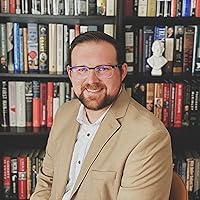
David Herbert Donald, Lincoln biographer and winner of the Pulitzer Prize, has revised and updated his classic and influential book on Lincoln and the era he dominated.
When Lincoln Reconsidered was first published it ushered in the process of rethinking the Civil War that continues to this day. In the third edition, David provides two important new essays, on Lincoln's patchy education—which we find was more extensive than even the great man realized—and on Lincoln's complex and conflicted relationship to the rule of law. Together with a new preface and a thoroughly updated bibliographical essay, Lincoln Reconsidered will continue to be a touchstone of Lincoln scholarship for decades to come.
Majoring in history and sociology, Donald earned his bachelor degree from Millsaps College in Jackson, Mississippi. He earned his PhD in 1946 under the eminent, leading Lincoln scholar, James G. Randall at the University of Illinois. Randall as a mentor had a big influence on Donald's life and career, and encouraged his protégé to write his dissertation on Lincoln's law partner, William Herndon. The dissertation eventually became his first book, Lincoln's Herndon, published in 1948. After graduating, he taught at Columbia University, Johns Hopkins and, from 1973, Harvard University. He also taught at Smith College, the University of North Wales, Princeton University, University College London and served as Harmsworth Professor of American History at Oxford University. At Johns Hopkins, Columbia, and Harvard he trained dozens of graduate students including Jean H. Baker, William J. Cooper, Jr., Michael Holt, Irwin Unger, and Ari Hoogenboom.
He received the Pulitzer Prize twice (1961 and 1988), several honorary degrees, and served as president of the Southern Historical Association. Donald also served on the editorial board for the Papers of Abraham Lincoln.
David H. Donald was the Charles Warren Professor of American History (emeritus from 1991) at Harvard University. He wrote over thirty books, including well received biographies of Abraham Lincoln, Thomas Wolfe and Charles Sumner. He specialized in the Civil War and Reconstruction periods, and in the history of the South.
I received this DRC free in exchange for an honest review. Thanks go to Net Galley and Open Road Integrated Media for letting me read it; Donald won the Pulitzer for his Lincoln biography, and I was sure this series of essays written for the purpose of dismantling myths surrounding the most revered president ever to occupy the White House would be hidden treasure rediscovered. What a crushing disappointment.
In the introduction, Herbert mentions that his section on abolitionists has drawn a great deal of criticism. Unfortunately, he appears not to have used such criticism as an opportunity to reevaluate the framework that limits his thinking in that section. More on that later; I realized that since this is a collection of essays on various aspects of Lincoln, primarily as president, I needed to set aside the sharp distaste that overwhelmed me initially in reading this selection and see what I thought of the other entries.
I found Donald’s essay regarding Mary Todd Lincoln interesting. Another, which addressed the folklore surrounding Lincoln, part of which involved every possible religious denomination attempting to claim him as one of their own when in reality, he just wasn’t all that religious, was interesting; I could have done without the Rastus-style written dialect provided to the African-American source he quoted.
In fact, it is Donald’s writing—and lack of it—regarding African-Americans that put my hackles up. I realized part way into it that this problem is going to be a common one for any Caucasian American scholar whose main body of work around the Civil War was written before the Civil Rights movement. For a long time, the American intelligentsia was tremendously segregated, and those at almost entirely white institutions of learning would never have deigned to call upon professors at traditionally Black universities or utilize the publications of Black historians. (It’s also before the first wave of feminism of the 60’s and 70’s, and so no woman is considered a credible resource; but that is a secondary consideration to the grave matter of Donald’s easy dismissal of Black historians, due to the topic at hand.)
Anyone that has delved deeply into the study of abolition and the Underground Railroad has to know that the majority of abolitionists in the North were free Black people. They didn’t turn up in Caucasian newspapers, but they were certainly quoted in the Black press. In most cases they did not attend meetings hosted by Caucasians unless specifically invited, as happened sometimes in Quaker-sponsored gatherings. But if WEB DuBois could find this information, then David Pulitzer Donald could have found it, too. His supercilious, offhand treatment of Black people when they are mentioned at all tells us why he chose not to go there.
Had Donald done all the work, rather than choosing those that suited his personal biases, he would have known how extensive the line of support was for John Brown. But he would have had to access publications that featured the writing of Black journalists, because according to DuBois and other sources, Brown did not discuss his plan with any other Caucasian abolitionists except his sons. In short, African-Americans and the information they left behind could have better informed Donald’s essays, but in dismissing them, he came up with incorrect conclusions.
Any essay that touched on what should happen to Black slaves in the south, or that could have included what was being said and done by Black citizens in the north, shared this deficit of information and necessarily misinformed Donald’s conclusions. The final essay, “A. Lincoln, Politician”, gave me an accurate and interesting tidbit: Lincoln had an understanding with Stanton, one that made its way into private correspondence and was thus documented, that when he came up with an idea that for reasons beyond his own knowledge was absolutely impossible to implement, Stanton was to denounce it, and then Lincoln would passively accept that his cranky Secretary of War had made the call. This makes a great deal of sense; in a way, Stanton was Lincoln’s version of Spiro Agnew—but without the corruption and financial scandal. Every president needs someone close by in their administration to play the role of bad cop in smothering popular but ill-advised initiatives, and for Lincoln, Stanton was that man.
The essay regarding Mary Todd Lincoln and their marriage is also interesting, but much less essential than the meaty but flawed articles having to do with race.
Before reading this collection of essays, I was so impressed with Donald’s achievements that I had gone to my wish list and added his biography of Lincoln in the hope I might receive a copy—even a used one—for Mother’s Day. As soon as I reached the essays dealing with race in this collection, I went back to that list and removed the biography.
I must admit that I was very skeptical of this book. However, once I started this collection of essays, I was hooked. What was the most fascinating part was the realization that the political scene hasn't changed in several hundred years. This story about Lincoln and the events that followed his assassination were things I could easily see going on today. I feel that Lincoln was used as a political pawn for years after his death. In fact, the historical view of Lincoln was more attributed to folk lore than Historical fact.
I would highly recommend this book for anyone wanting information on Lincoln. It is a book I will definitely come back to and read again.
I enjoyed this collection of essays taking a "revisionist" view of Abraham Lincoln. Most of these essays were published many decades ago, but that does not make them any less relevant to anyone studying Lincoln. I enjoyed the detailed examination of many different aspects of Lincoln (his views on the Constitution, his political savvy, his relationship with his wife, etc...) Highly recommended for Lincoln fans.
This is an amazing book! Written by the winner of 2 Pulitzer Prizes, the book peels away the myths surrounding Lincoln, one by one. I was astounded by how much trash I believed, indeed, was taught in school. The unsettling result is that I now have no concept of the real Lincoln because even Lincoln manipulated his image. I know what he was NOT. This book is a "must read" for Lincoln/history/Civil War buffs!
Excellent and well presented essays on Lincoln and the Civil War. The essay on Western Literature didn't really fit with the others, but I didn't seem to mind. Requires a fair background in the War and substantial knowledge on Lincoln to understand why the essays were written and why they are important.
"Mr. Donald was a historian of Abraham Lincoln+ Civil War who won Pulitzer Prizes for his biographies of the abolitionist statesman Charles Sumner + the novelist Thomas Wolfe." In honor of the late David Herbert Donald, Writer on Lincoln, Dies at 88 By WILLIAM GRIMES (NY Times May, 2009)
This is a thought-provoking, original and ground-breaking reappraisal of Lincoln and his times. These essays will enlarge and enrich oner's understanding of this crucial era in the American experience.
Readily accessible to one who is not a professional historian and covering a wide range of topics relating to Lincoln, the Civil War and the era in which he lived, this essay collection offers an entertaining and informative overview of all three subjects.
SOME ILLUMINATING ESSAYS ON VARIOUS ASPECTS OF THE CIVIL WAR
At the time the first edition of this book was published in 1947, David Donald was professor of History at Columbia University, when he went to Princeton University. He was also the author of books such as 'Lincoln,' 'Why the North Won the Civil War,' 'Charles Sumner and the Coming of the Civil War,' etc.
He wrote in the Preface, "I have tried to rethink some of the basic questions concerning the American Civil War: Why did the divisive spirit of sectionalism emerge so strongly during the prewar decades? How does one account for Lincoln's success as a wartime statesman? Why did the North win the Civil War? What meaning has the Lincoln symbol for us today?"
He observes, "Most of these abolitionists were born between 1790 and 1810, and when the first number of the Liberator was published in 1831, their median age was twenty-nine. Abolitionism was thus a revolt of the young." (Pg. 26-27) In addressing the abolitionists' "excessive suspicion" of Lincoln, he suggests, "by his effective actions against slavery he left the abolitionists without a cause. The freeing of the slaves ended the great crusade that had brought purpose and joy to the abolitionists. For them Abraham Lincoln was not the Great Emancipator, he was the killer of the dream." (Pg. 36)
He notes, "but for his election in 1860, Lincoln's name would appear in our history books as that of a minor Illinois politician who unsuccessfully debated with Stephen A. Douglas. And had the President been defeated in 1864, he would be written off as one of the great failures of the American political system---the man who let his country drift into civil war, presided aimlessly over a graft ridden administration, conducted an incompetent and ineffectual attempt to subjugate the Southern states, and after four years was returned by the people to the obscurity that he so richly deserved." (Pg. 57)
He states that "The President himself was color-blind; he shared neither the antislavery man's idealization... not the slaveholder's view... He had warm friends and countless admirers among (African-Americans)... But again he separated his personal feelings from what he regarded as his official duty... (His views) seemed inhuman to the idealists of the time, and it is unpalatable to the present-day liberal as well; yet clearly Lincoln had correctly analyzed the current state of American popular sentiment." (Pg. 135-136) He admits, "It was probably inevitable that Lincoln should have, as Emerson said, 'become mythological in a very few years.' America was badly in need of a hero." (Pg. 145)
This book is of continuing interest to students of American history, Civil War History, or Lincoln.
Interesting point from the essay on "a Reconsideration of Abolitionists": "Their demand for an unconditional and immediate end of slavery, which first became articulate around 1830, was different from earlier antislavery sentiment, which had focused on gradual emancipation with colonization...a special type of antislavery agitator, and his crusade was part of that remarkable American social phenomenon which erupted in the 1830s, "freedoms ferment", the effervescence of kindred humanitarian reform movements - prohibition; prison reform; education for the blind, deaf, dumb; world peace; penny postage; women's rights; and a score of lesser and more eccentric drives. Our author notes that historians have explored many of these movements, "...but paid surprisingly little attention to the movement as a whole". Would have been nice to see a bit more exploration of the genesis of that movement. The antislavery stalwarts were convinced by religion, reading, reflection. He confirms the traditional identification of radical antislavery with New England, particularly Massachusetts, folks "of the best New England stock...The parents of the leaders generally belonged to a clearly defined stratum of society. Many were preachers, doctors, or teachers...all were staunch Federalists...As young men the fathers of the abolitionists were leaders of their communities and states; in their old age, they were elbowed aside by the merchant prince, the manufacturing tycoon, or the corporation lawyer. The bustling democracy of the 1830s passed them by." It was a rural movement - the old villages of New England and its diaspora; it identified with neither the new industrialists or the new class of mill workers. Highly educated - Harvard or Yale, or Oberlin for those in the West. A former ruling class, pushed aside by progress, eloquent, but with time on their hands - ready made for a crusade. Sounds much like the folks around Henry and Brooks Adams - the next generation - who proclaimed corruption in the Grant administration. "In these plebian days, they could not be successful in politics; family tradition and education prohibited idleness; and agitation allowed the only chance for personal and social self-fulfillment."
Basically a collection of essays, this explores the little understood sides of Lincoln often by meta-analysis of historical works and primary sources. Basically, reading this after seeing the near canonization of Trump on (possibly?) the end of the GOP, it is interesting to read of the fervent adoration aimed at Lincoln from the birth of the GOP continuing on to memorial dinners and organized events (we still celebrate his birthday) decades later. Other things of interest:
- Lincoln was a confirmed Whig which was abhorred by supreme executive power and this made him conciliatory and even deferential to other organs of government in a way that the modern GOP does not align with - Lincoln's assassination on Good Friday and obscure birth fit into a mythic hero arc exploited by some religious figures. - Lincoln's law partner and associate Herndon fabricated much that is false about Lincoln, such as a loveless marriage with Mary Todd, etc.
History has always been an interest for me. This takes a bit of time and expands on it very nicely. It starts out with a nice introduction about Lincoln and his times, the people he knew and worked with, then goes onto the politics and war. It had some anecdotes that you never see anywhere else. It turns out that Lincoln was not a rabid emancipationist, but a practical president who did things as needed to be done. I wondered before why he only freed the slaves in the states in rebellion: it was because he did not want to alienate the slaveholders in Kentucky and Maryland. I am still mystified as to the reason for the war of northern aggression: slavery does not seem to be the all inclusive answer that mythology makes it out to be, and this book shows some alternative reasons, but does not take a stand, after it is only a collection of essays.
A dozen excellent essays on various aspects the Lincoln presidency. Takes a measured look at Lincoln’s successes and failures and also gives some insights into the politics of the times and how history is shaped more by what people think happened than what actually happened. David Herbert Donald is a terrific writer.
Published forty years before his Pulitzer Prize winning biography of Lincoln, these eleven essays by David Donald pushed back on some myths and filled in some holes in the vast and ever-expanding Lincoln literature. Very well written and a pleasure to read.
Out of the thousands of books written about Lincoln, this is one of the best. It is a series of essays about different aspects of Lincoln's life and his years as President. Well worth reading.
Probably when this was written, it was the latest research. It is been superseded by new findings and interpretations, but there are some valuable or interesting insights.
I read the second edition, not this one, the third. In high school, fifty years ago, our history teacher told us we need to read this book. I'm glad I've finally taken his advice.
Originally published in 1956, this is a dated but provocative collection of essays from Lincoln scholar David Herbert Donald. My favorites include "Toward a Reconsideration of Abolitionists", "Herndon and Mrs. Lincoln", "Refighting the Civil War", and "Abraham Lincoln and the American Pragmatic Tradition" as they cover topics that are still discussed today.
Lincoln Reconsidered by David Herbert Donald (1956) is a collection of essays on the 16th president by one of the most renowned scholars of the Civil War period. Donald attempts, in these explorations of Lincoln, to correct misunderstandings and overturn staid historical analyses. In the essay “Getting Right with Lincoln,” Donald examines the president as an historical figure of lasting influence and how his image and myth continue to shape modern political life. In “Toward a Reconsideration of Abolitionists,” Donald reexamines the class and cultural dynamics of the abolitionist crusade, arguing that it was mostly made up of activists who were in the milieu of antebellum social movements like prohibition and prison reform, among others.
The essays on Lincoln as a political figure are particularly insightful. In “A. Lincoln, Politician,” Donald upends the notion of Lincoln as a man removed from the political waters who sought only statesmanship. In fact, from his days in the Illinois Legislature all the way through the White House, Lincoln was an adept student of politics who used the media and cultural currents to his advantage. In “the Radicals and Lincoln,” he explores the battles between the radical Republicans, who argued for a more forceful form of reconstruction, and Lincoln, who sought a more conciliatory path. “Abraham Lincoln and the American Pragmatic Tradition,” my favorite of the political essays, analyzes Lincoln’s foregoing need to compromise and gradual change, often tempered by moments of swift action, as a manifestation of the broader currents of democratic thinking that embodied his era.
Donald is one the greatest Lincoln scholars, so reading him expound on a wide variety of topics is such a delight, especially for students of the period like myself. I don’t always agree with his conclusions, however. In the concluding essay, “An Excess of Democracy,” I think he underplays the significance of slavery and overemphasizes the tumult of the expanding democratic process as factors that led to the Civil War. Nevertheless, this book is a fantastic foray into the mind of one of the greatest 20th century American historians.
“Lincoln Reconsidered” is a collection of essays on the Civil War Era with a focus, naturally enough, on Abraham Lincoln. They reexamine several aspects of the Lincoln Lore, things that have become standard but deserve a new look. Author David Donald looks at how later politicians have tried to “Get Right With Lincoln” and claim him as their own, and he steps behind the unflattering portrait of Mary created by William Herndon. Donald studies the Abolitionists’ positions and motivations and presents them as being motivated as much by a desire to protect white labor from Negro competition as being concerned about the slaves themselves, who many wanted removed from the country. Insights about Lincoln the Politician and his relationships with the Radicals, which was all about politics, makes for fascinating reading. The concept of Lincoln as a Whig in the White House helps place his presidency in the continuum of the American political spectrum.
“Lincoln Reconsidered” is a valuable supplement for the reader with a familiarity with Lincoln’s life and legend. It opens viewpoints that stimulate thought about one of our most iconic leaders. David Donald has made a valuable contribution to the Lincoln Literature.
I loved this book. As a lover of history, I have read most anything I can get my hands on regarding American History and Abraham Lincoln. This book not only presents what we already know in a different light, but also has tid-bits and facts that have been left out of history books that I have read, such as Abraham Lincoln being a land surveyor at one time. Great read!
After reading Donald's fabulous one-volume biography of Lincoln, from late 1990s in mid 2000s, I bought this revision of his fifty-year old essays on Lincoln. He's pretty good! Kept my attention. Highly recommended.