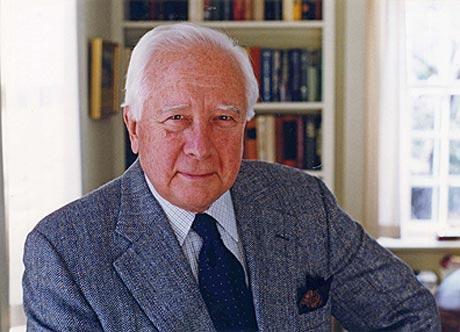
1776 was a particularly important year in the American story – and not just because of the Declaration of Independence that was adopted by the Second Continental Congress on July 4th of that year. For Americans who supported the cause of independence, the year 1776 was filled with dramatic highs and lows, as David McCullough conveys in his 2005 book 1776, a work that takes the reader all the way through that singularly dramatic calendar year from beginning to end.
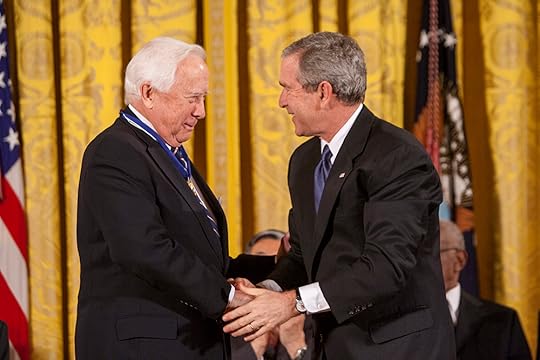
McCullough is, of course, one of the pre-eminent American historians working today. His core theme seems to be American innovation and achievement in the face of heavy odds, as with his works about the building of the Brooklyn Bridge, the construction of the Panama Canal, and the Wright Brothers’ achievement of powered flight. He has also focused on American leaders; his biographies of John Adams and Harry S Truman encouraged reconsideration and renewed appreciation for the work and the legacy of two often-underestimated U.S. presidents. His 1776 follows squarely in both of those thematic trajectories.
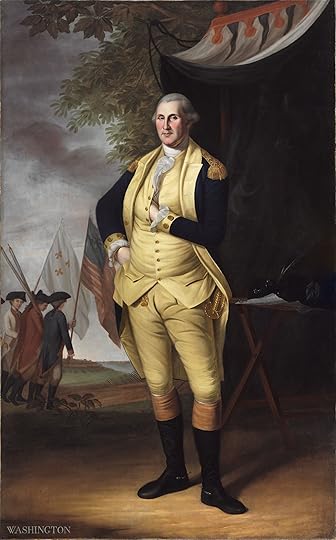
1776 actually begins by looking back to September 1775, when General George Washington’s military plans included a couple of self-evident duds: an ill-fated attack on the French Canadian city of Quebec, and what would have been a disastrous direct attack on the British-held and exceptionally well-fortified city of Boston. McCullough explains well why it is fortunate that Washington’s plan to attack Boston was ultimately a road not taken:
His second plan was to end the waiting and strike at Boston – which, it was understood, could mean destruction of the town. British defenses were formidable. In fact, defenses on both sides had been strengthened to the point where many believed neither army would dare attack the other. Also, a siege by definition required a great deal of prolonged standing still and waiting. But standing still and waiting were not the way to win a war, and not in Washington’s nature. (p. 51)
Luckily, Washington’s own subordinate officers, in one council of war after another, talked the tall Virginian out of launching his Boston attack; and the British ultimately evacuated Boston, of their own accord, in March of 1776. The Loyalist refugees leaving Boston included Harvard graduates, members of prestigious families like the Faneuils of Faneuil Hall, and even John Hancock’s former mistress. General Howe’s fleet left, and then George Washington’s Continental Army came in; and Washington was impressed by
...the strength of the enemy’s defenses. The town was “amazingly strong…almost impregnable, every avenue fortified,” he wrote. But if this gave rise to any second thoughts about his repeated desire to send men against such defenses, or the wisdom of his council of war in restraining him, Washington kept such thoughts to himself. Just as he had shown no signs of despair when prospects looked bleak, he now showed no elation in what he wrote, or in his outward manner or comments. (p. 107)
If you’re expecting that this book about the year 1776 will include a great deal about the Declaration of Independence that was promulgated from the rebel capital at Philadelphia in July of that year, then you may be disappointed. The Declaration gets only three pages out of a 294-page book. With his interest in the on-the-ground strategic and tactical realities of the year’s Revolutionary campaigns, McCullough acknowledges the Declaration’s soaring language of “all men are created equal,” of “life, liberty, and the pursuit of happiness,” but points out that a cynic could argue that “Such courage and high ideals were of little consequence…the Declaration itself being no more than a declaration without military success against the most formidable force on Earth” (p. 136).
Yet McCullough, in no mood for cynicism, ultimately acknowledges that the Declaration was much more than a paper eagle being waved in the face of the British lion:
At a stroke the Continental Congress had made the Glorious Cause of America more glorious still, for all the world to know, and also to give every citizen soldier at this critical juncture something still larger and more compelling for which to fight. Washington saw it as a “fresh incentive,” and to his mind it had not come a moment too soon. (p. 137)
The year 1776 still held plenty of setbacks and challenges for the independence-minded Americans. Most of the British forces that had left Boston in March had headed for New York, and the Continental forces outside the city were confident; but the Continental troops were untrained, camp fever was rampant, and the British were well-dug-in and more than ready for a fight.
What resulted was a major defeat for the Continental forces at the Battle of Brooklyn on August 27, 1776 – an unalloyed disaster that could have resulted in the destruction of George Washington’s entire army, if not for a gallant and exceedingly costly counter-assault by the Continental Army’s Maryland Line. Defeat at Brooklyn in late August was followed by a disorderly retreat through New York and into New Jersey in September:
The army that had shown such remarkable discipline and unity through the long night of the escape from Brooklyn had rapidly become engulfed with despair, turned surly and out of hand. Gangs of soldiers roamed the streets of New York, breaking into houses and taking whatever they wanted….Men in the ranks complained they had been “sold out.” Some were openly saying they longed for the return of General Lee. Washington’s leadership was in question. (pp. 201-02)
As if things didn’t seem apocalyptic enough in New York City in those days, the city suffered what is still called its “Great Fire” on September 20, 1776; as many as 1,000 buildings, or 25 percent of all the structures in the city, were destroyed. Unsurprisingly, the British and the Americans blamed one another for the conflagration, though the actual cause of the disaster has never been ascertained.
The Continental Army’s long retreat across New Jersey and into Pennsylvania continued through November, witnessed by no less a luminary of the Revolution than Thomas Paine: “Sick at heart over the suffering and despair he saw, but inspired by the undaunted resolution of many around him, Paine is said to have committed his thoughts to paper during the retreat, writing at night on a drumhead by the light of a campfire” (p. 251). Whether he was writing by a campfire’s light or not, Paine was as inspired by the Revolutionary cause as ever; and on December 23, Paine published The American Crisis, with its famous opening line, “These are the times that try men’s souls.”
And if some pro-independence Americans might have been happy with The American Crisis as a Christmas present, George Washington had a much better gift in store. In a moment that was later immortalized on canvas (albeit inaccurately) by artist Emmanuel Leutze, Washington led his Continental Army troops on a Christmas-night crossing of the icy Delaware River, from Pennsylvania to New Jersey, and successfully attacked an encampment of holiday-minded Hessians at Trenton on the early morning of December 26.
American casualties: 5 wounded, plus 2 who died from exposure to the cold. Hessian casualties: 22 killed, 83 wounded, and about 900 captured. It was just the kind of big victory the American cause needed – and it left Americans, as the pivotal year of 1776 ended, looking ahead to 1777 and the rest of the Revolutionary War with a renewed determination to fight through to final victory.
Ultimately, McCullough characterizes the year 1776 as “a year of all-too-few victories, of sustained suffering, disease, hunger, desertion, cowardice, disillusionment, defeat, terrible discouragement, and fear…but also of phenomenal courage and bedrock devotion to country”. Looking at the year 1776 in its totality, it is hard not to agree with McCullough that “the outcome seemed little short of a miracle” (p. 294); and McCullough conveys well the improbable, miraculous qualities of that historic year throughout his 1776.