Jump to ratings and reviews
Rate this book

Зеленый шатер

Rate this book
Zelenyj shater - eto roman o lyubvi, o sudbax, o xarakterax. Eto nastoyashhaya psixologicheskaya proza. No vmeste s tem novoe proizvedenie Ulickoj shire etix opredelenij.I, kak vsegda u Ulickoj, krome idejnogo i nravstvennogo posyla, est eshhe emocionalnaya zhivopis, tot ee unikalnyj dar, kotoryj i vyvodit knigi pisatelnicy na desyatkax yazykov k millionam chitatelej. Tolko ej prisushha bronebojnaya ironichnost, blagodarya chemu mnogie epizody na urovne odnogo abzaca peretekayut iz vysokoj tragedii v pochti chto shvejkovskij komizm.Zelenyj shater - ochen sereznaya i ochen smeshnaya kniga.

1031 pages, ebook

First published January 1, 2010

545 people are currently reading
14608 people want to read

About the author

Lyudmila Ulitskaya

126 books1,020 followers
Russian profile here Людмила Улицкая

Lyudmila Ulitskaya is a critically acclaimed modern Russian novelist and short-story writer. She was born in the town of Davlekanovo in Bashkiria in 1943. She grew up in Moscow where she studied biology at the Moscow State University.

Having worked in the field of genetics and biochemistry, Ulitskaya began her literary career by joining the Jewish drama theatre as a literary consultant. She was the author of two movie scripts produced in the early 1990s — The Liberty Sisters (Сестрички Либерти, 1990) and A Woman for All (Женщина для всех, 1991).

Ulitskaya's first novel Sonechka (Сонечка) published in Novy Mir in 1992 almost immediately became extremely popular, and was shortlisted for the Russian Booker Award. Nowadays her works are much admired by the reading public and critics in Russia and many other countries. Her works have been translated into several languages and received several international and Russian literary awards, including the Russian Booker for Kukotsky's Case (2001). Lyudmila Ulitskaya currently resides in Moscow. Ulitskaya's works have been translated into many foreign languages. In Germany her novels have been added to bestseller list thanks to features of her works in a television program hosted by literary critic Elke Heidenreich.

Ratings & Reviews

What do you think?
Rate this book

Friends & Following

Create a free account to discover what your friends think of this book!

Community Reviews

5 stars
1,739 (37%)
4 stars
1,710 (37%)
3 stars
847 (18%)
2 stars
244 (5%)
1 star
63 (1%)
Displaying 1 - 30 of 541 reviews
Profile Image for Jim Fonseca.
1,163 reviews8,499 followers
December 6, 2020
The Big Green Tent by Ludmila Ulitskaya

This is a long book (almost 600 pages); in a way almost an “epic novel” that you can get lost in. On the surface, it’s largely the story of three young men in the USSR beginning around the time of Stalin’s death (1953) through the 1960’s, through Khrushchev and Brezhnev. It’s the era of ‘samizdat’ when publications were copied and passed hand-to-hand at great risk to the authors and to those who possessed or passed on these banned publications. At some point all three of the young men, who grew up together, were involved in samizdat. So, all were resistors to the controlling regime.

description

I’ll tell you a bit about each of the three young men. We meet them as best-buddy school kids, serious learners, so they are outcasts and bullied by the run-of-the mill other boys. Ilye is the class clown but develops an interest in photography and becomes the major dissident, making a dangerous living off of samizdat and at times dragging the other two friends into trouble with him. Red-haired Mikha is an orphan, Jewish, living with an aunt. His ambition is poetry and skating until a tragedy strikes.

Sanya is sensitive, so sensitive that when he is bullied he has fainting spells and in that he finds a release from his tormentors. He’s a musician, interested in piano until he has an incident that damages his hand. The author never comes out and tells us that Sanya is gay, but we are told he gets excited by pictures of males and that his school-boy experience in a shed with the neighborhood girl who ‘befriended’ all the local boys terrified and disgusted him, so he never tried that again.

But the stories of the three boys constitute only the skeleton around which the book is structured. I’m reminded of another novel I reviewed, Past Continuous by Israeli author Yaakov Shabtai, that follows the lives of three young men in Israel. The story drops in an out of their lives to tell the stories of the lives of people they see at weddings, funerals and other gatherings. By the middle of the book, the main focus of the story becomes Olga, Ilye’s wife, and how she and her child adapt to living with her husband’s turbulent life. We also learn a lot about Olga’s mother and father who become extended characters, and in later years, their son become a major character.

So the outline of the lives of these three men provides us with a framework to learn the story of others. One is their favorite teacher who let’s them form a literary club and takes them outside of school hours on tours of Moscow’s dense literary scene: places known to Pushkin, Gogol, Tolstoy and others.

And what stories we read of. We read of a Russian general who has a long-term affair with his secretary. They are discovered, and someone has to go to the labor camp – of course it’s her. When she is released after many years he gets in touch and they start again – 32 years in all! The Nobel prize-winning poet Joseph Brodsky, expelled from the USSR, comes into the story several times.

We are treated to a wedding of a dissident – it’s his second marriage. He is marrying his first wife’s younger sister and his first wife is presiding over the ceremony and making the toasts! We hear the story of a young woman gymnast, plain-looking and with no interests other than athletics (the author calls her a C -), who suffers a career-ending injury before the Olympic tryouts and has no other life paths ahead of her. We hear of Sakharov and Pasternak. And there are many more stories.

description

We learn a lot about what life was like in the Soviet Union at this time for common people and especially for these dissidents. There are the lines. Some people get married just to get a two-room apartment. (Housing is assigned by the government.) All the dissidents are at times interrogated for days by the KGB and have their homes invaded and books and written materials confiscated. Some, such as Ilye, are imprisoned for a time. Olga’s mother, a famous author, has “pull” with a general so she helps to get Ilye’s photography equipment released. The system wants to force Mikha to emigrate to Israel to get rid of him, even though he has no interest in doing so.

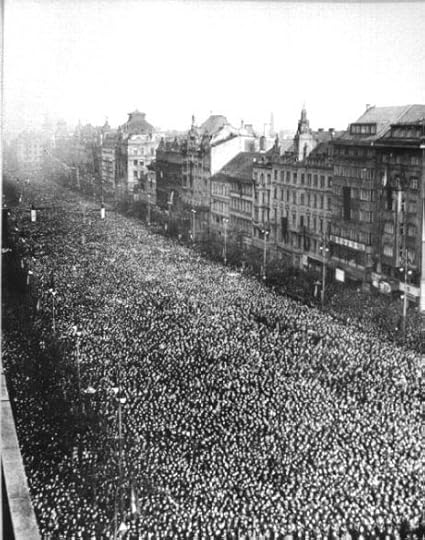
The story is interspersed with historical events, some fascinating. Who knew, for example, that in 1953 during Stalin’s funeral in Moscow people were crushed to death in the mob. In the story one character barely escapes the mob. The Soviet government officially reported that about 100 people had died but some historians estimate it was actually more like 1,000.

description

The author also gives us some detailed analysis of music, enough that I have marked this book on my ‘music’ shelf. Perhaps she is an accomplished musician or studied music? I looked on the web but could not find this info. Wiki notes that the author, of Jewish ancestry, belongs to a group in Russia that “sees themselves racially and culturally as Jews, while having adopted Christianity as their religion.”

An excellent, engrossing read that I will give a ‘5.’ The chronological structure of the book leads to a bit of repetition because at times as she goes back through the lives of the three men. We hear of the reactions to Stalin’s death more than once, and we see Olga go through a severe illness multiple times from the perspective of different characters.

The author’s work has been translated into more than 25 languages and on the web you can see discussion that she “should get the Nobel Prize.”

Top photo: lines to buy goods in the former USSR from qminder.com
Crowds at Stalin's funeral from pinterest.com
The author from alamy.com


Profile Image for Maziyar Yf.
814 reviews631 followers
February 9, 2024
چادر سبز بزرگ داستان با شکوهی ایست از زندگی سه دوست در مسکو که از دهه پنجاه میلادی شروع و سال ها به درازا می کشد ، لودمیلا اولیتسکایا نویسنده کتاب با مهارت و استادی طیف وسیعی ازچگونگی زندگی در شوروی و مسکو در دوران استالین ، خروشچف و برژنف را به تصویر کشیده . او توانسته تصویری بسیار واقعی از مصیبت زندگی در جامعه ای کمونیستی و اختناق زده را به تصویر بکشد .
لودمیلا اولیتسکایا

اولیتسکایا بیشتر برای آثار داستانی و رمان‌هایش شناخته می‌شود که موضوعاتی از جمله تاریخ، سیاست، اجتماع و موضوعات زنان را مورد شرح و بررسی قرار می‌دهند . او از طریق آثارش، موضوعات پیچیده و انسانی را مورد بررسی قرار می‌دهد و به طور کلی به عنوان یکی از نویسندگان مهم در ادبیات روسیه معاصر شناخته می‌شود . خوشبختانه از او تعددی محدود کتاب به فارسی ترجمه شده که البته چادر سبز بزرگ قطورترین و پر حجم ترین کتاب میان آن هاست .
فرم کتاب

اولیتسکایا داستان خود را به شکل غیر خطی جلو برده ؛ او بارها در زمان حرکت کرده و به عقب یا جلو می رود ، داستان او افزون بر سه شخصیت اصلی مذکر داستان ، سه کاراکتر زن هم دارد که گرچه می توان آنها را مکمل دانست اما در بسیاری از رخدادهای کلیدی داستان نقش مهمی دارند . به همین ترتیب او انبوهی شخصیت های فرعی خلق کرده و آنها را با مهارت به بدنه اصلی داستان پیوند داده و با پرداختن به زندگی آنها تلاش کرده تا خواننده را با زوایای بیشتری از زندگی افراد مختلف در شوروی آشنا کند . بنابراین کتاب او شامل تعداد زیادی داستان فرعی ایست که به گونه ای هماهنگ یک داستان واحد را می سازند .
هنر همانند اسلحه

چادر سبز بزرگ داستان زندگی سه پسر به نام‌های ایلیا، سانیا و میخا را روایت می‌کند. کودکی آنها با استالین ، نوجوانی با خروشچف و جوانی و میانسالی آنان با برژنف سپری می شود . آنها پسران جوانی هستند که بر اساس علاقه مشترکشان به ادبیات و اشتیاق خود برای آزادی شخصی و هنری، دوستی عمیقی با هم برقرار می‌کنند. آنها با ایجاد یک حلقه ادبی و فکری به نام چادر سبز بزرگ ، که نمادی از آرمان‌ها و آرزوهایشان است، ایده‌ها و آرزوهای خود را به تصویر می‌کشند . میخا شاعری با استعداد ، سانیا نوازنده ای با خلاقیت اما کم شانس و ایلیا ، عکاسی فرصت طلب است . آنها دانسته یا ندانسته ، خواسته یا نا خواسته با سلاح هنر خود را در برابر غول سرتا پا مسلح استبداد می یابند . نویسنده افزون بر این گروه مردانه ، مثلثی از زنان جوان اُلگا ، تامارا و گالیا با محوریت الگا ، همسر ایلیا خلق کرده و حوادث و وقایع جامعه روسیه را از دیدگاه آنان هم بررسی کرده . او به همین ترتیب مادربزرگ سانیا یعنی آنا الکساندرنوا را رهبر معنوی هم پسران و هم دختران کتاب قرار داده و این گونه از وجه مردانه کتاب هم کاسته است . ویکتور یولیویچ ، معلم ادبیات مدرسه پسران هم شخصیت مهم و تاثیرگزار دیگری ایست که تقریبا در سرتاسر کتاب حضور دارد .
شاید محور اصلی داستان را بتوان جنگ نرم هنر با کا گ ب ( احتمالا در زمان مدیریت پانزده ساله یوری آنده پوف ) و تلاش این اَبَر سرویس اطلاعاتی برای تسلط بر تمامی ابعاد زندگی روسها در دهه های 70 و 80 دانست. اگر از ماجراهای جذاب عاشقی و سختی های رایج زندگی در مسکو و تلاش مستمر برای ندادن بهانه به کا گ ب بگذریم ، کتاب را می توان داستان تلاش خستگی ناپذیر جوانانی ( در این کتاب ایلیا و میخا ) در جهت تولید و نشر روزنامه و یا نشریات زیرزمینی یا سامیزدات دانست . افرادی که با سخت کوشی و شجاعتی باورنکردنی کوشیدند تا صدای اندیشمندان روس و یا نویسندگان مخالف مانند الکساندرسولژنیتسین و کتاب های آنان ( در این کتاب مجمع الجزایر گولاگ ) را هم در خارج از کشور منتشر و هم در سرتاسر شوروی پهناور ، این کتاب های بسیار خطرناک را پخش کنند .
در کنار مبارزات سیاسی افراد مختلف ، اولیتسکایا به زندگی طبقات مختلف مردم برای ابتدا زنده ماندن و سپس زیستن هم پرداخته . او با زبانی ساده اما بسیار آشکار و روشن بلاهایی که یک رژیم توتالیتر بر جسم و روح و روان ملت آورده را شرح داده . هزینه ای که روسها و جمهوری های مختلف آن در زمان برژنف داده بودند گرچه به هیچ گونه با دوران استالین قابل مقایسه نیست اما به هیچ گونه نمی توان از کنار آن آسان گذشت . نویسنده این فشار روانی مخوف در کنار انبوه مشکلات دیگر را خیلی روشن و واضح شرح داده ، گویی مسیری ایست که پایان آن یا به تیمارستان و یا خود کشی ختم می شود .
خانم نویسنده خود به گروه یهودیان روسیه یا شوروی تعلق داشته . این گروه گرچه خود رااز نظر قومی و فرهنگی یهودی می دانند اما ممکن است به دلیل شرایط تاریخی و اجتماعی، وابستگی های مذهبی دیگری مانند مسیحیت را پذیرفته باشند. هویت‌ها و وابستگی های مذهبی درون این گروه می‌تواند متفاوت باشد، زیرا افراد ممکن است سطوح متفاوتی از مراعات مذهبی یا ارتباطات فرهنگی با یهودیت داشته باشند . در کتاب او هم گرچه یهودی ها حضور پر رنگی دارند اما اعتقاد چندانی به آیین ومراسم پر شمار دین خود و یا حتی ترک شوروی و مهاجرت به اسرائیل ندارند . بنابراین چادر سبز بزرگ بر خلاف خانواده موسکات شاهکار ایزاک باشویتس سینگررا باید کتابی سیاسی دانست نه هویتی .
چادر سبز بزرگ ، بار دیگر اهمیت بسیار هنر و به ویژه ادبیات را در آگاهی و تفکر انتقادی ، نقد ساختار قدرت ، حفظ هویت فرهنگی ، و انگیزه‌بخشی ، آفریدن الگو و دادن انگیزه هم در مبارزه و هم به باور پذیر بودن تغییرات مثبت در جامعه به خواننده یاد آور می شود .
اولیتسکایا در چادر سبز بزرگ توانسته است با استفاده از زبان ساده و شفاف، تصاویر زنده و قوی از زندگی در شوروی والبته تا اندازه ای کمتر روسیه پس از فروپاشی را به خواننده القا کند. . او با بررسی پیچیدگی‌های جامعه روسیه و تأثیر آنها بر زندگی افراد، به مسائلی نظیر سانسور، تبعیض، تحقیر و توهین، سیاست‌های دولت و تلاش برای حفظ هویت فرهنگی پرداخته است .
Profile Image for Elyse Walters.
4,010 reviews11.9k followers
March 8, 2017
Cruelty and loneliness.....
Soviet dissident movement....1950's --through 1990's with the collapse of the Soviet Union.
Honor.....fairness......justice....repression....evilness.....diversity....
Post Stalin era....
Non-linear storytelling: YOU WILL GET FRUSTRATED AND LOST AT TIMES......but then something really interesting draws you in like ancient rituals and moral maturity--- and how that plays out between boys and girls when schools are no longer segregated in the USSR.
The 'beginning' of this Russian story is intimate- family intimacy---with three school friends in Moscow..but further into the middle of this novel -- I needed some strong coffee to keep myself from drifting off into fairyland. note: I don't even drink coffee.
NOT to fear - sparks returned....soon I was back in the Soviet Union reflecting on talent shows -or poetry -or a costume ball - or a Play - or fortune telling - or smelling characters Colognes - or dancing with the gym teachers.....etc.

It takes some serious effort to STAY ENGAGED ... to STAY interested. This is a BIG BOOK. The women's study group at my temple will be discussing this book - in parts - once a week for TWO MONTHS!!!
Also, by coincidence, my Bay Area Book club picked this as our upcoming monthly pick. I've already been reading my physical book and listening to the audiobook- both - for the past three weeks. I'm still not done.

My favorite parts are the characters - especially the 3 boys/men.....( but I enjoyed them better as boys). The boys and their challenges were priceless - their personality traits charming.

Coming-of-age in Russia with KGB agents everywhere was insane....but there are many 'silly' moments - it was easy to forget the turmoil for awhile. This book gives a glimpse of how people survived. As for Jews...they just wanted to leave.

When the focus was on Russian literature or theater - my ears perked up a little more.
Family - close friends - schools -teachers - music - theater - dance - politics - history -religion -marriages - traditions - customs - love - loss - etc.
This is a hefty of a novel:
"The beating heart of Russian History"
with enchanting dialogue ......a little romance- childhood girls in Russia literature --
psychological Philosophy.. ....pleasures.....furry.... Nobleman and beautiful ladies...
Horrors and hated during unkind political times didn't mean people didn't still have hopes, dreams and literature as their antidote against misery.

BIG- AMBITIOUS- OUTSTANDING GIFTED AUTHOR.... but may not be for everyone. I'm 'still' working this book with a study group - the physical book - and audiobook for backup support. -- but for those this book 'is' for ---it's remarkable!

5 stars ...... with my own challenges - but still 5 stars!
Profile Image for Ema.
268 reviews792 followers
March 8, 2018
Acoperind peste jumătate de secol din istoria Rusiei, de la moartea lui Stalin până la câțiva ani după dizolvarea URSS, Imago este un roman excepțional, care-ți taie răsuflarea prin frumusețea, complexitatea, dar și amărăciunea lui. Este o carte copleșitoare, care te cam strivește sub greutatea ei elefantină, așa încărcată cu talente irosite absurd și destine modelate cu pumni insensibili de fier, cu neșansa de a trăi într-un timp bolnav și putred, când viața e ca un labirint sufocant fără ieșire, iar totul - bucuria, talentul, libertatea, chiar și dragostea -, evoluează doar pe jumătate.

Romanul vorbește despre copilărie și maturizare, despre prietenie și supraviețuirea într-un mediu devorat de ură și frică. Despre fragilitatea ființei umane, fie ea bună sau rea, și conflictele dintre părinți și copii, acutizate de regimul sovietic. Despre o lume salvată de literatură, muzică și pasiuni de tot felul, sau de votcă și rugăciune și, uneori, de un umor miraculos, rămas intact, nu se știe cum, în bătrânele uscate, uitate de moarte într-un sătuc rusesc izolat. Despre istoria influențată de literatură, căci ceea ce zice un mare scriitor devine adevăr istoric, dar și despre adevărul istoric care se păstrează în arhivele poliției politice, unde tot ce e confiscat se păstrează pentru veșnicie - sau pe aproape.

Printre altele, Imago este o călătorie fascinantă prin literatura rusă, pornind de la Tolstoi și Dostoievski până la autorii care au circulat prima oară în samizdat, dar și o călătorie prin muzică, îndeobște cea clasică, de la compozitori celebri ca Șostakovici și Mozart la exponenți ai avangardei ruse. Aș putea spune că romanul joacă rolul unui pedagog talentat, care povestește o mulțime de lucruri interesante despre istorie, muzică, literatură, chiar și despre știință, dar mai ales despre natura umană și felul în care reacționează indivizi diferiți în mediul toxic al unui regim totalitar.

Puteți citi aici recenzia mai lungă, scrisă pentru blog: https://lecturile-emei.blogspot.ro/20...

| Blog | Facebook | Instagram |
Profile Image for Malacorda.
598 reviews289 followers
October 7, 2019
Indecisa tra le quattro stelle e le quattro e mezza. Una lettura di peso e di soddisfazione. Un'opera strutturata e completa e che si posiziona perfettamente nel solco della grande tradizione letteraria russa. Mi sembra di scrivere delle banalità da fascetta, eppure il libro è esattamente questo… in comune con il grande romanzo russo ha non soltanto l'ambientazione ma soprattutto la trama importante con intrecci epici.

I protagonisti di questo romanzo sono artisti e cuori sanguinanti. Se me lo avessero messo tra le mani in una versione senza copertina, avrei giurato che a scrivere qui fosse Pasternak: perché quello che emerge non è tanto l'intento di raccontare una determinata storia, quanto attraverso la storia trasmettere un'atmosfera, un'aria, una cultura. Nel Dottor Zivago è l'aria della rivoluzione, qui invece è l'aria del secondo dopoguerra. E c'è una dose tale di letteratura e cultura russe che temo di essermi persa per strada buona parte delle colte citazioni e dei riferimenti e calembours vari. Ma anche così, anche senza possedere tutti gli strumenti per comprendere appieno, lo scenario della Mosca di inizio anni cinquanta si sente quanto mai concreto e plastico.

La storia si apre nel 1951 con un gruppo di ragazzini di dieci anni circa che, similmente a quanto accade ne L'attimo fuggente, si lasciano portare dal loro bravo professore curiosando tra tutti i vicoli e gli angoli di Mosca in cui si possa ritrovare e far rivivere i fantasmi della grande letteratura russa, ed è così che in essi nascerà l'amore per l'arte e la bellezza.
"Sembrava non dicesse niente di speciale, ma era sempre sul filo del rasoio. Da tempo ormai sapeva che il passato non era migliore del presente. Ma che c'era da dire? Da ogni tempo bisogna liberarsi, affrancarsi, non lasciarsene inghiottire. "La letteratura è l'unica cosa che aiuta l'uomo a sopravvivere a riconciliarsi col tempo", così istruiva i suoi discepoli."

Le pagine di vita di questo professore e della sua scolaresca sono talmente intrise, talmente sature di letteratura che le due cose sono intrecciate al massimo livello immaginabile, e tuttavia l'impianto in generale non risulta stonato o esagerato.
"Quante poesie! Quante poesie! Non ci fu un'altra epoca analoga in Russia, né prima, né dopo. I versi riempivano lo spazio senz'aria, diventavano essi stessi aria."

"Come Gulliver nel paese del lillipuziani, era legato con ogni suo capello al terreno della cultura russa, e quei legami da lui si tendevano verso i suoi ragazzi, che ci prendevano gusto, si abituavano a quel nutrimento polveroso, cartaceo, effimero."

Dal seme della letteratura e dall'insegnamento del pensare con la propria testa - più per innocenza e massima sincerità che non per fini propriamente politici - germoglierà la pianta della dissidenza.
"La parola 'dissidenti' non si era ancora radicata nella lingua russa, […] ma nelle teste intelligenti nascevano idee silenziose come tarli e pericolose come spirochete."

"…così ora percepiva l'assoluta importanza della propria opera. Immaginava di tenere nelle sue mani il destino di tutta la poesia futura. Come se qualcuno dall'alto l'avesse investito di una missione: custodire per l'avvenire quel valore prezioso che vive per caso, per una disattenzione dei potenti."

E dunque, i temi di questa storia sono l'amore per la letteratura, l'amicizia, il rifiuto verso ogni totalitarismo, il rapporto particolare che si può instaurare tra letteratura e dissidenza verso un regime. Ma nonostante l'oppressione e la follia del totalitarismo, i protagonisti della storia sanno trovare la gioia, e sanno viverla, e queste pagine sanno trasmetterla.

E ovviamente, c'è l'amore della scrittrice per la propria terra, che sa scindere l'amore per la Russia dall'odio per il sistema. I suoi protagonisti hanno solo pochi anni più di lei, è dunque facile immaginare che nel racconto ci sia ben più di qualche dettaglio autobiografico.

Si inizia il racconto con una scansione temporale assolutamente ordinaria; dopo il primo quarto del libro, con gli allievi che crescono ed iniziano ad avere ognuno la proprie vicende e inclinazioni, la narrazione assume una struttura piuttosto irregolare che procede zigzagando lungo il corso degli anni: per alcuni dei protagonisti si anticipa come andrà a finire la loro storia, compattando in poche pagine tutto quello che passa tra gli anni cinquanta e novanta, e solo in seguito l'autrice ripassa a raccontare i piccoli dettagli, i piccoli episodi contenuti in quel lasso di tempo e che vanno a spiegare l'intreccio che in alcuni passaggi assume vaghe tinte giallo-noir.

Nella parte centrale del libro, di man in mano che si entra nel dettaglio degli episodi, il numero dei personaggi aumenta notevolmente, e i vari capitoli diventano in pratica altrettanti raccontini tutti legati dal comune argomento delle attività di stampa clandestina di libri, disegni, fotografie e della diffusione di materiale antisovietico, delle attività sovversive e quant'altro. Come sempre, è fin troppo facile mettere i cattivi dalla parte del KGB e i buoni dall'altra, ma qui non si sente tanto l'intenzione di praticare questo tipo di distinzione, con l'argomento clandestinità si dipinge un vivace quadro di quello che da stare qui, al di qua della cortina, non si sarebbe mai sospettato, come giustamente osserva @Buttera nel commento sotto: "da fuori si vedeva solo il nemico quasi satanico o il mito del comunismo realizzato, a seconda della propria ideologia". Questo romanzo mostra invece l'underground, un sostrato di inimmaginate ricchezza e vivacità culturali che finiscono per apparire come il lato buono della medaglia. E d'altro canto, noi che viviamo in democrazia e non abbiamo mai neanche avuto niente a che fare con il totalitarismo, sappiamo tuttavia quanto faccia presto la democrazia a trasformarsi in oligarchia, e allora bisogna convenire che dal punto di vista culturale, dittatura o non dittatura, la storia si ripete sempre:
"La produzione letteraria e culturale destinata al popolo metteva angoscia. Restava un pugno di uomini, insignificante sotto tutti i punti di vista: sapientoni sopravvissuti, rintanatisi nella matematica e nella biologia, fra i quali non mancavano un paio di accademici, ma molti di più erano gli emarginati che campavano di incarichi modesti, nascosti in istituti di ricerca di terza categoria; e poi due o tre geniali studenti delle facoltà di chimica e fisica o del conservatorio. Questi invisibili con esigenze spirituali esistevano illegalmente. Ma quanti potevano essere costoro, che senza conoscersi si incrociavano nei guardaroba delle biblioteche e delle sale da concerto, nel silenzio dei musei deserti? Non era un partito, né un circolo, né una società segreta, e neppure un'accolta di persone che condividevano un ideale. Forse il loro unico comune denominatore era l'avversione per lo stalinismo. E, naturalmente, la lettura. Lettura avida, sfrenata, maniacale: hobby, nevrosi, droga. Per molti il libro, da maestro di vita, si trasformava in un suo sostituto."

Finale un tantino annacquato, non ho ritrovato la stessa ricchezza delle parti centrali dello sviluppo. Ma nel complesso, seicentoquaranta pagine di full immersion: ottimo viatico e ottima panoramica per chi, come la sottoscritta, apprezza la letteratura russa ma non dispone ancora di conoscenze apprezzabilmente approfondite.
Profile Image for Rosa .
195 reviews86 followers
March 7, 2025
گاهی شباهت ها که نه، تفاوت ها ما رو کنار هم جمع میکنه  تا کم و کاستی های زندگیمون رو پر کنیم، چادر سبز بزرگ هم قصه ی همین تکه های کوچیکیه که کنار هم به کل معناداری تبدیل میشن...
ایلیا، سانیا و میخا، سه پسر بچه با دنیا و روحیات مختلفن که هرکدوم به نوعی از داشتن خانواده ای کامل محرومن، اما تفاوت ها و فاصله ی طبقاتی و فرهنگیشون مانع از شکل گرفتن گروه کوچک دوستانشون " تریانون" نمیشه، جمع دوستانه ای که خیلی زود شکل خانواده ای رو به خودش میگیره که اگرچه پیوند خونی ندارن اما غم و شادی مشترک، پیوند عاطفی عمیقی رو بینشون به وجود اورده که تا اخرین روز زندگی خلل ناپذیر باقی می مونه، تکیه گاه و الگوی این مثلث دوستانه هم مادر بزرگی خوش قلب و ژرف اندیش و معلمی روشنفکر و حامیه که مسیر فکری این بچه ها رو به طوری هدایت میکنن که به مسائل سیاسی و اجتماعی کشورشون آگاه باشن تا قدرت تشخیصشون زیر فشار و تبلیغات و تطمیع حکومتی فلج نشه!
چادر سبز بزرگ، با شاخ و برگ دادن های بجا و مناسب به شخصیت ها و تقسیم تاثیر گ��اری و شجاعت بین اون ها، هم به مسائل همه گیر در روابط عاشقانه، کاری و خانوادگی و هم به مسائل تاریخی قابل توجهی همچون سامیزدات و عواقبش، تبعید و زندان، قتل ها و مرگ های سیستماتیک و کمبودها و تبعیض های تحمیلی پرداخته.
داستان حالت خطی نداره اما از نظم و شفافیت روایت کم نمیکنه، سرنوشت های مختلفی که اغلب به تلخی ختم میشن، روبرو شدن آدم های متعددی که گاهی از سر اتقاق بهم میرسن اما نقش مهمی در زندگی هم ایفا میکنن و در نهایت درد مشترکی که همه ی این آدم ها رو تبدیل به یک دهن برای فریاد میکنه، طرح کلی این داستان رو تشکیل میدن...
طرحی که فراموش نشدنیه و این کتاب رو به یکی از بیاد موندنی ترین ها تبدیل میکنه...

4.5⭐️
Profile Image for Chrissie.
2,811 reviews1,421 followers
November 19, 2023
It’s possible to write a review in glowing, positive terms, praising all the good, playing down the bad. I will try here to give you a balanced review. As a whole, I do like the book and am glad to have read it, but it could have been better.

The Big Green Tent by Lyudmila Ulitskaya draws life in the Soviet Union after the fall of Stalin. There is theme number one. At the start, in 1953, we are introduced to three friends—they are in the sixth grade and thirteen years of age. Friendship is a second theme. Sticking together, the three boys save a sweet, little cat from the hands of bullies. The three have different backgrounds and different personalities. Their differences don’t matter; they become close, under the tutelage of their enthused and dedicated teacher of literature. Their friendship transforms, evolves and expands as they mature, grow older and age. Life under the repressive Soviet regime knocks them about. We follow them and their beloved teacher / friend for four decades. Fifteen years separate the kids from the age of their teacher. The difference means less and less with the passage of years. Parents, grandparents, relatives, friends and acquaintances, along with a wide range of many other people join the scene. Their lives encompass marriage and kids, divorce, as well as death. Some emigrate, others remain, unwilling to leave their beloved homeland.

One of the three friends is drawn to photography, becoming involved in the promotion and publication of samizdat journals. Another is drawn to music, but with his right hand crushed, rather than becoming a pianist, he turns to the teaching of musical composition. The third is drawn to literature and poetry; he becomes involved in the teaching of disabled children. With the three friends, as well as their teacher, drawn by verbal, auditory or visual arts, a common thread tying the story together is the importance of art, artistic expression and freedom of choice. Art cannot blossom without freedom of expression. Artistic expression, in all its forms, is coupled to the right to freely express thoughts, ideas, emotions, one’s spirit and soul. This circles back to the repressive Soviet regime during the decades after Stalin’s death.

The themes are thus free expression versus repression, friendship and the value of art in all its forms.

So far, all seems interesting, intriguing. All hunky dory, right? Following the characters’ lives is however difficult, as it is told here in this novel. Information is not presented in chronological order. The story not only hops back and forth in time, but you are plunked down into people’s lives about whom you know nothing. It is not until the end that all the disparate parts really come together. Along the way what one is told seems “garbled, confused and told in swatches”. I have put these words in quotes because these are the very words the author uses to describe how life can seem as we live it. I understand her reason for presenting the story as she does, but I don’t agree that this is the best method by which to get ideas across.

The multiple Russian names used for each character causes further confusion.

I stopped trying to draw together the different episodes. I just listened, paying attention instead to see how each episode affected me. Was I drawn in, even if I didn’t understand who the people were and how they fit into the bigger picture? I discovered I enjoyed the book much more this way. Each episode, each swatch, each mini-story pulled me in. I became emotionally involved. Each story became firmly implanted in my brain because of the emotional connection I felt. I even stopped taking notes; I figured it is up to the author to make this all come together for me—and it did. I still think it would have been much better if the author hadn’t made the telling so confusing and disjointed.

Between the mini-stores there are sections where what has happened in the interim is quickly summarized—here events are told, not shown. In presenting information in a nonchronological order, information is repeated. As you understand more and more, you go into the different mini-stores knowing how they will end. This is a long book--had the story been told in chronological order, it would have been more concise, less repetitive and less confusing.

This is a book of historical fiction. The historical events are in the background—they shape the lives of the characters, but they are not the focus. They are mentioned, not explained. What you already know, you will recognize. What you don’t recognize, you will fail to understand. Well known authors, composers, musicians, politicians, leaders and dissidents are mentioned. You nod as they are spoken of. The more familiar one is with Russian history and its authors, poets, musicians and leaders, the more one will appreciate this book. Jotting down unfamiliar Russian names, I found difficult; I was unsure which were fictional and which were not!

The Big Green Tent is translated from Russian to English by Polly Gannon.

The audiobook is narrated by Jonathan Davis. I have no idea if the Russian words are correctly pronounced. I like the narration. I have no complaints, but neither did it wow me, so three stars for the audio performance.
Profile Image for Daniela.
190 reviews90 followers
December 30, 2020
What is this book about? Friendship? Resistance to tyranny? Survival? Art?

It finally occurred to me that maybe the book attempted to answer Russia's most famous question: What Is To Be Done? This question, asked by Tolstoy, Chernyshevsky, Lenin, among others, points to a feeling of dissatisfaction and what is more, an incompleteness that is part of the Russian pathos. Russia is an unfinished work, with hazy frontiers, with too much space, too many different people.

The novel's three main characters whom we follow from childhood all attempt, in their own way, to answer this question. What Is To Be Done? Which means, how can we live, what can we do to live a good, moral life? This is a difficult question to ask and answer in Soviet Russia. You don't have a lot of choice, there's not a lot of freedom, there's so much that you can't do, and sometimes what you can do is just plain evil. That is why there's a feeling of inevitability to many of these characters. No matter what they did, they would end up exactly the way they did. Their morality and good nature doomed them.

Another question the book poses is what is Russia? Is it the steppes? Is it Moscow and St Petersburg? It is Pushkin? Is it Lubyanka? Is it art? Is it literature? Russia here is much more than a country. It's nearly a feeling - not a feeling of superiority. The Russians in the novel are different, yes, but relatable, normal yet extraordinary people. No, as cliché as it sounds, Russia is a state of mind, a way of looking and dealing with issues more than a geographical space.

Like a good novel of ideas, The Big Green Tent doesn't answer the questions it asks. It leaves the answers to us. Not even the characters know. A beloved character dies because he could not answer questions. The Epilogue itself is filled with interrogations.

This is not a perfect novel. The narrative jumps baffled me a little at times. While it's not perfect, however, it is a Great Novel. It is a testimony of an Age, populated with compelling characters and peppered with philosophy and music. I recommend it to anyone.
Profile Image for Josh.
379 reviews260 followers
September 20, 2016
After reading Ulitskaya's 'The Funeral Party' last year, I thought I'd attempt the new, 2015 release 'The Big Green Tent' and I wasn't disappointed. This is mostly a story of three boys in the early 1950's as they attend school, grow up during a crazy time in the world and what they accomplish as they grow older. They are witnessing a time of change and national ideology, yet being scared of the government or even your neighbor hasn't changed: The death of Uncle Joe and Stalinism and the birth of Khrushchevism.

As Ilya, Mikha and Sanya meet in youth, they find a common denominator between them all: love. Their ambition to break through the binds that have held their families back and the tribulations they personally go through make them who they are and what they eventually become. They all have love for something and this love is strong. The love of capturing one moment in time forever (Ilya and his love for photography), Mikha's love, the much older grandmother of Sanya, Anna Alexandrovna (eros or pragma, take your pick!) and the love of music (and eventually a forlorn love explained later on by the Author) by Sanya. Each of these loves are compassionate for their entire lives, which some may lead them to an early death. The concept of love is what is so special to these main three and it's not just their personal loves but of Russia itself, its literature and its music, its history and what it means to be Russian. With that said, if it wasn't for a teacher, Victor Yulievich, a special man in all their lives, who knows who they'd become or where their lives would've lead.

"He led his boys down the paths of little Mikolay Irteniev, Peter Kropotkin, Sasha Herzen, even Alesha Peshkov -- through orphanhood, humiliation, cruelty, and loneliness, to their acceptance of things that he himself considered absolutely basic: the sense of good and evil, and the understanding that love is the supreme value."

While reading, the reader feels the terror of the KGB lurking behind every corner waiting to pounce, waiting to make the characters disappear. In turn, this leads to mass emigration by some to avoid imprisonment due to samizdat or what the 'powers that be' deem threatening to the government and the minds of people; intelligence is damaging to the possessive controller, the puppeteer works his magic as everyone scatters to be themselves.

At times, focus is needed due to the anti-chronological structure, but it's worth it in the end.

Profile Image for Larisa.
33 reviews12 followers
April 1, 2015
The expression “May you live in interesting times” is believed to be an ancient Chinese curse. Centuries ago it was adopted by Russians and altered to become “God spare us from living in era of changes”. Doomed to eternal punishment by the history of their own country, Russians hope for a life in peace.

For generations, Russian writers have examined the lives drained by the love and hate relationship with their country. To name just a few: Leo Tolstoy with his “War and Peace”, Boris Pasternak with “Doctor Zhivago”, Michail Bulgakov with “The White Guard”, Vasily Grossman with “Life and Fate”, Varlam Shalamov with “The Kolyma Tales”, Aleksandr Solzhenitsyn with “One Day in the Life of Ivan Denisovich” and now Ludmila Ulitskaya with “The Big Green Tent”.
“The Big Green Tent” is a tremendous collection of human stories. Whereas each of these stories would be precious and stimulating food for thought by itself, Ulitskaya weaves a sophisticated lace of twisted relationships and random encounters, creating a refined saga, which affects the reader on a deeply emotional level. The focus of the novel is on three school friends. Being very different in the way they were born and bred, they have a strange connection. A peculiarly broad-minded and devoted teacher challenges their perception of Russian history and literature by reading poetry, by discovering the city’s hidden past and by asking contentious questions. Reaching adulthood, they follow their own paths, struggling to stay away from the deception and denunciation in society. The reader meets a vivid cast of characters, discovers the dissident movement and explores the dangers of “samizdat” – illegal reproducing and distributing of banned publications. Again and again he is being asked those eternal moral questions, Russian literature is preeminent in. And yet again we have to balance between ego and soul, free will and fate, honor and betrayal. “The Big Green Tent” is a rich insightful research of human behaviour in yet another of the“interesting times” in Russian history – the KGB era.

The thoughtful reader will appreciate the powerful storyline, splendid language and clever observations of one of the most prominent contemporary Russian writers -Ludmila Ulitskaya.
Profile Image for Fiona.
982 reviews526 followers
March 4, 2018
An engrossing story of life in Communist Russia. At times tragic, sometimes darkly funny, it brought home to me that people were living this way even into the 1970s. Life was claustrophobic and controlled. There was little in the way of privacy or freedom of choice. The only way to survive with any confidence was to toe the party line or, at the very least, to give the appearance of doing so.

I enjoyed the pace of this book, only my second audiobook. It’s impossible to compare the experience of listening to a book with the pleasure of reading one but I managed to overcome my unreasonable prejudice against them and actually permitted myself to enjoy the experience!!!

Narrated by Rachael Stirling for BBC Radio 4. Her trademark deep, husky voice is perfect for this book and probably made all the difference ;).
Profile Image for Roger Brunyate.
946 reviews741 followers
August 4, 2018
 
Not Your Normal Novel

[NOTE: After posting the first half of this review, I received a thoughtful defense of the book by the friend who had first recommended it to me, Anna. Since she was so eloquent, and my own experience incomplete, I obtained her permission to post her account also, as a counterweight to my own review. My star rating now reflects both reviews: 3 stars for my own experience, 5 for hers, averaged to 4. rb]

======

ROGER'S TAKE:
"Precisely. Because all through the ages there have been people who want to 'revolve primarily around literature.' Like all of us here!" The teacher laughed. "And then there are the Colonel Bibikovs, who are charged with keeping a close eye on them. Yes, such are the times."
This book was recommended to me by a reader from Eastern Europe, Anna, who regards it as one of the great Russian novels of the last half-century. And I can see why she might feel a personal stake in it. In a culture where one's choice of reading—or even the pursuit of literature itself—can be cause for suspicion (Bibikov was the government spy keeping an eye on Pushkin), a tribute to the dissidents who defy it would be cause for celebration. Especially if you are a reader and critic yourself. So I started, hoping to join her in her praise. But a nearly 600-page tome is a lot, and although I was enjoying most of what I read, after about 250 pages, I simply saw no point in continuing.

One reason is the perpetual problem with Russian names. For the most part, both men and women are referred to by given name and patronymic, the combined names being long and difficult to keep straight if there are a lot of them. The surnames, by which Western readers mentally organize their characters, are less often mentioned, or sometimes not at all. And people make have nicknames, flattering or otherwise. So the author may reference Stalin, for instance, as Josef Vissarionovich, Dzhugashvili, Soso, or The Big Samekh, because her readers will recognize them. This is just something that readers of Russian novels have to put up with. But this is worse—far worse. For Ulitskaya, rather like Roberto Bolaño, uses names also as talismans, for what they will represent to initiated readers. The book is crammed with names of figures from Russian history and literature whose actions or writings struck a blow for freedom. To educated Russian readers, each name will carry an electric charge, but non-Russians may feel they are stumbling in the dark.

The second problem for me was structure. The first six chapters, 120 pages in all, work like a normal novel. We meet three boys, Ilya, Mikha, and Sanya, who form a close friendship at school and, under the mentorship of a charismatic teacher, form a club called the Lovers of Russian Literature (LORL). Then everything shifts in a 36-page chapter with the same title as the book, "The Big Green Tent"; the phrase comes from a dream about a world in which all the marginalized, exiled, and murdered may finally be united. The shift is that it only peripherally concerns the LORLs or continues the steadily advancing time-frame. Decades long, it is a whole-life story of Olga, the daughter of party apparatchiks, whose ideas shift 180 degrees which she is in college, leading her to join the group. I wondered, actually, if it might have been published before the rest of the book, as a standalone story.

Nor does the continuity of characters or time resume any time soon. I read six more chapters, each a separate story, focused on some peripheral character, and told out of sequence. Paradoxically, I enjoyed many of these more than the earlier chapters, but at the expense of any sense of onward momentum. Were this a normal novel, I would read to the end, wanting to know what happens. With a book of short stories, however, I do not feel that compunction. Once I realized that the nature of the book had changed, there seemed no pressing need for me to go on. I'm glad to have read what I did, but saw no compelling reason to continue. So I didn't.

======

ANNAS'S TAKE:

I understand why this, or her other novels except maybe for Daniel Stein, her least Russian novel, holds less appeal for Western readers. The greatness of this novel does not lie in its vertical (i.e. psychological) depth, but its horizontal scope.

Ulitskaya does not paint portraits, she paints landscapes. I see her novels, particularly this one, as a web or a mosaic. Is there a starting point or arrival in a mosaic? In her narrative web, the ‘capsule’ stories of the secondary characters with the unrememberable names are essential, as she memorializes a whole nation, not just a few representative characters who suffered. Her multi-generational cast exemplifies the ‘Russian metaphysical depression’ perfectly and also demonstrates that everyone was affected. This novel is unique in that – more than her other writings – it is a tribute also to those who could not resist the regime and either became informers or committed suicide. She never judges them.

History here does not just serve as the backdrop, it is the foreground that has an existential weight. For a strange reason, Eastern European society, at least its artistic representations, seems to be more than just the sum of its individuals. Hard to accept from a western liberal point of view, isn’t it?

Beyond all this, she shows that there is more to individual life than the shared suffering. And also that, sadly, this is no consolation when there is nothing more to a specific individual life of a Son Parentovich or a Daughter Parentevna than the common tribulations. For me, the Tent was an oratorio of life and death, of physical and moral survival or the impossibility of such survival. I’ve read no other piece of literature that captured this as perfectly, humorously, and yet dramatically, as this novel.
Profile Image for Olive Fellows (abookolive).
800 reviews6,396 followers
May 28, 2019
I have such mixed feelings on this book.

On one hand, there are breathtaking sections on love, music, and friendship. There are very deliberate and moving thematic elements that move with the characters through their life journeys. And, as a lover of Soviet history, there was something really special about seeing characters navigate this challenging world I know so well from my history books.

But the pacing and structure was so odd. We're supposed to be following three young boys (who grow into young men very early on in the book) who each conflict with the Soviet system in his own unique way. But there are a lot of side characters in this book who more or less turn into as important of main characters as our artistic trinity since they get just as many chapters dedicated to them. It was nearly every other chapter where our attention is ripped from the core characters, sometimes for purposes unknown. Not to say these chapters couldn't be engaging - some of them were quite entertaining - but I wanted to get back to the story.

It's also lopsided in its focus. Illya gets far more attention that Sanya and Mikha and the latter barely gets a mention after the opening chapters until the very last section of the book. Meanwhile, Illya and his long-time love Olga keep a firm grasp on the spotlight nearly the whole way through. I realize such a big tale like this must be so challenging to structure, but I don't know why the author chose to organize things the way she did. Almost immediately after we see the trio leave boyhood, we're introduced to Olga, only to fast forward to her bitter later life, and then go back in time to her years with Illya. If there was a purpose to that, it's a well-hidden one.

I'm happy I read this...but I'm also happy it's over. Неплохо.
Profile Image for Amanda.
1,199 reviews275 followers
February 14, 2017
This is a book I should have loved. It started out so good. It followed 3 friends and their favorite literature teacher but as the book went on and more and more and more and then some more characters were introduced it got fragmented and I lost interest. I considered a DNF but I did care enough about the main characters to finish also there were some really fun literary mentions. I have a feeling that this was just not the right book at the right time for me.
Profile Image for Shiva Mr.
92 reviews9 followers
February 27, 2025
یکی از رمان‌های خوبی که در این مدت خوانده ام. چادر سبز بزرگ اثر برجسته و شگفت انگیز لودمیلا اولیتْسْکایا، داستان زندگی سه پسر مدرسه ای را روایت می کند که در شرایط جنون آمیز اتحاد جماهیر شوروی بزرگ می شوند( دهه پنجاه تا هفتاد قرن بیستم). این رمان یک پانوراما از زندگی پس از استالین است. سه شخصیت اصلی داستان تلاش می‌کنند تا از طریق رابطه عاشقانه با هنر، موسیقی، عکاسی و ادبیات بزرگ روسیه به مبارزه با استبداد بروند. داستان با خبر مرگ استالین آغاز می‌شود. خانم اولیتسکایا در این رمان زنانی با شخصیت های پیچیده نیز خلق کرده است و بعضی از قسمت های رمان روایت داستان زندگی این زنان است. چادر سبز بزرگ یک رمان در مورد زندگی انسان ها در دوران کا گ ب است. زندگی در اتحاد جماهیر شوروی دشوار بود. تصور کنید در یک اتاق خانه با سه یا چهار عضو خانواده زندگی می کنید و با بیست یا سی نفر دیگر در آشپزخانه و حمام مشترک هستید. خواندن یا حتی داشتن یک نسخه قاچاق از دکتر ژیواگو باریس پاسترناک و یا مجمع الجزایر گولاگ سولژنیتسن در دولت سوسیالیستی می توانست فرد را برای چند سال زندانی کند.
Profile Image for Andrei Florian.
16 reviews79 followers
May 29, 2016
Este o abordare interesanta a vremurilor tulburi din perioada KGB-ista a anilor 1950 din Rusia. Trei baieti de la aceeasi scoala devin prieteni desi erau diferiti unul de altul ca fel de a fi. Un profesor reuseste sa le prezinte o cu totul alta imagine a societatii, dominata de neincredere si teama, prin intermediul literaturii, a poeziei ce le prefigureaza imagini diferite ale istoriei, trecutul necunoscut al orasului dintr-o perspectiva oarecum idealizata. Impresiile create in perioada scolii ii ajuta cand ajung adulti sa stea cat mai departe de sistemul social opresiv bazat pe neincredere in aproapele tau. In aceste conditii apare o rezistenta antisistem, dizidente ce reusesc sa-si mentina idealurile prin publicatii clandestine. Scriitoarea reuseste sa surprinda balansul dintre libertate si supunere, intre bine si rau, intre spirit si lumea materiala dominata de dogmele politice opresive.
Profile Image for merixien.
671 reviews667 followers
June 6, 2024
Kitap Stalin’in hastalığının radyodan halka duyurulduğu ama neredeyse bütün halkın çoktan öldüğünü anladığı 5 Mart 1953 sabahında; okula gitmek için hazırlanan üç kızın ve ailelerinin bu haberi almaları ve verdikleri birbirinden farklı tepkilerle açılıyor. Bir sonraki bölümde ise yine yakın dönemde okulda ortak ilgilerden çok ortak dışlanmışlıkla hayatları kesişen üç erkek çocuğu hikayeye dahil oluyor ve bu noktadan sonra genel olarak ana yapı bu üçlü ekseninde oluşmaya başlasa da aslında bu altı çocuğun hayat hikayeleri, aileleri, yollarının kesiştiği insanlarla ilişkileri derken dallanarak açılan geniş bir çevre üzerinden Stalin sonrası Rusya’ya odaklansa da muhalif kesim gözünden genel bir SSCB tarihini takip ediyorsunuz.

Açıkcası kitap benim radarıma yazarın adının son yıllarda Nobel tahminlerinde sık sık anılmasıyla ve Yaşam ve Yazgı’yı okuduktan sonra bu döneme dair yazılmış kitapların çok daha fazla ilgimi çekmesiyle girdi. Buna rağmen, yine de çok büyük bir beklentim yoktu. Ancak kitabın ilk 100-120 sayfalık bölümünü okuduktan sonra -tam olarak eş değer tutamayacak olsam da- bana Yaşam ve Yazgı tadında - hatta dönem itibariyle onun devamı niteliğinde- bir şeyler okuyormuşum gibi hissettirdi. Bunun en önemli sebebiyse, Lyudmila Ulitskaya’nın da muhalif kesimden gelmesinden öte benzer bir anlatı yolu izlemesiydi. Temelde altı ana karakter üzerinden başlayıp ilerledikçe oldukça genişleyen ve zamanda düzensiz sıçramalarla ilerleyen, asla doğrusal bir düzlemde ya da kronolojik olarak takip edemediğiniz buna rağmen yazarın bıraktığı küçük ya da büyük bağlantılara tutunarak bütün hikayeleri birbirine bağlayabildiğiniz asla kaybolmadan kitabın sonuna erişebildiğiniz-tıpkı Yaşam ve Yazgı’da olduğu gibi- dağınık ve karmaşık görünen bir hikayenin içinde kaotik de olsa kendine özgü bir düzenle inşa edilmiş etkileyici bir anlatıyla karşı karşıya kalıyorsunuz. Bu tipte; çok fazla acı, keder, çaresizlik ve sıkışmışlık hissiyle dolu ve muhtemelen gerek yazarın kendi hayatından gerekse tanıdıklarının hayatlarından ödünç alınmış çok fazla gerçek detaya dayandığını bildiğiniz bir kitap hakkında “keyifli” demek biraz garip geliyor. O yüzden doğru kelime ne olmalı bilmiyorum ancak bir şekilde sizi kendisine çeken ve okumayı bırakamadığınız kitaplardan birisi. Bu arada kitap boyunca Lyudmila Ulitskaya’nın biyoloji ve genetik üzerine olan uzmanlığını kitap boyunca -farklı karakterler üzerinden olsa da- sık sık gözlemleyebiliyorsunuz. Her ne kadar bu kesintiler biraz dikkat dağıtıcı olsa da bu dönemi, SSCB’nin bilim konusundaki politikasını da ifade etmesi açısından çok kıymetli.

Genel olarak anlatım dili, dönemin muhalif kesiminin içinde yaşadığı çaresizliğe - yeri gelip KGB ile iş birliğine varan çözümsüzlükler- göç mecburiyeti ve bu mecburiyetin karşısında ülkeye duyulan sevgiyi, bu kaosun yarattığı sıkışmışlığı aktarımını, bunu da müzik, sanat, edebiyat ve bilimle harmanlayarak yapmasını çok sevdim.
Profile Image for Jill.
200 reviews88 followers
December 25, 2015
Beautifully written and evidently also beautifully translated, this novel was worthy of two weeks of my time! (Crazy!) Many changes in the time periods and the characters left me wondering how it all would fit together at times. I still feel as though I missed some of the connections, but I loved it anyway. Worthy of a re-read!
Profile Image for Elena Papadopol.
710 reviews70 followers
September 11, 2022
Dupa primele pagini, m-am asteptam ca povestea sa fie impartita in mod egal intre cei trei prieteni - Miha, Ilia si Sania, insa naratiunea se dezvolta mai mult in directia Ilia-Olga, restul personajelor gravitand in jurul lor, tangential toti avand o legatura cu cei doi.
Stilul de scriere mi-a placut foarte mult - prezentarea evenimentelor din mai multe perspective si a efectelor de domino ce rezulta in urma unor decizii aparent izolate ii dau naratiunii mai multa substanta si greutate.
De asemenea, sunt de apreciat toate referintele literare si artistice.

"[...] Muzica e chintesenta, concentrat de comunicare, e tot ce exista dincolo de urechile noastre, dincolo de ce percepem, dincolo de constiinta noastra."

"- Ala ne-a luat tot, astalalt aduna ce-a ramas. Ah, ne-au liberat de tot, dragutii de ei! Mai intai de pamant, mai apoi de barbat, de copii, de vaca, de gaini... Ne libereaza de vodca, o sa fim liberi de tot..."
This entire review has been hidden because of spoilers.
Profile Image for Marc.
988 reviews135 followers
February 18, 2017
Somehow cramming 20th century Russia into just under 600 pages works. Maybe the last 100 pages dragged a bit, but overall, this was kind of an easy read in terms of pace and tone, while being incredibly complicated in terms of characters and connections. Ulitskaya focuses on post-Stalinist Russia's aftermath on families and artists. From children who never got to know their parents thanks to state-initiated "disappearances", deadly imprisonments in labor camps, or exhiles-gone-wrong to adults trying to operate under the constant watch of the KGB, what emerges is a land of well-earned paranoia and distrust. And yet through all this, culture and art persist like weeds growing through whatever cracks are available reaching toward the light. A non-chronological chronology of Russians and the Russian spirit.

What follows is a 98% complete list of characters and some book/author references I kept while reading loosely organized around main characters (in bold). I might clean it up at some point or create some sort of infographic for my own amusement (if so, I'll update, but don't count on it). Hiding it with the spoiler tag for those who care...
Profile Image for Pat.
91 reviews10 followers
August 30, 2014
A fantastic book from a skilled author who knows the human heart. Ulitzkaja is my discovery of the year.
Profile Image for Eylül Görmüş.
756 reviews4,690 followers
August 29, 2024
"Aşılmaz, tuhaf bir yasa: Sadece en masumlar meyillidir suçluluk duygusuna."

Nobel Edebiyat Ödülü için adı en güçlü adaylar arasında gösterilen Lyudmila Ulitskaya ile artık tanışmam şart diyerek okumaya başladım Yeşil Otağ'ı. Stalin sonrası Rusya'ya dair bir panorama aktarıyor yazar, üç çocukluk arkadaşının yıllara yayılan hayat öykülerini kronolojik olmayan bir şekilde takip ediyoruz ve bir yandan da tüm bu hikayelerde devletin koca elinin nasıl sürekli üzerlerinde olduğunu, o her şeyi kontrol etmeye çalışan mekanizmanın en sıradan hayatları bile ne biçimde dönüştürüp öğüttünü izliyoruz.

Kitaba dair yazdığı yorumda merixien'in de belirttiği gibi, Vasili Grossman'ın muazzam eseri Yaşam ve Yazgı'yı ziyadesiyle anımsatıyor kitap, bir anlamda onun devamı gibi hatta neredeyse. Tıpkı Grossman'ın yaptığı gibi büyük laflar etmeden, didaktikleşmeden, derdini küçük insan hikayeleri üzerinden anlatıyor, eleştirisini somut gerçekliklerle ortaya koyuyor.

Ancak... Grossman'ın metni ne kadar güçlü ve dokunaklıysa, bu metin de bana maalesef o denli zayıf geldi. Şaşkınım çünkü beklentim çok büyüktü. Ancak yukarıda alıntıladığım tek cümle dışında aklımda kalan bir tane bile cümle olmadı, olamadı. Hızlandırılmış çekimde gibi durmadan, durmadan olay sıralıyor yazar; evet ana karakterlerini iyi çizmeyi başarıyor ki zaten 565 sayfalık bir kitapta bunu yapamasa tuhaf olurdu ancak kimi yan karakterler o kadar tek boyutlu kalıyor, o kadar iz bırakmadan geçip gidiyorlar ki metinden, sırf yazarın mesajını desteklemek üzere oraya konmuş maketler gibi duruyorlar. Dilinde lezzet yok; bence insana, insanın karmaşasına, kendi doğurduğu devletle kurduğu ilişkinin dinamiklerine, o çelişkilere dair pek bir şey de yok.

Ve maalesef çeviri de çok problemli. Kitabın son okuması yapılmamış herhalde diye düşünüyorum zira metnin bu şekilde basılmış olmasının başka bir izahı olamaz. Acayip düşük cümleler, zamanda kaymalar, ayrı yazılması gerekirken birleşik yazılmış de'ler filan var kitapta, insanın bütün okuma keyfini alıyor. Dildeki yavanlık da çeviri kaynaklı mı diye düşünmeden edemedim açıkçası. Böyle önemli bir kitap bundan çok daha özenli bir redaksiyonu hak ediyormuş.

Üzücü oldu epey.
Profile Image for Hendrik.
440 reviews111 followers
August 8, 2018
Ljudmila Ulitzkaja rückt die Sowjetunion der Poststalinära in den Mittelpunkt ihrer Erzählung. Ausgehend von drei Schulfreunden, entfaltet sie die gesamte Bandbreite der Lebenserfahrungen der Nachkriegsgeneration. Man liegt nicht daneben, wenn man behauptet, dass der Roman auf ein gewisses Nostalgiebedürfnis bei seiner russischen Leserschaft abzielt. Wer ungefähr im gleichen Alter der Protagonisten ist, wird sich wohl in etlichen Szenen an das eigene Leben erinnert fühlen. Verharrt der Fokus zunächst auf der Gruppe der Schulfreunde, werden im weiteren Verlauf immer mehr Personen eingeführt. Dazu wird die Geschichte nichtlinear und aus wechselnden Perspektiven erzählt, was die Angelegenheit nicht einfacher macht. Zuweilen habe ich offen gesagt den Überblick verloren und einige Lebensgeschichten hätten nach meinem Geschmack noch etwas vertieft werden können. Es stirbt sich doch überraschend oft und schnell. Insgesamt gewinnt man aber einen guten Eindruck von den damaligen Verhältnissen. Darüber hinaus ist der Roman gespickt mit Verweisen auf die russische Literatur und Kultur. Besonders interessant fand ich die Szenen über den Samisdat, der literarischen Untergrundszene, durch deren Arbeit ansonsten verbotene Bücher im Land publiziert wurden.
Profile Image for Stela.
1,073 reviews438 followers
November 28, 2018
The Guilt of the Innocent

“It’s a strange, inexplicable law that the most innocent people among us are the ones predisposed to the greatest sense of guilt.”


While looking up the Internet for possible meanings of the title of Ludmila Ulitskaya’s novel, I found this interesting information that, in the Qur’an, the martyrs are gathered in a big green tent at the shore of a river close to the door of Paradise, from which provisions are brought to them day and night. Therefore, they don’t enter Paradise but are fed by it.

I don’t know whether the author is familiar with this image, but her book convenes too, under the big tent of art this time, a world martyrized by one of the most oppressive regimes the world has known: the communism, the very regime that promised humanity Paradise on Earth. Injustice, betrayal, diverted and/ or stopped short destinies, broken wings are whirled down in the bottomless funnel of a society well-known for its dexterity in crushing citizens like bugs at the slightest sign of disobedience. A society that Ludmila Ulitskaya knew very well, since she was an active part of those who tried to oppose it then (just as she is a relentless critic of the Putin’s debatable democracy now). And it is this world of more or less mighty dissidents her book is about.

It is the ambiguity of either the guilt, the victimization and the oppression that makes the beauty of this amazing novel, in other words the idea that a victim is not always completely innocent, and suffering does not assure you a place among the saints, idea suggested from the very beginning, through a quote from Boris Pasternak, used as a motto: “Do not be consoled by the injustice of our time. Its immorality does not prove our own moral worth; its inhumanity is not sufficient to render us human merely by opposing it.”

And we will find under the big (green) umbrella of the narrative victims that become traitors, weak men that become stronger or even weaker than before, oppressors ashamed by the oppression they inflict, proud citizens who firmly believe that their wrong is right and so on. All traced by a sure and impartial hand, that unfailingly paints a modern vanity fair, mixing suffering and weakness, ambitions and self-sacrifice, blind obedience and sometimes equally blind upheaval.

The story begins in the ‘50s, focusing on three school-age boys, Ilya, the “class-clown”, Sanya, “the musician”, and Mikha, “the Jewish four-eyes”, who are, even as children, isolated. For now isolated from the micro-society of their class, because their intellectual passions combined with their weak physique make the others reject them as “not normal”. This is only the beginning of a life in which the LORLs (“lovers of Russian literature”) as they call themselves, will, soon by choice, stand apart from the crowd (and there is quite a big crowd the book will present the reader with).

Each of them oscillates between two worlds: the “real”, repressive world of the communism and the ideal, rarefied world of the art. Each of them will be caught in between, missing the opportunity of becoming a great writer, a great performer or a great editor, the three things art needs in order to survive.

Mikha, who couldn’t follow his dream and continue his literary studies because in 1957, Moscow State University was closed to Jews and who would be fired from his job as a teacher, despite his passion and his skills with handicapped children because of a denounce from a colleague (who was already ill and will finish in a lunatic asylum by the way) that he is reading subversive literature, is the missed creator, whose artistic wings are clipped by a society not so interested in culture. This is maybe why his poetry could never reach maturity and would always have the sincere but rather clumsy style of his childhood poems. From the latter, the quatrain written at Stalin’s death is not only involuntary comical (because of the contrast between his sincere distress that Stalin would never come back and the Poesque reverberation that somehow manages to imply that this very event is a blessing in disguise), but also a foreshadowing of their (lack of) future:

Weep, people, living here and yon,
Weep, doctors, typists, workers galore.
Our Stalin is dead, and never will one
Such as he return. Nay, nevermore.


Indeed, for all of them, together with their friends, the samizdat will be the only form of fight, and art will be the only refuge. Sanya, delicate and withdrawn, who would not become the great pianist his family dreamt of him because of an incident in school when a colleague cut his hand with a knife, is the missed performer. Resigned to remain a theoretician, he takes his refuge in music, firmly believing that, like Plato’s ideas, it “is the quintessence, an infinitely compressed message; it’s what exists outside the range of our hearing, our perception, our consciousness”. In a simple solfeggio he could decode “the structure of the world itself”.

As for Ilya, the most active of them, whose controversial personality will play a role in the destiny of all around him, he is the missed publisher, or protector of arts. He is also the most practical of them, managing to make a living from the samizdat:

Contrary to most of these other heirs of Gutenberg, his intellectual contemporaries, he felt no moral qualms about material compensation. He expected to be well paid for his time and effort, and he invested his earnings in his photography and his expanding archive.


In her review published by New York Times in 2015, Lara Vapnyarnov compares the structure of the novel with a tree whose trunk and major branches are formed by these three characters.

Around them is recreated, in flash-back and flash-forward movements that seem to put together often in an aleatory way, like patches of different colours and dimensions sewn on the big canvas of the narrative, a society with its entire hierarchy, from the high officials and their KGB protectors to the shadowy opponents whose activities are more or less known by the upper class.

Among these characters a special attention deserves Olga, Ilya’s wife, whose destiny took the inverted road from privileges to shortcomings, from political obedience to rebellion. Born in a high class family, cheerful and pretty, liked by everybody, she takes at first very seriously the communist education at school and home, she is at first the embodiment of the good Soviet girl, honestly believing in the righteousness of the communist society, and proudly promoting its values like the priority of the collective good over the personal one:

From her parents she inherited a hatred for the rich (where were they, anyway?), as well as respect for the working man (or woman)—Faina Ivanovna, their housekeeper, for example, or Nikolai Ignatievich, who chauffeured her father’s official Volga automobile, not to mention Evgeny Borisovich, the chauffeur of her mother’s gray one. (…) She was guilty of nothing, before no one, and she loved Lenin-Stalin-Khrushchev-Brezhnev, the Motherland, and the Party, with a love both joyous and serene. She was morally stable and highly politically aware, as was noted in her letter of recommendation upon entering the Komsomol in seventh grade.


But an incident at school changed her beliefs forever. When she was about to finish University, one of the most loved and respected teachers was arrested and accused of publishing anti-Soviet works abroad. Together with some fellow students, she signed a letter in his defence with the only result that it got her expelled. The only good part of the story was that she was finally accepted in a group of sympathizers with the accused she had admired for a very long time but could not make friends with, probably because they were afraid of her political status. And that she met Ilya.

It is Olga who dreams of a big green tent she wanted to get into because it already contained all the people she knew:

I look around and see that all the people in the line are people I know—girls from Pioneer camp that I haven’t seen since we were kids, teachers from school, friends from college, our professor… it was like a demonstration!


Is this tent a metaphor of the “real” world or of the world of art or of both? Your guess is as good as mine. One thing is for sure: it generously shelters everybody, for everybody has a story that could blacken the white a little and whiten the black a little, like the story of Olga’s father, a general who couldn’t or wouldn’t risk his safety to protect his mistress despite his love for her, or of her mother, who, born in a family of priests, renegades it in order to succeed in life but will never be happy.

Sometimes there are characters that seem episodic but leave nevertheless the reader with a lasting impression. One of them is Vinberg, a Jew who fled from Germany to the USSR for protection only to be arrested in Russia and sent to Siberia for twenty years, another, Boris Ivanovich, an artist who hides in the house of three old women in the country because some political drawings he drew made him wanted by the police. After four years, when he thought nobody was looking for him anymore, he sent, with the help of Ilya his work abroad. Among them, the nudes of the three old ladies he sketched once when he surprised them bathing (the description of the old women, from which I’ve quoted below, is one of the most beautiful pages of the book):

Their long, loose gray hair streamed down over their bumpy spines. Their hands and feet seemed enormous and even more misshapen. Broken by working the earth, twisted like the roots of old trees, their fingers had taken on the colour of the soil in which they had been digging for so many decades. The skin of their bodies, however, was so white it looked bluish pale, like skimmed milk.


The artist was of course arrested – under the accusation of pornography.

Other times it is difficult to remember the characters but the story, that rings true despite the anecdotic, remains with you forever, like that one of the girl who bought new boots with the money she should have given to her grandmother, hid them in a box and because they were “a tad too tight” stuffed them with some papers. Without knowing it, she thus prevented her family from being arrested, for the papers were a clandestine copy of The Gulag Archipelago that the police came after that very night and were unable to find. And of course, always memorable is the story of the samizdat (the books that clandestinely circulated in the Soviet Union) and the tamizdat, (the books in Russian published abroad), a whole literature focused on the truth:

And there was the great truth of literature—Solzhenitsyn wrote book after book. They came out in samizdat, passed from hand to hand in the time-honoured pre-Gutenberg manner, on loosely bound, soft, hardly legible pages of onionskin paper. It was impossible to argue with these pages: their truth was so stark and shattering, so naked and terrible—truth about oneself, about one’s own country, about its crimes and sins.


In his Globe review , Anthony Domestico justly observes that even though Ulitskaya’s characters do not have the strength of Dostoyevsky or Tolstoy ones, because they are not souls with a rich inner life but rather “players in the drama that is Soviet history”, they help to create an incredible vivid world, “messily plotted yet historically textured, sometimes flatly written yet always sympathetically imagined — a patchy, vibrant mass.” A green oasis in the desert of a very bad era, I would say.
Profile Image for Judy.
1,961 reviews459 followers
November 12, 2016
Imagine you are a boy growing up in 1950s Soviet Moscow. You are just a bit outside the norm for a schoolboy in those times, the type who is bullied, the type who has dreams about how his life might go. You find two other boys like you and form a bond that lasts for a lifetime.

Better yet, the three of you find yourselves in a class taught by a man who can bring literature alive and who takes you under his wing. You learn that not all of life needs to be lived in fear of the KGB, in lock step to Soviet rules and plans.

So do Ilya, who loves photography, Mikha and his bent towards writing poems, and Sanya, lost in the wonder of music, become touchstones for each other. Stalin dies, there is a moment of leniency when Khrushchev comes to power, and for young people the dissident life is the thing. People still betray others who are then sent to prison camps. Maybe because these things happen daily and young people often hate injustice and desire change, they believe they can make a difference.

Despite the continuing horrors of the times, this is a great novel in the tradition of great Russian literature but set in our times and written by a woman! Ludmila Ulitskaya revels in story telling and has clearly thought deeply about her country and the souls of the Russian people.

Her novel is filled with many characters, with the thrill of defying authority, with love and loss, joy and sorrow, bravery and cowardice. The pages fly by. No wonder she is one of Russia's most popular writers.
Profile Image for Sotiris Karaiskos.
1,223 reviews124 followers
March 23, 2020
Something between a novel and a collection of interconnected short stories about life in the Soviet Union from the 1950s on. Any way we call it, in this book we follow closely and from afar a group of friends, from their school years until deep in their adult life, from their upbringing in idealistic certainties about the greatness of their country and their system of government until deep into their realization of the mediocrity that is limiting their lives through endless persecutions. Even in all the difficulties, however, the protagonists of these pages do not lose their courage and do their best to give meaning to their lives, each in their own way through the things that interest them. So the author creates a book that can critically criticize the Soviet system in which she grew up, but, on the other hand, does not show a life immersed in blackness as I think her main purpose is to bring us stories of people determined to make what they want in despite this system. So the reader gets a complete picture of an entire era in a very interesting way.

Κάτι μεταξύ μυθιστορήματος και συλλογής αλληλοσυνδεόμενων μικρών ιστοριών για την ζωή στην Σοβιετική Ένωση από την δεκαετία του 50 και μετά. Όπως και να το περιγράψουμε, μέσα σε αυτό το βιβλίο ακολουθούμε από κοντά και από μακριά μία παρέα, από τα μαθητικά τους χρόνια μέχρι βαθιά στην ενήλικη ζωή τους, από την ανατροφή τους μέσα σε ιδεαλιστικές βεβαιότητες για το μεγαλείο της χώρας τους και του συστήματος διακυβέρνησης της μέχρι την συνειδητοποίηση της μετριότητας που περιορίζει τις ζωές τους μέσα από ασταμάτητες διώξεις. Ακόμα και σε όλες τις δυσκολίες, όμως, οι πρωταγωνιστές αυτών των σελίδων δεν χάνουν το θάρρος τους και κάνουν ότι μπορούν για να δώσουν νόημα στη ζωή τους, ο καθένας με τον δικό του τρόπο μέσα από τα πράγματα που τους ενδιαφέρουν. Έτσι η συγγραφέας δημιουργεί ένα βιβλίο που μπορεί να κάνει σκληρή κριτική στο σοβιετικό σύστημα μέσα στο οποίο μεγάλωσε αλλά, από την άλλη, δεν δείχνει μία ζωή βυθισμένη στη μαυρίλα καθώς νομίζω ότι ο κύριος σκοπός της είναι να μας μεταφέρει ιστορίες ανθρώπων αποφασισμένων να κάνουν στο τέλος αυτό που θέλουν σε πείσμα αυτού του συστήματος. Έτσι ο αναγνώστης παίρνει μια ολοκληρωμένη εικόνα μιας ολόκληρης εποχής με έναν πολύ ενδιαφέρον τρόπο.
Profile Image for Lisa (NY).
2,139 reviews824 followers
unable-to-finish
August 20, 2025
dnf at page 200. All telling, no showing. Why read a 570 page summary?
Profile Image for Vlad Pîrvu.
90 reviews22 followers
March 24, 2023
Ceva nu s-a legat până la capăt. Un roman construit meticulos, impresionant ca teză, dar căruia îi lipsește acea predică ce ar fi trebuit să reiasă din zvârcolirea lăuntrică a personajelor, pilonul esențial pe care se sprijină marea literatură rusă (din rândurile căreia ar face parte și Ulițkaia, spun tot mai mulți). Universul interior al lui Ilia, al Olgăi, al lui Sania ori al lui Miha este insuficient explorat și exploatat, iar de aici și lipsa preocupării de a-ți pune cine știe ce întrebări pe parcursul lecturii (la ce să te gândești, la ce să meditezi, dacă personajele însele nu o fac?).

Roman bun, dar în niciun caz mare. Odată ce am închis cartea, am și ieșit din ea.

P.S. De plăcut, mi-a plăcut profesorul Viktor Iulievici:

„Viktor Iulievici se gândea acum cât de mult seamănă procesul dezvoltării elevilor săi adolescenți cu metamorfoza insectelor. Băiețașii încă necopți la minte, niște larve umane, consumă orice fel de hrană, o sug, o mestecă, înghit toate impresiile una după alta, pe urmă se transformă în crisalide și înăuntrul pupei totul se cristalizează într-o ordine dată, totul se clădește așa cum trebuie - sunt prelucrate reflexele, se fixează deprinderile, sunt asimilate primele reprezentări despre lume… Dar câte crisalide mor fără să ajungă la ultima fază, fără să spargă coconul, nelăsând să iasă fluturele din el! [...] Cât de multe fiinţe rămân însă larve până la moarte, fără să înţeleagă că n-o să ajungă niciodată la maturitate.”
Displaying 1 - 30 of 541 reviews

Can't find what you're looking for?

Get help and learn more about the design.