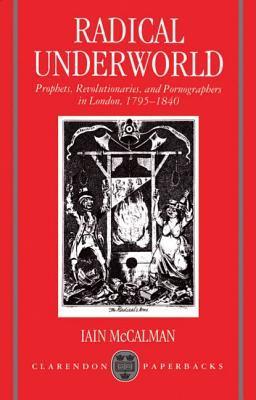
This highly acclaimed study draws on information from spy reports and contemporary literature to look at English popular radicalism during the period between the anti-Jacobin government "Terror" of the 1790s and the beginnings of Chartism. The book traces for the first time the history of the underground revolutionary-republican grouping founded by the agrarian reformer, Thomas Spence. Challenging conventional distinctions between "high" and "low" culture, McCalman illuminates the darker, more populist sides of Romanticism. Radical Underworld broadens the conventional boundaries of popular politics and culture by exploring a political underworld connected with poverty, crime, prophetic religion, and literary culture.
Iain McCalman is professor of history and the humanities at the University of Sydney. He has published numerous books and journal articles. His latest book, The Reef: A Passionate History, from Captain Cook to Climate Change, was published in Australia and the USA. Beyond his research, he has been an historical consultant and narrator for the BBC, ABC and other TV and film documentaries. His interest areas are the history of western environmental and cultural crises; scientific voyaging, ethnography and environmentalism and is currently the co-director at the Sydney Environment Institute.
Alas, not quite as exciting as the title. McCalman mines police records and spy reports to trace the movements and activities of London's radicals. "We have argued," he says in conclusion, "that humour, escapism, sex, profit, conviviality, entertainment and saturnalia should be admitted to the popular radical tradition, along with the sober, strenous and heroic aspects which are more customarily described."