Making the case for the Christian faith--apologetics--has always been part of the Church's mission. Yet Christians sometimes have had different approaches to defending the faith, responding to the needs of their respective times and framing their arguments to address the particular issues of their day. Cardinal Avery Dulles's A History of Apologetics provides a masterful overview of Christian apologetics, from its beginning in the New Testament through the Middle Ages and on to the present resurgence of apologetics among Catholics and Protestants. Dulles shows how Christian apologists have at times both criticized and drawn from their intellectual surroundings to present the reasonableness of Christian belief. Written by one of Catholicism's leading American theologians, A History of Apologetics also examines apologetics in the 20th and early 21st centuries including its decline among Catholics following Vatican II and its recent revival, as well as the contributions of contemporary Evangelcal Protestant apologists. Dulles also considers the growing Catholic-Protestant convergence in apologetics. No student of apologetics and contemporary theology should be without this superb and masterful work.
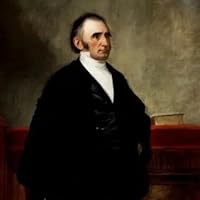
Avery Robert Dulles, S.J. (1918-2008) was a Jesuit priest, theologian, cardinal of the Roman Catholic Church and served as the Laurence J. McGinley Professor of Religion and Society at Fordham University from 1988 to 2008. He was an internationally known author and lecturer.
Dulles was born in Auburn, New York, the son of future U.S. Secretary of State John Foster Dulles (for whom Washington Dulles International Airport is named) and Janet Pomeroy Avery Dulles. His uncle was Director of Central Intelligence Allen Welsh Dulles. Both his great-grandfather John W. Foster and great-uncle Robert Lansing also served as U.S. Secretary of State.
He received his primary school education in New York City at the St. Bernard's School and attended secondary schools in Switzerland and The Choate School (now Choate Rosemary Hall) in Wallingford, Connecticut.
Dulles was raised a Presbyterian but had become an agnostic by the time he began college at Harvard in 1936. His religious doubts were diminished during a personally profound moment when he stepped out into a rainy day and saw a tree beginning to flower along the Charles River; after that moment he never again "doubted the existence of an all-good and omnipotent God." He noted how his theism turned toward conversion to Catholicism: "The more I examined, the more I was impressed with the consistency and sublimity of Catholic doctrine." He converted to Catholicism in the fall of 1940.
After graduating from Harvard College in 1940, he spent a year and a half in Harvard Law School, where he also founded the "St. Benedict Center" (which would become well-known due to the controversial Fr. Leonard Feeney S.J.), before serving in the United States Navy, emerging with the rank of Lieutenant. For his liaison work with the French Navy, he was awarded the French Croix de guerre.
Dulles is clearly a Roman Catholic writer, as evidenced by two paragraphs on Calvin and Barth each, in contrast to multiple pages on obscure French apologists. Yet this was a phenomenal survey of the discipline, which introduced me to some Catholic thinkers that I had not heard of, and encouraged me to take up and read others that I've only given cursory attention (Chateaubriand). A must read for those interested in apologetic method.
This book was recommended by a friend whose area of concentration is apologetics. This was one of several books that he mentioned to me in a conversation. It wasn't a difficult read and certainly a different perspective especially with the author being a Roman Catholic apologist himself but, in many ways, writing objectively. A rare find these days.
The historical perspective and timelines are invaluable and certainly provide some leads into other forms of apologetics philosophy and methods throughout church history. Again, this is a history of apologetics not an apologetic for the faith covering apologetics in the New Testament, The Patristic Era, The Middle Ages, the 16 and 17th centuries (Age of Reason), etc.
The book was not difficult to read and was easy to finish. The Bibliography and Index sections were extensive.
This seems to be the only current English-language book devoted to the history of Christian apologetics. So, it's a valuable resource. However, too often the book seems to be a running list of names, dates, and book titles, with little description of the arguments developed by the apologists. The coverage of historical figures is not always even. For example, the unorthodox Catholic Pierre Teilhard de Chardin receives five pages' worth of material, whereas C. S. Lewis gets one. There's no doubt in my mind who the greater apologist is. Did Dulles think that Teilhard de Chardin is too often neglected and therefore deserves more attention? It's not clear. I suppose Dulles found something valuable in the man's theology.
For those very interested in the history of apologetics, this is a book worth having. Otherwise, I would recommend that people read the apologists' works instead.
This was a required textbook in a graduate course. In it, Dulles covers 2000 years of history in less than 400 pages. It's comprehensive, but in order to be so, it is also summarily comprehensive. It's greatest value is in the scores of bibliographic references and historical locating of authors that most people probably never heard of . . . until they've read the book, of course. That's not to say that Dulles doesn't have insights and angles of his own, he does. But the value of this book is as a starting point, not as a be-all, end-all reference.
We tend to think of these as absolutes, unchangeable. But in fact these disciplines that we create change as we do.
Dulles's book explores the history of apologetics. The discipline changes with time, culture, audience, and the life of the apologist.
There has been a revival online for bright young Christians to offer up apologies for their faith. This book will help put into perspective the wonderful tradition they are setting out to participate in. Much of the objections to Christianity are quite old. And even for those new, we have enough precedence to gain inspiration and encouragement from.
Not a fan by any means. Def a Catholic bias. The Catholic history is painted in a positive light, even during the Reformation. The Protestant tinkers are given the same perspective as atheists. Had to read this for a class at a Baptist university. Needless to say it inspired a many good laughs even with the term "Arminian Calvinist"
In A History of Apologetics Cardinal Dulles has delivered what he promised at the outset, and more. Besides recounting in detail the contributions of hundreds of apologists throughout two millennia, Dulles demonstrates a deep understanding of their thought, and tells the story of how these apologetical ideas sometimes clashed with each other, sometimes made peace, and sometimes morphed into shapes almost beyond recognition. His consistent use of primary documents tells the reader that he has personally grappled with and digested the issues.
A couple shortcomings render this work less than completely satisfactory. First, although he was faithful in maintaining a neutral tone in his perspective on approaches to apologetic, Dulles could not hide his obvious disgust for apologists who maintain that Moses wrote the Pentateuch and that the apostles wrote the Gospels that bear their names. For example, he notes disparagingly that “Pascal imagines that the first five books of the Old Testament were written by Moses himself; consequently, he exaggerates the element of predictive prophecies in the Old Testament” (164). The apologetics of A. B. Bruce, in Dulles’s opinion, “could still be serviceable today” except it needed “some updating on critical and exegetical questions” (266). (Dulles is referring to Bruce’s “conservative position on the authorship and historical value of the four Gospels,” 267). Dulles makes comments such as these in at least five other places (about John Calvin [150], Jacques Abbadie [173], William Paley [189], Nicolas Bergier [199], and Nicholas Wiseman [244]).
A second shortcoming is that Dulles expresses difficulty in distinguishing between scholars who were attacking the Christian faith and scholars who were defending it. The twentieth century saw a rash of theological “revisionists,” including Lessing, Hegel, Strauss and Harnack. In their attempt to render Christianity credible to a secular world, they tended to extract its very essence, or at least replace it with something which, in their minds, was more easily defensible. Yet Dulles catalogues these scholars as apologists for the Christian faith. Dulles is candid about this difficulty when he writes, “The lines between defense and attack became increasingly blurred. . . . It is hard to know to what extend that are to be regarded as objectors and to what extent as upholders of the faith” (271). It seems that Dulles’s confusion could have easily been cleared up if he had defined (in the preface, perhaps) what he meant by “the Christian faith.” Lacking such a definition, Dulles feels obligated to include thinkers who actually undermined Christianity in the name of Christianity. At least he is frank about his discomfort with the situation.
These shortcomings only require the reader to be sensitive to Dulles’s unique perspective, but they certainly do not undermine the value of the Dulles’s enormous contribution to the discipline of apologetics. More than simply giving a chronicle of the discipline, A History of Apologetics inspires students of apologetics to draw the best from the past so they can give the best to the future.
[p. 367.] "In pressing the case for their discipline, apologists should keep in mind that it is neither necessary nor sufficient for salutary acts of faith. It is not necessary, for we all know people who have strong faith without having ever read a word of apologetics. It is not sufficient, because faith is a grace-given submission to the Word of God, not a conclusion from human arguments. Apologetics has a more modest task. It seeks to show why it is reasonable, with the help of grace, to accept God's word as it comes to us through Scripture and the Church."
Cardinal Dulles attempts to do this by detailing major works and movements in apologetical writing, from the New Testament to Liberation Theology and beyond. His focus, after the Reformation, remains on general Christian apologetics, not specifically Catholic or Protestant. His strengths lie in demonstrating why a particular author's work appealed to a time period, what conflicts they responded to, and how successive writers appropriated or combated their claims. While Dulles does outline the limitations of many authors, he himself does not deign to describe how people may have mis-applied apologetical arguments, through, say, the Inquisitions.
Only reason this is not 5 stars is simple because its a History book, you basically plough through. Interestingly starts off by recognising that the New Testament especially Luke and Acts has an Apologetic purpose -Strenghten believers, answer detractors. Some reviewers on amazon, suspicious of a book from a Roman Catholic, have complained that it has an RC bias. I suspect this is a confusion with Dulles's use of catholic, both Ratzinger and St Augustine are 'Catholic' but not in the same way.
Book was assigned for Classical Apologetics class. The book traces the historical progression of apologetics, and in that, highlights the historical and philosophical climate that affected the apologetic approach and emphasis.