Published in association with the esteemed Smithsonian Institution, this guidebook is packed with over 1,500 crystal-clear photographs with precise annotation to make identification sure and simple. Concise and jargon-free text pinpoints the key characteristics of each species and provides quick, accessible information.
For beginners and established enthusiasts alike, DK’s Smithsonian Handbook of Trees explains what a tree is, how trees are classified, and how to keep a record of the trees you have seen. To help you in the initial stages of identification, the book provides a visual key that shows the differences between conifers, broadleaves, and palms, identifies each genus by leaf type, and guides you to the correct species entry. A concise glossary defines scientific terms.
Written by experienced botanist and author Allen Coombes, and packed with detailed information on characteristics, distinguishing features, and more, DK’s Smithsonian Handbook of Trees is the clearest identification guide to trees for beginners and established enthusiasts alike.
Allen Coombes is Botanist at the Sir Harold Hillier Gardens, UK, where his special interest is Quercus (oaks). His publications include DK Eyewitness Handbook Trees and RHS Practical Guide Trees for Small Gardens.
He frequently writes articles for periodicals such as The Plantsman, The Garden and Kew Magazine. Allen resides in Hampshire.
? Dit is een cadeau van de postcodeloterij in de serie natuurboeken. Het vorige boek heette 'vogels in Nederland' en was ook een bewerkte vertaling van een Engels boek. 🤔 Ik vond het boek over vogels interessanter, ook omdat ik graag eens mee wil doen aan de nationale tuinvogeltelling...Ik heb al wel meegedaan aan de nationale bijentelling en daardoor leerde ik verschillende bijensoorten onderscheiden. Ik weet dat onze bomen aan de staatkant iets van Amerikaanse vogelkers heetten en dat zij bloesem geven (vorige week was dat ) in maart, de namen van de bomen heb ik ooit eens opgezocht in informatie van de gemeente, die netjes de staat en oorsprong van alle verschillende bomen bijhoudt en dat is dan ook aardig om dat te lezen in samenhang met dit nieuwe boek van NPL. MW 7/4/22
What I like about this tree guide: the page layouts, the photos, and the illustrations. (Every tree has a color drawing of a man figure standing next to a tree which is half-leaved, half barren, to show scale and branch structure.)
What's irritating: Some trees are identified by their common English and their Latin names, others only by their Latin names. The table of contents uses solely Latin (how does this help the average person??), as does the Identification Key. The index uses both English and Latin. I can't find cottonwood in the index, or anywhere in the book. (!) Cottonwoods are probably the largest trees where I live - that's me, standing at the base of this one:
and they have the most awesome bark. On large mature cottonwoods, unless your hands are the size of baked hams, you can stick your whole palm into its furrows:
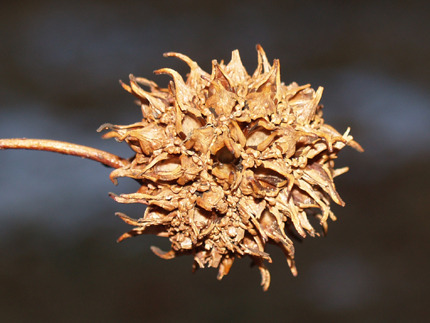
The sweet gum page (which is an entire page; some trees only get 1/2 or 1/3 of a page) doesn't even have a photo of the sweet gum fruit, which is its most recognizable feature. (Trivia: the sweet gum fruit has been called Satan's Testes, and also Quaker Mistletoe.)
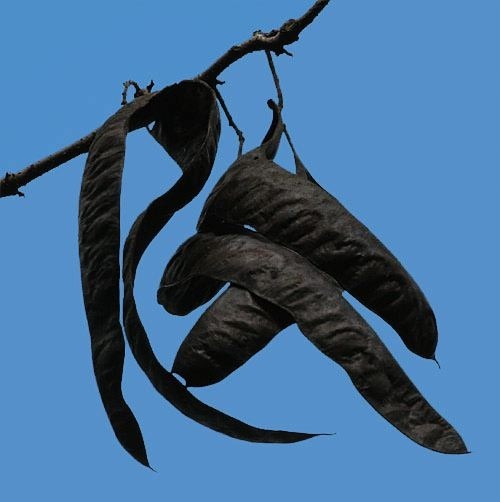
Certainly some fairly obscure trees are given space (the Syrian juniper, the Mount Etna Broom) at the expense of more common ones. On the plus side, I have learned that the fruit of the honey locust (that long, twisted brown hanging pod, which also fails to get a photo) contains a sweet, edible flesh. I'll have to try some in 2011.
Veľmi podarený sprievodca svetom stromov - jeden z "must-have" pre ľudí, ktorí si vytvárajú herbár. Na rozložiteľnej obálke sa nachádza vytlačené pravítko, veľmi užitočné, úvod nie je dlhý, základné pravidlá rozoznávania listov, kvetov, a podobne. Naozaj veľké množstvo rôznych druhov stromov, i takých, ktoré sa na Slovensku ani nevyskytujú. Kniha je rozdelená podľa listov, a teda - Ihlicovité, Šupinovité, Zložené a Jednoduché. Kvitovala by som rozdelenie týchto kapitol aj napríklad farebne, aby si človek mohol hneď nalistovať, čo potrebuje. Keďže sa často na dvojstránke vyskytujú aj 4 popísané druhy, fotografie listov či kvetov sú často dosť malé, a teda horšie sa identifikujú. Takisto je tu málokedy odfotená kôra. Vyvažuje sa to ale naozaj veľkým množstvom informácií - v texte sa prakticky vyskytujú len faktické presné informácie a popis stromu, kvetov, listov, plodov. Nechýba výška, šírka, popis kôry, čas kvitnutia, výskyt, sem-tam nejaká tá zaujímavosť, a, čo ja kvitujem najviac - podobné druhy - to znamená, že keď si nájdete nejaký strom na identifikáciu, a nie ste si istí, hneď vám ponúknu zoznam podobných alternatív, s ktorými ho môžete porovnať. To sa vyjavilo ako veľmi užitočné. Takisto sú stromky v knižke zoskupené podľa podobných druhov, čiže zaradom nájdete všetky druhy líp, javorov, dubov, a podobne, takže to nemusíte pracne hľadať hore dole. Odporúčam pri naozaj serióznom hľadaní a identifikovaní kombinovať s knižkami Stromy a kry - Naučte sa rozoznať najdôležitejšie druhy, Helga Hofmann a Nový průvodce přírodou - Stromy, Roland Spohn, tak budete mať najširší prehľad a identifikáciu temer zaručenú :)
Heel mooi naslagwerk met zo'n beetje alle bomen in Nederland, inclusief de sequoia (?) Rijk geillustreerd en beschreven, zo'n beetje onmisbaar voor de natuurfotograaf. Enige kritiek is het kleine formaat waardoor plaatjes en tekst moeilijk leesbaar worden.
Merged review:
Superb compendium that includes just about every tree and shrub species in the Netherlands. The rich illustrations and annotations render this an indispensable item for the nature photographer. Only criticism is the small format making images and text hard to read.
This is a great little book for tree identification. The pictures are photographs as opposed to illustrations which is something that works well for me. It would be more helpful if it included more pictures of bark however.