The author of Living When a Loved One Has Died draws from Jewish wisdom and tradition to provide thoughtful advice on moving through loss with grace and hope
Earl Grollman's Living When a Loved One Has Died has brought comfort to more than 250,000 readers. In Living with Loss, Healing with Hope, Grollman speaks directly to mourners of the Jewish faith. By weaving quotations from Jewish writers and philosophers into his comforting and expert prose, Grollman guides readers through the journey of mourning, healing, and hope.
A colleague of Grollman's once told him, “Earl, I am not a member of your faith, but if I wanted the soundest emotional and spiritual approach to death, I would be a Jew.” Occasionally quoting from sacred texts as well as Jewish writers and philosophers, Living with Loss, Healing with Hope illuminates Judaism's powerful recognition of the trauma of grief and of the mourner's responsibility eventually to return to the rhythm of life. In a brief final section, the author guides readers through Jewish funeral observances, Shiva, and beyond, and reminds all that these symbolic customs are ‘about change-remembrance, letting go, and moving on.’
“Earl Grollman is still the master of consolation. Every word of this little book is a polished jewel.” —Harold S. Kushner, author of When Bad Things Happen to Good People
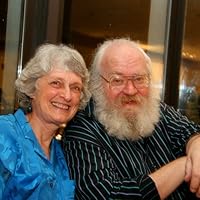
Dr. Earl A. Grollman, a pioneer in the field of crisis intervention, was rabbi of the Beth El Temple Center in Belmont, Massachusetts for thirty-six years. A past president of Massachusetts Board of Rabbis, he took early retirement from his congregation so that he could devote himself to writing and lecturing. A certified Death Educator and Counselor, he was cited as “Hero of The Heartland” for his work with the families and volunteers of the Oklahoma City Bombing.
Dr. Grollman has spoken at many colleges, clergy institutes, seminaries, physician’s forums, and hospital nursing associations; and addressed many support groups such as Compassionate Friends, Mothers Against Drunk Driving, and Widows Personal Services. He has also appeared on national television and radio—the Oprah Winfrey Show, Children’s Journal, All Things Considered, and Mr. Roger’s Neighborhood. Recently, he was featured on National Public Radio’s End of Life Series, in the roundtable discussion on grief and bereavement.
After the death of a loved one, your life is broken, and thus (I think) the words and thoughts of this book were broken. Until the last ten pages, there was not a single paragraph, but rather chunks of thought laid out like a poem but without the rhyme, meter, or other things that make poetry poetry. There were about 10 words per page, and one page didn't necessarily follow another. It was just disjointed little thoughts and words from mourners. I wish there had been more "Jewish" about this book, at least prior to the last 10 pages. I mean, there was some scripture and some quotes from rabbis, but most of it seemed to be the same advice my therapist gave, without much spirituality.
Sent to me as a condolence message, I found it quite a nice, comforting volume. I especially was moved by thinking about and rereading the 23rd Psalm. Walking though the valley of the shadow of death -- I had always understood it as referring to risking one's life and having a narrow escape, due to God's assistance or intervention -- not a very believable piece of magic. It had never occurred to me to see it as caring for or accompanying a dying person. Seen that way, it is a more authentic message of comfort and sustenance for the survivor, as if to say -- this is a sad, difficult thing, but I will help you through it and be with you throughout it.
"Who knew that grief would hurt so much?" "Grief is love not wanting to let go." I could keep on quoting -- and crying. This book doesn't grab me as much as "Living when a loved on has died" but Grollman continues to write things that touch my heart. He does not sugar coat, but he provides hope. "You will never have to go through that ordeal with that person again." He does deliver a Jewish slant to the process of grieving. I value the slant. I'm not sure what a Quaker slant would be.