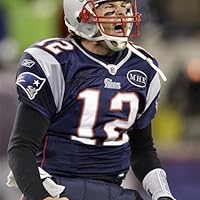
War Room is a very timely read as it covers the careers of Bill Belichick, Head Coach of the New England Patriots, while also highlighting the paths of Thomas Dimitroff and Scott Pioli, Belichick disciples turned competitors as GM and Assistant GM of the Atlanta Falcons.
These two teams, the Patriots and Falcons, are set to face-off tomorrow in Super Bowl LI on Feb 5, 2017.
The early parts of the book focus heavily on Belichick, while the end of the book spends equal time on him, as well as Dimitroff and Pioli.
The meat of the book focuses on the key transition period in their careers where the Patriots went undefeated in the regular season, lost in the Super Bowl, lost their starting quarterback the following season, and saw the three of them go their separate ways.
It mimics the growth that happened in real life of Belichick's two most trusted personnel evaluators.
I'd only recommend this book to people who are true Football fans (or ideally New England Patriots fans) as it shines a bright light on the inner workings of this sport. You will only get something out of the book if you understand the intricacies of the game and league.
Here are some of my key takeaways from the book:
- Belichick understood that Football presents an ever evolving range of opponents, each with their own strengths and weaknesses. Belichick built his teams like "a race care that could be modified and become adaptable to any course you asked it to run". He ignores the "false choices" of being good at one thing at the cost of another, and instead chooses to embrace being the best at whatever his opponent is worst at in a particular game or play. This extended to his scouting system, used to identify up-and-coming players, which "was built with football evolution in mind. It could be expanded or reduced to capture changes and trends in the game."
- With both players and coaches on his staff, Belichick aims in developing from within. It stunned me that most of the top coaches on Belichick's staff today had been coaching with him for over 15 years.
- Despite his gruff exterior, Belichick is known as a very caring individual. He originally got to know Pioli by letting him sleep on his couch in the coaches office in Cleveland so he didn't have to commute as much. He's known as a great listener amongst his players.
- Before coming into vogue with Ryan Holiday's writing, Belichick practiced "fear setting", often telling his fellow coaches that they will most certainly be fired in this business, and most of the time it isn't in their control. Knowing this, Belichick emphasized the focus on family
- The scouting system Belichick developed reminded me a lot of the "scorecard" method of hiring. Each position had a specific description of the outcomes they expected of the player (e.g. he must be able to win the battle in the neutral zone, he must be able to knock the offensive line back and establish a new line of scrimmage...etc.)
- Belichick is very good at ignoring the noise, believing if they built the team with "local sentiment in mind, they would be tempted to keep the team as-is". It reminds me of a common business mantras like "Don't fall in love with your own ideas." or "Don't get romantic about how you made your money"
- Like good founders, Belichick and Pioli hired people who there own worst critics.
- Robert Kraft, the CEO of the Patriots organization, operated more like a Chairman in terms of the Patriots sports team itself. He was involved enough to show he was paying attention, but not so much that it came off like he was meddling.
- Some of the most spectacular draft pick failures of the Patriots came from players with incredible athletic talent, who were not willing to put in the hard work. Chad Jackson, Laurence Maroney and more recently Jamie Collins, are examples of players who fell out of favor to do lack of effort.
- Belichick knows how to handle the emotions of his players, getting ahead of the Spygate incident by having a comedian come into address the team, allowing him to make fun of himself and all his best players. By getting ahead of the crisis, Belichick allowed his team to focus on the game at hand.
- As new players joined the Patriots, the veterans often wondered "why a group that accomplished nothing was seemingly so relaxed." This continual cultural evolution is another challenge that NFL teams face, which other business organizations might not.
- Belichick's excellence as a coach is heavily driven by the amount of deliberate practice he's put into the craft. Since the age of 23 he went straight to working in the NFL. His father was a legendary scout (he wrote a book on the topic) and as a child Belichick was studying the game of football. It is no surprise he has been to 9 Super Bowls in his career.
- Belichick also LOVES all aspects of the game, from the big picture to the finer details of watching hours of film. His love for the game gives him the drive to work hard and why "he's never complained of burnout or hinted at taking a break."
- As we are exposed to Dimitroff in the story, his personal development becomes clear as he emphasizes how he is OK to have a very different view of things than Belichick. Case in point, Belichick advised against him trading up o draft Julio Jones for the Falcons, but in hindsight it looks like a Franchise-saving trade for the organization.
- While Belichick studies a lot, he also understands that you need to eliminate excess and unecessary information, focusing only on what a player can do for your particular system.
- When the book briefly covers the approach of Todd Haley, another NFL coach at the time, it was surprising to me that it said "Haley knew that there couldn't be any in-game switching." which seems at odds with the Patriots approach to continual in-game adjustments.
- The owner of the Atlanta Falcons, Arthur Blank, showed incredible attention to detail. When Dimitroff showed up to a golf tournament wearing the pants of a competing brand to one that Blank owned, he inquired as to why, and when he heard it was because of lack of a common size, Blank immediately called the store to have it rectified as he suspected this could be affecting other customers.
- Belichick undersells the importance of the regular season. Nothing matters if you didn't close the deal and won the Superbowl.