In a bitterly divided nation where security trumps civil liberty, unemployed David is on the verge of sinking into the 'Zeroes' - a destitute underclass numbering millions. But then JobNet's advanced virtual reality world offers him a gateway to a worthwhile future, and a chance to rejoin society.
But David is an unwitting pawn in a deadly conspiracy to topple the Government: he's the ideal carrier for an intelligent virus designed to shatter the system and set the Zeroes free.
When the virus activates, chaos ensues and the Zeroes rise. David is left trapped inside a corrupted reality. If it doesn't shatter his sanity, the secret he finds there will change everything ...
Sometimes even a pawn can hold the balance of power.
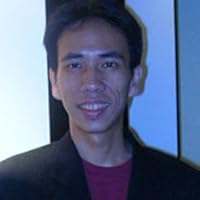
A coffee-guzzling journalist turned author, Mark Cantrell has chased the literary dream for years.
Somehow, it's always managed to stay one step ahead, but Mark perseveres in his pursuit all the same. There are worse ways to kill time, after all.
Mark is the author of two novels (so far), both released in paperback and digital editions by the indie press, Inspired Quill.
Both his novels haunt dystopian ground, but aside from their dark tone they remain very different beasts.
While CITIZEN ZERO (2017) runs towards political science fiction thriller, SILAS MORLOCK (2013) ventures into the shadows of dark, urban fantasy in homage of literary culture.
For want of comparison, in CITIZEN ZERO The Matrix meets V for Vendetta with a touch of I, Daniel Blake. SILAS MORLOCK, though, is more a macabre melding of Fahrenheit 451 and Nosferatu.
Away from novel-length works, Mark has written plenty of short stories and novelettes in his time. He's even been known to dabble in poetry.
Over the years, his stories have appeared in a variety of small press journals both in print and online.
Way back in 1998, two of his stories were featured in the Clover Books horror anthology, Spirit of Darkness. In 2001 there was Love, Sex, Death & Carrots. More recently, his work appeared in Bards and Sages Publishing's The Society of Misfit Stories Presents, Vol 1, Issue 1 (February 2019).
Between times, his fiction has appeared in publications such as Sci-Fright, Alternaties, Asphalt Jungle, Writers' Muse, the Writers’ Compass, and more. He's even self-published some of these works, individually as 'digital shorts', and in his collection of short fiction, ISOLATION SPACE (2009/2011).
Broadly speaking, Mark's work fits into the science-fiction-fantasy-horror spectrum, but he tends to write to the story and worry about the genre later. It seems to work, more or less. Certainly, he's happy (flattered) to be called a science fiction author.
By trade, Mark is a journalist. This is reflected on his author blog, where he writes articles about politics, society and current affairs, along with regular excursions into science, culture and literary life. Well, it keeps the 'blog-beast' fed.
As a jobbing B2B hack, Mark has mostly written for trade mags. He worked in Manchester for nigh on 15 years, writing about England's social housing industry. A pretty gritty topic, it definitely offered fuel for the dystopian mind.
On a more personal note Mark is a Yorkshireman born and bred in the city of Bradford. These days he lives in Stoke-on-Trent in the Midlands, but he remains a proud Northerner.
Mark studied politics at the University of Liverpool and trained as a journalist at the City University, London. After that, he got distracted writing what would become CITIZEN ZERO when he should have been pursuing his first break in the media. You live and learn. It kind of paid off in the end, though.
The writing bug caught Mark from a curious source. It all began towards the tail end of the 8-bit home computing era, when he crafted a series of text adventure games for the ZX Spectrum 48K and 128K computers.
Mark even won an award for one of those games, which led to them all being picked up and released by indie adventure game stalwart, Zenobi Software – itself an award winning company.
It proved to be a satisfying way of closing that chapter of his life, Mark says, as he went on to embark on a new beginning as an author and journalist.
Disclosure: I received a free copy of this e-book from the author in exchange for my promise of an honest review.
It is the future and Britain is under a near-totalitarian rule – all in the name of security, of course. People who are on the dole, or who have in some way trespassed against the Powers that Be are stripped of their citizenship and right, and become Zeros – dependent on the government for very basic support, reviled by Stakeholders (as citizens are called) and generally dispossessed. Constantly tracked by their Nexus card, they are not allowed to assemble or do anything that might destabilize society. David Mills is one such Zero – he has been on the Dole for ten years after his job was taken over by a computerized program. Now he has been contacted by JobMart to come in for a new program, called JobNet – one goes into an artificial reality world, and seeks a job there. In AR, he could search for a new job from companies all over the world, without ever leaving his own mind. However, what he learns about that AR, and the AI that powers it, will shock the reader.
I’m really torn about this book – one the one hand, it is very well written, fairly well edited (there are a number errors of passed/past and your/you’re type), the characters are well-done and it is overall technically quite good. That said, I really didn’t like the story much. It was hard to follow, although by the end it all made sense (so don’t despair while reading it – just keep going, you’ll understand!), and really quite depressing. Then again, it is dystopian, so I guess that is to be expected. If you like dystopian books, you should really like this one. Also, I felt it had a pretty good cautionary moral – don’t give away your freedoms in the name of security – that I think more people should be aware of – in many ways, it is very apropos to the modern world since 9/11, even though the book itself was written prior to that event (according to the note at the end, Cantrell wrote this in May 2001). So, my overall impulse is that people need to read this book.
“Citizen Zero” by Mark Cantrell is a complex story about an unemployed man who enters JobNet, a complex totalitarian realm where the real and un-real overlap in this “Orwellian” like story, but with many more characters with diverse experiences. Overall, this is a well-written, highly developed novel that gives a vivid, and sometimes-horrifying picture of a dystopian world. My critique is that the story could be simplified for a more concise message, but to me it’s not a discouragement to potential readers. Four stars!
As a disclaimer, I want to say that I am a light reader, and I classify this book as heavy and serious.
This book is full of symbolism and poetic words; I had to recharge myself quite often to be able to finish this book, but I am glad I am able to finish it. The question of human existence and its interaction with machines are the core theme of Citizen Zero. This book was written around year 2000, and that probably accounts for the bleak and gloomy depictions, but the ideas and thoughts inside this book is way ahead of its time.
David Mills has spent a decade on the breadline when he’s badgered into joining a new artificial-reality job-finding scheme. The dreamscape he wakes up in is pleasant enough and, for the first time in years, he forges a connection with a female friend. But he’s no more successful in finding work than in the real world where he’s ready to return when his fortnight’s up. Two things stand in the way of that, however: he’s loath to leave Christine and his body has been mislaid. Then a butterfly-shaped virus invades the system. Set in 2070 England, Citizen Zero creates a horrific near-future echoing present-day inequalities, which reminded me, before things got especially scary, of recent reads Connect by Julian Gough and Joanna Kavenna’s Zed.
The cover does look a little like it's indie made but it wouldn't put me off too much. It's definitely relevant to the sort of story Citizen Zero is.
Characters: 15/20
I really liked the hero of this story and his love interest and felt deeply for them both in what they had to go through. I was less interested in the rest. There were quite a few stereotypical bad guy types like the PM and his aides but a few of the other 'bad guys' surprised me as well. Several had regrets and their motives were interesting so it kept me curious.
Storyline: 17/20
The plot of this book was well thought out. Not overly complex but it really didn't need to be. And maybe a little predictable given the sort of book it is but I still enjoyed it. I love the concept of freedom and what freedom really looks like and where boundaries should be and this storyline explored all of those sorts of things.
Style: 10/20
For me the style of this book was it's weaker point. I think some people would really enjoy it and it reminded me a lot of Stephen King's earlier work in it's descriptive and very symbolic nature, but I found myself skim reading whole chunks of text to get to more action and dialogue.
For those who like the well described and thought through worlds then you will totally love this book, so I don't actually want to fault the author for this. He picked a style and did it well, it's just not a style I'm particularly fond of.
Spelling and Grammar: 18/20
I don't think I noticed a single typo which is very rare for me but I did have a few formatting issues with the size of the text. For some reason whole paragraphs would appear in a much larger text before going back to the normal size. It only bugged me ever so slightly though so I'm not knocking it much for that.
Conclusion: 72/100
So overall a pretty good book with a lot of world building, description and some well thought through characters. Not perfect, but still worth reading for anyone who likes to look at societal extremes and their consequences, while getting to route for the easy to relate to good guy.
David Mills has been on the dole, looking for work, for several years. When he reports to the Job Centre, he is told about Job Net, a virtual reality job hunting system that allows potential employees to interview for work all over the world. He is skeptical, but signs up for the program.
Of course, nothing is quite as splendid as it seems.
Whether or not it was the intention of the author, this dystopian tale felt to me like an appropriately scathing critique of Randian Objectivism. Unemployed, disabled or similarly "less than perfect" people are referred to by the people in power as "zeroes," seen as having no value whatsoever. Those in power, the privileged class, believe it is appropriate to further disenfranchise or even, ultimately, destroy the "zeroes" since they are not seen as making any contribution whatsoever to society.
Of course, revolution is inevitable.
This is a tightly constructed, futuristic piece. I'm hesitant to call it science fiction, although it contains elements thereof. It's more of a cautionary tale, in my mind.