Breslau 1919. Auf einer der Oder-Inseln werden die grässlich zugerichteten Leichen von vier jungen Männern gefunden. Der Mörder spielt Katz und Maus mit der Breslauer Polizei - und mit Eberhard Mock.
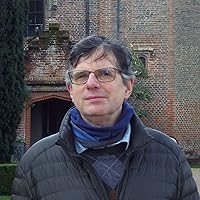
Wrocławianin. Wykładowca Uniwersytetu Wrocławskiego.
Autor osiemnastu bestsellerowych powieści kryminalnych, filolog klasyczny. Laureat prestiżowych nagród literackich i kulturalnych (m.in. Paszportu „Polityki", Nagrody Wielkiego Kalibru, Nagrody Prezydenta Wrocławia, Śląskiego Wawrzynu Literackiego), odznaczony Srebrnym Medalem „Zasłużony Kulturze Gloria Artis”. Jego książki przetłumaczono jak dotąd na osiemnaście języków. Zadebiutował w 1999 roku „Śmiercią w Breslau” - w 2019 roku obchodzimy 20-lecie jego twórczości. Miłośnik filozofii i logiki.
---
Marek Krajewski – socjolog, profesor zwyczajny, zatrudniony na Wydziale Socjologii UAM w Poznaniu. Autor licznych artykułów dotyczących materialności i wizualności, współczesnej kultury i sztuki oraz edukacji kulturowej. Opublikował też wiele książek poświęconych tej problematyce: Kultury kultury popularnej (2003), POPamiętane (2006), Za fotografię! (2010, wspólnie z R. Drozdowskim), Narzędziownia. Jak badaliśmy (niewidzialne) miasto (2012, wspólnie z R. Drozdowskim, M. Frąckowiakiem i Ł. Rogowskim), Są w życiu rzeczy… (2013), Incydentologia (2017). Współtwórca projektów badawczych, artystycznych i edukacyjnych: Niewidzialne miasto, Archiwum Badań nad Życiem Codziennym, Bardzo Młoda Kultura.
So, yes, it's a translation, which almost always makes for some awkward wording, but still...incredibly atmospheric, with wonderfully textured historical detail.
I picked up this book for a uniquely personal reason. In the documents that came from the War Crimes Archive in Ludwigsburg, Germany, I found that the German official who protected my mother's family, a man named Willy Selinger, came from a place called Breslau; a place I couldn't locate on any map of Germany. I wanted to know this; what makes a man stand up? What drives a man to revolt against his government's demented policy and decide to save Jews? I thought I might find it somewhere in Selinger's upbringing.
It wasn't until I discovered that a city in Poland now called Wroclaw used to be a German city called Breslau that I was able to locate our protector's birthplace. When I saw this book in the library stacks, I grabbed it. It's witty, droll, cynical but with a soft heart, a police procedural stocked with magnificent detail about the the streets, the stores, the architecture, the whorehouses, the restaurants, the aristocrats, the underworld, and the corruption, set in the year 1919. But more than that, you get a feeling for the way people lived.
Inspector Eberhard Mock lives with his aging, crotchety father in an apartment above a butcher shop. A veteran of the trenches in World War I, Mock has no illusions about anybody or anything. A series of grisly murders occurs. After each murder, a letter turns up addressed to Mock, exhorting him to admit to his mistakes, or more people will die.
Truly a great thriller. I look forward to reading the next books in the series.
This was a random pick-up from the library that waited patiently to be read whilst I tackled other books. When I started to read it I was afraid that it would be another disappointment along the lines of 'The Necropolis Railway' by Andrew Martin, which was just awful, or Gatiss' 'Lucifer Box' books which were a bit too clever for their own good, with little body to them. However, the more I read, the more I was reassured that this was a writer who could create three dimensional characters and set them in an atmospheric location with decent dialogue.
As I got to the last forty pages or so, I realised that the end was nigh and I was rather saddened. Krajewski started tying up his loose ends and the character depictions got thinner to make way for plot progressions. I guess you can't have it all. This book could easily have been another hundred pages long in my opinion, and as a lover of short books, this is a rare criticism.
Half-way through I was eagerly checking the library catalogue to see if there are any other works by the same author, however, now I think I will give Krajewski a rest and mull him over and tackle some of the other books that I have been meaning to read.
I'd definitely recommend his works and I do hope that he gets more acclaim in the UK.
Im 3. Band der Reihe, der aber chronologisch als 1. Teil anzusehen ist, da er bereits 1919 angesiedelt ist, erfährt man nun den Werdegang von Eberhard Mock. Hier lebt er noch mit seinem Vater zusammen über der alten Metzgerei seines Onkels und wird von Alpträumen geplagt, die ihn nicht schlafen lassen. Zudem geschieht noch ein mysteriöser Mord an vier Matrosen, den es aufzuklären gilt und dessen Motiv in Mocks Vergangenheit während des 1. Weltkrieges zu liegen scheint. Sehr gefallen hat mir hier vor allem der anfangs nicht zuzuordnende Prolog, der sich am Ende zu einem für Mock dramatischen Schluss erweist. Diesmal allerdings empfand ich aber auch ein paar Stellen im Mittelteil als kleinere Längen. Trotzdem bleibt die Reihe um Eberhard Mock für mich eine besondere Krimiserie, wie ich sie so noch nicht lesen durfte, und ich bleibe weiterhin gespannt auf die nächsten Teile.
Overall, I enjoyed the book. It was by far more interesting and well-structured than the previous one in the series. However, what I must say is that Krajewski is an author who enjoys the road more than the goal.
As always, we have great historical details like events, architecture, and - especially - local cuisine. Lots of insights into main character with his inner demons as well. The plot resolves about an occult sect, which always adds to eerie atmosphere. These are all the highlights of the book.
What I don't like is that actually I was pretty sure who the murderer is around the middle of the book. I just didn't know how and why.
--SPOILERS ALERT--
I mean, the moment when Mock exposes Ruhtgard knowing about the 'blind men'. He then goes on to explain that he knew from the organ-grinder daughter. Now, that's a good explanation, but the seed of doubt has been sown in my mind at this point. Later on, I only confirmed my opinion when Ruhtgard advised Mock to go and see a mesmeriser - as we knew from the murderer's journal that the sect wanted Mock to contact anyone related to occultism.
One thing that I find weird about the plot is why was Mock refraining from sleep? Why did he wait so much time to go to Muhlhaus? He knew about the ultimatum for 3 or four days before he did anything about it.
This entire review has been hidden because of spoilers.
En comparación con las dos primeras novelas de la serie, esta tercera es claramente inferior: la investigación se deshincha a medida que avanza, perdiéndose interés por la trama y por los múltiples personajes que aparecen (muchos para no reaparecer), muchos de los cuales están caracterizados de forma inverosímil y se comportan de forma arbitraria, resultando a menudo incluso molestos. Y nada que decir sobre la resolución, que no es sino la culminación de una novela que iba a la deriva desde el segundo tercio. En fin, una decepción.
Comprado en Cracovia hace varios años pero no ha sido hasta el confinamiento que lo volví a tener en mis manos. Tercera entrega de este inspector tan peculiar, y he de admitir que ha sido la que más me ha gustado.
Présentation de l'éditeur : Dans la ville polonaise de Breslau, en 1919, sous occupation allemande, Eberhard Mock occupe le poste d’inspecteur à la Brigade des Moeurs. Aucun bordel, aucune prostituée, ne sont inconnus à cet homme amateur de bonne chair, de femmes et de vodka. Mock, depuis la fin de la Grande Guerre est cependant victime de cauchemars atroces et réguliers que seul l’alcool permet d’éviter. C’est dans ce contexte, après une nuit passablement agitée, que le subordonné de Mock vient lui annoncer que quatre jeunes hommes habillés en marin viennent d’être trouvés atrocement mutilés sur une petite île de l’Oder. La police trouve près des victimes une feuille avec une citation de la Bible adressée à Mock lui-même. Cette enquête marquée par le désoeuvrement de l’après-guerre, le crime, les établissements douteux et l’émergence de la drogue, va faire ressurgir le passé encore très proche de l’inspecteur et, bien sûr, de nouveaux meurtres sont commis…
I won't forget this one. Something about it is very suspenseful, creepy, and heavy painful violence is a given. It's good, well written, perhaps no lighter translation can be given, and I'm sure a number of people who really like books bordering on horror would find it more to their taste than I would. It's just too too for me. It deals with the occult and a number of well respected, educated individuals who have formed quite a society dedicated to it. We're talking about say, 1919 here, and that is the world that is presented. I had someone figured out as the villain fairly quickly and it turned out I was right. And the perp, a policeman, was also a real mess with disturbing emotional and addictive problems, but basically a very good and dedicated heart. Finding much hope was not easy with this story, and it really explored the depths of certain types of depravity.
This entire review has been hidden because of spoilers.
This book is a sleazy tale of torture, ritual murder, mutilation and way too many prostitutes. Not withstanding two pages of quotes in praise of the book from worldwide critics, I think the tale is awful. The conclusion is so strange as to be totally unbelievable.
Originally published in Poland in 2005, this translation was printed in the USA in 2010. Set in Breslau, Germany (now Wroclaw, Poland)throughout the month of September, 1919, it must have lost a lot in translation.
maybe it was the translation, but there was a moment in this book when i thought, "stupid!! you just gave it away!!!" and then i went through the rest of everything to see if i was right. i was.
still, i like reading murder mysteries set in the town where i live. even if the street names are german. one thing's for sure, i'll never look at the trees in south park the same way again.
To trzecia ksiazka z serii o Ebehardzie Mocku, ktora przeczytalem, ale uwazam, ze powinienem byl ja przeczytac jako pierwsza. Teraz jestem pewien, ze na pewno powroce do wczesniej juz przeczytanaych ksiazek z serii o Mocku. Jesli juz czytam jakas serie to raczej chcialbym poznawac losy glownego bohatera wedlug chronologicznej kolejnosci.
Wedlug tego co udalo mi sie znalezc w internecie cykl o E. Mocku chronologicznie powinien w nastepujacy sposob byc poukladany: Widma w mieście Breslau Dżuma w Breslau Koniec świata w Breslau Śmierć w Breslau Głowa Minotaura Festung Breslau Rzeki Hadesu
Akcja "Widma w miescie Breslau" toczy sie w roku 1919. Ebehard Mock ma 36 lat. Pracuje w oddziale obyczajowym wroclawskiej policji. Mieszka wraz z ojcem w mieszkaniu na Plessauer Strasse. Cierpi na bezsennosc. Ucieka czesto do alkoholu i spedza noce w towarzystwie prostytutek. We Wroclawiu pojawia sie morderca, ktory za motyw zbrodni podaje niewiare Mocka w rzeczy nadprzyrodzone. Przy ofiarach morderstw znajdowane sa karteczki ktore bezposrednio zaadresowane sa do Mocka.
Po blizszym przyjzeniu sie postaci Mocka widzimy czlowieka, ktory jest weteranem pierwszej wojny swiatowej. Koszmary wojny nie zdarzyly go jeszcze opuscic. Bezsennosc, rzekome widma nawiedzajace Mocka to moze byc po prostu symptom zespolu stresu pourazowego, ktorego przyczyny moga lezec w tragicznych przezyciach wojennych. Bezsennosc, gleboki stan niepokoju, to symptomy pojawiajace sie u czlowieka, ktory znajduje sie pod wplywem wielkiego stresu. W takich to okolicznosciach Mock musi uporac sie ze sledzctwem. Nie ma latwego zadania.
Breslau (or Wroclaw as we now know it) is a flat and riparian city, with many bridges, parks and islands. In this story set just after World War I the city serves as a convincing backdrop for a tale of a series of murders done with the aim of manipulating the psychology of the investigator, Criminal Assistant Eberhard Mock. He is prey to heavy drinking, womanizing and also burdened by having to live with a nagging father. At times very funny, at times horrific, at times confusing (whilst embedded in its main protagonist's mental state the book still indulges in 'head hopping' point of view changes), the story unfolds in such amoral settings as a brothel-like hotel. This provides a queasy mixture of glamour, disfigurement and obsession that reminded me of the films of Joseph von Sternberg ('The Blue Angel'). This compelling background does not quite compensate for a slow-starting plot which is not always logical or clearly conveyed. Still Mock is an appealing central character and for him alone I recommend the book.
Dans « Les fantômes de Breslau », Marek Krajewski nous plonge dans la Silésie de 1919, une région profondément marquée par les bouleversements de la Première Guerre mondiale. La ville de Breslau (aujourd’hui Wrocław en Pologne) est dépeinte comme un espace urbain en pleine transition, où les cicatrices du conflit mondial cohabitent avec les premières manifestations d’une société qui tente de se reconstruire. L’auteur restitue avec minutie cette atmosphère particulière d’après-guerre, où l’instabilité politique et sociale règne dans les rues de cette métropole allemande qui, quelques décennies plus tard, sera polonaise... La suite de ma chronique sur mon blog : https://lemondedupolar.com/eberhard-m...
Not bad, just not very good either. The setting is Breslau, but apart from an abundance of street names, it adds little too the story in my opinion. On the other hand, I did enjoy reading this book. I'm actually more curious about the Eberhard Mock books set in Nazi Breslau, especially during it's final days in WW2.
I rarely advice people to read something and I won't do it now, but I do advise people to go and visit Breslau/Wroclaw. It's a beautiful city and they've got great beer. You can use Krajewski's book to find out how the streets were named some 80 years ago.
Odwrotnie do poprzednich części cyklu, tutaj bardzo długo musiałem się wkręcać w fabułę. Mam jednak wrażenie że to moja wina. Te książki trzeba czytać góra na 2-3 razy, a ja podzieliłem ja sobie na znacznie drobniejsze fragmenty. Najistotniejszą częścią lektury dzieł M. Krajewskiego jest chyba ich niepowtarzalna atmosfera, a żeby ją docenić trzeba czytać po kilkadziesiąt stron na raz. Ja zrobiłem tak mniej więcej od połowy i myślę, że Widma są niemal tak dobre jak Śmierć i Koniec świata w Breslau.
Грустная история про расследования ритуальных убийств в 1919 году. Только что кончилась Первая мировая война, а в Бреслау (ныне Вроцлав) убивают людей всё равно. И убивают странно, жестоко, страстно и мерзко. К правде герой — криминал-ассистент Мок — придёт, но по дороге очень много потеряет.
Очень колоритные истории у Марека Краевского. Надеюсь, всю серию затем переведут на русский. Иначе как читать?... На польском, увы, не умею.
Having read the first two Mock books, I find myself incredibly disappointed by this one. What I had found strange but beguiling in their style has become annoyingly arch in this one - the plot is ludicrous, characters behave in such bizarre fashion I wondered if the author was having a joke to see how far he could go before the reader threw in the towel.
Wonderful reconstruction of post-WWI Germany. Another effective page-turner from Krajewski, with a plot and cast of characters so dark that you'll need a torch to read it!
The second installment in the Monk series taking place in Breslau, during the Weimar era. This novel is not as good as the first and is a bit convoluted. Hopefully book three will pick up speed.
Started and finished date - 01.04.25 to 03.04.25. My rating - Three Stars. I did enjoyed this book but I didn't love it and The cover of book was okay. The paced of plot was bit rush and the writing was okay. I found mystery was okay also the atmosphere was pretty good. The ending of book was okay and I mixed feeling about the characters and I would have them to flash out bit.
W 2007 roku miało miejsce może nie doniosłe, ale z pewnością ciekawe wydarzenie - Marek Krajewski otrzymał honorową Nagrodę Wielkiego Kalibru za wprowadzenie do literatury postaci Eberharda Mocka. "Widma" nie są pierwszą napisaną czy wydaną książką o Mocku, ale pierwszą pod względem kolejności spraw prowadzonych przez komisarza.
Jest rok 1919. Mock ma 36 lat, silny pociąg do alkoholu, zawsze czyste buty i lekką nadwagę. Jest kawalerem i mieszka z ojcem nad nieczynnym już sklepem rzeźniczym wuja w nędznej izdebce, do której wchodzi się przez klapę w podłodze. Pracuje jako asystent kryminalny w wydziale obyczajowym, a zakres jego obowiązków obejmuje głównie przesłuchiwanie i spisywanie alfonsów oraz sprawdzanie cór Koryntu pod kątem aktualności wpisów w książeczkach zdrowia. I nie wiadomo jak długo jeszcze by to trwało, gdyby nie dokonano odkrycia zmasakrowanych zwłok czterech młodych mężczyzn w marynarskich czapkach wraz z listem, w którym morderca wzywa Mocka do przyznania się do jakiegoś popełnionego w przeszłości błędu, a sam komisarz zostaje zwerbowany do wydziału zabójstw.
Ofiar (oraz listów) przybywa i szybko staje się jasne, że morderca uśmierca osoby przesłuchiwane przez komisarza, co z jednej strony prowadzi do odsunięcia go od śledztwa, a z drugiej do jego nieoficjalnej kontynuacji przez Mocka przy wsparciu zaprzyjaźnionych zbirów z półświadka. Siłą rzeczy również komisarz analizuje swoją przeszłość, wspomina czasy nauki i wojny, a ze względu na makabryczność zbrodni dręczą go koszmary senne w akompaniamencie wyrzutów sumienia. Dzięki temu czytelnik ma wgląd w lęki i marzenia Mocka, a te są równie ważne co prowadzone śledztwo. Przeciwwagą dla podlanych alkoholem i nieco neurotycznych wynurzeń komisarza są rozważania mordercy, krótkie lecz porażające chłodem i okrucieństwem psychopatycznego umysłu.
Głównym wyznacznikiem prozy Krajewskiego są opisy, zawsze drobiazgowe i sugestywne. Świetną, stylizowaną polszczyzną autor odmalowuje dwa przenikające się w powieści środowiska: dziwek i alfonsów oraz zdeprawowanej arystokracji ze świeżo uzyskanymi tytułami. Opisuje eleganckie restauracje i podejrzane speluny, wielkie domy bogaczy i nędzne mieszkanka biedoty, główne arterie i mroczne zaułki Wrocławia, gabinety i podwórka, stroje i zawartość talerzy. A wszystko spowite patyną sprzed wieku, w kolorze sepii, choć uprzedzam lojalnie, że jest to sepia pokryta brudem, smrodem i chorobami skóry.
Jako iż jesteśmy w międzywojennym Wrocławiu, trzeba też przygotować się na to, że większość nazw własnych, imion i nazwisk jest niemiecka, a na dodatek autor, będący z wykształcenia filologiem klasycznym, wkłada w usta Mocka łacińskie zwroty, sentencje i takież asocjacje. Moim zdaniem jest to kolejny plus powieści, a Krajewski ma dla mnie status arcymistrza kryminału retro.
Polecam gorąco, choć raczej wielbicielom mocnych wrażeń:)
Let me preface this review by saying, that when I started reading 'Phantoms of Breslau', I had no clue who the author was or what kind book this is. I literally picked it off the library shelf because I liked the cover. Secondly my knowledge of European history is sketchy at best, so it took me a 100 odd pages of reading into, before realizing that Breslau is a German (occupied or otherwise) town.
The book seems very fragmented, though I don't think it is the author's fault. I read an English translation (originally written in Polish), and many a times lost the train of events. In a translation, sometimes it helps to give a reference sketch of the events happening in the background as cultural assumptions cannot be made by an outsider.
The book starts out with a dark humorous tone with a very cynical protagonist, Inspector Mock, a man shuttling between fighting his own inner demons, to fighting the real demons of the society. A corrupt cop with very loose morals, who goes on to take a high moral ground when he is made indirectly responsible for a series of murders.
The tone of the book also changes with the character. In the beginning, it has many light passages describing food so descriptively, that all it made me want to do is to put the book down and 'PIG OUT'.
Example:
"He divided a hot potato with his fork and slathered half of it with the soured cream coating the herrings. The fork impaled a piece of potato, then speared a slice of onion with a crunch before fianlly piercing a chunk of apple. In ecstasy Mock slid all these specialities into his mouth and chased them down with some more cold schnapps to stimulate his digestion."
With his attitude, the tone of the book also changes. It gets quite political in between, and further introduces a philosophy spouting serial killer.
All in all, not a bad break from the usual suspects of Connely, Patterson, et all. Though I am taking a star away, as I am sure the translation could have been much much better.