Winner of the Commonwealth Writers’ Prize for Best Book, Caribbean & Canada and the Canadian Authors Association Literary Award; Finalist for the Governor General’s Literary Award for Fiction, the Thomas Head Raddall Atlantic Book Award, and the Winterset AwardWhen a whale beaches itself on the shore of the remote coastal town of Paradise Deep, the last thing any of the townspeople expect to find inside it is a man, silent and reeking of fish, but remarkably alive. The discovery of this mysterious person, soon christened Judah, sets the town scrambling for answers as its most prominent citizens weigh in on whether he is man or beast, blessing or curse, miracle or demon.Though Judah is a shocking addition, the town of Paradise Deep is already full of unusual characters. King-me Sellers, self-appointed patriarch, has it in for an inscrutable woman known only as Devine’s Widow, with whom he has a decades-old feud. Her granddaughter, Mary Tryphena, is just a child when Judah washes ashore, but finds herself tied to him all her life in ways she never expects. Galore is the story of the saga that develops between these families, full of bitterness and love, spanning two centuries.With Paradise Deep, award-winning novelist Michael Crummey imagines a realm where the line between the everyday and the otherworldly is impossible to discern. Sprawling and intimate, stark and fantastical, Galore is a novel about the power of stories to shape and sustain us.
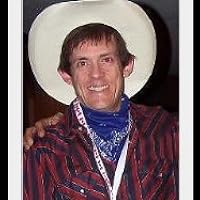
Born in Buchans, Newfoundland, Crummey grew up there and in Wabush, Labrador, where he moved with his family in the late 1970s. He went to university with no idea what to do with his life and, to make matters worse, started writing poems in his first year. Just before graduating with a BA in English he won the Gregory Power Poetry Award. First prize was three hundred dollars (big bucks back in 1987) and it gave him the mistaken impression there was money to be made in poetry.
He published a slender collection of poems called Arguments with Gravity in 1996, followed two years later by Hard Light. 1998 also saw the publication of a collection of short stories, Flesh and Blood, and Crummey's nomination for the Journey Prize.
Crummey's debut novel, River Thieves (2001) was a Canadian bestseller, winning the Thomas Head Raddall Award and the Winterset Award for Excellence in Newfoundland Writing. It was also shortlisted for the Giller Prize, the Commonwealth Writers' Prize, the Books in Canada First Novel Award, and the IMPAC Award. His second novel, The Wreckage (2005), was nominated for the Rogers Writers' Trust Fiction Prize and longlisted for the 2007 IMPAC Award.
Galore was published in Canada in 2009. A national bestseller, it was the winner of the Commonwealth Writers' Prize for Best Book (Canada & Caribbean), the Canadian Authors' Association Fiction Prize and was shortlisted for the Governor-General's Award for fiction.
He lives in St. John's, Newfoundland with his wife and three step-kids.
Galore is all over the place. And I didn't like it.
I like epic historical fiction. (The Far Pavilions) But, this one wasn't epic. It was more a collection of pointless stories strung together than a rich tapestry with unifying threads.
I don't necessarily mind plot lines about priests who act in un-priestly ways. (The Thorn Birds) But there was nothing redeeming about this priest.
In fact, I can't think of a single character that I cared for much. That's a shame because there were so many to choose from.
On to the next book. :) I recommend giving this one a pass.
"100 Years of Solitude in Newfoundland" is probably how everyone describes this book, because that's what it is. Same magical realism; same complex, circling family trees. Same mythic feel; same epic, frustrating refusal to commit to one story. It's a little bit easier to read - when it zooms in on one story or another it zooms with a vengeance, gaining a sense of immediacy that Marquez's book almost never hits. And it's like half as long.
Here is Newfoundland:
There's a Yeats thing happening here too, I think. Doctor Newman, feeling "like he'd been transported to a medieval world that was still half fairy-tale," reminded me of Yeats' Ireland: "We exchange civilities with the world beyond." In both cases it's basically irrelevant whether fairies or mermaids literally exist or not; what matters is that one is exchanging the civilities. Irish people are like this, and there are a lot of Irish in this story.
It picks up steam in the second half. It's a brilliantly planned book; every event has significance. Crummey doesn't drop a stitch, and when he chooses to wave away his Marquezian mythic fog to dawdle with the story, you'll find yourself staying up late to read. My favorite bit is the side story of Mr. and Mrs. Gallery and Father Phelan. "Choose your hell!" someone says, and you're like oh snap, this book just brung it.
There are those who enjoy books with undeveloped characters, major plot threads picked up and dropped, hypocritical religionists with no contrasting genuine heroism and morality, bleak setting, and ultimately pointless story, but I am not one of these people. If the book itself doesn't take its own story seriously (did Judah really come from a whale? Did they really harvest all that squid?), then why on earth should we readers? When I read the reviews of this book, I thought it was going to be something like a sumptuous Thanksgiving dinner spread, but I have been cheated. Imagine a spread like that, but after your Golden Retriever has had his way with it. That is more this book. Sure, there is plenty of everything, and a highly varied selection, but none of it is really very appetizing, let alone satisfying. It certainly doesn't hold a candle to Marquez (One Hundred Years of Solitude), but even there I am in the minority, as I much preferred Allende's The House of the Spirits to Marquez. Galore isn't even in the same league; the former two have a theme and a flow, Crummey's book just has everything thrown in it with no apparent point.
I haven't really read much fiction set in Newfoundland, but I would steer readers away from this book and towards Anne Proulx's The Shipping News, which is very evocative of the region, has gripping characters, and a moving story that doesn't leave you wondering what the !#$@$ you just read.
Ho. Lee. Crap. Wow. This was amazing. And I know everyone won’t think so. This is the kind of book that has a select audience. It spans centuries and generations with families interacting and intermarrying. I live for this kind of book and there were times when it was an effort to keep all the characters straight. But I loved it. I must be a sucker for a novel about a fishing village and life on the sea, because I loved Carsten Jensen’s We, the Drowned the same way. I would put that book, Galore and One Hundred Years of Solitude together on the shelf. They will all be read again in the future. Wow. WOW!
”They spoke of the days of plenty with a wistful exaggeration, as if it was an ancient time they knew only through stories generations old. My Jesus, the cod, the cod, the cod, that Crusade army of the North Atlantic, that irresistible undersea current of flesh, there was fish in galore one time. Boats run aground on a school swarming so thick beneath them a man could walk upon the very water but for fear of losing his shoes to the indiscriminate appetite of the fish.”
Michael Crummey’s Galore is less than 350 pages, but it reads like a much longer and immersive historic epic. Galore spans about one hundred years — chronology in Crummey’s Newfoundland feels as foggy as the weather — beginning in roughly the early 1800s and ending after World War One. Crummey being Crummey, most of Galore’s action occurs in an isolated and often impoverished outport dependent upon the vicissitudes of the cod fishery and unforgiving winters for survival. Crummey packs a village full of personalities, relationships, stories, connected and unconnected events, and folklore into Galore. Even with frequent lookbacks to the two part family tree helpfully included — but where’s the map? — Galore’s stories prove difficult to fully follow. More careful readers than I might find Galore frustrating. But for readers who glory in Crummey’s wonderful story-telling and who don’t feel a need to understand every narrative thread, Galore is thoroughly absorbing and enjoyable.
Every so often I finish a book, and can't start another one because I'm still thinking about the book I just finished. Galore is one of those books.
Galore pulled me in from the start. Part historical fiction, part magical realism, and part multi-generational family saga. Witchcraft and modern (for its time) medicine. Two feuding families. The haves vs. the have-nots. Religion. Ghosts. Galore has it all. Stories Galore. There is abundance every so often, and there are hard times more often. The people of this fictional town in long ago Newfoundland feel so real you would recognize any of them if you saw them on the street.
The story begins with an infant's birth and a fully grown, nearly albino, mute man, being pulled out of the belly of a whale that washed ashore. The townspeople see nothing weird about this, and neither does the reader. The author's wonderful storytelling style weaves the lives of the characters together in an unforgettable manner that will have you thinking about this book long after you've finished it.
The comparisons to One Hundred Years of Solitude are inevitable, and I started making them early in the book (and before I read reviews that make such a comparison). However, in many ways Galore is more readable than 100 years and the characters are more human.
Two parts history and one part fairy tale, Galore takes place on the isolated island of Newfoundland, where the lines between reality and fantasy, and between superstition and happenstance all get a bit blurry. While at the beginning, I would find myself questioning how any of this could actually happen, by the end I freely accepted the idea that the reason a girl would be born with webbed fingers could be traced to an affair her great-grandfather had had with a mermaid decades earlier.
The quality of the narrator is also brilliant- his accent fits in beautifully with the story. I will definitely listen to more of his work!
On audio, loving it so far!
Update- I found out after reading some reviews that the print version comes with family trees, which I wish could be incorporated into the digital audiobook somehow. I ended up cheating- I dl'd the sample ebook onto my nook, which includes the first few pages... including the family trees! Very handy. I'm still loving the story, btw. I want it to be adapted to stage or screen somehow.
Historical fiction that covers the 19th and early 20th century Newfoundland cod fishing industry and the people trying to survive in this harsh environment. An enigmatic mute man is found in the belly of a beached whale. The Devine family takes him in and names him Judah. From there, we are introduced to the other families in the community and the source of an ongoing feud with the Sellers family. The plot covers what happens to these families and their descendants over multiple generations.
This is a unique book. The story contains a small portion of magical realism based upon the folklore and superstitions of the region. It includes lots of eccentric characters. The plot is filled with outlandish episodes. I enjoyed the first half more than the second, which covers union organizing around the time of WWI. If you enjoy books based on myths and folktales, give this one a try.
This is the book the seemed impossible not to like. The sheer amount of awards and accolades it had gathered, the Best of 2009 lists it was on. And yet the main reason I read it all the way through was my OCD style commitment to finishing books and I was happy to have it over and done with. What makes this particular experience odd is that it was such a well written book, Crummey really has a way with language and some turns of phrase were simply stunning, but it simply wasn't enough to carry the book and so the weighty saga (made heaviest by its contents and not so much size) collapsed into a laborious read. The story follows generations upon generations of the cruelly ironically named Paradise Deep in Newfoundland, a place where lives are bleak, depressing and exhausting, something to be endured more so than enjoyed...and all the same things hold accurate for the reading experience as well. This was more of an exercise in patience and much too much wasted time.
This book had the feel of oral history to me - taking events beyond the concepts of 'real' or 'fantastical' and into a world that simply and unquestioningly 'is'. The writing is spare yet vivid, with a touch of the biblical that perfectly matches the inhabitants of this Newfoundland town (although it does subtly adapt as time goes on). These people face a land so harsh that they have no choice to but accept everything with a fatalism that treats the ordinary and the weird as equal. That a living man can be cut from the belly of a whale, mute, pale as ice, and radiating a permanent fish stink, is just one more fact of life, no stranger than events in the Old Testament. As the one outsider who came to stay, the town doctor felt as if "... he'd been transported to a medieval world that was still half fairy tale." A large cast of characters all cut from this same block, yet unique and unforgettable.
This is a book of such potency, it feels alive in your hands, fills your head with its characters, the names whispering in dreams in the middle of the night. Devine's Widow. Jabez Trim. Mary Tryphena. Judah Devine. Doubting Thomas Trass. Reverend Dodge. King-me Sellers. Obediah and Azariah. The triplets who are so identical, even they all think they're Alphonse. And the places they live! Paradise Deep. The Gut. Selina's House. The story is intricate, like a labyrinth but one the reader can walk into and out of with ease and comfort, eager for the next step. Such majesty and skill here, the storytelling is stunning. Keep the classics. I'm a Crummey devotee. 10 stars for him and all of those shining.
Galore is a swallow you whole kind of novel. Speaking of which when the story begins the townspeople of Paradise Deep pull a man out of a whale. I have to suspect that even in the great whaling times of the early 19th century you just didn't see that every day. The whale has beached itself on the shore of this remote village in Newfoundland. When it dies the citizens come together to butcher the whale and gather the blubber for lamp oil. Then just like Uncle Jed's bubblin' crude out from the whale comes an all white dude. True story or so the folklore of Paradise Deep goes. The next hundred years in Paradise Deep are filled with the flux of public opinion, the curse of Judah (The whale man who unsurprisingly never loses his fish smell.) and the savior Judah, blood feuds, ill-fated love affairs, the moneyed of the town verses the hand to mouth, opera singers, paternity questions, alcoholics, scrimshaw, a witch/healer and the kind of legends and characters that come from a very creative writer building a larger than life history.
Galore is a perfect name for this novel by Michael Crummey. It's a word I associate with the word lavish and Galore is a lavish novel. There is a lavish amount of characters, story lines, fish and Newfoundland brought to you in 100% lavish writing. Many writers strive to create a entire community with it's own natural folklore, but who succeeds? In recent memory I'd have to say We The Drowned and Galore both do and...no one else.
If your favorite novels are slim studies of the interior life of characters who have a crisis the level of a hangnail then by all means skip Galore. Only read Galore if you adore terrific writing, invention, unique characters and lots of storytelling. --Oh yeah and historical fiction that doesn't mention a single Tudor, Borgia or Kennedy.
Some others have liked Galore as well: Winner of the Commonwealth Writers’ Prize for Best Book, Caribbean & Canada and the Canadian Authors Association Literary Award; Finalist for the Governor General’s Literary Award for Fiction, the Thomas Head Raddall Atlantic Book Award, and the Winterset Award.
I started reading Galore and I was carried off my own feet in my small apartment in Nepal, carried to a cold and difficult island off the east coast of Canada. Carried so effectively that it didn't matter whether or not I previously thought of Newfoundland as such a barren, unwelcoming place, what mattered was that I believed it. I believed that a man could be cut from a whale and smell of fish ever after, that he could pass the trait to his son, that he could be mute and white and magical. I believed that the people worked terrifically hard, that the people had superstitions sewn into them from birth, that passing through the branches of a tree could save people's lives.
Galore was tough, unrelenting in character introduction and pace, epic in its portrayal of four generations, harsh in description. It was never soft, barely hopeful. But it brought me to a place I had never been before, a place where a young girl might choose to have all her teeth removed, just because they might rot one day, a place where love and food and procreation and religion are salty and difficult, harsh as the coldest sea. I could barely keep up at times, I flipped through pages looking again for character names, and at times I winced at events I found repulsive or offensive, but I never, ever lost my awe at the quality of Crummey's writing. Galore is terrific and terrifying, an incredible read.
Michael Crummey was born & raised in Newfoundland, lives there still, and has set all of his meticulously researched novels & collections of short stories thus far in this beautiful, windswept, and harshly-demanding Canadian province.
is set in the outport villages of Paradise Deep and The Gut, joined by the Tolt Road over the headland between them, in an undefined period that covers most of the nineteenth century and the first few years of the twentieth. The novel chronicles the lives of two rival families (the Sellers and the Devines) for six generations, and I often referred to the genealogy chart at the front of the book, especially during my first reading.
Inspired by the works of Gabriel García Márquez, Crummey has combined the starkly difficult conditions of pioneer outporters with a touch of magical realism. According to Wikipedia, magical realism is “an artistic genre in which magical elements or illogical scenarios appear in an otherwise realistic or even ‘normal’ setting.” This is Crummey’s first use of the method in his novels.
Part 1 of Galore more or less moves around the life of Mary Tryphena Devine who is nine years old the winter day that a whale beaches itself in the bay. From the whale’s belly emerges, half-dead, the man who becomes known as Judah, the Big White, whose presence will affect the lives of all in the port, and none more so than Mary Tryphena’s.
As Mary Tryphena matures, marries, has sons (one illegitimate), and then grandchildren, the story goes back and forth between the history of Mary T.’s grandmother (Devine’s Widow) and her parents, and the interconnection with King-Me Sellers and his grandson Absalom. The boy Absalom has fallen in love Mary T., who unbeknownst to him, is his first cousin. For this, he is banished to England for half a decade. While he is gone, Mary Tryphena is married to someone else and is lost to him.
Nearly four decades pass in the intermission between Parts 1 and 2, and we pick up the story with Mary Tryphena an old woman with the community role that her grandmother, Devine’s Widow, had. We learn of the events of the intervening years through the eyes of two grown brothers we last knew as boys who ferry the young newly-arrived Dr. Harold Newman to patients by boat, by dog-sled and on foot.
As they tell the stories that the reader already knows, it becomes clear that a large number of the people in the community do not believe the stories that have been passed on. It’s here that magical realism that has been interwoven into Part 1 is brought into question.
Did Judah really come out of the belly of the whale? Did he indeed bring the squid, and then fish galore? Did Callum really see the mermaid that the Woundy brothers nearly went overboard for? Was Jabez Trim’s bible really found in the gullet of a cod? How do we explain Mr. Gallagher?
I’m not a fan of magical realism, but I think that part of the reason that the author could use the technique so readily and successfully in the first half of the saga is the vacuum of any other explanation of other-worldly phenomena. The itinerant priest who served the marrying, baptizing, and burying needs of the Catholic population was an agent of superstition. (Not that the population was any better served in later times with the Protestant Reverend Dodge and the Catholic priest of the season. Both applied scriptures harshly and the Catholic church especially meddled in the political affairs of the people, threatening ex-communication for anyone who joined the Fishermen’s Protective Union in the early years of the twentieth century.)
Perhaps I just relate more easily to the starkness of early Newfoundland life than to the heat of Central America, but I found that, although I could not stomach Márquez, I loved the effect in Crummey’s Galore.
One of the effects that I felt played a huge part in this novel is the indeterminate passage of time. Crummey might pick up the next paragraph, page or chapter with the following week, but just as often with thirty years in the past or ten years hence, with no explanation or placement. At first, I found this disconcerting but as the story developed, I found it to be one of its greatest strengths. Dates were not important, particularly in Part 1.
Time passed from one generation to the next, affected strongly by the last, and life went on unchanged. World events had little, if any, impact on the people’s lives. There was no change in circumstances, no accumulation of material goods, no inheritances. There was simply the unending drudgery, cold, hunger, fishing, the cycles of plenty and want, the love, and the hate that remained the same for generation after generation. Hopeless circumstances and a futile existence.
Galore is not a happy book, but an amazingly powerful read. I highly recommend that you do just that. ( )
My Maternal Grandmother was born and raised on Bonne Bay in Woody Point. This is a very special place, extremely dear to my heart, which should be a testament to this beautiful and wild island's powers since I've only been privileged enough to visit there twice. Hence, my interest in this book, and I hate to say it, but it just wasn't for me.
I'm very glad to see that so many have enjoyed a Newfie writer. Truly. However, if this had been my one and only exposure to the island and it's people, I might come away with a VERY unfavorable impression. Many people in fact don't take the time to dig harder and not let one sole source, experience, or person guide them.
For myself, there were few likeable characters, but to be fair each character was extremely human. They had their own desires, temperaments, and a fair share of dirty laundry. I think the crudeness and outright vulgarity of the dialogue was a bit overdone sometimes (dialogue is a pet peeve of mine, I hate reading a story based in Scotland with the "brogue" written in, I would much rather imagine it, thanks). I think otherwise, it was very easy to find myself with the Mummers in so and so's house, or be trying to walk along with said character through a snowbank on a full moon night. So very well done there. Also, how the book was edited and presented (without quotations for each piece of dialogue) was a slight turn off.
There were quite a few people to keep straight, and a few family trees to try to keep in mind. The story seemed to bounce around quite a lot, back and forth through time, or from person to person or family to family, which made it slightly confusing, quite frankly. I'm very sad to say that whatever point Mr. Crummey was trying to put out there completely eluded me. Was it perhaps the sad end of the Divine family? The crude, harsh, insanity of island life? Happiness for the characters seemed like such a fleeting thing, no one ever seemed to get it, or hold it for long if they did.
Still, putting a book out into the world is a very special thing. An effort to be applauded, and I'm glad so many have enjoyed this book. And I hope you DO try it if you want to read something a bit different. It wasn't quite my cuppa, but I'm sure it could be enjoyable for many others.
Thank goodness there was a genealogical chart to track these rambunctious characters through the decades of their antics. I would have appreciated a map as well, for I have to agree with MC when he states that " Nfdld seemed too severe and formidable, too provocative, too extravagant, singular and harrowing to be real. " p187 Of the early inhabitants "they had an additional sense lost to modern man through lack of use"p 155 and this book is an admirable document of their connections and disconnections as the old ways give over and so much is lost.
It is the ending of this book that makes it so remarkable in my mind, shoving my rating up and cementing my admiration for MC.
A glorious read even though it loses a little bit of its steam in the second half of the book. Still, it is a wonderful read, a mix of generational family tales, folklore, & history. Loved the way Crummey also showcased the cyclical nature of life & of the generations of the families.
(If you read & enjoy this book, I think you'd also really enjoy Mink River by Brian Doyle.)
This novel has a lot of elements that pretty much guarantee an enjoyable read for me - a bleak, cold-weather island setting; embedded superstitions and magical realism; religious conflict; quirky characters... this is my "type." Readers who enjoyed The Shipping News or Ahab's Wife: Or, The Star-gazer would probably enjoy this.
I did get a bit bogged down in the discussion of the fisherman's union, although surely that was timely in the period this is set. That and a frustration with how the second half jumped around in time keeps this from being five stars.
"She had enough Irish to discipline her youngsters and make love to her husband."
"Hunger is the best sauce."
"Newfoundland seemed too severe and formidable, too provocative, too extravagant and singular and harrowing to be real. He half expected never to lay eyes on the place again, as if it didn't exist outside the stories in his head."
Michael Crummey opens his new novel with Judah, "wilderness on two legs, mute and unknowable, a blankness that could drown a man", sitting in a "makeshift asylum cell, shut away with the profligate stink of fish that clung to him all his days." Only Mary Tryphena Devine comes near him these days, urging him to take a little food... Judah's story is the primary, yet not the only otherworldly theme that glides through this multigenerational chronicle, set in one of Newfoundland's wild and rough eastern coastal regions, and, more specifically, in two remote fishing villages, Paradise Deep and The Gut. Crummey, himself a Newfoundlander and an award-winning Canadian author, has written this highly imaginative, superbly crafted folkloric tale that blends with great ease strands of supernatural magic of old fairy tales and beliefs with a cultural and social history of Newfoundland's Outports. Spanning over some one hundred years, starting with the early eighteen hundreds, the author delves deep into personal relationships between members of the early settler communities, shaped by the strife between the Irish and West-country English, and the political and the religious influences.
After a brief glimpse into a later period, Crummey moves quickly back in time to Mary Tryphena's childhood when a whale beached itself on the shore of Paradise Deep. The villagers, desperate for food after another meager fishing season and an icy-cold winter of scarcity, can hardly wait to cut up the animal's flesh. Just then, as Mary Tryphena's grandmother, Devine's Widow, pulls the body from the whale's belly, the figure starts coughing up water, blood and small fishes...! He is fully grown and cuts an unusual figure among the locals: he is completely white from head to toe, and his smell of rotten fish is so overpowering that nobody wants to be near him...
The locals, God-fearing yet illiterate, and with the itinerant priest not due for a visit for some time, cannot agree which biblical name belongs to the "story with the whale" and, as a compromise, decide on "Judah". Suspicion follows the strange figure from the outset - not just physically is he an oddity, he also appears to be mute. The villagers easily blame him for all the mishaps that are befalling them. Until, one day, Judah one leads them to the most amazing catch...
Much of Crumney's narrative is focused on the ongoing strife between the Devine family, the most important clan in The Gut, who have "adopted" Judah, and the Sellers clan who control Paradise Deep, wealthy merchants who exert their power over the communities by any means,legal or not. The clans' dispute has a long history, going back to Devine's Widow and King-me Sellers, yet, over the generations it has turned into a constant, often violent, rivalry between the Irish and West-Country English, between the poor fisher folks and the merchants/land owners. The different church representatives also compete for the souls of the villagers. Much influence rests with some of the local women; they play an important role in both contributing to and smoothing the generational conflicts. Not only do they have a central role here, they are, very convincingly, depicted as the carriers of tradition and, sometimes, magical powers... The local dialect of the time is prominent throughout the frequent dialogs and takes some getting used to. It adds, however, a special flair to the narrative.
Crummey weaves an intricate six-generation tapestry of the two clans and the people around them that it is sometimes difficult not to get lost in the interrelationships between characters, despite thme being fully developed. For his factual backdrop, the author touches on various political developments in Newfoundland and introduces historical figures into the fictional world he has created. While the author never loses his interest in the local communities, some of the (historical and other) side developments take away some of the magic of the narrative's central drive and focus. To help the reader through the myriad of names that come to life in the story, a genealogical chart is displayed upfront. While such a chart is useful, given the wealth of characters, it does reveal some linkages that are better discovered only in due course. All in all this is a rich tale that will attract those readers in particular who have an interest in the history of the island of Newfoundland.
I don’t know what just happened to me. I was minding my own business, my February reads already planned and stacked up on a shelf, when suddenly I was overcome by the desire for a spontaneous read, something that has been sitting on my shelves for a long time, something I haven’t given a second thought to since I placed it on my shelf. Hello Galore! Nice to meet you. And just like that I was sucked into a fantastical world like none I’ve been in before. Part fable, part myth, part old fashioned family saga, an epic novel like no other, a charming romp through two centuries on the New Foundland coast, I could hardly stand coming up for air as I consumed the narrative in hungry gulps.
A whale beaches itself on the shores of the isolated town of Paradise Deep, just in time for the famished residents to finally feel hope of being sated. As they hack away at the carcass they are shocked to find a man inside, alive, mute and reeking of fish. They soon name him Judah (although he calls himself God’s nephew) and he is absorbed into a community that is already full to over-flowing with odd, eccentric, strangely endearing characters. And as we learn their stories, and watch those complex stories fold in on themselves and into the next generation, it’s the continuing saga of this fantastical community that tears at the sensibilities which the author renders with grace and aplomb. These hardscrabble characters fight each other, the land, the sea and the elements. The harsh New Foundland weather with its extremes in temperature and precipitation and the rolling sea provide tremendous obstacles to any shred of happiness these characters might grasp. Between poor fish hauls and total or partial crop failure, life in Paradise Deep makes it seem hardly like, er, paradise. But Judah, the albino found within the beached whale, seems to be some kind of talisman for the people. Their luck seems to change. The fish are plentiful and they’re harvesting bumper crops.
If you’re looking for intricate plotting, you’re looking at the wrong book. This book is about deeply flawed and complex characters and Crummey is a genius in his skill at character portrayal and, thereby, telling the fascinating tales that make up the narrative. King-me Sellers, the self-proclaimed patriarch is at constant odds with the enigmatic Devine’s Widow, who some claim is a witch and who practices some unexplainable medical procedures. They dominate their respective families who are at war with each other throughout the course of the book. There’s a jealous husband who dies and yet comes crashing through the ceiling and becomes a permanent fixture in the frightened community; a priest who doesn’t exactly play by the rules:
”’You’d be a half-decent priest if you gave up the drinking and whoring,’ Devine’s Widow told him. ‘Half-decent,’ he said, ‘wouldn’t be worth the sacrifice.’ He was mean and mercurial and abrupt, the sort of man you could imagine slipping through an outhouse hole when circumstances required it. He was fond of quoting the most outrageous or scandalous confessions from his recent travels, he named names and locations, adulteries and sexual proclivities and blasphemies. He had no sense of shame and it was this quality that marked him as a man of God in the eyes of his parishioners.” (Page 18)
And when a new doctor finally comes ashore and the patients line up he treats a beautiful young woman in just the way she asks to be treated. She may only have two teeth that need to be extracted but he acquiesces when she asks that he pull them all, ‘they’re only going to cause her grief later on and she’ll as like be somewhere she got no one to pull them.”
As one generation dies off and we meet up with the next generation we find the years are flying by and, coincidentally, the pages seem to be turning themselves until we come to the end and find we’re right back where we started. But oh my, what a time we had getting the. Very highly recommended.
Hmmmm. Well, started this after wanting to for so long, and really amazed by Crummy's writing - his evocation of the people and the coves and the ghost, oh, especially the ghosts, is really something. I could read for chapter after chapter. And watch the town of people (never really defined by census, just that there were lots more when needed, and many more than the one who starved to death), just pass the time in exquisite detail.
But.
And this "but" stopped me cold at the half-way point, between Part I and Part II. The book just lay there on my table. I couldn't pick it up. Why? The characters were so clear and distinct and unique, but I had absolutely no curiosity about what would happen next.
That was it. After reading 150 pages of these lives, I realized that although people had scraped a dismal living from those shores, and starved to death, or froze, multiple times, during those interminable winters, the problem was....nothing had really happened.
I mean, things, many things, had happened. To individuals. But as the narrative voice was 3rd-person, all these things were details. And since the psychic-distance was looking down over two towns in the cove of Paradise Deep, those individual details never resolved themselves into any grand narrative, that would make care about an individual or the town.
Hey, guess what? Next winter someone will freeze. Some family will starve to death. OK, Got it.
Just never found the desire to keep reading. After all those awards and citations, it was just well-written, but boring. Maybe someone who loves multi-generational soap-operas will love this book. But not me. If it had been advertised as a multi-generational soap-opera, I would have passed. If you wouldn't, then I would say this will be a great book for you, because you simply can't beat the writing here.
In the early 1700's a whale is washed ashore on a beach in Newfoundland, and the local villagers who scratch a living from fishing and gardening, cut up the whale for food and oil. When they slit the belly open, a man slithers out. Mute, pale, and forever stinking of fish, Judah as he becomes known starts this saga that spans two centuries of the hard life on the shore. There are so many children, and grandchildren, marriages and houses that it was easy to become muddled about who was who, but in the end that didn't matter and I let go of the thread and just enjoyed how Crummey had managed to create a sweeping story while still focusing on wonderful details like the drunkard who keeps a goat in her house for company, a chick born with four legs, the babies who are passed through the branches of a particular tree to keep them safe, and hundreds of others. (I reckon Judah has a genetic disease called trimethylaminuria (or fish odour syndrome). A character with this disease also appears in Ned Beauman's novel Boxer, Beetle.)
On a sentence by sentence level, Galore is very well written, the plot is full of interesting twists, strange and uncanny moments that somehow feel both plausible and magical - a spin on Jonah, a sex-obsessed ghost, a magical tree, a mechanical dolphin - good stuff. The characters are solid, but at times they are also intentionally flatten - as though they do exist but on a Sunday school felt-board or within a rather droll Biblical/steam punk role playing game. Setting-wise, Galore is a regional novel, firmly anchored in Newfoundland with Newfoundlandish things to say; it is also a sort of dynastic big picture take on all the branches of a family tree.
That being said, as the narrative progresses it trends toward self-obsession and reporting... telling about huge chunks of time rather than giving it in scene. When the action is in scene, it's great, but there's a good 1/3 or more of the story that's set down like an encyclopedia entry. This becomes particularly distracting toward the end - a difficulty that's compounded by a heavy borrowing from the plot of 100 Years of Solitude. Granted Galore goes some new places and says stuff in a new way, but we're still talking incestuous liaisons, genetic defects, bad priests, etc. The ending drags and then rushes and then gets to a place where it’s suddenly quite interesting again. I read the final few pages three times; they were that good. All in all, I’d say read Galore if you’re really into Jonah or Newfoundland or maybe your cousin, which… yeah, I liked it.
This is an old fashioned multi-generational novel with a bit of fantasy thoughtfully thrown in. It won numerous Canadian and Commonwealth literary prizes. The setting begins with a whale stranded on a Newfoundland beach in the late 1700 or early 1800s. As the villagers are stripping the whale for blubber and oil they pull a man from the whale’s stomach. He is barely alive, very white and stinks. They are somewhat religious but there only source of instruction is a Bible recovered from a shipwreck. It is very difficult to read. The story of Jonah is known but the reading difficulty results in the survivor’s being named Judah. There are four themes. Generations of village families, their actions, quarrels, marriages, adulteries, bastards, births and deaths are the central theme. Newfoundland is another. It is a harsh country with long winters and poor soil. Villagers are almost totally dependent on fishing for their existence and during some years the catch is almost non-existent. Their poverty and provincialism is another theme. At times some families die from starvation. Many are illiterate or semi-literate and their remote location makes them out of touch with the rest of the world. Unionism and co-opts appear late in the 19th and 20th centuries. Galore answers their affect on poverty. Finally, there is long religious struggle between various forms of home grown religion, Protestantism and Catholicism. Father Phelan is a favorite. Judah’s life is very much in the background. Galore is highly recommended and is an extremely good read.
The premise seemed interesting and was looking forward to seeing how all the family interactions and back-stabbing, ups and downs of living on Newfoundland went on during the time frame of the book, but...such was not the case.
Even with the genealogy charts, I still got confused with who was who, the marriages, children, etc. It also seemed that at times one sentence indicated a "present time" then the next sentence was a "past time" and that got me confused; then there were out-of-the-blue mentioning of deaths, marriages and children.
The story lines of Sellers being and evil and cruel person & that of the forming of the fishery union & those of the religious leaders and how those that followed whichever religion they followed divided the area and province was good and then how they all fell apart and people came together was well written, but that did not save this book.
I also, despite reading two other books by this author and two by fellow Newfoundlander Alistair Macleod got lost with some of the local linguistics and turn-of-phrases and perhaps I lost some of the story because of this??
So there is this albino who gets swallowed by a fish and then . . .
Well, the then is a bit complicted, kinda like life. You have religious battles, you have a sex addicted priest, you got witch women, you have ghosts, you have adultry.
There is even fish!
Galore is one of those fantasy novels that people who say they don't read fantasy, read and don't know it's fantasy. It makes me want to visit Newfoundland.
While not the deep structue of say A.S. Byatt, this book is one of those family sagas, an almost circular tale. It's rich, deep. It's like the work of Michael Chabon, but more of milky dark chocolate, with nuts and raisins. It's a latte.
My husband and I listened to this on a road trip, which I cannot recommend, and here is why:
The author, while able to write a tale of magical realism encompassing a man who survives being eaten by a whale, was not creative enough to come up with an alternative to repeatedly using the n-word to describe the one character of color, and further insisted on using it every time a pond near his property was mentioned, which felt wholly unnecessary and caused us to frantically scrabble for the volume controls every time we approached a tollbooth.
Other than that, I found all the characters and families a little confusing to keep track of, but that might also be my fault, because I doze off easily in moving cars.
I really loved this book. I don't really know what else to say about it. The way it executed its magical realism elements was perfect. The atmosphere was overwhelming and immediate. It was strange, beautiful, and creepy. There are so many themes and topics this book addresses--it basically has it all--and even though the book is under 400 pages, Crummey seems to manage it all with depth and style. I'm sure it would benefit from a reread, and for anyone considering it, winter seems like a good season to read this book in, not just to match the setting (Newfoundland), but to match the mood as well.
A whale washes up on the shore of the hardscrabble town of Paradise Deep, in Newfoundland. When the townspeople go to butcher it, a living but barely breathing man is found inside. Given the name Judah, he appears human, but smells badly of fish all the time. Crummey traces the lineages of several families in this small community as they weave in and out of Judah's life, which has more bleak moments than joyous ones. This is truly a book about the difficulty of trying to understand and accept the differences in each other. The writing is lyrical, the setting foreign yet familiar - not an easy read, but a rewarding one.
They spoke of the days of plenty with a wistful exaggeration, as if it was an ancient time they knew only through stories generations old. My Jesus, the cod, the cod, the cod, that Crusade army of the North Atlantic, that irresistible undersea current of flesh, there was fish in galore one time. Boats run aground on a school swarming so thick beneath them a man could walk upon the very water but for fear of losing his shoes to the indiscriminate appetite of the fish.
ga•lore
[guh-lawr, -lohr] adverb in abundance; in plentiful amounts: food and drink galore. Origin: 1660–70; < Irish go leor enough, plenty>
If the wistful nostalgia for the days of plenty, of fish galore, speaks of a real time, it's no wonder that the poor fishermen and their families, as well as the shrewd and shifty businessmen who would build whole communities from their labour, would have been lured from Europe to settle the barren and inhospitable coasts of Newfoundland. The novel Galore follows the intertwining of two such families, the Sellers and the Devines, the one rich and the other barely surviving, over six generations and two hundred years. When Devine's Widow (her actual name seems to have been lost to history) rejected the marriage proposal of King-me Sellers, they went on to found the two families that would make up the majority of the characters in this book. Portentously, Devine's Widow left King-me with a curse: May the sea take you and all the issue of your loins.
If ashes to ashes and dust to dust is the biblical way of the world, it follows naturally that in Newfoundland that which comes from the water will be returned to the water. The Widow is accused of being a witch, a perfectly reasonable assumption to the people of Paradise Deep, and takes her place alongside other fantastical creatures, such as mermaids, the Little People of the woods, a mute albino delivered live from the belly of a whale, and more than one tangible ghost. A doctor who joins the community on a two year contract, and ends up staying forever, seems equally intrigued and repulsed by what he initially finds: He felt at times he'd been transported to a medieval world that was still half fairy tale. In many ways, the day to day lives of the locals was medieval, little changed from a subsistence life from centuries before.
Michael Crummey shows great affection for the inhabitants of this lost world, and if I have a complaint, it might be that he's a bit too gentle with them. Certainly there are unlikeable characters in this book, murderers and philanderers and misers and fools, but none of them really came off the page for me. A true story: I have a friend who married a Newfoundlander, whose own father was a fisherman in a coastal community of less than two hundred people, fifty and more years after Galore concludes. This man was away on the fishing boats most of the time but when he was home, he was a mean and abusive drunk who forced himself on his long-suffering wife, eventually siring fourteen children by her. The woman was so overwhelmed, barely able to care for and feed the ever growing brood, essentially all alone, and she went to the parish priest for advice. The priest called down all the wrath of God upon her head for daring to complain about her lot in life and impressed on her that her only duty as a wife was to submit to her husband. And this was in the mid to late twentieth century. Yet, in Galore, not one character seems as real to me as my friend's father-in-law, whom she never met, and about whom she has only broadly sketched. Even the clergy in Galore, while gently ridiculed, are presented as benign-- they may behave unclergylike, especially the Catholic priest, but all of them are ultimately interested in the salvation of their parishioners.
I did like this bit about the doctor's experiences, and what it says about the Newfies:
The patients he saw were virtually incapable of articulating their troubles, offering only the broadest, most childish descriptions of what ailed them. I finds me sides, they told him. I finds me legs. I got a pain up tru me, they said. Bad head, bad back. Bad stomach, which sometimes meant trouble breathing. Even under questioning they had difficulty presenting specific symptoms, which made them sound like a crowd of hypochondriacs, but it was rare to root out a malingerer. People on the shore were unable to distinguish illness or injury from the ordinary strain and torment of their days until they were crippled and it was only the desperate who braved the clinic, and only after they'd exhausted every quack potion and home remedy available.
After the bleakness and hard labour of generations of fishermen, Crummey offers rescue in the form of a union organizer:
He had the rhythm and demeanor of a preacher, the same bluff assurance. He began with an overview of the sad facts of a fisherman's life, the deplorable conditions they lived and worked in, the parasites in St. John's who bled them dry. A sycophantic tone to the presentation that made the men restless, the grievances so familiar they could have rhymed them off in their sleep. But Croaker paused at the end of the list, breeding anticipation with his silence, and they all leaned slightly forward in their pews. --You people, he said finally. He pointed with his sausage fingers. Grovellers, he called them. They were living the same miserable lives their fathers lived and their fathers' fathers before them. The wealth of the nation made on their backs and every one of them content to beg at Levi Sellers' door. They were backward and illiterate and happy to leave their children no hope of a better life.
What I found most illuminating about this speech is how it contrasts with the experience that Susanna Moodie describes in Roughing It In The Bush. To Moodie, emigrating and homesteading in Upper Canada was a very hard and rough life, but after years of work, one could survey the cleared land, the improved soil, the comfortable living one has eked out and then pass it all on to one's children, who would not have to labour as hard themselves. There seems a point to the sacrifices. But in coastal Newfoundland, the point for generations was to merely survive.
And the bit that seems to summarise the whole plot, when the doctor hints at euthanasia to his wife who lies dying of cancer:
Bride offering the slightest nod. --Now the once, she said.
It was the oddest expression he'd learned on the shore. Now the once. The present twined with the past to mean soon, a bit later, some unspecified point in the future. As if it was all the same finally, as if time was a single moment endlessly circling on itself. Bride forever absent and always with him.
And so the generations were come to an end: those descendants of Devine's Widow and King-me Sellers who are not dead by the end of the book are never heard from again after leaving for the States, taken by the sea as surely as if they had drowned in it.
I didn't love this book, and for a poet, Michael Crummey rarely wowed me with poetical language, so it's a solid three stars for me. I have a thing for Newfie stories, and a preference for those told by Newfies themselves (*cough* sorry Annie Proulx *cough*) and will happily continue to mine the genre.