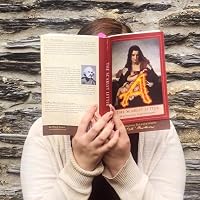
Marie-Grace is worried. Yellow fever is raging through New Orleans. The orphanage where she and Cécile have been volunteering is becoming crowded with children who have lost their parents to the dreadful disease. And now someone Marie-Grace cares about is terribly ill. When the chance comes to help, Marie-Grace takes it. She knows she can make a difference. But will this horrible fever cause Marie-Grace to lose the home and family she loves? Includes an illustrated "Looking Back" essay about health and medicine in the 1800s. The story continues in the sixth book in the Cécile's Gift.
Sarah Masters Buckey was raised in New Jersey and lived in Texas for 15 years. Sarah was nominated for the Agatha Award in 2008 for A Thief in the Theater and in 2005 for The Curse of Ravenscourt. She was nominated for an Edgar Award in 2007 for The Stolen Sapphire.
this epidemic!! I really do feel for Marie-Grace, but I just find her stories a little boring compared to Cecile--Cecile's got such a big family which makes for so many great side characters and interactions, where Marie-Grace kind of lacks that. I love seeing her at the orphanage though!
If book 4 is the story of Armand's illness and recovery, book 5 is the story of Océane's illness and recovery. In both cases, the girls do a little nursing, some worrying, and a lot of witnessing events around them.
Hypothesis: One of the reasons this series doesn't work is that it isn't the girls' story - they are merely witnesses to history, playing bit roles in the larger story. Contrast, say, Felicity, who definitely is also witnessing history, but the plots center her in a way that these don't.
And if there's any doubt that Océane is the thread holding this book together, look at the timeline: - At the orphanage, MG and Cécile discuss Océane and whether helping to plan her wedding will help her recover. - When MG goes home, Uncle Luc comes looking for someone to help Océane; MG volunteers - At the infirmary, MG sits with Océane, sings to her, and fetches ice chips. - On the way home that night, Dr. Gardener announces that he's sending MG away to keep her safe. The very next day, she gets on the boat (and the right off again). We're up to page 57 of 72, and it's still the same day. - Then we zoom through the six weeks MG lives at the orphanage - at the end of which she gets to go home AND Océane comes back from the country. - The wedding is three days later. Curtain.
Another nitpick: I'm side-eyeing the speed with which Dr. Gardener tries to send MG away. We're told it's 9 p.m. as they're going home, and he says she's getting on a boat the next day. Wouldn't you want to wait a few days so you can let the Belle Chêniére relatives agree to host her - or at least know to expect her first??
But it isn't all bad:
- MG proves herself resourceful when she sits with Ocèeane. Although the work isn't hard in itself, it's clear the setting is stressful. And she manages to turn an awkward encounter with Lavinia into being one of the first people in the building to know about the ice delivery.
- I love the gentle way Cècile encourages MG to eat when she thinks she's too worried to be hungry.
- I like this as a depiction of music practice. We see MG practicing several times, and because it's sweet MG, she doesn't complain about having to practice. And it's not just presented as repetition - she has a specific challenge: supporting and holding a high note.
- I even like that we really don't get much description of the wedding other than MG's song. It absolutely feels true to performance nerves - the rest of the event can be a bit of a blur.
Because this one breaks all the formula rules for AG series, we don't have a holiday story or a birthday story, and school scenes are minimal. But this totally feels like a Saves the Day story.
Just like Cecile, Marie-Grace only truly cares about the epidemic once it affects someone she is personally connected with. She helps this woman at the infirmary and stays with her for hours, but she doesn't do much at all to make a difference. She is only focused on that one person, can't really do much at all, and can only aid her through a plot point that is completely shallow and contrived.
She does contribute more broadly to society near the end, but that part of the story doesn't make sense at all.
Also, this book is very plodding and dull. I kept looking ahead to see how much was left, and it always amazed me how much of the story remained. I had the same experience with almost all of these books, but it was especially noticeable here, since the story was even more shapeless than some of the others, and just an episodic string of events. This is incredibly sub-par in comparison to other American Girl series, and I don't regret my decision to skip it when it came out.
I just, hm... I did not like the ending plot bit. I don't think it was unreasonable of her dad to want to
This is where I really felt the strain of the split format hit. If this was a 6 book series, maybe this plotpoint could have... actually mattered? And have consequences? Alas.
I'm not especially familiar with the 1853 yellow fever epidemic, but it's impossible to read this and not think of 2020. I enjoyed seeing Marie-Grace take after her dad, though I think this was resolved a little quickly.
The plot is lacking. You'd think Madame Oceane is the main character, not Marie-Grace. The part about Papa sending her away seemed weird, and sending her to the orphanage instead even weirder. Marie-Grace is treated as an adult, she does the work of an adult or older teen especially at the orphange where there are probably other kids her age there. What about the orphans who are 9? Do they work as much as MG? Or is MG serving them from a more grown up position? Are there really only kids younger than that in this orphange? It seems weird to me compared to Nellie and her sisters experience of orphanges. For MG, the orphange is a bright happy place that she loves where she is treated as the Nun's favorite helper while her own home is dark and lonely. Whereas for Nellie the orphange was hell on earth. And going to the infirmary, I bet it wasn't as pretty as described given the nature of this disease and again MG seems more like an older teen than a child in her nurse role. Does she become a nurse during the Civil War? And I feel like MG copycats Samantha with the handsome uncle's wedding and the special role she plays in it. I feel like there's a very real possibility that MG could also live with her aunt and uncle like Samantha too given her father's tendancies to send her away. I would have loved to have seen her father get married instead of the uncle. Aunt Oceane feels like a real mother to MG whereas Aunt Cornelia was always very much distant respected aunt vibes. Overall, this book is better than Meet Marie-Grace but not as good as the baby Phillip book, in my opinion. And MG still lacks personality. She's just kinda eh.
In hindsight, I feel like the Marie-Grace & Cecile books are almost a pivot point to the more middle-grade books of Mary Ellen and Nanea where there's two much longer chapter books instead of the original six-book format with specific themes (meet! School! christmas! Birthday! Saves the day! Changes!). This is a continuation of the yellow fever epidemic story, with Marie-Grace doing her best to help watch over singing instructor Madame Oceane, but leaving a note saying M-G was at the infirmary causes her father to realize that maybe she should be sent away for safety.
A solution is found that keeps her in NOLA, though time is kinda skipped over quickly? She is helpful, though.
Ooof I hate to keep mentioning the art in my reviews on the M-G/Cecile books, but Madame Oceane's face in the last illustration/one that goes on the cover but uncropped is uh, kinda reminiscent of that monkey Jesus painting.
As a little girl. I was opposed with American Girl. I still really enjoy the stories. American Girl really got me into reading. I started American Girl when I was 9. I loved them ever since.
This series of books is so startlingly different from prior series. Aside from breaking away from the original six book format, the main characters of the series don't always feel as if they are the girls. With prior books, I feel like, although there are serious historical events going on, they never prevent the girls from being kids.
In Molly's series, WWII is going on in the background, and Molly's life is impacted. Molly's dad is off at war, food is rationed, and there are times when things are different from what Molly is used to. But, Molly is still a kid and is shown being one. We see her hate turnips, spend time with friends, and have fun. With Felicity, the beginnings of the revolutionary war is going on in the background, but Felicity is still shirking her applesauce duties and sneaking off on a horse. They get to have kid adventures.
For Marie Grace and Cecile, the story is ultimately different. The first two books show them experiencing their world, going to a party, having a bit of fun, but after that the series becomes focused on yellow fever. Marie Grace doesn't have agency over her own story, and instead becomes the vehicle for while yellow fever tells its tale. She is shepherded around, ever in danger of getting sick, but forced to constantly be in the line of danger in order to save everyone else. The only time we see her being a kid is only when she is treated as one by her father, who realizes "Hey, my daughter is ten in a disease ridden city. Maybe I should take measures to keep her safe." And then there's this awkward on the boat off the boat shuffle that served no purpose.
In Cecile's books, there seem to be more hints of her still being a kid. She shows more independence and personality, which I appreciate. In general, I wish both girls had been given a fair shake with a six book series.
MG's uncle marries her singing teacher and now Mademoiselle Oceane has become Madame Oceane. Actually, I should say Mademoiselle Michel has become Madame Rosseau. For the longest time I thought her last name was Oceane, but I guess that's her first name? Anyway, MG sings "Amazing Grace" at their wedding.
Before that happens, Mme Oceane has been sick with yellow fever, but I knew she would get better. Just like I knew they weren't going to kill off Cecile's brother, I knew they wouldn't kill off MG's favorite singing teacher (and her only one) and future aunt. Especially since she had already lost her mother and younger brother five years prior, they weren't going to make MG go through more despair.
The outfit she's wearing on the cover is the same one she wears to the wedding. There's a lot going on with it. For one thing, I don't think I would ever pair green and purple together.
An interesting book to read as we are in the middle of our own epidemic. A teaching moment for kids at this time. I think the author did a good job of showing how overwhelming it was to treat so many sick people at one time. Kind of how our hospitals and their staff have been overwhelmed by COVID patients during the past year and a half. The portion in the back of the book also touches on the spreading of diseases back in the early to mid 1800s before people realized how germs were spread.
Marie-Grace is being sent away by her father. She wants to stay in New Orleans and help with the sick. Marie-Grace and Cecile devise a plan to help with the orphans. They go every day to help entertain the children. Marie-Grace even starts staying there to help her father keep their home okay. Soon the Yellow Fever starts to wane and the city returns to life. This series started slowly, but the last few books have shown the girls' character and bravery. I have truly enjoyed getting to know these girls and I can't wait to read the final book in this series.
This is the last book with Marie-Grace as a headliner and it leaves me at a loss at who she is. Marie-Grace seems best defined by the people she is trying to please, if only an adult might take notice of her. She's a background character in her own story. Maybe this series is more about a summer than one or two girls. I just feel sad for her. I hope to see more of a feature of this character in the last book but I have a feeling she'll just be there hoping a for literally any adult to notice her just for a moment. At the very least, this book wasn't as tragic as the last one but it left me wondering where the story has to go.
Finally found this one. The last of the series for me to read. I go back and forth. It was a good story. Seemed a little simplified, but I guess that can go with the title. Even small things you do can make a difference and contribute to positive outcomes.
So this one has enough plot, but it's not very well managed. For example, Mlle Océan's possible death should probably be a bigger crisis than M-G maybe having to leave NOLA. All in all, M-G's books are stronger and have more developed supporting characters than Cécile's. One book to go!
To quote the youths, I was "triggered" repeatedly throughout this book, especially in the Peek into the Past where it stated "In the US, today there are fewer diseases likely to become epidemics"...or so we thought.
3.5 stars rounded up. I miss the old format of Meet, School, Holiday, Birthday, Summer, Changes/Winter. I did learn a bit more about the yellow fever epidemic of 1854 but I don't really care much about these characters.
3.75 stars. Stories are flowing much better now! I like what they’re attempting in these stories, but also feel like I’m missing out by only have three stories based on each girl! I don’t feel like I’m getting as much time with them as other AG characters!
Oh i loved this one! “We doctors do all we can, but a good nurse makes all the difference.” Yasssss Dr. Gardner, TELL ‘EM! 👏🏻 Loved Marie-Grace being mini Florence Nightingale even if it did bring some covid flashbacks 🤣