Can love survive a lifetime? With its urgent sense of history, sweeping emotion, and winning young narrator, Mal Peet's latest is an unforgettable, timely exploration of life during wartime.
Can love survive a lifetime? When working-class Clem Ackroyd falls for Frankie Mortimer, the gorgeous daughter of a wealthy local landowner, he has no hope that it can. After all, the world teeters on the brink of war, and bombs could rain down any minute over the bleak English countryside - just as they did seventeen years ago as his mother, pregnant with him, tended her garden. This time, Clem may not survive. Told in cinematic style by acclaimed writer Mal Peet, this brilliant coming-of-age novel is a gripping family portrait that interweaves the stories of three generations and the terrifying crises that define them. With its urgent sense of history, sweeping emotion, and winning young narrator, Mal Peet's latest is an unforgettable, timely exploration of life during wartime.
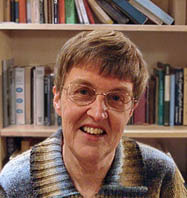
Mal Peet grew up in North Norfolk, and studied English and American Studies at the University of Warwick. Later he moved to southwest England and worked at a variety of jobs before turning full-time to writing and illustrating in the early 1990s. With his wife, Elspeth Graham, he had written and illustrated many educational picture books for young children, and his cartoons have appeared in a number of magazines.
This book sounded fascinating and I thought the idea was interesting and innovative and something I have never read in a YA novel. But then… eh. I’ll start with the things I liked. As Clem told the story of his grandma, his mother and father and then himself, the narration was dripping with delightful colloquialisms, humorous anecdotes and was, all in all, quintessentially British. In these sections Clem was a great narrator, telling his story of growing up with hindsight and peppering it with numerous wink-wink-nudge-nudge asides that had me laughing out loud. (The bit where he was trying to find out about sex through Lady Chatterley's Lover was hysterical) But unfortunately, the fun times stopped there. I often felt like I was reading two separate books. I’m not sure whether it was because I know pretty much nothing about the Cold War and the events leading up to it but it often felt like I was reading a historical textbook in a stuffy classroom in the last period on a Friday afternoon. I often found my mind drifting and I wanted to return to the strawberry fields with Clem and Goz and find out what was happening there. I think the problem was that Peet so desperately wanted to set the scene and explore the history of the time, which would be fine, but I didn't really think that the two sections linked together. I think Peet did a much better job at exploring the uncertainties of the era when he was depicted the feelings of George, Clem’s father, and the sense of disillusionment when he returned from fighting. “ ‘It’ was a better life, though, no matter what. The future he’d fought for. He’d imagined love, respect, comfort, pranky sex. It hadn’t turned out to be that, though. Quite the opposite.”
I just we’d spent more time in this section rather the heavy duty history sections.
Breaking my Book Review Silence to say that I love this book, and also that it has made me sob a lot during the last 20 pages, making a change from making me laugh a lot for the greater part of the book.
I love this book for many ridiculous and possibly wrong reasons, thusly:
Mal Peet and I share the distinction of having our books Life: An Exploded Diagram and Code Name Verity named as the two Boston Globe - Horn Book Award Honor Books in the fiction category this year (the overall award winner is Vonda Michaux Nelson’s No Crystal Stair: A Documentary Novel of the Life and Work of Lewis Michaux, Harlem Bookseller). So Mal Peet and I have met, and sat next to each other and patted each other on the back as we accepted our awards, and were dragged apart just as we’d started a really interesting conversation about Westland Lysanders, and sat on a much-too-short panel together being asked really good questions by Martha Parravano on the theme ‘War Stories’.
Also, curiously, Life: An Exploded Diagram shares all the peculiarities of Code Name Verity that trip up the inattentive reader: a complex narrative structure in which the narrator refers to himself/herself in the third person for most of the book; flashbacks to several different time periods; an overaged narrator for a teen read; sections which focus on contemporaneous historical events which interrupt the action of the story; and overall, a love of the sound of words and something bordering on worship of place. Not surprisingly, I wallow in this kind of writing and adore reading it. I’m reckoning the same readers who find Code Name Verity difficult to get through will find Life: An Exploded Diagram equally dense. But readers who enjoyed CNV might really enjoy Life.
I should probably also mention that this book reminded me a LOT of Red Shift for many reasons, and also that I think it is a bit old-fashioned that way - while being quite innovative, there is a long literary history that feeds into the crafting of this novel.
I love this book because it has made me understand the Cuban Missile Crisis in a way that, for the first time ever, makes sense.
I love this book because it captures 20th century Norfolk and the changes in the land so beautifully.
I love Frankie and her beauty - I love the worship of the desire and sensuality of youth - and I love the triumph against the odds of the Grammar School Boys, first of their kind (partly because I am married to one and like seeing this early description of what the grammar schools actually offered).
And I love that the author, in spite of himself, has given me the chance to believe in a happy ending.
Thank you Mal Peet, and congratulations!
---------------------
(I don't know if it really qualifies as a Wasteland Book, but there are a lot of themes I recognize going on here.)
Before I begin I must first quote Clem and ask you to “bear with me while I describe it. Or try to describe it. My hobbling and pigeon-toed prose can’t do it justice, I know that.”
Now, to the review:
Norfolk, 1962. It’s a hot summer during the Cold War. Clem, a working-class boy from a council estate, and Frankie, the daughter of a wealthy landowner, are conducting a furtive and high-risk relationship. Meanwhile, the world’s superpowers are moving towards nuclear confrontation. With the Cuban Missile Crisis looming, it seems that time is running out for Frankie and Clem. There are things they need to do before the world explodes.
Firstly I need to tell you that, while this is an accurate description of the story, it comes nowhere near close to encompassing the enormous scope of this novel. In fact, this really only sums up Part 2.
So, let me attempt to explain this epic novel.
Basically, it is the story of a boy and a girl. Clem and Frankie. It’s your typical dilemma, he’s poor and she’s rich. They fall in love. The fallout from this “furtive and high-risk relationship” would be catastrophic and their families would be distraught. Your typical Romeo and Juliet. However, what makes Peet’s novel different is that this is only part of the story.
Throughout Part 1 we are introduced to Clem in a roundabout sort of way. We learn of his grandmother, Win’s, sad and lonely childhood and her eventual marriage to a man she doesn’t love. We see Clem’s mother, Ruth, grow to fall in love with Clem’s father, George. All these personal milestones are set against the sweeping backdrop of every major historical event of the 20th Century. Peet effectively illustrates that although these momentous events (World Wars and the like) are only a backdrop in our personal lives. These things which are historical on a world scale do not compare, at the time, to the fact that you just lost your virginity. We all remember where we were when we heard particular event had happened (John Lennon assassinated, 9/11), likewise we remember the first car we bought or moving out of home.
“By the time I was delighted by the belated arrival of my pubic hair, the United States had developed rockets...that could travel eleven thousand kilometres to dump four megatons of explosives onto Russia.”
“Her name was Julie. I was, it seemed, invisible to her, but one day...she said, “Coffee bar or pub?” It was a hot July evening. The day before, an American called Neil Armstrong had stepped - well, sort of hopped backwards - onto the surface of the moon. This was only slightly less amazing than the fact that Julie...had spoken to me.”
“She left me in May 1979, the day after Margaret Thatcher was elected Prime Minister. It was a pretty rough week all round...”
These are just a few examples of the point I am trying to make. Our own little worlds colliding with ‘history’ and traveling in parallel before splitting again. Peet sums it up better than I can possibly hope to:
“I lived through all these times, these great events, without caring very much, concerned with my own agenda rather than the world’s. Most of us do likewise. History is the heavy traffic that prevents us from crossing the road. We’re not especially interested in what it consists of. We wait, more of less patiently, for it to pause so that we can get to the liquor store or the laundromat or the burger bar”
Part 2 focuses on those two weeks in October, 1962, when two men played a dangerous game and held in the palm of their hands the fate of the world. These men, John F. Kennedy and Nikita Khrushchev, bought the world to the brink of nuclear warfare and teetered dangerously close to the edge. Most of those words were adapted from my year 11 essay on the Cuban Missile Crisis. So, obviously this element of the book appealed to me. My essay was cynical about Kennedy and EX-COMM’s approach to the crisis, so it was nice to see that Peet’s view was similar. For some, I know this section would get boring. I even got a little bored when there was in-depth passages about the missiles (to me they all have pretty much the same effect - BOOM). However, for the most part Peet detailed these events in an amusing way. Intertwining it with the details of Clem and Frankie’s relationship.
“It’s High Noon, and the Bad Guy in the black hat stands in the middle of the street of the frontier town with a gloved hand poised over his holster and calls out the sheriff, who is the Good Guy and wears a white hat...He is the one who stand between [the people], their desires for peace and prosperity, and the dark anarchy of the Bad Guy, who will abuse their homes and their wives and daughters. And the Good Guy wins, of course. Even though, sometimes, he is mortally wounded in the process.”
“The thing about MAD is that it depends upon powerful people being sane. That nobody sensible would actually want to convert to lifeless ash the hand that traced the lovely curve of Frankie’s breasts and belly in the gathering darkness of a Norfolk barn...Unfortunately, however, weapons of mass destruction tend to attract maniacs...”
And Part 3? Well, I guess you’ll just have to read the book to find out...
While you could by no means cite this book as a reliable source - as Peet says himself “Clem...is an unreliable historian. In concocting his narrative...he has used (and sometimes abused) material...” - it is obvious that Peet has done his research. Although this is the case it is still informative. I was also impressed that a bibliography was included; my former history student self is in the habit of verifying sources and suspecting unsupported claims.
Peet’s writing was exceptional. There were many times when certain passages or sentences reminded me of that marvellous song-writing duo Lennon and McCartney and some of my favourite lines from songs like Eleanor Rigby and Lady Madonna. His writing was lyrical, it flowed easily, making it simple to become completely immersed in Clem and Frankie’s world. Below are some of my favourites:
“The landscape itself seemed to grieve. In the untilled fields, poppies proliferated like a million droplets of blood.”
“Between the stranger and Ruth a silence stretched above Clem’s head like a sheet hung on the washing-line”
“Scraps of talk, sound, would drift like flakes of burnt paper on a spiralling wind”
“I sat there ravished, breathless, gazing at the treasures cast upon the wall.Hands and eyes that were now less than dust had painted things that were packed with life. The gleam in a pewter jug, the glass on a dead bird’s wing, the mellow curve of a clay pipe, the silver glitter on the scales of a fish, the dash of pigment that became winter light on a wine glass”
“Sky-filling curtains of light furled and unfurled around him, phasing through iridescent shades of yellow, green, turquoise, indigo. They snaked away, faded, returned as brilliantly vibrant cliffs dropping into dark nothingness”
The characters and setting of the novel were superb. While some may, understandably, find the thick Norfolk accents annoying while reading, I felt that it really helped me to connect more to the stories and the characters...making them more vivid and real. I loved the fact that, although it was technically a love story, the audience was introduced to so much more. Rather than parents, friends, and even ‘Apocalypse Men’ fading into the background, as happens far to often in YA novels, each of these people was brought to life within the novel and had their own story to tell. Rather than being solely the story of a romance, it was also partly the story of a family and partly the story of a community.
Finally, I have one more little thing to share with you - my favourite chapter title:
You Learn Nothing About Sex From Books, Especially If They’re By D. H. Lawrence
The front flap says this is Mal Peet's most ambitious project yet, and it's true, this book is ambitious. It covers over 100 years of history, attempts to clarify one of the more confusing experiences of the Cold War, mixes in some misplaced religious ecstasy, shoots us forward to the defining moment of this century so far, all the while focused on two kids who just want to have sex.
If you can stick with it, it's worth it. I get that this is classified as a young adult novel, but it's one of the few I've read with an adult narrator. Since the narrator is an adult, it gives us an adult perspective on the young characters' lives. I think this has the effect of transforming emotions that might otherwise be "run-of-the-mill" young adult experiences (first love, *sigh*) into moments of beautifully described confusion and clarity.
Peet also keeps the themes moving throughout the novel. It feels driven by explosions: bombs, planes, emotions, casual encounters, tempers, small and large, fiery nuclear rockets and smoldering feelings. The sudden impact of each one changing, molding, melting and re-shaping the lives of the characters.
Lastly, my favorite part about this book is that even though I studied Advanced Placement US History in high school as well as Communism & Socialism in college, I never once understood what the whole Cuban Missile thing was about. After reading this book, I get it. If only for the history lesson, it's worth it.
A working class boy and an upper crust girl fall in love in the shadow of the Cuban Missile crisis.
In between chapters of Clem and Frankie racing to get their rocks off before the bombs start falling, and hilariously acute looks at Soviet and American strategic command, this book hares off down threads of lives connected to the leads, showing what was really at stake from a nuclear apocalypse.
Check this review out and others on my blog: Get Real.
This one started off interestingly enough but rapidly disintegrated during the second half in a trajectory not unlike the nuclear fallout feared by the characters in this book. Good historical fiction focuses on the human condition (whether universally or within the context of the time discussed), using a particular time or event as a backdrop (See Okay for Now by Gary Schmidt). Bad historical fiction reads like a surreal text book, dry and inaccurate. This book is among the latter. The tone alternated between glib, a desire to be seen as profound and also something akin to a shoulder shrug. Does near-obliteration merit an "Oh, well?"
The book started off as a pretty cool family history set between the latter days of World War II and the Cuban Missile Crisis. For a teen novel, the story actually started to fall off the rails just as you happened upon the teen in question.
Clem's family lives a pretty typical blue collar, lower-middle class kind of life in rural England. It's almost a bit too typical. He doesn't fit in at the school he attends on scholarship, the big evil rich guy who owns half the town is cramping his style, etc. I liked Clem actually, but his character wasn't developed enough. And when you come across his girlfriend (daughter of said big evil rich guy), it's hard to get a handle on her too. I liked her personality. She had guts and acted like a girl you wanted to know at school during that time. All the same though, I still didn't feel like I knew her. There also wasn't enough time spent on the relationship between these two characters. It was hard for me to understand why they were in love.
The flow of this story was mostly alright through the first half. It was third person omniscient, which was occasionally interrupted by present-day Clem's first-person voice. I didn't like that, but it didn't overly bother me. That became more pronounced later, and the story also was interspersed more and more with an annoying, semi-guessed-at summation of how the major players during the Cuban Missile Crisis went through the whole thing. It felt like some kind of snotty history lesson that wasn't actually history. It detracted from the story at hand, and I'm sorry, but the Cuban Missile Crisis was not the story at hand here.
The winding up of events during the present day might have been the worst thing about this book. It was all just too coincidental and too easy. And I didn't buy the connection the author wanted to make between the early events of this story and the concluding events.
This book had some chuckles occasionally, and I liked the pissy tone here and there. This just isn't a book that's going to stay with me.
i read this book because Elizabeth Wein told me to. she says in her blog that this book is much like Code Name Verity and if you have paid any attention at all to my reviews and updates in the last few months (no reason why you should have, but just in case), you know that Code Name Verity is my current and sole obsession.
this book was unengaging to me until about half way through. it's brilliantly written and fabulous in all sorts of ways (including its sense of place, so, if you are english and come from the part of the country in which the book is set, you might get a bit misty-eyed), but i am not a fan of long-span narratives and this is definitely a long-span narrative. half-way through it starts getting going and it includes an unlikely but fabulously placed rendition of the cuban missile crisis, which, among other things, made me feel infinitely more forgiving toward the current US administration. clem's first person narrative of the cuban missile crisis made me realize that US presidents, even good, sane, moral, awesome presidents, must deal with a powerful entourage which severely cuts into and undercuts the Great Absolute Power we believe they have. my friend wilhelmina jenkins, who, i hope, is reading this, has tried to school me on this for years, but of course i didn't believe her.
at just about the time when peet gives us clem's rendition of the cuban missile crisis the novel grabbed me by the throat and didn't let me go till the end.
the end is fantastic and also disappointing because you desperately want things to turn out well. i'm not saying they don't, but it's ambiguous. you might very well find that they turn out fabulous. i appreciate the rigor of writers like peet, who present life as the mixed bag of goods it is, and leave us wanting for more. like, you know, a sequel.
i won't give this book a star rating because my view of its shortcomings is entirely related to my desires, not to its qualities. it's a great book that deserves better readers than me.
Well. So that's how you want to write your book, eh? (shakes head). Ohhhhh-kay. 2.5 stars (Vague spoilers ahead.)
This is the story of a life (lived 1943-2001, plus some genealogical background) and it's an anti-war book. It follows on the one hand, Clem, and on the other hand, the Cuban Missile Crisis--in the main--and various other wars and their effects. And it cheaply ends on 9/11, which really, you probably shouldn't do.
I kept thinking, gee, these two story lines are going to intersect in some amazing way...but they don't. In effect, this novel says, love is important and war is kinda bad. Really? I never knew that. (/sarcasm.) Though I did not know JFK farted a lot, so I supposed I learned something from the book.
There are some beautifully turned phrases and funny moments (the adolescent Clem's trying to understand what sex might be like from reading D.H.Lawrence made me laugh aloud). But the long, long, long process of Clem's getting his girlfriend's bra off, over weeks of fumbling snogging, was boring as hell. (The male fetishization of the female chest has long puzzled me, though. Really, it's just a chest with balls of fat hanging off it. Get over it, guys.)
I was bored by the missile crisis and bored by boobs, hoping it'd all come together brilliantly, but after I'd suffered through the boob-bombs parts, it didn't. In fact, the way it comes together is like a bad joke. From about page 150 on, the book shed stars for me. Too bad, too--Peet can write good pages here and there.
I have stated before that I dislike historical fiction that packs too much factual information - like it's trying to disguise the fact it's trying to teach you something - within the story of characters and their relationships and emotions.
This book seems to gleefully do just this. There are substantial sections, maybe a quarter or more of the book, are accounts of WWII officers, and later and more importantly of Kennedy, Kruschev, and their staff dealing with the Cuban Missile Crisis. But I really ENJOYED these sections because it was clear to me that our fictional narrator Clem is behind these "history lessons" because of his wry delivery and early on disclaimer that he likes to fabricate historical events based on actual facts filtered through his own sense of history and sentimentality.
I learned a lot, and enjoyed the tone. It did sometimes frustrate my desire to read the main plot about two star crossed British teens in 1962 who just want to love each other and lose their virginity to each other. But I think that was a purposeful choice by the author to give the reader the same sense of frustration that our teens are feeling!
So is this YA? I'd say yes, but in the way that To Kill a Mockingbird is but not the way, say, Divergent or AS King books are YA.
Our small, intimate, precisely-known and closely-bounded lives play out against the massive sweep of history - that filtering of the everyday that pulls some events and personalities into a narrative that gets passed onwards.
Every so often, we feel our little lives play out against, intersect with, even shape, that narrative. We might be involved in the events; we may even be those personalities. Sometimes, we suddenly notice history happening: we can't rip our eyes away from the tv screen as a man jog-steps a little awkwardly and places a booted foot on the Moon, or as toy-like figures seem to float down from a burning tower. And every so often, we notice the momentous events in our own lives playing out against the momentous events of the world.
It was like this when I met my husband. We came together over a tumultuous, unexpected, poorly planned few weeks which overlapped with the March-April 2003 invasion of Iraq. I can remember looking at the papers at the time and thinking 'One day, this will be history, but what I'm going to remember is what's happening right now, right here, to me. That's so deep.' [I was 23 at the time, you'll have to forgive me.]
Mal Peet captures exactly this feeling of the miniature and the massive intersecting. In 'Life: An Exploded Diagram' Clem and Frankie experience the throes of first love against the backdrop of the great who'll-blink-first moment of the Cuban missile crisis: the teenagers race towards sex as the Russians and the Americans race towards war.
Peet's story has all sorts of cliches. Clem is a working class boy, Frankie (Francoise) is the only daughter of the wealthy land-owners who employ Clem's father. There are nasty boarding schools, a wizened granny, Nazis, and the familiar ingredients of the family saga novel: three generations, two wars, one hundred years of changing social expectations and sexual mores.
To explain how Peet takes this material and fashions it into something utterly fresh, something that just wraps you up and drags you along, is to risk taking the charm and tension and humour out of the book. Though it deals with undeniably YA material (a forbidden relationship, the terrors of losing your virginity, high school misery, unseeing and distant parents) Peet innovates wildly.
First, there's the voice: we switch numerous times between the viewpoints of an omniscient narrator, teenaged Clem, teenaged Frankie, and present day Clem, aged somewhere towards his 60s. One of the most playful and true-to-life displays of this switching is as we moved between blue-balled Clem, desperately desirous and desperately unsure, and Frankie, who has been educated by one of her friends into how to drive boys wild by making them think they're making bold and seductive progress when really they're being slowly lead through a series of strategically dropped barriers.
Then there's the insight into the adult generations. As Clem and Frankie bathe in hormones, we learn how his grandmother Win sought to pass her distrust of men and loathing of sex on to her daughter, Ruth, and achieved some success: despite George and Ruth's wartime passion (a brief interlude that resulted in Clem), their marriage is mutually, but silently, sexless. We track George as he tries to make something of himself, without getting Above Himself (a cardinal sin in their tiny Norfolk village). We watch as the little Christian sect Win has joined (after the Methodists proved themselves too frivolous for her) prepares for the end of days. Usually, adults in YA books are handy plot-props: here, any one character could have been the lead figure.
Finally, there's the great trump card. Just when this could be any other, very well told, saga, Peet pulls out into a vertiginously wide-angle view, and drops us into JFK's war room as the Hawks and the Doves counsel and bully him over the Russian arms build-up in Cuba. It sounds implausible - how do you bind that in here? - but perhaps that's because a person of my generation can have no idea of what the Cold War was actually like; a very real sense that the world might very well end, and that the advice to take shelter under a desk and cover any bare skin by pulling your jersey over your face and hiding your hands between your thighs is probably going to be useless. The potential end of the world (and a side-helping of Andrew Marvell's To his Coy Mistress) give Clem and Frankie every reason to break all the rules and Go All The Way.
As affecting as Clem and Frankie's story is, it's actually Peet's retelling of the days in October 1962 when JFK and Khrushchev drew close to a third world war that gripped me. It's not a period of history that I know much about at all, and Peet's description of the events is marvellous. He draws the figures cleanly and quickly and powerfully - JFK is getting by on a cocktail of drugs, plagued by wind, sex-mad, loathed and taunted by his military advisors; Khrushchev might come across at first as a peasant-fool, but is "as hard as a drill-bit and as cunning as a lavatory rat". He walks us through the proliferation of nuclear weapons, and the "mathematics of annihilation": how much more powerful they had become between 1945 and 1962. He interweaves conversations recorded in JFK's war room with his narrative, making you blood-chillingly aware of how much this moment hinged on a bunch of men who neither liked nor trusted each other arguing their way to some kind of sane agreement (and that was just on the American side).
Like one of my other most favourite YA-but-not books, David Mitchell's Black Swan Green, Peet's story is at least semi-autobiographical, without ever seeming to be so, and reminds me how we're all part of history, even if we don't make it into the textbooks. Highly recommended.
Okay so it could have been a much better book if the main romance had been cute or humorous or cliche or anything other than an unrestrained sexual trainwreck of sadness and emptiness. But I'm going to bump it up from one to two stars because at least it's honest and has an internally consistent worldview. If a story is going to off-handedly dismiss the existence of God like this one does (why are we taking the Russian's word for it, again), then at least it should be true to the miserable, bleak, pointless existence of its Godless storyworld. This book is. Featured primarily is the awfulness of - love - sex - parental relationships - families - agriculture - military service - politics - education - art - aging - work - and, most definitely, religion without Jesus.
Recap: - Several generations of loveless (or at least romance-less) marriages - Star-crossed young lovers - The Cuban Missile Crisis - Our world on the brink of destruction - A look at the role both politics and religion play in the end of the world - Some pretty life-changing explosions
Review: Oh, what to say about Life: An Exploded Diagram... It has received all kinds of glowing reviews. It bested Patrick Ness's A Monster Calls in the first round of the BOB. Author Mal Peet excelled in revealing a very specific world through the use of the characters' dialect. One example: "You put that ole coat on, if yer gorn out. There's a wind'd cut yer jacksy in half." As I read, I was struck repeatedly with the thought, "Wow. This man can write." There are tons of writers who can tell a good story, but Mal Peet has a particularly affecting way with words. All things considered, I can appreciate Life: An Exploded Diagram.
But did I really enjoy reading Life? That's a different story. My major issue is that I sincerely feel that this is an adult novel. The vast majority of the characters are adults. The narrator is an adult, reflecting back on a certain period in his teen years. The issues and themes that many of the adults dealt with felt completely out of place in a YA novel. When the story focused in on Clem and Frankie's teenage forbidden love, it felt a little more YA, but then the ending wandered back into adult territory again.
And does the YA/Adult distinction matter so much? Perhaps not. But. It just won a round in the Battle of the Kids' Books. And this is not a book I would hand to most kids.
The overall mood of the story felt gloomy to me. Every scene I envisioned was brown, gray, and dreary. I found myself looking forward to the scenes with the different political leaders during the Cuban Missile Crisis because those were the only passages that hinted at any action. And because I thought Peet's sense of humor really came through as he described different conversations and reflections that were had by Kennedy, Castro, and Kruschhev.
And the end. What in the world happened there? Bizarre.
If you've read Life: An Exploded Diagram, I would love to talk to you about it. Please leave a comment and let me know!
Recommendation: I would recommend Life to mature readers who appreciate adult, literary fiction or historical fiction.
There are good story tellers, there are eloquent writers and sometimes there are those few who have the talent to deliver both. Mal Peet has the ability to grasp the most complex concepts and distil them into a form that is immediately understood but not dismissed. Peet’s turn of phrase and descriptive narrative is to be savoured and the unfolding story he tells is thought provoking and full of so many unexpected twists and turns that the reader is constantly wondering what is going to be around the next corner. This style also helps to promote the passion, anxiety and anticipation that young people generally feel when they are perched on the precipice of adulthood.
Peet portrays ordinary lives being lived in dangerous times. He brings to life all the emotions, ideals and passions of Clem, a working class teenager and Frankie, a rich man’s daughter. This vibrant splash of colour is painted onto the backdrop of the mundane lives of both their parents who are caught up on the treadmill of existence and the fear of Clem’s Grandmother Win, preparing to leave this earth. He successfully transitions back and forth over three generations of the one family, tying in their different perspectives on a life being lived under the same potentially devastating threat - the Cuban Missile Crisis – something totally out of their universe and their control.
This is not just a young person’s book. I would recommend adults read it as well. At 56 years old I can see the wonderful innocent naivety of the teenage pair, their thirst for excitement and their first experience of love and how little they know that with age and the burden of responsibility, the body weakens, the passion wanes and the mundane often takes over. It’s all in front of them.
My teenage daughter recommended this book to me and I would recommend it to anyone who has the passion for a good thought provoking story and a love of words.
Having read and thoroughly enjoyed Tamar, I was eager to read Mal Peet's latest. The writing is just as crisp and sharp, a wonderful depiction of Clem's young life and his first love, and the wonder of discovering sexual attraction against a backdrop of wartime rural Norfolk and vividly drawn schooldays. There's a good measure of humour, and aching moments of sadness. Then the "exploded diagram" brings in the world situation with a look at JFK and other protagonists during the Cuban missile crisis. And that's where things went a little wrong for me. Clever, yes, but I thought there was an absence of "fit" between the stories - other than the obvious urgency of the young couple getting together before they're blown to smithereens. The world story is told very straight, despite the apparent insights into world leaders' lives - I missed Clem and Frankie every time the story veered away, and found myself skipping chunks. I'm out of step with a lot of other reviewers on this book, but my overall feeling was a slight disappointment and disconnection.
Thanks to netgalley for providing an advanced e-copy.
It had the kind of writing I loved to savor. The story was deep and layered and quietly explosive. Coupling a love story with the Cuban Missile Crisis was the sort of ballsy genius few could pull off. bringing together these opposites, forbidden young love and a potential world annihilation, seems thoroughly random. But then Peet beautifully, simply and astonishingly draws the parallels that, once revealed, are so obvious, you wonder how you never made the connection before.
To be frank, this story hinges on the fact that Clem wants to have sex with his secret girlfriend Frankie. And Frankie wants to have sex with Clem. The events leading up to this, which, when it comes right down to is handled with the focus more on the feelings afterward than the act itself, are plainly, and maybe graphically described. Lots of necking and petting, if you get my 1970's drift.
The exploded diagram of Clem Ackroyd's life is masterfully displayed with all it's various parts. The various characters are complex and sad and desperate and each has their own crisis: their moment when everything changes. A masterfully told story that shines the spotlight on what motivates us.
This is one of the best books I've ever read. It is both simple and deeply complex. The backdrop of the unfolding nuclear confrontation between Russia and America in Cuba acts as a metaphor for Clem and Frankie's relationship. By training my/ the reader's eye on the potential apocalypse, I felt Clem and Frankie's closeness - that their relationship was this hugely big thing, on par with apocalypse. And that is how I remember feeling when I was a teenager in love - like we'll explode at any moment, that we are both strong and fragile. I liked the link between George and Gerard flattening the Norfolk landscape into a desert of intensive farming, and the arming of Cuba - the remodelling of the landscape. This is also echoed by how a nuclear war would have destroyed vast areas of land, flattening it to a wasteland. I read it with a pencil in my hand and scribbled loads of notes in the margins - the sign of a clever and engaging book. I finished reading it a few days ago and I still can't get the characters out of my head. I'm sort of mourning them or something.
I just loved this. As a young child in the 60s I had a plan in my small rural NZ village to hide in my wardrobe if the Russian soldiers came. I remember trying to understand the seriousness of the Cuban Missile Crisis and this book captures it beautifully. I know it is supposed to be for young adults but I think this book delivers equally to adults. There are so many strong, real characters and although one could argue that the extended history lessons, albeit told through the eyes of Clem, the teenage protagonist, pull away from the story of Clem and Frankie, somehow it works.
Wow. This one had me at "Ruth Ackroyd was in the garden checking the rhubarb when the RAF Spitfire accidentally shot her chimney pot to bits" (the opening sentence), tightened its hold with "Washing blew on the line: tea towels, Ruth's yellowish vests, her mother's bloomer ballooned by the wind, their elasticated leg holes pouting" (p. 2), and didn't let go until that final, breathtaking, impossibly amazing moment. Which I will not describe to you because you should read this book. Cannot wait to learn more about this writer.
I thought this would be a long way from 5 stars when I began the story. But I was captured by the painful and beautiful teenage love story of Clem and Francoise (Frankie) and how hard it was to be alone in 1962! Mal Peet mangages to interweave their story with that of Kennedy and Kruschev and the Cuban Missile Crisis.
The most enjoyable book I have read this year. I wouldn't classify it as Young Adult, it is just a cracking novel, written in language that is a delight to read.
I have owned this book for an eternity, and I'm so happy that I finally read it I'm so proud of myself.
So. This book was fabulously written. The format, the research, and the actual writing itself were all just fantastic. I was so impressed with how the story was woven together, especially since I want to be a writer myself.
The story is brutally realistic. Personally, I more like books with lots of happiness and love, and while a romantic relationship is the primary focus of this book, that romantic, fluffy happiness is still few and far between. This is probably why the book isn't one of my new favorites, as well as some little things in the story that bugged me just a tad (the ending was a little rushed, and I wish we focused some more on Win, George, and Ruth).
But I would recommend this! It is a book that, while not for everyone, is just very solid and well-crafted.
OK so I'm not a "young adult" by any stretch of the imagination, but my 13 year old recommended it to me, and I throroughly enjoyed it. The timespan it covers is before my time - I'm younger than the characters and older than the audience - but I can relate to the themes, having grown up a decade after the events in the book were happening - with nuclear weapons being a real threat to our lives - and the idea of our little lives happening within the context of grand events that impinge and affect our actions is a universal theme. (I write this with Donald Trump as president and the uncertainty level ramping up once more).
It's a lovely book, with delightfully described relationships.
Well, this one's going to be a bit tricky to write. and not because I hated, or I loved it. But possibly both. At the same time. All at once. Let me explain....
When I first read about this one, well, to say I was intrigued was an understatement. Code Name Verity had given me an appetite for some more exquisitely written twentieth century historical YA fiction and the political angle of this one got my attention, being in the possession of a politics degree myself (although I have never actually used it from the moment I graduated).
Let's start with the positives - the writing. It was superb. It was funny. I spent the first half of the novel highlighting at least a paragraph a page. It made me want to eat my Kindle it was so damn good.
Nostalgics believe that the past is nicer than the present. It isn't. Or wasn't. Nostalgics want to cuddle the past like a puppy. But the past has bloody teeth and bad breath. I look into it's mouth like a sorrowing dentist.
The first third builds up a picture of Clem's family history in intricate and personal detail, going back to his great-grandparents. Each member is so brilliantly captured, especially his grandmother Win and father George, and it felt like a privilege to read such fantastically-written characters.
However... as wonderful as this prose was, when it was getting close to the middle of the book and I still knew very little about our protangonist, my mind started to wonder where the hell this was going exactly. The whole family history thing reminded me of Behind the Scenes at the Museum by Kate Atkinson, but whereas that was like a jigsaw slotting into place as the book went on, this felt like the author was giving us all this background information just because he could. As gorgeous as it was, I just wanted it to have more of a purpose.
My mixed feelings continued when it came to the whole concept of the novel. I loved the idea of this - one of the key events in twentieth century history having an indirect influence on one of the key events in the life of a seventeen year old boy in a remote part of Norfolk. And I really, really wanted it to work. And it sort of did, but, well, it would have been and much more enjoyable read if there was slightly less history and slightly more Clem and Frankie. Every time we got to one of those key moments in Clem's love life, it was abandoned and we're back with JFK for another two chapters. Although I enjoyed the way he made major political figures characters in this story (especially JFK with his randiness and his ailments), it was felt overdone, clunky and forced a lot of the time. What could have been a way of making history more fascinating may well have become, I fear, even more of a turn-off to those who aren't already fascinated with it.
The other thing I was never quite sure of was Clem. We learn so much about those around him, yet I finished the book feeling I didn't know that much more about our narrator than a the start (or more accurately, the middle or thereabouts when Clem finally became a character). His voice didn't half tell a great story, but the overriding impression I got of him was just a boy who was desperate to get his first shag. And that's about it. And I wish we'd got more of Frankie into the story. I learned so much about her from just one sentence (not all of it good, mind), and I would have loved to see more of her character that wasn't only to do with her relationship with Clem.
Despite my criticisms, I would still very much recommend you read this - it's original, beautifully written and doesn't patronise the reader - like with the best YA, I can imagine people of all ages enjoying this (ok, maybe not ALL ages). I just wanted all the elements to gel together more seamlessly and to care just a little bit more about the story and the person telling it.
But it also serves as a very important reminder of a period of history that could well have been the darkest of them all, and for that it must be applauded.
I decided to read this book because my Mum had been bugging me to read it for about a million years. I was on holiday, I was bored and I desperately wanted something to read. I had tried to open the book and begin to read a couple of times, but was always distracted or found I had something else to do. I thought for some strange reason this book would be boring (maybe it was the cover?) I was so, so wrong. The category this book completes is "a book recommended by a member of your family." I am so glad my mum recommended this book to me, because it is a historical novel but also a teenage coming of age story. I.Love.Historical.Novels. I love them so much. If I could chose one type of book to read for the rest of the year, it would be historical fiction. Or perhaps I would read dystopian books (I have been reading a lot of these lately), but probably historical fiction. This one did not disappoint, and combined a time in history I knew barely anything about with a love story and a beautiful writing style that fitted the narrative perfectly. I didn't want to put it down, ever. The category "a book recommended by a member of your family" was very interesting to me. It was great to get a recommendation by one of my parents, because it let me know the sort of books they enjoy. I thought I would be recommended some horrible, boring thing about, say, the economics of the world, when actually it turns out my mum reads pretty interesting books! And even better, the book was in one of my favourite genres!
The character I found most interesting was Clem, the narrator. I loved how he was so honest, and he was a typical teenager growing up. The story is twofold: on one level it is really about a teenager growing up and finding himself, but on another it is a historical account of a time and place – the Cold War, England, early Sixties. Clem is growing up in a time when the future looks bleak and people are constantly worrying about nuclear war. This leads to some interesting outcomes for Clem and his girlfriend Frankie who are both consequently in a hurry to experience all life has to offer before it is too late and the whole world is blown to smithereens! The story really highlights the tensions of the Cold War but it also illustrates the way our world is always at war in one way or another and that tensions are always stirring. Clem’s whole family in this story have grown up in war: Clem’s Grandmother in the First World War, his mother and father in the Second, and Clem himself growing up in the Cold War. Today we live with the War on Terror and its consequences and interestingly this story ends dramatically with the attack on the Twin Towers - the beginning of this latest war. The story is broad and filled with fascinating historical and political detail and kept me turning the pages to the end.
My favourite quote from this book would be: “Sentimentality and nostalgia are closely related. Kissing cousins. I have no time for nostalgia, though. Nostalgics believe the past is nicer than the present. It isn't. Or wasn't. Nostalgics want to cuddle the past like a puppy. But the past has bloody teeth and bad breath. I look into its mouth like a sorrowing dentist.” I love this quote for its brilliant use of language. The metaphor about the bloody teeth and the dentist is very vivid, and if you don’t like dentists and teeth gross you out, (like me), it really brings home the point and stays in your mind. The point being, that we often look at the past through very rose-tinted glasses, and on closer examination, the past is not always as pleasant or quaint as we thought it was. I learnt a lot of history and a lot about the politics of the Cold War, (a part of history I have never really know much about at all), from this book. I loved how the politics were presented in a descriptive and engaging way in scenes in this book because of course it wasn’t boring. I would definitely recommend this book!
Life: An Exploded Diagram is a coming of age story set in rural North Norfolk during the Cold War. These two things alone made it a bit of a must read for me. Having never read an Mal Peet I wasn't sure what to expect but I can honestly say I really enjoyed it.
Life is one of those books you can devour in a matter of hours despite its size (at just about 400 pages long it is a bit of a monster). I was totally engrossed and found myself just wanting to read more and more to find out what happened next.
As I said Life is basically a coming of age story following the life of Clem Ackroyd a boy from rural north Norfolk focusing particularly on his teenage years and the relationship he develops with local rich girl Frankie. When I was reading it it reminded me both of Boy by Roald Dahl in its narrative and style but also a bit like an Adrian Mole story in how ordinary Clem actually was. I loved the relationship between them and I was on tenderhooks waiting to see what was going to happen between them.
I loved the Norfolk references being a native myself. I hate it when stories are "set" in a place but it is obvious that the person has never been there. Apart from the fact that a few names are changed (I loved the use of the name Hazeborough - if you are from Norfolk you will get the joke - if not I don't think I can explain it) you can really tell that the author is writing about someehere he has actually been and about experiences he lived through earlier in his life.
I also really enjoyed the historical references. The books is a prime example of the type of historical fiction I love and the type I think appeals to Young Adults themselves. It doesn't attempt to over burden your with detail after detail about the period but rather builds them into the story to give you a real sense of period without the reader really realising it.
I must say the end came as a bit of a suprise and I had to go back over a couple of pages to check I hd got it right. I didn't see it coming at all but it fit really perfectly the story as a whole and I loved how poetic it was against the historical backdrop it was written in.
all in all an excellent book which I really enjoyed. I will be recommending this one regularly.
Life : an Exploded Diagram is transcendent. It is beyond. It is a book that should not be shelved under YA fiction, it is not a book that should be read solely by one demographic. In a very quiet way, this book is one of the best I've read this year.
But it's not easy. It is reminiscent of Brideshead Revisited and Flambards and When the Wind Blows, with a plot that sprawls cinematically through a good few years, countries and perspectives and because of that self-aware scope, it's not easy to get into. But oh my God, once you're into it, you're locked into it.
There's a very lovely warmth in Peet's writing all through this book. From the startling juxtapositions between massive world-shattering events and that moment where a boy meets a girl; it's just so damn good. And he's right. It doesn't matter what's happening in the world, the biggest of things may be happening, sometimes it doesn't matter when you're locked in a maelstrom of your own. I love his writing. I love how, on every page, there's a fragment of the most beautiful images I've ever witnessed. The last pages in particular blew my mind more than a little. I howled. I'll admit that right now, I howled.
This book took me from breath to breath, happiness to sadness and back again, and I was hook-caught every step of the way.
I absolutely loved this book and was sad to be finished with it last night. The writing is really amazing, and I found myself rereading sections just to appreciate the words and ideas over again.
Although I loved it completely, it may not be for everyone. I think the main problem younger readers might have with this is the British dialect. The story begins during WW2 in an English village, and when the characters converse, it's with a heavy local dialect. I could almost always discern what they were saying, but there were a few places where I admit to being unsure about a word or two. Obviously dialect adds to the realism of the time and place, but it was sometimes hard for me to follow and may be enough to put off other readers.
Anyway, the story covers quite a span of time from WW2 to 2001 with the largest section set in the year 1962. The main character, Clem Ackroyd, is a teen at that time and a 3rd person narrator relates Clem's first love with the wealthy landowner's daughter, Frankie. The book is also written in 1st person at times as Clem, in 2001, tells about his life in NYC. The story moves back and forth and is easy to follow despite the jumps in place and time.
Part of what I found so amazing about this book was the history woven throughout. In case you are wondering about the missile on the cover, the Cuban Missile Crisis actually plays an interesting role in the novel, and I probably learned more about the intricacies of that event from this book than I ever did from a history class.
My overall recommendation is that this is a book for readers who love language and who are not intimidated by some strange dialects and shifting perspectives. Excellent!
I decided to read this book after seeing it go several rounds in SLJ's Battle of the Kids Books. Judging from the other books in the running, I thought it would be more of a "kids" book, but this one is definitely YA...and I'd say older YA at that. Still, and excellent book, just out of my usual age range. The reader meets Clem Akroyd as a baby, as well as learning the circumstances of his conception, birth and family history. Clem was born towards the end of WWII, which has him coming of age in the height of the cold war. One summer, Clem and his friend Goz go to work at the local berry farms to earn some extra money. While there, Clem meets the daughter of the rich land owner. Clem and Frankie start a little romance, where they steal kisses between rows of berries. The romance grows and its intensity is fed by the Cold War, specifically the Cuban Missile Crisis. After all, what do two teenagers who are crazy about each other have to lose if the world might end tomorrow? Peet does such a good job of building the intensity of the romance between Clem and Frankie, it will bring back those memories of first love for the readers. The story is told by Clem as an adult almost 50 years removed from the main events in the novel. A skillfully written story by an excellent writer, the sections retelling political events from the time are as mezmerizing as the romance. Great choice from grades 11+
I liked Tamar by the same author well enough, but Life: An Exploded Diagram read like a very bad The Book Thief. It's too bad, because the premise - young love during the Cuban Missile Crisis - is quite good. But I didn't care about any of the characters. They were oddly drawn and underdeveloped and did not inspire sympathy. The story was dull and cloudy and muted, like I was trying to read it underwater.
Plus, I am so tired of books (YA ones, especially) reaching outside of their purview to include hints of sex, whether it fits or not. For example, check out this ridiculous specimen from page 266: "By the time I was delighted by the belated arrival of my pubic hair, the United States had developed rockets that could travel eleven thousand kilometres to dump four megatons of explosive onto Russia." The book was full of allusions like this, wedged and jammed into the prose wherever the author felt like it (which was often). Less pubic hair, more Cuban Missile Crisis, please.