

What do you think?
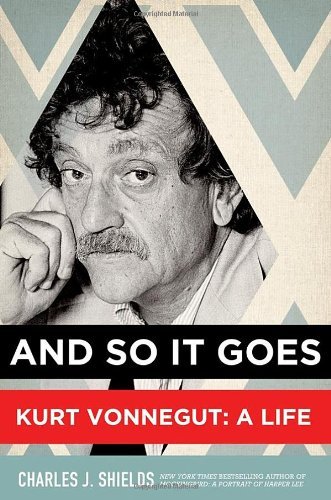
And So it Goes: Kurt Vonnegut: A Life
The first authoritative biography of Kurt Vonnegut Jr., a writer who changed the conversation of American literature
In 2006, Charles Shields reached out to Kurt Vonnegut in a letter, asking for his endorsement for a planned biography. The first response was no ("A most respectful demurring by me for the excellent writer Charles J. Shields, who offered to be my biographer"). Unwilling to take no for an answer, propelled by a passion for his subject, and already deep into his research, Shields wrote again and this time, to his delight, the answer came back: "O.K." For the next year—a year that ended up being Vonnegut's last—Shields had access to Vonnegut and his letters.
And So It Goes is the culmination of five years of research and writing—the first-ever biography of the life of Kurt Vonnegut. Vonnegut resonates with readers of all generations from the baby boomers who grew up with him to high-school and college students who are discovering his work for the first time. Vonnegut's concise collection of personal essays, Man Without a Country, published in 2006, spent fifteen weeks on the New York Times bestseller list and has sold more than 300,000 copies to date. The twenty-first century has seen interest in and scholarship about Vonnegut's works grow even stronger, and this is the first book to examine in full the life of one of the most influential iconoclasts of his time.
513 pages, Hardcover
First published November 8, 2011
About the author
Charles J. Shields
96 books82 followersCharles J. Shields is the author of And So It Goes: Kurt Vonnegut: A Life (Henry Holt & Co.), Mockingbird: A Portrait of Harper Lee (Holt), the highly acclaimed, bestselling biography of Harper Lee,I Am Scout: The Biography of Harper Lee (Henry Holt Books for Young Readers), and The Man Who Wrote the Perfect Novel: John Williams, Stoner, and the Writing Life (University of Texas Press).
In January 2022, Henry Holt will release Shields' new book, Lorraine Hansberry: The Life Behind 'A Raisin in the Sun,' the most comprehensive biography of, in James Baldwin’s words, this “very young woman, with an overpowering vision.”
In January 2022, Henry Holt will release Shields' new book, Lorraine Hansberry: The Life Behind 'A Raisin in the Sun,' the most comprehensive biography of, in James Baldwin’s words, this “very young woman, with an overpowering vision.”
Ratings & Reviews
Friends & Following
Create a free account to discover what your friends think of this book!
Community Reviews
Displaying 1 - 30 of 296 reviews

April 8, 2012
A cursory glance at Charles J. Shields’s bibliography shows him to have authored a string of hack profiles ranging from Saddam Hussein to J.K. Rowling, plus books on sexual disorders, Uruguay and Vladimir Putin. Clearly this is the man to write the first full-length biography of bouffant satirical demigod Kurt Vonnegut. CLEARLY. Like him or not, he will remain, for time immemorial, the first and only man to have authority from The Master to write a full-length bio (or, at least, a vague thumbs-up from a doddery moribund man who he spoke to twice). But here we are, here it is, so it goes, and so on. Shields has written an extremely workmanlike bio, forgoing any textual trickery or temporal twiddling to present a birth-to-death portrait of the artist as a cranky firecracker, partial Mormon, and counterculture Baal. It zips along nicely. Shields’s own hack background clearly mirrors Vonnegut’s career chasing moolah in the slicks, so any protests on that front are churlish. CHURLISH. He describes well the maelstrom of family in Kurt’s life, and the agents, friends, extra kids and sparring partners.
But there’s one person missing from this bio: Kurt Vonnegut. I see only a shadow walking through these pages. I see his first wife Jane come to life brilliantly—an utterly devoted charmer who never loses faith in Kurt’s ability to become a great writer, who Kurt breezily betrays once his career picks up traction. His children swirl in and out the novel, tormented and amused at this cartoon grump lurking in his office doorway trying to write a novel with very short chapters. This isn’t necessarily a criticism—Kurt was deeply insecure and lacking identity. His shrewd businessman’s instincts dominated much of his writing life—the famous perm and moustache was cultivated to impress his readership following Slaughterhouse-Five’s huge success. His advice as a writing teacher was geared towards selling stories for vanishing magazine markets. He clearly relished his financial freedom after a long decade grafting largely for financial success. He was a free enterprise capitalist, not a socialist dreamer.
There are many unpleasant revelations in this book, mostly Kurt’s treatment of women: not impressive. Embarrassing examples abound, including his on-campus sexism and philandering in the sixties, though this is hardly surprising given the middle-aged males dominating the writing courses at the time. Basically, Kurt was an asshole. He acknowledges this many times in interviews and his books. He was an overgrown baby who wanted status and respect as an author, forever insecure about his place in the pantheon. Anyway: none of this matters, really. We have the books. Shields isn’t too hot on the canon, offering slim synopses and capsule summaries where meatier examinations might have been welcome for the devotee. He is also overly harsh about a number of his works, lingering on the critically popular ones. More drooling devotion might have been welcome.
Although meticulously compiled from limited scraps, the book is frustrating since we don’t get a better sense of Vonnegut outside his autobiographical works. Perhaps that’s the point: Kurt lived a Jackson Pollock life, as anarchic and shambling as his novels, and ultimately he was a product of depression-era America, the 30s and 40s, and remained rooted to these beginnings all his life . . . which is hardly a flaw. Learning how typically writerly he was “humanises” the man behind the novels, and does little to change our opinion of his work. His last ten years of life, sadly, were spent with Jill Krementz, whose behaviour towards her eighty-year-old spouse is not what one might term “affectionate.” Kurt really needed Jane in his life in his dotage, the poor sap. So: a solid bio with a throwaway appendix, badly endnoted.
But there’s one person missing from this bio: Kurt Vonnegut. I see only a shadow walking through these pages. I see his first wife Jane come to life brilliantly—an utterly devoted charmer who never loses faith in Kurt’s ability to become a great writer, who Kurt breezily betrays once his career picks up traction. His children swirl in and out the novel, tormented and amused at this cartoon grump lurking in his office doorway trying to write a novel with very short chapters. This isn’t necessarily a criticism—Kurt was deeply insecure and lacking identity. His shrewd businessman’s instincts dominated much of his writing life—the famous perm and moustache was cultivated to impress his readership following Slaughterhouse-Five’s huge success. His advice as a writing teacher was geared towards selling stories for vanishing magazine markets. He clearly relished his financial freedom after a long decade grafting largely for financial success. He was a free enterprise capitalist, not a socialist dreamer.
There are many unpleasant revelations in this book, mostly Kurt’s treatment of women: not impressive. Embarrassing examples abound, including his on-campus sexism and philandering in the sixties, though this is hardly surprising given the middle-aged males dominating the writing courses at the time. Basically, Kurt was an asshole. He acknowledges this many times in interviews and his books. He was an overgrown baby who wanted status and respect as an author, forever insecure about his place in the pantheon. Anyway: none of this matters, really. We have the books. Shields isn’t too hot on the canon, offering slim synopses and capsule summaries where meatier examinations might have been welcome for the devotee. He is also overly harsh about a number of his works, lingering on the critically popular ones. More drooling devotion might have been welcome.
Although meticulously compiled from limited scraps, the book is frustrating since we don’t get a better sense of Vonnegut outside his autobiographical works. Perhaps that’s the point: Kurt lived a Jackson Pollock life, as anarchic and shambling as his novels, and ultimately he was a product of depression-era America, the 30s and 40s, and remained rooted to these beginnings all his life . . . which is hardly a flaw. Learning how typically writerly he was “humanises” the man behind the novels, and does little to change our opinion of his work. His last ten years of life, sadly, were spent with Jill Krementz, whose behaviour towards her eighty-year-old spouse is not what one might term “affectionate.” Kurt really needed Jane in his life in his dotage, the poor sap. So: a solid bio with a throwaway appendix, badly endnoted.

November 21, 2011
As someone who conceitedly fancies himself a Vonnegut scholar, I like to think that I’m an expert on all things Vonnegut. Every time I read a new book of KV criticism, I huff and sneer demeaningly thinking, “Pfff, I could write that because I’m so great; I just haven't done it yet.” Shields' biography is what I could only dream of writing. So, Charles J. Shields, my hat is off to you: kudos for putting me in my place.
The depth and breadth of research that went into this is staggering. I read more endnotes (just because I enjoyed seeing where each Vonnegut tidbit came from) than I did in Infinite Jest. Shields secured access to Vonnegut’s personal collection of correspondences and interviewed a whole slew of his family members, friends and former acquaintances. Every biography I read will forever be weighed against Boyd’s two volume Nabokov masterpieces, works that I never expect anything to counterbalance; this comes very, very close. The only thing that is missing is the in-depth criticism of each Vonnegut novel; however, that’s not a requisite for a biography, and the fact that this focuses on Vonnegut “the man” is just fine.
Vonnegut “the man” and Vonnegut “the fictional character” are so often viewed as the same person, and Shields does a wonderful job addressing this. In fact, this was the most disappointing aspect of the book for me. Reading about the real Kurt Vonnegut, I often felt like the little boy at the end of Joyce’s “Araby”: disappointed, disillusioned. Kurt does not seem like he was a very good father. He seems to have been an even worse husband. Jane seems to have supported him just like Vera supported Vladimir; however, Kurt, childishly, depended on her for everything, acted like a self-centered patriarch, and had multiple affairs—even cheating on one mistress with another. So many of the noble principles espoused in his writings prove to be nothing more than ideals. That’s totally fine, but learning that my hero couldn’t exactly live up to those ideals is saddening. “[Kurt] had made choices, consciously or unconsciously, that had created multiple and even contradictory identities. He was a counterculture hero, a guru, and a leftist to his fans; a wealthy investor to his broker; a champion of family and community and yet a distant father; a man who had left his ‘child-centered’ home to save his sanity, but then married a younger woman who was leading him into fatherhood again; a satirist of American life but feeding at the trough of celebrity up to his ears” (351). This book just pulled back the curtain on my hero and made me realize the very lesson he gave his creative writing class at Harvard, “‘people are not wholly bad. People are not wholly good either. Try not create characters in terms that are absolute—real people aren’t like that’” (277). This book made me recognize that my hero was only human. (There is, perhaps, one exception to the above rule: Jill Krementz, Kurt’s second wife, really does seem like a complete “cunt,” to use the poignant word that Nanny told me Kurt had once used to describe her.)
Perhaps because the “characters” in this biography were so human, I actually shed a tear when there was family discord or when someone, who has been dead for ten or twenty or fifty years, "died." The fact that I do know what members of the Vonnegut clan have passed means that, for me to be so affected by their passings, Shields really did make them come to life again in this biography.
Phenomenal biography!
p.s. "To re-create how he liked to work...He posted his grandchildren's drawings on the refrigerator door, tacked a few drawings of his own to the walls, and displayed in the kitchen a bumper sticker quoting him: YOUR PLANET'S IMMUNE SYSTEM/IS TRYING TO GET RID OF YOU" (409).

That very bumper sticker, the one formerly displayed in his kitchen, is now on my "Kurt Vonnegut Bookshelf" by my desk. :-)
The depth and breadth of research that went into this is staggering. I read more endnotes (just because I enjoyed seeing where each Vonnegut tidbit came from) than I did in Infinite Jest. Shields secured access to Vonnegut’s personal collection of correspondences and interviewed a whole slew of his family members, friends and former acquaintances. Every biography I read will forever be weighed against Boyd’s two volume Nabokov masterpieces, works that I never expect anything to counterbalance; this comes very, very close. The only thing that is missing is the in-depth criticism of each Vonnegut novel; however, that’s not a requisite for a biography, and the fact that this focuses on Vonnegut “the man” is just fine.
Vonnegut “the man” and Vonnegut “the fictional character” are so often viewed as the same person, and Shields does a wonderful job addressing this. In fact, this was the most disappointing aspect of the book for me. Reading about the real Kurt Vonnegut, I often felt like the little boy at the end of Joyce’s “Araby”: disappointed, disillusioned. Kurt does not seem like he was a very good father. He seems to have been an even worse husband. Jane seems to have supported him just like Vera supported Vladimir; however, Kurt, childishly, depended on her for everything, acted like a self-centered patriarch, and had multiple affairs—even cheating on one mistress with another. So many of the noble principles espoused in his writings prove to be nothing more than ideals. That’s totally fine, but learning that my hero couldn’t exactly live up to those ideals is saddening. “[Kurt] had made choices, consciously or unconsciously, that had created multiple and even contradictory identities. He was a counterculture hero, a guru, and a leftist to his fans; a wealthy investor to his broker; a champion of family and community and yet a distant father; a man who had left his ‘child-centered’ home to save his sanity, but then married a younger woman who was leading him into fatherhood again; a satirist of American life but feeding at the trough of celebrity up to his ears” (351). This book just pulled back the curtain on my hero and made me realize the very lesson he gave his creative writing class at Harvard, “‘people are not wholly bad. People are not wholly good either. Try not create characters in terms that are absolute—real people aren’t like that’” (277). This book made me recognize that my hero was only human. (There is, perhaps, one exception to the above rule: Jill Krementz, Kurt’s second wife, really does seem like a complete “cunt,” to use the poignant word that Nanny told me Kurt had once used to describe her.)
Perhaps because the “characters” in this biography were so human, I actually shed a tear when there was family discord or when someone, who has been dead for ten or twenty or fifty years, "died." The fact that I do know what members of the Vonnegut clan have passed means that, for me to be so affected by their passings, Shields really did make them come to life again in this biography.
Phenomenal biography!
p.s. "To re-create how he liked to work...He posted his grandchildren's drawings on the refrigerator door, tacked a few drawings of his own to the walls, and displayed in the kitchen a bumper sticker quoting him: YOUR PLANET'S IMMUNE SYSTEM/IS TRYING TO GET RID OF YOU" (409).
That very bumper sticker, the one formerly displayed in his kitchen, is now on my "Kurt Vonnegut Bookshelf" by my desk. :-)

November 25, 2011
This review of the OUTSTANDING book has been revised and can now be found at Expendable Mudge Muses Aloud!

November 28, 2012
An excellent biography about one of the iconic writers of our time, this book is by Charles Shields, who was with Vonnegut almost up to the day he went into the coma in March of 2007, dying in April, almost 85 years old. Shields shows the solid German-American Midwestern roots of the man, and then the horrific ordeal he survived during the fire-bombing of Dresden in WWII. Of course, that event served as the basis for his greatest book, "Slaughterhouse-Five."
As with other veterans, his war experiences overshadowed his entire life. The only way he could try to deal with it was to try to make sense of it in a novel. The fact that it became a big hit was partly due to the times--the Vietnam War was raging and a growing protest movement against the war was building. Vonnegut was seen as one of the spokespersons, even a prophet, of the antiwar movement. However, like Mark Twain, a writer that he resembled in many ways, he was a man of contradictions, with a public persona that did not really match the private person. Shields explores this central aspect of his life, as well as analyzing the fourteen books that Vonnegut produced.
As with other veterans, his war experiences overshadowed his entire life. The only way he could try to deal with it was to try to make sense of it in a novel. The fact that it became a big hit was partly due to the times--the Vietnam War was raging and a growing protest movement against the war was building. Vonnegut was seen as one of the spokespersons, even a prophet, of the antiwar movement. However, like Mark Twain, a writer that he resembled in many ways, he was a man of contradictions, with a public persona that did not really match the private person. Shields explores this central aspect of his life, as well as analyzing the fourteen books that Vonnegut produced.

February 4, 2012
I just finished And So It Goes: Kurt Vonnegut a Life by Charles Shields. This could easily be one of the most jilted half-assed biographies I've ever read. Shields opens the book with his desperation to get Vonnegut to allow him to be his biographer and allow him to write his book. Kurt initially refuses the request and then eventually allows it. Shortly after, Kurt Vonnegut passed away.
The major problem in this book though is that Shields appears to hate Kurt Vonnegut. He seems like a man who had only read Cat's Cradle and Slaughterhouse-5 in high school and then had to suffer through the rest of his work after getting the job.
Sourcing is a huge issue in this work. It seems like Shields' main source of quotes seem to come from his ex-wife or his daughter Nannette, who clearly had issues with her father. The effect it creates is Sheilds comes acrossed looking like a jilted lover himself.
A biography should have the fullest account possible of the subjects life, good and bad. This is what the reader expects from a biography: a full, true account. In the case with authors, a behind the scenes account of what was happening in the author's life also adds a new layer of perspective to an authors work.
Shields instead chose to focus on everything bad about the man. His drinking, rage, infidelities, etc. are all the focus here. The book itself assumes that these are the reasons a reader comes to it. Writing was just a by-product of what Vonnegut did in the few times he wasn't too busy being an egocentric prick to pass some time.
Shields even go so far as to make his own psychological evaluations of everything from KV's childhood to old age.
He did a cut and paste of a Salon.com article in which Peter Fonda claims that Kurt Vonnegut reached in his desk and pulled out a joint. This part of the book was troubling to me so I looked it up. The quote was there alright. Here's why this troubles me though... In "Cold Turkey" an essay that was published in 2004 he says he has only smoked marijuana once in his lifetime with the Grateful Dead. Why would Kurt lie? Especially once we consider that Peter Fonda's quote came from his book in 1969? Given the popularity of other "Leftist" authors of the time like Hunter Thompson and Jack Kerouac, who would care about his pot usage in 2004? Maybe "Cold Turkey" wasn't on Shields' reading list. Shields also then cuts out the salon.com article which ended with "What a wonderful family…" it's fairly obvious why that part was left out though... it goes against his making Vonnegut look like an asshole vibe which he continues the next paragraph.
The worst part of all this is now it'll be another few years before someone else tries to do a better job.
The major problem in this book though is that Shields appears to hate Kurt Vonnegut. He seems like a man who had only read Cat's Cradle and Slaughterhouse-5 in high school and then had to suffer through the rest of his work after getting the job.
Sourcing is a huge issue in this work. It seems like Shields' main source of quotes seem to come from his ex-wife or his daughter Nannette, who clearly had issues with her father. The effect it creates is Sheilds comes acrossed looking like a jilted lover himself.
A biography should have the fullest account possible of the subjects life, good and bad. This is what the reader expects from a biography: a full, true account. In the case with authors, a behind the scenes account of what was happening in the author's life also adds a new layer of perspective to an authors work.
Shields instead chose to focus on everything bad about the man. His drinking, rage, infidelities, etc. are all the focus here. The book itself assumes that these are the reasons a reader comes to it. Writing was just a by-product of what Vonnegut did in the few times he wasn't too busy being an egocentric prick to pass some time.
Shields even go so far as to make his own psychological evaluations of everything from KV's childhood to old age.
He did a cut and paste of a Salon.com article in which Peter Fonda claims that Kurt Vonnegut reached in his desk and pulled out a joint. This part of the book was troubling to me so I looked it up. The quote was there alright. Here's why this troubles me though... In "Cold Turkey" an essay that was published in 2004 he says he has only smoked marijuana once in his lifetime with the Grateful Dead. Why would Kurt lie? Especially once we consider that Peter Fonda's quote came from his book in 1969? Given the popularity of other "Leftist" authors of the time like Hunter Thompson and Jack Kerouac, who would care about his pot usage in 2004? Maybe "Cold Turkey" wasn't on Shields' reading list. Shields also then cuts out the salon.com article which ended with "What a wonderful family…" it's fairly obvious why that part was left out though... it goes against his making Vonnegut look like an asshole vibe which he continues the next paragraph.
The worst part of all this is now it'll be another few years before someone else tries to do a better job.

November 3, 2011
As I read And So It Goes, I thought I was going to regret having done so. It's a sobering experience to discover someone I admire has feet of clay. There is no doubt that Kurt Vonnegut was a deeply flawed and troubled person, quick to anger, a user of those who thought they could trust him, a philanderer and a distant father. But given the unbearable circumstances of his life, a mother who committed suicide, a beloved sister dying young of cancer and being a not only a prisoner of war but being imprisoned while the Americans bombed Dresden, where he was held, it was miraculous that he wasn't worse.
Charles Shields does an admirable job telling Vonnegut's story, especially since Vonnegut died at the beginning of the project. Shields has an evident sympathy and admiration for Vonnegut, but never lets his admiration hold back from telling the often ugly truth of his life. It was truly a fascinating life. I don't think I will hold Vonnegut in such high esteem now, knowing the sordid details of his life, but I will still read him. So it goes.
Charles Shields does an admirable job telling Vonnegut's story, especially since Vonnegut died at the beginning of the project. Shields has an evident sympathy and admiration for Vonnegut, but never lets his admiration hold back from telling the often ugly truth of his life. It was truly a fascinating life. I don't think I will hold Vonnegut in such high esteem now, knowing the sordid details of his life, but I will still read him. So it goes.

Read
November 8, 2011Yes, that was pretty terrible, although less awful than most biographies of female writers (much less prurient description of Vonnegut's love life, for one thing). It was also unsettling how we were just supposed to unquestioningly accept Vonnegut's second wife as a cast-iron bitch, probably because she chose not to cooperate with the biographer (see: Ted Hughes, Sonia Orwell, &c &c). I did enjoy learning totally useless facts about Vonnegut, such as his favourite program being Law and Order. What else is modern American literary biography for?
OTHER USELESS FACTS ABOUT VONNEGUT:
- He was Geraldo River's father-in-law!
- He appeared in a coffee ad!
- He owned a failed Saab dealership (shades of Rabbit)!
- Lily Vonnegut, the daughter from his second marriage, appeared as Montana Wildhack in a 2010 play (well, I got that from the net)!
- He never got in a fistfight with Norman Mailer! (Well, I deduced that from its non-appearance. Wait, didn't Aristotle say you can't prove a negative? We can never prove Vonnegut didn't get in a fistfight with Mailer? Whoops.)
OTHER USELESS FACTS ABOUT VONNEGUT:
- He was Geraldo River's father-in-law!
- He appeared in a coffee ad!
- He owned a failed Saab dealership (shades of Rabbit)!
- Lily Vonnegut, the daughter from his second marriage, appeared as Montana Wildhack in a 2010 play (well, I got that from the net)!
- He never got in a fistfight with Norman Mailer! (Well, I deduced that from its non-appearance. Wait, didn't Aristotle say you can't prove a negative? We can never prove Vonnegut didn't get in a fistfight with Mailer? Whoops.)

March 20, 2012
Charles J. Shields seems to really not like Kurt Vonnegut. This is a problem since the market for this book is people who do like Kurt Vonnegut. And I'm not saying that just because of all the dirty laundry about his personal life, but because he has no appreciation for his actual literary work. The best part of the book is at the very beginning, past the awful part where he talks about how he got to write the book, the part about Vonnegut's family and school years. This should have been a better book. Disappointing, but not wholly without value.

December 3, 2011
And So It Goes: The sad life of Kurt Vonnegut, Jr.
The face that peers out at you from the cover is immeasurably sad. It’s the face of a man in middle age weighed down by lifetimes of tragedy. The man — one of the most remarkable novelists of the 20th century — is Kurt Vonnegut, known throughout much of his adult life as Kurt Vonnegut, Jr.
In And So It Goes, Charles J. Shields plumbs the depths of Vonnegut’s sadness. He began work shortly before Vonnegut’s death in 2006 and conducted lengthy interviews with his children, his first wife, contemporary writers, business associates, and neighbors. The intimacy and detail of the book is remarkable: a whole man emerges from its pages.
Vonnegut struggled through the first four decades of his long life — he died at 83 — then gradually gained readers through the 1960s until, with the publication of Slaughterhouse-Five in 1969, he became famous “overnight” as he neared the age of 50. After years of eating cereal for dinner and scraping for pennies selling what he regarded as hack stories for the popular magazines of the 1950s and 1960s, he and his wife suddenly found themselves rich as royalties poured in from reprints of his earlier work and as each succeeding book, good or bad, lingered on the best-seller lists for week after week.
Like the best of his novels — Cat’s Cradle, published in 1953, as well as Slaughterhouse-Five — Vonnegut was deceptively complex. In public, Vonnegut affected the manner, even for a time the moustache and the white suit, of his literary hero, Mark Twain. Like Twain, he was folksy and often screamingly funny. A rigid moralist and a plain-spoken opponent of war and defender of freedom of speech, he was idolized by a generation of students and was one of the most popular speakers on college campuses throughout the country during the 1970s and 1980s. In public appearances, Vonnegut generally came across as avuncular, considerate, and witty, often leaving audiences gasping from laughter. At the University of Iowa Writer’s Workshop, he proved himself to be a popular and talented teacher.
The man himself, however, though consistently witty throughout his life, bore little other resemblance to his long-time public image. He treated his long-time first wife, Jane, with undisguised contempt, ignored his children and frightened their friends, betrayed his own friends by summarily ending decades-long business relationships, and, in his final years, became intolerably grouchy.
Reflecting the truism that “what goes around comes around,” Vonnegut’s childhood was deeply troubled. His mother, having been raised in luxury and dependent on servants for even the most mundane tasks, was emotionally upended by the Crash of 1929, when the family’s circumstances were sharply reduced. She spent the rest of her life sleeping for days on end and moping about the house, finally killing herself when Kurt was just 21 — on Mother’s Day, 1944. His feckless father, a talented engineer trapped in life as an architect like his brilliant father, paid little attention to Kurt as a child and almost never encouraged him in any way. All the family’s attention was fastened on Kurt’s older brother, Bernard, a gifted scientist who later in life discovered the technique of cloud-seeding to induce rain. When Kurt announced his interest in pursuing studies in the arts, Bernard insisted that he enroll at Cornell to study science, and the younger brother was powerless to resist. He lasted two years there and, later, pursued an anthropology degree at the University of Chicago with a similar lack of success. (Years later, he persuaded the Chicago Anthropology Department to accept his novel Cat’s Cradle in lieu of a thesis and was awarded an M.A.)
Though tragedy in other forms continued to dog Vonnegut in later years, one event stands out as central to his character and his career: the fire-bombing of Dresden in 1945. Vonnegut had enlisted as a private in the U.S. Army the year before and, as his luck would have it, his unit was eventually sent to the Western Front in Europe — positioned at the farthest-forward salient in the Allied lines. Shortly afterward, the Germans attacked in what became known as the Battle of the Bulge. Vonnegut and his buddies were quickly taken prisoner along with thousands of other Americans and marched overland to POW camps in Germany. Eventually, Vonnegut and a small number of his fellow prisoners were taken into Dresden and housed in a old slaughterhouse– very shortly before the horrific fire-bombing attack that killed more than 60,000 civilians. The Americans survived by hiding in a basement. They were put to work once the attack had ended — collecting and stacking corpses.
Is it any wonder why Kurt Vonnegut was cranky? Naturally, none of what he endured can excuse his bad behavior. But it certainly does begin to explain the current of profound sadness that ran throughout Vonnegut’s life.
So it goes.
(From www.malwarwickonbooks.com)
The face that peers out at you from the cover is immeasurably sad. It’s the face of a man in middle age weighed down by lifetimes of tragedy. The man — one of the most remarkable novelists of the 20th century — is Kurt Vonnegut, known throughout much of his adult life as Kurt Vonnegut, Jr.
In And So It Goes, Charles J. Shields plumbs the depths of Vonnegut’s sadness. He began work shortly before Vonnegut’s death in 2006 and conducted lengthy interviews with his children, his first wife, contemporary writers, business associates, and neighbors. The intimacy and detail of the book is remarkable: a whole man emerges from its pages.
Vonnegut struggled through the first four decades of his long life — he died at 83 — then gradually gained readers through the 1960s until, with the publication of Slaughterhouse-Five in 1969, he became famous “overnight” as he neared the age of 50. After years of eating cereal for dinner and scraping for pennies selling what he regarded as hack stories for the popular magazines of the 1950s and 1960s, he and his wife suddenly found themselves rich as royalties poured in from reprints of his earlier work and as each succeeding book, good or bad, lingered on the best-seller lists for week after week.
Like the best of his novels — Cat’s Cradle, published in 1953, as well as Slaughterhouse-Five — Vonnegut was deceptively complex. In public, Vonnegut affected the manner, even for a time the moustache and the white suit, of his literary hero, Mark Twain. Like Twain, he was folksy and often screamingly funny. A rigid moralist and a plain-spoken opponent of war and defender of freedom of speech, he was idolized by a generation of students and was one of the most popular speakers on college campuses throughout the country during the 1970s and 1980s. In public appearances, Vonnegut generally came across as avuncular, considerate, and witty, often leaving audiences gasping from laughter. At the University of Iowa Writer’s Workshop, he proved himself to be a popular and talented teacher.
The man himself, however, though consistently witty throughout his life, bore little other resemblance to his long-time public image. He treated his long-time first wife, Jane, with undisguised contempt, ignored his children and frightened their friends, betrayed his own friends by summarily ending decades-long business relationships, and, in his final years, became intolerably grouchy.
Reflecting the truism that “what goes around comes around,” Vonnegut’s childhood was deeply troubled. His mother, having been raised in luxury and dependent on servants for even the most mundane tasks, was emotionally upended by the Crash of 1929, when the family’s circumstances were sharply reduced. She spent the rest of her life sleeping for days on end and moping about the house, finally killing herself when Kurt was just 21 — on Mother’s Day, 1944. His feckless father, a talented engineer trapped in life as an architect like his brilliant father, paid little attention to Kurt as a child and almost never encouraged him in any way. All the family’s attention was fastened on Kurt’s older brother, Bernard, a gifted scientist who later in life discovered the technique of cloud-seeding to induce rain. When Kurt announced his interest in pursuing studies in the arts, Bernard insisted that he enroll at Cornell to study science, and the younger brother was powerless to resist. He lasted two years there and, later, pursued an anthropology degree at the University of Chicago with a similar lack of success. (Years later, he persuaded the Chicago Anthropology Department to accept his novel Cat’s Cradle in lieu of a thesis and was awarded an M.A.)
Though tragedy in other forms continued to dog Vonnegut in later years, one event stands out as central to his character and his career: the fire-bombing of Dresden in 1945. Vonnegut had enlisted as a private in the U.S. Army the year before and, as his luck would have it, his unit was eventually sent to the Western Front in Europe — positioned at the farthest-forward salient in the Allied lines. Shortly afterward, the Germans attacked in what became known as the Battle of the Bulge. Vonnegut and his buddies were quickly taken prisoner along with thousands of other Americans and marched overland to POW camps in Germany. Eventually, Vonnegut and a small number of his fellow prisoners were taken into Dresden and housed in a old slaughterhouse– very shortly before the horrific fire-bombing attack that killed more than 60,000 civilians. The Americans survived by hiding in a basement. They were put to work once the attack had ended — collecting and stacking corpses.
Is it any wonder why Kurt Vonnegut was cranky? Naturally, none of what he endured can excuse his bad behavior. But it certainly does begin to explain the current of profound sadness that ran throughout Vonnegut’s life.
So it goes.
(From www.malwarwickonbooks.com)

January 27, 2021
Written during the last year of Vonnegut’s life, this authorized biography details his successes, failures, good attributes, and bad. It took decades, and lots of odd ventures, to finally become a successful writer. During the several years following his POW experience, he tinkered with how to effectively tell the Dresden story. Finally, while teaching at the University of Iowa, the brilliant Slaughter-house Five came to fruition.

February 12, 2016
It seems on browsing through some of the reviews of "And So It Goes" that many readers picked up this biography hoping to find the persona that Kurt Vonnegut crafted, as opposed to an honest story about the person. This is not a hit piece, as some reviewers assert, but rather a biography of the man, not the image he cultivated to sell his books. They are two very different things. Charles Shields is a fan of Vonnegut's, even going so far as to call him "an extraordinary man" in the text's Introduction. However, he does present him truthfully, and it seems that many fans can't handle that. I too will admit that I don't like finding out how much Kurt Vonnegut was not the man in real life that he used as his persona for the author of his novels. It makes me a little sad, but close reading of Vonnegut's nonfiction pieces alerted me long ago to his bitterness and mean spirit. I just conveniently ignore it. However, Mr. Shields must be truthful in this book, and he is.
I'll start with bringing up some negatives about the text. On a minor note, there are a few factual errors and inaccurate statements about a couple of Vonnegut's novels. Not a big deal which I am sure will be cleared up in later prints of the book. Of more consequence (to me) was how Mr. Shields inserts his own opinions about Vonnegut's novels occasionally into his examination of them. I don't like this. I am fine with him examining critical receptions and reader responses to the works when they appeared, but his personal thoughts on them should be left alone. It detracts from the objectivity he as the biographer should be trying to create.
However, Mr. Shields shines when he examines Vonnegut's life and the manner in which it found its way into his masterpiece "Slaughterhouse-Five". This part of the text is very well done, as is a lovely section on thoughts about the nature of "art" that Vonnegut shared with his scientist brother Bernard. The conversation is recounted on pages 394-396 of the text and is a highlight. The book also ends with an interesting (and short) history of Vonnegut's ancestors. I am not sure why it ends the book, but it is informative none the less.
On a personal note, if "And So It Goes" and Vonnegut's life feature a villain it is Vonnegut's second wife Jill Krementz. If half of what appears in this text is true (and it is all footnoted in the bibliography) then she was and is a horrible woman who did much to bring despair and pain into Vonnegut's life. The reader will hate her, and be exhausted and troubled by Vonnegut's never washing his hands of her. Mr. Shields never says this, but I get the feeling he was not too fond of her.
As the first authorized biography of Vonnegut (he was working with Shields when he died) "And So It Goes" is an important text. One of the most important writers of the last century deserves a biography, and now finally he has it.
I'll start with bringing up some negatives about the text. On a minor note, there are a few factual errors and inaccurate statements about a couple of Vonnegut's novels. Not a big deal which I am sure will be cleared up in later prints of the book. Of more consequence (to me) was how Mr. Shields inserts his own opinions about Vonnegut's novels occasionally into his examination of them. I don't like this. I am fine with him examining critical receptions and reader responses to the works when they appeared, but his personal thoughts on them should be left alone. It detracts from the objectivity he as the biographer should be trying to create.
However, Mr. Shields shines when he examines Vonnegut's life and the manner in which it found its way into his masterpiece "Slaughterhouse-Five". This part of the text is very well done, as is a lovely section on thoughts about the nature of "art" that Vonnegut shared with his scientist brother Bernard. The conversation is recounted on pages 394-396 of the text and is a highlight. The book also ends with an interesting (and short) history of Vonnegut's ancestors. I am not sure why it ends the book, but it is informative none the less.
On a personal note, if "And So It Goes" and Vonnegut's life feature a villain it is Vonnegut's second wife Jill Krementz. If half of what appears in this text is true (and it is all footnoted in the bibliography) then she was and is a horrible woman who did much to bring despair and pain into Vonnegut's life. The reader will hate her, and be exhausted and troubled by Vonnegut's never washing his hands of her. Mr. Shields never says this, but I get the feeling he was not too fond of her.
As the first authorized biography of Vonnegut (he was working with Shields when he died) "And So It Goes" is an important text. One of the most important writers of the last century deserves a biography, and now finally he has it.

January 14, 2012
In the spring of 1967, Kurt Vonnegut spoke at Reed College where I was freshman. I attended his lecture which I don't remember. I also dropped in on a group discussion he held in the common area of my dorm. He hooked me there. Mainly Vonnegut talked about his struggle to write a book about the firebombing of Dresden. I was surprised to learn of this event and quite impressed with Mr. Vonnegut. When the book he was working on (Slaughterhouse Five) was published, it was not the book I expected but more than lived up to my expectations. For many years I read each new Vonnegut book. Mostly I enjoyed them though none ever seemed to be as quite as good as Slaughterhouse Five.
This biography is extensive and well documented with lots of footnotes giving you the informant for most of incidents reported. Charles Shields summarizes each of Vonnegut's books linking characters to real people and situations in Vonnegut's life. Shields describes a complex and changeable man, capturing the mood of each period of his life. He resists the temptation to pick a persona for Vonnegut and emphasize that throughout the book.
Vonnegut's 2nd wife refused to talk to Shields and comes off as quite the shrew in the book. Clearly she really alienated Vonnegut's friends and relatives who provided much of the information to Shields. I see an opening for a quite different biography written with her blessing. Stay tuned.
This biography is extensive and well documented with lots of footnotes giving you the informant for most of incidents reported. Charles Shields summarizes each of Vonnegut's books linking characters to real people and situations in Vonnegut's life. Shields describes a complex and changeable man, capturing the mood of each period of his life. He resists the temptation to pick a persona for Vonnegut and emphasize that throughout the book.
Vonnegut's 2nd wife refused to talk to Shields and comes off as quite the shrew in the book. Clearly she really alienated Vonnegut's friends and relatives who provided much of the information to Shields. I see an opening for a quite different biography written with her blessing. Stay tuned.

January 1, 2012
Perhaps people familiar with Kurt Vonnegut's media persona will not need a book that serves to humanize the curmudgeonly author. But for people like me, who only know him through reading a few of his books, this is a fascinating, if depressing, story. It paints a picture of a man scrambling and grasping for respect in a field that often doesn't seem inclined to provide it. It shines a light onto a troubled family life and personal grievances, both justified and not. It examines two marriages that can most simply be described as difficult. And through it all it describes, as much as possible, Vonnegut's frame of mind and reference for writing his many books. At one point near the end it is noted that Vonnegut is a man torn among several identities, among them a domineering and blustery father, a relatively conservative Midwesterner, and a liberally anti-war firebrand. Who is the real Kurt Vonnegut? Reading this book may not provide the answer, but it will provide a front-row seat to his own struggle with the question.

April 22, 2025
..saturīgi labs dzīvesstāsts par vienu no labākajiem amerikāņu rakstniekiem. un neba Vonnegūtam vienmēr viss bijis uz "paplātes". :)

November 8, 2024
I chose this for my 1000th book on goodreads because in high school I had been so enamored with Vonnegut I chose to get his words tattooed on my body. I don’t regret that choice, as the words are as pertinent to my soul today as they were then, however, it is sad to see a hero demystified. Kurt was a troubled man throughout his whole life, who made mistakes just like the rest of us. It’s depressing to know that though he preached love, acceptance, and kindness in his books, he just wasn’t able to be that person in real life. I can’t imagine how his family felt trying to reconcile their husband, father, brother with the writer. This book was incredibly written, very very personal, and it was incredible to see what kind of states of minds Kurt was in while writing certain books. Definitely worth a read if you’re a Vonnegut fan.

August 15, 2013
I'm not sure I've read a biography before in which the author takes such apparent delight in dissing his subject. Yes, Vonnegut built a bridge for millions of youngsters to cross from science fiction to literature. That to me seems commendable. No, he did not have the traditional pedigree you find among the literary elite. Yes, he wrote easy-to-read books that were long on humor and humanism and short on other virtues, and collected a lot of young, liberal, naive, not-exactly-literary-lion fans along the way who kept his book sales afloat. All true, but mostly what Shields illuminates is his own snobbish assholishness. *

May 29, 2018
""Humanists [...] try to behave decently and honorably without any expectation of rewards or punishments in an afterlife."
(From Kurt Vonnegut's address to the American Humanist Association on the occasion of being awarded Humanist of the Year, Portland, Oregon, 1992.)
Over a half a year ago I reviewed here John Tomedi's book Kurt Vonnegut , which did not exactly read like a biography but rather like a collection of serious, almost research-depth essays about the Vonnegut opus. Charles Shields' And So It Goes: Kurt Vonnegut: A Life (2011) is a biography proper, and an extremely detailed one. Reading the biography one feels that virtually every month of Kurt Vonnegut's adult life has been documented. Well-written and balanced this is a captivating read and my main complaint is the large volume: 424 pages plus 68 pages of notes and references.
Thanks to Mr. Shields' monumental work I now understand Kurt Vonnegut as a writer a little better and like him as a person perhaps a little less. Since Mr. Shields' research, so richly referenced, seems extremely meticulous and detailed, I have high degree of confidence in his observations. He had the opportunity to work with Mr. Vonnegut on the biography over correspondence for several months and had several in-person conversations with him shortly before the writer's death in 2007.
One does not usually summarize a biography in a review. I am skipping over all the well-known events from Vonnegut's life, such as his service in the US Army in Germany in the waning years of the World War II and the POW period spent in Dresden, housed in a slaughterhouse, during the February 1945 massive bombing by the Allied forces. Of the period 1947 - 1967, when Vonnegut worked as a journalist and a writer for general Electric while publishing several early novels, I found his participation in a creative writing program at the University of Iowa the most interesting.
Vonnegut's breakthrough began in 1967 and fully materialized in 1969 with the publication of his masterpiece - to me one of the best books ever written - Slaughterhouse-Five . The novel arrived in bookstores at the time of the growing anti-Vietnam-war sentiment and perfectly matched the zeitgeist. Mr. Vonnegut became a hippie icon, "and his novels became part of the printed currency of the youth movement." Yet the biographer also points out a growing dissonance between the young readers' image of Vonnegut and the actual persona of a clean-shaven and business-attired writer. The reader may also be interested in Mr. Shields' descriptions of the difficult business of selling a book, even if the book is a masterpiece.
I am unable to refrain from mentioning the famous incident of book burning in the U.S., this Great Land of Freedom of ours.
I feel a little hurt by Mr. Shields' ridiculing Bluebeard as "an overlong, bumptious treatise on the value of Vonnegut's oeuvre as a writer," as I love the novel and consider it the second best in the oeuvre. But then, what do I know about literature.
Three and three quarter stars.
(From Kurt Vonnegut's address to the American Humanist Association on the occasion of being awarded Humanist of the Year, Portland, Oregon, 1992.)
Over a half a year ago I reviewed here John Tomedi's book Kurt Vonnegut , which did not exactly read like a biography but rather like a collection of serious, almost research-depth essays about the Vonnegut opus. Charles Shields' And So It Goes: Kurt Vonnegut: A Life (2011) is a biography proper, and an extremely detailed one. Reading the biography one feels that virtually every month of Kurt Vonnegut's adult life has been documented. Well-written and balanced this is a captivating read and my main complaint is the large volume: 424 pages plus 68 pages of notes and references.
Thanks to Mr. Shields' monumental work I now understand Kurt Vonnegut as a writer a little better and like him as a person perhaps a little less. Since Mr. Shields' research, so richly referenced, seems extremely meticulous and detailed, I have high degree of confidence in his observations. He had the opportunity to work with Mr. Vonnegut on the biography over correspondence for several months and had several in-person conversations with him shortly before the writer's death in 2007.
One does not usually summarize a biography in a review. I am skipping over all the well-known events from Vonnegut's life, such as his service in the US Army in Germany in the waning years of the World War II and the POW period spent in Dresden, housed in a slaughterhouse, during the February 1945 massive bombing by the Allied forces. Of the period 1947 - 1967, when Vonnegut worked as a journalist and a writer for general Electric while publishing several early novels, I found his participation in a creative writing program at the University of Iowa the most interesting.
Vonnegut's breakthrough began in 1967 and fully materialized in 1969 with the publication of his masterpiece - to me one of the best books ever written - Slaughterhouse-Five . The novel arrived in bookstores at the time of the growing anti-Vietnam-war sentiment and perfectly matched the zeitgeist. Mr. Vonnegut became a hippie icon, "and his novels became part of the printed currency of the youth movement." Yet the biographer also points out a growing dissonance between the young readers' image of Vonnegut and the actual persona of a clean-shaven and business-attired writer. The reader may also be interested in Mr. Shields' descriptions of the difficult business of selling a book, even if the book is a masterpiece.
I am unable to refrain from mentioning the famous incident of book burning in the U.S., this Great Land of Freedom of ours.
"[...] in 1973 in Drake, North Dakota [...] a sophomore complained that her English class was reading Slaughterhouse-Five and that it was profane. The school board went into special session and ordered the superintendent to burn all copies of the novel. On a freezing November day, three dozen were shoveled into the school furnace [...]"The biographer goes into much detail about Kurt Vonnegut's personal life, in my view way too much. The long-lasting yet gradually more and more difficult marriage to Jane Cox is juxtaposed with Vonnegut's turbulent later-life union with Jill Krementz. The biographer does not hide his moral judgments.
I feel a little hurt by Mr. Shields' ridiculing Bluebeard as "an overlong, bumptious treatise on the value of Vonnegut's oeuvre as a writer," as I love the novel and consider it the second best in the oeuvre. But then, what do I know about literature.
Three and three quarter stars.

July 24, 2017
Outside of the war, Vonnegut never seemed to realize he was the common denominator to his problems. He told his readers to be kind while never making much room for it in his own life. 'And So It Goes' shows how Vonnegut lived in two worlds: one occupied with war, complaints and self-pity while the other filled with granfalloons, harmoniums, chrono-synclastic infundibulums, and a "message to humanity."
On his writing
The “message to humanity” is a by-product: it always has been…If you want to make a living writing you will first of all write to entertain, to divert, to amuse. And that in itself is a noble aim.
As the bombs were being dropped on Dresden:
Even at eight thousand feet, it was hot work for the RAF bomber crews. Thousand-degree heat scorched the bellies of the planes, and smoke rose to fifteen thousand feet, making the aviators wet with perspiration. The intensity of the firestorm below created superhot tornadoes, mile-high vortexes ripping oxygen from the air to feed their roaring, thermal engines. The torquing effect, on the atmosphere hurled people, animals, and furniture skyward, up from a city that was falling down underneath them.
The aftermath
[***Graphic***]
They passed the corpse of a boy with his burned dog at the end of a leash; bodies of children dressed in party clothes; blackened drivers slumped at the wheels of their cars; couples who had leaped into fountains for safety and plunged into boiling water instead. [due to heat from the bombs] The Dresden zoo, blown open by direct hits, had released its ark of animals into the wild. The men spotted a llama mounting slopes of debris. Exotic birds, with no trees to sit in, preened themselves on twisted iron railings. A chimpanzee, once popular with children, sat alone without hands.
From ‘Player Piano’ to ‘Jailbird’
He concludes, “We are here for no purpose unless we can invent one. Of that I am sure,” which answers the question posed twenty-seven years earlier in ‘Player Piano,’ “What are people for?”
---
I write with a big black crayon, you know, grasped in a grubby, kindergarten fist…If you want to kind of try what I do, take life seriously but none of the people in it
On his writing
The “message to humanity” is a by-product: it always has been…If you want to make a living writing you will first of all write to entertain, to divert, to amuse. And that in itself is a noble aim.
As the bombs were being dropped on Dresden:
Even at eight thousand feet, it was hot work for the RAF bomber crews. Thousand-degree heat scorched the bellies of the planes, and smoke rose to fifteen thousand feet, making the aviators wet with perspiration. The intensity of the firestorm below created superhot tornadoes, mile-high vortexes ripping oxygen from the air to feed their roaring, thermal engines. The torquing effect, on the atmosphere hurled people, animals, and furniture skyward, up from a city that was falling down underneath them.
The aftermath
[***Graphic***]
They passed the corpse of a boy with his burned dog at the end of a leash; bodies of children dressed in party clothes; blackened drivers slumped at the wheels of their cars; couples who had leaped into fountains for safety and plunged into boiling water instead. [due to heat from the bombs] The Dresden zoo, blown open by direct hits, had released its ark of animals into the wild. The men spotted a llama mounting slopes of debris. Exotic birds, with no trees to sit in, preened themselves on twisted iron railings. A chimpanzee, once popular with children, sat alone without hands.
From ‘Player Piano’ to ‘Jailbird’
He concludes, “We are here for no purpose unless we can invent one. Of that I am sure,” which answers the question posed twenty-seven years earlier in ‘Player Piano,’ “What are people for?”
---
I write with a big black crayon, you know, grasped in a grubby, kindergarten fist…If you want to kind of try what I do, take life seriously but none of the people in it

June 3, 2021
3.5
Accessible style, missing quotations from KV's letters (denied by the family), and a bit scant on deep literary analysis. The last 2 decades fly by, as in most biographies. Someone mentions in this book that by age 50 the plot is over but the story goes on, or something like that. Worth reading, if in the mood.
Accessible style, missing quotations from KV's letters (denied by the family), and a bit scant on deep literary analysis. The last 2 decades fly by, as in most biographies. Someone mentions in this book that by age 50 the plot is over but the story goes on, or something like that. Worth reading, if in the mood.

September 28, 2017
Biography is the story of a life, and when that life ends, so must the biography. I regretted that this holds true for Charles Shields’ AND SO IT GOES…, one of the genre’s more engaging, albeit painful, accounts of a life's journey. Shields rightly foregrounds Vonnegut’s harrowing WWII experience and its effect on an exceedingly complex psyche. For anyone who thinks “successful” writers get there simply on the basis of their talent and then comfortably slip into that role, AND SO IT GOES… will disabuse them of that fantasy. Vonnegut became not only a popular writer, thinker, and political satirist, but, in the eyes of many, emblematic of a specific age, admirably revivified by Shields. I cannot recommend this book highly enough; not only will you have read an excellent account of a life, you will gain a deeper understanding of the often dark places from which iconic––and ironic––fiction is produced. I read this book several years ago, and in my memory it remains an important contemporary biography.
August 15, 2022
Poking around the goodreads review of this book, I saw someone make a good point: you can’t object to the fact that a middlebrow hack wrote this biography, in a classic middlebrow hack way, because Kurt Vonnegut was, by his own admission, a middlebrow hack. Moreover, Vonnegut was a man who wanted to be loved, showered with affection and awards, even more than he eventually came to be after he lived to become one of the most beloved figures in American literature towards the end of his life, for being that middlebrow hack.
I think this goodreads person raises a good point, but I disagree with it. Being a middlebrow hack — the dude wrote a lengthy essay about how John Lennon’s “Imagine” is the “song of the [twentieth] century,” which, when you consider it’s a puling sentimental plea for a pretty dystopian-seeming utopia written by a man with an extensive record of violence, does make some sense but not in the way Shields wants it to — Shields can’t see the miracle in front of him. Kurt Vonnegut, with every temptation of his times and of his own character and circumstances, produced some of the best American literature of the century. The middlebrow hack – by his own self-hating description – who couldn’t break out of Saturday Evening Review for years is one of the greats- and I’m pretty sure his biographer, here, just is not.
His work is both respected and genuinely loved- Vonnegut’s the only good writer I used to see name-checked regularly in online dating profiles, when I was looking at them more. It deals with the biggest, heaviest themes of literature in an accessible, humorous style. Vonnegut was sufficiently experimental with form and narrative that he gets slotted into the “postmodernist” box, but not being a pedant or intentionally obscure – he always prized clarity in writing – that assignment really doesn’t stick, as far as I’m concerned. His many imperfections as a writer became signatures of personal style. His imperfections as a man, which Shields lovingly details here, did not lead to him being posthumously “cancelled” – he is, arguably, the only one of the big straight white male writers of the American midcentury who has entered the 2020s with his reputation more or less intact. Some of that is probably down to his presentation of self, but, and maybe I’m being romantic here, I really do think the quality of his writing has done a lot to keep it alive.
Shields doesn’t talk much about that. It’s clear from the outset that this is, indeed, “a life,” as publishers often subtitle tedious biographies. That is, it traces the subject’s parentage, childhood, education, publishing career, marriage(s), affair(s), friendships (especially with other famous people), children, grudges, decline, etc. To the extent such books pay attention to the books the author wrote (“a life”-style biographies are especially common for writers, but not unknown for actors, painters, even politicians), it’s to figure out some very basic themes that tie back with the author’s points about the subject’s psychology. Any reference to literature outside of the subjects’ work usually only happens in the context of the subjects’ publishing relationships- and publishers and editors tend to document themselves well, write a lot of letters, et al, so relations between authors and publishers and editors feature a lot in such biographies.
That’s more or less the model this biography follows. We learn a lot about Kurt Vonnegut Jr.’s upbringing in the bosom of a wealthy and cultured German-American family in Indianapolis, which curdled pretty early on as the family’s fortunes declined. Vonnegut’s mother killed herself, and his domineering older brother insisted that Kurt ignore his inclinations towards writing to become a physical scientist, like him. Shields depicts young Kurt Jr as sensitive and humorous, swinging between easy successes and baffling failures. Plenty of grist for the psychologizing mill, here.
Probably the most interesting thing about all of this is a glimpse at the pre-1941 German-American milieu, back before the two world wars ground German identity in this country into kitschy dust. The Vonneguts identified their German-ness with education, culture, success, humanism, contributions to the civic spaces in which they lived, and so did a lot of German-Americans. There was almost an idea they were better Americans than the Anglos, with their yahoo-ism and crooked institutions. World War One was a massive blow to this community, with laws passed against the teaching of German, imprisonment of German cultural and political leaders, even a ghastly massacre of German dog breeds. There was less febrile backlash with World War Two, but arguably, something worse happened- many German-Americans, the Vonneguts included, were skeptical about the war. This was understandable, given what had happened in World War One, but turned out to be wrong… and then the enemy in the next war that they were wrong about turned out to be committing some of the worst atrocities in history in the name of the supremacy of Germans. Not, as they say, a good luck. The German-Americans had a deal — a full, undisputed embrace of postwar white normalcy — and they took it.
Whether or not he embraced isolationism as a college cut up at Cornell — he did, and was no fan of FDR, either — Vonnegut still joined the army after dropping out of Cornell. This, of course, proved to be one of the pivotal events of his life. It solidified his hatred of authority and his pessimism regarding humanity, and witnessing the firebombing of Dresden provided the basis for, arguably, his greatest and most successful novel, “Slaughterhouse-Five.” Like a lot of dudes who came back to the States after seeing some shit overseas, he wanted two fundamentally incompatible things: he wanted calm and prosperity, complete with its conventional accouterments of wife, kids, house; and he wanted to not deal with bullshit, he wanted to do something with the perspective he gained, to tell and live the truth.
This doesn’t excuse, or necessarily even make sympathetic, the kind of things Vonnegut and others like him (his friend Norman Mailer went even more off the rails) did in response to this dynamic, primarily treating families they started in the first postwar flush of normalcy-seeking shoddily. Vonnegut came to treat his drive to be a great writer not just as though it was his sole motivator, but that it should be his family’s, as well- and his first wife, Jane, went along with it, uprooting her life to move around with him, cooking and cleaning and raising his kids as he left a good job as a General Electric PR flack (secured by his brother, the genius scientist) and decamped them to Cape Cod, pecking out stories, plays, eventually novels. This is where Shields’ seemingly endless resource of publisher gossip comes in. Does it shock you, dear reader, to find out that Kurt Vonnegut was something of a primmo donno, that he wasn’t the most reliable producer of drafts, that he was foolish with money? Well, if it does, you’ll have a shit ton of fun with this book. Same goes for the idea that Vonnegut, especially left on his own when he takes a teaching job at the Iowa Writers Workshop, was something of a philanderer, and not that nice to either his wife or his mistresses, seeing them basically as adjuncts to his becoming. When they became inconvenient, like Jane did once she became a god-bothering Christian and there weren’t that many kids in the house anymore and he had money besides, he tended to leave them aside.
As it happens, I do think stuff like that belongs in a Vonnegut biography. I think it can be useful to relate a writer’s personal life to his output, in a variety of ways. It doesn’t deserve the proportion of “And So It Goes” that it gets, at the expense of analysis that Shields clearly isn’t interested in, and probably hasn’t got the chops for- doesn’t claim to. Beyond that, it’s just not that interesting. Moreover, I don’t think Shields has the degree of insight he thinks he has, even as he admits only meeting Vonnegut twice before he died and never really interviewing the guy. You don’t need that much in the ways of interviews to get that Vonnegut was a lifelong melancholic depression sufferer, who also experienced hard blows like a mother and sister committing suicide and, you know, surving a terrible war atrocity. Being a depression sufferer doesn’t make the behaviors that depression can encourage any better- it doesn’t make the people the depressed person harms any less harmed. Vonnegut didn’t always tell the truth about himself, but he seldom hid that he was a depressed, often petty (he was always mad he didn’t win enough literary awards), somewhat lecherous, not generally pleasant man.
Shields does some “artist compelled by demons” stuff here but doesn’t get at what actually made Vonnegut special. Nowadays, when someone describes something as “touching” it sounds like ad copy for the Hallmark channel, and when some calls something “relatable” it’s a joke about how bizarre the world has become (something Vonnegut would have gotten, even if he was arguably lucky to die before the internet became what it became). But even when his characters were getting “unstuck in time,” evolving into seal-people, flying to Traflamadore, freezing the world with Ice-9, etc., they were embedded in human dilemmas and realities that we need, but often fail, to touch, that we can relate to but seldom have related to us by official culture. Vonnegut both got the mire of existence in which we live, and could envision other realities, other ways of being- which got his novels slotted into scifi pulp publishing for most of his early career. Speaking of dilemmas, he honored the scifi writers – his saintlike Kilgore Trout was based on Theodore Sturgeon – but did not want to be one, for basically petty reasons- money, esteem.
Shields is almost troublingly – dare I say “touchingly”? – blind to almost all of this. He gets that people came to like Vonnegut. He gets that Vonnegut’s writing discussed various themes and issues before many other major writers took them on. He places Vonnegut in the context of the social changes we associate with the sixties and the decades thereafter, which is relevant enough, even if most of what Vonnegut had in common with his hippie readers was a certain fecklessness. He points to parallels between characters in Vonnegut’s novels and people Vonnegut knew, situations in novels and situations in Vonnegut’s lifes, of varying levels of picayunity. And that’s about it, as far as actually understanding Vonnegut’s books go.
Less than being annoyed by this, I’m baffled. In what world is Vonnegut’s middle-aged philandering and drinking more interesting than trying to understand the thought-world that created his work? It is not “hot goss” that writers show up at Iowa unprepared to teach in any meaningful sense and to buy time and make contacts for other projects. It’s not that interesting that Vonnegut’s kids had kind of lousy times, in part because of their feckless, sometimes harsh dad. So why write this? Is it just a souvenir for fans? I guess it’s my own fault for not looking harder for a more analytical biography- as Vonnegut would recognize, people often make their own issues, even if they are, at the same time, “overdetermined” (to use the kind of word Vonnegut never would). Oh, well. **
I think this goodreads person raises a good point, but I disagree with it. Being a middlebrow hack — the dude wrote a lengthy essay about how John Lennon’s “Imagine” is the “song of the [twentieth] century,” which, when you consider it’s a puling sentimental plea for a pretty dystopian-seeming utopia written by a man with an extensive record of violence, does make some sense but not in the way Shields wants it to — Shields can’t see the miracle in front of him. Kurt Vonnegut, with every temptation of his times and of his own character and circumstances, produced some of the best American literature of the century. The middlebrow hack – by his own self-hating description – who couldn’t break out of Saturday Evening Review for years is one of the greats- and I’m pretty sure his biographer, here, just is not.
His work is both respected and genuinely loved- Vonnegut’s the only good writer I used to see name-checked regularly in online dating profiles, when I was looking at them more. It deals with the biggest, heaviest themes of literature in an accessible, humorous style. Vonnegut was sufficiently experimental with form and narrative that he gets slotted into the “postmodernist” box, but not being a pedant or intentionally obscure – he always prized clarity in writing – that assignment really doesn’t stick, as far as I’m concerned. His many imperfections as a writer became signatures of personal style. His imperfections as a man, which Shields lovingly details here, did not lead to him being posthumously “cancelled” – he is, arguably, the only one of the big straight white male writers of the American midcentury who has entered the 2020s with his reputation more or less intact. Some of that is probably down to his presentation of self, but, and maybe I’m being romantic here, I really do think the quality of his writing has done a lot to keep it alive.
Shields doesn’t talk much about that. It’s clear from the outset that this is, indeed, “a life,” as publishers often subtitle tedious biographies. That is, it traces the subject’s parentage, childhood, education, publishing career, marriage(s), affair(s), friendships (especially with other famous people), children, grudges, decline, etc. To the extent such books pay attention to the books the author wrote (“a life”-style biographies are especially common for writers, but not unknown for actors, painters, even politicians), it’s to figure out some very basic themes that tie back with the author’s points about the subject’s psychology. Any reference to literature outside of the subjects’ work usually only happens in the context of the subjects’ publishing relationships- and publishers and editors tend to document themselves well, write a lot of letters, et al, so relations between authors and publishers and editors feature a lot in such biographies.
That’s more or less the model this biography follows. We learn a lot about Kurt Vonnegut Jr.’s upbringing in the bosom of a wealthy and cultured German-American family in Indianapolis, which curdled pretty early on as the family’s fortunes declined. Vonnegut’s mother killed herself, and his domineering older brother insisted that Kurt ignore his inclinations towards writing to become a physical scientist, like him. Shields depicts young Kurt Jr as sensitive and humorous, swinging between easy successes and baffling failures. Plenty of grist for the psychologizing mill, here.
Probably the most interesting thing about all of this is a glimpse at the pre-1941 German-American milieu, back before the two world wars ground German identity in this country into kitschy dust. The Vonneguts identified their German-ness with education, culture, success, humanism, contributions to the civic spaces in which they lived, and so did a lot of German-Americans. There was almost an idea they were better Americans than the Anglos, with their yahoo-ism and crooked institutions. World War One was a massive blow to this community, with laws passed against the teaching of German, imprisonment of German cultural and political leaders, even a ghastly massacre of German dog breeds. There was less febrile backlash with World War Two, but arguably, something worse happened- many German-Americans, the Vonneguts included, were skeptical about the war. This was understandable, given what had happened in World War One, but turned out to be wrong… and then the enemy in the next war that they were wrong about turned out to be committing some of the worst atrocities in history in the name of the supremacy of Germans. Not, as they say, a good luck. The German-Americans had a deal — a full, undisputed embrace of postwar white normalcy — and they took it.
Whether or not he embraced isolationism as a college cut up at Cornell — he did, and was no fan of FDR, either — Vonnegut still joined the army after dropping out of Cornell. This, of course, proved to be one of the pivotal events of his life. It solidified his hatred of authority and his pessimism regarding humanity, and witnessing the firebombing of Dresden provided the basis for, arguably, his greatest and most successful novel, “Slaughterhouse-Five.” Like a lot of dudes who came back to the States after seeing some shit overseas, he wanted two fundamentally incompatible things: he wanted calm and prosperity, complete with its conventional accouterments of wife, kids, house; and he wanted to not deal with bullshit, he wanted to do something with the perspective he gained, to tell and live the truth.
This doesn’t excuse, or necessarily even make sympathetic, the kind of things Vonnegut and others like him (his friend Norman Mailer went even more off the rails) did in response to this dynamic, primarily treating families they started in the first postwar flush of normalcy-seeking shoddily. Vonnegut came to treat his drive to be a great writer not just as though it was his sole motivator, but that it should be his family’s, as well- and his first wife, Jane, went along with it, uprooting her life to move around with him, cooking and cleaning and raising his kids as he left a good job as a General Electric PR flack (secured by his brother, the genius scientist) and decamped them to Cape Cod, pecking out stories, plays, eventually novels. This is where Shields’ seemingly endless resource of publisher gossip comes in. Does it shock you, dear reader, to find out that Kurt Vonnegut was something of a primmo donno, that he wasn’t the most reliable producer of drafts, that he was foolish with money? Well, if it does, you’ll have a shit ton of fun with this book. Same goes for the idea that Vonnegut, especially left on his own when he takes a teaching job at the Iowa Writers Workshop, was something of a philanderer, and not that nice to either his wife or his mistresses, seeing them basically as adjuncts to his becoming. When they became inconvenient, like Jane did once she became a god-bothering Christian and there weren’t that many kids in the house anymore and he had money besides, he tended to leave them aside.
As it happens, I do think stuff like that belongs in a Vonnegut biography. I think it can be useful to relate a writer’s personal life to his output, in a variety of ways. It doesn’t deserve the proportion of “And So It Goes” that it gets, at the expense of analysis that Shields clearly isn’t interested in, and probably hasn’t got the chops for- doesn’t claim to. Beyond that, it’s just not that interesting. Moreover, I don’t think Shields has the degree of insight he thinks he has, even as he admits only meeting Vonnegut twice before he died and never really interviewing the guy. You don’t need that much in the ways of interviews to get that Vonnegut was a lifelong melancholic depression sufferer, who also experienced hard blows like a mother and sister committing suicide and, you know, surving a terrible war atrocity. Being a depression sufferer doesn’t make the behaviors that depression can encourage any better- it doesn’t make the people the depressed person harms any less harmed. Vonnegut didn’t always tell the truth about himself, but he seldom hid that he was a depressed, often petty (he was always mad he didn’t win enough literary awards), somewhat lecherous, not generally pleasant man.
Shields does some “artist compelled by demons” stuff here but doesn’t get at what actually made Vonnegut special. Nowadays, when someone describes something as “touching” it sounds like ad copy for the Hallmark channel, and when some calls something “relatable” it’s a joke about how bizarre the world has become (something Vonnegut would have gotten, even if he was arguably lucky to die before the internet became what it became). But even when his characters were getting “unstuck in time,” evolving into seal-people, flying to Traflamadore, freezing the world with Ice-9, etc., they were embedded in human dilemmas and realities that we need, but often fail, to touch, that we can relate to but seldom have related to us by official culture. Vonnegut both got the mire of existence in which we live, and could envision other realities, other ways of being- which got his novels slotted into scifi pulp publishing for most of his early career. Speaking of dilemmas, he honored the scifi writers – his saintlike Kilgore Trout was based on Theodore Sturgeon – but did not want to be one, for basically petty reasons- money, esteem.
Shields is almost troublingly – dare I say “touchingly”? – blind to almost all of this. He gets that people came to like Vonnegut. He gets that Vonnegut’s writing discussed various themes and issues before many other major writers took them on. He places Vonnegut in the context of the social changes we associate with the sixties and the decades thereafter, which is relevant enough, even if most of what Vonnegut had in common with his hippie readers was a certain fecklessness. He points to parallels between characters in Vonnegut’s novels and people Vonnegut knew, situations in novels and situations in Vonnegut’s lifes, of varying levels of picayunity. And that’s about it, as far as actually understanding Vonnegut’s books go.
Less than being annoyed by this, I’m baffled. In what world is Vonnegut’s middle-aged philandering and drinking more interesting than trying to understand the thought-world that created his work? It is not “hot goss” that writers show up at Iowa unprepared to teach in any meaningful sense and to buy time and make contacts for other projects. It’s not that interesting that Vonnegut’s kids had kind of lousy times, in part because of their feckless, sometimes harsh dad. So why write this? Is it just a souvenir for fans? I guess it’s my own fault for not looking harder for a more analytical biography- as Vonnegut would recognize, people often make their own issues, even if they are, at the same time, “overdetermined” (to use the kind of word Vonnegut never would). Oh, well. **

June 22, 2020
A friend got this for me for my birthday. Simply because of that, I am giving it a 5 star.
I also think Kurt is amazing, so that also adds to the 5.
Thanks Brian
I also think Kurt is amazing, so that also adds to the 5.
Thanks Brian

May 25, 2024
Funny funny guy

September 21, 2022
There is a saying, Never meet your heroes. I’ve now met one of mine, the curtain is pulled back, and, well, he’s a sure enough flawed human being, flawed and sad and often angry, also funny and a person who liked to be around other people, likes the spotlight, and he left us some really wonderful books. If you’re a fan.
This book biography is a trove of history and anecdotes and insights into the mind and heart of Mr. Kurt Vonnegut, Jr.
I knew he had been a POW near the end of World War II, held at the end with other POWs in an underground slaughterhouse/meat locker, in German called “schlachthof fünf”. When the allies repeatedly fire bombed Dresden, aiming to break the will of the Germans, 60,000 were killed. I knew this, but had not known how harsh were the conditions, freezing and starving, during his captivity prior to Dresden. At the end of the days-long fire bombing, the POWs came out of the underground confinement, which is what saved their lives, to view literally a hell on earth. They were screamed at and spit at by survivors and those coming in from the countryside, put on details to drag corpses out of basements, unbelievably horrible and grotesque to this 22 year old young man, and who knows how deep were the scars from this, PTSD which affected the rest of his life.
His struggle to make it at a right as a writer went on for 20+ years with only tiny bits of success, before luck and hard work and people pulling for him came the publication of Slaughterhouse Five and he became a big deal. Until reading this book, I had no idea how big a deal he really became, an antiwar activist, constantly sought after speaker at college campuses and other intellectual gatherings, he was a witty and funny and acerbic speaker, as the situation required.
Through the years, however, he was definitely a jerk to his wife, Jane, who was a sweetheart, to his three children and the four nieces and nephews they took in when his brother-in-law and sister died within 36 hours of each other. He was also a sometimes jerk to friends on whom he turned his back after they had helped him become established, not a nice man in a lot of ways. He chain smoked Pall Mall cigarettes from the time he was a junior in high school, yet amazingly smoking is not what did him in at 83 years of age. It was an effing dog! I swear that’s true!
Over the years, the one constant in his life with only a few exceptions was rising early each morning and setting his butt down to write, for four or five hours, until lunch.
I’m going to reread some of his books now, and will definitely plan a trip in the next year or two to the Kurt Vonnegut museum in, where else, Indianapolis!
And so it goes…
This book biography is a trove of history and anecdotes and insights into the mind and heart of Mr. Kurt Vonnegut, Jr.
I knew he had been a POW near the end of World War II, held at the end with other POWs in an underground slaughterhouse/meat locker, in German called “schlachthof fünf”. When the allies repeatedly fire bombed Dresden, aiming to break the will of the Germans, 60,000 were killed. I knew this, but had not known how harsh were the conditions, freezing and starving, during his captivity prior to Dresden. At the end of the days-long fire bombing, the POWs came out of the underground confinement, which is what saved their lives, to view literally a hell on earth. They were screamed at and spit at by survivors and those coming in from the countryside, put on details to drag corpses out of basements, unbelievably horrible and grotesque to this 22 year old young man, and who knows how deep were the scars from this, PTSD which affected the rest of his life.
His struggle to make it at a right as a writer went on for 20+ years with only tiny bits of success, before luck and hard work and people pulling for him came the publication of Slaughterhouse Five and he became a big deal. Until reading this book, I had no idea how big a deal he really became, an antiwar activist, constantly sought after speaker at college campuses and other intellectual gatherings, he was a witty and funny and acerbic speaker, as the situation required.
Through the years, however, he was definitely a jerk to his wife, Jane, who was a sweetheart, to his three children and the four nieces and nephews they took in when his brother-in-law and sister died within 36 hours of each other. He was also a sometimes jerk to friends on whom he turned his back after they had helped him become established, not a nice man in a lot of ways. He chain smoked Pall Mall cigarettes from the time he was a junior in high school, yet amazingly smoking is not what did him in at 83 years of age. It was an effing dog! I swear that’s true!
Over the years, the one constant in his life with only a few exceptions was rising early each morning and setting his butt down to write, for four or five hours, until lunch.
I’m going to reread some of his books now, and will definitely plan a trip in the next year or two to the Kurt Vonnegut museum in, where else, Indianapolis!
And so it goes…

June 1, 2012
The first time I read Vonnegut was in high school, Mr. Milheim's English class. The book was "Slaughterhouse Five", and I think I read it from cover to cover in one sitting.
I would like to say that I loved it because of its anti-war message, its clever non-linear narrative, its wonderful humor, and its cynicism, but, in truth, I loved it primarily because it was the first time I ever saw the word "motherfucker" in a book.
Vonnegut killed my innocence. So be it.
I have been an unabashed Vonnegut-lover ever since.
Charles J. Shields, the author of "And So it Goes: Kurt Vonnegut: A Life" does a superb but perhaps ultimately inadequate job of capturing the character and personality of such a unique man of letters. It's not Shields's fault, really. Vonnegut just seems like too much personality for one book.
Shields succeeds in doing several things with this book:1) shedding light on many of the personal experiences in Vonnegut's life that helped shape his fiction, 2) providing brief but insightful literary analyses of each of Vonnegut's novels, and 3) making me want to go back and re-read every single one of Vonnegut's books. (I've read all of them at least once, a few of them, like "Slaughterhouse Five", "Cat's Cradle", and "Breakfast of Champions", multiple times.)
They say it's not wise to meet your idols for fear of being disillusioned, but after meeting Vonnegut in the pages of this excellent biography, I feel only more love and admiration and respect for the man.
I would like to say that I loved it because of its anti-war message, its clever non-linear narrative, its wonderful humor, and its cynicism, but, in truth, I loved it primarily because it was the first time I ever saw the word "motherfucker" in a book.
Vonnegut killed my innocence. So be it.
I have been an unabashed Vonnegut-lover ever since.
Charles J. Shields, the author of "And So it Goes: Kurt Vonnegut: A Life" does a superb but perhaps ultimately inadequate job of capturing the character and personality of such a unique man of letters. It's not Shields's fault, really. Vonnegut just seems like too much personality for one book.
Shields succeeds in doing several things with this book:1) shedding light on many of the personal experiences in Vonnegut's life that helped shape his fiction, 2) providing brief but insightful literary analyses of each of Vonnegut's novels, and 3) making me want to go back and re-read every single one of Vonnegut's books. (I've read all of them at least once, a few of them, like "Slaughterhouse Five", "Cat's Cradle", and "Breakfast of Champions", multiple times.)
They say it's not wise to meet your idols for fear of being disillusioned, but after meeting Vonnegut in the pages of this excellent biography, I feel only more love and admiration and respect for the man.

September 29, 2011
I wanted to read this book because Kurt Vonnegut is one of my all-time favorite authors. His inventive imagining and placing human feelings into inhuman scenarios reflect a chaotic modern world. He was never satisfied with telling a story straight or leaving any of his characters alone to wrestle with the fates he gave them by themselves. I think he was probably a better writer than a human. He wanted to be a better creator than his creator, but he was flawed in the same ways he felt god was flawed - absent and distant.
I don't really care about the book aspect of this book. It wasn't spectacular. It must have been hard to papier mache a life out the pages of letters. Which got me wondering about the future of biographies. If Vonnegut were my age, for example, there wouldn't be much hard data on which to base such a biography. I've written a lot of letters, but, ever increasingly, with new technology, hard copy of written communication is shrinking. And what does exist isn't worth quoting. Quick indecipherable emails shed no light. I think if Vonnegut were still alive, he could write a biography based on emails. But who would he write about? Himself, obviously.
I have to admit I cried when I got to the end of the book, like a light had gone out all over again, the extinguishing of a great star that had once burned in isolation but also as a part of a literary constellation.
I don't really care about the book aspect of this book. It wasn't spectacular. It must have been hard to papier mache a life out the pages of letters. Which got me wondering about the future of biographies. If Vonnegut were my age, for example, there wouldn't be much hard data on which to base such a biography. I've written a lot of letters, but, ever increasingly, with new technology, hard copy of written communication is shrinking. And what does exist isn't worth quoting. Quick indecipherable emails shed no light. I think if Vonnegut were still alive, he could write a biography based on emails. But who would he write about? Himself, obviously.
I have to admit I cried when I got to the end of the book, like a light had gone out all over again, the extinguishing of a great star that had once burned in isolation but also as a part of a literary constellation.
March 19, 2012
Shields does a very good job researching and humanizing Vonnegut. Vonnegut himself is my favorite author, whose insights I couldn't get enough of. What Shields does is humanize him.
Most of Vonnegut's works have had some degree of autobiographical content in them, and Shields' account of Vonnegut's life and relationships is nothing new. But what Shields does exceptionally well is talk about it objectively, and the impact those events had on Vonnegut himself, and how that impacted his novels and essays. (we as Vonnegut readers only got the filtered version of his life events from Vonnegut himself through his works).
What was interesting, but also rather upsetting, is the feeling that Vonnegut, who was known for his tidbits of extreme and concise wisdom about being decent human beings, being kind, and the importance of human connections and family, didn't exactly practice what he preached. Vonnegut wasn't a model father or husband, nor a particularly decent person or friend towards those he was closest to. In other words, he was human.
A very good biography bringing vonnegut to life as a true to form human being, with all the good and bad stuff that comes along with it.
Most of Vonnegut's works have had some degree of autobiographical content in them, and Shields' account of Vonnegut's life and relationships is nothing new. But what Shields does exceptionally well is talk about it objectively, and the impact those events had on Vonnegut himself, and how that impacted his novels and essays. (we as Vonnegut readers only got the filtered version of his life events from Vonnegut himself through his works).
What was interesting, but also rather upsetting, is the feeling that Vonnegut, who was known for his tidbits of extreme and concise wisdom about being decent human beings, being kind, and the importance of human connections and family, didn't exactly practice what he preached. Vonnegut wasn't a model father or husband, nor a particularly decent person or friend towards those he was closest to. In other words, he was human.
A very good biography bringing vonnegut to life as a true to form human being, with all the good and bad stuff that comes along with it.

January 15, 2012
Excellent and detailed, Shields bio gives a close up portrait of the man and some of the motiviations behind his works. The New York Times review said it revealed Vonnegut as a sad man. I didn't really get that, but he certainly had some sad moments. Given KV's wit and sarcasm and I can also definitely see some big laughs in there. I also enjoyed reading Vonnegut's comments on his own work.
Nice to find out that my favorite Vonnegut, The Sirens of Titan was possibly his favorite. he says that it was his only book "that wrote itself. All the others refused." It was also good to find out that KV was a jazz fan. One of the photos in the book even has him sitting at a table with Eddie Condon in Condon's nightclub. I think the author may have missed a connection here. Author Richard Gehman is mentioned several times as a friend of Kurt's. Gehman collaborated with Condon on Eddie Condon's Treasury of Jazz.
Nice to find out that my favorite Vonnegut, The Sirens of Titan was possibly his favorite. he says that it was his only book "that wrote itself. All the others refused." It was also good to find out that KV was a jazz fan. One of the photos in the book even has him sitting at a table with Eddie Condon in Condon's nightclub. I think the author may have missed a connection here. Author Richard Gehman is mentioned several times as a friend of Kurt's. Gehman collaborated with Condon on Eddie Condon's Treasury of Jazz.

December 11, 2017
His second wife, Jill, was "a frequenter of parties attended by people in the arts and gave Kurt entrée to a society he had never known before. One of his former students from Iowa, Barry Jay Kaplan, observed the ascendance of Kurt Vonnegut, erstwhile writer of drugstore paperbacks, into the glitterati. “It was as if Kurt was just this sort of rube from the sticks and she was this smart city girl who was taking him in hand. Which, in a certain way, was what happened. I guess the worst thing you could say about Kurt was that he wanted to be a famous New York City writer and she helped him.....Now he was joshing and drinking with famous people— many of whom had never read any of his novels."

November 4, 2021
I appreciate the level of research that went into this, an amazing feat. However, I found the author's voice to be resentful, dismissive or mean-spirited at times. I appreciate the way KV contradictions, character defects, and tragedies were illustrated; however, there really wasn't any care put into the assessment the author injected (too frequently). Sure maybe Im just to much a KV fan and idealist...but then who else is the book for?
Displaying 1 - 30 of 296 reviews