

What do you think?

Heavy Metal: How a Global Corporation Poisoned Kodaikanal
A terrifying investigative account of a global corporation’s role in perpetrating India’s greatest mercury poisoning catastrophe.
In 2001, a Hindustan Unilever-owned thermometer factory in Kodaikanal, Tamil Nadu, made national headlines when a massive dump of broken mercury thermometers was discovered at a local scrapyard. As the multinational corporation conducted one hasty internal assessment after another to save face, state authorities discovered that the company had violated all acceptable guidelines for toxic waste disposal measures, causing grievous harm to its workers’ health and the region’s fragile ecosystem.
As evidence of mercury poisoning among workers mounted, the local community—aided by environmental watchdog Greenpeace and various public-interest organizations—launched a battle against the multibillion-dollar conglomerate that would last fifteen years, culminating in an undisclosed settlement paid to 600 of its ex-employees. And despite the factory’s closure, scientific reports would reveal mercury levels to be 1,000 times higher than the safe limit, raising serious concerns about HUL’s toxic legacy in the hill station.
For years, Ameer Shahul, a former investigative reporter and Greenpeace campaigner, closely tracked the Kodaikanal mercury poisoning case. The result is Heavy Metal, a blistering account of a colossal industrial tragedy precipitated by corporate negligence and acts of omission and commission at the highest levels.
In 2001, a Hindustan Unilever-owned thermometer factory in Kodaikanal, Tamil Nadu, made national headlines when a massive dump of broken mercury thermometers was discovered at a local scrapyard. As the multinational corporation conducted one hasty internal assessment after another to save face, state authorities discovered that the company had violated all acceptable guidelines for toxic waste disposal measures, causing grievous harm to its workers’ health and the region’s fragile ecosystem.
As evidence of mercury poisoning among workers mounted, the local community—aided by environmental watchdog Greenpeace and various public-interest organizations—launched a battle against the multibillion-dollar conglomerate that would last fifteen years, culminating in an undisclosed settlement paid to 600 of its ex-employees. And despite the factory’s closure, scientific reports would reveal mercury levels to be 1,000 times higher than the safe limit, raising serious concerns about HUL’s toxic legacy in the hill station.
For years, Ameer Shahul, a former investigative reporter and Greenpeace campaigner, closely tracked the Kodaikanal mercury poisoning case. The result is Heavy Metal, a blistering account of a colossal industrial tragedy precipitated by corporate negligence and acts of omission and commission at the highest levels.
- GenresNonfiction
399 pages, Kindle Edition
Published February 10, 2023
Ratings & Reviews
Friends & Following
Create a free account to discover what your friends think of this book!
Community Reviews
Displaying 1 - 11 of 11 reviews

February 24, 2023
Heavy metal: How a global corporation poisoned Kodaikanal by Ameer Shahul📚
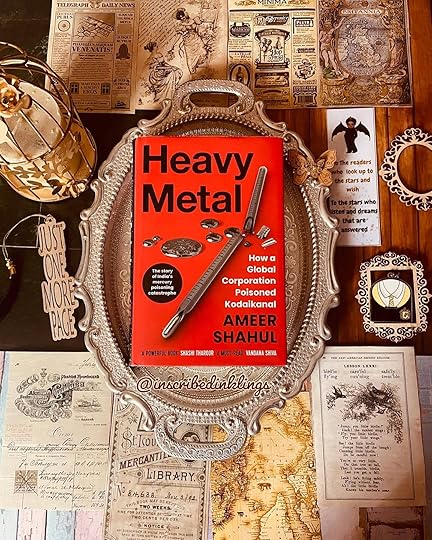
Heavy metal was a detailed history surrounding the events of mercury poisoning in Kodaikanal in 2001 by Hindustan Unilever. Being a Tamilian, this book resonated with me. I had no idea that such a thing had happened and also we all use this brand all the time without knowing the history of it. It gave me an insight what happened with factories and it’s workers earlier.
There were barely any protection or rights for the workers who worked in factories. Although it brought a lot of work opportunities, it also bought pollution and destruction to overall health of the employees. The worst part was the fact that the factory knew their employees were driving due to increased exposure to mercury yet pretended to know nothing. The fight for justice was 20 years in the making and getting a compensation now after hundreds of lives lost seems futile.
The biodiversity in Kodaikanal and the lakes were altered due to the dumping of factory waste. Generations of people were affected due to this negligence. It shocks me how some people are ready to go to any lengths to get rich and this was the case in this story. If you want to learn more about this incident, please read this book.
Rating- ⭐⭐⭐⭐️
- Afreen Khalil
Heavy metal was a detailed history surrounding the events of mercury poisoning in Kodaikanal in 2001 by Hindustan Unilever. Being a Tamilian, this book resonated with me. I had no idea that such a thing had happened and also we all use this brand all the time without knowing the history of it. It gave me an insight what happened with factories and it’s workers earlier.
There were barely any protection or rights for the workers who worked in factories. Although it brought a lot of work opportunities, it also bought pollution and destruction to overall health of the employees. The worst part was the fact that the factory knew their employees were driving due to increased exposure to mercury yet pretended to know nothing. The fight for justice was 20 years in the making and getting a compensation now after hundreds of lives lost seems futile.
The biodiversity in Kodaikanal and the lakes were altered due to the dumping of factory waste. Generations of people were affected due to this negligence. It shocks me how some people are ready to go to any lengths to get rich and this was the case in this story. If you want to learn more about this incident, please read this book.
Rating- ⭐⭐⭐⭐️
- Afreen Khalil

February 25, 2023
• “Growth for the sake of growth is the ideology of the cancer cell”.
• The 399 pages long book speaks a lot about itself as is apparent from the book’s title itself. Further, the underlying theme of the book traces the year 2001 when the HUL-owned Thermometer Company was found to be in brazen violation of environmental standards for waste disposal and the gravity of the situation can be ascertained from the fact that the discharge was 1000 times more than the permissible limit. The book through its chapters traces all the events which took place in a rather investigative and comprehensive fashion. The chapters have been divided in a phased manner and with sheer clarity bring to the surface all the heard and unheard aspects of the whole matter and the professional credentials of the author are a testament to the same.
• The book’s writing style has been kept simple, and easy to understand for the readers. Further, the book at hand remains contemporaneous and stresses making the populace aware of what remains the existing reality of the environmental front. Thus, in light of the above-stated aspects, the book remains to be a must read for anyone willing to go for a thought invoking read and for anyone willing to go for a read which depicts reality.
• The 399 pages long book speaks a lot about itself as is apparent from the book’s title itself. Further, the underlying theme of the book traces the year 2001 when the HUL-owned Thermometer Company was found to be in brazen violation of environmental standards for waste disposal and the gravity of the situation can be ascertained from the fact that the discharge was 1000 times more than the permissible limit. The book through its chapters traces all the events which took place in a rather investigative and comprehensive fashion. The chapters have been divided in a phased manner and with sheer clarity bring to the surface all the heard and unheard aspects of the whole matter and the professional credentials of the author are a testament to the same.
• The book’s writing style has been kept simple, and easy to understand for the readers. Further, the book at hand remains contemporaneous and stresses making the populace aware of what remains the existing reality of the environmental front. Thus, in light of the above-stated aspects, the book remains to be a must read for anyone willing to go for a thought invoking read and for anyone willing to go for a read which depicts reality.

March 31, 2025
Account of mercury poisoning in Kodaikanal by HUL, and the long drawn battle that followed for cleanup.

April 9, 2023
This book is full of knowledge that every Indian should have about Kodaikanal’s thermometer factory which was owned by the top corporate giant Hindustan Unilever. As I have mentioned quite a lot in my Instagram stories and book introductory posts, this book got in a state of perplexity. I feel a bit shame in admitting that I didn’t know about this unfortunate incident. When I requested the publishing house to send me this book for review was totally based on the book blurb and I am glad that they sent this book within a week.
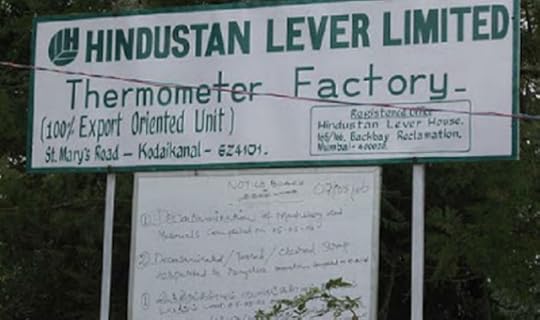
I cannot praise Ameer Shahul enough for his way of writing this book, it is so perspicuous and pertinent in a way that someone who does not know anything about this incident can assess the degree of blunder that a factory made. This book not just tells you about the Kodaikanal mercury case but also put in-depth light on the history of corporations, the products that are being manufactured by the company along with various mergers, and how they came to India. From talking about the people involved in getting us free from the perilous and unfortunate incident to the people who have suffered from it, from telling about the history of uses of Mercury to well elaborating sections of various mishaps that happened because of Mercury around the globe.
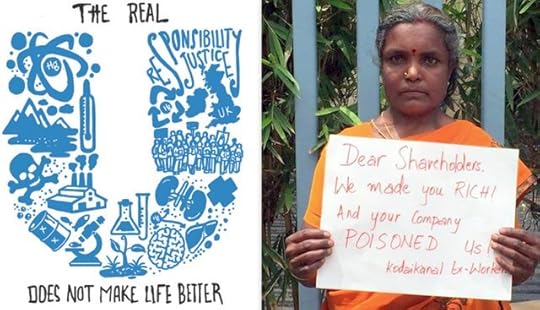
What I most liked about this book is that it is well written in a story-based format that can grip any reader’s attention, I got into the tendency of researching all the things and all the people that the author has mentioned that is why it took me a lot of time to finish it completely. I was so intrigued that I went through a few headlines from the early 2000s too. As a consumer, I do know about the Unilever products that the author talked about but I have never seen them from a business or corporation point of view (like various marketing stunts that they pulled in India). Part 5- A poison named Mercury literally made my heart drenched and I truly laud the way Greenpeace and media house’s workers helped Kodaikanal and India’s environment.
I am just a reader, reading this book from the corner of my bed and getting to know what happened to hundreds of people and the ecosystem of Tamil Nadu when I was just three years old what happened way back before I was born totally got me inundated with emotions and my salute to Ameer Shahul, Mody, Selvi Meenakshi, K. Gopala Krishnan, Raja Mohamed, Mahendra Babu and to everyone involved in this fight and thank you for thinking about environment and people.
It is my request to everyone reading this review to please read this book…!
I cannot praise Ameer Shahul enough for his way of writing this book, it is so perspicuous and pertinent in a way that someone who does not know anything about this incident can assess the degree of blunder that a factory made. This book not just tells you about the Kodaikanal mercury case but also put in-depth light on the history of corporations, the products that are being manufactured by the company along with various mergers, and how they came to India. From talking about the people involved in getting us free from the perilous and unfortunate incident to the people who have suffered from it, from telling about the history of uses of Mercury to well elaborating sections of various mishaps that happened because of Mercury around the globe.
What I most liked about this book is that it is well written in a story-based format that can grip any reader’s attention, I got into the tendency of researching all the things and all the people that the author has mentioned that is why it took me a lot of time to finish it completely. I was so intrigued that I went through a few headlines from the early 2000s too. As a consumer, I do know about the Unilever products that the author talked about but I have never seen them from a business or corporation point of view (like various marketing stunts that they pulled in India). Part 5- A poison named Mercury literally made my heart drenched and I truly laud the way Greenpeace and media house’s workers helped Kodaikanal and India’s environment.
I am just a reader, reading this book from the corner of my bed and getting to know what happened to hundreds of people and the ecosystem of Tamil Nadu when I was just three years old what happened way back before I was born totally got me inundated with emotions and my salute to Ameer Shahul, Mody, Selvi Meenakshi, K. Gopala Krishnan, Raja Mohamed, Mahendra Babu and to everyone involved in this fight and thank you for thinking about environment and people.
It is my request to everyone reading this review to please read this book…!
June 29, 2023
This book deals with how a global FMCG giant’s callous attitude in running the thermometer manufacturing unit poisoned the princess of hill stations, Kodaikanal. Reading the book is like watching a documentary. But be assured, it is not just a simple company-polluted-we-fought-and-won narrative. It is much more wider and deeper than that. Detailing about many instances of industrial pollution like Minamata disease in Japan, love canal in USA, Bhopal gas tragedy in India, it allows the reader to get a holistic understanding of industrial pollution in India and elsewhere.
Its contents are carefully divided into parts where, along with the main narrative, we get to see many related events which led to the mercury poisoning in Kodai. We see the humble beginnings of products like ponds, vaseline, fair & lovely and dove, how the environmental awareness in the west pushed many companies to shift their manufacturing units to developing countries, the double standards of MNCs in safety in the west and India, the evolution of Greenpeace.
The long arms of power & money of the company corrupted & subverted whatever / whoever came in the path. We cannot help but feel the injustice and helplessness of the ex-employees, when they are fighting the 16 year long legal battle against a global corporation. Hence, whenever we encounter someone who stands by the ex-employees in the book like Mody, Greenpeace India, counsel Vaigai and others, we take a deep breath of relief. Ironically, it was not fairness in the courtroom that settled the dispute in 2016, but a nudge from Polman, the then CEO of HUL, after the Kodai mercury issue came into limelight, when he was nominated for the Champions of Earth Award by the UN.
Can someone or something powerful cause damage to the people and environment and get away with it? This question kept haunting me even after completing the book. The ex-employees got a settlement, the mercury levels in the factory site remediated, but did we account for all the damage that has been done by mercury in Kodai? How do we trace all the mercury laden glass waste which was disposed off in various local scrapyards for 18 years? What about the loss done to the pristine pambar sholas and its voiceless flora and fauna? Lack of scientific evidence remains a major impediment to bring justice to the Shola environment and wildlife.
Like how any element with half life cannot fully disappear, the mercury toxicity in Kodai can never be totally accounted for / cleaned up. The mercury will remain in the land, water, air of Kodai & Sholas and in the bodies and souls of its people & wildlife. Along with it lives a hope for a clean planet, greener tomorrow and braver rainbow warriors.
P.S – North American Cree Indian prophecy: “When the world is sick and dying, the people will rise up like Warriors of the Rainbow…”
Its contents are carefully divided into parts where, along with the main narrative, we get to see many related events which led to the mercury poisoning in Kodai. We see the humble beginnings of products like ponds, vaseline, fair & lovely and dove, how the environmental awareness in the west pushed many companies to shift their manufacturing units to developing countries, the double standards of MNCs in safety in the west and India, the evolution of Greenpeace.
The long arms of power & money of the company corrupted & subverted whatever / whoever came in the path. We cannot help but feel the injustice and helplessness of the ex-employees, when they are fighting the 16 year long legal battle against a global corporation. Hence, whenever we encounter someone who stands by the ex-employees in the book like Mody, Greenpeace India, counsel Vaigai and others, we take a deep breath of relief. Ironically, it was not fairness in the courtroom that settled the dispute in 2016, but a nudge from Polman, the then CEO of HUL, after the Kodai mercury issue came into limelight, when he was nominated for the Champions of Earth Award by the UN.
Can someone or something powerful cause damage to the people and environment and get away with it? This question kept haunting me even after completing the book. The ex-employees got a settlement, the mercury levels in the factory site remediated, but did we account for all the damage that has been done by mercury in Kodai? How do we trace all the mercury laden glass waste which was disposed off in various local scrapyards for 18 years? What about the loss done to the pristine pambar sholas and its voiceless flora and fauna? Lack of scientific evidence remains a major impediment to bring justice to the Shola environment and wildlife.
Like how any element with half life cannot fully disappear, the mercury toxicity in Kodai can never be totally accounted for / cleaned up. The mercury will remain in the land, water, air of Kodai & Sholas and in the bodies and souls of its people & wildlife. Along with it lives a hope for a clean planet, greener tomorrow and braver rainbow warriors.
P.S – North American Cree Indian prophecy: “When the world is sick and dying, the people will rise up like Warriors of the Rainbow…”
April 17, 2023
Heavy Metal: How a Global Corporation Poisoned Kodaikanal by Ameer Shahul
.
When a multi-billion-dollar company comes to invest in your country by setting up factories and workstations, it brings numerous opportunities for people with jobs, salaries, and accommodation.
It not just helps the Government, State, or Consumer to develop and thrive but also the people residing in that very place. So, overall it's a glorious way to grow by supporting each other.
However, if one day you come to know that the company or institution that is providing you employment to feed your family is nothing but a big deception to destroy the environment and your family, what will you do?
"Heavy Metal: How a Global Corporation Poisoned Kodaikanal" is a well-documented, well-written, and astonishingly narrated book that sheds light on the corporate malpractices of a multinational company that poisoned the town of Kodaikanal in India with toxic waste.
The author precisely details the events leading up to the disaster and the aftermath, including the health impacts on the local population, the corporate cover-up, and the grassroots campaign by activists to seek justice.
One of the most thoughtful things about the writing style of the author is that he presents us with the history of Chesebrough-Pond's Inc, Unilever Plc, Hindustan Lever Limited (HLL), Hindustan Unilever Limited (HUL), and how the thermometer factory ended up setting in Kodaikanal.
While reading the sections where the author has mentioned the victims you will get to know how mercury was a slow poison that was projected to the workers in the name of laboring in the manufacturing units for years. And dumping the mercury waste made the situation even worse.
Frankly speaking, before reading this book I never knew about this factory or the environmental devastation that was caused by the HUL Thermometer Factory. So, for me, it's a must-read for everyone and I can vouch for the fact that you will enjoy reading it. It's wonderfully written.
In the end, I would like to thank and salute Ameer Shahul, Mody, Selvi Meenakshi, K. Gopala Krishnan, Raja Mohamed, Mahendra Babu, and everyone involved in this fight against the man-made catastrophe.
.
When a multi-billion-dollar company comes to invest in your country by setting up factories and workstations, it brings numerous opportunities for people with jobs, salaries, and accommodation.
It not just helps the Government, State, or Consumer to develop and thrive but also the people residing in that very place. So, overall it's a glorious way to grow by supporting each other.
However, if one day you come to know that the company or institution that is providing you employment to feed your family is nothing but a big deception to destroy the environment and your family, what will you do?
"Heavy Metal: How a Global Corporation Poisoned Kodaikanal" is a well-documented, well-written, and astonishingly narrated book that sheds light on the corporate malpractices of a multinational company that poisoned the town of Kodaikanal in India with toxic waste.
The author precisely details the events leading up to the disaster and the aftermath, including the health impacts on the local population, the corporate cover-up, and the grassroots campaign by activists to seek justice.
One of the most thoughtful things about the writing style of the author is that he presents us with the history of Chesebrough-Pond's Inc, Unilever Plc, Hindustan Lever Limited (HLL), Hindustan Unilever Limited (HUL), and how the thermometer factory ended up setting in Kodaikanal.
While reading the sections where the author has mentioned the victims you will get to know how mercury was a slow poison that was projected to the workers in the name of laboring in the manufacturing units for years. And dumping the mercury waste made the situation even worse.
Frankly speaking, before reading this book I never knew about this factory or the environmental devastation that was caused by the HUL Thermometer Factory. So, for me, it's a must-read for everyone and I can vouch for the fact that you will enjoy reading it. It's wonderfully written.
In the end, I would like to thank and salute Ameer Shahul, Mody, Selvi Meenakshi, K. Gopala Krishnan, Raja Mohamed, Mahendra Babu, and everyone involved in this fight against the man-made catastrophe.
March 15, 2023
"Heavy Metal: How a Global Corporation Poisoned Kodaikanal" by Ameer Shahul is a well-researched and eye-opening exposé on the environmental pollution caused by the Hindustan Unilever thermometer factory in Kodaikanal, India. The author masterfully weaves together the stories of the factory workers, the local community, and the corporate greed that led to the poisoning of the land and people of Kodaikanal. Shahul's writing is engaging and poignant, leaving the reader with a deep understanding of the devastating effects of corporate negligence on human lives and the environment. This book is a must-read for anyone interested in environmental justice and the intersection of corporate power and public health.

October 26, 2023
An important book describing how big corporates have been irresponsibly polluting the environment and almost always shunning away from the responsibility of cleaning up of the shit they have left behind. Ameer Shahul mainly focuses on the Kodaikanal-HLL issue but also covers similar corporate atrocities from history.

October 5, 2025
Fact file
July 21, 2025
A poignant story of perpetual pollutioning of Western Ghats' timeless beauty Kodaikanal with one of the most hazardous chemicals humankind has ever seen, Mercury. Written in nothing lesser than a thriller kind of style.
The book unravels the unheard story of pain and agony of common people and other forms of lives of Kodai by laying bare how helpless the environment and the common people are, yet gives hope that anything unjust can be fought against.
Altogether its a gripping ride that takes you from the tranquil ponds of Kodai to the roaring rivers of America, into tense courtrooms, all while the forlorn call of the Nilgiri Pipit echoes in the background, and a thousand heavy thoughts that rise and stir.
The book unravels the unheard story of pain and agony of common people and other forms of lives of Kodai by laying bare how helpless the environment and the common people are, yet gives hope that anything unjust can be fought against.
Altogether its a gripping ride that takes you from the tranquil ponds of Kodai to the roaring rivers of America, into tense courtrooms, all while the forlorn call of the Nilgiri Pipit echoes in the background, and a thousand heavy thoughts that rise and stir.
Displaying 1 - 11 of 11 reviews