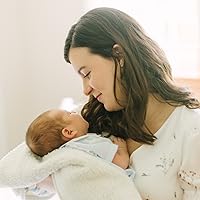
"The object of this book is practical utility, not literary effect. It is written for mothers in the common walks of life. There are many mothers, in every village of our land, who are looking eagerly for information respecting the government of their children. It is hoped that the following treatise may render them some assistance." from the Author's Preface
John Stevens Cabot Abbott (Andover Theological Seminary; Bowdoin College, 1825) was a historian, Congregationalist pastor, and pedagogical writer. With his brothers, including Gorham and Jacob Abbott, he was a co-founder of Abbott Collegiate Institute for Young Ladies in New York City.
Super convicting little book! A completely honest and concise take on our duty as mothers.
I think he sees things pretty simply (maybe too simply?) in implying that if you just discipline and teach your children the right virtues they will surely become Christians and good citizens. I also don’t agree with his “because I was a good boy on Sunday I found my lost ball on Monday” story. Ehhh. Maybe. There are other things I didn’t quite agree with but I won’t go on about it.
But really, it was one of the best books on mothering I’ve read. Whew! I’ve got work to do!!
A powerful and convicting book that shows how weighty the mother’s role is in a child’s life!
There were moments I struggled with as he often puts forth the absolute worst case scenario (your child growing up to be a lawless scourge on society who burns your house down and dies a drunkard), but there was so much good in this book, and I would recommend it to anyone.
“O mothers! Reflect upon the power your Maker has placed in your hands! There is no earthly influence to be compared with yours. There is no combination of causes so powerful in promoting the happiness or the misery of our race, as the instructions of home. In a most peculiar sense God has constituted you the guardians and the controllers of the human family.”
This is a very weighty parenting book. Instead of more “discipline” helps and techniques, the author placed the core of the message on the mother’s personal godliness, discipline and self-control as the greatest tools for raising children.
“It is a beautiful arrangement of Providence that requires that the great work of the formation of the character of children should be done in the heart of the parent herself…so I am to curb the impetuous passions of my child, mainly by gaining the victory over myself, and bringing all my own passions under perfect control.”
This book should sit next to the stove and be read often. It’s easy to pick up and glean insights from just a page while you’re stirring a pot of food. It’s from 1873, and the wisdom then is still wisdom now. While the examples don’t always fit in to a 2026 world or how we’d talk today, the sentiment is still incredible. It’s really helpful and pointed reminders on my role and the impact of my every day life. All too often it’s easy to assume the big things make the difference… but it’s proven over and over and over again that it’s the small, daily patterns that shape us and our families. I will reread this book often as long as I live.
What would you expect from a parenting book penned by a pastor born 200 years ago? If I hadn't read a rave review from someone who included a disclaimer that some of the discipline techniques touted in the preface would have put her off I too would have shut the book and gone no further. However, I found it to be filled with good principles and solid suggestions.
Today's reader will have to do some mental editing to adjust the author's recommendations to what is now known about child development. The author directs his remarks to those who are of a Judeo-Christian persuasion. I found many of his points to be instructive even now. All my children are raised, making the reading of this book a reflective examination of my own motherhood journey.
The writer proceeds with bullet points and then fleshes them out with chatty examples so his meaning does not escape the reader. Looking at the bullets alone strips the work down to the bone, thus losing the charm of the work. I make the following notes to jog my memory and to pair with the quotes I have collected from the book.
I. Obedience is absolutely essential to proper family government (p.18)
II. How is this habit of obedience to be established? (p.22) 1. Never give a command which you do not intend shall be obeyed.(p22) 2. Never punish when the child has not intentionally done wrong.(p49) 3. Never think that your child is too young to obey.(p55) 4. Guard against too much severity.(p.57)
Chapter IV - The Mother's Difficulties 1. One great obstacle is the want of self-control on the part of parents.(p61) 2. Another great obstacle in the way is the want of resolution.(p64) 3. Another great obstacle in the way of training up a happy and virtuous family is the occasional want of harmony between parents on the subject of education.(p75)
Chapter V - Faults and Errors 1. Do not talk about children in their presence.(p83) 2. Do not make exhibitions of your children's attainments.(p88) 3. Do not deceive children.(p97) 4. Do not be continually finding fault.(p100) 5. Never punish by exciting imaginary fears.(p107)
Chapter VI - Religious Instruction 1. Children must be taught religious truth at home.(p113) 2. Parents must have deep devotional feelings themselves.(p115) 3. Present religion in a cheerful aspect.(p119) 4. Improve appropriate occasions.(p121) 5. Avoid inappropriate occasions.(p133)
Chapter VII - Religious Instruction -cont.- 1. It is our privilege and our duty to describe heaven to our children as God has described it to us.(p138) 2. Dwell particularly upon the Saviour.(p142) 3. Pray with your children.(p146) 4. Teach your children to pray themselves.(p151) 5. Expect that your child will become a Christian.(p155) 6. Do not speak to others of the piety of your child.(p158)
Chapter VIII - Results 1. Mothers have as powerful an influence over the welfare of future generations as all other causes combined.(p165) 2. There is certainly much that fathers can do, but this treatise is prepared to impress upon the mind the duties of mothers.(p167) 3. Nothing can be of greater importance to the parents and child than a correct system of family government.(p171) 4. Keeping a journal of observations about your child will help the mother determine a course of action.(p173) a. The habit of keeping such a record indces a mother to look with greater scrutiny into her own motives of action, into her principles of family government, and to govern her own heart and conduct, and cultivate more of a spirit which every mother needs,--a spirit of prayer.(p177) b. The plan I would suggest might be something like the following. 1. Notice the earliest developements of temper. 2. Remark what things peculiarly interest your child. 3. Describe the course pursued to insure obedience. 4. Describe the course of first religious instruction and what generally excites the strongest interest in your child's mind.
There's a lot to love about this little 1834 parenting book. It's a completely no-nonsense approach to parenting that advocates high expectations and concepts like first-time obedience. It stresses the life-long (or, potentially eternal) consequences of failing to teach children self-control, repentance, and gratitude, empowering the mother to really shape the kind of adults her children become.
In some ways the approach is diametrically opposed to grace-based parenting; the whole idea is pretty much to show zero tolerance for disobedience, disrespect, or dishonesty, and to use both physical punishment and removal of privileges to achieve that goal. But in other ways, he's really saying a very similar thing: the responsibility of a Christian mother is not simply to manipulate and control her children's behavior, but to raise Christ-centered adults. You teach your children grace by first exposing their need for it. In order to accomplish this, the mother herself must be self-controlled, patient, selfless, and reliant on God. God is shaping us even as we are shaping our children. The beginning of the book might strike someone as harsh, but I think Abbott does a good job of rounding the harshness out with the diligence to show unwavering love and care by the end.
There were a few weird parts. Some of the anecdotes were a little hard to accept, or perhaps just entirely irrelevant to present day. Does anyone believe that poor child actually died of FEAR when the maid hung a scary mask above his crib? Not that the whole concept of using fear as punishment doesn't horrify me. It's sad that he even had to address the heartless mothers who stuck their kids in dark closets all day to scare them into obedience!
You won't agree with everything in this book, but isn't that the case with all parenting material? And isn't that kind of the point he ends on? You read an assortment of things, take in a variety of advice, mull it over, process it, try it out, and discover what actually works for you and your family. There are plenty of great tid-bits in The Mother at Home that make it worth reading even 200 years after its first publication.
Re-read this one and much of it really beautiful; encouraging, practical and quite a few pages I wanted to just mark to read again later- at the same time, this isn’t a book I would recommend freely? Yet I found myself wanting to read it a second time so here we are!
I would say read with discernment -I have mixed feelings about this book. Some parts I was raising an eyebrow. 🤨
This book had several areas that genuinely challenged me and encouraged growth in my mothering. (More so in tandem with the discussion on each chapter with Amy that really helped me see the areas for implementation and her sweet encouragement) There were moments of strong conviction that helped me reflect more deeply on the responsibility and influence of motherhood, and for that, I’m grateful.
At the same time, some of the examples felt quite severe, and at times the tone seemed to suggest that if we fail even slightly, all is lost, or conversely, that if we do everything right, all will turn out well. While I understand the author’s intent to emphasize the weight and importance of a mother’s role, this can come across as overly heavy or discouraging.
Because of that, I would be cautious in recommending this book to a new believer or a young mother. It may be more beneficial for someone who already has a grounded understanding of grace and is able to read it with discernment
Some "outdated" advice (but not really because it's just different language than we'd tend to use today), but chalk-full of solid principles and hard truths for mothers on discipline and cultivating their children's loves, spurring them on to be christian adults they can be proud of.
Like a breath of fresh air, this book comes down hard on the side of the need for strict parental discipline. It is not concerned about having friendships with small children, but about disciplining them to equip them for life. Even as an Auntie, I found it convicted my attitude, while pointing out ways discipline is no longer encouraged. I was also convicted about not praying enough for mothers. It is a heavy responsibility you bear with long term ramifications for you and your children if you're lazy about it. It's also a responsibility that demands constant vigilance.
Two, caveats to what is said in this book. First, don't read it without the gospel or you will despair. The author doesn't pull any punches about children dying, weak mothers, and the road you can send your children down if you are lazy. You could easily be overwhelmed. Remember grace and the gospel. Second, doing everything right is not a guarantee your child will be all they should be or that they will be saved. Yes, the Lord uses wise and good mothers regularly to save children and to shower the world with common grace, but it's not promised. All mothers must take their work seriously and trust it to the Lord. This isn't a magical formula to earn you your children's salvation.
Other than those two things, I think this book could help set at right the total lack of discipline found in our child rearing today. Even if you don't agree with everything, it will convict you and challenge you.
Such a fantastic book calling moms to realize the weight of their actions and the incredible influence they have on their children. The author did essentially guarantee that if you’re a faithful, godly mother your children will be saved - which I disagree with. However, the admonition to be faithful and consider the long-term and even eternal influence you can have on your children is a priceless piece of wisdom. I am greatly challenged from this read and I’m sure will return to it many times in parenting.
Sometimes you just need a kick in the pants from 1833. This is the second time I've read this book, and it is still one my favorites about raising children. The language isn't hard to get through, though I admit I had to look up what an "andiron" was and why children would be so tempted to mess with them, much to a 1833 mother's dismay. Sobering, encouraging, and instructive. Thankful I finally own a copy.
Maybe the best book I read all year. Definitely the best on Christian parenting I’ve ever read, period. I could have underlined the entire book and nearly did. I do not typically partake in marginalia, but alas, could not help myself. Personal notes abound in my copy.
This is FAR from exhaustive. But here are some of my favorite quotes from the book (that is, the ones that aren’t too lengthy to share in a review):
“If from false feeling, you shrink from this duty, you are recreant to the sacred trust which God has committed to your care…..If there be any cruelty in the world which is truly frightful, it is the cruelty of a falsely indulgent and unfaithful parent.”
“Train up your children to be virtuous and fearless. Moral courage is one of the surest safeguards of virtue.”
“It is our privilege and our duty, therefore, to describe heaven to our children, as God has described it to us.” “What is the ocean but a drop sprinkled from the almighty hand? What is Niagara, to us so magnificent, but a tiny rivulet rippling over its pebbly channel?”
“Words are air. They fall upon the ear, and are forgotten. But who ever forgets abiding, consistent, unvarying example? What child ever ceases to remember the life, the daily life, of its father and mother?……Gain the victory yourself, and your child will gather strength from your success to struggle with her own temptations and sins.”
“The best evidence of piety which anyone can give, is the evidence afforded by the devout Christian fidelity with which he performs all the duties of life, both great and small.”
En lo personal, es sin duda, un libro que debe estar en nuestra estantería. Hace referencia de el papel tan importante que tiene mamá en la crianza de los hijos y de la marca que dejan sus enseñanzas,amonestaciones pero sobre todo, oraciones. Léelo!
Parts of this book are quite excellent and make a compelling case for our responsibility and influence as mothers. Requires discernment in parts because it can be quite outdated and heavy-handed. Overall a worthwhile read.
What a great and convicting parenting book! It’s hard to imagine it was written in the 1800s but still feels (mostly) relevant for today. Definitely recommend! I listened to the audio version on YouTube by Scroll Reader.
Best practical parenting book I've ever read. Convicting and edifying. It embodies the verse, "do not grow weary in doing good, for you will reap a harvest if you do not give up".
This may be the BEST parenting book I've ever read. it shows how far we have immersed our Christian walk with the culture of today. The chapters on pietyI could read over and over!
Wow! What rich and relevant parenting advice from 1833. I could never have imagined that a book written 150 years ago would have such relevant advice for mothers. “The Mother at Home” is full of godly wisdom.
This book deals with getting your child to obey at the first command. It is heavily religious as it was a tract written in 1833, so it deals with why you want to discipline your child and that why is heavily steeped in Christianity--however I found it to be wonderful religious content because it was deep and not fluff. If you are not a Christian family this probably would not help you because its advice is not necessarily common sense (I'd suggest Rosemond's The Well-Disciplined Child for similar obedience training without the heavy Christian influence) but deals specifically on why you want your child to learn obedience because the child's adulthood is formed generally from the early childhood behavior, the easier it is to teach them about values and religion if they are mindful, how your inability/ability to parent affects you and your child in the afterlife, how overdoing the self-esteem thing (puffing up their vanity) isn't good, etc. I don't think I disagreed with much. The more permissive parenting/modern parenting advice doesn't match this. Spanking is advocated so if you're totally against that you may not like it, but there is other advice that could be applicable without it. I've read some knee-jerk reaction reviews to this that claimed this was abuse but if you read it, this author is not advocating abuse at all in fact he insists that you should not punish unless you have your head about you and shows that parents should be reluctant to spank unless it is necessary.
I started using these disciplinary measures with my 6 year old immediately, and immediately I saw results, she's misbehaving less and is much more loving toward me and the talks we've had have seemed to make her much more in tune with what obedience is so she can be so more often. Her world has become orderly and she can know better what to expect at all times which gives her some power over her actions, and it has also given me a clearer vision of how I want to deal with discipline and why and I'm much calmer during "battles". Not that we're suddenly perfect or anything.
I'd always held that the wildly undisciplined children I see all around me now wouldn't have happened way back when, but a lot of the author's personal observations of unruly children sounded a lot like the ones I've seen nowadays and my "good old days" nostalgia was dashed.
The 2.99 kindle edition I bought had a lot of computer read font errors. Most of the time I could figure out what it says although there were a few errors that were undecipherable. The vocabulary is large and a bit archaic (as in "licentious profligate" being my favorite phrase I must use now :) so sometimes I'd read over it thinking it was a word I didn't know but then realized that one of the letters had been misread by the computer software) For a book I spent money on I'm was a bit disappointed that the seller didn't look through the book and at least change the words that had numbers actually misinterpreted in it!