In the aftermath of revolution, King Kalak of Tyr is dead and all eyes fall on the lucrative iron mines of his once mighty city-state. Merchant houses scramble to seize what scraps they can while King Hamanu of Urik, the Lion of the Desert, rallies his armies to crush the Tyr rebellion underfoot. He cannot allow this insurrection to succeed and intends to seize the city’s precious resources for himself. The hope of the Tyr revolution seems destined to fail as the tyrannical specter of Hamanu’s war machine looms large on the horizon.
But fate chooses the most unlikely heroes. Loren, a gladiator pressed into service by a corrupt merchant prince; the ambitious Alaeda Stel who hopes to secure her family’s future by exploiting Tyr’s sudden weakness; a street thief named Melech; and Korvak the disgraced templar are Tyr’s best and only hope. The promise of freedom rests on their ability to overcome the greed and lust for power that threatens to undermine the principles of Tyr’s revolution.
Robert J. Schwalb, a writer and award-winning game designer best known for his work on Dungeons & Dragons, got his start in 2002 and has never looked back. He has designed or developed almost two hundred gaming books in both print and digital formats for Wizards of the Coast, Green Ronin Publishing, Black Industries, Fantasy Flight Games, and several other companies. Some of his best-known books include the Dark Sun Campaign Setting, Player’s Handbook 3, A Song of Ice and Fire Roleplaying, Grimm, and Tome of Corruption. Look for Robert’s first novel in late 2011.
What does Rob have to say?
Fresh from my second go at college, all flushed and giddy for having graduated Magna cum Laude with special honors, I was ready to start writing fiction for a living. Reality didn’t waste any time intruding on my grandiose dream. The need for a steady job—beyond peddling liquor at the now closed Esquire Discount Liquors—became evident when the student loans clamored for repayment. Carpet, tile, and hardwood sales would be my future for a time. A friend ran a store in town and offered me a job. My previous careers had been selling men’s clothes, fast food, and then extended warranties. Flooring was none of these things so I jumped at the chance.
I was terrible. I shouldn’t have been surprised. I had a degree in English and Philosophy. Flooring customers don’t quite get pre-Socratics humor. I stuck it out though and supplemented my income by selling liquor a few days a week. I got to chat up the regulars at the liquor store who happened by for their thrice-daily pints of Kessler/Skol/Wild Irish Rose. It seemed my fate was to join many other Philosophy majors and do nothing with my training.
However, one night, I ran across Mongoose Publishing’s open call for book proposals. I thought about it for all of 3 seconds before working up my first pitch. A little under a year later, my first book, The Quintessential Witch, hit the shelves. When I wrote the Witch, 3rd edition rules for Dungeons & Dragons were still new and fresh. The d20 system was gathering steam and gaming entered something of a renaissance as companies were created just to feed the insatiable appetite for all things D&D. There were probably more companies than there were writers and thus it proved a perfect time to break into the industry.
Now I was no stranger to gaming. My Dad introduced me to board games when I was very young with Wizard’s Quest by Avalon Hill. Then I discovered Conan, Dune, Gor, the Lord of the Rings, Narnia, and so on. My interest in fantasy kept growing so when my neighbor offered me Tracy and Laura Hickman’s Rahasia for a quarter, I happily paid. That little adventure changed my world forever. I didn’t have the rules and had no idea what I was doing. I was hungry and figured out enough from the adventure to design my first roleplaying game. “Passages” became popular in my class for a week or two. We’d play during study hall or recess.
My Dad noticed and when he went off to a publishing convention (he worked for a famous Bible publisher in Nashville), he talked with a TSR rep, who I imagine might have been Gary Gygax. My father told him that I was designing my own games, so the TSR fellow, in a deft and generous move, gave him a stack of books and adventures. I had everything but the rules of the game. Luckily, a trip to the bookstore and meeting my soon-to-be Dungeon Master Landon, put the Red Box in my hands and my first character in my imagination. Creating the character was far less interesting than talking about comics, yet when we broke out the dice the next week and played the first game, I was hooked for life.
This all happened at a time when conspiracy theories about Satanism gripped the nation. Certain members of my family bought into the hype and thought my soul was in peril. So I stepped into a much wider world of RPGs. I played everything I could. Top Secret, DC Superheroes, Gamma World,
For a barely-over 300 pages novel this Schwalb fellow sure did his best to pack in A LOT.
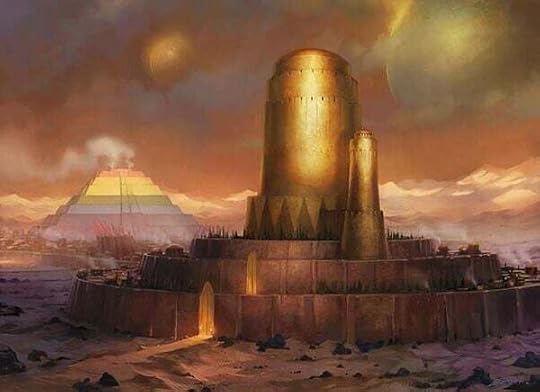
View of the most noteworthy landmarks of the City-State of Tyr.
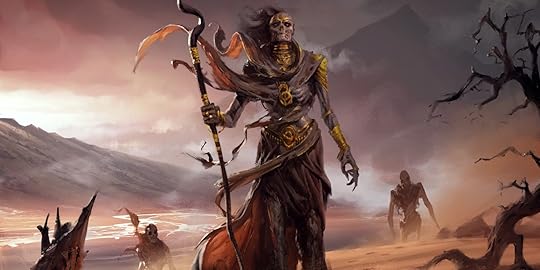
I really enjoyed returning to the familiar setting of Tyr at the time of the invasion by Urik with an entirely new band of disparate characters, but unfortunately they were just too damn disparate. This kind of loosely connected storytelling works well in the hands of a master like Quentin Tarantino in a 2-hour film but becomes frustrating in an over-stuffed story like this. And how, exactly, did it tie in to this Abyssal Plague business? Is it because the Big Bad was a nasty-ass necromancer?
The author was always sure to let the reader know how much the decomposing minions stank up the desert. Grody.
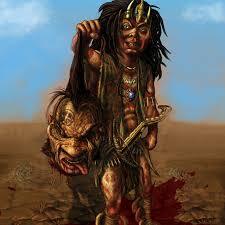
There were some good points, I suppose- I enjoyed some of the Heavy Metal battle sequences and some of the characters, like the fallen Templar Korvak or the antagonist Vordon, were interesting but too many were mere audience stand-ins or cyphers. Also, some sequences veered a little close to torture porn territory for my liking (looking in your direction, cannibal halfling henchman).
I am a big Schwalb fan when it comes to tabletop gaming, specifically his Shadow of the Demon Lord system which is one of the best TTRPGs ever made. Naturally, when finding out he wrote a novel for one of the only pre-made settings from DnD that I like, I had to give it a try.
The Dark Sun setting is captured very well, but in the end there is a lot of build up for a very rushed and somewhat baffling conclusion.
Death Mark is the third stand-alone novel in the recent relaunch of the Dark Sun series of novels based on the Dungeons and Dragons universe of Dark Sun. This is Robert J. Schwalb's first novel, but he has written many adventures, source-books, and rule sets for various d20 role-playing systems. Death Mark was released December 2011 and was published by Wizards of the Coast LLC.
Tyr has fallen in revolution and a new Sorcerer-King has claimed Tyr's throne. After freeing the city's slaves and closing Tyr's iron mines, the city of Tyr is far from recovering from the death of King Kalak. The city's merchant houses fight for anything that is left as a rival city marches to take over the reeling city. However, that's not the only problem that Tyr has to deal with. House Vordon is looking to take the city under its control, and placing Thaxos Vordon as the new leader. But at the same time, another merchant house is on the move to take the city. Being forced into servitude after becoming a free man, the former gladiator Loren leads House Shom towards Tyr under the watchful and mysterious Temmnya. Another merchant house, House Stel, wants to gain a foothold on Tyr or more importantly, its iron mines. Alaeda Stel journeys towards Tyr where she awaits her assignment, but something just doesn't feel right. The disgraced templar Korvack looks to get back into King Tithian's good graces by trying to uncover any plots against the new Sorcerer-Kings new throne and enlists the aid of Melech, a thief with connections. Tyr's future looks bleak.
Criticisms: 1) Ending. The build up of Death Mark's fantastic story is almost ruined by the rushed and hurried ending. That said, the ending isn't all that bad. It still does attempt to tie up the loose ends and bring the story to a satisfying conclusion, however it felt underwhelming and rushed. Things happen to mostly get the book to the three hundred page length. Truth be told, Death Mark feels like it should have had a sequel with everything that was going on feel like it was better concluded, along with helping to make the ending feel a bit more satisfying.
Praises: 1) Story. Death Mark is a complex, multiple plot-line story done right. There are five main plot-lines, with many little minor plot points, in Death Mark. Most novels with multiple story-lines, four or more, tend to lie on the rushed, clustered side of the road. There's too much going on without a moment of respite or reason for why. In Death Mark everything that happens really does happen for a reason. You can see the progression of how a situation got to where it is currently. Another problem with most multiple story-lined novels is that the multiple plots seem to be either loosely connected or forced into one another. With Death Mark the stories really did come together in a nice and fitting way. This just helped in making Death Mark all the more enjoyable and interesting. 2) Characters. Where Death Mark also shines is with its characters. The main characters and the minor ones both came off as extremely developed and interesting. No character felt wasted or misused. Everyone had role and they either met it or exceeded that role's expectations. While the minor characters were good, Death Mark's main cast is fantastic. Diverse, deep, and interesting really do help in summing them up. From the recently freed gladiator to the imprisoned and disgraced templar, each social status is represented and really gives the reader an excellent look into what makes Athas tick. The characters themselves are fleshed out and really do go through some great development as the story progresses. These characters do make reading through Death Mark an extremely enjoyable experience. 3) Dark Sun. After the recent relaunch of the Dark Sun novel line, this is the first book that really gave the world and setting some depth and understanding. Personally, I have no experience of the world outside of the two newer released novels and what little information I gathered from a quick search, but the world seemed a lot more explained and defined in Death Mark than it did in the previous two novels. Honestly, without the great use of background I would still think very little of Dark Sun and would still be wondering what exactly the world is. Great descriptions, explanations, and great usage of exposition really makes Dark Sun seem like a totally different and new setting that makes you yearn to learn more if you have little knowledge of the universe. All this can point back to how well Death Mark built up the surrounding world.
Side Notes: 1) Tyr. After reading Death Mark, I have this sudden interest in learning more about the city where the story takes place in. Why, exactly, was the former Sorcerer-King overthrown and how different was the city before? 2) Pakka. Out of all the great characters and their own personal arcs, Pakka's seemed the most interesting and heartbreaking. It's not much for me to warrant a whole praise section for this character out of the other great ones alongside her, but it is worth mentioning that her character was in my opinion the best of the bunch. 3) Cover Art. Death Mark has a very standard fantasy novel cover, but honestly, I just don't care for it. The colors are drab and boring and there is nothing there to make it "pop". It has the standard brown color scheme that seemed to have become popular in the past few years and that, while fitting, just doesn't seem to work. The character on the front, who is possibly Temmnya, kind of looks unappealing. She's just there in skimpy, impractical clothing doing nothing. She isn't tantalizing, but just boring. Other than that, there isn't much else to this drab, bland cover.
Overall: 5/5 Final Thoughts: Even with the rushed ending, Death Mark really sparked my interest in the otherwise flat world of the recent Dark Sun novels. With its great cast, interesting story-lines, and an informative, yet entertaining look at the world of Athas, Death Mark was a great read. Aside from the rushed ending, which I still believe would have worked better if this was a multi-part series, there is little that really holds Death Mark back. The story is wonderfully complex and understandable, along with showcasing a lot of depth and intrigue of the world. The characters are just great and you'll soon find one that you will attach yourself to. There is not much more to say about Death Mark other than go pick it up. If you were on the fence or even remotely interested in the world of Dark Sun, I would say this is an excellent place to start.
An enjoyable book, and a vast improvement over City Under the Sand. The action scenes were well written, though the plot seemed unnecessarily convoluted at times, especially at the start. Halfway through, though, I was pulled in and finished the book in one sitting. While I don't believe it stands up to the Prism Pentad (though what could, honestly?), I definitely see a positive upswing in the new Dark Sun novels starting here.
I love the Dark Sun world. This was a good book, but no real suprises anywhere. I found the ending confusing at times though jumping from one character to another but I understand because there were so many and alot of action to cover.
Not bad. Engaging and well written. I found the character description to be sparse and the pacing was a bit off till half way through the book. I'd recommend it to a fan of the Dark Sun game world but to no one else.
Pues ni tan mal. Creo que es la primera novela de Dark Sun, fuera del Pentaprisma, en la que se nota que el autor controla la ambientación y tiene ganas de contar una historia ahí. No me gusta especialmente el estilo de Schwalb, es diseñador de juego de rol (incluido el material de DS de 4e), no escritor... y se nota. Hay partes que duelen de leer, pero en general, las ganas que le pone el hombre a la descripción del ambiente y los escenarios compensan de largo. Una pena que esa ambientación sea la de la versión de 4e de Dark Sun, pero no se podía pedir todo.
La trama en sí no me ha volado la peluca, pero tiene su aquel y el autor hasta se ocupa de encajarla entre los eventos de la primera y segunda novela del Pentaprisma y eso se agradece.
Junto con el Pentaprisma (al que le puedo poner algunos peros) y la trilogía de Lynn Abbey de "Athas Chronicles", de lo mejor que se ha novelizado para Dark Sun.
The final (as of writing, 2024) Dark Sun novel, and it's the best of the bunch, in my opinion. It truly captures the brutal, unforgiving setting, not shying away from violence and its consequences, or from the harsh consequences of actions. Characters from the Prism Pentad are weaved in where necessary (this book takes place between the pages of 'The Crimson Legion') but they never overshadow events.
Disparate characters get caught up and linked by a sinister plot, and not all of them will make it through; anyone could die at any time, and it feels like it.
My only complaint is that the ending itself is very overblown, far too grandiose for what went before.
This was an engaging read and was surprisingly sophisticated for a Dark Sun novel. It had everything from trade wars, politics, violence and gore, crime syndicates, necromancy, vengeful spirits, and a cannibal halfling. In a way the novel was a victim of its success, as it provided so many characters with their own unique goals that by the time of the climax at the end of the novel there wasn't enough space to tie them all up in a satisfying way.
It's been awhile since I've read the first Dark Sun novels from the early 90s, but if memory serves this novel takes place immediately after the events in the Prism Pentad despite being written decades later.
This was a physically tough book to read. The sentence structure lacked flow and more significantly the font was very small, making it a tiring read.
The story was almost 2 different stories. The first 2/3 of the book was a nicely tangled story about merchant wars and was very interesting and captivating. The last 1/3 of the story was almost like the author got tired and asked how can I end this fast. The answer of course is ZOMBIES controlled by a young enchantress that needs to be more powerful than the sorcerer-kings in order to control the army of undead that she creates. The characters lacked believability, one being so far as to lose an eye and his manhood and continue on as if nothing had occurred because he could survive without them. Overall a lot of huge problems with the writing.