

What do you think?

人魚シリーズ [Ningyo Series] #2
Mermaid Saga, vol. 2
Yûta consiguió la inmortalidad el día que comió carne de sirena, y ahora lleva ya 500 años viviendo. Deambula de un lado para otro con Mana, una jovencita con quien se cruzó en su viaje y que, al igual que él, obtuvo la vida eterna sin pretenderlo. En este tomo, el encuentro entre Yûta y otro inmortal desencadena una nueva tragedia...
240 pages, Paperback
First published November 18, 2003
About the author
Rumiko Takahashi
1,596 books2,201 followersRumiko Takahashi (高橋留美子) was born in Niigata, Japan. She is not only one of the richest women in Japan but also one of the top paid manga artists. She is also the most successful female comic artist in history. She has been writing manga non-stop for 31 years.
Rumiko Takahashi is one of the wealthiest women in Japan. The manga she creates (and its anime adaptations) are very popular in the United States and Europe where they have been released as both manga and anime in English translation. Her works are relatively famous worldwide, and many of her series were some of the forerunners of early English language manga to be released in the nineties. Takahashi is also the best selling female comics artist in history; well over 100 million copies of her various works have been sold.
Though she was said to occasionally doodle in the margins of her papers while attending Niigata Chūō High School, Takahashi's interest in manga did not come until later. During her college years, she enrolled in Gekiga Sonjuku, a manga school founded by Kazuo Koike, mangaka of Crying Freeman and Lone Wolf and Cub. Under his guidance Rumiko Takahashi began to publish her first doujinshi creations in 1975, such as Bye-Bye Road and Star of Futile Dust. Kozue Koike often urged his students to create well-thought out, interesting characters, and this influence would greatly impact Rumiko Takahashi's works throughout her career.
Career and major works:
Takahashi's professional career began in 1978. Her first published story was Those Selfish Aliens, a comedic science fiction story. During the same year, she published Time Warp Trouble, Shake Your Buddha, and the Golden Gods of Poverty in Shōnen Sunday, which would remain the home to most of her major works for the next twenty years. Later that year, Rumiko attempted her first full-length series, Urusei Yatsura. Though it had a rocky start due to publishing difficulties, Urusei Yatsura would become one of the most beloved anime and manga comedies in Japan.
In 1980, Rumiko Takahashi found her niche and began to publish with regularity. At this time she started her second major series, Maison Ikkoku, in Big Comic Spirits. Written for an older audience, Maison Ikkoku is often considered to be one of the all-time best romance manga. Takahashi managed to work on Maison Ikkoku on and off simultaneously with Urusei Yatsura. She concluded both series in 1987, with Urusei Yatsura ending at 34 volumes, and Maison Ikkoku being 15.
During the 1980s, Takahashi became a prolific writer of short story manga, which is surprising considering the massive lengths of most of her works. Her stories The Laughing Target, Maris the Chojo, and Fire Tripper all were adapted into original video animations (OVAs). In 1984, after the end of Urusei Yatsura and Maison Ikkoku, Takahashi took a different approach to storytelling and began the dark, macabre Mermaid Saga. This series of short segments was published sporadically until 1994, with the final story being Mermaid's Mask. Many fans contend that this work remains unfinished by Takahashi, since the final story does not end on a conclusive note.
Another short work left untouched is One-Pound Gospel, which, like Mermaid Saga, was published erratically. The last story to be drawn was published in 2001, however just recently she wrote one final chapter concluding the series
Later in 1987, Takahashi began her third major series, Ranma ½. Following the late 80s and early 90s trend of shōnen martial arts manga, Ranma ½ features a gender-bending twist. The series continued for nearly a decade until 1996, when it ended at 38 volumes. Ranma ½ is one of Rumiko Takahashi's most popular series with the Western world.
During the later half of the 1990s, Rumiko Takahashi continued with short stories and her installments of Mermaid Saga and One-Pound Gospel until beginning her fourth major work, InuYasha. While Ran
Rumiko Takahashi is one of the wealthiest women in Japan. The manga she creates (and its anime adaptations) are very popular in the United States and Europe where they have been released as both manga and anime in English translation. Her works are relatively famous worldwide, and many of her series were some of the forerunners of early English language manga to be released in the nineties. Takahashi is also the best selling female comics artist in history; well over 100 million copies of her various works have been sold.
Though she was said to occasionally doodle in the margins of her papers while attending Niigata Chūō High School, Takahashi's interest in manga did not come until later. During her college years, she enrolled in Gekiga Sonjuku, a manga school founded by Kazuo Koike, mangaka of Crying Freeman and Lone Wolf and Cub. Under his guidance Rumiko Takahashi began to publish her first doujinshi creations in 1975, such as Bye-Bye Road and Star of Futile Dust. Kozue Koike often urged his students to create well-thought out, interesting characters, and this influence would greatly impact Rumiko Takahashi's works throughout her career.
Career and major works:
Takahashi's professional career began in 1978. Her first published story was Those Selfish Aliens, a comedic science fiction story. During the same year, she published Time Warp Trouble, Shake Your Buddha, and the Golden Gods of Poverty in Shōnen Sunday, which would remain the home to most of her major works for the next twenty years. Later that year, Rumiko attempted her first full-length series, Urusei Yatsura. Though it had a rocky start due to publishing difficulties, Urusei Yatsura would become one of the most beloved anime and manga comedies in Japan.
In 1980, Rumiko Takahashi found her niche and began to publish with regularity. At this time she started her second major series, Maison Ikkoku, in Big Comic Spirits. Written for an older audience, Maison Ikkoku is often considered to be one of the all-time best romance manga. Takahashi managed to work on Maison Ikkoku on and off simultaneously with Urusei Yatsura. She concluded both series in 1987, with Urusei Yatsura ending at 34 volumes, and Maison Ikkoku being 15.
During the 1980s, Takahashi became a prolific writer of short story manga, which is surprising considering the massive lengths of most of her works. Her stories The Laughing Target, Maris the Chojo, and Fire Tripper all were adapted into original video animations (OVAs). In 1984, after the end of Urusei Yatsura and Maison Ikkoku, Takahashi took a different approach to storytelling and began the dark, macabre Mermaid Saga. This series of short segments was published sporadically until 1994, with the final story being Mermaid's Mask. Many fans contend that this work remains unfinished by Takahashi, since the final story does not end on a conclusive note.
Another short work left untouched is One-Pound Gospel, which, like Mermaid Saga, was published erratically. The last story to be drawn was published in 2001, however just recently she wrote one final chapter concluding the series
Later in 1987, Takahashi began her third major series, Ranma ½. Following the late 80s and early 90s trend of shōnen martial arts manga, Ranma ½ features a gender-bending twist. The series continued for nearly a decade until 1996, when it ended at 38 volumes. Ranma ½ is one of Rumiko Takahashi's most popular series with the Western world.
During the later half of the 1990s, Rumiko Takahashi continued with short stories and her installments of Mermaid Saga and One-Pound Gospel until beginning her fourth major work, InuYasha. While Ran
Ratings & Reviews
Friends & Following
Create a free account to discover what your friends think of this book!
Community Reviews
Displaying 1 - 18 of 18 reviews

August 13, 2024
Ooh, igual de bueno que el anterior.
Macho, qué depresión. Las barbaridades que hace la gente por no ir a terapia y no aceptar el luto. O, bueno, las barbaridades que hace la gente por ser inmortal. Como demuestran los protagonistas, ser inmortal es una mierda.
Macho, qué depresión. Las barbaridades que hace la gente por no ir a terapia y no aceptar el luto. O, bueno, las barbaridades que hace la gente por ser inmortal. Como demuestran los protagonistas, ser inmortal es una mierda.

May 24, 2023
No puedo bajarle de las cinco estrellas, ya que me parece una de las mejores obras de Rumiko.
Sigue manteniendo la tensión y el terror de su anterior número.
El anime ha adaptado perfectamente la esencia del manga.
Las leyendas son uno de los puntos fuertes de esta saga.
Cada historia tiene una parte muy triste y conmovedora. Sin embargo (justo antes de terminarlas), también llegas a empatizar y humanizar con ese mal.
La relación de Yûta y Mana cada vez es más cercana.
Estoy deseando que llegue ya el tomo tres y así poder comparar el final de ambos formatos (ya os comenté que la resolución animada quedaba abierta).
Sigue manteniendo la tensión y el terror de su anterior número.
El anime ha adaptado perfectamente la esencia del manga.
Las leyendas son uno de los puntos fuertes de esta saga.
Cada historia tiene una parte muy triste y conmovedora. Sin embargo (justo antes de terminarlas), también llegas a empatizar y humanizar con ese mal.
La relación de Yûta y Mana cada vez es más cercana.
Estoy deseando que llegue ya el tomo tres y así poder comparar el final de ambos formatos (ya os comenté que la resolución animada quedaba abierta).

February 1, 2015
Edición argentina, tomo 2 de 3.

November 17, 2025

Review for complete series

Yuta travels across Japan in search for people like him – people who have gained immortality through the flesh of a mermaid. His search has proven fruitless for 500 years for only one in a thousand will survive the poison of mermaid flesh. Finally, he meets Mana; she too has eaten the flesh and together they travel to find a way to become mortals again.
I have rather mixed feelings about this one. I think the first thought that comes to mind is that I really liked Yuta and Mana as characters. This was also my first complete series by Rumiko Takahashi. It is rare that I leave a series incomplete but her other series, Inu Yasha, Volume 1 and Ranma ½, Vol. 1 (Ranma ½, were without a doubt among the series that led me to read manga. I loved those two but they are much, much, much too long – I never got to finish them. Mermaid Forest was only four volumes long so I could not resist.
I have always felt conflicted about Rumiko Takahashi’s art style. It is certainly unique and I like her art in general but it also seems messy and rushed. Looking at her more recent works, almost 40 years after Mermaid Forest, she does not seem to have improved. This leads me to believe that it is simply the way she chooses to draw. Despite not watching much anime, I have to say that this is a rare case of me preferring the anime art style to the manga’s.
I find it difficult to say that this manga had an actual plot for it was very episodic. The chapters could be read in almost any order. It actually worked out nicely as every episode centred around a different person Yuta and Mana meet and how the poisonous mermaid flesh has different effects on different people. However, even if a story is episodic, I do like them to have some form of closure. And I did not feel as though Mermaid Forest had one. One could easily have assumed that there are more volumes to come.
The individual stories are all well done. They are not repetitive and all show variations of how the poison can change a person. Few become immortal and lead a relatively normal life. Some die and many are turned into monsters. But there are also several characters who seem somewhere in between; they became immortal but with side effects such as only parts of their body turning into a monster.
What the stories do have in common though, is that they are all dark and tragic. Many tell of sad love stories and of being unable to let go of someone. They are all quite brutal and bloody and told with high suspense. Several of the characters have grown insane over the course of their unnaturally long lives. Of course, there had to be a psychotic character that looked like a child.
Yuta and Mana are both very likable. Yuta is caring and always trying to help others. Mana started out as an awfully spoiled and unfriendly character but – well she had been kidnapped and locked up for most of her life – I suppose she has the right to have a bad temper. After being saved by Yuta, she becomes very pleasant. She is also rather interesting as she is very naïve due to being locked up for so long. She has very little knowledge of the outside world and does not read other people very well. But even though she is so naïve, she is a very strong character who does not hide behind Yuta. She gets involved with the action as much as he does.
I would really have appreciated a better ending – or rather an ending at all! But it certainly is not a reason not to read the story. There are no loose ends as every chapter has an ending of its own.
August 22, 2023
Sigue siendo una historia bastante buena en este segundo tomo. Me gusta como la autora va ampliando el funcionamiento del mundo. Las distintas historias en este tomo nos dan a conocer otros posibles efectos y como depende de la persona, además de que el grado de efectividad varía también. Fue un tomo mas misterioso que el primero. Siempre había mas de lo que se veía a simple vista y encajaba bien. Todavía sigo sin entender tanto a Mana, pero me cae lo suficientemente bien como para que no sea un problema para disfrutar la historia. La propuesta de la autora está buena, y la estoy disfrutando mucho. Aunque si creo que podría haber tenido una historia un poco mas secuencial y hubiese quedado muy bien. Igualmente estoy muy satisfecho con esta serie hasta ahora y tengo expectativas medianamente altas para el tomo final.

June 12, 2023
As good as the first volume, this one without translation mistakes. This is a fantastic story with the perfect mix of horror and beautiful art. I'm enjoying it as much as I did the first time I read it so long ago. This volume contains The mermaid scar, and as I didn't remember anything about it, it was a disturbing surprise... But not as much as the story I've been waiting for. I'm looking forward to read volume 3 where the most (for me) disturbing story is.

August 1, 2023
Ma siamo sicuri che questo due volumi siano scritto dalla Takahashi?
Morti, sangue, scene davvero forti, che mai avrei pensato di trovare belle opere di quest'autrice.
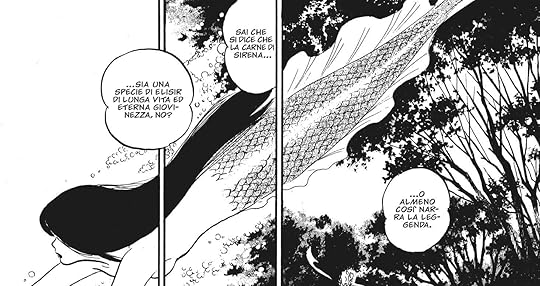
Storie singole che portano avanti una storia orizzontale che fa eco a tutte le faccende in cui ci ritroveremo.
Viaggeremo su e giù per il Giappone e per le epoche con la leggenda di queste sirene come forza motrice.
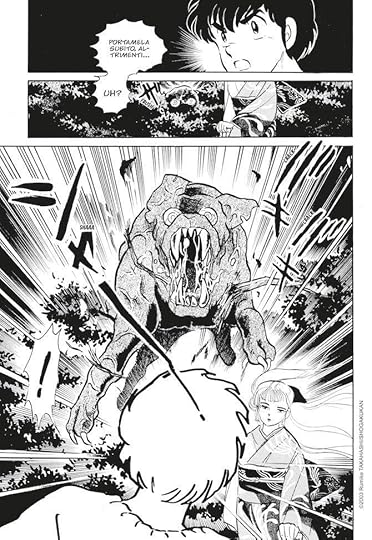
2 volumi promossi alla grande, si leggono senza impegno e le storie sono sempre crude e interessanti.
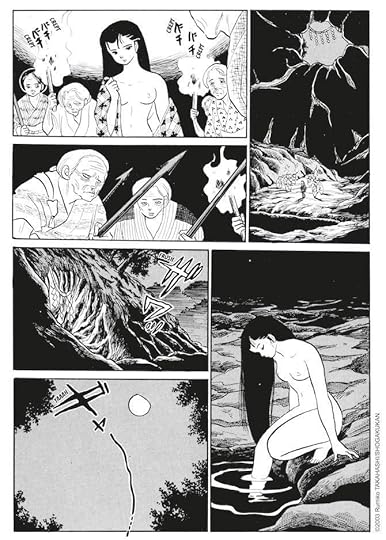
Morti, sangue, scene davvero forti, che mai avrei pensato di trovare belle opere di quest'autrice.
Storie singole che portano avanti una storia orizzontale che fa eco a tutte le faccende in cui ci ritroveremo.
Viaggeremo su e giù per il Giappone e per le epoche con la leggenda di queste sirene come forza motrice.
2 volumi promossi alla grande, si leggono senza impegno e le storie sono sempre crude e interessanti.

April 13, 2024
El segundo tomo de la historia de Yuta y Manna y veo como se intensifica la relación entre ambos, pero debo decir que este tomo me gustó un poco menos. Esto porque las historias no tuvieron ese factor fantástico que tuvieron las del primer tomo.

May 29, 2023
Pues me ha parecido mejor este tomo que el anterior. Una maravilla

June 18, 2023
4,5 ⭐️ El estilo de Rumiko 👌🏾 on point


December 25, 2023
situationship but the situation is we are doomed to live an immortal life and are the only ones who can understand each other and live alongside

October 30, 2024
Fua, muy bueno este, eh? EL primer capítulo ya está por encima de los 3 anteriores, pero es que el último es chefkiss. Da en todo el horror ancestral de la inmortalidad jajaja
November 23, 2024
It is so good to read, i like it

October 14, 2025
Masterpiece.

January 17, 2014
Los disfrute intensamente, leerlos en el tren con el, siempre un lindo recuerdo.

January 9, 2015
No me termina de gustar. Tiene algunas escenas o situaciones repetitivas en cada capitulo, llega a ser algo cansado.

Want to Read
March 29, 2017Edición argentina ya descatalogada. Tomo 2 de 3.
Displaying 1 - 18 of 18 reviews